
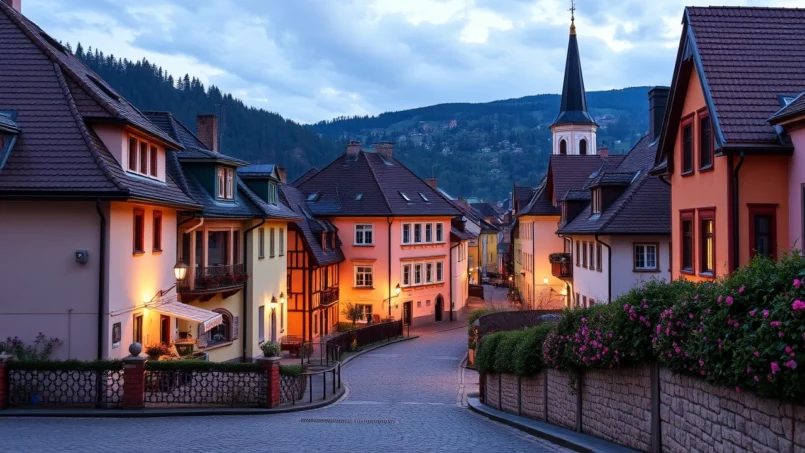
 Published on and written by Cyril Jarnias
Located in the heart of Europe and a member of the European Union and the Eurozone, Slovakia is increasingly attracting expatriates seeking an accessible real estate market, a moderate tax regime, and decent yield prospects. Between Bratislava, a dynamic capital oriented towards Austria and the rest of the EU, and the tourist-favored Tatra Mountains, the country offers a range of investment profiles rarely so clear-cut for a market still considered “secondary” in Europe.
For an expatriate, real estate investment in Slovakia can serve to diversify assets, acquire a pied-à-terre, or generate rental income in euros. It is essential to fully understand market access rules, actual costs, specific risks, and the methodology for structuring a project remotely.
This guide offers a clear, concrete, and data-driven overview of real estate investment in Slovakia for a non-resident, based on the legal framework, taxation, financing, main urban markets, and best practices for due diligence.
Why Slovakia Interests Expatriate Investors
Slovakia ticks several boxes sought by foreign investors: political and economic stability linked to the EU, moderate but steady growth, a relatively light property tax regime, and prices still significantly lower than those in major Western European capitals.
The homeownership rate in Slovakia exceeds 90%, one of the highest in Europe.
Prices have risen strongly in recent years, with an average increase of 8 to 10% per year over six years and a peak of nearly 18.7% in 2021, before a more recent stabilization phase. Despite this dynamism, values per square meter remain well below those seen in Vienna, Munich, or Paris.
For expatriates, Slovakia thus appears as an interesting compromise: a financially affordable entry point, rental income in euros, a structured legal framework, and a market still far from saturation.
What a Foreigner is Actually Allowed to Buy
An expatriate’s first instinct is often to wonder if, as a non-resident, they can actually become an owner. In Slovakia, the answer is generally yes, but with some nuances.
Citizens of the EU, EEA, and Switzerland have practically the same rights as Slovaks for purchasing homes, offices, commercial spaces, and buildable land. They can acquire apartments, houses, buildings, or commercial premises without quotas or caps on foreign owners per building or neighborhood.
Third-country nationals can freely purchase apartments, houses, commercial buildings, or cottages, without needing a residence permit or long-stay visa, including as tourists. However, the acquisition of agricultural land, forests, and plots located in protected natural areas is subject to reciprocity rules and conditions of residence or local activity. For these restricted assets, a common solution is to use a Slovak company such as an s.r.o. (equivalent to an LLC), which requires a minimum share capital of 5,000 euros.
This point is essential for expatriates: there is no “Golden Visa” type program linked to real estate. Becoming the owner of an apartment in Bratislava does not open a fast track to permanent residence or citizenship. Ownership can serve as proof of housing in a residency application, but is never sufficient on its own.
Legal Framework: A Robust Cadastre, But to be Handled Methodically
Slovakia belongs to the civil law tradition, with a legal foundation relatively clear for real estate ownership. The main texts are the Civil Code, the law on the real estate cadastre, and a specific law for condominiums (apartments and non-residential premises).
The country has 72 cadastral offices managed by district authorities. Registration of all property is mandatory there. For a foreign investor, it is crucial to know that the transfer of ownership is legally effective only at the time of its entry into the land register, not at the signing of the preliminary contract or the deed of sale.
The cadastral extract, called “List vlastníctva“, mentions the owner, the description of the building or plot, as well as any attached property rights (easements, mortgages, rights of way, etc.). Part of the information is available free online, but the underlying legal acts are accessible only to the parties concerned or their representatives.
In Slovakia, the ownership of a building and the land it occupies can be separate. Acquiring a house therefore does not automatically confer ownership of the land, and vice versa. In a condominium context, each owner holds a private unit as well as a share of the common areas, which are managed by a homeowners’ association or a property manager.
The current cadastral system is considered reliable, but it still bears traces of the socialist era: registration errors, inconsistencies on certain plots, unsettled inheritances. This is one reason why local lawyers recommend tracing the chain of ownership back at least ten years during due diligence, or even longer for complex land parcels.
How a Purchase Actually Unfolds for an Expatriate
Broadly speaking, the Slovak procedure will not be unfamiliar to a European accustomed to continental markets. The steps follow a classic order, with however a few specificities.
Property searches can be done via listing portals, local agencies, or word of mouth. In Bratislava, the neighborhoods most targeted by expatriates are Staré Mesto (historic center), Ružinov, Nové Mesto, or Petržalka. Elsewhere in the country, Košice, Žilina, Trnava, Nitra, or tourist areas in the High Tatras and Liptov concentrate many opportunities.
When a buyer makes an offer on a property, it is usually formalized by a reservation contract accompanied by a deposit of 5 to 10% of the price. This amount is held in an escrow account (with a lawyer or notary) until any conditions precedent are satisfied. It is essential to note that serious professionals refuse any direct payment to the seller’s personal account before legal safeguards are in place.
The signing of the final sales contract (“kúpna zmluva”) must be in writing. The document must include the full identity of the parties, the precise cadastral description of the property, the price, payment terms, and any accessory rights (easements, parking, cellars, etc.). Contracts can be drafted in a bilingual version, but the text filed with the cadastre must be in Slovak or Czech.
For the registration of a deed in the cadastre, authentication of the seller’s signature by a notary or authorized lawyer is mandatory. That of the buyer, although not systematically required, is strongly recommended to guarantee the legal security of the transaction. Once the complete file is submitted to the competent cadastral office, the processing time is 30 days. There is an accelerated procedure, subject to higher fees, allowing a decision within 15 days.
A foreigner who cannot travel can appoint a local representative by power of attorney, provided this authorization is legalized (apostille or consular legalization) and officially translated into Slovak. In practice, many expatriates manage the entire transaction remotely via a lawyer and a trusted agent, while making at least one physical visit to avoid bad surprises.
Once the registration in the land register is validated, ownership is legally transferred and the funds can be released to the seller.
What It Really Costs: Fees, Taxes, and Charges
One of Slovakia’s advantages lies in a relatively contained level of transaction costs. Beyond the purchase price, however, several mandatory or strongly recommended items must be anticipated.
There is no longer a property transfer tax (stamp duty) since the mid-2000s. The absence of “stamp duty” places the country in an advantageous position compared to many European neighbors. However, ancillary costs represent in practice between 3% and 9% of the price, with a frequent range around 5 to 7%.
The cadastre charges a fixed fee of 66 euros for a standard registration. The accelerated 15-day processing raises this amount to 266 euros, halved in case of electronic submission (33 and 133 euros). This is often supplemented by around a hundred euros in various administrative fees.
Common legal fees for a real estate transaction of 250,000 euros, representing 0.6 to 0.8% of the price.
Notaries intervene mainly for authentication of signatures and, if applicable, the management of an escrow. Each certified signature typically costs between 20 and 40 euros. A specific escrow agreement can be billed around 66 euros.
Real estate agencies apply commissions averaging 3 to 5% of the price, with a possible range of 2 to 6%. By convention, it is often the seller who pays this commission, but in some arrangements, the buyer bears all or part of their own agent’s remuneration. For a full advisory service (search, checks, negotiation, financing follow-up, key handover management), packages around 6,000 euros including tax are mentioned.
Fixed cost for registering the mortgage in the land register when purchasing with a Slovak loan.
Once an owner, the investor must pay a local property tax, modest but unavoidable. It is calculated on the area (in m²) and usage, not on the market value. The base scale is around a few tens of cents per m², with each municipality applying its own multipliers. In practice, a standard apartment often bears between 40 and 200 euros in annual tax, a house between 120 and 450 euros, with the highest amounts found in Bratislava.
In parallel, ongoing maintenance and major works must be budgeted. Best practices advise setting aside 1% to 2% of the property’s value each year, distinguishing roughly 0.5 to 1% for annual maintenance (small repairs, refurbishments) and 0.5 to 1% for a renovation fund (roof renovation, facade work, replacement of technical systems). For an apartment valued at 200,000 euros, this represents 2,000 to 4,000 euros in annual budget to plan, including condominium fees.
Taxation: What a Foreign Owner Gains and Loses
Tax-wise, Slovakia adopts a rather investment-friendly approach. No tax on real estate wealth, no inheritance or gift tax since 2004, no transfer tax: the framework is immediately lighter than in several major EU countries.
Rental income is taxed as personal income, under a progressive scale: 19% up to an annual threshold (approx. 41,000–47,000 €) then 25% above. The owner can deduct actual expenses (loan interest, works, management fees, property tax, insurance…) or opt, under conditions, for a flat-rate expense deduction (e.g., 40% of rents, within an annual limit). A small specific annual allowance on a fraction of rents exists but remains marginal.
Real estate capital gains are not subject to a separate tax: they are included in taxable income. However, two major exemptions make the taxation of disposals relatively mild for those investing medium-term. Firstly, the resale of a property held for more than five years and not used for commercial purposes is completely exempt for an individual. Secondly, the sale of a primary residence benefits from an exemption provided the home has been occupied for at least two years and has not served as a professional tool in the last five years. Outside these scenarios, the net capital gain is taxed at the 19% or 25% scale.
For companies, real estate gains are subject to corporate tax with a standard rate of 21% and progressive rates (10% for small structures under a threshold, 24% for very high profits). The advantage lies in the possibility to depreciate the asset and deduct costs more broadly, which is interesting for a large portfolio or development projects.
For a French expatriate, these mechanisms combine with the tax treaty to avoid double taxation concluded between France and the former Czechoslovakia, still applicable to Slovakia. Rents and capital gains from a Slovak property are taxable in Slovakia and must be declared in France, but a tax credit prevents effective double taxation, up to the limit of the French tax corresponding to this income.
Financing Your Purchase: Options for a Non-Resident
Slovak banks do not close their doors to foreigners, but apply stricter criteria than for local residents. The market is supervised by the National Bank of Slovakia, which sets limits on the debt-to-income ratio and loan-to-value ratios.
For a Slovak resident, some institutions can grant a loan up to 90% of the property value. For a non-resident, the loan-to-value (LTV) ratio is typically between 70% and 80%. It is therefore necessary to plan a minimum personal contribution of 20% to 30%. This percentage can be higher if the profile is deemed riskier, for example with non-Eurozone income or limited credit history.
The approval criteria remain classic: minimum age 18, loan repayment ending before 65–70 years, employment history (6 to 12 months for an employee, 1 to 2 fiscal years for self-employed), credit history check, capped debt service ratio as a fraction of net income. The bank also examines the country of residence and nature of income. EU citizens earning a stable salary in euros are clearly the most favored.
For financing up to 80%, fixed rates for 3 to 5 years for foreigners typically range between 3% and 4.6%. Loans over 20 years average just over 4%, with adjustments according to the borrower’s profile. Borrower’s insurance, covering at minimum death and disability, and sometimes job loss, is mandatory.
An element not to be overlooked: each rejected loan application leaves a mark in credit databases, which can penalize a future application. It is often relevant to use a broker specialized in assisting foreigners, who knows the most open institutions and the types of applications they favor.
Where to Invest: Overview of the Main Slovak Markets
For an expatriate, choosing the right city – and the right neighborhood – weighs at least as much as the quality of the asset itself. Slovakia offers several real estate scenes with very different profiles.
Bratislava, the economic and political capital, is unsurprisingly the most expensive market in the country. Apartment prices there revolve around 2,700 to 3,000 euros per square meter on average, with peaks between 4,000 and 7,500 euros in the most sought-after sectors. Rents in the old town range from 11 to 14 euros per m² per month, compared to 9 to 12.5 euros in neighborhoods like Ružinov or Nové Mesto. Gross yields for well-located small units settle around 5%, slightly less for larger surfaces.
Although cheaper than major Western metropolises, Bratislava has a tight real estate market. A two-room apartment in the city center typically costs between €200,000 and €300,000. Rental demand is strong, driven by local professionals, expatriates, students, and tourists. An annual deficit of several tens of thousands of new housing units suggests sustained market tension.
Košice, the country’s second city and a university and IT hub, displays much more accessible levels. The average price per square meter for an apartment oscillates between 1,200 and 1,350 euros. Gross yields there frequently exceed 5%, potentially reaching 6% in certain segments, with long-term rents lower than Bratislava’s but a significantly more favorable price-to-rent ratio.
In some university areas like Trnava, rents have increased by nearly 18% per year in recent years.
For enthusiasts of second homes and seasonal rentals, the regions of Liptov or the High Tatras offer a market of cottages, mountain apartments, and rural houses at heterogeneous levels: small resort apartments can be negotiated from 20,000 to 30,000 euros, while high-end developments far exceed 500,000 euros. Gross yields on well-managed tourist rentals can range between 5 and 7%, with high occupancy periods in peak season but greater volatility over the year.
The following table illustrates order of magnitude prices and yields according to several major cities and regions.
| City / Region | Avg. Apt. Price (€/m²) | Estimated Gross Yield | Dominant Profile |
|---|---|---|---|
| Bratislava | 2,700 – 3,000 | 4 – 5 % | Capital, professionals, expats |
| Košice | 1,200 – 1,350 | 5 – 6 % | University city, IT |
| Trnava | ~1,500 | 5 – 5.5 % | Students, industry |
| Žilina | ~1,400 | ~5.5 % | Industry, logistics |
| Prešov | < 1,000 | variable, rising | Medium city, long-term rental |
| Tatras / Liptov | 900 – 3,000+ | 5 – 7 % (touristic) | Vacation homes |
Property Types and Indicative Budgets
The Slovak market offers a palette of products ranging from micro-apartments in the city center to rural farms, including suburban houses and rental buildings. For an expatriate, the most commonly targeted types are urban apartments and small townhouses.
Apartments in cities remain the norm for young professionals and much of the middle class. In Bratislava, a studio or an older two-room apartment can be found under 200,000 euros on the outskirts, while a renovated property in the old town or a recent residence quickly exceeds this threshold. In other cities, the total price for the same surfaces is often halved, or even more.
The price of modern houses near Bratislava or in mountain resorts can exceed this amount in euros.
The table below gives some examples of price ranges for a standard apartment according to location, based on average prices per m² and a surface area of 60 m².
| Location | Avg. Price (€/m²) | Indicative Price 60 m² Apt. |
|---|---|---|
| Bratislava | 2,700 – 3,000 | 162,000 – 180,000 € |
| Košice | 1,200 – 1,350 | 72,000 – 81,000 € |
| Trnava | ~1,500 | ~90,000 € |
| Žilina | ~1,400 | ~84,000 € |
| Prešov | < 1,000 | < 60,000 € |
These orders of magnitude must of course be refined by a micro-local analysis (street, building, condition, floor, parking, etc.), but give a clear view of the entry ticket gap between the capital and regional cities.
Rental Yield: What to Expect in Practice
Gross yields announced on the Slovak market – particularly in urban centers – generally oscillate between 4.5 and 5.5% per year, with higher peaks in certain sectors (up to 6% in Košice, 5.7% in Bratislava on well-targeted small surfaces).
The question for an expatriate is not only to look at the gross but the net after expenses, taxation, and vacancy. In Bratislava, available data indicates net yields rather between 2.5 and 3.5%, while cities like Košice, Žilina, or Trnava frequently allow targeting nets of 3 to 4.5% if management is optimized.
For opportunistic projects like renovation-resale (“fix and flip”) or land development, margins can be significant: 20 to 30% for well-executed buy-renovate-sell operations, and between 30 and 70% for structured subdivision or development projects. However, these arrangements require in-depth local expertise, particularly on urban planning regulations, the banking environment, construction costs, and marketing risks.
At the scale of an individual expatriate investor, most strategies remain oriented towards long-term holding, with objectives combining recurrent rental income (5 to 8% gross targeted) and potential capital gain at ten years and beyond, in a country still catching up compared to its Western neighbors.
Due Diligence and Risks: Points of Vigilance for a Foreigner
Despite its appearance as an “easy” market, Slovakia presents several pitfalls that local professionals regularly see closing in on unprepared foreign investors.
The first concerns verification of the title deed. Registration in the cadastre is proof, but does not offer an absolute guarantee of absence of dispute. Historical errors, unsettled inheritances, disregarded pre-emption rights (co-owners, spouse, the State for certain listed monuments), unformalized easements can lead to disputes after purchase. This is why serious lawyers systematically reconstruct at least ten years of the chain of ownership, analyze old court decisions, and compare cadastral data with on-the-ground reality.
Before buying, it is imperative to check the official classification of the land (agricultural or other) and the existence of legal rights of way, especially if access crosses a private plot. Consult the urban plan and, if necessary, have a surveyor conduct a boundary survey to confirm areas.
More direct scams are not absent from the landscape: listings for properties burdened with undisclosed mortgages, promises of sale signed by fake owners or representatives without valid power, requests for deposits into dubious accounts, interference with transfer instructions. Rigorous control of sellers’ identity, powers of attorney, bank details, and mortgage registrations via the cadastre neutralizes a large part of these risks.
An investor negotiated the price of a 250,000 € property down to 140,000 € after a building expert (“statik”) revealed major defects requiring 150,000 € in renovation. After works, the property’s value was estimated at 250,000 € two years later, illustrating the importance of a thorough inspection for negotiation and added value.
Remote Management: How to Manage Your Property from Abroad
For an expatriate not living in Slovakia, the question of day-to-day management is central. Collecting rents, handling repairs, managing tenant or tourist turnover is not feasible in “self-management” mode from hundreds or thousands of kilometers away.
Two pillars are therefore essential: a local manager and reliable digital tools. On-site, a property administrator or letting agency handles tenant placement, inventory, rent collection, arrears follow-up, and coordination with tradespeople. Fees generally revolve around 3 to 6% of rents collected for long-term rental management, more for short-term rentals like Airbnb.
High occupancy rates that can be achieved in peak season in very touristic areas with full-service management.
Regarding tools, using management software or platforms (payment recording, expense tracking, quarterly reports) facilitates remote oversight. Some online agencies offer hybrid models, combining virtual tours, electronic signatures, digital reporting, and physical presence via partners.
The essential for an expatriate remains to carefully choose their main contact, to check their references, experience, and ability to communicate in a shared language (English, sometimes French or German), and to formalize the relationship with a detailed management mandate, governing fees, scope of services, and level of autonomy in decision-making.
Structuring Your Investment: In Your Own Name or Via a Company
Slovak law allows a foreigner to buy in their own name or via a local structure, most often an s.r.o. (limited liability company). The choice depends on the asset profile, investment volume, and long-term strategy.
For a first modest-sized purchase, intended for mixed use (pied-à-terre and occasional rental), acquisition in one’s own name is generally the simplest path. Taxation remains straightforward, administrative procedures limited, and exemptions on five-year capital gains or on the primary residence are fully accessible.
For an expatriate planning to acquire multiple properties, develop a professional rental activity, or undertake small development projects, choosing a corporate structure offers several advantages. It notably allows deduction of a broader spectrum of expenses (such as those related to a vehicle, overheads, or depreciation), offers more flexible management for share transfer, and may provide access to certain tax exemption regimes upon disposal of shares, subject to meeting required holding conditions.
In return, accounting complexity increases, corporate tax applies to profits, and transferring funds to personal wealth can trigger taxation on dividends, although rates remain moderate compared to other countries.
For non-residents from countries with restrictions on purchasing agricultural land or certain types of land, holding via a Slovak company is also a common way to circumvent limitations, while respecting local law.
Residency, Personal Taxation, and Life Project
An important reminder is necessary for every expatriate: owning property in Slovakia does not make you a Slovak tax resident, nor a resident under foreign national law. Tax residency is determined based on criteria such as annual length of stay (starting from 183 days), presence of a permanent home, the center of economic and personal interests. As long as you live elsewhere and spend most of your time in another country, Slovakia will consider you a non-tax resident, taxable only on Slovak-source income (rents, capital gains, possibly local professional activity).
For a stay exceeding 90 days within 180, a residence permit (work, studies, family reunification, etc.) is mandatory. Ownership of real estate can support the application by attesting to accommodation and financial stability, but is not a valid reason on its own to obtain a residence permit.
In a global expatriation strategy, choosing Slovakia as a country of residence can have advantages (moderate cost of living, reasonable taxation, European environment), but requires taking into account tax treaties with the country of origin, any developing anti-optimization legislation there, and the reality of settling (language, integration, employment or activity on site).
How to Approach Your First Investment: A Three-Step Method
For an expatriate discovering Slovakia, it is useful to approach the project in a structured way.
The first step is to clarify objectives: are you primarily seeking rental yield, long-term capital gain, personal use, or a mix of the three? The holding horizon, accepted risk level, and availability for management will guide the choice of city, property type, and strategy (long-term, student furnished, seasonal, renovation, etc.).
The second step involves analyzing several cities (like Bratislava, Košice, and possibly a regional city). Compare prices per square meter, observed rents, vacancy rates, local economic dynamism, and infrastructure (universities, industrial zones, presence of international companies). The goal is to select one or two micro‑markets where the combination of price, rent, and growth prospects appears most interesting.
The third step involves forming a “local team“: a real estate agent to hunt and negotiate, a lawyer to secure the process, a potential broker for financing, and, already, a management contact to prepare post-signature. This network will often make the difference between a smooth investment and an administrative headache.
In the background, the investor must keep in mind two budgetary constraints: anticipate up to 5% of the price for acquisition fees excluding tax and agency, and set aside 1 to 2% of the property’s value each year for operating and maintenance expenses. This financial realism prevents overestimating yields and maintains a clear view of net profitability.
In Summary: An Open but Demanding European Market
For an expatriate, Slovakia today offers a rare mix of stability, accessibility, and potential. The absence of a transfer tax, lenient long-term taxation, still affordable prices, and decent rental yields make the country a serious candidate in a strategy of real estate diversification in Central Europe.
The market’s attractiveness should not overshadow the requirements of rigor: the cadastral system requires expert reading, the distinction between land and building ownership demands particular attention, certain land parcels require adapted legal structures, and geographical distance makes the choice of intermediaries crucial.
For an expatriate ready to surround themselves with a local lawyer, an experienced agent, and a reliable manager, real estate investment in Slovakia can integrate harmoniously into a European portfolio, bringing both euro-denominated income, exposure to a market still in a catch-up phase, and options for stays in a human-scale country at the heart of the Union.
Disclaimer: The information provided on this website is for informational purposes only and does not constitute financial, legal, or professional advice. We encourage you to consult qualified experts before making any investment, real estate, or expatriation decisions. Although we strive to maintain up-to-date and accurate information, we do not guarantee the completeness, accuracy, or timeliness of the proposed content. As investment and expatriation involve risks, we disclaim any liability for potential losses or damages arising from the use of this site. Your use of this site confirms your acceptance of these terms and your understanding of the associated risks.

Cyril Jarnias is an independent expert in international wealth management with over 20 years of experience. As an expatriate himself, he is dedicated to helping individuals and business leaders build, protect, and pass on their wealth with complete peace of mind.
On his website, cyriljarnias.com, he shares his expertise on international real estate, offshore company formation, and expatriation.
Thanks to his expertise, he offers sound advice to optimize his clients' wealth management. Cyril Jarnias is also recognized for his appearances in many prestigious media outlets such as BFM Business, les Français de l’étranger, Le Figaro, Les Echos, and Mieux vivre votre argent, where he shares his knowledge and know-how in wealth management.





