
 Published on and written by Cyril Jarnias
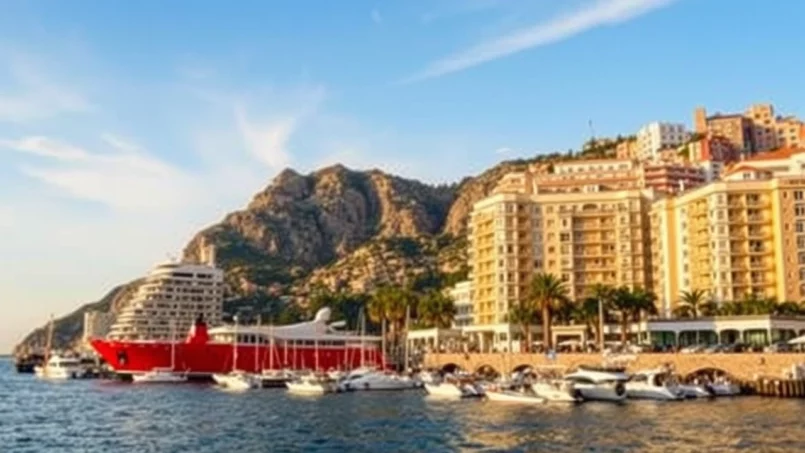
Moving to Monaco is like stepping into a postcard: yachts lined up in Port Hercule, Belle Époque facades, almost constant sunshine, maximum security, and luxury boutiques on every corner. Yet, behind this image of perfection, many newcomers go through the same silent trial: homesickness.
Feeling homesick in a rich and safe country is common and linked to the contrast with your previous life. Understanding this mechanism, knowing the local resources, and learning how to anchor yourself can turn this difficult period into a personal growth experience.
Understanding Why Homesickness Hits Hard in Monaco
The Monégasque setting is striking: less than 2 km² squeezed between sea and mountain, record population density, an ultra-cosmopolitan population where over 75% of residents were born abroad and more than 130 to 140 nationalities coexist. Nearly a third of the inhabitants are millionaires, apartments sometimes sell for over €50,000 per m², and supercars cross paths with limousines in front of the Monte-Carlo Casino.
The brutal contrast between life in an extreme environment, like in a polar scientific base, and a “normal” life elsewhere can exacerbate homesickness. The environment, while fascinating, is disorienting and can generate a mix of feelings: a person feels privileged to have such an experience but may also feel a sense of illegitimacy, isolation, or of being a permanent visitor, which intensifies nostalgia.
The climate, however, poses no problem: blue skies most of the year, mild temperatures even in winter, around 300 days of sunshine. Yet, it’s not the weather that makes a “home,” but the familiar markers: language, habits, smells, rhythms, humor, relationships.
Culture Shock Isn’t Just for ERASMUS Students
Psychologists who work with expatriates often describe an adaptation process in several phases:
Setting in Monaco typically follows four distinct stages. First, the “honeymoon” phase, marked by wonder for the sea, the terraces, the cars, and the prestigious events. Then, a phase of frustration appears, with fatigue, irritation, nostalgia, and strong homesickness. Next comes an adjustment phase, where you make small progress like understanding the bus network or a few social codes. Finally, you reach the adaptation phase, where you eventually consider Monaco “home.”
This process is not linear, especially in such a particular environment. The implicit social pressure – success, appearance, status – can amplify doubts about one’s legitimacy, place, and life choices. Homesickness then becomes as much a longing for the place of origin as an identity questioning: “Where do I belong?”
Framing What You Feel
Telling yourself that “everything is fine on paper” because you live in the sun, in a safe and rich country, doesn’t prevent suffering. On the contrary, feeling guilty for being sad in an idyllic setting worsens the discomfort. It’s helpful to name what’s happening.
Homesickness often combines several ingredients: loneliness, loss of routines, difficulty communicating in the local language, feeling of having lost professional or family reference points, administrative overload related to residency, work permits, or housing.
Studies indicate that the absence of a social network is a risk factor for mental health more significant than cultural differences. In Monaco, this risk is amplified by the high cost of living and the frequent turnover of residents, which weakens the building of lasting connections.
The symptoms are varied: persistent sadness, irritability, fatigue, insomnia, loss of appetite, desire to isolate oneself, increased alcohol consumption, feeling like you don’t “measure up” to the Principality’s image. They don’t mean you made a “bad choice” by coming, but that a major transition is underway.
Leveraging Monaco’s Particularity to Recreate a Sense of Home
One of the most useful paradoxes to keep in mind: if the shock is stronger in Monaco, the tools to adapt are also numerous, provided you look for them in the right places.
The country is tiny: you can walk across it in less than an hour. This human scale, combined with a dense network of associations, clubs, and institutions, facilitates the creation of routines and regular encounters, provided you leave your home and dare to open a few doors.
Turning the City into Familiar Territory
To tame homesickness, transforming Monaco from a postcard backdrop into a “familiar territory” is essential. This is achieved through very concrete actions:
Always take the same bus from the Compagnie des Autobus de Monaco at the same time, greet the driver, learn where to get off to go to La Condamine, Fontvieille, or Monte-Carlo. Shop at the Condamine market, chat with the vendors, find a favorite stall. Choose a regular bench in the Japanese Garden or the Exotic Garden to read or call your family. Frequent the same café – for example at the Café de Paris or a brasserie in La Condamine – until you’re recognized.
Creating these visible, repetitive markers symbolically recreates the habits you left behind and soothes the nervous system. In a state where 20% of the territory is composed of gardens and parks, it’s possible to carve out regular “bubbles” of calm.
Embracing Language and Codes Without Losing Yourself
French is the official language, but Italian and English are widely used, especially in finance, yachting, luxury hospitality, and retail. The traditional dialect, Monégasque, is taught in schools and symbolizes local identity.
For a newcomer, language is both an obstacle and a powerful tool against homesickness. Not understanding what’s being said around you reinforces the feeling of strangeness. Conversely, making progress, even very slowly, creates small daily victories.
Integrating a few automatic phrases – ‘Bonjour,’ ‘Merci,’ ‘S’il vous plaît,’ ‘Bonne journée’ – and using them systematically in shops, at the bus stop, or in a building elevator creates repeated micro-connections. In Monaco, politeness and discretion are strong values; flowing into these customs facilitates acceptance.
Tip for integration in Monaco
Enrolling in a French course or participating in conversation sessions (some are organized by clubs like the Club des Résidents Étrangers de Monaco, the CREM) allows you to combine learning and socializing. The goal is not to lose your accent or your native language, but to add another string to your social bow.
Breaking Out of Isolation: Clubs, Associations, and Communities
Monaco offers a rare density of clubs, associations, and international networks, precisely because its population is highly internationalized. For an expatriate struggling with homesickness, this associational fabric is a potential lifeline.
Several very active structures play a central role in the integration of newcomers. They are not “mundane gadgets” but, very concretely, places where you can find your first friends, first practical advice, even first professional opportunities.
Here is an overview of some of the important collective resources for building a network.
An Ecosystem of Associations to Avoid Being Alone
Associations and clubs cover very diverse needs: socialization, mutual aid, culture, support by nationality or language, leisure activities. The challenge for you is less about knowing everything than about choosing one or two and attending regularly, rather than multiplying superficial contacts.
Discover different types of structures and the support they can offer if you suffer from homesickness while living in Monaco.
Meet people who share your culture or interests to recreate a sense of familiarity and belonging.
Share your experience in a supportive setting and receive advice to better manage your nostalgia.
Join a regular activity to create a new routine, have fun, and expand your social circle.
Benefit from professional support to understand and overcome feelings related to homesickness.
Find comfort and community within a place of worship or spiritual practice.
Frequent places known to be gathering points for expatriates and internationals.
| Type of Structure | Example from Research | Concrete Benefit for a Newcomer |
|---|---|---|
| Expatriate Residents Club | Club des Résidents Étrangers de Monaco (CREM) | Friendly evenings, weekly lounge bar, international meetings |
| Online Expatriate Community | InterNations (Monaco community) | Regular events, interest-based groups, expat-to-expat support |
| Professional / Prestige Club | Monaco Ambassadors Club (MAC) | High-level networking, galas, influential professional contacts |
| Nationality-based Association | British Association of Monaco, Club Suisse de Monaco | Familiar cultural references, use of native language, practical help |
| Mutual Aid Association | Les Voisins, Les enfants de Frankie | Gentle integration, charitable activities, sense of purpose |
| Leisure Club | Monte Carlo Bridge Club | Regular activity, structured social link, intellectual challenge |
| Digital Platforms | Facebook ‘Monaco Expats’, Meetup, Expat.com | Daily life information, classifieds, outing announcements |
These structures organize very concrete events: cocktails, dinners, conferences, cultural outings to the Opéra de Monte‑Carlo, bridge evenings, conversation classes, charitable actions for children or seniors, etc. For many expatriates, their first circle of friends was created at a simple club dinner or a quiz night in a bar organized by an international community.
Arriving alone at an event where you don’t know anyone is uncomfortable, but it’s precisely this initial awkwardness that allows you to break the cycle of isolation. In Monaco, where everything is geographically close, the barrier is almost never logistical, but almost always psychological.
Testimonials and Tangible Effects
Several testimonials gathered from available resources highlight the same scenario: a foreign executive explains finding his first friends at an international evening; an Italian entrepreneur says she developed her clientele through recommendations from a residents’ club; a newcomer recounts that the Monte Carlo Bridge Club allowed him to discover a game and build strong bonds.
These stories show that, even in an environment where appearances are carefully curated, fundamental human needs remain the same: to be acknowledged, to wait for someone, and to be waited for. Each association you attend regularly becomes an element of your new inner “village.”
Maintaining Ties with Home Without Clinging Exclusively to It
Completely cutting yourself off from family and friends to “better integrate” is as problematic as being glued to your phone at all hours. Finding a balance between connection with your country of origin and local investment is one of the most effective levers against homesickness.
The good news: Monaco is very well connected, both technically and geographically.
Since 2024, subscribers of the 4 main French operators can use the Monaco Telecom network without extra charge within the Principality.
On a practical level, it can be useful to configure your phone for seamless use between Monaco and France:
| Practical Phone Action | Useful Detail in Monaco |
|---|---|
| Network Selection | Leave the smartphone on automatic selection to connect to ‘Monaco Telecom’ |
| Mobile Data and Roaming | Enable ‘data abroad’ to use the Monégasque network with a French plan |
| Calling to France | Dial +33 before the number, save French contacts in international format |
| Calling a Monégasque number from Monaco | Dial the number directly without +377, but keep it in international format for travel |
Regular video calls with family, sending photos of your new habits (the commute to work, the sea view, Monégasque Christmas decorations) allow your loved ones to step into your daily life. They then see that your life is not just about yacht clichés and high-society parties, which reduces misunderstandings and sometimes felt guilt.
The ideal frequency of calls with loved ones varies from person to person. For some, daily contact can accentuate the feeling of distance, while for others, this regular link is essential. The important thing is to identify what truly soothes you, without feeling forced to follow implicit rules like ‘you must call often’ or ‘you must not call too much’.
Leveraging the City to Take Care of Your Mental Health
The Monégasque government has made mental health a key axis of its health policy. A multi-year action plan, titled “Psychological Stability and Wellbeing,” aims to promote psychological well-being, detect distress early, and coordinate care.
For someone struggling with homesickness, this means two very concrete things: there are available professionals, and asking for help is not unusual.
A Structured and Accessible Healthcare System
The Principality has a high-level public healthcare system, funded by contributions to the Caisses Sociales de Monaco (CSM). The Centre Hospitalier Princesse Grace (CHPG) plays a central role, including for psychiatry and psychology. A specialized unit, La Roseraie (UPPM), and a mobile psychiatric unit complete the system.
The conditions covered include cases ranging beyond the extremes, such as depression, anxiety disorders, adjustment disorders, addictions, sleep disorders, teenage difficulties, as well as distress related to expatriation and homesickness.
For a resident affiliated with the CSM, psychiatric hospitalization is covered, and a portion of outpatient consultations and medication is reimbursed, according to the usual conditions of the scheme. Many residents complement this with private insurance.
In parallel, the city has many psychologists, psychotherapists, and private centers that often work in several languages, including English, Italian, and of course French. You can find various approaches: cognitive-behavioral therapies, analytical psychotherapy, couple and family therapy, online support, etc.
Hotlines and Support Structures in Case of Distress
Homesickness can, for some people, turn into genuine depression. Thinking about returning recurrently is not alarming in itself; however, loss of the joy of living, suicidal thoughts, or the inability to function daily justify seeking help quickly.
Several helplines and organizations are available to offer psychological support and compassionate listening.
Dedicated numbers to talk confidentially with a professional, available 24/7 or during extended hours.
Associations and health centers offering face-to-face psychological support with therapists.
Structures offering tailored listening for young people, families, or people facing particular situations.
| Service | Main Role | Access Methods (examples from data) |
|---|---|---|
| CHPG Psychological Support Helpline | 24/7 listening, assessment, referral | Phone call, anonymous and free |
| Monégasque Red Cross | Psychological support, face-to-face interviews | Dedicated line, appointments possible |
| Private centers and practices (e.g., PCC…) | Individual, couple, family psychotherapy | By appointment, sometimes covered by insurance |
| Fight Aids Monaco Association | Psychological support for certain specific populations | Appointments, support by professionals |
Access to classic emergency numbers, like 112, redirected to local services (police, fire, emergency medical services), is also available. In case of acute distress, going directly to the CHPG emergency room is the right course of action.
The key idea: you are not supposed to “earn” or not earn help based on how objectively enviable your situation is. Just because you live in the sun, in a rich country with no income tax, doesn’t make your suffering any less legitimate.
Learning the Monégasque Codes Without Losing Yourself
Monaco has a social culture strongly marked by elegance, reserve, and discretion. People greet each other with a firm handshake, the titles “Monsieur,” “Madame” followed by the surname are frequent in formal contexts. Punctuality is taken seriously, both in professional and private life.
In public spaces, people speak rather quietly, they avoid visible displays of drunkenness or arguments. The law prohibits intrusive photography of private individuals, respect for privacy is a strong norm. Beachwear stays at the beach: you cover up to walk around the city.
Initially, cultural codes of reserve can be perceived as a form of coldness, especially for people from more expressive cultures. In reality, this attitude is another way of showing respect and does not reflect an intention of distance.
Adopting these codes (arriving on time, dressing well without ostentation, moderating your volume, avoiding intrusive questions about money or politics) does not mean renouncing your culture of origin. It’s a bit like the principle of bilingualism: you don’t lose your mother tongue, you add another one.
And, paradoxically, the more you feel capable of “playing” the local code, the less you feel observed, judged, or out of sync – which soothes homesickness.
Using the Cultural and Event Fabric to Project Yourself
The Monégasque calendar is saturated with events: Monaco Formula 1 Grand Prix, Monte‑Carlo Rolex Masters, Monaco Yacht Show, International Circus Festival, Red Cross Galas, Rose Ball, National Day, Feast of Saint Devota, shows at the Grimaldi Forum, ballets, operas, concerts by the Philharmonic Orchestra, etc.
For someone suffering from homesickness, these events can play two opposite roles: accentuate the feeling of not belonging if you watch them from afar… or offer milestones in time if you make them concrete appointments.
Planning your participation in local events, even modest ones (a show at the Théâtre Princesse Grace, an exhibition at the Oceanographic Museum, a circus evening in January, a summer fireworks display, the Saint Devota procession in winter), helps you project yourself into the coming months and inhabit the local calendar.
You can also choose a few traditions as a new framework for your life: exploring culinary specialties (barbagiuan, dishes based on cod like brandamincium), attending Monégasque Christmas mass or the Good Friday procession, even out of simple cultural curiosity. The goal is not to convert to a new identity, but to add layers to your own.
Coping with the Pressure of Luxury and the Reality of Daily Life
Living surrounded by yachts, high jewelry storefronts, and sports cars can generate a curious side effect: you sometimes feel “poor” or insignificant, even with a good standard of living. This constant visual environment can create a feeling of social disconnect, which easily blends with homesickness.
It’s useful to recall some realities: the Principality certainly has many millionaires and billionaires, but also employees, families, cross-border workers – nearly 52,000 people come from neighboring France every day to work in Monaco. The country functions thanks to a majority of ordinary lives.
To alleviate financial and social pressure, some residents opt for more discreet Monégasque neighborhoods (Moneghetti, Saint-Michel, Les Révoires, La Colle) or combine a life in Monaco with housing in neighboring French towns like Beausoleil, Roquebrune-Cap-Martin, or Nice. This approach allows for reducing costs and finding a more familiar social setting.
Homesickness is often fueled by this sense of gap between the life imagined before departure – sometimes idealized – and the reality of daily life: administrative difficulties, loneliness, overtime, commuting by bus rather than by helicopter. The sooner you accept that Monaco is also a place where you do your grocery shopping, take your children to school, and wait for the bus in the October rain, the faster you move out of the realm of shattered dreams and into that of a real life, with its ups and downs.
Recognizing When Homesickness Becomes Concerning
Not all sadness is pathological, and many difficult phases resolve on their own as you find your bearings. But some signals should alert you.
Professionals who work with expatriates describe several “red flags”: significant increase in alcohol or medication consumption; persistent refusal to go out or meet anyone; inability to motivate oneself for simple daily tasks; panic attacks; permanent feeling of emptiness or despair; suicidal thoughts, even fleeting ones.
Estimated number of mental health professionals per 100,000 inhabitants in Monaco, facilitating access to support.
Consulting a psychologist or psychiatrist doesn’t sanctify the problem; on the contrary, it allows you to put words to the expatriation experience, review your expectations, and identify what in homesickness is part of a normal adaptation process and what requires more intensive care.
Building Dual Belonging Rather Than Choosing a Side
An idea often returns among those who have successfully adapted: stop opposing your country of origin and Monaco. You don’t rebuild yourself by cutting off a past to stick on a future, but by creating continuity.
This can be achieved through very simple gestures:
Foreign residents in Monaco often maintain their cultural heritage while integrating into local life. This includes speaking their native language at home with their children, who are educated in the Principality’s French or international school system, cooking traditional dishes while exploring products from Monégasque markets, celebrating their national holidays while participating in local events like the Prince’s Day or Saint Devota, and frequenting both community associations (like the British Association of Monaco or the Club Suisse de Monaco) and generalist clubs like the CREM or InterNations.
The goal is not to become “more Monégasque than the Monégasques”, nor to remain eternally “in transit”. Monaco is a special case: the majority of its residents are not nationals, and Monégasque citizenship, rare, is not the same as belonging to the place. You can learn to tell yourself: “I come from elsewhere, I live here, both are true.”
Giving Yourself Time… and the Right to Change Your Mind
It’s tempting, when going through an intense period of homesickness, to conclude too quickly that “this country is not for me”. The opposite is just as frequent: forcing yourself to stay to prove something, at the cost of your mental health.
Research on expatriation shows that intentions to leave or return often evolve along the stages of the adaptation curve. A crisis phase does not necessarily predict failure, just as a honeymoon phase does not guarantee lasting success.
In Monaco, obtaining more stable residence permits (temporary, ordinary, privileged) is conditional on specific residence durations (one, three, ten years). Rather than projecting onto the very long term immediately, a healthier approach is to set intermediate and realistic steps. For example, assess your sense of integration after six months of sincere efforts to settle in, then readjust your goals accordingly.
Acknowledging, if applicable, that returning to your country of origin or settling elsewhere is not an admission of failure, but an informed decision, also helps reduce pressure and thus… the homesickness itself. You breathe easier when you know you have the right to rewrite the script.
In Summary: Transforming a Lack into a Resource
Managing homesickness in Monaco is neither ignoring the pain by drowning yourself in glitz, nor dramatizing it to the point of forgetting the place’s unique assets. It’s accepting that moving to a tiny, hyper-dense, luxurious, and extremely international Principality is a major psychological trial, even when you’ve long dreamed of living there.
The combination of several elements works in your favor: a gentle physical setting (climate, small size, urban nature), a dense associational and international fabric, a structurally sound mental healthcare system, high security, and great linguistic and cultural diversity.
To overcome homesickness, grant yourself the right to your emotions, establish simple routines, participate in clubs or associations, maintain a chosen link with your country of origin, and use mental health resources if needed. These steps allow you to develop an expanded identity and a new way of inhabiting the world.
Monaco will always remain a special place; the question is not so much to “blend in” as to find an angle that fits your measure. And that process – an intimate one – takes time, regardless of the number of yachts in the harbor.
A future retiree, 62 years old, with a financial estate exceeding one million euros, well-structured in Europe, wishes to transfer his tax residence to Monaco to optimize his tax burden and diversify his investments, while maintaining a strong link with France. Allocated budget: 10,000 euros for comprehensive support (international tax advice, administrative formalities, relocation, and estate structuring), without forced asset sales.
After studying several options (Portugal, Italy, Greece, Andorra), the chosen strategy targets Monaco for the absence of income and wealth tax for non-Monégasque residents, its legal stability, and its immediate proximity to France. The mission includes: pre-expatriation tax audit (exit tax, tax reporting), obtaining a Monégasque residence permit via rental or purchase of a residence, opening local bank accounts, plan for breaking French tax ties (183 days/year outside France, center of economic interests), coordination with a local network (lawyers, tax specialists, private banks), and overall estate integration (analysis and possible restructuring).
Disclaimer: The information provided on this website is for informational purposes only and does not constitute financial, legal, or professional advice. We encourage you to consult qualified experts before making any investment, real estate, or expatriation decisions. Although we strive to maintain up-to-date and accurate information, we do not guarantee the completeness, accuracy, or timeliness of the proposed content. As investment and expatriation involve risks, we disclaim any liability for potential losses or damages arising from the use of this site. Your use of this site confirms your acceptance of these terms and your understanding of the associated risks.

Cyril Jarnias is an independent expert in international wealth management with over 20 years of experience. As an expatriate himself, he is dedicated to helping individuals and business leaders build, protect, and pass on their wealth with complete peace of mind.
On his website, cyriljarnias.com, he shares his expertise on international real estate, offshore company formation, and expatriation.
Thanks to his expertise, he offers sound advice to optimize his clients' wealth management. Cyril Jarnias is also recognized for his appearances in many prestigious media outlets such as BFM Business, les Français de l’étranger, Le Figaro, Les Echos, and Mieux vivre votre argent, where he shares his knowledge and know-how in wealth management.





