
 Published on and written by Cyril Jarnias
On one hand, a green island with crystalline air, safe cities, and omnipresent nature. On the other, a narrow job market, rising rents, and a certain geographic isolation. Expatriation to Tasmania is a growing dream for more and more potential movers, but behind the images of wild beaches and ancient forests, reality is more nuanced.
Good to know:
Tasmania offers a high quality of life, a preserved environment, and great safety. However, one must consider the rising housing costs, a healthcare system sometimes under pressure, geographic remoteness, and the need for cultural adaptation.
An Exceptional Environment, Tasmania’s Major Asset
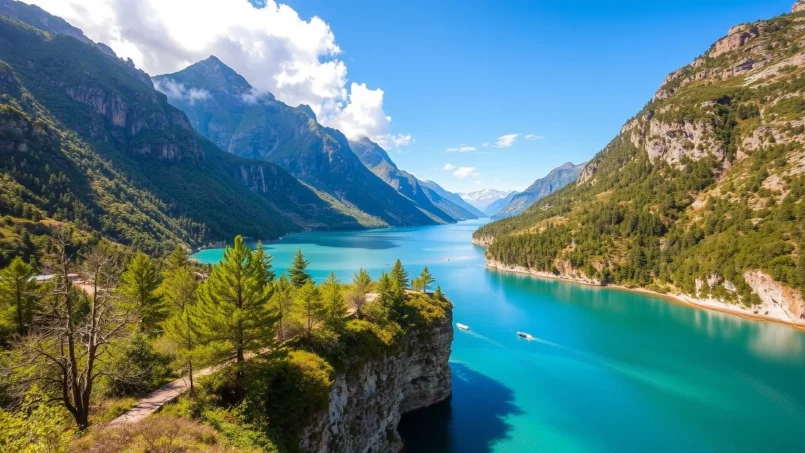
The first thing that strikes you in Tasmania is the nature. Nearly 40% of the territory is protected as national parks and reserves, a vast portion of which is UNESCO World Heritage listed. Temperate forests, alpine mountains, wetlands, isolated beaches, and rugged coastlines create a landscape unparalleled in Australia.
The air is among the purest in the world. Air quality indices for fine particles remain very low, a point regularly highlighted by environmental and health studies. For an expatriate fleeing the pollution of major cities, this aspect is decisive, especially for families or people with respiratory problems.
Example:
The region’s climate is temperate maritime, comparable to that of the United Kingdom, New Zealand, or the American Pacific Northwest. It features four distinct seasons, with moderately warm summers and cool winters. In coastal areas, winter temperatures are rarely freezing.
In summer, coastal temperatures hover around 68 to 75 °F (20 to 24 °C), with the sea reaching about 70 °F (21 °C). Valleys west of Hobart can regularly exceed 77 °F (25 °C), and even reach 104 °F (40 °C) during rare heatwaves. In winter, coastal highs are around 54 °F (12 °C), while inland plateaus easily drop below freezing (32°F/0°C), with days without a thaw in the highest areas. Snow remains frequent on the highlands like kunanyi/Mount Wellington or Ben Lomond, but is rare at sea level.
2400
This is the annual rainfall in millimeters received by the northwestern regions and highlands of Tasmania.
For an expatriate, this translates to an abundance of outdoor activities available year-round: hiking, mountain biking, surfing, kayaking, fishing, sailing, diving, golf, not to mention easy access to iconic sites like Wineglass Bay, Cradle Mountain, or the Tasman Peninsula. Many activities are free or low-cost, a significant advantage for quality of life.
A Green Island… Ecologically Too
Tasmania isn’t just green to the eye: it is also green in its carbon balance. The state is powered 100% by renewable energy, primarily hydroelectricity. Moreover, the massive reduction in native forest logging in the early 2010s transformed Tasmania into a net carbon sink.
Note:
The regeneration of Tasmania’s old-growth forests reversed their role: from being significant sources of CO₂ emissions (around 10 million tonnes per year), they have become carbon sinks absorbing more than they emit. This Australian state reached net zero in 2013 and has since maintained net negative emissions, at around –8.5 tonnes of CO₂ equivalent per capita, compared to a national average close to 18 tonnes.
The government has set ambitious targets: maintaining net zero or negative emissions from 2030, doubling renewable electricity production by 2040, developing green hydrogen, electrifying the government vehicle fleet, and halving food waste. For a climate-conscious expatriate, living in a region that is a pioneer in the energy transition is an undeniable asset.
Tip:
The effects of climate change are already observable on Réunion Island: rising average temperatures, decreasing rainfall in some areas since the 1970s, sea level rise of 4 to 8 inches (10 to 20 cm), and warming coastal waters (more than 1.8°F/1°C on the east coast since the 1940s). Projections for the end of the century, under a high-emissions scenario, indicate a possible temperature increase of 5°F (2.8°C), changes in rainfall patterns, increased wildfires, and marine heatwaves. These changes represent both risks and opportunities for key economic sectors like agriculture, fishing, and tourism.
Quality of Life: Between Postcard and Daily Reality
Tasmania is sold – and lived – as a human-scale place. Hobart, with about 220,000 inhabitants, concentrates over half the state’s population, but retains the feel of a large provincial town more than a metropolis. Launceston, Burnie, and Devonport complete this compact urban network, surrounded by countryside accessible in less than an hour’s drive.
Studies on quality of life highlight several strengths: high sense of safety, low crime (Hobart has the lowest rate among Australian capitals), healthy air, short commute times, and a strong community life. Launceston, for example, has the country’s shortest average commute time, around 13 minutes.
Urban Quality of Life in Australia
Discover the benefits of city life in Australia for expatriates, marked by easy transportation and convenient access to amenities.
Proximity and Accessibility
Homes are typically located less than 20 or 30 minutes from the city center, and children can often walk or bike to school.
Pleasant Commutes
Cities are easy to navigate on foot, with a developing network of bike paths, reducing car dependency in urban areas.
Access to Nature
Parks and beaches are easily accessible, offering a balance between urban life and outdoor recreation.
Less Stressful Driving
Car use, although often necessary for rural areas, is generally less onerous than elsewhere in Australia thanks to smoother traffic.
The cultural scene, long considered the island’s weak point, has profoundly changed. Hobart is home to the controversial and fascinating MONA (Museum of Old and New Art), which triggered a veritable local cultural revolution. Arts festivals (Mona Foma, Dark Mofo), food festivals (Taste of Summer, Festivale in Launceston), weekly markets (Salamanca Market, Farm Gate Market, Harvest Market), concerts, theater, classical music with a nationally-level symphony orchestra: the cultural offering is now dense, at least for the size of the population.
Launceston’s food scene is driven by the quality of local produce: fruits, vegetables, seafood, fish, grass-fed meats, cool-climate wines, craft beers, whisky, gin. Many expatriates appreciate being able to buy directly from producers at markets or roadside stalls.
UNESCO – City of Gastronomy
But those arriving with the idea of a Sydney-style nightlife may be disappointed. Bars are concentrated in a few neighborhoods (Salamanca, waterfront, North Hobart, Sandy Bay) and the offering remains modest compared to major capitals. Some foreigners, particularly young adults, feel there’s “not much to do” in the evening or in winter, and report difficulties in creating a circle of friends beyond the professional sphere.
A Welcoming Society, but Not Always Simple to Integrate Into
Accounts generally describe Tasmanians as friendly, relaxed, helpful people, often ready to help a newcomer. The population remains mostly of Anglo-Celtic origin, but recent immigration has diversified the cultural landscape. For an expatriate, this translates to a combination of conviviality, frankness in interactions, and attachment to private space.
However, broader studies on the cultural adaptation of migrants in Australia show that more than half of new arrivals feel loneliness, anxiety, or a cultural gap during the first year. The famous “culture shock” often follows a classic curve: a honeymoon phase upon arrival, a period of frustration (language barrier, social codes, bureaucracy), then gradual adjustment and, for some, lasting integration.
Good to know:
Despite good English skills, the accent, local slang (e.g., ‘arvo’ for afternoon, ‘servo’ for service station), and a very direct and relaxed communication style can be surprising. The sometimes sarcastic humor and strong emphasis on camaraderie (‘mateship’) can give an impression of a closed circle, requiring adaptation for expatriates from more formal cultures.
Studies on well-being in Tasmania also reveal that while community is important to residents, many feel they have little influence over the future decisions of the territory. Only slightly over 30% of respondents in a major well-being survey felt they could influence Tasmania’s future. This perception can fuel a certain local conservatism, which is sometimes felt in the welcome given to rapid changes, whether economic or demographic.
Cases of aggressive nationalist attitudes or suspicion towards foreigners exist, as everywhere, but Tasmania is still largely perceived as safe for women, families, and LGBTQ+ individuals. Equality, “fairness,” and environmental tolerance are regularly cited values.
For an expatriate, the key seems to be participation: sports clubs, associations, volunteering, parent-teacher groups, professional networks, cultural events. Those who get involved in local life often report faster integration than those who stay among other expatriates or in a virtual bubble.
Cost of Living: More Affordable Than Sydney, but More Expensive Than Imagined
The reputation of Tasmania as a “cheap” region needs to be nuanced today. The island remains, overall, more affordable than metropolises like Sydney or Melbourne, but the rapid rise in real estate prices and rents has made daily life more expensive, particularly in Hobart.
Recent data shows price levels significantly lower than Sydney’s, but with strong growth: the median house price in Hobart is now around 700,000 to 730,000 AUD, with neighborhoods like Sandy Bay exceeding 1.4 million. Rents have increased sharply, with a median weekly rent of about 600 AUD for a house in Hobart, and a shortage of rental properties across the island: vacancy rates around 0.6% in the capital, and sometimes as low as 0.3% in certain sectors.
Comparisons with other Tasmanian urban centers and regional areas illustrate this gap.
Indicative Cost Example for a Couple or Family
| Expense Category | Hobart (capital) | Launceston (2nd city) | Regional Town (e.g., Huonville) |
|---|---|---|---|
| Weekly Rent 3-Bed House (AUD) | 600 – 750 | 500 – 650 | 450 – 550 |
| Monthly Groceries (family, AUD) | 800 – 1,000 | 750 – 950 | 850 – 1,100 |
| Monthly Bills (energy, water, internet, AUD) | 250 – 350 | 230 – 330 | 280 – 400 |
| Fuel (one liter unleaded, AUD) | ~1.95 | ~1.92 | ~2.05 |
For an expatriate, housing remains the primary budget item. Renting an entire house often comes close to 550 to 650 AUD per week in or near urban centers, compared to 150 to 250 AUD for a room in a shared house. In Hobart, the rental market is described as “very tight,” and it’s not uncommon for dozens of applications to be submitted for the same property.
9
Only 9% of recent real estate transactions in Tasmania are affordable for a typical local household.
Other expenses are more moderate. A bill at a cheap restaurant is around 18 to 20 AUD per person, a full meal for two at a mid-range establishment around 90 AUD. A weekly grocery basket for a family of four approaches 220 to 230 AUD. Fresh local produce is often of excellent quality, sometimes at prices lower than on the mainland, especially through markets or roadside stalls.
300
Amount in AUD of a typical quarterly electricity, gas, and water bill for a household in winter, which can increase by an additional 300 AUD for heating during a severe winter.
Monthly Order of Magnitude for an Expatriate
Cost of living studies give fairly consistent ranges. For a single person in Hobart, one finds:
| Lifestyle Level | Monthly Estimate (AUD, including rent) |
|---|---|
| Frugal lifestyle | 1,450 – 1,700 |
| Standard “comfort” | 1,900 – 2,400 |
| High comfort level | 2,600 – 3,200 |
For a family of four, average costs, including rent, often exceed 4,500 AUD per month. International students, meanwhile, are encouraged by the federal government to prove the availability of approximately 29,710 AUD in annual savings to cover daily life.
In summary, Tasmania remains significantly cheaper than Sydney or Melbourne, but its price trajectory – especially in Hobart – forces expatriates to build a realistic budget, particularly if they arrive without secured employment.
Employment: A Narrow but Targeted Market
One of the main limitations of Tasmania is its job market. Opportunities are fewer than in the major cities on the mainland. The leading sectors are not the same as in Sydney or Brisbane, and the economy, although diversified, relies heavily on a few pillars: tourism, healthcare, agriculture, agri-food, education, construction, and public services.
Figures show an average annual salary of around 80,000 AUD, lower than the Australian average. Some skilled trades stand out: a registered nurse can expect around 107,000 AUD, an exercise physiologist around 65,000 AUD, a bank employee around 50,000 AUD. Professions in healthcare, engineering, education, IT, and skilled trades are at the top of the needs identified by the authorities.
Good to know:
Due to the aging of its workforce (over 30% are over 50), Tasmania anticipates nearly 100,000 employees retiring in the next 15 years. To remedy this, the state offers active nomination programs via regional visas (subclass 491) and sponsored permanent residence visas (subclass 190). These pathways grant additional points to the migration score and advantages for those who commit to living and working in Tasmania for several years.
Examples of In-Demand Sectors
| Sector | Types of Positions Sought (examples) |
|---|---|
| Healthcare & Social Assistance | Doctors, nurses, midwives, physiotherapists, etc. |
| Education | Primary/secondary teachers, special needs |
| Agriculture & Agrifood | Agronomists, veterinarians, farm managers |
| Construction & Engineering | Civil/electrical/mechanical engineers, site supervisors |
| ICT | Analysts, developers, cybersecurity |
| Tourism & Hospitality | Chefs, hotel managers, reception staff |
For an expatriate, the message is twofold. On one hand, those with a sought-after qualification and recent professional experience have good cards to play. Many testimonials from engineers, nurses, chefs, teachers, analysts, or accountants show they quickly found a position matching their skills, sometimes via a state nomination.
Note:
For generalist or saturated professions, competition is strong, and hiring often happens through networks and referrals. Authorities advise settling only after a thorough study of the job market, ideally with a formal job offer in hand.
International students have a more progressive path: working part-time (often 10 to 20 hours per week) in hospitality, restaurants, retail, or tourism during their studies, and taking advantage of free employability workshops organized by the university and public agencies. These jobs, often paying between 14 and 25 AUD per hour, can finance part of daily life, provided one manages their budget carefully.
Healthcare System: Accessible, but Strained in Some Areas
On paper, Tasmania benefits from a strong healthcare system, organized around four main public hospitals (Hobart, Launceston, Burnie, and Latrobe) and a network of medical centers and secondary facilities in rural areas. The Royal Hobart Hospital, founded in 1804, is undergoing a major modernization plan; Launceston General Hospital is on a similar path, and clinics serve patients in more isolated areas.
Good to know:
Access to care is variable. In major cities, the availability of general practitioners, specialists, and hospitals is good, but wait times for certain non-urgent surgeries or specialist consultations can be long. To improve the situation, digital health programs (telemedicine, hospital in the home) and Medicare-funded urgent care clinics have been developed.
In rural and isolated areas, access becomes more complicated: travel times of one to two hours to reach a hospital, very limited or non-existent general practitioner presence in some small towns, and more frequent reliance on aeromedical evacuations for serious situations. Authorities support outreach programs, like Victoria’s telemedicine for strokes or specialized missions via TAZREACH, but the shortage of GPs remains chronic in some regions of the North and North-West.
Good to know:
Access to the Australian healthcare system depends on status. Citizens and permanent residents benefit from Medicare, the universal public system, as well as concession cards for discounts. Non-residents must take out specific health insurance (overseas visitor cover) or, for students, OSHC which is mandatory. It is strongly recommended to choose insurance covering ambulances, as costs can be high for non-residents.
Mental health is not forgotten. National helplines (Lifeline, Beyond Blue) and local services (Access Mental Health in Tasmania) offer 24/7 help, and specific structures cater to refugee populations, youth, LGBTQ+ individuals, or members of Aboriginal communities. The government stresses the need for new arrivals to register with a general practitioner as early as possible, even before getting sick.
Education: A Real Strength for Families
For expatriate families, school is often a central subject. From this perspective, Tasmania offers a good quality education system, recognized for its high university admission rates and often smaller class sizes than on the mainland.
The public system is structured around primary school (up to Year 6), college (Years 7 to 10), and high school (Years 11 and 12, often in separate colleges). The curriculum follows the Australian curriculum, with an emphasis on critical thinking, creativity, and project-based learning rather than rote memorization.
98
Over 98% of international students graduating from Tasmanian public high schools and applying to an Australian university receive an admission offer.
In high school, students prepare the Tasmanian Certificate of Education (TCE), a senior secondary certificate recognized throughout Australia, and an Australian Tertiary Admission Rank (ATAR), calculated from their results. The TCE opens the door to the University of Tasmania, the country’s fourth oldest, renowned for the modest size of its cohorts and its specific research areas (marine science, Antarctica, agriculture, etc.).
Good to know:
International students receive comprehensive support: dedicated advisors, 24/7 emergency line, a buddy program with a local student, English language support (EAL/D), and a wide choice of free extracurricular activities (sports, music, debate, mountain biking, surfing, kayaking). Satisfaction surveys among former students reveal very high rates, both for the quality of teaching and for the welcome in homestay families.
Expatriate families must nevertheless account for costs: while public school is free for citizens and permanent residents, holders of temporary visas pay full tuition fees. Private schools – including Catholic schools or those offering the International Baccalaureate – can reach or exceed 40,000 to 45,000 AUD per year for the later years of schooling. It’s also important to check “school zones,” which are very determinative for access to certain sought-after public schools, especially around Hobart.
Housing: From the House with a Garden to Rental Stress
The Tasmanian dream often comes with the image of a detached house with a garden, close to the sea or mountains. This image remains largely true: the state has a high ratio of single-family houses compared to apartments (about 90% houses), much more than Sydney or Melbourne. Average floor areas regularly exceed 1,800 to 1,900 sq ft (170 to 180 m²) for a standard family home.
23
Interstate purchases increased by about 23% in a recent year, contributing to reduced housing affordability.
The rental market is the first affected. In Hobart, vacancy rates hover around 0.6 to 0.9%, a level which means, in practice, that very few properties remain available for long. Listings for rentals under 400 AUD per week, which represented nearly a third of the supply in 2020, barely represent over 10% a few years later. In Launceston, vacancy rates are also below 1%, with a median weekly rent of about 400 AUD for a house and 330 AUD for an apartment.
Good to know:
Real estate prices in Tasmania vary considerably by region. Northern Hobart suburbs like Glenorchy and Moonah are more affordable, with a median house price just over 600,000 AUD, unlike upscale sectors like Sandy Bay. The west coast generally offers lower prices but is more isolated from services and employment. The east coast, very touristic and with remarkable landscapes, has a more limited job market and services.
For an expatriate, two elements are crucial: preparation and flexibility. On one hand, one often needs to arrive with solid references, proof of stable income, the ability to pay a bond (often equivalent to four weeks’ rent) and the first month’s rent in advance. On the other hand, being open to less central locations or shared housing can reduce the bill and facilitate initial settlement.
Transportation & Accessibility: An Island at the End of the World
Living in Tasmania means accepting a certain geographic isolation. The island is located about 155 miles (250 km) south of the mainland, separated by Bass Strait. Connections are by plane or ferry.
The airports of Hobart and Launceston provide daily flights to major Australian cities (Sydney, Melbourne, Brisbane, Adelaide, Perth, Canberra, Gold Coast). Seasonal connections also exist with Auckland in New Zealand. The trips are relatively short from Melbourne (less than an hour) or Sydney (less than two hours), but combined with long international flights, the journey to Europe or North America becomes particularly long.
Good to know:
The Spirit of Tasmania ferry provides a daily service between Devonport and Geelong (near Melbourne) in about 9 hours. This option is particularly suitable for expatriates moving with many belongings or wanting to transport their car, but it involves a significant cost and requires advanced logistical planning.
Within the island, the car often remains the most flexible solution, especially outside urban cores. The road network is adequate but sometimes winding, particularly in mountainous areas. Public buses, operated notably by Metro Tasmania in Hobart, Launceston, and Burnie, meet basic urban needs fairly well, supplemented by private services in the periphery and companies like Merseylink in Devonport. Hobart also has a Derwent River ferry service for commuting from the eastern shore.
Tip:
Commute times remain reasonable, but car dependency is strong for families in the periphery or rural areas. Fuel prices are slightly above the Australian average, with strong variations in remote areas. Carpooling and rideshare (Uber, Ola) exist but offer less service density than in a metropolis.
For cyclists, the mandatory helmet law and driving on the left are elements to integrate. The centers of Hobart and Launceston are becoming more bike-friendly, but expatriates from Northern Europe or the Netherlands will still find the cycling culture less developed compared to their home countries.
Culture Shock, Loneliness, and Mental Health: The Invisible Downsides
Beyond the numbers and landscapes, expatriation to Tasmania involves a profound transformation of daily life. Research on expatriate trajectories in Australia shows that most go through the same stages: initial enthusiasm, confrontation with cultural differences, adjustments, then integration or re-questioning of the project.
Sources of difficulty are not lacking: distance from family and friends, time zone differences that make communication complex, very long travel times for occasional returns, but also discovering a different administrative system, new social norms, and an extremely localized job market.
Note:
Even in an environment considered welcoming, new arrivals, particularly young adults and students, can experience great loneliness, doubts, and mild to moderate depression. They face strong pressures related to academic demands in a second language, difficult financial management, and social integration often centered around a culture of going out for drinks, which can exclude non-drinkers.
Expatriate children must adapt to a new school system, different teaching methods, sometimes less focused on grades than in their home countries, which can worry parents. The first months may be marked by social integration difficulties, whether it’s mastering English, play styles, or cultural references.
Good to know:
Tasmania and Australia offer various support services (anonymous helplines, specialized psychologists, university services, community associations, online groups). However, they are often underutilized due to lack of information, time, or the stigma associated with mental health.
For an expatriate, anticipating this aspect is as important as budgeting for rent. Planning routines for contact with family back home from the start, signing up for group activities, learning local cultural codes, accepting moments of vulnerability, and, if needed, consulting professionals are integral parts of a successful expatriation.
Conclusion: For Whom is Tasmania a Good Choice for Expatriation?
Putting the advantages and disadvantages together, Tasmania appears as a destination with strong potential for certain profiles, but far from ideal for everyone.
Major Assets
– An exceptional natural environment, easily accessible, with some of the cleanest air in the world.
– A temperate climate without extremes, pleasant for outdoor enthusiasts.
– Safe, human-scale cities, offering very short commute times.
– A surprisingly rich cultural and food scene for a small population.
– A solid education system, suitable for families, with good preparation for higher education.
– Incentive programs for skilled migration in certain professions (healthcare, teaching, engineering, agriculture, IT, etc.).
– A low ecological footprint, a pioneering position on renewable energy and carbon neutrality.
Limitations and Risks
– A restricted and very competitive job market for non-priority occupations, where networking counts a lot.
– Rising housing costs, particularly in Hobart, with real rental stress.
– A public healthcare system under pressure in some areas, and difficulties accessing GPs in rural areas.
– A relative geographic isolation, which complicates international travel and reinforces the feeling of remoteness.
– More limited nightlife and leisure options compared to major metropolises, which can weigh on young adults.
– Challenges of cultural integration, despite an overall welcoming population.
Good to know:
Tasmania is particularly suitable for people seeking a better quality of life, a healthy environment, and a slower pace. It is advantageous to have a sought-after professional skill or geographic flexibility (remote work, relocatable business). It is also a very favorable setting for families who value nature, safety, outdoor activities, and less academically competitive schooling.
Conversely, for profiles that need a very broad job market (generalist creative professions, non-specialized managers, recent graduates without experience) or who thrive on the cultural tumult, overwhelming diversity, and permanent nightlife of a major metropolis, Tasmania risks feeling too small, too slow, and, ultimately, frustrating.
Good to know:
Expatriation to Tasmania is neither a fairy tale nor a bad deal. It is a project that requires meticulous preparation, by analyzing the numbers (rents, jobs, healthcare) and weighing the advantages (scenery, life balance) against the challenges (island pace). For those who approach it with realism, it can offer a unique balance between work life, environment, and personal time.

Cyril Jarnias is an independent expert in international wealth management with over 20 years of experience. As an expatriate himself, he is dedicated to helping individuals and business leaders build, protect, and pass on their wealth with complete peace of mind.
On his website, cyriljarnias.com, he shares his expertise on international real estate, offshore company formation, and expatriation.
Thanks to his expertise, he offers sound advice to optimize his clients' wealth management. Cyril Jarnias is also recognized for his appearances in many prestigious media outlets such as BFM Business, les Français de l’étranger, Le Figaro, Les Echos, and Mieux vivre votre argent, where he shares his knowledge and know-how in wealth management.





