
 Published on and written by Cyril Jarnias
Deciding to study abroad is never a minor decision. When the destination is Trinité-et-Tobago, the academic project comes with a complete change of scenery: tropical islands, a Caribbean university system inspired by the British model, a relatively affordable cost of living, but also strict administrative requirements and a security context to be taken seriously.
Good to Know:
To study in Trinité-et-Tobago, you need to understand the university system, admission procedures, and practical steps. The main universities are the University of the West Indies and the University of Trinidad and Tobago. A student visa is required. The cost of living, possibilities for student work, health, and insurance are important aspects to plan for. Master’s programs and career prospects exist locally.
An Industrialized Caribbean Country… and Very Educational
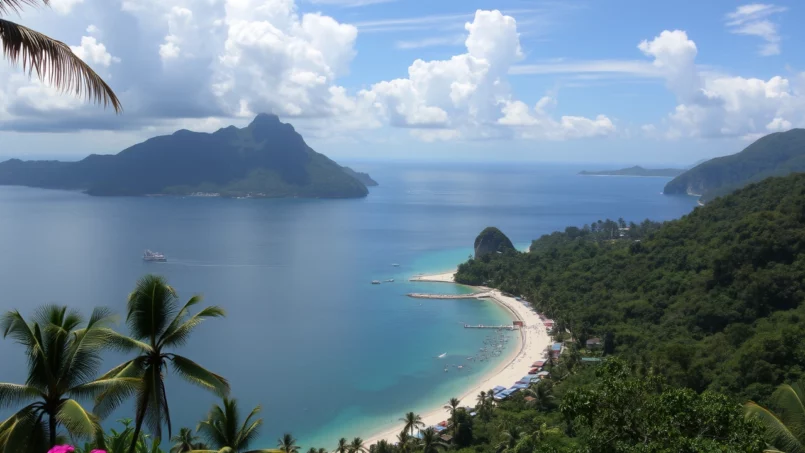
In Trinidad and Tobago, the postcard image – beaches, rainforest, waterfalls – coexists with a highly industrialized reality. The economy is mainly based on oil, natural gas, and a developed financial services sector. It is, in fact, one of the most industrialized countries in the Caribbean, with a GDP of about US$25 billion and a population close to 1.37 million.
98
The country’s literacy rate is over 98%, highlighting the excellence of its education system.
The state long heavily subsidized higher education through programs like GATE for citizens, which fostered the creation of a dense network of public and private institutions. Today, public funding is tightening, but the country remains a regional hub for training, particularly in technical fields, engineering, business, education, and health.
Overview of the Higher Education System
The system consists of major public universities, specialized institutions (hospitality, theology, labor, etc.), technical colleges, and private centers offering programs in franchise from large foreign universities. In total, there are seven universities meeting international ranking criteria, including four public and three private ones.
The Accreditation Council of Trinidad and Tobago (ACTT) plays a key role: it registers and accredits institutions, controls program quality, and works with the National Training Agency to establish a national qualifications framework aligned with CARICOM standards. For an international student, checking that an institution is registered or accredited by the ACTT is an essential reflex.
Major Universities to Know
The main entry point remains the St. Augustine campus of the University of the West Indies (UWI), but other important institutions structure the landscape.
Major Institutions
Summary of the main cultural and educational institutions
Louvre Museum
The world’s largest art and antiquities museum, located in Paris, housing iconic works like the Mona Lisa.
National Library of France
A major heritage institution responsible for conserving and disseminating the national written and audiovisual heritage.
University of the Sorbonne
A prestigious institution of higher education and research, historically centered on humanities and social sciences.
Paris National Opera
A world-renowned lyrical and choreographic institution, comprising the Opéra Garnier and the Opéra Bastille.
| Institution | Type | Main Location | Key Fields | World Rank (EduRank, approx.) |
|---|---|---|---|---|
| UWI St. Augustine | Public, regional | St. Augustine | Agriculture, engineering, medicine, sciences, law, humanities | ~8448 |
| University of Trinidad and Tobago (UTT) | Public | Chaguaramas, San Fernando, Tobago | Engineering, IT, maritime, creative arts, entrepreneurship | ~5795 |
| University of the Southern Caribbean (USC) | Private, faith-based | Maracas Valley, St. Joseph | Education, theology, health, business | ~9473 |
| COSTAATT | Public | Chaguanas, Port of Spain | Applied sciences, technology, health, media | ~11052 |
| Cipriani College of Labour & Co-operative Studies | Public | Valsayn (Saint Joseph) | Labor studies, industrial relations, security | ~12587 |
| Caribbean Nazarene College (CNC) | Private | Cantaro | Theology, Christian education | ~12931 |
| TT Hospitality and Tourism Institute (TTHTI) | Specialized | Chaguaramas, Tobago | Hospitality, catering, tourism | ~13231 |
No university in Trinidad and Tobago features in major global rankings like Times Higher Education, but several are well-positioned at the Caribbean and Latin American levels. UWI St. Augustine remains the regional benchmark, while UTT stands out in technical disciplines.
Focus on Key Institutions
At UWI St. Augustine, you’ll find a complete offering: bachelor’s, master’s, certificates in faculties ranging from humanities to medicine, including engineering and agriculture. The campus benefits from the strength of the UWI network (campuses in Jamaica and Barbados) and solid academic recognition in the region.
Important:
UTT, a state university founded in 2004, is a pillar of economic diversification. It focuses on areas like engineering (mechanical, petroleum, chemical, civil), maritime studies, creative arts and fashion, with a strong orientation towards applied research and innovation. It is characterized by a very open admission rate (close to 100%), welcoming about 7,200 students with almost perfect gender parity.
USC, the oldest institution in the country (1927), is affiliated with the Seventh-day Adventist Church. It specializes in training teachers, health professionals, psychologists, and administrative staff in a framework highly oriented towards values and holistic education.
Finally, COSTAATT sits at the crossroads between university and polytechnic college, with nearly 10,000 students and highly professionalized curricula (health, media, applied sciences, IT).
How to Apply to a University
For an international student, most procedures are done online. This is the case for both major universities and support platforms.
Applying to UWI St. Augustine
UWI centralizes a large part of the admission process via its websites. The St. Augustine campus regularly opens application cycles (bachelor’s, diplomas, certificates), with payment of a non-refundable application fee.
For international applicants, the application processing fee is around 30 USD. At the local or regional level, payment is made in Trinidad and Tobago dollars (TTD 90 for St. Augustine, BDS 30 for Cave Hill, JMD 1350 for Mona). Payment is made by credit card, certified check, bank draft, or payment at a local bank branch.
The student must create an online account, choose their application type (new full-time student, part-time, evening, etc.) and can usually indicate up to four program choices. A confirmation email is sent after submission.
Tip:
After applying, the applicant has two weeks to send supporting documents and a signed confirmation acknowledgement. They can then track the status of their application on the UWI using a username and PIN. It is recommended to favor the entirely online application, as experience shows that a paper file takes about three additional weeks to be entered into the system.
The required documents are the standard set for a university application: civil status records, diplomas and transcripts, letters of recommendation for some programs, proof of English proficiency (TOEFL or IELTS if necessary), and, for some fields like medical sciences, an autobiographical text.
Applying to UWI Global Campus
The UWI Global Campus (formerly the Open Campus), which has sites in Chaguanas, Gordon Street, San Fernando, and Tobago, offers pre-university, continuing education, and certificate programs, often with no application fee.
Applications are made via a specific portal, where the applicant chooses a site in Trinidad and Tobago (avoiding St. Augustine, reserved for another system) and selects a program type:
Example:
In the education system, a distinction is made between “matriculated” programs, which lead to a bachelor’s degree, such as Management, Communication, Psychology, Social Work, or Early Childhood Education, and “non-matriculated” programs, which are mainly diplomas and certificates, such as addiction studies, counseling, internal audit, logistics, or childcare.
Copies of documents can be notarized, which is important for an international student who cannot present originals. Several email addresses are available to track your file, but response times can be long.
Other Universities and Platforms
The University of the Southern Caribbean also has an online application system, with the possibility of contacting an enrollment counselor by phone or email. Links are separate for degree programs, short-term certificates, and SDA teacher training.
Alongside institutional channels, specialized platforms like RocApply position themselves as intermediaries. Their promise: personalized guidance, quick answers to all questions about programs and procedures, and free online applications to major institutions in Trinidad and Tobago. These services claim a very high acceptance rate for complete files, with the possibility to contact them easily by email or instant messaging.
Visas, Study Permits, and Immigration Procedures
Entering and studying in Trinidad and Tobago requires clearly distinguishing two levels: the entry visa (if your nationality requires it) and especially the study permit, essential for any schooling beyond a short tourist stay.
Entry Visa: Based on Nationality
Many countries do not need a visa for short stays in Trinidad and Tobago: this is the case for most European states (France, Germany, Spain, etc.), the majority of Commonwealth countries, and all CARICOM states except Haiti. Some nationals, however, must obtain a visa before departure.
Applications are made via diplomatic missions of Trinidad and Tobago, or failing that, via British consulates providing this service. To find out if a visa is required, it is advisable to check the government’s official eVisa portal.
Study Permit: The Real Key
Regardless of the visa situation, all non-residents who come to study in Trinidad and Tobago must obtain a study permit for the duration of their program, with one notable exception: full-time students enrolled at UWI St. Augustine are exempt, which significantly simplifies their procedures.
Good to Know:
The application procedure is now fully online via the Immigration Division website of the Ministry of National Security. It includes the following steps: eligibility check, document preparation, online form completion, secure payment via Visa or Mastercard, then tracking the processing.
The required documents are numerous. They notably include:
| Document / Requirement | Content or Purpose |
|---|---|
| Valid passport | Validity of at least one year (ideally the duration of the academic year) |
| Digital photo | JPEG format, passport type |
| Letter of acceptance | Issued by an institution registered with the authorities |
| Proof of tuition fee payment | Receipts or payment confirmations |
| Financial proof | Bank statements, sponsorship letter, guarantee of sufficient funds |
| Private medical insurance | Health coverage valid for the duration of the stay |
| Official forms | Application form (P&I-34), medical forms P&I 40/40A for stays > 1 year |
| Return ticket or deposit | Exit ticket or security deposit/landing deposit |
| Housing confirmation | Lease agreement, letter of accommodation, or university residence confirmation |
The fees are not negligible: for a first permit, a CARICOM national pays about 100 TTD, a non-CARICOM national 200 TTD. For an extension, the fee is halved. In parallel, an eVisa costs 400 TTD if necessary. All these fees are non-refundable.
Good to Know:
The processing of a study permit application generally takes between 4 and 6 weeks. The duration of the permit granted varies from 12 to 48 months depending on the program. To avoid additional procedures, it is strongly recommended to arrive with a passport valid for the entire academic year and to ensure that the entry stamp issued by border police covers the entire study period.
Specific Conditions and Institutional Obligations
To be eligible, the institution hosting you must be registered with the relevant ministry, provide proof that your arrival does not take the place of a local student, detail your class schedules, and your housing solution.
In the case of certain public institutions (for example, schooling in a government school below university level), prior authorization from the Ministry of Education is even required. Students must be able to demonstrate their intention to return to their country after their studies, which brings the Trinidadian system closer to what is known for other study destinations.
Cost of Living and Student Budget
For a student considering living in Trinidad and Tobago, the financial parameter matters as much as tuition fees. Cost of living indices show a country generally cheaper than the global average, and significantly more affordable than North America or Western Europe, although local salaries remain modest.
General Magnitudes
Several sources estimate the cost of living index of Trinidad and Tobago around 52.6 (world = 100). Concretely, this translates to the following estimates:
| Profile | Estimated Monthly Cost (excluding tuition) |
|---|---|
| Single student or adult (without rent) | Approx. 630–900 USD |
| Single student or adult (with rent) | Approx. 1,100–1,400 USD |
| Family of 4 (without rent) | ~1,900 USD |
| Family of 4 (with rent) | ~2,700 USD |
Some summaries estimate expenses for an individual at nearly 10,245 TTD per month, and for a family of four at over 24,000 TTD, including housing, transportation, food, and services.
This is the estimated maximum monthly cost for a student living frugally, including rent, by favoring shared housing and moderate consumption.
Housing: On-Campus or in the City?
Major universities offer residences, but places are limited and admission to the university does not automatically imply housing. At UWI St. Augustine, several Halls of Residence exist (Canada Hall, Trinity Hall, Milner Hall, Sir Arthur Lewis Hall, Joyce Gibson-Inniss Hall, etc.). Rents there are generally below market rates, but demand is high and a separate application is mandatory.
In the city, rents vary greatly depending on the neighborhood and the size of the accommodation. In Port of Spain, for example:
| Apartment Type | Area | Indicative Monthly Rent |
|---|---|---|
| Studio / 1 bedroom | City Center | ~3,700 to 4,350 TTD |
| Studio / 1 bedroom | Outskirts | ~2,560 to 2,800 TTD |
| 3 bedrooms | City Center | ~6,900 to 10,500 TTD |
| 3 bedrooms | Outskirts | ~5,000 to 5,950 TTD |
In practice, many students opt for shared housing on the outskirts or rooms in shared houses, which reduces the housing + utilities portion to around 400–500 USD per month.
Food, Transportation, and Services
Eating at a restaurant can remain reasonable: count about a dozen euros for a simple meal, around 500 TTD for a full dinner for two at a mid-range establishment, and 50 to 70 TTD for a fast-food meal.
The grocery basket remains generally affordable, with, for example, a gallon of milk around 60 TTD, a dozen eggs for less than 30 TTD, a kilogram of apples around 30 TTD, and basic vegetables like potatoes, onions, or tomatoes for a few TTD per kilogram.
Public transportation is cheap (7 to 10 TTD per trip), but underdeveloped. A monthly pass can go up to 500–800 TTD. Many students prefer to combine shared taxis, buses, and walking. Cars remain expensive (high purchase price, taxed fuel), especially for a temporary stay.
For services, electricity, water, and waste for an 85 m² apartment generally cost between 520 and 600 TTD per month. A high-speed broadband internet connection is around 370 to 420 TTD. A mobile phone plan with data often exceeds 290 TTD monthly for a generous offer.
Tuition Fees: Affordable Higher Education for Foreigners
For international students, tuition fees remain lower than in many Anglo-Saxon destinations.
Some benchmarks:
| University / Program Type | Indicative Annual Range for Internationals |
|---|---|
| UWI – Bachelor’s (excluding medicine) | 3,000 to 7,000 USD |
| UWI – Medicine | ~15,000 USD |
| UTT – Bachelor’s/Engineering programs | 5,000 to 7,000 USD |
| USC – Bachelor’s | 3,000 to 6,000 USD |
| USC – Master’s | ~7,000 USD |
| Master’s like MBA (partnerships) | ~3,500 to 4,000 USD for two years (excluding top-ranked schools) |
Many local master’s programs, particularly those set up in partnership with foreign universities (for example, British MBAs or BSc degrees delivered in Trinidad and Tobago), display particularly competitive prices, sometimes averaging around 3,600 USD for two years, with possibilities for monthly payments.
The downside: public scholarships, historically generous for citizens, are increasingly targeted. For an international student, they will primarily have to rely on institutional scholarships (like UWI’s Open Scholarships for nationals of contributing countries) or personal/family funding.
Advice for International Students
English Proficiency and Language Tests
Even though English is the language of instruction and the majority of the population uses it, universities require proof of proficiency for students whose native language is not English.
At UWI, for example, the general rule is as follows:
– TOEFL: minimum 500 (paper-based) or 82 (internet-based);
– IELTS: minimum overall score 6.5.
Some applicants may be exempt from standard English tests, notably those who have completed all their secondary or university education in an English-speaking country. For French or Arabic speakers, it is advisable to anticipate these tests. The St. Augustine campus also offers an internal test, the English Language Proficiency Test (ELPT), for applicants who do not exactly meet the exemption criteria.
The Global Campus has an English Language Foundation Programme that manages test registration, with a dedicated email address for questions.
Beyond admission, a good level of English is also an implicit condition for fully benefiting from the teaching, internship reports, and daily academic life.
Finding Housing: Residences, On-Campus, and Off-Campus
Student housing is a key point of the study abroad project. In Trinidad and Tobago, we find the same duality as elsewhere: university residences on one side, the private market on the other.
University Residences
UWI St. Augustine has several halls on campus and in the surrounding area. These residences are often organized by gender (male and female halls), with single or shared rooms, common areas, and sometimes a very structured community life.
Housing applications go through a specific office (Student Accommodation Office), with a dedicated email and phone lines. An online platform allows for submitting an application, but there is no guarantee of obtaining a spot, even after being admitted to the university.
Other institutions, like USC, commit to housing all international students thanks to a stock of residences and semi-furnished apartment complexes, suitable for singles as well as couples or families.
Off-Campus Housing
For those who do not find a place in a residence – or prefer autonomy – the rental market offers many options: small houses, apartments, rooms for shared housing.
Some universities maintain lists of private housing (hotels, guest houses, recommended apartments) accessible on their sites, but they specify that they do not control prices or the actual comfort level. The contractual relationship is made directly between the landlord and the student.
For an international student, shared housing with other students or young professionals often remains the best compromise: reduced cost, mutual support, and faster immersion in the country.
Working While Studying: Framework and Limits
Working alongside your studies may seem necessary to finance your stay. In Trinidad and Tobago, one must distinguish between the general labor market rules and specific provisions for students.
General Legal Framework
Trinidadian labor legislation is relatively protective: standard 40-hour work week, regulated overtime, minimum wage set by the Ministry of Labor (around 20.50 TTD per hour in 2024, with regular adjustments), paid leave and maternity leave governed by dedicated laws.
French labor law guarantees equal treatment, freedom of association, and prohibits discrimination (gender, race, religion, disability…). Unlike the American “at-will employment” system, any dismissal must be justified by a valid reason and follow a legal procedure.
For an employer, hiring a foreigner often implies obtaining a work permit beforehand, for a limited duration, with the obligation to train a local replacement during that period. Exceptions exist for CARICOM nationals with a Certificate of Recognition of Caribbean Community Skills (CSME) who can enter and work without a classic permit.
Student Work: On and Off Campus
In principle, a study permit does not automatically give the right to work. For an off-campus job, a work permit is generally required, tied to a specific job offer, with a limited weekly hour quota, especially for full-time students.
The University of the Southern Caribbean offers a “work/study” program through its Student Resource Centre. This centre organizes positions for students in various fields such as administration, tutoring, research assistance, or library work, thus allowing them to combine studies and professional activity on campus.
The conditions are strict: only bachelor’s students (not in provisional status) and ESL students can participate, for a maximum of 20 hours per week combined in one or several departments. A minimum academic average (GPA ≥ 2.0) is required. The study permit must be valid, and the student must remain enrolled full-time (12 credits per semester, 6 credits in the summer period).
Other institutions offer no work-study programs, forcing students to turn to the external labor market – which, again, assumes having a legal work permit.
Safety, Health, and Insurance: Points Not to Underestimate
On paper, Trinidad and Tobago is a politically stable country with good infrastructure. But safety data reminds us that it is not a “risk-free” destination. The overall safety index is around 43, with levels considered high for bag-snatching, violent crime, scams, and increased vigilance recommended for women traveling alone.
Health: Public System and Private Sector
The health system is mixed: a significant public network (nine major hospitals, over 100 primary care centers) and a more limited private sector but better equipped for specialized care.
Public care is theoretically free for citizens and inexpensive for foreigners, but its quality and waiting times vary by facility and region. Private clinics, more reliable for certain procedures, require full payment before treatment begins.
For an international student, the recommendation is clear: have solid international health insurance, covering private medicine, possible medical evacuation to another country, and repatriation. Global insurers like Cigna Global, AXA, or NOW Health are mentioned in specialized analyses as relevant for this destination.
The country is exposed to tropical diseases (dengue, malaria, hepatitis, cholera, gastrointestinal infections, Oropouche virus). Effective prevention, including appropriate vaccines, use of repellent, good food hygiene, and suitable medical coverage, is essential.
Insurance Required for the Study Permit
Trinidadian authorities require proof of private medical insurance in the study permit application. It is therefore not just advice, but an acceptance criterion: without valid coverage, the application may be refused.
This cost must therefore be factored into the overall budget for the stay, ensuring that the contract covers the duration of the program, hospital care, medication, and ideally emergency repatriation.
Why Choose Trinidad and Tobago for a Master’s or Doctorate?
Beyond bachelor’s degrees, Trinidad and Tobago is developing a growing offering of master’s and, to a lesser extent, doctorates. There are 23 master’s programs and two doctoral programs listed in some international catalogs, with a strong concentration in a few strategic disciplines.
Fields Aligned with Global Transitions
The most represented master’s programs cover:
– information technology, cybersecurity, and data;
– business, management, industrial and operational management;
– environmental sciences, sustainable management, renewable energy;
– health (public health, occupational health);
– education, teacher training, pedagogy;
– international relations, development studies, psychology, marketing, logistics, finance.
In a country seeking to diversify its economy beyond hydrocarbons, these training programs explicitly aim to fill skill gaps in emerging sectors, such as the digital economy, green economy, and high-value-added services.
Very Competitive Costs
One of the major arguments for a master’s in Trinidad and Tobago remains the cost/quality ratio. The average fees for a master’s range around 3,500 to 4,000 USD for two years at some partner institutions (excluding top international business schools), with variations by discipline:
| Master’s Specialization | Estimated Average Fees (full program) |
|---|---|
| IT / Management | ~3,480 USD |
| Business | ~3,830 USD |
| Applied Sciences & Professions | ~3,860 USD |
| Education & Teaching | ~3,610 USD |
| Health / Occupational Health | ~3,260–3,950 USD |
| International Relations / Marketing / Finance | ~3,700 USD |
| Environment / Engineering | ~3,260 USD |
Some local schools, friendly to working adults, offer modular MBAs completable in 12 months, with six intakes per year, evening classes or blended learning, assessment by written assignments rather than final exams, all with monthly payment facilities and sometimes discounts or financial aid.
Recognition and International Partnerships
Many institutions do not just award national degrees: they host programs accredited by British or North American universities. This is the case, for example, with BSc or MBA degrees awarded in partnership with British universities, diplomas from international professional associations (ACCA, ABE, etc.), or programs ranked in listings like Eduniversal.
Students can obtain a degree from a country like the UK or Canada while studying in Trinidad and Tobago. This formula offers a cost much lower than a full stay in those countries and allows immersion in an English-speaking Caribbean environment.
Strengths and Limitations of the Destination for an International Student
Choosing to pursue studies in Trinidad and Tobago means weighing undeniable advantages against constraints not to be ignored.
On the side of strengths, we find:
– the English language, which facilitates academic and professional integration;
– a cost of living and tuition fees moderate compared to major English-speaking destinations;
– a solid offering in engineering, applied sciences, business, education, and health, driven by regionally recognized institutions;
– a rich natural and cultural environment, in the heart of the Caribbean;
– a quality assurance system (ACTT) and increasing alignment with international qualification frameworks (CARICOM).
But the destination also presents challenges:
The country has an imperfect level of domestic security, requiring constant vigilance, particularly in certain urban areas. The public health system may fall below Western standards, with a strong reliance on private medicine for certain care. For students, inequalities in access to study funding and recent restrictions on public subsidies are noteworthy, especially since the international visibility of universities remains limited in major global rankings.
For a motivated student, aware of these realities, and in search of an English-language degree in a country where daily life remains affordable, Trinidad and Tobago can still represent a strategic choice, especially for technical disciplines, management, or studies related to the Caribbean economy.
Concretely Preparing Your Project: Roadmap
To turn the dream into reality, a study project in Trinidad and Tobago benefits from being structured into a few key steps, which also align quite well with the generic guides offered by orientation platforms:
1. Identify the Right Program
Clarify the discipline, level (bachelor’s, master’s, doctorate), duration, language of instruction, degree recognition, and career prospects. Compare UWI, UTT, USC, COSTAATT, and partner institutions according to your career goals.
2. Analyze Admission Requirements
Gather transcripts, diplomas, letters of recommendation, TOEFL/IELTS scores, CV, statement of purpose/autobiographical statement if required. Verify the equivalency of your foreign degrees with CSEC/CAPE or local bachelor’s degrees.
3. Submit the Online Application
Create an account on the university’s website or go through a specialized platform. Pay the application fees if applicable. Strictly adhere to deadlines, keeping in mind that Caribbean universities may announce closing dates quite early in the academic year.
After receiving your letter of acceptance (conditional or final), you must confirm your enrollment by paying the first tuition deposit. This payment is mandatory, as it is this acceptance letter that will allow you to initiate your study permit application.
5. Prepare the Study Permit and, if Necessary, Visa Application
On the Immigration Division portal, complete the online application, upload documents in PDF, pay the fees. Simultaneously check if your nationality requires an entry visa and submit the application to the competent embassy/consulate.
6. Organize Housing
Apply in parallel for a spot in a university residence (if available), or start looking for shared housing or private accommodation near your campus. Be wary of offers that seem too good without a visit or formal contract.
7. Finalize the Budget and Insurance
Finalize your financial plan (savings, family support, possible institutional scholarships). Purchase international health insurance meeting the study permit requirements. Also plan a small margin for unexpected expenses (housing deposit, equipment purchase, books, etc.).
After receiving your permit, book your flight while checking health conditions (vaccines, etc.) and customs rules (cash limits, prohibited items like camouflage clothing). Scan all your documents and keep a digital copy accessible.
9. Settle In and Integrate
Upon arrival, follow immigration instructions (present letter of admission, proof of funds, return ticket if necessary). Contact your university’s welcome services, student associations, international relations offices. Inquire immediately about areas to avoid, safety best practices, and emergency numbers.
By following this trajectory, relying on official resources (university websites, ACTT, Immigration Division) and possibly on specialized intermediaries, it becomes possible to transform the idea of studying in Trinidad and Tobago into a realistic project, financially manageable and administratively sound.
—
Pursuing higher education abroad in Trinidad and Tobago means stepping off the beaten path while remaining in a structured English-speaking space, equipped with serious universities, a demanding accreditation system, and daily life that remains relatively accessible. For students who accept dealing with a sometimes tense security environment and a two-tier health system, the destination offers an original compromise: a recognized degree in an industrialized Caribbean country, with the sea and tropical rainforest as immediate neighbors.

Cyril Jarnias is an independent expert in international wealth management with over 20 years of experience. As an expatriate himself, he is dedicated to helping individuals and business leaders build, protect, and pass on their wealth with complete peace of mind.
On his website, cyriljarnias.com, he shares his expertise on international real estate, offshore company formation, and expatriation.
Thanks to his expertise, he offers sound advice to optimize his clients' wealth management. Cyril Jarnias is also recognized for his appearances in many prestigious media outlets such as BFM Business, les Français de l’étranger, Le Figaro, Les Echos, and Mieux vivre votre argent, where he shares his knowledge and know-how in wealth management.





