
 Published on and written by Cyril Jarnias
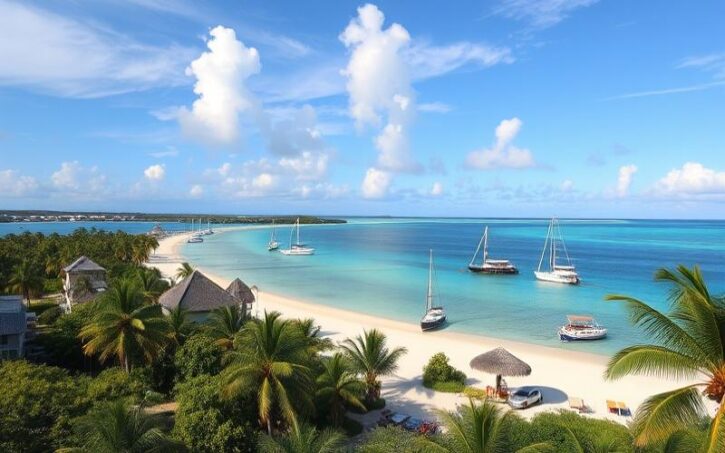
The Bahamas, a paradise archipelago located in the Atlantic Ocean, attracts numerous expatriates each year seeking sun, sandy beaches, and an exceptional quality of life. However, settling in this country requires following a number of administrative procedures. In this article, we will guide you through the different steps to realize your dream of living in the Bahamas, covering essential aspects such as obtaining a visa, finding housing, renewing your residence permit, and legal obligations for foreigners.
Opening the Doors to Paradise: How to Get Your Visa for the Bahamas
The first crucial step to settling in the Bahamas is obtaining a visa. The process may seem complex, but with the right information and careful preparation, you can navigate these administrative waters smoothly.
To start, it is important to note that citizens of many countries, including France, do not need a visa for tourist stays of less than 90 days in the Bahamas. However, if your intention is to settle permanently in the country, you will need to obtain a residence permit.
The Different Types of Visas for the Bahamas
There are several categories of visas for the Bahamas, each corresponding to a specific situation:
The Visa Application Process
To obtain your visa, you will need to follow these steps:
1. Gather the necessary documents, which generally include:
– A passport valid for at least six months beyond your intended date of entry into the Bahamas
– Recent passport-sized photos
– A birth certificate
– A clean criminal record certificate
– Proof of sufficient financial resources
– Health insurance valid in the Bahamas
2. Fill out the appropriate visa application form, available on the official website of the Bahamas Department of Immigration.
3. Pay the visa fees, which vary depending on the type of visa requested.
4. Submit your complete application to the nearest Bahamas embassy or consulate to your place of residence.
5. Wait for the decision from the Bahamian authorities. Processing time can vary from a few weeks to several months, depending on the complexity of your case.
Tips to Maximize Your Chances of Getting a Visa
– Make sure all your documents are up-to-date and translated into English if necessary.
– Prepare a strong application demonstrating your ties to your home country (property, family, etc.) to reassure authorities of your intention to return.
– If applying for a work visa, obtain a detailed letter from your future employer explaining why your profile is needed in the Bahamas.
Good to Know:
Bahamian authorities place great importance on protecting local employment. Your work visa application will have a better chance of being accepted if your profile matches a specific need not covered by the local workforce.
Finding Your Piece of Paradise: The Quest for the Ideal Home in the Bahamas
Once you have your visa in hand, the next step is to find housing in the Bahamas. This search can be both exciting and tricky, as the Bahamian real estate market has its own particularities.
Housing Options in the Bahamas
You have several options for housing in the Bahamas:
– Long-term rental: This is often the preferred option for expatriates, offering more flexibility.
– Buying property: For those considering a long-term stay or an investment.
– Hotel residences: An ideal temporary solution while finding permanent housing.
The Housing Search Process
1. Define your budget and criteria (location, size, amenities).
2. Check specialized real estate websites for the Bahamas, such as Bahamas Real Estate or BREA (Bahamas Real Estate Association).
3. Use a local real estate agent. Their knowledge of the market and regulations can be invaluable.
4. Visit several properties to get a clear idea of the market and available options.
5. Once you have made your choice, negotiate the terms of the rental or purchase contract.
Important Points to Consider
– Real estate prices in the Bahamas can be high, especially in tourist areas and on the most popular islands like New Providence (Nassau) or Grand Bahama.
– Make sure you fully understand the terms of the contract, especially regarding fees and the responsibilities of the owner and tenant.
– For property purchases, note that foreigners must obtain a permit from the Bahamian government for any acquisition exceeding 2 acres (approximately 0.8 hectares).
Good to Know:
The Bahamas offers attractive tax incentives for foreign real estate investors, including no income tax, capital gains tax, or inheritance tax. However, make sure you fully understand all the legal and tax implications before committing to a real estate purchase.
Extending Your Stay in Paradise: Renewing Your Residence Permit
Living in the Bahamas long-term requires regularly renewing your residence permit. This step is crucial to maintain your legal status in the country and avoid any issues with local authorities.
The Renewal Process
1. Start the renewal procedure at least 3 months before your current permit expires.
2. Gather the necessary documents, which generally include:
– Your valid passport
– Your current residence permit
– Recent passport-sized photos
– Proof of sufficient financial resources
– A recent medical certificate
– Proof of housing in the Bahamas
3. Fill out the renewal application form, available from the Bahamas Department of Immigration.
4. Pay the renewal fees, which vary depending on the type of permit.
5. Submit your complete application to the Department of Immigration.
6. Wait for the authorities’ decision. Processing time may vary, but allow several weeks.
Tips for a Successful Renewal
– Make sure you strictly comply with the conditions of your current permit (for example, not working if you have a retiree visa).
– Keep a record of all your contributions to the Bahamian community (volunteering, investments, etc.), as this can work in your favor during renewal.
– If your situation has changed (new job, marriage to a Bahamian citizen, etc.), inform the authorities as this could affect your status.
Good to Know:
The Bahamas recently introduced a permanent residence permit system for certain categories of expatriates, including investors and owners of high-value real estate. Inquire with the Department of Immigration to see if you are eligible for this status, which would save you from frequent renewals.
Navigating Administrative Waters: Mandatory Procedures for Expatriates in the Bahamas
Settling in the Bahamas involves complying with a number of administrative obligations. Although the country is known for its administrative simplicity compared to other destinations, it is crucial to follow these steps to ensure a smooth stay.
Main Procedures to Complete
1. Registration with your country’s embassy: While not mandatory, this step is highly recommended. It will allow you to receive consular assistance if needed.
2. Obtaining a National Insurance Board (NIB) number: Even though the Bahamas does not tax personal income, this number is necessary for various administrative procedures, including opening a bank account.
3. Opening a local bank account: This will greatly facilitate your daily transactions and bill payments.
4. Taking out health insurance: Although the Bahamas has a public health system, it is recommended to take out private insurance to access better quality care.
5. Registering your vehicle: If you plan to buy or import a car, you will need to register it with the Department of Road Transport.
6. Reporting a change of address: Whenever you move within the Bahamas, you must inform the Department of Immigration within 48 hours.
Tips to Facilitate Your Procedures
– Always keep copies of your important documents (passport, residence permit, etc.) in a safe place.
– Familiarize yourself with how local administrations work. The Bahamas has a different administrative culture from France, sometimes with longer processing times.
– Do not hesitate to use professionals (lawyers, accountants) to help you with your more complex procedures.
Good to Know:
The Bahamas recently launched an e-government initiative aimed at simplifying many administrative procedures. Regularly check for new online processes that could make your life as an expatriate easier.
The Rules of the Game: Laws and Regulations for Foreigners in the Bahamas
Living in the Bahamas as a foreigner means complying with a specific legal framework. Although the country is generally welcoming to expatriates, there are certain restrictions and obligations that are important to know to avoid any legal problems.
Key Regulations to Know
1. Employment restrictions: The Bahamas protects its local labor market. Foreigners can only hold positions for which no qualified Bahamian is available. The employer must obtain a work permit for each foreign employee.
2. Limitations on property ownership: Although foreigners can buy real estate in the Bahamas, the acquisition of land over 2 acres requires special government authorization.
3. Investment regulations: Certain economic sectors are reserved for Bahamian citizens. Foreign investors must obtain approval from the Investments Board for certain types of investments.
4. Length of stay: Even with a residence permit, foreigners are generally required to spend a minimum amount of time in the Bahamas each year to maintain their status.
5. Taxation: Although there is no income tax in the Bahamas, foreign residents may be subject to taxes in their home country. It is crucial to fully understand your tax situation.
Tips for Navigating the Bahamian Legal Framework
– Familiarize yourself with local laws. Ignorance of the law is not a valid excuse in case of an offense.
– Regularly check the Department of Immigration website to stay informed of regulatory changes.
– If in doubt about a legal matter, do not hesitate to consult a lawyer specializing in Bahamian immigration law.
– Strictly comply with the conditions of your visa or residence permit to avoid any risk of deportation.
Good to Know:
The Bahamas recently introduced special visas for “digital nomads,” allowing remote workers to stay up to one year in the country. If you work remotely, this option could be interesting for experiencing life in the Bahamas before committing to a long-term move.
Settling in the Bahamas represents an exceptional opportunity to live in a paradise setting while benefiting from an attractive economic and tax environment. However, as with any expatriation, careful preparation and a good understanding of administrative procedures and the legal framework are essential to ensure a smooth transition and a successful stay.
By following the advice and information provided in this article, you will be well-equipped to begin your new life in the Bahamas. Remember that every situation is unique and regulations can change. It is therefore always recommended to verify the most recent information with Bahamian authorities and consult professionals for complex issues.
With good preparation and an open mind, your expatriation experience in the Bahamas promises to be a rewarding and unforgettable adventure. Enjoy the natural beauty of the archipelago, its vibrant culture, and its laid-back lifestyle while respecting local laws and customs. Welcome to your new paradise!

Cyril Jarnias is an independent expert in international wealth management with over 20 years of experience. As an expatriate himself, he is dedicated to helping individuals and business leaders build, protect, and pass on their wealth with complete peace of mind.
On his website, cyriljarnias.com, he shares his expertise on international real estate, offshore company formation, and expatriation.
Thanks to his expertise, he offers sound advice to optimize his clients' wealth management. Cyril Jarnias is also recognized for his appearances in many prestigious media outlets such as BFM Business, les Français de l’étranger, Le Figaro, Les Echos, and Mieux vivre votre argent, where he shares his knowledge and know-how in wealth management.





