
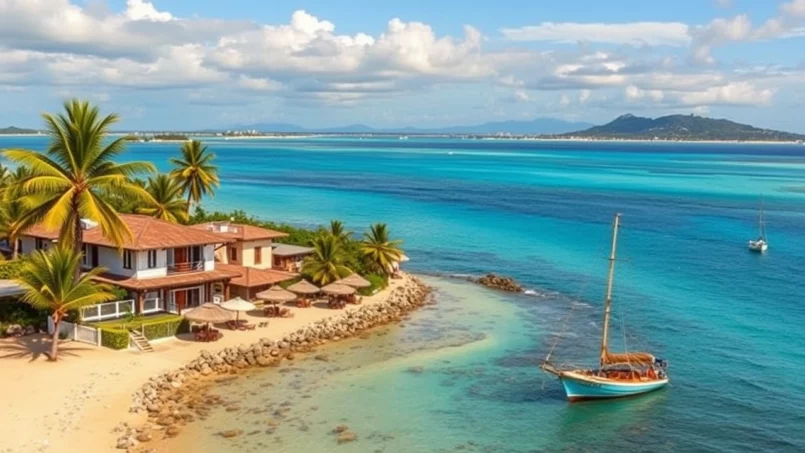
 Published on and written by Cyril Jarnias
The vacation home market in Nicaragua is at a pivotal moment. Between a tourism boom, major infrastructure projects, and prices still well below those in Costa Rica or Panama, the country is attracting more and more retirees, digital nomads, and investors seeking a sunny holiday home. But beneath the postcard image, the market remains complex, very cash-based, with mixed rental yields and a legal framework that must be handled with caution.
This article details market dynamics, the most sought-after areas, price levels, applicable taxation, and the main risks to be aware of before investing in a vacation home in Nicaragua.
A Real Estate Market Gaining Momentum
The Nicaraguan real estate market is going through a phase of sustained growth, particularly along the southern Pacific coast, the heart of the vacation home market.
Available data shows that the volume of transactions is at or near historically high levels. After a dip linked to the 2018–2019 political events, the recovery that began in 2020 has continued uninterrupted. Between mid‑2020 and mid‑2025, many properties gained 15 to 30% in value, with an estimated average annual increase of between about 5% and 7%.
Experts anticipate a cumulative increase in real estate values of 25 to 40% by 2030.
This dynamic is part of a relatively favorable macroeconomic context: GDP growth around 3–3.5% per year, inflation back to about 3.5% (below the ten-year average), steady growth in foreign direct investment (FDI), and a gradual improvement in the country’s credit rating. In 2022, FDI increased by 25.3% to reach nearly $1.842 billion, with a significant portion directed towards tourism and real estate.
Prices Still Significantly Lower Than Neighbors
Despite this rise, Nicaragua remains, by far, one of the most affordable real estate markets in Central America. Estimates show that prices are on average 50 to 70% lower than those in Costa Rica or Panama, even though some areas offer a comparable level of scenery and comfort.
In 2023‑2025, median values are still at attractive levels:
| Indicator (national / major areas) | Average or Median Price (USD/m²) | Estimated Annual Growth |
|---|---|---|
| National average apartment price | ≈ 1,230 | 5–7% |
| National average house price | ≈ 930 | 4–6% |
| Managua – median apartment | ≈ 1,235 | +11% / year |
| Rivas Department (south coast, Emerald Coast) | ≈ 930–1,395 depending on type | +12% / year (houses) |
| Granada – colonial houses | ≈ 878 | +7% / year |
| Estelí – houses | ≈ 679 | +2% / year |
For the specific vacation home market, the difference with competing markets is striking. Where a beachfront lot can reach $575,000 in Costa Rica, a similar parcel in Nicaragua can still be negotiated for around $250,000. Some beach lots, bought for $30,000 to $60,000 a few years ago, are now reselling for around $250,000, proof of an appreciation potential already well underway.
Why Nicaragua Attracts Vacation Home Buyers
Several drivers converge to fuel demand for holiday homes and vacation homes.
A Very Low Cost of Living, Comfortable Lifestyle
The first argument is economic: the cost of living in Nicaragua is about 46% lower than in Costa Rica. A couple can live comfortably on $1,000 to $2,500 per month, and a single person often on less than $1,000. For comparison, a retirement in Florida averages over $4,000 monthly.
For vacation home owners who spend only part of the year there, a budget of $1,500 to $3,000 per month allows for a high level of comfort, with household staff, regular outings, and leisure activities. Services are inexpensive, daily goods are affordable, and public healthcare is described as free and of an acceptable standard, although for complex care, expatriates often turn to private clinics in Managua or neighboring countries.
Tourism Boom and Upscaling
Tourism is the major underlying engine of the market. After a record of nearly 1.96 million visitors in 2017 and then a downturn, visitation has recovered. In 2023, the country welcomed about 1.2 million visitors, with a 24% year-on-year increase in tourism revenue. The following year, new records were reached, not only in numbers but also in spending per tourist.
In Q3 2024, the average daily expenditure per visitor increased by approximately 9.5%. Projections forecast annual tourism growth of 5.9% until 2029. This growth is qualitative: the arrival of travelers with higher purchasing power, attracted by premium offerings, is stimulating the development of high-end accommodations (villas, condos, serviced residences).
In this context, owning a vacation home on the southern Pacific coast – occupied for a few months a year and rented out the rest of the time – is becoming an increasingly common model.
Tax and Legal Framework Favorable to Foreign Ownership
Legally, Nicaragua presents a very open discourse towards foreign investors. The Constitution (Articles 27 and 44) guarantees the right to property and equal treatment between Nicaraguans and non‑nationals. The Foreign Investment Law (Law 344) formalizes these protections and confirms the possibility for a foreigner to buy property on the same terms as a citizen, without residency requirements or a minimum amount.
Concretely, a foreign purchaser can acquire real estate, subject to the necessary authorizations in certain strategic sectors; finance the acquisition with international capital; and be subject to specific declarations to the French tax authorities.
– purchase in their own name (full ownership)
– or via a Nicaraguan company, which notably allows benefiting from a 15% capital gains tax rate instead of 30% if the sale is made by an individual.
Nicaragua applies a territorial tax system: only Nicaraguan-sourced income is taxed locally. Income received from abroad (such as dividends or rents) by a Nicaraguan tax resident is not taxed in the country. This characteristic can allow for tax optimization strategies by combining tax residency in Nicaragua with wealth or investment structures established abroad.
For vacation home owners, the main taxes are:
| Type of tax / real estate cost | Indicative rate / main rule |
|---|---|
| Annual property tax (IBI) | ≈ 1% of 80% of the cadastral value (often below market value) |
| IBI exemptions | Urban properties < $40,000; small rural plots; agricultural land up to 51 acres |
| Transfer tax on purchase | 1–4% of the declared value (4% most common) – buyer’s responsibility |
| Registry fees | ≈ 1% of price |
| Attorney fees | 1–2% of price |
| Notary fees | ≈ 0.5–1.5% of price |
| Capital gains tax (individual) | 30% on net gain |
| Capital gains tax (Nicaraguan company) | 15% on net gain |
| Tax on rental income for non‑residents | 15% on a standard taxable base (70% of rent, 80% for vacant land) |
In total, acquisition costs for the buyer (all fees included) are often between 7.5% and 9% of the price. On the other hand, annual holding costs remain moderate, generally below 1.1% of the property’s value, which is attractive for a vacation home held long-term.
Residency Programs and Digital Nomads
Real estate purchase can serve as an entry point to legal residency. The investment-based residency program imposes a threshold between $30,000 and $50,000 according to sources and project type. It is in addition to the classic retiree resident (pensionado, minimum $1,000 monthly pension) or rentista ($1,250 in passive income) schemes.
These schemes, combined with the introduction of a digital nomad visa, have contributed to an estimated 15% increase in long‑stay accommodation bookings. For the vacation home market, this means a broader base of potential occupants than just seasonal tourist flow.
Major Vacation Home Areas
While one can theoretically buy a vacation home almost anywhere in the country (excluding immediate border areas and the first 50-meter coastal strip), a handful of regions concentrate the bulk of foreign demand.
San Juan del Sur: The “Little Capital” of Beach Homes
San Juan del Sur is the name that consistently appears in market reports. This resort town on the southern Pacific coast, about 140 km from Managua, has become the main hub for vacation homes in the country.
The town itself (approximately 15,000 inhabitants) offers a rare combination of factors: a protected bay, a range of surrounding beaches (Remanso, Maderas, La Flor…), a lively center of restaurants and bars, services for expatriates, and even two international schools (a third is in preparation). Many Canadians, North Americans, and Europeans have settled there, often mixing life on-site with regular returns to their home country.
Prices have experienced a volatile evolution. After climbing until 2017, they fell by about 30% following the 2018 unrest and have not fully returned to pre-crisis levels. Today, the market is described as stable, consolidating, with a prospect of moderate increase – typically 1 to 3% per year in neighborhoods oversupplied with seasonal rentals, and more in rare ocean-view locations.
The price per square meter of land for older houses in the city center, or about $90 per square foot.
The rental market there is very active, especially in short-term rentals. A case study on a $190,000 condo in La Talanguera clearly shows the economic logic:
| Rental Strategy (La Talanguera – $190,000 condo) | Estimated Annual Gross Revenue | Estimated Net Yield |
|---|---|---|
| Long-term rental | $15,600 | ≈ 2.8% |
| Seasonal rental (Airbnb), 20% discount for long stays | $26,460 | ≈ 5.3% |
These figures illustrate market reality: San Juan del Sur is not, to date, a cash‑flow paradise. Yields remain modest, especially after accounting for platform commissions (VRBO, Airbnb, etc.), management and maintenance fees. On the other hand, the “vacation home + long-term appreciation” approach remains coherent, especially compared to valuations in markets like Costa Rica.
Popoyo / Tola and the Emerald Coast: The Surfers’ Paradise Getting Organized
Further north, still on the Pacific coast, the Tola region and more broadly the Costa Esmeralda (Emerald Coast) is the other major hub for vacation homes.
Popoyo is world-renowned for its waves. The area has developed with luxury residential and hotel projects (like Rancho Santana or Guacalito de la Isla), offering villas, security, golf, and beach clubs. It attracts a wealthy clientele seeking tranquility, outdoor activities, and a preserved natural environment.
Accessibility has improved significantly with the opening of sections of the new coastal highway (Carretera Costanera). A key section reduced travel time between Managua and Popoyo by over 30%. Ultimately, the Costanera (about 355 km, from Corinto to San Juan del Sur) should connect over 60 beaches and energize the entire Pacific coastline. The project, funded to the tune of approximately $401.5 million – mainly by a credit line from the regional bank CABEI – is cited by most players as the future accelerator for the area.
This improvement in access has already translated into an estimated 12% annual price increase in the Rivas department (where Tola and San Juan del Sur are located) for certain house segments. In the municipality of Tola alone, the AirROI platform already lists over 200 short-term rental properties, with average monthly revenues exceeding $2,000 for the best-located properties.
Granada and León: Urban and Colonial Vacation Homes
Inland, the colonial cities of Granada and León offer another facet of the vacation home market.
Granada, on the shores of Lake Nicaragua, is one of the oldest cities in Central America. Its colorful colonial houses with inner courtyards, churches, and cobblestone streets attract retirees and North American expatriates. It is estimated that about 1,000 expatriates reside there, and that Americans have bought and renovated nearly half of the colonial homes in the historic center.
Description of the city of Granada
Financially, Granada stands out for its still very low prices: many colonial houses are listed under $60,000, with an average price around $878 per square meter. The increase is steady, around 7% per year, driven by tourism, renovation projects, and growing interest in long‑stay rentals or conversion into guesthouses. Gross rental yields there are estimated between 5 and 7%, higher than those on the oversaturated short-term rental coast.
León, more marked by its role as a cultural and university capital, follows a similar trajectory: colonial center, increasing tourism, proximity to beaches (Las Peñitas, Poneloya), and still very competitive value.
Managua: A Market More for Rentals, but Strategic for Some Investors
The capital is not, strictly speaking, a vacation home market in the beach sense. Managua appeals more to local buyers and foreigners seeking an urban base with good schools, hospitals, shopping malls, and fast connection to the rest of the country.
Prices per square meter are the highest in the country for apartments (approximately $1,230–1,235/m² on average), but gross rental yields are among the best: 8 to 11% for condos, around 8% for houses. Upscale neighborhoods (Mirador de Santo Domingo, Villa Fontana Sur…) are seeing a proliferation of condominium and gated community projects, sometimes bought as rental investments by wealthy Nicaraguans or foreigners looking to diversify their portfolio in an urban setting.
Prices, Concrete Examples, and Value Dynamics
Beyond averages, a few examples of properties for sale or sold allow for a better grasp of the reality of the vacation home market:
| Example of property / location | Property type | Asking price (USD) |
|---|---|---|
| Beachfront lot (beach, Pacific) – Nicaragua (generic) | Beachfront land | ≈ 250,000 |
| Equivalent lot in Costa Rica | Beachfront land | ≈ 575,000 |
| Ocean-view lots at Punta Diamante, Playa Remanso (San Juan del Sur) | 2 land parcels | 225,000 |
| 2-bedroom condo, La Talanguera (San Juan del Sur) | Apartment in gated community | 190,000 |
| Condo 401C, La Talanguera (San Juan del Sur) | High-end condo | 475,000 |
| House Casa Brisa de Mar, La Talanguera | Villa | 409,000 |
| Villa San Juan | House | 200,000 |
| Villa Nacascolo | House | 280,000 |
| Modern house on Ometepe Island | Standalone house | 299,000 |
| Land in La Talanguera (San Juan del Sur) | Building lot | 60,000 |
| Ocean-view lot in Brisas del Pacífico (San Juan del Sur) | Buildable land | 64,900 |
These figures confirm a wide price range: from a small lot for less than $70,000 to a coastal villa exceeding $600,000, with a multitude of condos around $150,000–$250,000 in between. For a budget that would often only allow a simple apartment in a mature market, a buyer here can aim for a vacation home with a pool and ocean view.
Maximum annual increase expected in real estate values in the coastal zones of Rivas and Tola in the coming years.
Rental Yields: Mirage or Real Opportunity?
For many buyers, a vacation home is not just a family house, it’s also an investment supposed to partially or fully self-finance through seasonal or long-term rental.
Highly Variable Yields Depending on Markets
Observed gross yields vary greatly from one area to another:
| Area / property type | Estimated Gross Rental Yield |
|---|---|
| Apartment in Managua | 8–11% |
| House in Managua | ≈ 8% |
| Coastal house (Rivas, Tola, Emerald Coast) | 7–10% (theoretical, highly dependent on occupancy) |
| Colonial house/condo in Granada | 5–7% |
| Condo in San Juan del Sur (case study) | 2.8% (long term) – 5.3% (Airbnb) |
In beach areas, the rise of platforms like Airbnb, VRBO, or KAYAK has led to an explosion in the number of properties listed. The municipality of San Juan del Sur thus has over 500 short-term rentals listed by some aggregators, and Tola nearly 300. Nationwide, there are about 4,900 active listings, with an average occupancy rate of around 31%, and a Revenue Per Available Room (RevPAR) of about $30.
As competition is already strong, newcomers must refine their strategy (location, quality, services, dynamic pricing) to maintain satisfactory occupancy rates.
Case Study: San Juan del Sur by the Numbers
In the municipality of San Juan del Sur, AirROI attributes the following characteristics to the short‑term rental market:
– approximately 560 active properties
– average monthly revenue around $1,425
– average daily rate ≈ $193
– average occupancy rate ≈ 32%
In other words, outside of exceptional beachfront properties or in highly sought‑after complexes, net profitability rarely exceeds 5–6% once the following are deducted:
– platform commissions
– local management fees
– routine maintenance (pool, garden, air conditioning, etc.)
– fees and taxes.
Large villas for groups or families remain in demand, notably by wealthy Nicaraguan clients seeking weekend getaways. However, the most prominent projects do not guarantee strong and immediate profitability; these investments are rather considered “lifestyle” purchases, where the usage value outweighs the financial return.
A Market More Favorable to Capital Appreciation Than Cash‑Flow
Given the data, specialists advise considering the Nicaraguan vacation home market first and foremost as a long‑term capital appreciation play, rather than a short-term cash flow generator. The anticipated rise in values, combined with a still low entry cost, constitutes the main argument, more than spectacular monthly cash flows.
For investors focused purely on rental yield, other markets – including Managua, or different countries – may offer better prospects. On the other hand, for a buyer primarily seeking an affordable tropical base, with the possibility of covering part of the costs through rental when not on-site and benefiting from gradual appreciation, Nicaragua ticks many boxes.
Major Infrastructure Projects: What’s Changing for Vacation Homes
One of the most structuring elements for the future of the market is the vast infrastructure program launched by the state, often in partnership with regional donors and China.
La Costanera: The Road That Could Change Everything
The Carretera Costanera, or La Costanera, is a project for a 355 km coastal road along the Pacific, linking the northern port of Corinto to the tourist hub of San Juan del Sur and extending towards the Costa Rican border. Its total budget exceeds $400 million, with nearly $382.6 million financed by the BCIE (CABEI) and about $19 million by the Nicaraguan government. China is expected to finance a second phase as part of a free trade agreement.
Details on operational sections and development phases of the transportation corridor project.
First 30‑km stretch between El Naranjo and Playa El Remanso, already in service.
119 km from Masachapa to El Naranjo, expected to be fully operational before the end of 2026.
Opening envisioned by the end of the decade, with route adjustments to reduce environmental impacts.
The expected effects are multiple:
– sharp reduction in travel times between Managua and key beaches (Popoyo, Remanso, Maderas, etc.)
– better access to remote residential projects and hotels
– increase in land values along the axis
– emergence of new localities on the vacation home map, as access becomes easier.
The most frequently cited reference is the development of the Guanacaste peninsula in Costa Rica, just across the border: once roads were improved, once-remote areas quickly transformed into corridors of villas, hotels, and condos.
Other Structuring Projects
Other projects are worth following for future vacation home owners:
Major road, air, and public transport network development projects to improve connectivity and mobility.
Construction or modernization of approximately 4,200 km of main roads nationwide.
New road connecting Cárdenas to the port of Colón and then to San Carlos, opening a smoother axis towards the Río San Juan region.
North of Managua, designed for 3.5 million annual passengers with two 4,000 m runways. Co-financed by China to strengthen air connectivity.
BRT projects aimed at improving traffic flow in the capital and its access points.
On a more targeted scale, the Inter‑American Development Bank (IDB) is also funding a $10 million program to improve tourism offerings and heritage in San Juan del Sur and Granada, with the goal of increasing average visitor spending (by over 35% in San Juan and 25% in Granada) and doubling the number of formal tourism-related jobs in these cities. Again, local vacation home owners – especially those operating seasonal rentals – are potential direct beneficiaries of this upscaling.
Legal Framework, Detailed Taxation, and Purchase Procedures
One of the crucial points for any prospective buyer is understanding the legal framework, particularly in a country that has experienced several waves of agrarian reforms and confiscations.
Foreign Ownership: Rights, Restrictions, and Sensitive Areas
In principle, a foreigner can become an owner in “full ownership” under the same conditions as a Nicaraguan. There is no minimum investment amount, nor a residency requirement. It is possible to buy in one’s own name or through a Nicaraguan company, often preferred for tax and estate structuring reasons.
Two major categories of restrictions apply, however:
1. Border areas: the law prohibits the acquisition by foreigners of land located within 5 km of the borders with Costa Rica and Honduras, for national security reasons. Between 5 and 15 km, a specific permit is required. Some investors circumvent this constraint by creating a Nicaraguan company that holds the property, but this is a setup that requires careful legal handling.
The first 50 meters from the high-tide line are public domain and inalienable. The next 150 meters (up to 200 m) are subject to a regime of concessions or specific authorizations. It is common to find properties under “right of possession” or long-term municipal concession there, especially on some islands or the Caribbean coast. These situations present a higher risk than a classic title deed.
Added to this are the communal property areas, particularly on the Caribbean coast (RACCN, RACCS), where lands are collectively managed by indigenous or Afro‑descendant communities. In these sectors, individual sale to non‑members is frequently contested.
Historical Title Risks and Litigation
The most delicate point lies in the history of land ownership. Between 1979 and 1990, the Sandinista government expropriated approximately 28,000 properties. Many of these cases have been settled (restitution, compensation, agreements), but thousands are still under discussion, including cases involving American citizens compensated by Washington.
The consequences for the market are significant:
In some cases, several people claim to have a valid title to the same parcel. Buyers sometimes discover years after their purchase that their deed is contested by a third party or by the state. Legal proceedings can last for years, in a context where corruption or political pressure makes decisions difficult to predict. The execution of favorable court decisions, such as evictions, is not always guaranteed on the ground. Finally, intrusions or occupations by squatters or former occupants are mentioned, sometimes with limited reaction from the authorities.
This legacy does not mean it is impossible to buy safely, but it imposes a much more rigorous due diligence discipline than in simpler markets.
Purchase Process and Recommended Due Diligence
The standard process unfolds in several steps and lasts, in the best case, 30 to 60 days for signing the public deed, several months for final registration:
1. Search and offer: property selection, price and condition negotiation. A deposit of 10 to 20% is customary upon signing the promesa de venta (promise to sell / private contract).
Essential procedures to secure the acquisition of a property in Spain, by verifying its history, legal status, and compliance.
In-depth verification of the chain of title for at least 10 years, ideally back to 1979, or even before 1917 for coastal properties, to spot any potential expropriation or conflict.
Obtaining a document (libertad de gravamen) certifying the absence of mortgages or liens on the property.
Verification of the up‑to‑date cadastral plan and its correspondence with the physical reality of the land, including an on‑site visit and marker survey.
Obtaining a municipal solvency certificate and property tax receipts proving no arrears.
For properties that have belonged to the state or are located in certain coastal areas: obtaining the letter of non‑objection from the Attorney General (Certificación de No Objeción).
3. Final deed: signing of the escritura pública (notarized deed) before a Nicaraguan notary, in Spanish. The buyer can grant a special power of attorney (poder especial) to a lawyer to sign on their behalf.
4. Registration: filing of the deed with the Public Property Registry. The administrative process can take several months depending on the region.
The use of a local lawyer experienced in real estate, as well as obtaining title insurance – costing around 0.5–1% of the price – is highly recommended. In the most frequented beach areas (San Juan del Sur, Tola, Granada), the use of an escrow service for the transaction funds has developed, although it is not yet the national standard.
Risks, Challenges, and Limits to Keep in Mind
Despite the many arguments in favor of Nicaragua, buying a vacation home there is not without risks.
Political Context and Legal Security
The country suffers from a media “bad reputation” according to some players, who consider the external image unfairly tarnished compared to the level of security felt on the ground by many expatriates. Nevertheless, it remains that:
– international observers point to recurrent political instability and a justice system sometimes aligned with the government
– demonstrations can occur and escalate
– from the point of view of some countries (notably the United States), caution is advised, especially regarding land disputes, and consular assistance remains limited (no capacity to intervene in Nicaraguan courts).
For a vacation home buyer, the main issue is title security and the ability to enforce their rights in case of conflict, more than common crime, which remains, according to several rankings, relatively contained compared to other countries in the region.
Climatic Hazards and Natural Risks
Nicaragua is located in a highly exposed zone:
Number of major climatic events (hurricanes and tropical storms) occurring in Nicaragua between 2008 and 2022, ranking it 49th out of 180 on the Global Climate Risk Index.
For beachfront vacation homes or those in immediate proximity, these factors translate into:
– sometimes visible coastal erosion, notably in certain bays
– higher insurance premiums for coastal houses
– the need to plan for adapted construction (elevation, resistant materials, drainage systems, etc.).
Vacation Rental Market Saturated on Some Beaches
The success of Airbnb and similar has a downside: a sometimes oversupplied short‑term rental market in areas like San Juan del Sur or Tola. With over 4,900 listings nationwide, 562 for the municipality of San Juan del Sur alone, and over 200 in Tola, competition is fierce, especially in the low season.
The consequences are reflected in:
Average occupancy rate of properties in San Juan del Sur and nationwide.
The solution, for owners who still want to rent, is to differentiate themselves (architecture, decoration, services, pool, panoramic view, central location or conversely assumed isolation) and to adopt sophisticated marketing strategies (professional photos, virtual tours, dynamic pricing). Listings incorporating 3D tours, for example, record 87% more views, which translates into more bookings.
Limited Access to Credit and a Very Cash‑Based Market
Finally, the local financial context limits the use of leverage. Mortgage loans for foreigners are rare and subject to high rates (often 11 to 15%), while seller financing arrangements require down payments of 20 to 50% and short terms (2 to 5 years).
Many buyers therefore finance their purchases with cash, sometimes by mobilizing a home equity line of credit (HELOC) on their primary residence in their home country. However, with rising interest rates in the United States and Canada (around 7% for many home loans), this strategy is becoming less attractive. The Nicaraguan vacation home market is thus largely a market for available liquidity, rather than a playground for highly leveraged investors.
Should You Buy a Vacation Home in Nicaragua?
In light of the available data, the vacation home market in Nicaragua presents a unique combination of assets and risks.
On the positive side:
The market offers prices still much lower than major competing destinations in the region, with a low cost of living allowing one to enjoy their residence several months a year. Tourism is growing, attracting a wealthier clientele with increasing average spending. Major infrastructure projects (like the Costanera, roads, and airport) could strongly revalue certain coastal corridors. The tax and legal framework is officially welcoming to foreigners, with full ownership possible, territorial taxation, and moderate property taxes. The potential for capital appreciation is estimated between 25 and 40% by 2030 in many areas.
On the challenge side:
– historical complexity of land titles in some regions, requiring robust due diligence and quality legal support
– sometimes unpredictable political and institutional environment
– high exposure to climate risks for coastal properties
– vacation rental market already very competitive on some beaches, with sometimes disappointing rental yields
– difficult and expensive access to local credit, often requiring cash financing or international structures.
For a buyer seeking:
Nicaragua presents two distinct investment profiles. For simple short-term rental yield maximization, it’s probably not the best option, except perhaps in some very targeted segments of the Managua market. On the other hand, for the acquisition of an affordable vacation home, allowing one to stay several months a year in a tropical climate (22–30 °C on the coast and in Granada) with activities like surfing or hiking, and to benefit from an already established expatriate community life, while anticipating solid long-term appreciation of the property, Nicaragua clearly stands out from other destinations.
Nevertheless, this market should not be approached lightly or on a whim based on online listings. It requires visiting, walking the land, talking with neighbors, consulting several lawyers, comparing neighborhoods, and integrating upcoming infrastructure projects. Well-prepared, an acquisition can prove to be not only a good financial opportunity but also a deeply transformative life choice.
Disclaimer: The information provided on this website is for informational purposes only and does not constitute financial, legal, or professional advice. We encourage you to consult qualified experts before making any investment, real estate, or expatriation decisions. Although we strive to maintain up-to-date and accurate information, we do not guarantee the completeness, accuracy, or timeliness of the proposed content. As investment and expatriation involve risks, we disclaim any liability for potential losses or damages arising from the use of this site. Your use of this site confirms your acceptance of these terms and your understanding of the associated risks.

Cyril Jarnias is an independent expert in international wealth management with over 20 years of experience. As an expatriate himself, he is dedicated to helping individuals and business leaders build, protect, and pass on their wealth with complete peace of mind.
On his website, cyriljarnias.com, he shares his expertise on international real estate, offshore company formation, and expatriation.
Thanks to his expertise, he offers sound advice to optimize his clients' wealth management. Cyril Jarnias is also recognized for his appearances in many prestigious media outlets such as BFM Business, les Français de l’étranger, Le Figaro, Les Echos, and Mieux vivre votre argent, where he shares his knowledge and know-how in wealth management.





