
 Published on and written by Cyril Jarnias
Moving to Egypt can be both exciting and daunting. Between the bustle of Cairo, the Red Sea beaches, an attractive cost of living, and a sometimes tense political context, the question of safety consistently comes up for future expatriates. The country welcomes over 11 million visitors each year and a growing foreign community, but it is also subject to travel advisories from several Western governments.
For a successful expatriation, it’s not about finding a risk-free country, but about understanding the specific risks well. This includes researching neighborhoods to live in, transportation, access to healthcare, common scams, and social and cultural codes to better integrate.
Understanding the Safety Level in Egypt
The image of Egypt often oscillates between postcards of Nile cruises and headlines about terrorism. The reality lies somewhere in between. Statistically, the country is far from a “failed state,” but it is not a model of stability either.
Major international indicators show a “moderate” country in terms of security and peace, fairly comparable to many well-known tourist destinations.
Here is a summary of some recent rankings:
| Indicator / Source | Rank / Score (Egypt) | Quick Takeaway |
|---|---|---|
| Numbeo – Safety Ranking (146 countries) | 69th | Ahead of Sweden, Australia, and the United States |
| Global Peace Index (163 countries) | 107th | A “middle-of-the-pack” country, neither at war nor peaceful |
| Global Finance – Safest Countries (134) | 65th | Ahead of Poland, Italy, and the United States |
| GeoSure (Cairo – Theft) | 67/100 (theft risk) | Moderate risk for petty crimes |
| GeoSure (Cairo – Basic Freedoms) | 16/100 | Limited public freedoms |
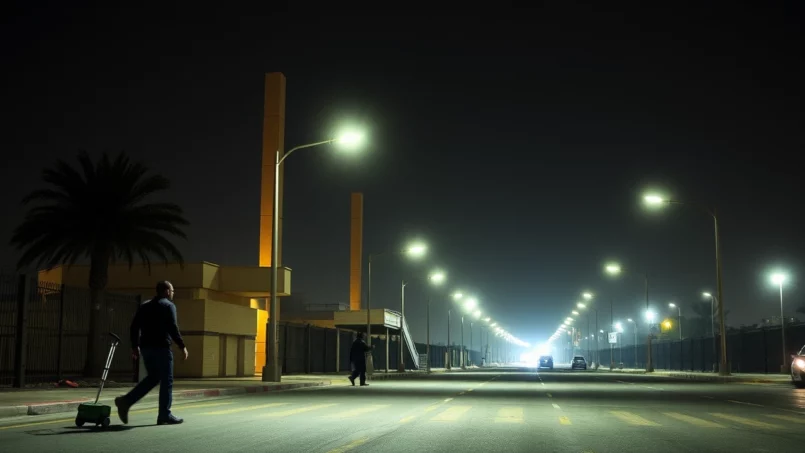
Violent crimes targeting foreigners remain rare, and the main daily threats for expatriates are more likely to be petty theft, scams, road risks, and, for women, sexual harassment. Major tourist areas like Cairo, Luxor, Aswan, or Red Sea resorts are heavily secured, with a visible presence of police and military, as well as a dedicated tourism police force.
Several Western governments (United States, Canada, United Kingdom, Australia) recommend exercising a high degree of caution for travel to Egypt. They advise against or formally prohibit travel to certain regions deemed at risk: North Sinai, the Western Desert near Libya, and sensitive border areas.
For an expatriate, this means that safety varies greatly depending on the region and even from one neighborhood to another. A smooth expatriation therefore requires well-considered geographical choices.
Where to Live Safely: Mapping of Neighborhoods and Regions
The choice of neighborhood largely influences the sense of security, daily comfort, and the ability to integrate. Cairo concentrates most professional opportunities and the largest expatriate community, but other cities like Alexandria or Hurghada also host a growing number of foreigners.
The Broad Geographical Balance
Several areas are unanimously considered to be avoided for relocation, except for very specific and supervised missions: North and Central Sinai, a 20 to 50 km strip along the Libyan border, the Western Desert west of the Giza–Luxor–Aswan–Abu Simbel axis. These regions are marked by the presence of armed groups, trafficking, and sometimes unexploded ordnance from World War II.
Major tourist cities and resorts in Egypt are considered generally safe, benefiting from enhanced security measures. This national priority to protect visitors applies especially to destinations such as Cairo, Luxor, Aswan, Hurghada, and Sharm El Sheikh.
Cairo: Overview of Neighborhoods for Expatriates
Cairo is a megalopolis of over 9.5 million inhabitants within city limits and over 23 million in Greater Cairo. The city is described as overcrowded, noisy, polluted, with chronic traffic jams. Half the population lives in informal neighborhoods with limited infrastructure (roads, waste collection, transportation). In this context, certain neighborhoods clearly stand out for their level of safety and comfort.
Here is a useful framework for a future expatriate:
| Neighborhood / Zone | Profile and Vibe | Safety and Expatriate Demographic | Main Drawbacks |
|---|---|---|---|
| Zamalek | Island in the Nile, upscale, artistic area, many cafes, embassies | Very safe, ideal for singles and families, popular with diplomats | Noise and traffic jams, high rents |
| Maadi | Southern suburb, “green oasis,” tree-lined streets, village-like feel | Considered very safe, a classic choice for expatriate families | Far from the center, long commutes to tourist sites |
| New Cairo (Tagamoa el Khames) | New city to the east, gated compounds, shopping malls, private schools | Secure enclaves, very “Western” lifestyle, quiet | Car necessary, little street life, limited local culture |
| 6th of October / Sheikh Zayed | New city to the west, residential and technological areas | Clean neighborhoods, less polluted and perceived as safe | Very remote, total dependence on car |
| Garden City | Upscale neighborhood by the Nile, close to the center | Very quiet, many hotels and embassies, enhanced security | Few local shops and little nightlife |
| Heliopolis | Historic neighborhood in the east, near the airport | Relatively less dense, greener than the center | Experienced episodes of tensions and protests in the past |
| Downtown | Historic heart, lively, shops, dusty streets | Vibrant but more harassment, not ideal for women alone | Noise, pollution, frequent petty scams |
| Mohandiseen / Dokki / Agouza | Major residential and commercial hubs of Giza | Authentic, very local, but congested and not very green | Infernal traffic, few green spaces |
| Giza – Pyramids Area | Popular neighborhoods around the Giza plateau | Stay possible only in very high-end hotels | Relative insecurity, many scams, very far from the center |
Zamalek offers an almost European atmosphere, with increased police presence due to embassies and high walkability. Solo female expatriates report a significantly greater sense of security there compared to downtown. Maadi, more residential and green, is often described as a village within the city, ideal for families and those who prioritize tranquility over immediate proximity to museums.
New cities like New Cairo and 6th of October illustrate the concept of security through enclosure via “gated communities.” Compounds such as Madinaty, Rehab, Mivida, Katameya Heights, or Dream Land function as autonomous, ultra-secure bubbles, equipped with security guards, private facilities (sports clubs, international schools, shopping malls, parks, clinics). This urban planning offers a protected living environment but also creates social and spatial disconnection from historic and traditional Cairo.
Other Cities and Resorts
For expatriates working in tourism, diving, or hospitality, cities like Hurghada, Sharm El Sheikh, or Dahab are popular bases. They combine strong security (checkpoints, controlled perimeters around resorts) and a more relaxed lifestyle, where dress codes are less strict within hotel complexes.
In a different vein, Alexandria attracts expatriates seeking a major city that is more “relaxed” than Cairo, on the Mediterranean coast. While the city remains conservative in parts, reports from women traveling alone describe it as a fairly safe and manageable environment, with the same basic precautions as elsewhere.
Daily Safety: Crime, Scams, and Harassment
Most expatriates in Egypt do not face violent crime, but must get used to three realities: opportunistic petty crime, the omnipresence of scams in tourist areas, and, for women, a high level of harassment.
Crime and Common Risks
Available data describes a generally moderate level of crime, with a low probability of violent assaults. Pickpocketing, bag snatching, and petty theft concentrate in the usual places: bazaars, crowded public transport, major tourist sites, and heavily frequented neighborhoods like downtown Cairo or the markets of Luxor.
Scams, however, are omnipresent in everything related to transportation, shopping, and certain services. They are not organized crime, but exploit the wealth gap between locals and foreigners, and the newcomers’ lack of familiarity with the context.
Overview of the Most Frequent Scams
Expatriates and regular travelers describe a series of recurrent scenarios, found in Cairo as well as in Giza, Luxor, Aswan, or on the Red Sea coast.
At airports or train stations, some drivers offer exorbitant fares (up to 4 times the normal price), ask to cancel the ride in the app for a higher cash payment, or falsely claim that public transportation isn’t working to push their services.
Around tourist sites, individuals pose as official guides, ticket inspectors, or “monument guards” with more or less credible badges. They explain that the ticket is not the right one, that access to a certain viewpoint requires an extra fee, or slip into photos to then demand a tip.
Horse or camel rides pose a real problem with pricing transparency. It’s not uncommon for a very low price to be announced at the start, then once in the saddle the owner explains that the agreed amount was “per person” or “per photo,” and demands a much higher sum, implicitly threatening not to let you dismount until payment is made.
In local shops, haggling is common, but be vigilant against deceptive practices. Some sellers state a price without specifying the currency (e.g., “10”) to then claim it was in dollars or euros, not Egyptian pounds. Others might substitute a 200-pound note with a 20-pound note and accuse the customer of underpaying. Always verify the currency mentioned and the notes you hand over.
In restaurants and hotels, bills can be discreetly inflated, with un-ordered items added, or “gifts” suddenly charged at the end. In hotel laundries or for “in-house” services, the lack of upfront pricing sometimes leads to disproportionate amounts.
The main principles to reduce these risks are simple: always ask for the price beforehand, clarify if it’s a total price or per person, systematically check your change, decline services presented as “free,” and purchase tickets and services directly from official counters or platforms.
Sexual Harassment and Women’s Safety
One of the most sensitive aspects of safety in Egypt concerns the situation of women, both local and foreign. Several studies conducted before and after 2010 indicate an extremely high level of harassment. One cited survey, conducted by a UN-linked organization, reported over 99% of Egyptian women having experienced some form of harassment in their lifetime. Another, from the Egyptian Center for Women’s Rights, mentioned 98% of foreign women and 83% of Egyptian women being affected.
Harassment, frequent in Egypt, manifests as leering, catcalling, sexual comments, stalking, and sometimes groping in public places. During political protests, the risk of serious assaults increases significantly. This is why many governments explicitly mention this issue in their safety advice regarding the country.
Since 2014, sexual harassment has been punishable by law, and sanctions have been strengthened several times. Public campaigns encourage women to file complaints. Specialized clinics have been created to support victims of sexual assault. But in practice, many prefer to ignore minor incidents and avoid direct confrontation with harassers, as the power dynamic and social norms rarely favor women.
For female expatriates, several strategies increase daily peace of mind: adopting modest attire (shoulders, chest, and knees covered), avoiding walking alone at night in poorly lit areas, preferring Uber or Careem cars over street taxis, using women-only carriages on the Cairo metro, staying in the middle of crowds and close to families in heavily frequented places, and not hesitating to take refuge in a store or ask for help if a situation feels threatening.
Getting Around Safely: Roads, Public Transport, and Taxis
Road safety is probably one of the trickiest points for an expatriate. Egypt is among the countries with a particularly high rate of road accidents. Rules are often ignored, signage is erratic, and it is common to encounter vehicles going the wrong way, pedestrians, or animals on fast lanes.
Traffic and Driving
Driving oneself in Egypt requires strong nerves and excellent skills in chaotic driving environments. Car rentals exist but are generally only recommended for very experienced drivers in this type of context. In the city, traffic jams sometimes limit danger by reducing speed but make driving tiring and stressful. On intercity roads, excessive speed, especially of long-distance buses, is a real problem.
For greater safety and comfort, it is recommended that newcomers prioritize public transport, chauffeur services, or app-based cars rather than driving themselves. For a long-term stay, families may consider buying a vehicle and hiring a full-time driver, an option often more affordable locally than in Europe due to salary differences.
Taxis, Uber & Careem
Taxis remain the most common solution for urban travel. In Cairo, there are white taxis with meters, older black-and-white taxis, and private yellow taxis. In theory, metered taxis offer better transparency, but many drivers refuse to turn on the meter or claim it is broken.
Apps like Uber, Careem, Bolt, or InDriver have become valuable tools for expatriates, especially in Cairo and Alexandria. They allow for a fixed fare known in advance, payment by card or cash, and provide a trip record in case of problems. Prices remain very low for a Westerner: a twenty-minute ride in Cairo can cost the equivalent of a few dozen Egyptian pounds.
If a driver tries to circumvent the app’s payment system (by asking for extra cash or encouraging you to cancel the ride), the appropriate response is to calmly refuse. Then propose either to strictly follow the fare indicated in the app or to end the trip.
For women alone, sitting in the back, limiting overly personal conversations, sharing your live location with someone close, and checking the vehicle’s license plate before getting in are simple but reassuring gestures.
Metro, Buses, and Intercity Transport
The Cairo metro is a fantastic tool to escape traffic jams. It is inexpensive, generally reliable, and has women-only carriages in the middle of the train. The density during rush hour can be impressive, but expatriates often see it as a safe and efficient way to cross the city, provided one accepts the proximity and frequent lack of air conditioning.
Urban buses and minibuses, while very economical, present major challenges for newcomers: lack of clear route information, information primarily in Arabic, imprecise schedules, and increased risks of pickpocketing and harassment. They are not recommended for the beginning of an expatriation without good language skills and a desire for total immersion.
For travel between cities, long-distance buses (Go Bus, Blue Bus, East Delta, West Delta…) cover the territory well, with air-conditioned and sometimes high-end buses. The real risk here comes from fast driving, especially at night. Choosing reputable companies, avoiding night trips when possible, and preferring trains or planes for very long distances is often safer.
Trains connect Cairo to Alexandria, Luxor, Aswan, and other major cities. Express links and sleeper trains are appreciated by expatriates and considered safer than the road. Domestic flights, on the other hand, offer a fast and well-regulated alternative, especially between Cairo, the Red Sea, and southern Egypt.
Health, Medical System, and Insurance: A Pillar of Safety
The safety of an expatriation is not only about the streets but also about hospitals. The contrast between the public system and the private sector is very marked in Egypt.
An Overburdened Public System
The public healthcare system, managed by the Ministry of Health and several organizations (Health Insurance Organization, Curative Care Organization), offers low-cost coverage for citizens but suffers from a chronic lack of resources. There is talk of aging equipment, bed shortages, understaffing, imperfect hygiene, and very long wait times.
With about 0.75 doctors per 1,000 inhabitants, and an exodus of practitioners to better-paying countries, it is unrealistic for an expatriate to rely solely on the public sector if they wish to benefit from a level of care comparable to what they know in Europe or North America. Especially since counterfeit medicines circulate on the market, sometimes packaged in packaging imitating major brands.
Egypt has launched a reform (Universal Health Insurance System) aiming for universal health coverage by the second half of the decade. However, this system is primarily intended for Egyptian citizens and residents officially employed locally. Most expatriates do not have direct access to it, or only under limited conditions.
The Crucial Role of the Private Sector and International Insurance
The private sector partly compensates for these weaknesses. Over 60% of the roughly 1,800 hospitals in the country are private, with modern facilities, better hygiene standards, recent equipment, and often English-speaking staff. Some hospitals are internationally accredited and accustomed to treating a foreign clientele, whether expatriates or medical tourists.
A few names regularly come up in feedback: Cleopatra Hospital, As-Salam International, Dar Al Fouad, private polyclinics in Cairo and Alexandria, or well-equipped facilities in Hurghada or Sharm El Sheikh for treating diving accidents.
In the absence of direct billing, most private clinics and hospitals require immediate payment or a deposit, even in emergencies. Patients bear these costs directly in more than half of the cases, and expenses can escalate quickly for hospitalization, surgery, or medical repatriation.
For an expatriate, taking out an international health insurance plan is therefore not a luxury but an elementary safety condition. Major companies (Cigna Global, AXA, Allianz, Bupa Global, William Russell, MetLife, GeoBlue, etc.) offer contracts covering consultations, hospitalization, medical imaging, major treatments, sometimes maternity and mental health, but above all: medical evacuation and repatriation, essential if a serious problem occurs in an ill-equipped region.
The important thing is not so much to choose the best-known brand but to check precisely:
Discover the main elements to know about health coverage in Egypt, from reimbursement methods to ancillary services.
Plans typically include coverage in private clinics through direct agreements or a reimbursement system upon invoices.
Check the level of the annual reimbursement ceiling as well as the per-claim limit (per medical event).
Usual exclusions include pre-existing conditions, routine dental care, and maternity-related costs (unless an option).
Some insurers promise reimbursement within 48 hours for complete files. Times vary by company.
Services like teleconsultation, psychological support, or obtaining a second medical opinion may be included.
Daily Health and Prevention
Beyond hospitalization, daily life in Egypt also requires adapting to a different sanitary environment. Air pollution, especially in Cairo, favors respiratory problems, while tap water is not recommended for drinking. Digestive illnesses (traveler’s diarrhea, salmonella) are common among newcomers, as are heatstroke and dehydration in summer.
Prevention involves a few habits: drinking only bottled or filtered water, avoiding questionable ice, favoring well-cooked food, washing hands regularly or using hand sanitizer, protecting yourself from the sun (hat, sunscreen, hydration), and putting together a small first-aid kit with basic treatments.
Regarding vaccines, the usual recommendations (DTP, measles-mumps-rubella, hepatitis A and B, typhoid, possibly rabies) should be discussed with your doctor before departure. Health authorities also remind us of the importance of keeping polio vaccination up to date, as polio is still circulating in the country.
Financial Safety, Inflation, and Digital Scams
Egypt is going through a difficult economic period, with a strong devaluation of the Egyptian pound and inflation that reached peaks above 30% before recently receding. This situation creates an environment conducive to social tensions and also to the development of new types of scams, especially online.
Inflation and Cost of Living
For an expatriate paid in a strong currency (euro, dollar, pound sterling), the cost of living in Egypt remains attractive. Estimates mention, for rents, average amounts around $350 per month for a single person and $560 for a family, with strong variations depending on the city and neighborhood. In Cairo, these averages rise to about $367 for a single person and $567 for a family; in Alexandria, they are lower for singles but similar for families. In Hurghada, they are between these two cities.
Nearly one third of Egyptians are estimated to live below the poverty line.
Cybercrime and Online Fraud
Egypt is also experiencing a sharp rise in cybercrime. With over 80 million internet users and massive use of mobile wallets, losses linked to online fraud are estimated at several billion dollars. The country represents a significant share of recorded cyberattacks on the African continent, and ransomware detections there are among the highest.
Expatriates must be particularly vigilant regarding their safety, administrative status, and integration in their new country of residence.
– fake real estate listings on platforms like Facebook Marketplace, promising apartments at unbeatable prices,
– fake hotel or travel booking sites, collecting payments for non-existent services,
– romance scams targeting foreign women via social media,
– cryptocurrency investment scams or pseudo-currency placements,
– fake charity or religious cause fundraising.
The best defense remains caution: never pay a substantial deposit without a visit and contract, always verify the legal existence of agencies, use recognized platforms, be wary of overly insistent interlocutors or those offering unrealistic financial returns, protect your passwords, and activate two-factor authentication.
Integrating to Enhance Safety: Communities, Networks, and Cultural Codes
Safety does not depend solely on police or infrastructure, but also on the ability to integrate into a social fabric. Egypt, a very relational country, is no exception: being surrounded, knowing a few cultural benchmarks, and being able to rely on a network radically changes the expatriation experience.
Expatriate Communities and Mutual Support
Several organizations play a key role in supporting newcomers. The InterNations platform, present in 420 cities, has an active community in Egypt, notably in Cairo, Alexandria, Hurghada, and Sharm El Sheikh. Members—Americans, British, Germans, French, but also from many other countries—exchange practical advice, good addresses for doctors, schools, lawyers, and organize regular meetups, cultural outings, and thematic workshops.
Some networks provide concrete support even before expatriation, such as for finding housing or understanding administrative procedures. Associations, such as the Community Services Association (CSA) in Cairo, organize orientation seminars (e.g., “Fundamentals of Living in Egypt”). These programs combine workshops, discussions, and networking, allowing participants to anticipate difficulties, share experiences, and build an initial circle of contacts.
Many informal groups also exist on Facebook, Meetup, or other networks, whether for parents of students, athletes, female expatriates, linguistic or religious communities. Participating in these meetups, but also in local life (Egyptian sports clubs, Arabic classes, festivals, markets) not only makes one feel less isolated but also better understand how society works, which strengthens the ability to spot problematic situations.
Social Codes, Religion, and Respect for Norms
Egypt remains a largely patriarchal and religious society, where social norms differ significantly from those of major Western metropolises. Adopting a posture respectful of these codes also contributes to daily safety by avoiding misunderstandings.
Public displays of affection are frowned upon, and discussions about sexuality or certain political topics remain sensitive. Dress code is generally conservative, especially outside hotels and resort areas. For men and women, covering shoulders, chest, and knees in public spaces helps avoid stares and remarks.
Learning a few words of Arabic (“as-salam alaykum,” “la shukran,” “min fadlak/min fadlik”) is perceived as a sign of respect and can defuse many tensions. Similarly, understanding that many people who spontaneously offer help actually expect a tip avoids misunderstandings. It is entirely acceptable to decline these offers politely but firmly.
Finally, staying away from political demonstrations, contentious gatherings, and public debates on sensitive topics is a basic principle. The law strictly regulates protests, and authorities do not hesitate to arrest foreigners suspected of activism.
Practical Preparation: Housing, Travel, Useful Numbers
A smooth expatriation in Egypt requires good logistical preparation. A few points deserve particular attention.
Regarding housing, working with a local real estate agent (semsarr) is common but implies having a trusted Egyptian or someone who speaks Arabic to avoid contractual misunderstandings. Landlords often ask for several months’ rent in advance, a security deposit, and a copy of the passport. Checking the quality of the neighborhood (lighting, noise, distance to work or schools, proximity to medical services) is at least as important as the interior comfort of the apartment.
For your travel, plan routes between home, work, and school in advance. Test different transport options (metro, Uber, taxi) and avoid long car trips during rush hour. Prioritize proximity to your workplace: a closer home, even if smaller, significantly improves safety and quality of life compared to a larger but more remote home.
Knowing local emergency numbers is also an essential reflex. 122 for police, 123 for ambulance, 180 for fire department, and 126 for tourism police should be saved in your phone upon arrival, as well as the contact details of your embassy or consulate.
A Smooth, But Not Naïve, Expatriation
Safety in Egypt is neither black nor white. Major cities and resorts can offer a safer daily environment, in terms of violent crime, than many Western metropolises. But the country still faces major challenges: localized terrorist threats, high road risks, widespread street harassment, a weakened public health system, economic tensions that fuel petty trafficking and scams.
For a smooth expatriation, it is essential to choose your neighborhood carefully, take out reliable international health insurance, learn the local social codes, build a strong network, and know the reflexes to avoid scams and daily risks. These preparations transform an intimidating country into a welcoming and pleasant place to live for many years.
The key is not to try to eliminate all risk, but to understand them finely to reduce them as much as possible. In Egypt, this clarity is your best ally for a truly smooth expatriation.
Disclaimer: The information provided on this website is for informational purposes only and does not constitute financial, legal, or professional advice. We encourage you to consult qualified experts before making any investment, real estate, or expatriation decisions. Although we strive to maintain up-to-date and accurate information, we do not guarantee the completeness, accuracy, or timeliness of the proposed content. As investment and expatriation involve risks, we disclaim any liability for potential losses or damages arising from the use of this site. Your use of this site confirms your acceptance of these terms and your understanding of the associated risks.

Cyril Jarnias is an independent expert in international wealth management with over 20 years of experience. As an expatriate himself, he is dedicated to helping individuals and business leaders build, protect, and pass on their wealth with complete peace of mind.
On his website, cyriljarnias.com, he shares his expertise on international real estate, offshore company formation, and expatriation.
Thanks to his expertise, he offers sound advice to optimize his clients' wealth management. Cyril Jarnias is also recognized for his appearances in many prestigious media outlets such as BFM Business, les Français de l’étranger, Le Figaro, Les Echos, and Mieux vivre votre argent, where he shares his knowledge and know-how in wealth management.





