
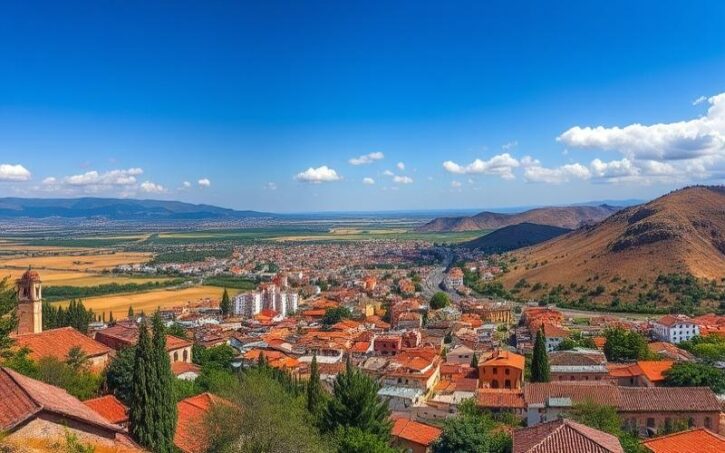
 Published on and written by Cyril Jarnias
White sand, turquoise water, tropical climate, and English everywhere… On paper, the case for trying expatriation in Barbados is enticing. The island has also implemented a visa dedicated to remote workers, the famous “Barbados Welcome Stamp,” which attracts freelancers, full-time remote employees, and entrepreneurs from around the world.
Good to know:
Settling on this tourist island offers advantages like favorable taxation, relative safety, and good digital infrastructure. However, it also involves a high cost of living, heavy dependence on tourism, social constraints, and concerning vulnerability to climate hazards, making it a demanding destination.
This guide reviews the main advantages and disadvantages of expatriation in Barbados – with a particular focus on the Welcome Stamp for digital nomads – based on numerical data and concrete elements of daily life.
The Barbados Welcome Stamp: A Real Plus for Remote Workers
Before talking about beaches, climate, or cost of living, we need to understand the tool that put Barbados back on the map for digital nomads: the Barbados Welcome Stamp, often called the digital nomad visa or eVisa.
This program was launched in 2020 to revive the economy battered by COVID-19. It allows you to live on the island for up to 12 months while working remotely for a foreign employer, clients based outside Barbados, or a company registered abroad.
Conditions and How the Welcome Stamp Works
The entire process is done online, without going through an embassy. The decision usually comes in less than one business week, and payment is required only after approval. The visa takes the form of a PDF linked to the passport and allows multiple entries.
Attention:
The visa is intended for an adult teleworker with stable income of at least 50,000 USD per year, health insurance covering the entire stay, and a valid passport (at least 6 months). Spouses, partners, and children can be added as dependents, upon presentation of proof of family relationship.
A crucial point: this visa only authorizes remote work for non-Barbadian entities. You cannot legally work for a local company or for your own company registered in Barbados without going through a real work permit.
Summary table of the program’s main points:
| Aspect | Detail |
|---|---|
| Official Name | Barbados Welcome Stamp |
| Duration | 12 months, renewable |
| Type of Work Allowed | Telework for foreign employer/clients, company outside Barbados |
| Minimum Declared Income | 50,000 USD per year |
| Health Insurance | Mandatory (private) for the entire stay |
| Individual Visa Fee | 2,000 USD |
| Family Visa Fee | 3,000 USD |
| Procedure | 100% online, response ~7 business days |
| Tax Status | Non-resident for Barbadian income tax, exemption on foreign income |
For high-income profiles, this visa is competitive: no non-refundable deposit, fast processing, flexible entries and exits, and a clear tax framework.
Major Tax Advantage: No Local Tax on Foreign Income
Under the Welcome Stamp, income generated outside Barbados is not subject to Barbadian income tax. This is provided for by the Remote Employment Act of 2020. Even if you spend more than 182 days on the island, these holders are treated as non-residents for tax purposes.
Tip:
If you are an employee legally based in another country or a freelancer billing abroad, Barbados applies no income tax withholding on these revenues, nor any local social contributions. This provision significantly reduces the risk for your employer of creating a “permanent establishment” on the island.
However, be careful: this exemption does not erase obligations in the country of origin (France, Canada, Belgium, Switzerland, USA, etc.). Americans, for example, remain taxable on their worldwide income. Expatriation to Barbados is therefore not a magic wand for tax optimization – it is mainly an environment that does not add a layer of domestic taxation on foreign income.
A Very Attractive Living Environment: Climate, Relative Safety, Language, Healthcare
Beyond the visa, what draws expatriates are the basics: climate, quality of services, political stability, and relative safety.
Climate and Environment: A Double-Edged Paradise
Barbados enjoys a tropical climate with an average annual temperature around 27°C (81°F). Sunshine is present year-round, the beaches are spectacular, and the water is warm. The dry season roughly runs from December to May, the wet and hurricane season from June to November.
For a teleworker coming from a cold climate, the idea of exchanging gray skies for Caribbean light is a massive draw. The island also offers a relatively calm Caribbean coast on the west and a more rugged Atlantic side to the east, popular with surfers.
But this same environment comes with risks. The island is on the edge of the main hurricane zone, but remains exposed to tropical storms and sometimes violent cyclones, like Elsa in 2021 or Beryl in 2024, which caused significant damage to homes. Climate change is increasing the frequency and intensity of these events, while also exacerbating coastal erosion and drought episodes.
Good to know:
Barbados is ranked among the most water-scarce countries in the world. The island depends on underground aquifers, has no major rivers, and is experiencing longer dry periods, putting pressure on its resources. Any expatriate must factor these long-term structural risks into their thinking.
Safety: An Island Generally Safer Than Many Other Destinations in the Region
Compared to other Caribbean countries, Barbados is perceived as relatively safe. Major travel organizations in several Western countries place the island in the category of destinations where “normal precautions” are sufficient.
Violent crimes rarely target visitors, even though the recent rise in homicides, often gang-related, reminds us that the island is not immune. The main risk for an expatriate remains petty opportunistic crime: pickpocketing in tourist areas, theft from inadequately secured homes, credit card scams, etc.
Certain neighborhoods of Bridgetown or its outskirts are not recommended at night, and isolated beaches in the evening should be avoided. For the rest, Barbados remains one of the most politically stable islands in the region, with functioning institutions and a rule of law inspired by the British model.
Language, Culture, and Social Integration
English is the official language and is actually spoken by 100% of the population, which greatly simplifies professional and social integration for most expatriates. A local dialect, Bajan, a mix of English and West African influences, is very common in informal interactions, but Barbadians easily switch to standard English with foreigners.
Tip:
Barbadian society places great importance on politeness and respect. It is a social norm to greet people with expressions like “good morning,” “good afternoon,” or “good night” when entering a shop or bus; not doing so is considered rude. Additionally, the pace of life, often referred to as “island time,” is slower than in Europe or North America. Appointments, work, or services may therefore take longer. For some expats, this slowness is a luxury, while for others, it can be a source of frustration.
Another important cultural marker: dress code. Going out in swimwear or shirtless in town is frowned upon, and camouflage clothing is simply prohibited by law, for everyone. Society remains rather conservative on moral issues: public displays of affection are generally discreet, and the LGBTQ+ community still faces intolerant attitudes, even if some of the harshest laws are no longer enforced.
Healthcare: A Solid System for a Small Island
One of the underestimated assets of Barbados is the quality of its healthcare system, often presented as one of the best in the Caribbean. The island operates with a dual system:
– a public sector, funded by the state, with the Queen Elizabeth Hospital in Bridgetown and a network of polyclinics covering almost the entire territory;
– a well-equipped private sector, with several clinics and hospitals appreciated by expatriates.
The public sector offers free or heavily subsidized care for residents, and in some cases for foreigners in regular status. The downside is the waiting time for non-urgent consultations or certain specialized exams. The private sector is responsive and better equipped, but expensive and often requires immediate payment.
Order of magnitude of costs in the private sector, which concern most expatriates:
| Type of Care | Typical Cost (BBD) | Approximate Equivalent (USD) |
|---|---|---|
| General practitioner consultation | 100 – 200 | 35 – 60 |
| Specialist consultation | ≥ 200 | 70+ |
| MRI | From 1,000 | 350+ |
| Private hospitalization / surgery | Several thousand | Several thousand |
Authorities now require health insurance for foreigners, including Welcome Stamp holders. International coverage possibly including medical evacuation (to the US, for example) is highly recommended, as not all advanced procedures are available locally.
For families, the offering in obstetrics, pediatrics, and routine care is comparable to what you find in Western systems, with medical staff often trained in the UK.
Internet, Remote Work, and Infrastructure: Above Regional Average
For a digital nomad, access to a reliable connection is sometimes worth more than a beautiful beach. On this point, Barbados plays a strong hand.
The island has good fiber optic coverage, with average speeds reported around 100 Mbps and higher. Major mobile operators, like Digicel, provide stable and high-performance mobile internet. In the capital Bridgetown, many cafes offer free Wi-Fi, and coworking spaces are multiplying, especially in areas frequented by expats (Bridgetown, Holetown, Speightstown).
Good to know:
General infrastructure (main roads, electricity, services) is good for a small island. However, expect inconveniences like micro-outages, occasional internet interruptions, and narrow, sometimes poorly lit secondary roads. These constraints, common in the region, should be considered if you have very strict professional requirements.
The time zone (GMT-4, Atlantic Time) is particularly convenient for working with North America: you easily cover the East Coast, and a good part of the day with the West Coast without extreme shift hours.
Cost of Living: An Expensive Island, but Not Necessarily More Than Major North American Metropolises
The budget question is probably the main filter for an expatriation project in Barbados. On a small importing island, many goods are expensive, especially imported products (electronics, brand-name clothing, certain foods). Rents can quickly climb in desirable areas.
International comparisons, however, show a more nuanced reality: Barbados is generally cheaper than major US cities, especially from a housing perspective, but more expensive than many European or Latin American countries.
Summary Comparison Barbados / United States
The average data available allows us to draw the following picture:
| Indicator | Barbados | United States |
|---|---|---|
| Total cost of living (average) | 46% cheaper | — |
| Cost of living excluding rent | Slightly higher | Reference |
| Average rent (overall) | 50.7% lower | — |
| Average monthly net salary | ~1,186 – 1,470 USD | ~4,330 – 4,540 USD |
| Cost of living 1 person (excluding rent) | ~1,350 USD | ~2,500 USD |
| Cost of living family (excluding rent) | ~3,120 USD | ~5,730 USD |
| Quality of life (synthetic index) | 66 | 87 |
For an expat who maintains a North American or Western European salary, Barbados is not necessarily inaccessible, especially if you are willing to move away from the most beautiful tourist neighborhoods. On the other hand, for someone who has to live on local income, the cost of living is significantly tighter, with an average salary that covers expenses only slightly beyond a typical month.
Housing, Food, Transport: What to Expect in Concrete Terms?
Rents vary greatly depending on the size of the accommodation, the area, and the standard. Average figures give some benchmarks:
| Type of Accommodation | Barbados (USD/month, averages) |
|---|---|
| Studio 40 m² city center | ~780 |
| Studio 40 m² cheaper area | ~380 |
| 3 rooms city center (80 m²) | ~1,600 |
| 3 rooms cheaper area | ~560 |
These average figures are confirmed by local ranges expressed in BBD for furnished accommodations:
5900
The monthly rent for an 85 m² apartment in an expensive area of Bangkok is nearly 5,900 baht.
For food, the main remark is twofold:
Example:
In French Polynesia, cooking at home with local products like fish, some fruits, and regional specialties remains relatively affordable. On the other hand, heavy reliance on imported products, international brands, and dining out quickly causes the food budget to skyrocket.
A few examples of average prices to give you an idea:
| Product / Service | Barbados (approx USD) |
|---|---|
| Simple business lunch menu | 8 – 9 |
| Dinner for two at a restaurant | 40 – 45 |
| Fast food meal like McDonalds | 9 – 10 |
| 1 L milk | 3.5 – 4 |
| 12 eggs | 5 – 5.5 |
| 1 kg tomatoes | 8 – 9 (≈ 18 BBD) |
| 0.5 L beer at a bar | 2.5 – 2.8 |
| Cappuccino | 4.5 – 5 |
Services like cinema, hairdressing, or certain leisure activities remain somewhat cheaper than in North America: a simple haircut is around 8 USD, a cinema ticket around 9–10 USD. On the other hand, brand-name clothing and sports shoes are significantly more expensive than in the USA.
Transport also tells the same story: buses remain very economical, but taxis and gasoline are expensive compared to major powers.
| Transport | Barbados | United States (reference) |
|---|---|---|
| Single bus ticket | ~1.75–1.80 USD | ~2.35–2.50 USD |
| Monthly transport pass | ~26–57 USD | ~65–70 USD |
| Gasoline (liter) | ~1.9–2 USD | ~0.9 USD |
| Taxi start fare | ~12.5 USD | ~3.8 USD |
| Taxi per km | ~2.5 USD | ~1.7 USD |
The consequence is clear: once settled, prioritizing walking, the bus, and, for some, a used vehicle can end up costing less than relying on multiple taxis.
Education and Family Life: A Serious Framework, but Expensive for International Private Schools
For families settling in Barbados, the schooling question is central. The public education system is largely inspired by the British model, with a literacy rate close to 100%. School is compulsory from ages 5 to 16, and English is the language of instruction.
Barbadian public schools offer a good overall level, but most expats prefer private or international institutions for reasons of curriculum continuity, pedagogy, and social network.
Barbados notably has:
– very high-level international schools, such as The Codrington School (full IB curriculum) or Lockerbie College (Cambridge curriculum);
– a set of reputable local private schools (St. Winifred’s, Providence, Ursuline Convent, etc.).
Fees vary enormously depending on the institution and level. To give some benchmarks:
| Type of Institution | Annual Range (BBD) |
|---|---|
| Local private primary / secondary | ~5,000 – 20,000 |
| IB School (Codrington) – early years | From ~7,600 |
| IB School (Codrington) – high school / IB DP | Up to ~44,000 |
International schools offer very multicultural environments, sometimes with more than twenty nationalities represented, teachers from around the world, and programs leading to the International Baccalaureate or Cambridge exams.
For families earning a high foreign income, this cost remains manageable, especially since Barbados also offers childcare and daycare solutions that are much cheaper than in North America. A full-time private daycare place often costs around 265 USD per month, well below US standards.
Housing and Real Estate: Between Rising Prices and No Restrictions for Foreigners
Another key parameter of expatriation is the housing strategy: rent or buy, especially if you are considering a multi-year expatriation or seasonal back-and-forth.
Renting in Barbados: Flexibility, but Strong Seasonality
The rental market is very active, driven by:
– short-term tourism;
– longer stays (Welcome Stamp, retirees, families);
– the business community.
In the high tourist season (December–April), finding short-term accommodation at a reasonable price can become difficult in the most attractive areas. Conversely, those who commit to a longer lease and search away from the “waterfront” can find more affordable rates.
Good to know:
Expatriates generally favor Bridgetown, Holetown, or Speightstown. The west coast, known as the “Platinum Coast,” concentrates the upscale offering of villas and condominiums, while the south coast offers a balance between local life and tourism.
Buying Property: No Barriers for Foreigners, but Costs and Complexity to Anticipate
From a legal standpoint, Barbados is very open: no caps or quotas for foreign buyers, no residency or nationality requirement, and a legal framework based on English law that is quite reassuring for investors.
Prices, meanwhile, reflect both the scarcity of land in the best sectors and the island’s desired upscaling. As an indication:
350000
The entry price for a local 3-bedroom house in Barbados is about 350,000 BBD.
Ancillary costs for purchase include notary fees (often 1.5 to 2% of the price), stamp duty, and, on the seller side, a property transfer tax of 2.5%. There is also the possibility, for investors, to structure the purchase through an offshore company, which can reduce transfer costs upon resale but imposes significant setup and annual running costs.
For long-term expatriation candidates, certain residency schemes (like the Special Entry and Reside Permits) are also tied to significant real estate or financial investment levels.
Mobility, Transport, and Logistics: Well-Connected Island, More Difficult Internal Mobility
Internationally, Barbados is fairly well connected. Grantley Adams International Airport offers direct flights to major hubs like New York, Miami, Toronto, London, Frankfurt, Amsterdam, and Panama, operated by numerous airlines (American Airlines, Air Canada, British Airways, JetBlue, Virgin Atlantic, Lufthansa, etc.). Recent increases in air capacity have supported the rise in tourist arrivals.
Good to know:
In Cyprus, driving is on the left. Main roads are in good condition, but country roads are often narrow, poorly lit, and have speed bumps. Local drivers frequently use the horn and do not always respect speed limits.
For someone settling in:
– the bus is very economical, but often crowded and unreliable, with private minibuses that drive fast and stop frequently;
– taxis are convenient but expensive, without meters, so negotiate before the trip;
– renting or buying a car can become essential in some areas, but gasoline is expensive.
On the other hand, the island is compact enough (432 km²) that daily distances remain moderate. You are rarely more than half an hour’s drive from a beach or urban center, and most residents are within a quarter-hour drive of a medical center.
Society, Rights, and Constraints: Social Conservatism, Specific Rules, Risk of Culture Shock
Even though English makes life easier, expatriation to Barbados is not simply moving to another English-speaking country. The culture, stemming from a mix of African, British, and Caribbean heritage, has its own codes.
New arrivals often go through the classic phases of culture shock: honeymoon, then frustration with the slowness, differences in pace, attitudes perceived as too relaxed, before finding a new equilibrium.
Certain legal and social constraints can be surprising:
Attention:
The law prohibits the wearing of camouflage clothing for everyone, including children. Drugs, including cannabis, are illegal and severely penalized. While homosexuality is no longer criminalized, society remains very conservative, and public displays of affection, for any couple, are frowned upon. Driving under the influence of alcohol is very strictly limited, with a legal limit of 0.03 g/dl.
Finally, as Barbados is a small island society of about 280,000 inhabitants, anonymity is limited. Reputation, local network, and the ability to integrate without exclusively locking yourself into an “expat bubble” make a real difference in the quality of life in the medium term.
A Fragile Economic and Climate Model: What the Postcards Don’t Show
Behind the image of tax/nomad paradise lie two structural realities that every serious expatriate must consider: dependence on tourism and climate vulnerability.
An Economy Highly Dependent on Tourism and Offshore Finance
Barbados is classified as a high-income country, with a GDP per capita in purchasing power parity around 22,000 USD. The services sector represents nearly 90% of the economy, with:
– tourism accounting for between a third and over 40% of GDP when indirect effects are included, and providing more than a third of jobs;
– international financial services as the second largest foreign exchange earner.
Good to know:
The island’s economy is heavily dependent on North American and European tourism, making it vulnerable to international crises, as in 2008 and with COVID-19. This dependence contributed to a very high level of public debt, requiring a restructuring program with the IMF. To cope, the state is now relying on innovative instruments such as “debt-for-nature swaps” (conversion of debt into environmental investments) and advocating for reform of the international financial system.
This context does not prevent Barbados from being attractive, but it reminds us that part of local prosperity rests on volatile external flows. An expatriate considering a property purchase, entrepreneurial project, or long-term settlement must factor in this risk factor.
The Climate Threat, Omnipresent for a Dense Coastal Territory
With over 600 inhabitants per km² and about a quarter of the population living in coastal areas, Barbados is directly exposed to the consequences of sea-level rise, erosion, and storms. Nearly 90% of hotels are located on the coast, in the areas most vulnerable to tropical storms and sea-level rise.
Attention:
Projections indicate a sea-level rise that could reach 1.4 meters by 2100 in the Caribbean. Recent events (hurricanes, marine heatwaves, sargassum blooms) foreshadow more frequent impacts: destruction of infrastructure, water shortages, and consequences for marine biodiversity and tourism.
The authorities have launched several ambitious plans – energy transition, building reinforcement (“Roofs to Reefs”), development of electromobility – but nevertheless, for a long-term resident, Barbados is on the front line of climate change.
Advantages and Disadvantages: Which Profile Is Barbados Really Suitable For?
Faced with these elements, the balance sheet for expatriation to Barbados is mixed, and heavily depends on the profile.
Among the main assets for a digital nomad or affluent expatriate:
– a clear, fast, renewable Welcome Stamp visa with no local tax on foreign income;
– an English-speaking, politically stable environment with a solid rule of law;
– good internet infrastructure and a growing community of teleworkers;
– a high level of healthcare and education (especially via private/international schools) for the region;
– a very attractive quality of life if you accept the local pace: beaches, water sports, friendliness, climate.
Among the significant limitations and risks:
Attention:
Barbados presents several challenges to consider: a high cost of living (imported products, upscale housing, international schooling), an economy dependent on tourism and finance (exposed to external shocks), vulnerability to climate risks (hurricanes, sea-level rise, water stress), a conservative social environment (not very inclusive for LGBTQ+ people), and a local job market that is not very accessible (the Welcome Stamp does not allow any local work).
In summary, Barbados is particularly suited for expatriates and nomads who have:
Tip:
To settle sustainably in Madeira, it is recommended to have comfortable income from abroad (such as remote employment, international freelance activity, or a company domiciled elsewhere). You also need a certain tolerance for heat and climate hazards, as well as an appetite for island life and a slower pace, being tolerant of the famous “island time.”
For candidates seeking a very low cost of living, abundant local employment opportunities, or an ultra-progressive social environment, other destinations will be more suitable.
Expatriation to Barbados is neither an “easy paradise” nor a tropical hell. It is a lucid bet: living in a relatively prosperous small island nation, pleasant to live in, and fiscally welcoming for foreign income, but squarely facing the challenges of the 21st century – climate, debt, dependence on tourism. It is up to each person to decide whether this compromise matches their priorities, risk tolerance, and life plan.

Cyril Jarnias is an independent expert in international wealth management with over 20 years of experience. As an expatriate himself, he is dedicated to helping individuals and business leaders build, protect, and pass on their wealth with complete peace of mind.
On his website, cyriljarnias.com, he shares his expertise on international real estate, offshore company formation, and expatriation.
Thanks to his expertise, he offers sound advice to optimize his clients' wealth management. Cyril Jarnias is also recognized for his appearances in many prestigious media outlets such as BFM Business, les Français de l’étranger, Le Figaro, Les Echos, and Mieux vivre votre argent, where he shares his knowledge and know-how in wealth management.





