
 Published on and written by Cyril Jarnias
Italy, the cradle of Catholicism and a land steeped in a rich religious history, offers expatriates a unique cultural experience where religious practices play a central role in daily life. For those settling in this Mediterranean country, understanding and respecting these traditions is essential for successful integration and a rewarding experience.
The Omnipresence of Catholicism in Italian Culture
Catholicism is deeply rooted in Italian identity, influencing not only spiritual life but also the social and cultural aspects of the country. Although Italy is officially a secular state, the Catholic Church retains significant influence over society. This reality manifests in various ways in the daily lives of Italians and, by extension, the expatriates living there.
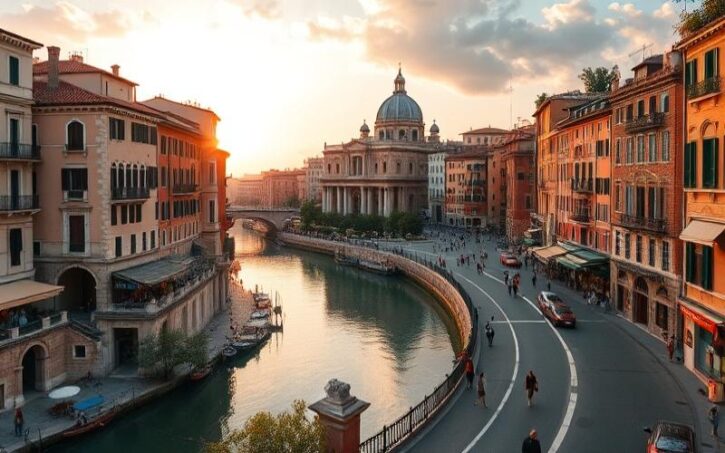
Churches, cathedrals, and basilicas are not merely places of worship but centers of community life. Even for non-believers, these buildings are often important landmarks in Italian towns and cities. It is not uncommon to see Italians making the sign of the cross when passing a church, even if they are not particularly devout.
Religious holidays mark the Italian calendar, offering numerous occasions for celebrations and gatherings. Holidays like Christmas, Easter, the Assumption (August 15), and All Saints’ Day (November 1) are national public holidays. These periods are characterized by specific traditions, elaborate family meals, and often partial or complete closures of businesses and services.
Major Religious Holidays and Their Impact on Daily Life
For expatriates, it is crucial to understand the importance of these religious holidays and their impact on daily life in Italy.
Christmas (Natale)
The Christmas season in Italy runs from December 8 (Feast of the Immaculate Conception) to January 6 (Epiphany). During this period, Italian cities are adorned with festive decorations, Christmas markets flourish, and the atmosphere is one of celebration. Christmas Eve (la Vigilia) is often marked by a fish dinner, while Christmas Day is an occasion for a large family meal.
For expatriates, it is important to note that many businesses and services operate at a reduced pace during this period. It is advisable to do your shopping in advance and expect extended closures, especially between Christmas and New Year’s.
Easter (Pasqua)
Easter is a major holiday in Italy, with celebrations beginning on Palm Sunday and culminating on Easter Sunday. Holy Week is marked by numerous processions and religious ceremonies, particularly in the cities of Southern Italy. Easter Monday (Pasquetta) is also a public holiday and is traditionally dedicated to outdoor picnics.
Expatriates should be aware that during this period, many tourist sites may be busier than usual. It is recommended to plan ahead for travel and restaurant reservations.
The 2025 Jubilee: An Exceptional Event
The year 2025 will be particularly significant for Italy with the celebration of the ordinary Jubilee. This event, which occurs only every 25 years, will attract millions of pilgrims to Rome and other Italian cities. Pope Francis has chosen the theme “Pilgrims of Hope,” emphasizing hope as a driving force of faith.
For expatriates living in Italy, the 2025 Jubilee will have a significant impact on daily life, especially in Rome and major cities. One can expect:
– A significant increase in the number of visitors, particularly in Rome and the Vatican. – Special religious ceremonies and events throughout the year. – Possible saturation of transportation and accommodations. – Enhanced security measures in places of worship and tourist sites.
Expatriates are advised to stay informed about planned events and plan their travel accordingly, especially if they reside in areas likely to be heavily crowded during this period.
Good to know:
The 2025 Jubilee will begin on December 24, 2024, with the opening of the Holy Doors and will end on January 6, 2026. During this period, many special masses and ceremonies will be organized, offering a unique opportunity to experience Italian religious fervor.
Codes of Conduct and Respect for Religious Traditions
For expatriates, it is essential to understand and respect the codes of conduct related to religious practices in Italy. Here are some important points to keep in mind:
Dress Code in Places of Worship
- Avoid shorts and very short skirts
- Cover your shoulders
- Remove hats or caps inside churches
In some highly frequented places, such as St. Peter’s Basilica in Rome, these rules are strictly enforced, and access may be denied to those who do not comply.
Respecting Silence and Solemnity
Even though many Italian churches are tourist attractions, it is important to remember that they are first and foremost places of worship. Therefore, one should speak in a low voice, turn off cell phones, and avoid taking photos during religious services.
Participation in Ceremonies
Expatriates are generally welcome to attend masses and religious ceremonies, even if they are not Catholic. However, it is important to respect local practices. For example, communion is reserved for baptized Catholics.
Respecting Local Traditions
Each region of Italy has its own religious traditions, often linked to local patron saints. Participating in these celebrations, even as a simple spectator, is an excellent way to immerse yourself in the local culture. Patron saint festivals are often occasions for processions, fireworks, and street parties.
Good to know:
Many Italian cities have their own patron saint, celebrated with an annual festival. For example, Rome celebrates Saints Peter and Paul on June 29, while Florence honors Saint John the Baptist on June 24. These days are often local public holidays and are marked by special festivities.
Religious Freedom and Practicing Other Religions in Italy
Although Italy is predominantly Catholic, the Italian Constitution guarantees freedom of religion. Expatriates of different faiths can generally practice their religion without difficulty, especially in larger cities.
Non-Catholic Religious Communities
Major Italian cities are home to communities of various faiths, including Protestant, Orthodox, Jewish, and Muslim. Rome, Milan, and Florence, in particular, offer a variety of places of worship for different religions.
- Protestant communities: Lutheran, Anglican, and Evangelical churches can be found in several Italian cities.
- Jewish community: Italy is home to one of the oldest Jewish communities in Europe, with historic synagogues in cities like Rome, Venice, and Florence.
- Muslim community: Although less visible, the Muslim community is growing, with mosques and Islamic cultural centers in several cities.
Resources for Expatriates
For expatriates looking to practice their religion or connect with their religious community in Italy, several resources are available:
- Embassies and consulates: They can often provide information on local places of worship and religious communities.
- Expat groups: Expat associations and online groups are excellent sources of information for finding places of worship and religious communities.
- Specialized websites: Some websites list places of worship for different religions in major Italian cities.
The Impact of Religious Practices on Professional Life
For expatriates working in Italy, it is important to understand how religious practices can influence professional life.
Religious Public Holidays
Many public holidays in Italy are linked to Catholic religious feasts. Businesses and offices are generally closed on these days. The main religious public holidays include:
- Epiphany (January 6)
- Easter Monday
- Assumption (August 15)
- All Saints’ Day (November 1)
- Immaculate Conception (December 8)
- Christmas (December 25)
- St. Stephen’s Day (December 26)
Workplace Accommodations
Italian employers are generally open to requests for accommodations for religious practices, as long as it does not interfere with professional obligations. Expatriates can discuss their specific needs with their employer, such as breaks for prayer or time off for non-Catholic religious holidays.
Conclusion: Embracing Religious Diversity in Italy
Living in Italy as an expatriate offers a unique opportunity to discover and appreciate the country’s rich religious tradition. Whether one is a believer or not, understanding and respecting these practices is essential for successful integration into Italian society.
Italy, while deeply rooted in its Catholic tradition, is increasingly open to religious diversity. Expatriates will generally find a welcoming environment to practice their own religion, while also having the opportunity to participate in local traditions if they wish.
Ultimately, the religious experience in Italy can be a rewarding aspect of expatriate life, offering unique perspectives on Italian culture, history, and values. By approaching this dimension with an open mind and respect, expatriates can not only integrate more easily but also enrich their own understanding of spirituality and cultural diversity.
Good to know:
Even for non-believers, participating in local religious festivities can be an excellent way to immerse yourself in Italian culture and build bonds with the local community. These events are often an opportunity to discover unique culinary, musical, and artistic traditions.
Disclaimer: The information provided on this website is for informational purposes only and does not constitute financial, legal, or professional advice. We encourage you to consult qualified experts before making any investment, real estate, or expatriation decisions. Although we strive to maintain up-to-date and accurate information, we do not guarantee the completeness, accuracy, or timeliness of the proposed content. As investment and expatriation involve risks, we disclaim any liability for potential losses or damages arising from the use of this site. Your use of this site confirms your acceptance of these terms and your understanding of the associated risks.

Cyril Jarnias is an independent expert in international wealth management with over 20 years of experience. As an expatriate himself, he is dedicated to helping individuals and business leaders build, protect, and pass on their wealth with complete peace of mind.
On his website, cyriljarnias.com, he shares his expertise on international real estate, offshore company formation, and expatriation.
Thanks to his expertise, he offers sound advice to optimize his clients' wealth management. Cyril Jarnias is also recognized for his appearances in many prestigious media outlets such as BFM Business, les Français de l’étranger, Le Figaro, Les Echos, and Mieux vivre votre argent, where he shares his knowledge and know-how in wealth management.





