
 Published on and written by Cyril Jarnias
Buying to rent in Cyprus is no longer an exotic gamble. The market has become massive, structured, and above all very transparent for a wealth investor seeking regular income, inflation protection, and a reasonable capital appreciation perspective, without jumping into pure speculation.
Apartments account for nearly 68% of residential transactions in the country
However, not all segments are equal, especially for a wealth investor thinking in a five-to-ten-year horizon, capital preservation, and stable cash flows. Between student residences, urban apartments, vacation rentals, upscale villas, and commercial real estate, you need to sort through them.
The goal of this article: map out the market segments that truly deserve the attention of a wealth investor looking to buy to rent in Cyprus, and those best approached with caution.
A favorable market context, but increasingly selective
Cyprus is emerging from several years of real estate euphoria. The total value of real estate transactions reached about €5.7 billion, with a strong residential dominance: nearly 67% of total value and over 14,000 housing transactions in a recent year. Apartments drove most of the value growth, amid rapid urbanization and the rise of the “buy‑to‑let” model.
After annual increases of 7 to 8% in 2022-2023, residential price growth is slowing to 3-4% per year. Apartments are rising more (around 4.8%) than houses (around 2%), and new energy-efficient constructions show the best appreciation (4 to 5% per year).
Foreign demand experienced a dip of around 10% in 2024, before rebounding with an increase of nearly 24% in sales to non-residents in a recent quarter. Overall, foreign buyers still account for about 44 to 45% of market value, with a trio of very active nationalities (British, Russians, Greeks), joined by Israelis, Lebanese, Romanians, Ukrainians, and a whole population of “digital nomads.”
In this context, the key phrase recurring among analysts is telling: buying a property to rent in Cyprus in 2026 is “selectively interesting.” In other words, it’s no longer enough to buy anything anywhere. The promising segments are clear, and the areas to avoid or handle with caution are equally clear.
Reminder: what a “buy‑to‑let” investment in Cyprus really entails
Buying to rent in Cyprus is first and foremost an income investment. A “buy‑to‑let” property is a home acquired specifically to generate rent, whether through long-term leases (local residents, expats, students) or short-term rentals (tourism, Airbnb, corporate).
In practice, two models coexist:
The rental market splits into two distinct segments: on one hand, long-term, quieter, with leases of one year or more, regular monthly rents, and lighter management; on the other, short-term, very dynamic along the coast, with high gross income but heavy management intensity, seasonality, and operating costs.
Average gross yields set the framework: around 5.1 to 5.4% across residential, with a real spread between properties and locations. Most landlords see a 1.5 to 2 percentage point gap between gross and net: in practice, net yields hover around 3.5 to 4% on “standard” properties, and can reach 5% or slightly more on optimized strategies.
For a wealth investor, the key is not to chase the 12% gross from a villa rented a few weeks a year, but to find the right combination of capital safety / rental visibility / taxation.
The main families of segments in Cyprus
The Cypriot market is structured around a few major families of rental products:
Discover our wide range of properties suited to all profiles and needs
In business centers and university cities
Dedicated student residences
Short-term vacation apartments and villas
High-end homes for affluent expat clientele
Offices, retail, warehouses
Agritourism, tourism projects, ultra-luxury real estate
Each of these families has different risk, return, and liquidity profiles. Rather than thinking only in terms of “city,” it’s useful to cross-reference location, property type, and operating model.
Segment #1: Modern urban apartments, the foundation of rental wealth
For a wealth investor, this is the bedrock of the Cypriot market. The numbers are telling: apartments account for nearly 68% of residential transactions, show the best price appreciation over time, and have recorded the strongest rent increases.
Gross apartment yields by main city hover around 5%:
| City | Average gross apartment yield (order of magnitude) |
|---|---|
| Limassol | ~5.5–6% (peak at 7% on well-located small units) |
| Nicosia | ~4.5–5.5% |
| Larnaca | ~4–5.5% |
| Paphos | ~4–5.5% (excluding short-term) |
| Famagusta | ~3.5–5% (highly seasonal) |
The recommendation that recurs in studies is clear: for a buy‑to‑let investment, the best vehicles remain modern apartments in urban or tourist centers, particularly in:
– the city centers of Limassol, Nicosia, and Larnaca;
– neighborhoods undergoing gentrification or boosted by major infrastructure projects (Zakaki in Limassol, Mackenzie in Larnaca, Kato Paphos).
New constructions with high energy ratings outperform, with price increases of 4 to 5% per year and higher rents than older buildings, while requiring less maintenance.
For a wealth investor, this segment checks several boxes:
Apartments offer resale liquidity significantly higher than isolated villas. Rental demand is supported by a stable mix including young professionals in tech and finance, civil servants, service employees, expats, and students. Management is easier, often through a local agency or manager. Additionally, seasonality exposure is limited, especially in Nicosia and the business districts of Limassol or Larnaca.
It’s not the most spectacular segment, but it is the backbone of a wealth portfolio.
City focus: where to look for “wealth” apartments?
Each major Cypriot city plays its own part, with a unique profile.
Limassol, the economic capital, remains the most expensive and most international hub. Average rents are very high: a two-bedroom easily rents for around €2,000 to €2,500 per month in central or waterfront neighborhoods, a well-located studio around €1,400. Gross yields average between 5.5 and 6%, with nice cases at 6.5–7% on small apartments (studios, one-bedrooms) near employment hubs.
Neighborhoods like Mesa Geitonia, parts of Neapolis (off the first seafront line), Zakaki, or the residential part of Germasogeia often offer the best compromise between yield and appreciation potential.
Gross apartment yields in Nicosia range from 4 to 6%, with peaks of 5 to 7% for student housing.
Larnaca is the city to watch for the coming decade. Entry prices remain more accessible than Limassol (two-bedroom in the city center sometimes still between €120,000 and €180,000), but price dynamics are among the fastest in the country, especially around the port and marina undergoing redevelopment, and coastal neighborhoods like Mackenzie or Drosia. Gross yields are around 4.5–5%, but with potential for rent and price growth above the national average.
Paphos remains a market much sought after by European retirees and teleworkers, with healthy rental demand, but a stronger mix between long-term stays and tourist stays. On a two-bedroom around €250,000, a monthly rent of €1,000 to €1,200 is common in neighborhoods like Kato Paphos, yielding roughly 4.8–5.8% gross.
For a wealth investor, these modern urban apartments form the “core” of the portfolio: reasonable yield, liquidity, visibility.
Segment #2: Student housing, the new safe-haven asset
This is one of the most striking phenomena in the recent Cypriot market: student real estate has come out of the shadows to become a full-fledged asset class, with occupancy and yield dynamics increasingly attracting institutional investors… and savvy individuals.
Cyprus has established itself as a regional educational hub, notably through Nicosia and, in the north of the island, Famagusta and Kyrenia, which concentrate many universities. The student population, very international, is growing strongly, and demand far exceeds the supply of public housing.
The features that interest a wealth investor are very clear:
Contracts are typically signed for 12 months, unlike pure university towns where they last 9 or 10 months. Rental vacancy is almost nonexistent in the off-season, with occupancy rates exceeding 90% in major student cities. Demand is extremely predictable and independent of the classic tourist season. Finally, this market shows resilience in times of economic uncertainty, as education remains a priority even during economic downturns.
Student residences in Cyprus now offer gross yields of 4 to 8% depending on location, property quality, and service level. On a European scale, student residences are even the third-largest real estate segment, with average yields of 6 to 9% and occupancy rates above 90% in major university cities.
In Nicosia, student studios offer net annual yields of 5 to 7%. In neighborhoods like Engomi and Aglandja, near campuses, PBSA investment includes professional complexes with housing, coworking, laundries, and lounge areas.
For a wealth investor, this segment checks several criteria:
– stable rental income, little subject to tourist cycles;
– multi-year visibility thanks to the announced growth in student numbers, especially international;
– possibility to go through specialized operators or proptech platforms that secure long-term leases in advance.
The main drawback: the fine selection of location (immediate proximity to campuses, transport, services) and the risk of oversupply if too many projects launch simultaneously in a given micro-neighborhood. But in already established major university centers, student housing is today one of the segments closest to a “high-coupon real estate bond.”
Segment #3: Vacation rentals in tourist areas – handle as a “dynamic” pocket
It’s impossible to talk about Cyprus without mentioning tourism. The island welcomes more than 4 million visitors per year, arrivals have increased by more than 12% in a recent year, and certain nationalities (British, Israelis, Poles) account for significant shares of the flow.
Logically, short-term rentals have exploded. It is estimated that there are around 16,000 active tourist rentals (Airbnb, Booking, etc.) on the island. In areas like Paphos, Ayia Napa, Protaras, or certain coastal neighborhoods of Limassol, a well-managed short-term property can theoretically show dream gross yields: 8 to 12%, sometimes more in high season.
Aggregated data confirms this potential:
In some highly touristy areas like Paphos or Ayia Napa, annualized gross yields in high season can temporarily reach 12%
The problem is not the gross, but the net. The numbers show that:
– occupancy rates easily reach 80–90% in high season (May to October), but can drop below 40% in winter;
– professional management fees (check-in, cleaning, maintenance, platform management) frequently absorb 20 to 25% of gross income;
– utility bills (water, electricity, internet), furniture and its turnover, and accelerated wear further eat into the yield.
The difference in net yield between short-term and long-term rentals is often only 10 to 20%, not 50 or 100%. For example, a property at 6% gross and 4% net in long-term could reach 9% gross and 5% net in short-term, with heavier management and seasonal volatility.
For a wealth investor, this segment can have its place, but rather as a limited “dynamic” pocket:
– interesting for boosting the overall portfolio yield;
– makes sense if you can delegate management to a reliable, well-established local operator;
– to prioritize in truly premium locations (beach proximity, marina, historic center, strong tourist hubs).
On the other hand, basing an entire wealth strategy on a single ultra-seasonal destination like Ayia Napa carries obvious risk: winter vacancy, volatility of tourist flows in the event of a geopolitical or health shock, possible regulatory pressure on vacation rentals.
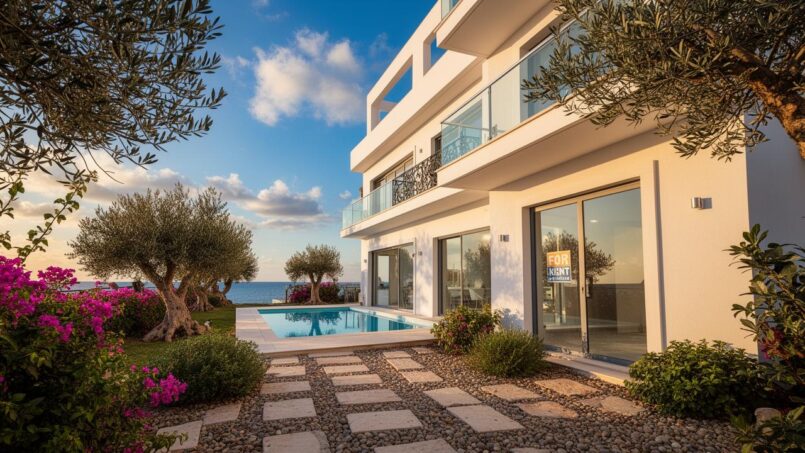
Segment #4: Villas and family homes for expats – moderate yield, capital protected
Houses and villas account for about one-third of residential transactions. They are the archetype of the “wealth” asset in many investors’ eyes: garden, pool, comfortable space, quality residential location, sometimes in gated communities.
In terms of gross performance, this is not the most profitable segment: house yields average around 3% gross nationwide, significantly less than apartments. This differential is reflected in yield statistics: about 5.4% for apartments versus about 3% for houses.
On the valuation side, houses appreciate more slowly than apartments: around 2 to 3% annual increase, compared to 4 to 5% for well-rated new apartments. But again, the devil is in the details:
– in some coastal areas popular with expat families, villas and subdivision houses show very strong rental demand;
– neighborhoods in Limassol like Agios Tychonas, upper Germasogeia, or the northern arcs Parekklisia / Palodia attract executives and managers willing to sign long leases to house their families;
– around Paphos, areas like Chloraka, Tala, or zones near schools and health services see sustained demand for houses for retirees or relocated families.
Well-positioned, high-performing villas in these micro-markets offer net yields close to 4 to 5%.
For the wealth investor, the appeal of this segment is often twofold:
– diversification: limiting correlation with the very fast cycles of urban apartments;
– “personal use” dimension: possibility of occupying the property a few weeks a year, especially for a retiree or family wishing to alternate between residence in Cyprus and another country.
However, you must accept:
– a higher entry ticket than a standard apartment;
– heavier maintenance costs (pool, garden, structure);
– slightly slower resale liquidity than a small city apartment.
Segment #5: Office and commercial real estate – a diversification tool, not the core of the portfolio
The commercial segment (offices, retail, warehouses) represents only about 2% of total sales value in a typical year, for just over 500 transactions. Yet gross yields are theoretically higher: around 5.6% for offices, close to 5.8% for retail, and a little over 4% for warehouses.
The problem, for a private wealth investor, is granularity:
Many relevant commercial deals exceed €500,000, but vacancy can be longer and riskier in case of a sector downturn (retail being the least appreciated with weak rent and value growth), while technical and legal management is more complex (commercial leases, standards).
However, some very targeted niches can make sense for diversification:
– modern office space in the administrative cores of Nicosia or the tech corridors of Limassol, with yields around 5.5–7% and corporate tenants;
– tourism or leisure projects in emerging coastal areas, but these are more opportunistic than purely wealth-oriented.
For a wealthy investor or a family structure looking to complement a portfolio already well-stocked with residential, a few well-selected office lines can provide a good yield / lease duration combination. But it is not, for a typical private investor, the priority segment.
Segment #6: Luxury and ultra-luxury – capital, image, but high selectivity
Cyprus has become one of the most active luxury markets in Europe, with a high-end segment representing about 8% of market value, for just over 200 annual transactions above €1.5 million. Limassol clearly dominates this niche, although Paphos has significantly increased its high-end market share.
The properties involved: penthouses in residential towers, waterfront villas, homes in golf resorts, marina properties, etc. Ticket prices range:
– “entry-level luxury” segment between €1 and €1.5M;
– core range between €1.5 and €3M;
– “trophy assets” above €3, or even €5 or €10M for the rarest products.
On the rental yield side, data shows that: real estate investments can generate significant passive income depending on location and property type.
For investment products like managed prestige residences, announced gross yields are typically 5 to 9%. However, for individual ultra-villas, the approach is more wealth-oriented than rental: they serve as a value refuge and capital reserve, with possibly a few very well-paid rental weeks.
For an international wealth clientele, these properties make sense in a geographic diversification and quality of life logic. But again, this is not the basis of a rental portfolio. These are rather prestigious cornerstone assets to add once the backbone (apartments, student residences, possibly family villas) is already in place.
Where are the best yield/safety combinations for a wealth investor today?
By cross-referencing yield, stability, liquidity, and cash flow visibility, a few segments clearly stand out for a wealth investor wanting to buy to rent in Cyprus.
1. New or recently built, well-rated energy apartments in structured cities
Over time, apartments remain:
– the most liquid assets;
– those benefiting most from rental pressure (strongest rent increases, especially in Limassol and Nicosia);
– those showing the most robust price increases.
Studies forecast for 2026 a price increase of 4 to 6% on the best modern apartments, particularly two-bedroom units in established, well-served neighborhoods. Gross yields hover around 5.5–6% in Limassol (up to 7% on some well-located small units), around 5% in Nicosia, 4.5–5% in Larnaca and Paphos.
For a wealth investor, the recipe that recurs often is simple: target 1 or 2-bedroom apartments, new or very recently renovated, with good energy performance, in neighborhoods like:
Distribution of attractive neighborhoods by major city: Limassol, Nicosia, Larnaca, and Paphos
Mesa Geitonia, interior parts of Neapolis, Zakaki, residential Germasogeia
Engomi, Strovolos, Aglandja
City center, Mackenzie, port/marina area
Kato Paphos, Universal, Chloraka
This yields a realistic net yield range around 3.5–4.5%, with high demand visibility and honorable resale prospects.
2. Dedicated student housing and university-area apartments
For a wealth investor seeking a quasi-defensive asset, student housing in Cyprus offers a very attractive mix:
– regular income 12 months a year in major university hubs;
– occupancy rates above 90%;
– net yields frequently between 5 and 7% where demand is tight.
In Nicosia, the student-friendly neighborhoods (Engomi, Aglandja, around the major universities) are emblematic. Proptech platforms like MyStudentFlat illustrate the segment’s professionalization: they connect developers and investors, secure long leases, and pool management.
For a wealth investor looking to smooth out tourist risks and benefit from demand largely disconnected from cyclical uncertainties, this is today one of the most solid segments.
3. Quality apartments in growth pockets in Larnaca and Paphos
Price data shows that “real” value growth is no longer only on the Limassol seafront. Neighborhoods like:
– Mackenzie and Drosia in Larnaca;
– Kato Paphos and Universal in Paphos;
– Zakaki and Mesa Geitonia in Limassol
Annual price increases in Larnaca are between 5 and 8%, well above the national average.
– entry prices still much lower than Limassol or some sectors of Paphos;
– a major port and marina redevelopment project;
– rapid upscaling of new construction programs.
For a wealth investor, the idea is not to speculate on prices doubling in three years, but to commit to a 5–10 year trajectory where:
– the property’s nominal value increases steadily;
– rent follows demand pressure (expats, professionals, tourists);
– resale remains easy, because the neighborhood is booming.
These are typically the segments where you can consider a growth pocket in the portfolio, alongside more “cushion” segments like Nicosia or student housing.
Long-term vs. short-term: which to favor in a wealth approach?
The numbers from the Cypriot market are clear:
– short-term rentals (Airbnb, vacation) often show gross yields 2 to 4 percentage points higher than long-term rentals;
– but after management, vacancy, fees, and taxes, the net differential often shrinks to 1 point or slightly more.
For a wealth investor, the question is therefore not only “where is the highest yield?”, but “what kind of rental cash flow do I want to receive, and at what cost in time, complexity, and risk?”.
Wealth investor profiles tend to prioritize: capital security, wealth preservation, and stable income. They are generally attracted to less risky investments, such as real estate or bond allocations, to ensure long-term financial stability.
Favor long-term rentals in cities with structural demand (Nicosia, Limassol away from the tourist seafront, Larnaca, Paphos outside purely vacation neighborhoods). You can optionally add a small short-term rental component in a well-established resort, via a professional manager, to boost overall yield without unbalancing the portfolio.
An interesting emerging strategy is the hybrid model: rent short-term during high season (May–October) and switch to medium or long-term rentals (3 to 6-month contracts) the rest of the time, especially for digital nomads or wintering retirees. Studies show that this type of setup, when well executed, can generate average yields around 8–10% gross, while partially smoothing seasonality.
Financial and tax framework: why Cyprus is structurally pro-investor
The tax reform that recently took effect has strengthened the appeal of renting in Cyprus for landlords, especially wealth-oriented ones:
The reform eliminates stamp duty on new contracts, abolishes the special defense contribution (about 2.25% of gross revenue), raises the tax-exempt income threshold to €22,000 per year, and increases deductions on real estate capital gains (up to €150,000 for a primary residence). These measures reduce transaction costs, increase net rental yields, and lower taxes on rental income and capital gains.
Add to that a structurally favorable environment:
– no annual property tax (national property tax has been abolished; only modest municipal fees remain);
– comparatively high rental yields for Southern Europe (5.4% average on apartments, versus typically 3–4% in Greece or Portugal);
– a banking system that readily finances rental investments (loans up to 60–70% of value, down payments of 30–40%, rates falling around 2–4.5% on new builds);
– residence-by-investment programs (so-called “Golden Visa”) starting at €300,000, which interest a non-European wealth clientele.
For a wealth investor, the cumulative effect of these elements is significant: an already decent net yield is further improved by legislation, and the recurring tax burden on ownership remains low compared to other European countries.
How to concretely structure a “buy-to-let” wealth strategy in Cyprus?
Without getting into operational details (which always require a local lawyer and tax advisor), a few guidelines emerge from the market for a wealth investor:
Anchor the portfolio on modern urban apartments in areas with sustainable demand like Nicosia, certain Limassol neighborhoods, growing Paphos and Larnaca. Allocate 20 to 40% to resilient segments: student housing, locations near schools and universities, administrative districts. Reserve a small pocket for short-term rentals in 1 or 2 key tourist zones, managed by a reputable local operator. Include at least one personal-use asset (villa or large house) if the investor plans recurrent occupancy, while renting it the rest of the time. Avoid over-concentration on micro-markets that are too seasonal or dependent on a single nationality or economic sector.
The holding horizon must be thought of as long-term: with about 4–6% price increase expected on average for quality apartments and net rental yields around 4–5%, it is over five to ten years that the combination of income + appreciation makes full sense. Conversely, very short holdings are mechanically reduced by entry fees, exit costs, and capital gains taxes.
In summary: the segments most deserving a wealth investor’s attention
Without claiming to be exhaustive, a clear hierarchy emerges from the data:
1. Modern apartments in urban centers and business districts These are the “bonds” of the portfolio: solid yield (gross 5–6%, net 3.5–4.5%), liquidity, deep demand, and geographic diversification (Limassol, Nicosia, Larnaca, Paphos).
2. Student residences and housing near campuses A quasi-defensive asset: near-permanent occupancy, high-end net yields (often 5–7%), a segment undergoing institutionalization. Nicosia is the centerpiece of this puzzle.
Investing in apartments located in growth pockets of Larnaca (Mackenzie, Drosia, marina area), Paphos (Kato Paphos, Universal), and certain Limassol neighborhoods (Zakaki, Mesa Geitonia) allows combining a decent rental yield with above-average price growth, thus offering an interesting lever to boost portfolio value over ten years.
4. A careful selection of family villas in expat areas Less profitable gross, but highly sought after for long-term rentals in certain Limassol or Paphos neighborhoods, they play a wealth and usage role, with sustained resale value.
This pocket can slightly increase the overall yield, provided you accept the management complexity or delegate it, and restrict it to truly prime locations.
In the background, the accommodating tax regime, the absence of annual property tax, the relative solidity of the Cypriot economy, and the still-positive trajectory of rents make Cyprus fertile ground for a buy-to-let wealth strategy. Provided, now, that you play the game of fine selection, rather than relying on the general rising tide to lift all boats.
A wealth project or a question? Contact us now to speak with a wealth management expert.
Disclaimer: The information provided on this website is for informational purposes only and does not constitute financial, legal, or professional advice. We encourage you to consult qualified experts before making any investment, real estate, or expatriation decisions. Although we strive to maintain up-to-date and accurate information, we do not guarantee the completeness, accuracy, or timeliness of the proposed content. As investment and expatriation involve risks, we disclaim any liability for potential losses or damages arising from the use of this site. Your use of this site confirms your acceptance of these terms and your understanding of the associated risks.

Cyril Jarnias is an independent expert in international wealth management with over 20 years of experience. As an expatriate himself, he is dedicated to helping individuals and business leaders build, protect, and pass on their wealth with complete peace of mind.
On his website, cyriljarnias.com, he shares his expertise on international real estate, offshore company formation, and expatriation.
Thanks to his expertise, he offers sound advice to optimize his clients' wealth management. Cyril Jarnias is also recognized for his appearances in many prestigious media outlets such as BFM Business, les Français de l’étranger, Le Figaro, Les Echos, and Mieux vivre votre argent, where he shares his knowledge and know-how in wealth management.





