
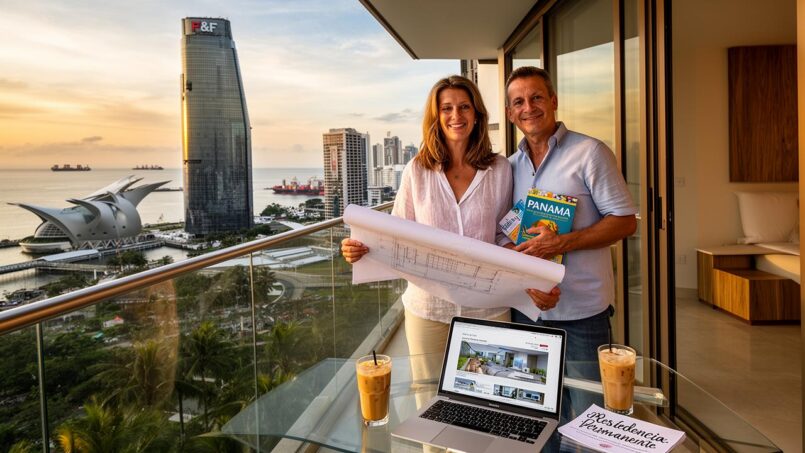
 Published on and written by Cyril Jarnias
Moving to Panama is attracting more and more retirees, families, investors, and digital nomads. Lower cost of living than in North America or Western Europe, territorial taxation, relatively accessible permanent residency, a U.S. dollar economy, and a solid healthcare system—the country has many advantages.
Between visas, housing, banking, taxes, healthcare, and labor laws, this 2025-2026 guide provides a concrete, step-by-step process to prepare your move.
Understanding the “Panama Deal” Before You Pack Your Bags
Before you start stacking boxes, it’s crucial to grasp what sets Panama apart from other expat destinations.
The country has used a currency pegged to the U.S. dollar for over a century, which eliminates exchange rate risk on a daily basis. The economy is dollarized, and prices and contracts are in USD or balboas, at perfect parity. For an expat paid in dollars or euros, budgeting is very straightforward.
Panama applies a strict territorial tax system: only locally generated income is taxable. This means salaries paid by a foreign employer, rents from properties located outside the country, dividends, and pensions received from abroad are excluded from Panama’s tax base. This regime is particularly advantageous for retirees and remote workers paid by foreign entities, although it does not exempt you from meeting tax obligations in your country of origin.
On the real estate side, the legal framework is one of the most open in the region. For the most part, a foreigner enjoys the same property rights as a Panamanian citizen. You can buy, sell, mortgage, rent, or bequeath a property in your name, with no limit on the number of properties and no requirement for a local partner. The only major restriction concerns a 10 km strip along the borders with Costa Rica and Colombia, where foreigners cannot hold titled land, as well as certain islands and indigenous territories. Elsewhere, foreigners are fully protected by the Constitution (Article 47).
Major procedures like MRIs, surgeries, or childbirth are 40% to 60% cheaper than in North America.
On the flip side, this is not a “free paradise”: you must navigate a maze of visas and procedures (often with a lawyer), budget for private health insurance, and accept a sometimes slow administrative environment.
Choosing the Right Visa: Retiree, Investor, Employee, or Nomad?
The first major decision concerns your residency status. Panama offers several entry points, each with a very different logic depending on whether you are a retiree, remote worker, investor, or employee of a local company.
Main Categories of Long-Term Visas
Options actually used in 2026 center around a few modern programs, most of which grant permanent residency relatively quickly.
The Pensionado (Retiree) Visa is for people with a pension or lifetime annuity. It grants permanent residency right away and opens the door to a wide range of discounts (healthcare, leisure, transportation, etc.).
The Friendly Nations Visa targets citizens of about 50 “friendly” countries (USA, Canada, most EU countries, Australia, several Asian and Latin American countries). It now requires demonstrating real economic ties (local employment or real estate purchase) but leads to permanent residency after two years.
The Qualified Investor Visa is designed for large investors: a high investment amount, but permanent residency in record time (about one month of administrative processing once the complete file is submitted).
The Economic Solvency / Self-Sufficiency Visas allow you to settle by immobilizing a significant amount of capital (real estate and/or term bank deposit). They also typically grant immediate permanent residency.
Alongside these long-term programs, the short-stay visa for remote workers (digital nomad) allows you to stay up to 18 months as a non-resident, with no direct path to permanent residency.
The Pensionado Visa: The Top Option for Retirees
For a French-speaking retiree looking for stable residency and minimal hassle, the Pensionado Visa is usually the simplest route. It grants permanent residency upon approval, with no provisional stage.
To be eligible, you must prove a lifetime pension income of at least $1,000 per month from a recognized entity. For each dependent, an additional $250 per month is required.
An important advantage: if you purchase a property in Panama worth at least $100,000, the pension threshold drops to $750 per month. This mechanism clearly encourages retirees to become property owners.
Additionally, the program provides a set of discounts on many items (healthcare, transportation, leisure). In practice, these rebates can save some households between $200 and $400 per month, depending on their use of medical services and leisure activities.
The process requires a heavy but standardized dossier: apostilled criminal record certificate, medical certificates issued by a Panamanian doctor, proof of pension, civil documents (marriage, children’s birth certificates), all legalized and translated into Spanish if necessary.
The Friendly Nations Visa: For Active Professionals and Freelancers from “Friendly” Countries
The Friendly Nations Visa has changed significantly since 2021. It’s no longer enough to open a “shell company” or deposit a small amount in a local account. Now, the Panamanian government requires real economic ties.
To be eligible, you must:
– Be a citizen of one of the 50 listed “friendly” countries (including most major Western nations);
– Demonstrate “economic or professional ties” to Panama through one of the following:
– Employment with a Panamanian company, with a duly registered contract;
– Real estate purchase of at least $200,000;
– Or, in some related schemes, a significant term bank deposit (in practice, the first two options are most common).
The minimum amount in USD to maintain in a local account to be eligible for the visa.
This route is well-suited for professionals who want to work locally (with a work permit) or for those who were planning a substantial real estate purchase anyway.
The Qualified Investor Visa: Express Residency for a Large Check
The Qualified Investor Visa is for people with high capital who want to secure permanent residency quickly, without going through a temporary phase.
Several investment options exist, the most common being:
– Titled Real Estate: minimum investment of $300,000 until October 15, 2026, after which the amount will increase to $500,000 per Decree 193/2024. The property must be titled, registered at the Public Registry in the applicant’s name, and free of liens, except for a standard mortgage.
– Financial Securities: at least $500,000 invested in eligible Panamanian securities.
– Term Bank Deposit: a three-year deposit of at least $750,000 in a local bank.
The major advantage of this visa: permanent residency is granted almost “day 1” once the file is approved. The administration sets a theoretical review period of 30 business days, although in practice, it takes 30 to 90 days from document preparation abroad, investment, and obtaining the residency card.
In exchange, the investment must be maintained for at least five years to preserve the residency obtained through this route. After five years of permanent residency, it is theoretically possible to apply for naturalization, subject to language and civics requirements.
Other Programs: Self-Sufficiency, Investment, Family, and Work
For those who are neither retirees nor necessarily in the $500,000+ investment bracket, there are so-called economic solvency combinations. These typically require a minimum of $300,000 in real estate, a bank deposit of at least three years, or a mix of both (e.g., $200,000 in property + $300,000 in deposit for a total of $500,000 in some variants).
An investment of at least $160,000 in the capital of a Panamanian company and the creation of several full-time local jobs can lead to temporary residency, then permanent residency after about two years if conditions are maintained.
Family routes also exist: reunification with a Panamanian spouse (subject to the genuineness of the marriage), parents of a child born in Panama (application possible once the child turns five), etc.
Finally, there are work visas for people recruited by a local company. But these procedures are better suited for a traditional employee profile than for a retiree or investor.
The Remote Worker (Digital Nomad) Visa: Stay as a Non-Resident for Up to 18 Months
The short-stay visa for remote workers was established by Executive Decree 198/2021 and remains in effect in 2026, with no major reforms announced.
It is for people who:
– Work exclusively for employers or clients located outside Panama;
– Earn at least $36,000 per year, or about $3,000 per month (the sometimes-cited figure of $50,000 is incorrect according to available data);
– Can prove this stable income through contracts, pay stubs, or bank statements.
This permit grants non-resident status for an initial period of nine months, renewable once for another nine months, for a maximum of 18 months. It is not a direct path to permanent residency. It’s a good tool for “testing” the country over a year while remaining tax-affiliated with your home country, but it does not replace a real settlement project.
Cost of Living: How Much to Budget Each Month?
One of Panama’s major draws remains its significantly lower cost of living compared to Western countries. Available data indicates that daily expenses (excluding rent) are on average about one-third lower than in the U.S., and rents are more than 40% lower on average.
However, amounts vary widely depending on whether you live in Panama City in an upscale neighborhood, a mid-sized city like David or on the Pacific coast, or a mountain village like Boquete.
Sample Budgets by Profile
The table below summarizes average living costs (including housing) reported for 2026, for reference only.
| Profile / Situation | Estimated Monthly Budget (USD) | Summary Comment |
|---|---|---|
| Single – “Budget” mode (incl. rent) | from $1,011 | Modest studio, few outings |
| Single – Inland (Boquete / Coronado) | $1,600 – $2,200 | 1-bedroom apartment + reasonable outings |
| Single – Panama City “Modest” | $1,500 – $2,000 | Average neighborhood, home cooking, public transport |
| Single – Panama City “Comfort” | $1,800 – $2,600 | Good neighborhood, regular restaurants, some leisure |
| Single – Panama City “Premium” | $4,000 – $5,500 | New building, upscale neighborhood, frequent travel |
| Couple – Panama City Mid-range | $2,800 – $3,800 | 2-bedroom, weekly outings, Uber + metro |
| Couple – Inland (Boquete / Coronado, etc.) | $2,500 – $3,500 | Lower cost, little A/C usage |
| Family of 4 – Panama City “Premium” | $4,500 – $6,500 | 3-bedroom, expat neighborhood, car, private school |
| “Comfort/Luxury” Budget – Single | Up to $4,248 | Very comfortable lifestyle |
| “Comfort/Luxury” Budget – Couple | Up to $5,929 | High level of services and leisure |
| “Comfort/Luxury” Budget – Family of 4 | Up to $8,164 | High standard, heavy service consumption |
These ranges remain indicative: a big expense like private school ($600 to $1,200 per child per month in Panama City) or a high-end health insurance plan can quickly drive up the bill.
Housing: Rent or Buy, and at What Price?
The Panamanian real estate market remains overall cheaper than in North America, even though prices are rising.
For purchases, you can find:
– Apartments with ocean views in Panama City starting from $165,000 in some expat neighborhoods;
– Condos in sought-after areas around $150,000 for entry-level;
– Three-bedroom houses in Boquete around $150,000;
– Single-family homes in Coronado or Pedasí in the $185,000 range and up, depending on location.
Recent information on the rental market
Rents have increased by 3% compared to the previous year.
The number of rental inquiries jumped 12% this quarter.
| Type of Housing / Location | Monthly Rent Range (USD) |
|---|---|
| Studio / 1-bedroom in central Panama City | $800 – $1,870 |
| Studio / 1-bedroom outside center (Panama City) | $650 – $1,500 |
| 1-bedroom in El Cangrejo (furnished) | $700 – $1,200 |
| 1-bedroom in San Francisco (furnished) | $800 – $1,400 |
| 1-bedroom in Punta Pacifica (furnished, high-end) | $1,200 – $2,500 |
| 2-bedroom in decent Panama City area (ideal for retired couple) | $1,200 – $1,800 |
| 3-bedroom in San Francisco / Costa del Este (family) | $2,000 – $3,000 |
| 1-bedroom inland (Boquete, Coronado, etc.) | $700 – $1,000 |
| Small 1–2 bedroom house in small towns | $400 – $600 |
Leases typically require a security deposit equal to two months’ rent. In small towns, water and internet are sometimes included in the rent, with houses at $800 per month in Boquete, for example.
Hotels and short-term rentals in Panama City cover a very wide spectrum: from $21 to over $200 per night, with an average around $175–$183 for a double room. In the low season (September–November, or June–July depending on the source), rates for 3- and 4-star hotels can drop significantly.
Daily Expenses: Food, Utilities, Healthcare, Transportation
A single person spends on average between $300 and $450 per month on groceries, more if they mainly shop at international supermarkets. Local markets (“mercados”) can often save you 30% to 40% on fruits and vegetables compared to large chains.
For utilities, water and gas remain cheap, while electricity can be a heavy cost if you run the A/C a lot. A household with heavy A/C use can spend up to $250 per month on electricity, whereas mountain towns (Boquete, El Valle) often don’t need A/C, significantly lowering the bill. Fiber internet subscriptions (100 to 300 Mbps) run around $35 to $60 per month, and unlimited mobile data plans between $15 and $30.
The cost of a specialist consultation in a top-tier hospital in Panama City is up to $120, while an MRI costs up to $400—rates significantly lower than in North America.
Private health insurance for expats is highly recommended. For an adult living inland, policies range from $80 to $150 per month. For a couple over 60, expect $300 to $500. For a family of four in Panama City, premiums often fall between $400 and $700 per month. Pensionado retirees also benefit from discounts on many medical services.
Transportation remains modest: city buses and the metro cost $0.35 to $0.50 per trip, while Uber or urban taxi rides range from $2.50 to $8 depending on distance. A retired couple in Panama City often manages with a transportation budget of $150 to $250 per month (mix of Uber and metro), while a family with a car and fuel may spend between $400 and $600.
Finding Housing Upon Arrival: Hotel, Airbnb, Then Long-Term Lease
For a smooth move, many expats opt for a two-step strategy: temporary accommodation (hotel or Airbnb) for a few weeks while scouting neighborhoods and visiting properties, then signing a long-term lease.
Panama City offers over a thousand hotels, with prices ranging from $20 to over $200 per night. The most popular expat neighborhoods for a first stay include:
Among Panama City’s neighborhoods, you’ll find Casco Viejo, charming but expensive (average nightly rates around $250 in upscale hotels), Avenida Balboa & Marbella with its oceanfront boulevard and luxury buildings, Obarrio, a convenient central area mixing offices, shops, and residences, El Cangrejo, a more residential and lively zone popular for its restaurants, and Punta Paitilla & Punta Pacifica, upscale neighborhoods with numerous residential skyscrapers.
For long-term rentals, it’s wise to:
– Visit the property and neighborhood in person (avoid sending deposits for unverified listings);
– Confirm in writing what is included: furniture, appliances, condo fees, water, internet, etc.;
– Carefully review the lease (duration, termination conditions, rent increases, move-in inspection, deposit).
Agencies specializing in foreign clients can simplify the search but often charge fees. Many expats also use international or local platforms to find their first leases.
Buying Real Estate as a Foreigner: Rules and Steps
For a long-term settlement project, purchasing property can make sense, especially in a country where foreign property rights are solidly protected.
What a Foreigner Is Allowed to Buy
In Panama, an expat can hold full ownership (fee simple) of:
– An apartment (condominium) in Panama City;
– A single-family home in a beach resort like Coronado;
– A titled beach lot in Pedasí;
– Or any other property with a title registered at the Public Registry of Panama with a finca number.
The Constitution guarantees foreigners the same property rights as nationals. There are no quotas, limits on the number of properties, or requirement to involve a Panamanian partner, as long as the property is titled and outside the restricted zones.
The main exceptions concern:
– The 10 km strip along the borders with Colombia and Costa Rica, where foreigners (including companies controlled by foreigners) cannot own titled land;
– Certain islands and insular lands not designated as development zones, where purchase is restricted;
– Lands belonging to indigenous communities, closed to foreign acquisitions;
– Properties held under right of possession (ROP), which do not constitute a secure title, cannot be mortgaged, and do not offer the same guarantees.
It’s crucial to only buy titled properties that are registered and have a finca number identifiable at the public registry. Schemes using companies to circumvent the 10 km limitation are contrary to the spirit of the Constitution and do not offer solid legal protection.
How to Structure Ownership: Individual Name, Company, Foundation
A foreigner can hold property:
– In their own name, which remains the simplest solution for a single primary residence;
– Through a Panamanian corporation (S.A. or LLC), a common strategy for income properties, for reasons of confidentiality, liability limitation, or estate planning;
– Through a Private Interest Foundation (PIF), a tool primarily intended for organizing succession and asset transfer.
The choice of structure has implications for management costs, local taxation, international inheritance, and banking. Prior consultation with a lawyer specializing in Panamanian real estate and wealth planning is highly recommended.
The Purchase Process: From Offer to Public Registry Recording
A typical secure real estate purchase follows several key steps.
It begins with a letter of offer from the buyer to the seller, stating the proposed price, financing terms, deposit amount, and an approximate timeline. Once an agreement is reached, the parties sign a Promise to Purchase Agreement (PPA).
The deposit for a PPA is typically about 10% of the price, ranging between 5% and 10% depending on the case.
During this phase, the buyer hires a lawyer responsible for:
– Verifying the property title at the public registry (no undisclosed mortgages, liens, outstanding debts, consistent boundaries, etc.);
– Confirming the property is titled and not merely a right of possession;
– Reviewing and, if necessary, drafting the contracts (PPA, deed of sale);
– Arranging the use of an escrow account or equivalent scheme to secure the fund transfer;
– Preparing the notarized deed to be signed before a notary and then recorded.
Not all transactions use an escrow account; many closings are done through the lawyers’ accounts or direct bank transfers under legal supervision. However, for a foreigner, using a mechanism where funds are only fully released once the title is duly registered at the Public Registry is the safest practice.
The classic process is as follows:
1. The lawyer confirms the property’s legal status at the registry (title, finca number, no surprise liens). 2. The PPA is signed with a due diligence period clause, during which the buyer can withdraw if a serious issue arises. 3. The deposit (about 10%) is paid. 4. The deed of sale is executed before a notary; transfer taxes are paid to the DGI, notably via Form 106. 5. The deed is presented to the Public Registry for recording. 6. Once recording is effective, the balance of the price is released to the seller. 7. The registry updates the property record: the buyer officially becomes the owner.
Depending on the payment method (cash, installment financing, off-plan purchase), the timeline may vary—some real estate programs involve a series of payments before or during construction, then a balance upon delivery.
Additional Costs: Budget 2% to 5% Beyond the Price
Alongside the purchase price, you need to add:
– Lawyer’s fees;
– Notary fees;
– Public registry recording costs;
– Real estate transfer tax.
A good rule of thumb is to budget an additional 5% of the purchase price to cover these closing costs.
On the tax side, a key change takes effect on January 1, 2026: Law 468 of April 2025 ends the capital gains exemption that previously applied to developers’ first sales. Starting in 2026, all real estate sales, including those by developers, are subject to capital gains tax, which may affect prices and how a resale is structured.
Opening a Bank Account: A Test of Patience for Non-Residents
Panamanian banks are increasingly demanding towards foreigners, especially non-residents. Among the major institutions, only a few still accept account openings for non-residents, and timelines often stretch from 6 to 10 weeks between application and activation.
Panamanian banks (Banco General, Banistmo, Multibank, BAC Credomatic, Banesco, Towerbank, Canal Bank, Credicorp) require a minimum deposit of $500 to $5,000 depending on the profile. Non-residents are accepted with varying tolerance but must demonstrate concrete ties to the country: property ownership, a business, or an ongoing residency process.
Documents typically required include:
To open a bank account in Panama, you must provide: a valid passport (at least 6 months remaining) with a second ID from the same country, a recent proof of address, proof of income for 3 to 6 months, two bank reference letters less than 30 days old, a CV, a description of the source of funds, and proof of ties to Panama (property deed, long-term lease, or lawyer’s letter).
Almost all institutions require physical presence for signature: the process can be initiated remotely with a local lawyer, but final validation requires an interview with an “ejecutivo de relaciones”. Careful preparation reduces the risk of rejection and speeds up the process.
Taxation: Benefiting from Territoriality Without Missteps
One of the major reasons Panama attracts so many expats is its territorial tax system. However, it’s crucial to understand its contours to avoid drawing wrong conclusions.
What Is Taxable in Panama… and What Is Not
The Panamanian tax code states that only Panamanian-source income is taxable, namely:
– Income from economic activities carried out within the territory;
– Compensation for services used or economically exploited in Panama;
– Income from property, rights, or assets located or used in Panama.
Conversely, the following are considered foreign-source income and therefore not locally taxable:
– Salaries paid by a foreign employer for services performed abroad;
– Rents from real estate located outside Panama;
– Dividends from foreign companies;
– Foreign retirement pensions;
– Remote work income as long as clients and economic use are outside the country.
Digital nomads working for European or North American clients, retirees receiving foreign public pensions, and investors living off European rents do not pay tax in Panama on that income, even if they become tax residents, as long as that income remains outside Panama.
Tax brackets for locally earned income remain moderate: progressive rates for individuals (0% to 25%, with the top 25% rate applying to higher brackets), and a 25% corporate income tax rate.
Tax Residency and Certificate of Residency
It is essential to distinguish between:
– Immigration residency (visa, resident card), managed by the National Migration Service (SNM);
– And tax residency, recognized by the Directorate General of Revenue (DGI).
Obtaining a permanent resident card does not automatically make you a tax resident. For Panama to consider you a tax resident, one of the following conditions must be met:
The minimum number of days of physical presence (consecutive or not) required in Panama during the tax year to be considered a tax resident.
To prove this tax residency to another country (e.g., to activate a double taxation treaty or to convince your home country’s tax authority that you have changed residency), you must apply for a Certificate of Tax Residency (Certificado de Residencia Fiscal, CRF) from the DGI. This certificate:
– Is usually issued for one year and must be renewed;
– Requires, among other things:
– An entry/exit record from the SNM;
– Copies of passport pages with stamps;
– Proof of permanent housing (property deed or long-term lease);
– Utility bills, a Panamanian bank account, etc.;
– Sometimes a sworn statement stating that your income is foreign-source and therefore non-taxable;
– Will not be issued if you do not meet the presence or center-of-interest criteria.
Note: Even if you are a tax resident, if you receive no Panamanian-source income, you have no local filing obligation. However, if you engage in taxable activity in Panama (local business, Panamanian employment, local rental income), you must file an annual tax return.
The Specific Case of Digital Nomads
The remote work visa does not automatically turn its holder into a tax resident. Many holders technically remain non-residents in the eyes of the DGI, especially if they keep their physical presence below 183 days per year.
They are then not taxed in Panama on their foreign income and cannot obtain a Panamanian tax residency certificate. They often remain liable in their home country. This intermediate status can be interesting for people who simply want to enjoy the country without restructuring their entire international tax situation.
Healthcare: Choosing Between Public and Private Systems
The Panamanian healthcare system consists of three main sectors:
– MINSA, the network of public clinics and hospitals managed by the Ministry of Health;
– Caja de Seguro Social (CSS), the social security system funded by payroll contributions;
– A private sector that is very developed in Panama City and, to a lesser extent, in David.
Legal residents have access to public healthcare (MINSA, CSS), but most expats prefer private hospitals, which are better equipped, less crowded, and more often English-speaking.
The hospitals most favored by expats in Panama City include:
– Pacifica Salud – Hospital Punta Pacífica, affiliated with Johns Hopkins Medicine International, considered a luxury facility;
– Hospital Nacional, a large private multi-specialty group;
– Centro Médico Paitilla / Hospiten Paitilla, another leading private player.
The cost of one night in a top-tier private hospital like Punta Pacífica can reach $800 to $1,200.
Many expats take out local or international private health insurance, with monthly premiums generally ranging from $80 to $700+, depending on age, coverage, and deductible.
The public systems (MINSA and CSS) remain extremely cheap (consultations for a few dollars), but wait times, overcrowding, and language barriers limit their appeal for newcomers.
Working in Panama: Residency and Work Permit Are Two Separate Processes
For those who wish to work locally (not simply telework for a foreign employer), the procedure has two separate parts:
1. Obtain residency (via Friendly Nations, investor, family reunification, etc.), managed by the SNM. 2. Apply for a work permit from the Ministry of Labor (MITRADEL).
The maximum percentage of foreign employees allowed in a company’s total workforce in Panama, unless exceptions apply for certain technical or managerial positions.
For an employer to hire a foreigner, they must:
– Demonstrate that no local candidate is available for the position;
– Offer a salary of at least $850 per month to the foreign worker;
– Comply with foreign worker quotas (10%, or up to 15% under certain specific regimes);
– Commit to a relationship that can last up to a maximum of six years for the same worker under certain permit types.
The work permit process involves a range of documents:
The employer’s contribution rate for Social Security (CSS) registration is 12.25% of the salary.
The entire process (visa + permit) must be handled by a Panamanian lawyer, who will file the applications with the SNM and MITRADEL. It is important to note that simply being a permanent resident does not automatically give you the right to work without a permit, except under certain specific regimes.
Practical Procedures: The Importance of a Lawyer and Apostilles
A constant across all stages of settling in Panama: the mandatory involvement of a local lawyer for immigration procedures, and highly recommended for real estate and banking.
For any residency visa, the law requires you to use a lawyer registered with the Panamanian Bar Association (Colegio Nacional de Abogados). This lawyer will:
– Verify your eligibility for the chosen visa;
– Prepare the list of documents to obtain in your home country (birth certificates, criminal record, marriage certificates, pension letters, proof of income, etc.);
– Ensure all these documents are apostilled or legalized at a Panamanian consulate and, if necessary, translated into Spanish by a court-certified public translator in Panama;
– Draft powers of attorney, forms, sworn statements, and submit them to the SNM.
Additionally, they arrange local appointments: registration with immigration services, medical exams with Panamanian doctors, fingerprinting, and possible visits for the resident ID card (cédula E) at the Electoral Tribunal.
The same lawyer or a colleague can also assist you with: completing necessary procedures, representing you before judicial authorities, and advising you on your rights and obligations.
– Structuring a real estate purchase (individual, company, foundation);
– Opening bank accounts, helping to anticipate each bank’s requirements;
– Setting up a local business structure, if applicable.
It is strongly advised to clearly separate mandatory government fees (taxes, repatriation deposits, national treasury filing fees) from the lawyer’s fees, so you know exactly what is paid to the state and what compensates the advisor.
Conclusion: A Successful Move to Panama Is All About Preparation
Moving to Panama in 2026 can offer an enviable quality of life: controlled costs, favorable territorial taxation, warm climate, efficient private healthcare, secure property rights, and a variety of permanent or temporary residency options suited to very different profiles.
To turn this promise into success, three principles clearly emerge from the available information:
For a successful expatriation, it’s crucial to plan ahead by preparing documents for apostille, thinking through the combination of visa/ownership structure/tax strategy, and budgeting your cost of living. Surround yourself with an experienced immigration and real estate lawyer, an international tax specialist if needed, and fellow expats for practical advice. Finally, verify property titles at the public registry, avoid dubious listings, and understand the limits of each visa, such as the non-resident and non-renewable nature of the digital nomad visa beyond 18 months.
With these precautions and a good dose of patience for navigating bureaucracy, Panama can become much more than a vacation destination: a true host country for your retirement, your remote work activity, or your investment project.
Have a wealth planning project or a question? Contact us now to speak with a wealth management expert.
Disclaimer: The information provided on this website is for informational purposes only and does not constitute financial, legal, or professional advice. We encourage you to consult qualified experts before making any investment, real estate, or expatriation decisions. Although we strive to maintain up-to-date and accurate information, we do not guarantee the completeness, accuracy, or timeliness of the proposed content. As investment and expatriation involve risks, we disclaim any liability for potential losses or damages arising from the use of this site. Your use of this site confirms your acceptance of these terms and your understanding of the associated risks.

Cyril Jarnias is an independent expert in international wealth management with over 20 years of experience. As an expatriate himself, he is dedicated to helping individuals and business leaders build, protect, and pass on their wealth with complete peace of mind.
On his website, cyriljarnias.com, he shares his expertise on international real estate, offshore company formation, and expatriation.
Thanks to his expertise, he offers sound advice to optimize his clients' wealth management. Cyril Jarnias is also recognized for his appearances in many prestigious media outlets such as BFM Business, les Français de l’étranger, Le Figaro, Les Echos, and Mieux vivre votre argent, where he shares his knowledge and know-how in wealth management.





