
 Published on and written by Cyril Jarnias
The consumer market in Guatemala finds itself at the crossroads of several powerful dynamics: a fairly stable macroeconomy, recently contained inflation, an explosion of mobile-driven online commerce, a still very traditional food sector, and one of the highest informality levels on the continent. Added to these is a decisive factor for domestic demand: migrant remittances, which account for nearly a fifth of GDP and directly fuel household consumption.
This article draws on recent data from the Instituto Nacional de Estadística, the Bank of Guatemala, the IMF, the World Bank, and specialized analysts (Trading Economics, Statista, 6Wresearch). It aims to analyze the consumption structure, purchasing behaviors (who, what, where, how), and future market trends.
On the macroeconomic front, Guatemala shows a fairly robust trajectory for a developing country. GDP stands at approximately $109 to $112 billion according to recent sources, with average growth near 3.5% per year since the early 2000s. The country is now the largest economy in Central America, ahead of its neighbors Honduras, El Salvador, Nicaragua, and Costa Rica.
The productive structure still relies on a mix of agriculture, light industry, and services primarily focused on the domestic market. Manufacturing (especially agri-food and textile assembly), trade, and private services are the main contributors to GDP.
The weight of the major sectors in the economy can be summarized as follows:
| Economic Sector | Estimated Share of National GDP |
|---|---|
| Manufacturing | ≈ 20% |
| Trade | ≈ 18% |
| Private Services | ≈ 14% |
| Agriculture | ≈ 12% |
GDP growth is driven by both domestic demand – private consumption and investments – and exports, notably agricultural products (coffee, sugar, bananas) and manufactured goods (textiles, apparel). But this dynamic coexists with extreme inequality, persistent poverty, and a massively informal labor market.
Inflation: from strong surges to a phase of relative calm
Inflation is a key indicator for understanding household purchasing power. In the recent period, Guatemala has experienced a cycle of price increases followed by normalization. After annual inflation of 6.9% in 2022, in the wake of global shocks to commodities and transportation, price increases have slowed:
| Year | Annual Inflation Rate |
|---|---|
| 2020 | 3.21% |
| 2021 | 4.26% |
| 2022 | 6.89% |
| 2023 | 6.21% |
| 2024 | 2.87% |
In 2024, inflation thus drops back to around 3%, a level below the country’s historical average (6.7% on average between 1951 and 2025). Over the longer term, the consumer price index (CPI) series shows the magnitude of past fluctuations: the non-seasonally adjusted annual variation peaked at over 60% in the early 1990s, while August 1952 even recorded a price drop of nearly 12%.
The CPI reached an all-time high of 185,754 points in early 2025 on a seasonally adjusted basis (base 2010=100).
Analyst projections (Trading Economics, IMF) converge toward moderate inflation in the coming years: around 1.9% in the short term, then a return to about 4–4.5% by 2026–2027, with an average of around 4% by 2030. In a Latin American context often marked by inflationary episodes, this profile makes Guatemala a relatively stable market, important for both consumer confidence and investors.
Purchasing power, poverty, and inequality: a massive contrast
This relative price stability should not mask the social situation: Guatemala remains one of the most unequal countries in Latin America. According to different measures, between 47% and nearly 60% of the population lives below the poverty line based on the national line or international thresholds (e.g., $8.30 per day in 2021 PPP). Poverty is much higher in rural areas and particularly affects indigenous populations, who represent nearly 40% of the inhabitants and of whom about 80% are in poverty.
Approximately 70% to over 80% of workers operate without a formal contract, representing a record level of informality.
These characteristics profoundly shape the consumer market: tight budgets, high price sensitivity, day-to-day purchasing, preference for small package sizes, heavy reliance on informal credit or borrowing from neighborhood stores.
Household spending structure: a growth engine on a steady rise
Despite these constraints, private consumption is growing steadily and constitutes one of the main engines of the economy. Household final consumption expenditure is at a record level and has been on an upward trajectory for over two decades.
The rise of consumption
Figures from the Bank of Guatemala clearly illustrate this trend:
| Year | Consumption Expenditure (GTQ millions) |
|---|---|
| 2001 | 122,599.40 |
| 2010 | (increased level, above historical average) |
| 2023 | 530,344.89 |
| 2024 | 560,004.22 |
| 2025* | 582,404.00 (forecast) |
| 2026* | 602,789.00 (forecast) |
| 2027* | 623,886.00 (forecast) |
Trading Economics forecasts / macroeconomic models.
This is the average annual consumption in billions of quetzals in Guatemala between 2001 and 2024.
This dynamic is supported by several factors: population growth (nearly 18.7 million inhabitants, with a median age around 25), urbanization, the rise of a still narrow but expanding middle class, high flows of migrant remittances, and expanding private credit (over 325 billion monetary units in credit to the private sector by mid-2025).
Consumption measured by the COICOP classification
To analyze the structure of this expenditure, statisticians use the COICOP classification, which breaks down household spending into 12 main categories (food, housing, transport, health, communication, etc.). Guatemala is no exception: food, housing, and transport form the core of consumption, with food weighing particularly heavily for low-income households.
Work by the IMF and World Bank indicates that more than half, and often much more, of the poorest households’ budgets is spent on food. At the same time, the cost of basic services (housing, energy, transport) weighs heavily, especially since electricity prices are among the highest in the region, particularly in rural areas.
The decisive role of remittances in consumption
It is hard to understand domestic demand in Guatemala without mentioning migrant remittances. The country is now the top recipient in the region in absolute value, and these transfers constitute a crucial source of income for millions of households.
A considerable macroeconomic weight
Remittance flows have experienced spectacular growth. In the early 2000s, they were around $500 million (about 3% of GDP). Twenty years later, they exceed $18 billion and represent about 19% of GDP. In 2024, remittances reached $21.5 billion, an amount comparable to or even greater than the annual value of exports.
According to the 2014 ENCOVI survey, international transfers reached 9% of households in Haiti, or about 1.36 million people, nearly one in ten people. For these beneficiary households, remittances constituted on average 44% of their monthly income. This financial dependence was even more pronounced for rural households, those headed by a woman, or those headed by a young person.
How remittances translate into consumption and investment
World Bank studies on Guatemala provide a nuanced view: contrary to the cliché that remittances mainly fuel “conspicuous consumption,” beneficiary households spend proportionally less, at the margin, on food and more on housing, health, and especially education than non-beneficiary households.
The study shows that: the results yield significant conclusions on the subject studied.
Analysis of the effect of domestic and international remittances on household spending patterns.
Households receiving domestic remittances spend about 12% less on food, and those receiving international remittances about 15% less.
The marginal share of the budget devoted to education increases by 45% for recipients of domestic remittances and by 58% for international remittances.
Housing spending increases, boosting construction, renovations, and purchases of materials (wood, bricks, tiles).
In other words, remittances certainly finance current consumption (food, transport, communication, basic goods), but also serve as a lever for investments in human capital (extended schooling for children) and physical capital (improved housing), with a lasting impact on consumption trajectories.
At the same time, these flows strongly contribute to demand for basic goods and services: private consumption funded by remittances covers food, housing, transport, household equipment, health services, and telephony, directly benefiting traditional stores, supermarkets, and online commerce.
A food market dominated by traditional channels
Food is the core expense for a large part of the population, and Guatemala is by far the largest market for packaged food products in Central America. But this market remains extremely dual: modern and organized in urban areas, very traditional and informal elsewhere.
Supermarkets: heavy in value, minority in volume
Retail sales of packaged food products are estimated at $6.7 billion in 2023 and over $7 billion in 2024, with a projection approaching $10 billion by the end of the decade. However, only 30% of food purchases are made in supermarkets. The remaining 70% are made in open-air markets (mercados) and small neighborhood grocery stores (tiendas de barrio).
The modern market is dominated by a few large groups.
Market analysis
| Chain / Group | Number of Stores | Market Share (Food / Value) | Main Positioning |
|---|---|---|---|
| Walmart Mexico & C.A. | ≈ 273 | ≈ 49–51% | Supermarkets & discount formats |
| Unisuper (La Torre…) | ≈ 241 | ≈ 21.5% | Domestic chain, mid/high-end |
| Groupe GTA (Super Del Barrio, Summa, Super Fresh…) | ≈ 200 | Significant share in discount | Low-price proximity formats |
| PriceSmart | 6 clubs | Niche, but high ticket | Membership warehouse club |
Walmart operates under several banners – Paiz, Walmart, Despensa Familiar, Maxi Despensa – and directly imports nearly 85% of its food products, strengthening its ability to compete on assortment and price. The chain also deploys its private label Great Value, typically positioned on value for money, which aligns with Guatemalan consumers’ high price sensitivity.
Unisuper, with its La Torre supermarkets and Torre Express proximity formats, embodies the modernization of domestic commerce. Finally, the GTA group (Super Del Barrio, Summa, Super Fresh) occupies a proximity discount segment, crucial for urban and peri-urban working classes.
Open-air markets and tiendas de barrio: the backbone of popular consumption
While large chains structure market value, it is the traditional channels that still dominate in volume. Wholesale and retail markets like La Terminal or Cenma in Guatemala City supply thousands of retailers and street vendors across the country. It is estimated that nearly 90% of the fruits and vegetables sold in these markets are locally produced.
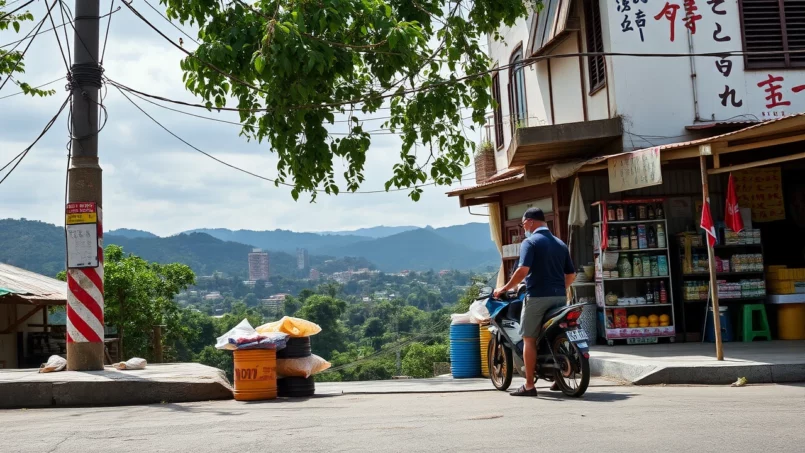
In these channels, consumer behaviors are adapted to economic realities: purchases are frequent but involve very small quantities, with a strong preference for fresh products. Customers often rely on informal credit granted by merchants. The commercial relationship is crucial, valuing direct contact and personal trust. This dense network of small businesses demonstrates remarkable resilience, even in the face of supermarket competition.
Explosion of e-commerce: a still young market, but with very high growth
The digital shift is one of the major changes in the Guatemalan consumer market. E-commerce, still embryonic a decade ago, is now growing at double-digit rates and gradually reshaping buying habits, especially in urban centers.
Size, growth, and user profiles
Different sources converge to describe a market in a take-off phase:
– e-commerce volume estimated at $2.7 billion in 2024;
– projected to $5.3 billion in 2027, a compound annual growth rate of about 26%;
– some older scenarios mentioned a temporary peak volume near $8.5 billion driven by the COVID shift.
Digital adoption is already well advanced:
| Digital Indicator | Estimated Recent Value |
|---|---|
| Internet access rate | ≈ 60–61% of population |
| Number of internet users | ≈ 11 million |
| Social media users | ≈ 8.7 million |
| Active mobile connections | ≈ 22.5 million (125% of population) |
| Share of adults shopping online | ≈ 50% |
| Share of businesses selling online | ≈ 54% |
Mobile plays a central role: about 80% of online purchases are made via smartphone. Over 20 million users are estimated to access the internet via mobile. The Guatemala City metropolitan area concentrates the majority of transactions, with nearly 73% of online sales coming from this area.
This is the percentage of Guatemalan consumers who cite time savings as the main reason for shopping online.
Top categories and dominant platforms
The most purchased categories online reflect a mix of digital content, electronics, and everyday consumer goods:
| Online Category (share of shoppers) | Share of e-shoppers affected |
|---|---|
| Software, apps, streaming platforms | 57% |
| Telephones and phone accessories | 51% |
| Food and beverages | 51% |
| Cosmetics and personal care | 42% |
| Cameras and photography accessories | 40% |
The most successful local retailers are building a true omni-channel presence. For example, Cemaco – leader in online traffic – recorded over 4.2 million visits to its site in a single month in late 2024. Other players like Max, Pacifiko, Guatemala Digital, or Kemik also count several million visits.
The online store ecosystem is dominated by accessible solutions like WooCommerce (over 50% of sites), Shopify, and Wix. However, the majority of revenue is concentrated on more advanced platforms like VTEX, illustrating the coexistence of micro-merchants and large, structured e-retailers.
Payment and logistics: between modernity and cash on delivery
One of the paradoxes of Guatemalan e-commerce lies in the structure of payment methods. Officially, international credit card payments account for about 63% of online transactions, followed by bank transfers (nearly 18%) and debit cards (14%). Digital wallets remain marginal, around 3%, although PayPal dominates this segment.
Yet, more than half of online shoppers (54%) report also using cash on delivery. This reflects both low financial inclusion – only 44% of adults have a bank account, less than 7% have a credit card – and a certain distrust of online payments and delivery security.
Logistics vary by merchant: large retailers offer home delivery, in-store pickup, or collection points, while small merchants often use local couriers or informal arrangements. Commerce via social networks (Facebook, Instagram, WhatsApp, TikTok) is also significant, with one in five online shoppers making purchases there, frequently paid in cash upon delivery of the product.
A highly internationalized market
Another major specificity: the high share of cross-border purchases. It is estimated that about 68% of e-commerce sales made by Guatemalan consumers are with foreign stores, mainly based in the United States, Europe, or Mexico. The most affected categories are electronics, fashion, auto parts, and certain cultural goods.
This import orientation depends on perceived quality, the appeal of major brands, and the still relative weakness of local supply in certain segments. It also explains why the issue of taxing imported digital services and goods has been raised before Congress, even though reform proposals have not yet succeeded.
Retail trade: dominance of modern chains and resilience of the informal sector
Beyond food and e-commerce, Guatemalan retail trade is undergoing profound change. The rise of large chains, the gradual formalization of part of the sector, and the persistent weight of informality create a highly contrasting landscape.
Retail sector dynamics
Sector studies show that retail trade and vehicle repair grew by about 5.4% year-on-year in the first quarter of 2024, contributing nearly one percentage point to GDP growth. Sales of packaged food products, estimated at over $7 billion in 2024, are expected to approach $10 billion by 2029.
Reports identify urbanization, rising incomes, expansion of organized chains, and network modernization as growth drivers. However, structural constraints persist, including macroeconomic vulnerability, historical inflation, strong informal competition, logistical challenges (cold chain, transport), and localized security risks.
Massive informality: a challenge and daily reality
With an informal sector estimated between 46% and over 50% of GDP, and about 70% of the active population employed outside the formal sector, Guatemala ranks among the most informal countries in the world. Wholesale and retail trade, along with agriculture, are the main providers of informal jobs, ahead of manufacturing and accommodation and food services.
This economy, present in markets and neighborhoods, allows low-income households to obtain supplies at low prices. However, it offers consumers weak protection (issues of traceability, quality, and rights) and a near absence of social protection for workers.
For international brands and distributors, this environment means that gaining market share requires adapting formats and packaging, working with a network of micro-retailers, and investing in education (quality, food safety, product benefits).
Consumer behavior: price-quality trade-off, health, and sustainability
Recent studies describe the Guatemalan consumer as “smarter and more demanding” in 2025: they compare prices, hunt for promotions, but are no longer willing to sacrifice quality or trust for a few cents. This gradual sophistication is mainly seen among urban middle classes, but is also radiating to other segments.
Price sensitivity and brand trade-offs
High price sensitivity, inherited from decades of limited incomes, translates into well-identified behaviors:
– systematic search for promotions and discounts;
– switching to cheaper brands within the same category when prices rise;
– purchasing smaller packages, even if the price per kilo or liter is higher, to limit immediate outlay;
– prioritizing the quality of fresh products, even if it means making stronger trade-offs on processed products.
During the 2022 inflation peaks, consumers applied the “basic basket defense” strategy by reducing non-essential purchases to maintain the quality of essential food purchases.
Health, well-being, and “eating better”
Health trends increasingly influence demand, particularly in supermarkets targeting middle and upper classes. There is a rise in products that are:
– organic or perceived as such;
– gluten-free, sugar-free, or low in sugar;
– rich in nutrients, protein, fiber.
The beauty and personal care sectors follow trends similar to those observed globally: success of mineral sunscreens, silk bonnets for hair popularized by social media, or skincare routines inspired by other regions. Young, highly connected consumers quickly import trends seen on TikTok or Instagram.
Guatemala is the top export market for US processed food products in Central America.
Sustainability and responsible consumption
Environmental awareness also appears in consumer preferences, particularly in real estate and certain retail segments. Nearly half of real estate buyers report placing high importance on environmental performance: ecological housing, renewable energy, sustainable materials. The country already has several dozen LEED certified or in-progress projects.
Large retail chains highlight “local products” sections, more ethical sourcing policies, or initiatives to reduce plastic packaging. For now, these efforts mainly concern the high and mid-range segments, but they lay the groundwork for more responsible consumption in the medium term.
Guatemala in regional and international trade in consumer goods
The Guatemalan consumer market is highly connected to international trade, particularly with the United States, its main partner. This applies to processed food products, clothing, electronics, and cultural goods.
A net importing country, but a primary market for certain products
Recent statistics show that total merchandise imports, estimated at over $32 billion in 2024, are growing faster than exports, maintaining a trade deficit (trade balance around –$1.8 billion in some recent periods).
US exports to Guatemala exceeded $10 billion in 2022.
The CAFTA-DR free trade agreement, in place since the mid-2000s, has largely liberalized flows: almost all US consumer and industrial goods now enter duty-free, with the notable exception of white corn and certain dairy products, protected by tariff-rate quotas.
Remittances, exchange rates, and imported consumption
The importance of remittances, mostly from the United States, also fuels demand for imported goods from that country, whether purchased in supermarkets, through cross-border e-commerce, or via informal channels. The relatively stable exchange rate (about 7.65 quetzals to the dollar in fall 2025) contributes to the predictability of purchasing power in foreign currency.
Market openness facilitates access to a variety of quality products, but it exposes local producers and SMEs to strong competition against international brands and high standards.
Outlook and challenges for the coming years
The consumer market in Guatemala is both full of promise and facing major structural challenges. Macroeconomic projections are rather favorable: GDP growth around 3.5–3.9% in the medium term, contained inflation near target, moderate public debt, monetary stability. Private consumption should continue to grow in value, driven by population growth, urbanization, the rise of e-commerce, and continued remittance flows.
But three major issues will shape this market’s trajectory.
The extreme informality of the labor market and commerce represents both a social shock absorber – providing income opportunities for millions – and a brake on upscaling consumption. As long as the majority of workers remain without social protection or income stability, consumer behavior will remain dominated by short-term constraints, day-to-day purchasing, and an absolute quest for the lowest price.
To stabilize household budgets and broaden demand for quality products, several policies can be implemented: facilitating formalization of micro-enterprises, reducing administrative costs of business creation, improving access to credit for SMEs, and strengthening social safety nets.
Financial inclusion and digitalization
The rise of e-commerce shows the potential of digitalization, but low banking penetration – less than half of adults have a bank account, barely over 6% have a credit card, and only about 1.4 million people use a digital wallet – still limits the expansion of online commerce, especially outside major cities.
Strengthening financial inclusion, developing payment solutions adapted to an underbanked population (wallets, QR codes, instant payments), securing transactions, and improving data protection are necessary conditions for digitalization to become a true accelerator of consumption rather than a channel reserved for a wealthy urban minority.
Resilience and sustainability of demand
Finally, the growing weight of remittances in domestic demand, while a strength today, could also become a source of vulnerability in the event of a shock to the US economy or changes in immigration policies. Diversifying growth drivers, supporting high-value-added sectors (agro-industry, services, tourism), and investing in education and health are all conditions for stabilizing the consumer market in the long term.
The Guatemalan market, young and growing, presents opportunities in sustainable and wellness sectors, but requires strategies adapted to its wide socio-economic disparities.
In this context, succeeding in the Guatemalan consumer market requires articulating three registers: price accessibility, essential in a still very poor country; quality and trust, which have become non-negotiable for a growing share of consumers; and innovation – digital, logistical, social – to meet the needs of a population that is both highly connected and very unevenly integrated into the formal economy.
Disclaimer: The information provided on this website is for informational purposes only and does not constitute financial, legal, or professional advice. We encourage you to consult qualified experts before making any investment, real estate, or expatriation decisions. Although we strive to maintain up-to-date and accurate information, we do not guarantee the completeness, accuracy, or timeliness of the proposed content. As investment and expatriation involve risks, we disclaim any liability for potential losses or damages arising from the use of this site. Your use of this site confirms your acceptance of these terms and your understanding of the associated risks.

Cyril Jarnias is an independent expert in international wealth management with over 20 years of experience. As an expatriate himself, he is dedicated to helping individuals and business leaders build, protect, and pass on their wealth with complete peace of mind.
On his website, cyriljarnias.com, he shares his expertise on international real estate, offshore company formation, and expatriation.
Thanks to his expertise, he offers sound advice to optimize his clients' wealth management. Cyril Jarnias is also recognized for his appearances in many prestigious media outlets such as BFM Business, les Français de l’étranger, Le Figaro, Les Echos, and Mieux vivre votre argent, where he shares his knowledge and know-how in wealth management.





