
 Published on and written by Cyril Jarnias
Between Andean volcanoes, Pacific beaches, and the Amazon jungle, Ecuador is a country where sports are part of everyday life. From the fútbol played in the streets to the waves of Montañita, passing through ecuavóley in neighborhood squares or mountaineering on Cotopaxi, the country offers an almost inexhaustible playground. This article provides an overview of the most popular sports to practice in Ecuador, with both a cultural and practical perspective for those who want to get involved on the ground.
The Reign of Fútbol: Playing the National Sport
In Ecuador, saying that soccer is popular is an understatement. Fútbol is described as a true national pastime, the sport that brings together all layers of society. About 65% of the population claims to be interested in this sport, and matches of the national team, nicknamed La Tri or La Tricolor, dominate television ratings.
In practice, soccer is played everywhere: in urban parks like Parque La Carolina in Quito, on neighborhood fields on the outskirts of Guayaquil, on coastal beaches, or on the esplanades of small Andean towns. The ease of access – a ball, a few stones for goals – explains the practical side of this success, but the identity and emotional dimension is equally decisive.
Where and How to Play Soccer in Ecuador
For a traveler or expat, it is very easy to join an impromptu game. Large cities have many public fields, sometimes lit at night. Parque La Carolina, Quito’s huge green lung, has 16 soccer and futsal fields, regularly occupied by friendly matches, amateur leagues, or corporate tournaments.
Professional stadiums are reserved for spectators. To play, favor parks, neighborhood complexes, municipal sports centers, or synthetic turf fields rented by the hour, which are very popular after work.
The table below summarizes the most common forms of playing soccer in the country.
| Form of Play | Typical Location | Required Level | Access for a Visitor |
|---|---|---|---|
| Informal 5 vs 5 | Urban parks, residential neighborhoods | Beginner to advanced | Very easy, just ask |
| 7 or 8-a-side | Rented synthetic turf fields | Recreational / amateur | Rental through private centers |
| Indoor futsal | Gyms, covered complexes | All levels | Local clubs or leagues |
| Organized amateur leagues | Secondary stadiums, schools, clubs | Intermediate to skilled | Prior registration |
The most widespread alternative in the city, however, remains futsal, deeply rooted in Ecuadorian urban culture. It is played in gyms, schoolyards, and also on mini-courts set up in parks, such as at La Carolina where a specific field is dedicated to futsal.
Experiencing the Atmosphere of Professional Matches
Even though this article focuses on playing, attending a Serie A match helps you understand how much soccer structures social life. In Quito, big stadiums like Estadio Rodrigo Paz Delgado (Casa Blanca, home of LDU Quito) or Estadio Olímpico Atahualpa become massive gathering places on match days. Fireworks, street vendors, yellow La Tri jerseys, and streets packed with fans create a kind of popular carnival.
A fan can experience the full spectrum of Ecuadorian soccer by alternating between practice sessions in parks and immersion in the stadium atmosphere of big clubs like Barcelona SC, Emelec, LDU Quito, or Aucas. This approach allows you to grasp both the practice of the sport on the field and the unique supporter culture in the stands.
Ecuavóley: The 100% Ecuadorian Variation to Discover
If there is one sport that immediately intrigues a visitor, it’s ecuavóley (or ecuavolley). This local variation of volleyball is so present that it sometimes rivals soccer in public spaces, especially in working-class neighborhoods and Andean towns.
At first glance, you’d think it’s just a casual game of volleyball. But a few details immediately betray that it’s a sport in its own right: the net is noticeably higher, teams have only three players, and the ball is actually a size 5 soccer ball.
Rules and Specifics of Ecuavóley
Ecuavóley differs from classic volleyball in several key ways. The net is 2.80 meters high, requiring very explosive movements and good aerial play. Each side fields only three players, who do not rotate like in traditional volleyball: each keeps their position, typically a central setter and two more offensive lateral players.
Unlike other ball sports, players are allowed to use the palm of their hands to strike. This peculiarity allows for spectacular hits and acrobatic defenses, where they try to “stick” or cushion the ball in the air before returning it.
This sport is played every day, everywhere in the country. The parks of Quito or Cuenca echo every late afternoon with the shouts and informal bets that accompany the games. Tournaments are ongoing, from neighborhood level to national competitions, and the Ecuadorian diaspora has taken the game with them to several countries in the Americas and Europe.
The following table allows for a quick comparison between ecuavóley and classic volleyball.
| Characteristic | Ecuavóley | Classic Volleyball |
|---|---|---|
| Net height | 2.80 m | ~2.43 m (men), ~2.24 m (women) |
| Number of players | 3 per team (fixed positions) | 6 per team (mandatory rotation) |
| Ball used | Size 5 soccer ball | Specific volleyball |
| Body parts allowed | Palms allowed, more flexible rules | Fingers/forearms, strict rules |
| Playing location | Parks, streets, dedicated courts | Indoors, beaches, official courts |
Where to Play and How to Join a Game
In Quito, Parque La Carolina is a true “cathedral” of ecuavóley: no less than 18 courts are dedicated to this sport. They can also be found in parks like El Ejido or in peripheral neighborhoods, where concrete or sand courts host daily games.
For a foreigner, the simplest way to play is to approach a group and offer to replace a missing player, possibly by paying a small stake in case of friendly bets. Locals generally accept happily if good will is shown. Suitable balls are sold at KAO sports stores, although most courts already provide equipment.
Ecuavóley requires some adaptation to local rules, which are often flexible and slightly different from one neighborhood to another, but it is undoubtedly one of the most effective ways to immerse yourself in everyday Ecuadorian life.
Basketball, Volleyball, and Tennis: Other Pillars of Team Sports
After soccer, several team sports hold an important place in the sporting landscape and are easily accessible for practice.
Basketball, Star of Schoolyards
Basketball enjoys high visibility, especially in high schools and universities. It is sometimes considered the country’s second sport. Ecuador even participated in the first FIBA World Championship in 1950, finishing 8th, a sign of a long-standing interest in the game.
Number of half-courts available simultaneously at Parque La Carolina in Quito.
You can easily join an informal game, even with a modest skill level: groups form and disband constantly, especially on weekends. Equipment is minimal – a pair of decent sneakers is enough – and reservations are generally not needed.
Classic Volleyball, Especially on the Coast
Alongside ecuavóley, “official” volleyball is also played, especially on beaches and in some indoor courts. The Ecuadorian Volleyball Federation organizes national championships, and the sport draws a significant audience, particularly in the coastal provinces where sand courts are abundant.
Popular and accessible sporting activities practiced on the coast with nets.
Sport commonly played on the beaches, using installed nets. Ideal for travelers, it only requires a swimsuit to join a team.
Volleyball variation also played on the beaches, alternating with beach volleyball depending on the groups present. A flexible and friendly practice.
Tennis, a Growing Sport
Tennis enjoys a more elite image but remains very popular among the middle and upper classes, especially in larger cities. The organization of an ATP 250 tournament, the Ecuador Open Quito, demonstrates the level of infrastructure and local interest in this sport.
You can find private clubs with hard courts or clay courts, as well as some public or university facilities accessible at reasonable rates. The estimate of 400,000 players gives an idea of the tennis community’s size in the country.
The table below quickly summarizes the place of these three sports in daily practice.
| Sport | Main Place of Practice | Typical Player Profile | Ease of Access for a Visitor |
|---|---|---|---|
| Basketball | Parks, schools, universities | Youth, students, amateurs | Very easy, open games |
| Volleyball | Beaches, indoor courts, parks | Mixed, often on vacation | Easy, especially on the coast |
| Tennis | Private clubs, urban sports centers | Middle and upper classes | Moderate, through clubs/rental |
Cycling, Running, and Endurance Sports: Making the Most of the Altitude
Ecuador has built a solid reputation in endurance sports, driven by its champions and its exceptional geography. Between the Andes, the Amazon, and the coast, the country offers varied terrain for cycling, running, or power walking.
Cycling, from the Streets of Quito to Andean Passes
Biking is both a mode of daily transportation and a widely practiced sport. Richard Carapaz’s victory at the Giro d’Italia helped make it a national symbol, and races like the Vuelta a Ecuador structure the local cycling calendar.
On a practical level, large cities have nascent bike lanes and shops offering rental and repair. But it is especially outside urban centers that cycling takes on its full meaning: climbs to volcanoes, winding roads in the Sierra, or downhill mountain biking trails make Ecuador a vast playground.
Organized cycling tours are developing, allowing visitors to rent an MTB or road bike with support, a support vehicle, and pre-arranged accommodations. The significant elevation gains, however, require good physical fitness.
Running and Power Walking
Athletics enjoys particular prestige since the Olympic medals of Jefferson Pérez, world champion and Olympic champion in the 20 km race walk. This tradition of walking and running translates into many urban running events, such as the Quito Últimas Noticias 15K, which is very popular.
For recreational running, many urban parks like La Carolina offer looped paths. Quito’s altitude (about 2,800 m) increases the intensity of the effort, also providing hypoxic training conditions sought after by some athletes.
Studies on physical activity also show that the majority of the adult population is considered sufficiently active, even though among adolescents, daily practice time often falls short of international recommendations.
Mountain Sports: Mountaineering, Trekking, and MTB in the Andes
With its volcanoes rising above 5,000 meters and its place in the great Andes mountain range, Ecuador is a paradise for mountain sports. Cotopaxi and Chimborazo, two iconic peaks, attract climbers from around the world every year.
Mountaineering and Volcano Climbing
The average altitude of the Ecuadorian Andean axis is close to 4,000 meters, making it a demanding playground, reserved for well-prepared practitioners or those guided by professionals. Many specialized agencies offer turnkey ascents including equipment, transport, food, and insurance.
In Ecuador, mountain activities are varied, ranging from glacier hiking to technical climbing, with several renowned climbing areas. The country has also demonstrated its commitment to this sport by hosting a World Youth Climbing Championship in Ibarra.
Even without aiming for the summits, high-altitude hikes – around lagoons, along ridges, or in the paramos – are a very popular activity, accessible with good basic equipment: sturdy hiking boots, warm and waterproof clothing, and a first aid kit.
Mountain Biking and Extreme Downhill
The Andean topography is perfectly suited for mountain biking, from simple scenic rides to challenging descents on trails or paths. Dirt bike ramps have even been installed in some urban parks, like at La Carolina, reflecting the local taste for gravity sports.
Routes often follow ancient Inca paths or agricultural tracks, presenting significant elevation changes. Bike and helmet rentals are easily accessible. Many agencies offer packages combining MTB with cultural visits to Andean villages.
The following table summarizes the main mountain sports you can practice.
| Activity | Main Region | Recommended Level | Guidance Recommended? |
|---|---|---|---|
| Hiking/Trekking | Andes, Amazon, Galápagos | Beginner to advanced | Recommended in high mountains |
| Mountaineering | Cotopaxi, Chimborazo, Andean volcanoes | Skilled / expert | Yes, with certified guide |
| Rock Climbing | Andean rock areas | Intermediate to expert | Highly recommended |
| MTB / Mountain Biking | Andean Sierra, Baños | All levels (depending on trail) | Often offered as a tour |
Adventure and Whitewater Sports: Baños, Amazon, and Pacific Coast
For those seeking adrenaline, Ecuador offers an impressive array of activities: rafting, canyoning, whitewater kayaking, bungee jumping, paragliding… The small town of Baños, at the foot of the Tungurahua volcano, has become the heart of this adventure tourism.
Baños, Ecuador’s Extreme Sports Capital
Perched at 1,800 meters altitude, Baños combines many assets: high-flow rivers (Pastaza, Patate), cliffs, gorges, and spectacular landscapes. You can practice rafting in class III and IV, kayaking, canyoning with rappelling down waterfalls, as well as a giant “pendulum” swing over the void.
The town offers many MTB rental agencies with full-day or half-day packages, including equipment. A famous route is the ‘Waterfall Route’, which combines downhill biking, zip-lining, and swimming breaks.
Rafting and Kayaking in the Amazon and Andes
Ecuador hosted the World Rafting Championships on the Quijos River, in the Napo province, which speaks volumes about the quality of its whitewater courses. Numerous Andean rivers allow for rafting and kayaking, with levels suitable for beginners as well as experts.
Local operators generally provide all necessary equipment (wetsuits, helmets, life jackets, paddles). They emphasize safety with experienced guides. Packages may include transport from major cities, meals, and sometimes accommodation in a lodge.
Other Adventure Activities
Beyond whitewater sports, Ecuador is an ideal terrain for:
– paragliding and hang gliding, taking advantage of stable winds and Andean relief,
– bungee jumping from bridges or purpose-built structures,
– zip-lining, especially around Baños and in some cloud forest areas,
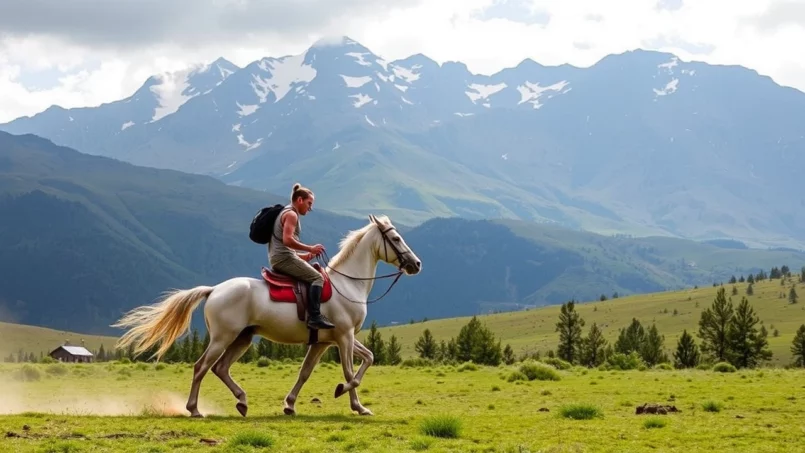
– horseback riding, common on Andean haciendas.
These activities are generally supervised by specialized agencies or operators; it is rarely advisable to attempt them alone without professional supervision.
Surfing, Kitesurfing, and Water Sports: The Pacific Coast and Galápagos
With over 2,200 km of coastline, Ecuador is now a highly sought-after destination for surfing and water sports. Notably, the country was hardly on the international surf map just a few decades ago, despite ideal conditions. Now, the situation has changed dramatically.
Montañita, Manta, Canoa: Hotspots of Ecuadorian Surfing
>Driven by local surfers and the Ecuadorian Surf Federation (FES), the coast has become a structured playground for boards. Towns like Montañita, Manta, or Canoa have become recognized surf centers on a regional scale.Montañita is often described as the capital of Ecuadorian surfing. A powerful right point break is found there, particularly strong between January and March, when swells can reach two meters. The town combines a backpacker vibe, surf schools, competitions, and a lively nightlife.
Manta is considered the best ‘beach town’ in the country, combining good waves, renowned gastronomy, and accessibility via a nearby airport. Canoa, on the other hand, is a long beach break over 10 km long, with no rocks or dangerous currents, ideal for beginners year-round, but can offer more challenging conditions from January to April.
Further north, Mompiche is famous for its long left point break, intended for experienced surfers. Further south, Playas, Salinas, and Punta Carnero complete the list of reputed spots where national and international competitions are regularly held.
The following table presents some major spots and their characteristics.
| Spot | Wave Type | Recommended Level | Special Features |
|---|---|---|---|
| Montañita | Powerful right point break | Intermediate to expert | Party atmosphere, many surf camps |
| Canoa | Long beach break | Beginner to advanced | Rock-free, ideal for learning |
| Mompiche | Long left point break | Skilled / expert | Technical spot, highly appreciated |
| Salinas | Beach + reefs + jetties | All levels | Family beach resort |
| Manta | Various spots around | All levels | Well-equipped coastal city |
A Structured Ecosystem Around Surfing
According to the FES, the number of surfers grew from about 200 amateurs in the 1980s to over 5,000 today, with a strong increase in schools and clubs. The federation, supported by the Ministry of Sports, manages competitions, national rankings, and elite support through a high-level plan including monthly scholarships and specific preparation for certain athletes.
The growth of surfing has generated a local economy including major brand stores, surf camps, equipment rentals, and schools led by local instructors. For many young people, this practice has become a lifestyle and can even constitute a profession, notably as an instructor or competitor.
Ecuador has already produced several world surfing champions and hosted major events such as the World Surfing Games, the Quicksilver ISA World Junior Surfing Championship, or the Bodyboarding World Cup in Manta.
Kitesurfing, Paddleboarding, and Complementary Water Sports
The Pacific coast is not limited to surfing. In some windy areas, especially around Playa Marianita, kitesurfing and stand-up paddleboarding have exploded. Marianita attracts practitioners from around the world thanks to regular wind conditions, particularly between June and November, a period also favorable for windsurfing.
Several beaches along the Ruta del Spondylus – this coastal route that follows the Pacific for over 500 km – lend themselves to various water sports: sea kayaking, paddleboarding, snorkeling, and even scuba diving at some sites.
The beaches remain generally uncrowded, allowing for relatively peaceful sessions, even in high season, with the added bonus of a cost of living often lower than other surf destinations on the continent.
Galápagos: Snorkeling, Diving, and Kayaking in a Natural Sanctuary
The Galápagos Islands, off the coast of Ecuador, constitute a world of their own for water sports and wildlife observation enthusiasts. Classified as a marine reserve and national park, the archipelago is one of the best-preserved places on the planet.
Diving, Snorkeling, and Kayaking
In these volcanic islands straddling the equator, outdoor activities are dominated by contact with the sea: snorkeling with sea lions, tropical fish, and sometimes hammerhead sharks, diving at world-renowned sites, and sea kayaking along the rocky coasts.
Surf spots near San Cristóbal benefit from swells coming from the northern and southern Pacific. On land, hikes allow you to observe giant tortoises, marine iguanas, and iconic birds like blue-footed boobies and frigatebirds.
A Regulated Destination
Access to most activities in the Galápagos is through authorized operators, out of concern for preserving the ecosystem. Groups are supervised by certified naturalist guides, who explain the rules of respect for the flora and fauna.
For an athlete, a stay combining hikes, snorkeling, kayaking trips, and possibly some surf sessions on San Cristóbal offers a unique immersion in nearly untouched nature, but you must accept a more regulated framework than on the mainland coast.
Traditional Sports and Ancestral Games: Another Way to Move
Beyond the major Olympic disciplines or adventure sports, Ecuador has a rich playful heritage, made up of traditional games and indigenous sports. Practicing them or attending demonstrations means discovering a more intimate facet of the local culture.
Chaza / Pelota Nacional: The Indigenous Sport Par Excellence
Chaza, sometimes called pelota nacional, is an indigenous racket sport, considered by some to be the true national sport. It blends elements of tennis, pre-Hispanic ball games, and, in some places, influences from soccer.
Two teams compete by hitting a ball back and forth with a racket or similar instrument, on an elongated field. This game is deeply rooted in certain Andean communities, where it is an integral part of local festivals and traditions.
Specific stadiums, such as the Estadio Chaza in Quito or venues in Ibarra and Guayaquil, host matches. For a visitor, attending a match is already an experience in itself; participating generally requires being introduced by locals, as the game relies heavily on community codes.
Street Games and Popular Practices
Among other traditional games, we find: board games, card games, dice games, outdoor games, and role-playing games.
– pasillo (here not the music, but a team game where you have to pass a ball without it touching the ground),
– palo encebado, where a team tries to manipulate a stick to send a ball into a target,
– trompo, a spinning top game where you try to knock down your opponent’s tops.
In the city of Ibarra, a local variant of paddleball is played. It is important to note that the rules and equipment used may differ from one neighborhood to another.
A more recent sport, invented by indigenous women near the Cotacachi volcano, consists of a form of handball played exclusively by women wearing the anaco, a traditional Quichua skirt. This blend of sporting modernity and traditional dress illustrates how the country constantly reinvents its physical practices.
These games are often highlighted during festivals organized by cultural authorities, such as the Inter-American Center for Crafts and Folk Arts (CIDAP) or the Sports Secretariat, which promote “ancestral, traditional, and popular games” as living heritage.
Urban Parks, Clubs, and Access to Facilities
Playing sports in Ecuador depends greatly on where you are. Large cities have relatively dense facilities, especially in parks, while rural areas rely more on open spaces and improvised fields.
Parks, Epicenters of Daily Practice
In Quito, Parque La Carolina is a microcosm of the entire sporting ecosystem of the country. Across several dozen hectares, you can find:
Discover the diversity and extent of available installations for practicing your favorite activities.
16 soccer fields for matches and training.
18 courts specially dedicated to playing ecuavóley.
8 basketball courts, often divided into 16 half-courts.
Several tennis courts and one futsal court.
Ramps specially designed for dirt bike riding.
Vast lawns for frisbee, yoga, or free training.
On weekends, the park becomes a giant open-air “gym” where families, groups of friends, and clubs cross paths. Further into the center, Parque El Ejido also hosts informal sports activities, from soccer to more traditional ball games.
In other cities, municipal parks or “sports units” play similar roles, even if facility density can vary. This is often where visitors will most easily find playing partners.
Private Clubs, Leagues, and Specialized Stores
More structured sports, like tennis, high-level basketball, or certain martial arts, generally go through private or associative clubs. Membership provides access to courts, coaches, and sometimes local leagues.
For sports equipment, store chains like KAO provide everything needed for sports like ecuavóley (balls, shoes, protections). Furthermore, the growing popularity of sports like surfing or MTB has led to the development of a network of specialized shops, available in larger cities and near tourist spots.
The table below summarizes the main places where a visitor can find sports activities to practice.
| Type of Location | Example | Main Sports Accessible |
|---|---|---|
| Large urban park | Parque La Carolina (Quito) | Soccer, ecuavóley, basketball, tennis, futsal, BMX |
| Downtown park | Parque El Ejido (Quito) | Informal soccer, ball games, jogging |
| Private clubs | Tennis clubs, gyms | Tennis, fitness, structured basketball, swimming |
| Surf towns | Montañita, Manta, Canoa | Surfing, bodyboarding, SUP |
| Adventure towns | Baños | Rafting, MTB, canyoning, paragliding |
Conclusion: Choosing Your Sport in Ecuador
Playing a sport in Ecuador is much more than just exercising. It’s a gateway to the country’s culture, its landscapes, its rhythms of life. Soccer allows you to instantly share a common language with the majority of people. Ecuavóley immerses you in the sociability of neighborhoods, with its shouts, bets, and local heroes. Surfing reveals a still relatively unspoiled coast, while mountaineering and trekking unveil the majesty of the Andes.
Between street sports, Olympic disciplines, adventure sports, and ancestral games, everyone can find their preferred field. Whether you are a beginner seeking discovery or a seasoned athlete looking for challenges at 5,000 meters altitude, Ecuador offers a rare range of sporting possibilities, always closely tied to its territory and its people.
Disclaimer: The information provided on this website is for informational purposes only and does not constitute financial, legal, or professional advice. We encourage you to consult qualified experts before making any investment, real estate, or expatriation decisions. Although we strive to maintain up-to-date and accurate information, we do not guarantee the completeness, accuracy, or timeliness of the proposed content. As investment and expatriation involve risks, we disclaim any liability for potential losses or damages arising from the use of this site. Your use of this site confirms your acceptance of these terms and your understanding of the associated risks.

Cyril Jarnias is an independent expert in international wealth management with over 20 years of experience. As an expatriate himself, he is dedicated to helping individuals and business leaders build, protect, and pass on their wealth with complete peace of mind.
On his website, cyriljarnias.com, he shares his expertise on international real estate, offshore company formation, and expatriation.
Thanks to his expertise, he offers sound advice to optimize his clients' wealth management. Cyril Jarnias is also recognized for his appearances in many prestigious media outlets such as BFM Business, les Français de l’étranger, Le Figaro, Les Echos, and Mieux vivre votre argent, where he shares his knowledge and know-how in wealth management.





