
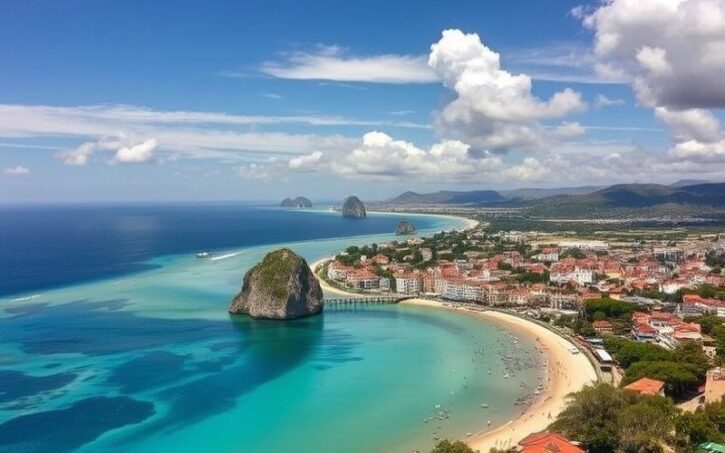
 Published on and written by Cyril Jarnias
Romania, with its picturesque landscapes and rich cultural heritage, is becoming a top destination for travelers seeking authenticity and diversity. However, venturing into the tourist accommodation sector in this country requires navigating a multitude of specific regulations and legal requirements.
Whether you want to transform a countryside house into a charming guesthouse or create a modern hotel complex, understanding the administrative and legal steps is crucial for success. This practical guide aims to demystify the essential steps and provide you with the keys to a thriving establishment that complies with current standards in Romania.
Administrative Procedures for Tourist Accommodation in Romania
To operate tourist accommodation in Romania, several administrative steps are necessary, involving procedures with local and national authorities, as well as compliance with specific standards.
Main Steps to Obtain Licenses and Authorizations
- Property Registration
- Declaration of the property as a tourist residence with the Land Registry (if the property is registered).
- Verification of any restrictions in condominium contracts, lease agreements, or with the mortgage lender.
- Signing a written rental contract if the property is registered with the Land Registry.
- Required Documents for Local Registration
- Tax registration certificate (mandatory for income declaration).
- Proof of ownership or lease agreement.
- Certificate of compliance with fire safety standards (see below).
- Floor plan and description of the activity.
- Liability insurance certificate.
- Fire Safety Certifications and Standards
- Obtaining a fire safety certification issued by the fire department or the competent local authority.
- Submitting a compliance report with safety standards (from the inspection).
- Compliance with evacuation, signage, and firefighting equipment standards.
- Tourist License Application
- Submitting a request for a classification certificate to the Ministry of Economy and Development – Department of Tourism.
- The request can be made by email or mail, generally free of charge.
- Providing supporting documents (registration certificate, fire safety certificate, floor plan, etc.).
- Processing time: generally a few weeks, but varies by region and case complexity.
- Posting and Information Obligations
- Mandatory display of the General Directorate of Tourism’s phone number in the accommodation.
- Providing regulatory information to tenants.
Summary Table of Documents and Procedures
| Procedure/Document | Authority/Body | Estimated Time | Fees |
|---|---|---|---|
| Land Registration | Land Registry/Locality | 1-2 weeks | Variable |
| Tax Registration Certificate | Local Tax Administration | 1 week | Low |
| Fire Safety Certificate | Fire Department/Local Authority | 1-3 weeks | Moderate |
| Liability Insurance | Insurance Company | Immediate | Per contract |
| Tourist License (Classification) | Ministry of Tourism | 2-6 weeks | Generally free |
| Information Display | On-site | Immediate | None |
Zoning Regulations and Sanitary Standards
- Compliance with municipal zoning regulations: some residential areas may prohibit or limit tourist accommodation.
- Compliance with national sanitary standards: hygiene of premises, waste management, ventilation, water quality, etc.
- Specific requirements for guesthouses, bed and breakfasts, and collective accommodations.
Periodic Inspections and Penalties
Regular inspections may be conducted by:
- Local authorities (for sanitary and urban planning compliance)
- The fire department (for compliance with fire safety standards)
- The Ministry of Tourism (for compliance with classification)
Frequency: annually or upon report
Possible penalties for non-compliance:
- Administrative fines
- Temporary or permanent revocation of the tourist license
- Mandatory temporary closure of the establishment
- Legal action in case of serious safety or hygiene violations
Key Takeaways:
To secure the operation of tourist accommodation in Romania, it is essential to anticipate administrative procedures, thoroughly document each step, and remain vigilant about constantly evolving local and national regulations.
Practical Tips
- Systematically consult the local town hall and, if possible, a specialized lawyer.
- Keep rigorous accounting of rental income.
- Stay updated using resources from the Ministry of Tourism and local professional associations.
Good to Know:
To operate tourist accommodation in Romania, it is crucial to obtain a tourist license from the Department of Tourism by submitting documents such as the tax registration certificate and fire safety certifications; remember that periodic inspections may be required and penalties apply for non-compliance. Operators must also comply with zoning regulations and specific sanitary standards, with processing times and fees varying by region.
Understanding Seasonal Rentals in Romania for Expats
Specific Regulations for Seasonal Rentals in Romania
- Every expat, whether a tenant or owner, must comply with specific tax and administrative rules.
- For short-term rentals (e.g., via Airbnb), the law has required since 2023 that owners issue tax receipts using an electronic cash register, even for renting a single room. They must also declare this income to the tax authorities and apply a 10% tax on net income.
- The tax regime differs based on the number of properties rented: between 1 and 5 properties, or more than 7 properties, which may entail additional obligations.
- EU expats can stay in Romania without formalities for up to 3 months. For stays exceeding 183 days in 12 months, it is mandatory to declare residence with the authorities and obtain a temporary residence certificate (valid for up to 5 years).
- For non-EU expats, a visa or temporary residence permit is required, with proof of resources, accommodation, and health insurance.
Types of Properties Available for Seasonal Rentals
| Property Type | Description | Advantages for Expats |
|---|---|---|
| Urban Apartments | Furnished, all sizes, city center or residential areas | Proximity to services, easy mobility |
| Single-Family Homes | Villas or village houses, with or without garden | More space, ideal for families |
| Studios | Small spaces, often economical | Suitable for short stays, students |
| Vacation Residences | Country houses, mountain chalets | Quiet, nature, local tourism |
| Shared Apartments | Apartment shared among expats or locals | Social atmosphere, reduced cost |
Administrative Steps for Renting or Listing a Property
- To rent: signing a written rental contract (often in Romanian), a common security deposit (1 to 2 months), and a recommended move-in inspection.
- To list: registering the lease with the tax authorities, declaring rental income, and mandatory issuance of tax receipts for seasonal rentals.
- Registration with the town hall or ANAF (National Agency for Fiscal Administration) may be required depending on the duration and type of rental.
- For long stays, declaring residence with the General Inspectorate for Immigration (IGI) to obtain a temporary residence certificate.
Rights and Obligations of Tenants and Owners
- Tenants: must comply with contract terms, pay rent and utilities on time, and return the property in good condition.
- Owners: must provide a compliant property, carry out major repairs, declare income, and issue tax receipts for seasonal rentals.
- Tenant protection is less regulated than in France: there is no legal rent cap or strict regulation of owner-initiated evictions.
- For expats, the contract language and understanding of clauses are essential: it is advisable to have the contract translated or to use a local expert.
Market Opportunities and Popular Geographic Areas
| Geographic Area | Attractiveness for Expats | Special Features |
|---|---|---|
| Bucharest | Dynamic capital, large expat community | Many modern apartments, coworking spaces |
| Cluj-Napoca | University hub, IT, startups | Young population, nightlife |
| Brasov, Sibiu | Proximity to mountains, tourism, heritage | Many vacation homes |
| Constanța, Coastline | Beaches, seaside lifestyle | Pronounced seasonality, high summer demand |
| Timișoara | Multicultural city, tech sector | Quality of life, renovated housing |
Practical Tips for Expats
- Ideal time to rent: spring and autumn for cities, summer for the coast and mountains.
- Reliable platforms: Airbnb, Booking.com, OLX, Imobiliare.ro, recognized local agencies.
- Language and communication: most owners speak Romanian; English is common in large cities. Arrange for translation of contracts if needed.
- Check legality: demand a written contract, ensure the property is declared, verify payment compliance (tax receipt).
Recent Legislation or Directives Impacting Seasonal Rentals
- Since 2023, seasonal renters are required to provide electronic tax receipts and declare all income from seasonal rentals, even through international platforms.
- Increased controls by ANAF on income from short-term rentals.
- Possible evolution of rules regarding the classification of short-term rentals and obtaining additional licenses or authorizations depending on the city or region.
Good to Know:
Expats looking to start seasonal rentals in Romania must register with local authorities and comply with local legislation, especially regarding required taxes and permits. Bucharest neighborhoods and the Transylvania region are particularly popular, and opting for a rental during the summer months can offer better profitability.
Essential Regulations for Year-Round Rentals in Romania
Main Legal Regulations for Year-Round Rentals in Romania:
| Regulated Aspect | Detail | Competent Body |
|---|---|---|
| Contract Type | Mandatory written contract, including address, duration, rent, obligations, and rights of the parties. | ANAF, Local Town Hall |
| Contract Registration | Declaration of the contract with ANAF (National Agency for Fiscal Administration) within 30 days. | ANAF |
| Termination | 60-day notice for monthly payment. Termination possible after 3 months of non-payment. | Court, ANAF |
| Tax Declaration | Annual declaration of rental income in the “single declaration” to ANAF. | ANAF |
| Taxes and Duties | Property tax (0.1 to 0.5%), income tax on rental income (gross, deductions removed since 2023). | ANAF, Local Town Hall |
| Permits/Inspections | Technical inspection required for some old or renovated buildings, permit needed for property conversion. | Local Town Hall, Local Inspection |
| Tenant Protection | Right to peaceful enjoyment, prohibition of abusive eviction, right to information and safety. | Court, Town Hall, ANPC |
Owner Obligations:
- Draft a contract compliant with Romanian legislation.
- Declare the contract to ANAF within 30 days of signing.
- Declare property ownership and rental income annually.
- Maintain the property in good condition and carry out major repairs.
- Respect the tenant’s right to peaceful enjoyment of the property.
- Pay property taxes and income tax on rental income.
- Immediately inform the tax authorities of any changes (sale, extension, change of use).
Tenant Obligations:
- Pay rent on the due dates.
- Use the property responsibly (“as a good family man”).
- Not sublet or transfer the property without the owner’s written consent.
- Inform the owner of any significant damage.
- Respect neighbors and condominium regulations.
Applicable Taxation on Rental Income:
| Type of Tax | Rate/Calculation |
|---|---|
| Income Tax | Taxation on the full rent received, without deduction (removal of the 40% allowance). |
| Property Tax | 0.1% (residential) to 0.5% (non-residential), calculated on the taxable value of the property. |
| Land Property Tax | Variable depending on the zone and use, set by the town hall. |
Registration and Declaration Process:
- Submit a copy of the contract to ANAF within 30 days.
- Declare property ownership and rental income annually (using the “single declaration” form).
- In case of substantial changes, immediately notify the town hall and ANAF.
- Keep proof of payment and evidence of property maintenance/inspection.
Permits or Inspections:
- Some municipalities require a technical compliance certificate for old or renovated properties.
- For renovations, a building or renovation permit must be obtained from the town hall.
- Compliance with health and safety standards (e.g., gas, electrical installations).
Fundamental Tenant Rights:
- Right to a safe and sanitary property.
- Right to notice in case of termination (except for serious fault).
- Right to protection against eviction without a court decision.
- Right to information on contractual obligations and charges.
Competent Government Bodies:
- ANAF (National Agency for Fiscal Administration): contract declaration, rental income, taxes.
- Local Town Hall: property taxes, permits, inspections, social housing.
- Court: disputes and forced terminations.
- ANPC (National Authority for Consumer Protection): tenant protection in case of abuse.
Practical Tips for Compliance and Profitability:
- Always establish a written, precise contract compliant with the Romanian Civil Code.
- Systematically declare rental income to avoid tax penalties.
- Stay informed of legislative changes and consult a local tax expert to optimize taxation.
- Invest in property maintenance and renovation to increase its value and attract reliable tenants.
- Regularly check local requirements for permits, taxes, and inspections.
- Maintain clear and documented communication with the tenant to limit disputes.
- Keep a record of all payments and interventions carried out on the property.
To maximize profitability while remaining compliant, it is highly recommended to consult a local tax expert and conduct regular legal monitoring.
Good to Know:
Romanian owners must register rental contracts with ANAF to ensure tax compliance, while tenants benefit from legally protected rights, including protection against illegal eviction; remember to check required local inspections to maximize your property’s profitability.
Practical Guide for Foreign Investors in the Romanian Tourism Sector
Practical Guide for Foreign Investors in the Romanian Tourism Sector
Main Regulations Concerning Foreign Investment in the Tourism Sector
- Investment Control: Since Government Emergency Ordinance No. 108/2023, any foreign direct investment exceeding 2 million euros in sensitive sectors (including tourism, when it relates to national security or critical infrastructure) is subject to review and approval by the Commission for the Examination of Foreign Investments (CEISD).
- Definition of Foreign Direct Investment: Any contribution allowing participation in the management or control of a Romanian company, including the creation or acquisition of a tourist accommodation structure.
- Licenses and Permits: Any tourist accommodation structure (hotel, guesthouse, hostel, campsite) must obtain a tourist operating license from the competent ministry (Ministry of Entrepreneurship and Tourism) as well as local authorizations (urban planning, fire safety, sanitary).
Administrative Steps for Registering a Tourism Business
- Choice of legal form (LLC, JSC, etc.).
- Reservation of the company name with the Trade Registry.
- Drafting the articles of association and depositing the share capital.
- Registration with the Trade Registry with:
- Signed articles of association
- Proof of registered office
- Proof of capital deposit
- Copies of shareholders’ identity documents
- Tax registration application
- Obtaining specific authorizations:
- Building permit (if applicable)
- Sanitary authorization
- Fire safety authorization
- Tourist license issued by local authorities and the Ministry of Tourism
Example: To open a guesthouse in Brașov, you will need to register the company, obtain a tourist license, a sanitary authorization, a fire permit, and comply with local urban planning standards.
Practical Recommendations for Foreign Investors
- Partner with local collaborators: This facilitates market understanding, access to local networks, and administrative management.
- Human resources management:
- Recruit locally to benefit from local knowledge.
- Provide specific training to ensure service quality.
- Market integration:
- Adapt the offering to the expectations of international and local tourists.
- Participate in professional associations and local trade fairs to increase visibility.
- Prioritize communication in Romanian and English.
Tax Regimes and Government Aid
| Type of Taxation | Rate or Specific Feature |
|---|---|
| Corporate Income Tax | 16% of net profit |
| Micro-enterprise | Revenue up to 5M USD, partial exemptions |
- Aid and Subsidies:
- Possibility of subsidies or co-financing for projects in rural areas, ecotourism, heritage renovation, or sustainable development.
- Access to European funds for modernization or innovation.
Trends and Opportunities in the Romanian Tourism Sector
| Region/Type of Accommodation | Specific Opportunities |
|---|---|
| Transylvania (Brașov, Sibiu) | Cultural tourism, nature, city breaks |
| Danube Delta | Ecotourism, wildlife observation |
| Black Sea Coast | Development of beach hotels, resorts |
| Maramureș, Bucovina | Traditional accommodations, rural tourism |
| Thermalism and Wellness | Development of spas, treatment centers |
- Strong Trend: Growing demand for eco-friendly accommodations, thematic tours, adventure tourism, and authentic experiences.
Best Practices for Sustainability and Compliance with Environmental Regulations
- Compliance with environmental standards during construction and operation: waste management, energy efficiency, minimizing impact on biodiversity.
- Obtaining ecological certifications (e.g., Ecolabel) to attract an international clientele sensitive to ecotourism.
- Integration of local populations in projects to strengthen social acceptance and heritage valorization.
- Examples:
- Use of local and sustainable materials for accommodation construction.
- Implementation of rainwater harvesting and solar energy systems.
Note:
To maximize chances of success, it is highly recommended to be assisted by specialized firms in Romanian business law and taxation, as well as local tourism development agencies.
Good to Know:
To invest in the Romanian tourism sector, obtain the required licenses from the Ministry of Tourism, in addition to local business registration; prioritize collaboration with local providers to facilitate your market integration. Consider regions like the Danube Delta, where subsidies for sustainable and environmentally friendly development are available.
Disclaimer: The information provided on this website is for informational purposes only and does not constitute financial, legal, or professional advice. We encourage you to consult qualified experts before making any investment, real estate, or expatriation decisions. Although we strive to maintain up-to-date and accurate information, we do not guarantee the completeness, accuracy, or timeliness of the proposed content. As investment and expatriation involve risks, we disclaim any liability for potential losses or damages arising from the use of this site. Your use of this site confirms your acceptance of these terms and your understanding of the associated risks.

Cyril Jarnias is an independent expert in international wealth management with over 20 years of experience. As an expatriate himself, he is dedicated to helping individuals and business leaders build, protect, and pass on their wealth with complete peace of mind.
On his website, cyriljarnias.com, he shares his expertise on international real estate, offshore company formation, and expatriation.
Thanks to his expertise, he offers sound advice to optimize his clients' wealth management. Cyril Jarnias is also recognized for his appearances in many prestigious media outlets such as BFM Business, les Français de l’étranger, Le Figaro, Les Echos, and Mieux vivre votre argent, where he shares his knowledge and know-how in wealth management.





