
 Published on and written by Cyril Jarnias
Moving to Jamaica is not simply a relocation to the tropics. Yes, there are the beaches, reggae, nearly constant sunshine, and a relaxed way of life. But behind the postcard, Jamaica is a complex country: a varied cost of living, a dynamic but unequal real estate market, an improvable healthcare system, high crime rates, and highly regulated visa and work permit procedures.
This guide compiles and structures key information from specialized sources to help you prepare a realistic and secure life project in Jamaica.
Understanding Jamaica Beyond the Clichés
Jamaica is a Caribbean island of just over 4,000 square miles, located about a hundred miles south of Cuba. It has approximately 2.8 to 2.9 million inhabitants, mostly of African descent, but also communities of Indian, Chinese, North American, Canadian, or British origin.
The climate is tropical and warm year-round, with temperatures rarely dropping below 68°F. Humidity can be high, and the island experiences a rainy season, generally from May to October. It lies within the Atlantic hurricane belt and regularly experiences major storms, with significant destruction, as recently seen in the western parishes.
The country is a parliamentary democracy and a member of the Commonwealth. English is the official language, but Jamaican Creole (Patois) is omnipresent in daily life. The society, with a Christian culture, places great importance on family and informal networks. The pace of life, often referred to as “island time,” means administrative procedures and services can be noticeably slower than in European or North American countries.
Finally, Jamaica is a very unequal country, where upscale, secure neighborhoods coexist with very poor urban areas marked by extreme crime. This is a central element to keep in mind before deciding to settle there.
Where to Live in Jamaica as an Expat?
The choice of city or village determines almost everything: budget, safety, access to healthcare, schools, internet quality, social atmosphere. Jamaica is divided into parishes, but in practice, expats concentrate in a few cities and coastal areas.
Overview of Main Cities and Popular Areas
The essential urban landscape for expats can be summarized in this table:
| Location | Estimated Population | General Profile | For Which Type of Expat? |
|---|---|---|---|
| Kingston | 600,000–700,000 (metropolitan area) | Political and economic capital, very contrasted | Executives, entrepreneurs, families seeking international schools |
| Montego Bay | ~110,000 | Major tourism hub and international airport | Retirees, investors, remote workers |
| Ocho Rios | 10,000–15,000 | Coastal town and cruise port | Expats seeking a city/beach compromise |
| Negril | ~7,000 | Beach resort (Seven Mile Beach) | Digital nomads, seasonal workers, beach lovers |
| Port Antonio | 13,000–14,000 | Northeast coast, more preserved and lush | Nature lovers, more bohemian profiles |
| Falmouth | ~8,000 | Cruise port, Georgian architecture | Retirees, profiles seeking calm and relative safety |
| Mandeville | 47,000–50,000 | Inland town, cooler climate | Retirees, families, middle class |
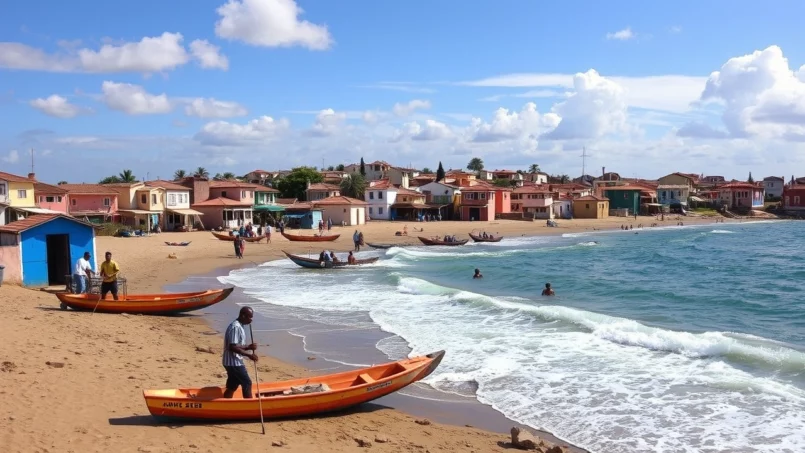
| Treasure Beach | ~3,500 | Very quiet fishing village (south coast) | Expats seeking a slow, rural life |
| Spanish Town | ~160,000 | Former capital, rich history, but challenging | To be considered with great caution |
| Portmore | ~182,000 | Large suburb of Kingston | Local middle class, few permanent expats |
Within these cities, certain neighborhoods are particularly mentioned by and for expatriates, often due to their perceived level of safety, the presence of gated communities, and proximity to services.
In Kingston, the names Barbican, New Kingston, Jack’s Hill, Beverly Hills, Norbrook, Mona, or Liguanea frequently come up. In the periphery, Saint Andrew concentrates many high-end residential neighborhoods.
In Montego Bay, neighborhoods like Coral Gardens, Ironshore, Spring Farm, Westgate Hills, and certain ‘Montego Heights’ type residences attract newcomers. In Negril, the West End cliffs and the areas around Long Bay or Bloody Bay are favored. Finally, near Ocho Rios, the sectors of Content Gardens, Mammee Bay, and Richmond Estate are frequently cited in real estate listings.
Finally, localities like Falmouth (Retreat Heights, Granville), Port Antonio (Drapers, San San), Runaway Bay, Saint Ann’s Bay, Hopewell, Discovery Bay, or Duncans are developing due to tourist and expat demand.
Safety: Areas to Consider with Caution
Crime is a serious subject in Jamaica. The country has one of the highest homicide rates in the world, with violence concentrated in certain neighborhoods where gangs and drug trafficking networks clash. For an expat, this doesn’t mean they will be directly targeted, but it requires careful choice of residence.
Several areas are regularly cited as to avoid or bypass, particularly:
It is advisable to avoid several specific neighborhoods in the cities of Kingston, Montego Bay, Spanish Town, and Savanna‑la‑Mar due to strong gang presence and activity. In Kingston, these areas include notably West Kingston, Trench Town, and Tivoli Gardens. In Montego Bay, sectors such as Flankers, Rose Heights, and areas inland from the A1 road are affected. The cities of Spanish Town and Savanna‑la‑Mar also have several affected sectors.
Conversely, towns like Port Antonio, Falmouth, or certain neighborhoods in Ocho Rios are often described as relatively calmer. Gated communities are very popular, although their gates and guards are not an absolute guarantee: burglaries and assaults can occur there.
One principle emerges: before signing a lease or buying, it is highly recommended to spend time on site, day and night, talk to residents, use a local driver to explore, and ask for advice from already settled expats.
Cost of Living: How Much to Budget for Living in Jamaica?
Jamaica is neither an ultra-cheap paradise nor an overly expensive country. Everything depends on the location, lifestyle, and whether you consume local or imported goods.
Overall estimates for a single expat generally range between $1,500 and $2,000 USD per month, including housing, for a comfortable but not excessive lifestyle, with costs significantly higher in Kingston and Montego Bay than in small towns or rural areas.
Overview of Monthly Budgets by Profile
Several sources give the following order of magnitude:
| Profile | Estimated Monthly Budget (USD) | Main Comment |
|---|---|---|
| Single expat (general average) | ~$1,482 – $2,000 | Includes housing, food, transport, leisure |
| Digital nomad | ~$3,191 | High budget, quality housing, frequent outings |
| Family (4 people) | ~$2,160 | Excluding top-tier international schooling |
| Average local | ~$617 | Standard of living not comparable to expat standard |
| “Reasonable” budget excluding rent (1 person) | ~$913 | Food, transport, services, excluding housing |
Compared to the United States, the overall cost of living is estimated to be about 21–22% lower excluding rent, and nearly 34% lower including housing. Rents themselves would be on average about 57% cheaper than in the United States, with huge variations depending on the city.
Housing: Rentals and Real Estate Purchase
The rental ranges mentioned for expats are very broad:
Overview of price ranges for renting housing in Jamaica, in USD and JMD for some categories.
$190 to $400 per month.
Around $385 (approx. 51,000–60,000 JMD).
About $677 (around 90,000–110,000 JMD).
$1,500 on average.
Around $1,000.
Individual testimonials give some concrete benchmarks: a 2-bedroom apartment in Westgate Hills (Montego Bay) for about $480 per month; a 3-bedroom house in Saint Ann parish for $850; a middle-class apartment without security for 50,000 JMD; apartments in gated communities starting at $700, often between $1,000 and $1,100 for 24/7 security.
For purchase, the Jamaican real estate market is described as dynamic, with an overall volume estimated at nearly $94 billion USD and annual growth around 4% for residential, driven by tourism, foreign investment, and an expanding middle class. Typical price ranges mentioned are, for example:
– Kingston: $150,000 to over $1 million for high-end properties;
– Montego Bay: $200,000 to $1.5 million depending on neighborhood and sea view;
– Negril: $120,000 to $900,000.
The median house price in Jamaica is about $284,000 USD.
For a foreign buyer, there are no major restrictions: a non-resident can buy with the same rights as a citizen, subject to obtaining a tax registration number (TRN) and complying with anti-money laundering regulations (all funds must go through a bank, proof of funds required). A deposit of 10–20% of the price is the norm, with a 10% deposit upon signing the agreement. Additional costs notably include:
| Cost Item | Indicative Level |
|---|---|
| Stamp Duty | 4% of value, usually shared seller/buyer |
| Transfer Tax | 2%, paid by seller |
| Attorney Fees | 1.5 to 3% |
| Real Estate Agent Commission | 3 to 5%, paid by seller |
| Annual Property Tax | About 0.5% of value |
Mortgage rates, meanwhile, remain significantly higher than in many Western countries, often between 7.95% and over 10% per year for loans in Jamaican dollars, with some public institutions offering lower rates for residents.
Utilities, Food, and Transportation
The main expense items to anticipate are electricity, internet, water, groceries, and fuel.
Several expats point out that electricity is expensive. Examples of bills:
– 7,000 JMD per month for electricity in a modest apartment;
– over 20,000 JMD in a house in Mandeville;
– 24,000 JMD on average for an 85 m² with moderate air conditioning;
– about 9,600 JMD in a small studio.
The cost of Starlink equipment in Jamaica exceeds 75,000 JMD, significantly higher than the monthly subscription.
Regarding transportation, fuel is noticeably more expensive than in the United States, around 206–209 JMD per liter (approx. $1.30 USD, over 40% above US prices). One expat mentions a monthly budget of 15,000 JMD for gasoline, with a fill-up between 5,000 and 8,000 JMD. A monthly public transport pass is between 7,000 and 7,800 JMD.
Food products present a dual face: some local products (vegetables, tropical fruits) remain reasonable, but many imported products are very expensive: a gallon of milk is around $13, a dozen eggs can exceed 700 JMD, and mid-to-high-level restaurants can charge $25–35 per person for dinner.
Comparatively, Kingston remains cheaper than London, Toronto, Madrid, or many large American cities, but still more expensive than many cities in Latin America or Africa.
Jamaica clearly distinguishes tourist stays from any settlement project. Most expats start with short stays, then return with a long-stay visa, a work permit, or a residence application.
Entering Jamaica as a Visitor
Many nationals (notably Americans, Canadians, British, Europeans) can enter visa-free for a period generally limited to 90 days, provided they present a valid passport, a return or onward ticket, and proof of sufficient financial means.
An extension of stay can be requested from the Passport, Immigration and Citizenship Agency (PICA) to reach up to 180 days. Beyond that, the simple visitor status is no longer suitable, and a visa or another legal basis is required.
Overstaying the authorized period is a criminal offense that can lead to fines, imprisonment, and deportation, complicating any future residence application. Regularization after an overstay can cost about 50,000 JMD.
Long-Stay Visa, Temporary and Permanent Residence
To live in Jamaica for more than a year, several options exist, generally centered around work, studies, family (marriage, reunification), or retirement with sufficient resources.
Applications for permanent residence are made to PICA. Typical documents to provide are:
To compile a complete residence application file for Jamaica, you must provide the following documents: a valid passport; proof of sufficient resources (such as bank statements or a pension certificate); an original certified birth certificate; a marriage certificate if applicable; a medical certificate; a police record from your home country; two recent passport-sized photos; a handwritten letter explaining the reasons for your application; and the names and addresses of two reputable references, who are often Jamaican citizens.
Application fees for permanent residence are indicated as 30,000 JMD, and processing times generally range from 3 to 6 months, sometimes up to 8 months.
There is also a requirement for “registration as an alien” for non-nationals over 16 years old who plan to stay more than six months, with fees of 1,000 to 2,000 JMD depending on nationality.
Permanent residence, once obtained, ends the need to renew one’s stay, but does not, in itself, exempt one from a work permit to engage in paid activity.
Work Permit: A Strict Framework
Any foreigner wishing to work in Jamaica must generally obtain a work permit, except for specific exemptions (e.g., certain qualified CARICOM nationals or spouses of Jamaican citizens with an exemption).
The Ministry of Labour and Social Security (MLSS) manages work permits, in accordance with the Alien and Commonwealth Citizens (Employment) Act. The guiding principle is that Jamaicans must be prioritized in the labor market, hence a requirement for the employer to demonstrate that no local candidate is available for the proposed position.
The process is initiated by the employer (or sponsor, investor, etc.), who sends a cover letter to the Permanent Secretary of the ministry, detailing:
– the nature of the position, its duration;
– the efforts made to recruit a Jamaican;
– the reasons justifying hiring an expatriate.
The file includes, on the candidate’s side: passport, detailed CV, diplomas, reference letters, police record, passport photos, proof of registration with professional bodies where applicable (doctors, lawyers, engineers, pharmacists, teachers, etc.).
Permit fees include a processing fee (around 14,400–17,250 JMD) and the permit fee itself, based on duration:
| Work Permit Duration | Indicative Fees (JMD) |
|---|---|
| Up to 3 months | ~27,000 to 48,875 |
| 3 to 6 months | ~54,000 |
| 6 to 9 months | ~81,000 to 195,500 |
| 9 to 12 months | ~108,000 to nearly 200,000 |
Processing times are around 4 to 6 weeks, sometimes 6 to 10 weeks depending on complexity.
Certain professions require local registration (doctors, nurses, engineers, etc.) with bodies such as the Medical Council, the Nursing Council, the Professional Engineers Registration Board, the Real Estate Board, etc.
Working without a permit exposes both employer and employee to heavy penalties (fines, prison sentences). Providing false information in an application is also an offense.
Marriage to a Jamaican Citizen and Exemptions
A foreign spouse of a Jamaican can apply for residence, even citizenship, without renouncing their original nationality (dual citizenship is allowed). Beyond the usual immigration procedures, there is a specific employment-related provision: the Marriage Exemption Certificate (MEC).
This certificate, issued by the Jamaican Ministry of Labour, allows the non-Jamaican spouse to be exempt from obtaining a work permit. To be eligible, the marriage must generally have lasted at least six months. The application requires the physical presence of both spouses in Kingston and the provision of the following documents: the original marriage certificate, passports of both spouses, proof of cohabitation, a police record for the non-Jamaican spouse, and payment of a fee of about 17,250 JMD. Once obtained, the certificate must be presented to immigration services to have the appropriate endorsement placed in the beneficiary spouse’s passport.
Taxation: Interface Between Jamaica and Home Country
For American expats, but also for other nationalities, taxation is a central issue. Jamaica taxes its residents on their worldwide income. One is considered a tax resident once they spend more than 183 days per year on the island. Rates are progressive, with a tax rate of 25% above a threshold of about 1.7 million JMD, and 30% above 6 million JMD. Contributions to the local social security system (NIS) may be added.
An American living in Jamaica must continue to file a US tax return (Form 1040), with the possibility of reducing double taxation via the Foreign Earned Income Exclusion (up to $130,000 USD under conditions) or foreign tax credits (Form 1116). There is no comprehensive tax treaty or totalization agreement for social security between the two countries, which complicates the situation for the self-employed and professionals.
For British nationals, however, a double taxation agreement exists, with relief mechanisms. In all cases, consultation with a tax advisor well-versed in both systems is highly recommended.
Healthcare in Jamaica: System, Insurance, and Realities
Jamaica has a dual healthcare system: public and private.
The public sector is overseen by the Ministry of Health and funded mainly by taxes, with hospitals and health centers distributed across the island. Public care is officially free for patients, including expats, since the removal of user fees in 2008. In practice, quality varies greatly between facilities.
This is the number of hospital beds per 1,000 inhabitants in Jamaica, illustrating the scarcity of hospitalization capacity.
Public hospitals are often overcrowded, short of equipment and staff, with very long waiting lists for operations or specialized examinations. Many Jamaicans and expats therefore turn to the private sector, which is better equipped and faster, but much more expensive. Private clinics often require advance payment, sometimes in cash, and do not always accept international insurance directly.
The island remains limited for complex pathologies: in cases of advanced cancer, major heart surgery, or severe trauma, it is not uncommon for doctors to recommend medical evacuation to the United States (Miami), Canada, or Europe. The cost of medical repatriation can climb from $30,000 to over $50,000 USD. A major hospital stay on site can easily exceed $15,000–$20,000 USD.
For an expat, this translates into three imperatives:
– 1. Subscribe to robust international health insurance covering:
– private care in Jamaica;
– medical evacuation and repatriation;
– pre-existing conditions if applicable;
2. register with the National Health Fund (NHF) once a legal resident, to benefit from subsidies on medications for certain chronic illnesses;
3. Bring a supply of personal medications, especially for conditions like diabetes or hypertension, as some treatments are sometimes out of stock.
Note: Jamaica is exposed to mosquito-borne diseases (dengue, chikungunya, Zika), has a non-negligible HIV/AIDS rate, and requires yellow fever vaccination for travelers coming from a country where the virus circulates. It is therefore advisable to be up to date on vaccinations (measles, tetanus-diphtheria-pertussis, polio, hepatitis A and B, etc.) before departure.
Education: Local or International Schools?
For families, the school question often guides the choice of city and neighborhood. The Jamaican educational system is inspired by the British model, with primary school, secondary school, and possibly “Sixth Form” (equivalent to pre-university years).
Expatriates often favor international schools, which offer American, British, or International Baccalaureate (IB) programs, with experienced teachers, smaller classes, and modern facilities. Most of these institutions are located in Kingston, Montego Bay, Ocho Rios, and Mandeville.
Among the major international schools:
The international education offer in Jamaica is diverse. The American International School of Kingston (AISK) offers an American curriculum with IB in the final years and a French-speaking section. Hillel Academy, the largest international school in the country, follows British programs (IGCSE, A‑Levels) and IB for ages 3-18. Belair School in Mandeville applies a British curriculum with preparation for Caribbean exams (CSEC, CAPE) and the SAT. The International School of Jamaica in Montego Bay offers the IB Primary Years Programme. Other renowned institutions like Campion College, Kingston College, or the Jamaica Bilingual Academy (English/Spanish) complete this offer.
Tuition fees are high for the local context, but often lower than those of many international schools in Europe or Asia. Indicative ranges mention from $7,500 to over $15,000 USD per year for some schools, with lower fees in bilingual or regional structures.
For families, Jamaican public or private schools offer deep cultural immersion and reduced cost. However, this option requires significant adaptation to local teaching methods and involves dealing with sometimes limited resources.
Daily Life: Transportation, Banking, Leisure, Integration
Beyond the major issues of housing/visas/health, the success of a settlement depends on a thousand small details: how to get around, where to shop, how to open a bank account, how to meet people.
Getting Around: Car Almost Indispensable
In most cases, a car remains almost indispensable for an expat, especially outside the centers of Kingston or Montego Bay. Public transport (minibuses, city buses) is not very legible, often crowded, and not always considered safe. Knutsford Express is an exception with comfortable and appreciated intercity connections.
Roads are sometimes in poor condition, with many potholes, insufficient lighting, missing signs, and aggressive local driving (speeding, risky overtaking, drunk driving). Driving at night is not recommended, especially outside urban areas.
Licensed taxis have a red license plate (PP or PPV) and, for tourists, a JUTA sticker. It is recommended never to get into an unmarked taxi and to avoid sharing the vehicle with strangers. Ride-hailing services are starting to develop in Kingston.
Opening a Bank Account and Managing Money
To rent housing, pay bills, or receive a local salary, having a Jamaican bank account is very useful. Major banks (NCB, Scotiabank Jamaica, CIBC Caribbean, JN Bank, JMMB Bank, Sagicor Bank, Victoria Mutual) generally require:
– one or two photo ID proofs (passport, driver’s license, voter ID, etc.);
– a Jamaican tax registration number (TRN);
– a recent proof of address (electricity, water, phone bill, bank statement, lease agreement, etc.);
– proof of employment or source of income (employer letter, pay slips, business registration certificate, pensions, etc.);
– one or two references (existing bank customer, lawyer, doctor, pastor, employer, etc.).
For non-residents, the procedure is more burdensome: documents certified by a notary, bank letters from the home country, physical presence required for opening at some banks. Minimum opening deposits remain modest (a few thousand JMD, sometimes only 100 JMD for simplified accounts like JN Bank’s “Redi Savings,” which however has a monthly cap).
Most banks offer a good level of online services (bill payments, transfers, account viewing). Beware, however, of card skimming scams and ATM withdrawals: it is better to favor ATMs located inside shopping malls or secure bank branches.
Leisure, Culture, and Social Life
There are plenty of reasons to love Jamaica: legendary beaches (Seven Mile Beach in Negril, the coves of Treasure Beach, the coast of Port Antonio), Blue Mountains, tropical forests, waterfalls, diving, snorkeling, river rafting, horseback riding, golf, tennis. Major cities have cinemas, gyms, bowling alleys, shopping malls, and restaurants.
Jamaica offers a rich cultural experience with museums like the Bob Marley Museum and Devon House in Kingston, a colonial heritage visible in Spanish Town, and a vibrant music scene with concerts and sound systems. Major festivals such as Reggae Sumfest and Carnival punctuate the year. On the gastronomy side, iconic establishments like Usain Bolt’s Tracks & Records in Kingston and the Pelican Grill in Negril are frequently recommended must-visits.
For remote work, coworking spaces exist: The Hub in Kingston, Montego Bay Co‑working, or cafes with Wi‑Fi in Ocho Rios like Island Coffees Bar. The average cost of a flexible coworking desk is about $225 USD per month.
On the social front, Jamaica can be both warm and disorienting. Jamaicans can be very welcoming, but truly close relationships are built over time. Many expats report difficulty in establishing a stable circle of friends, especially since the expat community is quite mobile. Joining clubs (cricket, sports, churches, charitable associations), attending local events, and participating in online groups (Facebook, specialized forums, InterNations, etc.) helps break the isolation.
Personal Safety: Vigilance Without Paranoia
Living in Jamaica implies a keen awareness of safety, without falling into permanent fear. Some key guidelines emerge from expat advice and official recommendations:
To ensure your safety when moving around, it is recommended to avoid traveling alone at night, especially on foot or in isolated areas like deserted beaches or poorly lit alleys. Do not show signs of wealth (luxury watches, jewelry, large cameras, wads of cash). Use your accommodation’s safes to store passports, unnecessary bank cards, and large sums. Be vigilant when using ATMs: prefer ATMs located indoors and test the keypad for any skimming device. In case of theft or assault, avoid resisting, as the situation can escalate quickly. Be wary of unattended drinks, even in tourist environments. Finally, limit personal information you share with recent acquaintances.
Expats also emphasize caution with individual requests for financial help: it is better to support recognized organizations rather than hand out money personally, which can create expectations and tensions.
Finally, an important note for LGBTQ+ individuals: Jamaican law still criminalizes certain acts between men, and social homophobia is present. Assaults targeting people met through dating apps have been documented. For these expats, caution is even more crucial, particularly regarding public displays of affection and use of networks.
Settling Gradually: Test, Rent, Then Possibly Buy
Given the previous elements, a cautious and pragmatic approach seems necessary for a settlement project in Jamaica:
For a successful move, take multiple exploratory trips during different seasons to assess the climate, atmosphere, and safety. Start with a 6 to 12-month rental in a safe neighborhood, searching via local classifieds (supermarket notices, “For Rent” signs, word-of-mouth, specialized platforms) rather than solely international sites. Use this period to open a local bank account, understand the bureaucracy (TRN, licenses, NIS), and accurately assess your cost of living. Finally, gradually integrate into local networks: neighbors, shopkeepers, clubs, associations, and the expat community.
Once a good knowledge of the area is acquired, real estate purchase can become an interesting lever for financial stability (asset building, protection against inflation and rent increases, appreciation of properties in tourist areas like Negril, Montego Bay, or Ocho Rios). But the commitment must be made with full awareness of acquisition costs, natural risks (hurricanes, earthquakes), the state of infrastructure (water, electricity, roads), and the general economic evolution.
In Summary: For Whom Is Jamaica a Good Expat Destination?
Jamaica is not an “easy” or uniform destination. It can be ideal for some profiles, much less for others.
It primarily addresses those who:
New residents in Jamaica generally share several characteristics: they speak or wish to improve their English while being open to learning the local patois. They seek a slower pace of life, close to nature, and value a rich cultural life (music, cuisine, festivities). Financially, they have stable income (retirement, international remote work, thriving business) for a comfortable standard of living, good health coverage, and, if needed, international schools. They are aware of the challenges, ready to deal with sometimes slow administration, power outages, uneven public services, and a delicate security environment. Finally, they often consider investing in Caribbean real estate, accepting market and natural disaster risks.
On the other hand, for fragile profiles, those with low income, dependent on a very efficient public healthcare system, or for LGBTQ+ families seeking a legally protective environment, Jamaica may prove difficult, even unsuitable.
A successful expatriation project in Jamaica therefore relies on meticulous preparation, repeated testing, solid networks, and great adaptability. Under these conditions, the island can offer a rich, intense, and deeply exotic life, well beyond the beach and reggae music clichés.
Disclaimer: The information provided on this website is for informational purposes only and does not constitute financial, legal, or professional advice. We encourage you to consult qualified experts before making any investment, real estate, or expatriation decisions. Although we strive to maintain up-to-date and accurate information, we do not guarantee the completeness, accuracy, or timeliness of the proposed content. As investment and expatriation involve risks, we disclaim any liability for potential losses or damages arising from the use of this site. Your use of this site confirms your acceptance of these terms and your understanding of the associated risks.

Cyril Jarnias is an independent expert in international wealth management with over 20 years of experience. As an expatriate himself, he is dedicated to helping individuals and business leaders build, protect, and pass on their wealth with complete peace of mind.
On his website, cyriljarnias.com, he shares his expertise on international real estate, offshore company formation, and expatriation.
Thanks to his expertise, he offers sound advice to optimize his clients' wealth management. Cyril Jarnias is also recognized for his appearances in many prestigious media outlets such as BFM Business, les Français de l’étranger, Le Figaro, Les Echos, and Mieux vivre votre argent, where he shares his knowledge and know-how in wealth management.





