
 Published on and written by Cyril Jarnias
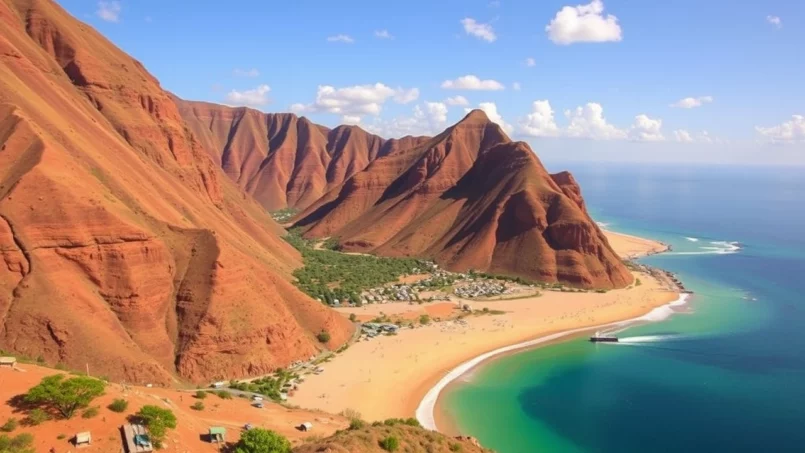
Moving to Tanzania is both a dream and a concern. Between the Indian Ocean beaches, the Serengeti savannahs, the slopes of Kilimanjaro, and the bustling energy of Dar es Salaam, the country offers a spectacular backdrop. But behind the postcard, the daily reality of an expat is still that of a poor, developing country with fragile infrastructure, a fussy bureaucracy, and sometimes bewildering rules.
This article provides a balanced analysis of the benefits and challenges of moving to Tanzania, incorporating key data on the country’s economic, social, tax, and practical situation, drawn from a detailed research report.
A country with strong potential… but among the poorest in the world
Tanzania ranks among the poorest nations on the planet, with a GDP per capita around 1,186 US dollars. More than half the population is considered poor from a multidimensional perspective, and a significant portion lives below the monetary poverty line. Yet the country is also one of Africa’s fastest-growing economies, driven by agriculture, mining, tourism, energy, telecoms, and ICT.
The contrast is striking: on one hand, a country still officially classified as “least developed”, on the other, a dynamic economy that has moved from low-income to lower-middle-income status in just a few years.
An economic structure that shapes expat life
Tanzania’s economy relies heavily on agriculture, which employs about 67 to 80% of the working population and accounts for a quarter of GDP. Most farming is rain-fed, with only a tiny fraction of irrigated land despite considerable potential. Next come industry (about a quarter of GDP) and services (nearly 44% of GDP), with growth sectors like telecoms, IT, finance, insurance, transport, and storage.
Tanzania is a major gold producer in Africa and also mines base metals and diamonds. Its mining sector attracts massive investments from international groups, particularly Australian, Canadian, and South African. Meanwhile, the energy sector offers diversified opportunities, with activities in oil, gas, and renewables like solar, wind, hydroelectricity, and biomass.
For an expat, this economic structure means an environment where opportunities exist, but in a country where the majority of the population remains very poor. This has direct effects on salaries, the cost of domestic labor, the perception of foreigners (seen as “rich”), and social and security pressures.
Real growth, but unevenly felt
After a slowdown due to the global financial crisis around 2009–2011, growth picked up again, reaching about 5.5% in 2016, thanks in part to high gold prices. However, the benefits of this growth do not spread evenly across all segments of the population. The country still has a mediocre human freedom index (6.38) and fragile social indicators, such as a life expectancy of about 67 years and high rates of infant mortality and malnutrition.
For an expat, this means living in an environment where major infrastructure projects, ultra-modern buildings, and slums coexist, as do brand-new hospitals and clinics without equipment.
Where do expats live and what is daily life like?
Expatriation in Tanzania is mostly concentrated in a few key cities, each offering a different face of the country.
Dar es Salaam, economic capital and heart of expat life
Dar es Salaam, literally the “City of Peace,” is the largest city and main economic hub. With over 4 million inhabitants on the mainland, it concentrates more than 10% of the country’s population. It is organized around three districts:
| Dar es Salaam District | Primary Role | Attractions / Reality for Expats |
|---|---|---|
| Ilala | Administrative center and business district, airport, train stations | Access to institutions, offices, transport, but heavy traffic |
| Kinondoni | Most populous district, affluent neighborhoods, majority of expats | Secure villas, international schools, restaurants, nightlife |
| Temeke | Industrial zone, country’s main port | Opportunities in logistics and industry, tougher environment |
The city is experiencing a real estate boom, but about 70% of its residents live in informal housing or slums. The contrast between expat neighborhoods (Masaki, Oyster Bay, Mikocheni, or Salasala) and disadvantaged areas is stark. Aging public transport, chronic traffic jams, and occasional water and electricity rationing are part of daily life.
In 2020, I rented a luxury seaside apartment with a pool for $600 a month, a price that went up to $800 a few years later, while the average Tanzanian lives on a net income after tax of about 626,000 TSh, or roughly $229 a month.
Testimony from an American expat in Dar es Salaam
Arusha, diplomatic hub and gateway to safaris
Arusha, the country’s third-largest city with over 400,000 inhabitants, is the second major expat hub. It is ideally located near many iconic parks (Serengeti, Ngorongoro, Manyara, Kilimanjaro) and hosts several international institutions (African Court on Human and Peoples’ Rights, East African Community headquarters, former International Criminal Tribunal for Rwanda).
The city attracts an international population (diplomats, NGO employees, tourism and conservation professionals). Its lifestyle is described as more provincial and with a milder climate than Dar es Salaam, but its infrastructure is less developed.
Other appreciated cities and islands
Beyond these two hubs, several cities host smaller expat communities:
| City / Region | Features for Expats |
|---|---|
| Mwanza | Second-largest city, major commercial center on Lake Victoria |
| Dodoma | Political capital, planned city under development, wine region |
| Moshi | Quiet town at the foot of Kilimanjaro, coffee region, base for climbs |
| Zanzibar City | Capital of the archipelago, UNESCO-listed Stone Town, strong Muslim identity |
| Mbeya | Mountain town in the southwest, rural and cool setting |
Each location involves a trade-off between infrastructure comfort, service levels (health, schools), proximity to nature, and cultural immersion.
A two-sided cost of living: very low for locals, reasonable for an expat
For an expat with foreign income or a skilled salary, Tanzania can seem very affordable, provided you accept a certain “disconnect” from the local standard of living. However, the numbers show a more nuanced situation.
Monthly cost, salaries, and purchasing power
Estimates indicate an average monthly cost including rent of around $805 to $709 for a single person, and $1,800 to just over $2,000 for a family of four. The country is about 1.6 times cheaper than the global average and ranks 145th out of 197 in terms of cost of living.
The average net salary after tax in Tanzania, about $229, illustrating the gap with the cost of living for expats.
An expat woman living in Dar es Salaam considers an annual budget of $12,000 (about $1,000 per month) allows a comfortable “middle-class” lifestyle for a single person: rent of $300 to $400, a few outings, home-cooked meals, occasional leisure.
Housing: largely affordable for foreigners
Rents remain moderate by international standards, especially compared to major Western cities:
| Type of housing | Expensive area (monthly average) | “Normal” area (monthly average) |
|---|---|---|
| Furnished 85 m² apartment | ~1,300,940 TSh ($526–530) | ~487,138 TSh ($195–200) |
| Furnished 45 m² studio | ~869,187 TSh ($350) | ~507,522 TSh ($205) |
In Dar es Salaam, a one-bedroom apartment in the city center averages around 942,000 to 1,324,000 TSh, while a three-bedroom can reach nearly 3 million TSh. In sought-after seaside neighborhoods, prices are higher but often still well below rents in major international cities.
In Dubai, landlords often require an advance rent payment ranging from several months to a full year. This practice, though common, can weigh heavily on cash flow. For an expat with a good salary, it is mostly a logistical constraint. However, for a young worker or freelancer with less regular income, this large sum can be a major barrier to settling in.
Food, services, and transportation
By consuming local products, daily life remains cheap: fruits and vegetables from markets, meat, ugali, rice, simple dishes at “local restaurants.” Services like cleaning or childcare are very affordable, which is why many expat families employ domestic help.
On the other hand, imported products, Western cuisine, certain leisure activities, or sports equipment can quickly drive up the bill. A gym membership in a business district, for example, runs about 150,000 TSh per month, over $60, sometimes more expensive than in the US for comparable facilities.
Transportation also shows a clear contrast: “dala-dala” (minibuses) cost a handful of shillings but offer limited safety and comfort. Taxis or ride-hailing cars are significantly more expensive but still cheap for an expat, with long urban trips costing around $15 to $20 per day for intensive use.
Job opportunities: interesting niches, increasingly restricted access
To work legally in Tanzania, expats must navigate a paradoxical job market: on one hand, a real need for skilled talent; on the other, an increasingly protectionist policy aimed at reserving jobs for Tanzanians.
Where are the jobs for expats?
Promising sectors for foreigners are concentrated in a few fields:
– Manufacturing and construction
– Information and communication technologies
– Tourism and hospitality (safaris, diving, beach stays)
– Mining, oil, gas, energy
– Education (English teachers, international school teachers)
– NGOs, international organizations, and development projects (health, education, microfinance, conservation)
The most sought-after professions for expats, with comfortable salaries relative to the local cost of living.
Overseeing IT projects and managing technical teams.
Designing and programming software solutions and applications.
Expertise in exploration, production, and management of petroleum resources.
Operating commercial flights for airlines.
Advising on and implementing telecom strategies and infrastructure.
Higher education and academic research in Cameroonian institutions.
By way of indication, certain high-end professions (surgeon, corporate lawyer, marketing director, IT director, pilot, petroleum engineer) are among the top local salary brackets, while still remaining well below Western standards.
Tightening immigration rules
Tanzanian authorities believe the presence of foreign workers is too high, especially in management positions. Although expats officially represent only about 0.8% of the workforce, nearly 90% of CEOs are said to be foreign, due to a lack of sufficient technical skills among the local population, according to some assessments.
To reverse this trend, the country has implemented several safeguards:
| Measure / Rule | Effect on Expats |
|---|---|
| Quota of 5 expats maximum per company in startup phase | Limits the number of foreign employees in new projects |
| Requirement that the deputy director be Tanzanian if the CEO is not | Aimed at fostering skills transfer and promoting a local “number two” |
| Increase in work permit fees | Raises the cost of foreign employment for employers |
| Law on foreign workers permits (2015) | Centralizes and tightens control over work authorizations |
| Deportations of workers without proper papers (e.g., foreign teachers in 2013) | Very clear signal of zero tolerance for expired or irregular permits |
To obtain a Class B work permit (salaried employment), the employer must prove the position cannot be filled by a Tanzanian. Highly skilled or rare professions, such as certain medical or technical specialties, remain more accessible, but hiring of generalist expats faces stricter screening.
Finding a job: between networking, platforms, and caution
Job searches can be done remotely or on the ground. Several online platforms, such as Zoom Tanzania, Brighter Monday, or Careers in Africa, are good starting points. Using LinkedIn, specialized WhatsApp or Facebook groups, and expat networks (like InterNations) also helps identify unpublished openings.
Two strategies exist: securing a contract before arriving, which facilitates the visa and provides security, or coming on the ground to test the waters and adjust your plan. The second approach exposes you more to scams, such as fake agencies demanding fees. Any employer or intermediary asking for money should be viewed with suspicion.
On the tax side, Tanzania applies a relatively simple taxation system, but it can weigh on expats, especially those with tax obligations in their home country.
When do you become a tax resident in Tanzania?
A tax resident is any person who:
– has a permanent home in Tanzania and is present there at any time during the tax year; or
– stays at least 183 days in the country during the year; or
– spends an average of more than 122 days per year in Tanzania over the current year and the two preceding years.
Residents are taxed on their worldwide income, while non-residents and “short-term residents” (less than two years total in their lifetime) are taxed only on Tanzanian-source income. For the latter, foreign income remains exempt for two years.
Income tax brackets
Personal income tax is progressive, with a top marginal rate of 30% for residents. The monthly brackets in Tanzanian shillings are as follows:
| Monthly bracket (TZS) | Rate applied |
|---|---|
| 0 – 270,000 | 0% |
| 270,001 – 520,000 | 8% on the portion above 270,000 |
| 520,001 – 760,000 | 20,000 + 20% on the portion above 520,000 |
| 760,001 – 1,000,000 | 68,000 + 25% on the portion above 760,000 |
| > 1,000,000 | 128,000 + 30% on the portion above 1,000,000 |
Non-residents, on the other hand, face a 15% withholding tax on salaries and a 30% rate on their other Tanzanian-source income.
Capital gains tax rate on real estate for non-residents in Tanzania.
Social security contributions and employer taxes
All employees, including expats, must contribute to a social security scheme. In the private sector, the National Social Security Fund (NSSF) is funded by a total contribution of 20% of gross salary: 10% from the employee, 10% from the employer. In the public sector, the split is slightly different (15% employer, 5% employee via the PSSSF).
Additionally:
– a Skills and Development Levy of 3.5% on the payroll for companies with at least 10 employees;
– a contribution to the Workers’ Compensation Fund of 0.5% of gross wages.
For an expat, social security contributions reduce net pay. The key issue is whether these social rights will be accessible in the long term, especially if returning to their home country.
Double taxation and special cases
Tanzania has signed double taxation agreements with a few countries (Canada, India, Italy, Scandinavia, South Africa, Zambia, etc.). For nationals of these states, it is sometimes possible to reduce the overall tax burden.
Americans, for example, are still required to file a return in the United States even when living abroad, with the possibility of benefiting from exemptions (foreign earned income exclusion) and tax credits for taxes paid in Tanzania, but at the cost of some administrative complexity.
For expat managers employed on a “net of tax” basis, contracts often stipulate that the employer bears the local tax burden. Tanzanian case law reminds, however, that these taxes paid on behalf of the employee themselves constitute a taxable benefit, justifying a complex “gross-up” of income.
Adapting to Tanzanian culture is one of the great advantages, but also one of the major challenges of expatriation.
A warm, hierarchical, and conservative society
Tanzanians are often described as warm, hospitable, and open. Greetings are central: people take time to ask about family, work, health. Not greeting or rushing through pleasantries is very poorly viewed. Respect for elders is particularly strong: they are greeted first, sometimes with a specific term (“shikamoo”).
The handshake, prolonged, is always done with the right hand; the left hand is considered impure for eating, giving, or receiving an object. Everyday gestures are codified, including how to call someone (never with the palm facing upward, reserved for animals).
Society being patriarchal and traditional, modest attire (shoulders and knees covered) is required, especially in Zanzibar where Islam is overwhelmingly dominant. Shorts are very poorly perceived outside of closed tourist beaches. In Zanzibar, fines can be imposed for attire deemed indecent in public spaces.
Indirect communication and “Pole Pole”
The unofficial motto “Pole Pole” (“slowly, slowly”) reflects a more relaxed relationship with time than in Europe or North America. Punctuality is not an absolute priority, even in business; delays are frequent and rarely dramatized. Combined with massive traffic jams, this makes keeping tight schedules difficult. For a Western expat, this requires a real mental adjustment.
Communication favors indirectness, avoiding blunt ‘no’s and direct expression of negative emotions in favor of humor and detours. Avoiding loss of face, especially in public, is crucial. In business, hierarchy is strictly respected, with a vertical decision-making process that values status and titles, even if it can slow operations.
Religion, customs, and taboos
The country is almost equally divided among Christian, Muslim, and traditional religions, with a Muslim majority in Zanzibar. During Ramadan, eating, drinking, or smoking in public during the day is discouraged and seen as disrespectful.
Homosexuality is highly taboo and criminally punished, with very harsh laws that can lead to life imprisonment. LGBT+ individuals face increased risk of harassment, arrest, and even intrusive medical exams. Same-sex displays of affection can lead to violence or police intervention. For affected expats, this legal and social framework constitutes a major drawback, sometimes a deal-breaker.
Finally, the perception that “all foreigners are rich” is widespread. It fuels requests for money, attempted corruption (sometimes even from police officers), scams, and exaggerated expectations that one must learn to manage without breaking the relationship.
Healthcare: a major black spot for expatriation
The health situation is one of the main disadvantages of settling in Tanzania, especially for families with children or people with chronic conditions.
An underfunded and unequal public system
Public hospitals suffer from a chronic lack of resources, trained staff, and modern equipment. Facilities are often overcrowded, especially outside major cities. For the majority of the population, access to care remains difficult, particularly in rural areas. Infectious diseases (malaria, typhoid, cholera, hepatitis, tuberculosis) are common, as is HIV/AIDS (about 4.7% of the population).
Infrastructure is concentrated in cities like Dar es Salaam, Arusha, Mwanza, or Moshi. Referral hospitals exist (Muhimbili in Dar es Salaam, Bugando in Mwanza, KCMC in Moshi), but overall the level remains below Western standards, especially for serious cases or complex trauma.
Some emergency services are virtually non-existent or very limited, ambulances are rare, and cash payment before treatment is often required.
Better private options, but still imperfect
Expats almost always turn to the private sector, which offers much more acceptable conditions: more modern facilities, better patient-to-doctor ratios, often English-speaking staff, shorter wait times.
Several private facilities in Tanzania (such as Aga Khan Hospital in Dar es Salaam, Regency Medical Centre, or clinics in Moshi and Arusha) can treat common conditions, perform advanced tests (CT scan, MRI), and carry out scheduled surgeries. However, in case of serious illness, major accident, or need for highly specialized care, medical evacuation to Nairobi or Johannesburg is often necessary for expats.
Health insurance and evacuation: essential
Access to the public system (NHIF) is theoretically open to citizens, but few foreigners can benefit from it at a satisfactory level. In practice, a solid international private insurance including air medical evacuation coverage is considered indispensable.
Major international companies (Cigna Global, Allianz, William Russell, etc.) and some local insurers (Jubilee, UAP, Resolution) offer suitable policies, whose details must be carefully examined:
Key elements to review when selecting medical coverage suited to expatriation.
Assess the breadth and quality of the insurer’s network of partner health professionals and facilities.
Check the availability and ease of using direct billing systems to avoid upfront payments.
Carefully examine reimbursement caps, especially for costly medical evacuations or repatriations.
Ensure long-term care (chronic conditions) and maternity-related expenses are covered.
Check the extent of coverage for psychology or psychiatry consultations and treatments.
Look for plans that cover preventive medicine, such as vaccines or regular check-ups.
Without this protection, a prolonged stay in Tanzania would represent a considerable health and financial risk.
Infectious risks and precautions
Malaria is endemic in almost all areas below 1,800 meters altitude, with a transmission peak around May–July. Using impregnated mosquito nets, repellents, long clothing in the evening, and appropriate chemoprophylaxis are strongly recommended, along with mosquito control at home (spray, fumigation).
Tap water is not drinkable. Filters, bottled water, or purification systems are essential in expat households. Numerous waterborne diseases (cholera, typhoid, schistosomiasis) are present.
Before moving, a visit to an international vaccination center is essential. Among the recommended vaccines are: hepatitis A and B, typhoid, tetanus, polio, diphtheria, measles-mumps-rubella, rabies (in some cases), yellow fever (mandatory if coming from endemic areas), meningitis, and of course COVID‑19 vaccination.
Safety: significantly better than some neighbors, but far from trivial
Tanzania enjoys a better security reputation than some East African countries, but risks are not negligible, especially in large cities.
Crime: from pickpocketing to express kidnappings
The major urban areas, especially Dar es Salaam and Zanzibar, have seen an increase in petty crime:
– pickpockets and bag snatching in markets, buses, bus stations;
– mugging by motorcycle (snatching bags or phones from a two-wheeler);
– home burglaries;
– sometimes violent attacks on urban beaches (Coco Beach, Toure Drive);
– “express kidnappings,” where complicit taxis or ride-hailing vehicles take victims to ATMs to withdraw large sums, or even make bank transfers.
Residential compounds designed for expats offer enhanced security through features like fenced enclosures, 24/7 guards, and alarm systems. These measures offset the risks of settling in a new country. Additionally, it is common for employers to cover the costs of these secure accommodations for their foreign managers.
In Zanzibar, incidents of assaults and thefts have been reported in Stone Town or on certain tourist beaches. Here too, discreet behavior, limiting visible valuables, using official taxis, and caution at night remain advisable.
Terrorism and occasional instability
The country is not spared from the terrorist threat, particularly due to its proximity to areas of jihadist activity such as northern Mozambique or Somalia via the Al-Shabaab network. Attacks have already targeted the Mtwara region, on the border with Cabo Delgado, prompting warnings from several embassies.
Elections can deteriorate into violent protests, with use of force by authorities, internet shutdowns, curfews, or roadblocks. Expats are generally advised by their embassies and employers to limit travel and avoid gatherings.
Relative political stability, but restricted freedoms
Tanzania is often presented as one of the most stable states in East Africa. However, this stability comes at the cost of some restrictions on civil liberties: independent media under pressure, strict laws on content deemed sensitive, bans on filming protests, and police authority to search phones for political or “inappropriate” content.
For the expat, this means operating in an environment where open criticism of the government, especially on social media, can lead to problems—something to keep in mind if you are politically engaged.
Education: serious compromises for families
For expatriate families, the schooling issue is central. The Tanzanian public school system, while a priority in national policies since independence, remains largely under-resourced and unsuited to Western standards.
Accessible but low-quality public education
Long distances to school, overcrowded classrooms, lack of materials, poorly trained teachers: schooling in public institutions remains difficult for many Tanzanian children. Enrollment rates drop drastically from primary (about 83% net rate) to secondary (around 28%), and only a tiny minority reaches higher education.
For an expat child, following the local education system is theoretically possible but rarely recommended. The language of instruction (Swahili in primary, English in secondary), specific curricula, pedagogical approach, and infrastructure make a later transition to a foreign school system particularly complex.
International schools: an asset… expensive
The most common solution is to enroll children in an international school. Dar es Salaam, Arusha, Moshi, Zanzibar, Mwanza, Morogoro, or Iringa have recognized institutions (International School of Tanganyika, Aga Khan schools, Haven of Peace Academy, International School Moshi/UWC East Africa, St. Constantine’s in Arusha, International School of Zanzibar, etc.) offering IB, British, or Cambridge curricula with English (and sometimes French) as the main language.
Fees are very high by local standards.
| Level / Type of International School | Approximate annual fees |
|---|---|
| Kindergarten / Primary | Around $4,900 to $9,900, sometimes more |
| Secondary / IB / A-Levels | Up to $20,000 to $30,000 at some leading institutions |
In the economic capital, some schools charge more than 27 million TSh per year for primary, and in Zanzibar or Arusha, the best boarding schools also run to several thousand dollars annually.
In other words, for an expatriate family, school fees are often one of the heaviest expenses, sometimes more than housing. Many NGO or multinational job offers include partial or full coverage of international school fees, which makes all the difference in the decision to relocate.
Visa procedures, work permits, and residence: administrative burden to anticipate
On the administrative side, Tanzania is not a bureaucratic nightmare, but you should expect long, technical, and costly procedures.
A sophisticated permit system
Long-term stays require a residence permit, in addition to a work permit. Three main classes exist:
– Class A: for investors and self-employed (business creation, autonomous economic activity);
– Class B: for salaried employees hired by a local company or institution in a specialist position;
– Class C: for students, researchers, volunteers, missionaries, retirees, patients undergoing treatment, etc.
Amount of assets required for certain investors as part of proof of funds for a work permit application in Dubai.
Companies often must first obtain a work permit from the Ministry of Labor (via the OWAIS system), then the residence permit issued by immigration services. In some cases, a “Special Pass” allows the applicant to be present in the country while the application is processed.
Official processing times are one week after biometric enrollment, but they can be longer in practice. Hiring a specialized lawyer or consultant is recommended to avoid procedural pitfalls.
Long-term residence and naturalization
To obtain permanent resident status, you generally need:
– to live and work legally for about ten years in Tanzania, or
– to be married to a Tanzanian citizen for at least five years.
It is also necessary to demonstrate good proficiency in Swahili and English, a clean criminal record, and a profession deemed useful to the country’s technological and economic development.
Naturalization remains rare, costly, and tightly controlled, especially since dual nationality is not recognized for adults. For most expats, the realistic horizon is regular renewal of work and residence permits, rather than acquiring a Tanzanian passport.
Assessment: who is Tanzania a good expatriation option for?
Behind the diversity of situations, a few key trends emerge.
Main advantages
– A cost of living generally lower than in the West, especially for housing, local products, domestic services, and public transport.
– An exceptional natural setting, with direct access to some of Africa’s most beautiful parks and landscapes (Serengeti, Ngorongoro, Kilimanjaro, lakes, Indian Ocean islands).
– Real professional opportunities in certain sectors (mining, energy, ICT, tourism, NGOs, international education), especially for rare or highly qualified profiles.
Main disadvantages
– A healthcare system far below Western standards, exposing you to real health risks without solid private insurance and evacuation options.
– A weak public education system, making international schools nearly mandatory for families, with very high fees.
– Non-negligible urban crime (theft, assault, express kidnappings), requiring daily safety habits.
– A legal framework highly hostile to LGBT+ people, with significant risks of harassment and prosecution.
– Heavy, costly, and increasingly restrictive immigration procedures to protect local employment.
– Fragile infrastructure (roads, electricity, water, internet), especially outside major cities, with regular outages and degraded road networks.
– A hierarchical, conservative, and indirect culture that can frustrate expats used to transparency and quick decision-making.
Ultimately, expatriation in Tanzania is more suitable for:
Expatriation in Congo mainly concerns three distinct profiles. First, professionals sent by solid organizations like multinationals, NGOs, or international institutions, who benefit from a comprehensive package including international health insurance, schooling, and secure housing. Second, entrepreneurs or investors willing to tackle heavy administrative procedures in exchange for prospects in growing economic sectors. Finally, individuals seeking a radical lifestyle change, such as retirees or international freelancers with stable external income. This last profile must be aware of local medical and educational limitations and be able to finance fallback solutions, such as treatment abroad or expensive private schools.
For families with young children, LGBT+ individuals, profiles highly dependent on high-level healthcare, or those seeking a very stable and predictable institutional environment, Tanzania requires deeper consideration, or even a plan B in a neighboring country with better infrastructure.
The appeal of the “African dream” should not obscure that Tanzania remains a country in transition, where an expat’s daily life is made up of safaris and breathtaking sunsets just as much as power outages, opaque administrative correspondence, and delicate social balances to maintain. Understanding this balance, embracing it, and preparing for it is probably the best way to turn an expatriation to Tanzania into a successful adventure rather than a disillusionment.
Disclaimer: The information provided on this website is for informational purposes only and does not constitute financial, legal, or professional advice. We encourage you to consult qualified experts before making any investment, real estate, or expatriation decisions. Although we strive to maintain up-to-date and accurate information, we do not guarantee the completeness, accuracy, or timeliness of the proposed content. As investment and expatriation involve risks, we disclaim any liability for potential losses or damages arising from the use of this site. Your use of this site confirms your acceptance of these terms and your understanding of the associated risks.

Cyril Jarnias is an independent expert in international wealth management with over 20 years of experience. As an expatriate himself, he is dedicated to helping individuals and business leaders build, protect, and pass on their wealth with complete peace of mind.
On his website, cyriljarnias.com, he shares his expertise on international real estate, offshore company formation, and expatriation.
Thanks to his expertise, he offers sound advice to optimize his clients' wealth management. Cyril Jarnias is also recognized for his appearances in many prestigious media outlets such as BFM Business, les Français de l’étranger, Le Figaro, Les Echos, and Mieux vivre votre argent, where he shares his knowledge and know-how in wealth management.





