
 Published on and written by Cyril Jarnias
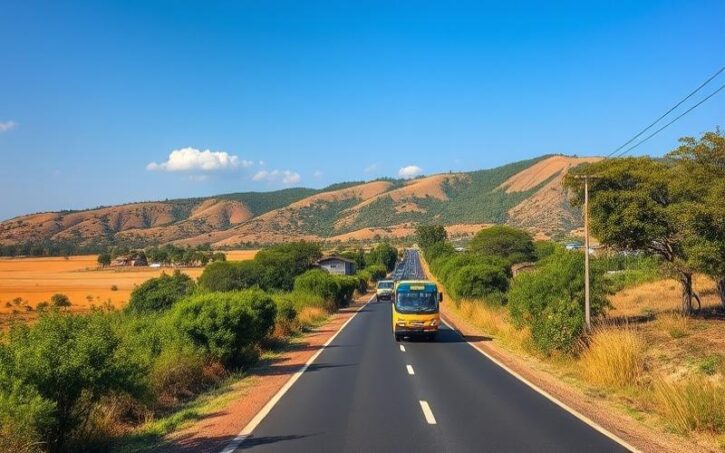
Traveling in Tanzania without renting a private 4×4 is possible. Between high-energy minibuses, ultramodern express buses, scenic trains, ferries, motorcycle-taxis, and ride-hailing apps, the country offers a dense public transportation ecosystem—sometimes chaotic, but overall effective and inexpensive. This practical guide compiles, in a single article, the essentials you need to know to get around like a local, taking into account on-the-ground realities, fares, safety rules, and accessibility considerations.
Understanding Tanzania’s Transportation Landscape
Tanzania is vast, with nearly 90,000 km of roads, of which only a minority are paved. The main highways connecting Dar es Salaam, Arusha, Moshi, or Mwanza are generally in good condition, but secondary roads quickly turn into dirt tracks, especially during the rainy season. In this context, public transportation plays a central role, both for city residents and travelers.
The country has a multi-tiered transport system: urban/peri-urban (dala dala, BRT, motorcycle-taxis, tuk-tuks), intercity (long-distance buses, trains, ferries), and to the islands (Zanzibar, Pemba, Mafia, lake islands). Regulation is handled by different authorities: LATRA for interregional bus fares, TANROADS for roads, and other bodies for rail and ferries.
For the traveler, the major advantage of this system is its very low cost by international standards. Tanzania’s transport price index, which compares the price of transport (road, rail, air) to the rest of the world, hovers around 60.85 on a global base of 100. In other words, getting around there costs significantly less than in most countries.
Dala dala: The Beating Heart of Local Transport
It’s impossible to talk about public transportation in Tanzania without mentioning the famous dala dala, those ubiquitous shared minibuses running from morning till night. They constitute the primary mode of public transport in most cities and across much of the secondary road network.
A dala dala is typically a minibus (often a Toyota Hiace) or a small reconfigured bus, sometimes even a covered pick-up truck. Their name comes from the English word “dollar,” a reference to the initially very low fare. They run on fixed routes, but without precise schedules: they leave when full, or almost full.
Onboard a dala-dala, the Tanzanian local bus, the atmosphere is loud and coded, with music at full volume (rap, hip-hop, bongo flava). The vehicle is personalized with painted slogans and decorated windows. The organization relies on a duo: the driver and the *mpigadebe* (called *konda* in Zanzibar), who is the conductor. The latter’s role is to shout destinations, bang on the bodywork to signal stops, collect payments, and manage the number of passengers, which often far exceeds the official seat capacity.
Dala dala have a reputation for being cheap, reliable on a daily scale (they run continuously), and present almost everywhere. In return, they are often overcrowded: a 14-seat vehicle can easily carry around twenty people. To get off, just shout “Shusha!” to signal you want to stop.
Typical Dala Dala Fares
Prices vary by city but remain very low. In large urban areas, a standard ride costs between 400 and 600 Tanzanian shillings (TZS) for a typical urban trip.
A simple table gives an idea of the price ranges:
| Route (examples) | Zone | Indicative Fare (TZS) |
|---|---|---|
| Short urban ride (city) | Dar es Salaam, Arusha, etc. | 400 – 600 |
| Stone Town → Pwani Mchangani | Zanzibar | ~1,700 |
| Stone Town → Paje | Zanzibar | ~2,000 |
| Paje → Bwejuu | Zanzibar | ≤ 500 |
| Standard inter-neighborhood ride | Other cities | often ≤ 1,000 |
It is customary to pay the conductor during the ride, not before boarding, especially on the mainland. The conductor gives change before you get off, sometimes at the last moment. In Zanzibar, fares are officially fixed (400 TZS between terminals, 2,000 TZS to cross the island), but tourists are frequently overcharged. Observing what locals pay is often the best guide.
Strengths and Limitations of Dala Dala
Dala dala fill an immense gap left by former public companies, but they have several limitations:
Safety is variable due to sometimes old and poorly maintained vehicles, and drivers incentivized for speed and overloading. Discomfort is notable during peak hours (crowding, heat, theft risk). Accessibility is very insufficient for people with reduced mobility or the elderly. Finally, the lack of official schedules complicates planning long trips.
Despite this, they remain the most immersive and economical way to get around, provided you maintain a minimum of vigilance and patience.
DART in Dar es Salaam: The Game-Changing Metro-Bus
In Dar es Salaam, Tanzania’s largest metropolis, the situation had become critical in the early 2000s: exploding population, monstrous traffic jams, slow commutes – average speeds of about 8.5 km/h were reported during peak hours. To address this crisis, the city bet on a Bus Rapid Transit (BRT) system, the Dar es Salaam Rapid Transit, better known by its acronym DART, operated by UDART.
A Rapidly Growing Metro-Bus Network
The DART project is structured in six phases, for a total planned length of about 140 km, with the ambition of covering over 90% of the urban population. To date, only Phase 1 is fully operational, but it has already profoundly changed the way people commute between the western suburbs and the city center.
Key figures for Phase 1:
| Characteristic | Value / Detail |
|---|---|
| Total length | ~21 km |
| Commercial service start | 2016 |
| Number of stations | 29 stations + 5 major terminals |
| Trunk routes | 3 dedicated corridors |
| Feeder routes | ~57.9 km |
| Initial fleet | 140 articulated and standard buses |
| Fleet (2022) | ~210 buses |
| Theoretical capacity | ~300,000 people/day |
| Actual ridership (2017) | ~179,000 passengers/day |
| Hours of operation | 4:30 AM – midnight, every day |
The main lines start from Kimara (west) and Ubungo to reach the waterfront (Kivukoni), Morocco, or Gerezani, using reserved lanes in the center of major arteries. Feeders, often operated by former dala dala operators integrated into the system, bring passengers from outlying neighborhoods to the trunk stations.
Stations in the Dar es Salaam BRT system are divided into three distinct types: terminals, elevated trunk stations, and feeder stations.
Travel Time, Frequency, and Comfort
One of the major contributions of the BRT is the spectacular reduction in travel times. A 20 km trip that could take nearly three hours during peak times in a dala dala or private car has been reduced to about 45 minutes on the BRT. On average, access time to the city center was reduced from 122 to 83 minutes between 2016 and 2019.
Bus frequency adapts to the time of day. During peak hours, the interval between two buses can be as short as 3 to 5 minutes on the busiest lines. During off-peak hours, frequency is about 10 to 15 minutes on the main trunks and about 20 minutes on feeder lines.
In terms of comfort, the fleet includes 18-meter articulated buses (about 150 passengers) and 12-meter standard buses (about 80 passengers), equipped with Euro III and IV engines. Specific facilities exist for people with reduced mobility and the elderly: reserved seats, priority boarding, wheelchair assistance at stations, free first aid.
Fares and Ticketing
The BRT is positioned above dala dala in terms of price but remains very affordable relative to local purchasing power. A single ticket is around 750 TZS, compared to about 500 TZS for a comparable trip in a classic minibus. Long-term, the system aims to implement an automated ticketing system with contactless cards. An app, the Mwendokasi App, already allows buying tickets in advance.
A simple fare comparison example:
| Mode of transport | Example of urban fare |
|---|---|
| Classic Dala Dala | ~500 TZS |
| DART BRT (urban trip) | ~750 TZS |
This difference, minimal for a visitor, remains significant for the poorest households, which is why a pilot conditional cash transfer (CCT) program was tested to help low-income urban workers use the BRT and even relocate closer to stations.
Impacts and Challenges of the BRT
The DART system has attracted international attention and has received, among others, sustainable transport awards in 2017 and 2018. Studies show a decrease of about 30% in road congestion and an approximate reduction of 20% in emissions on the served corridors. Increased user satisfaction in terms of safety and service quality is also observed.
Alongside these successes, several obstacles continue to pose challenges and require particular attention.
Unequal access to technology and digital skills widens gaps between regions and populations.
Protecting data and systems from increasingly sophisticated and frequent threats.
Dependence on external solutions and infrastructure, questioning strategic autonomy.
The need to evolve legal and regulatory frameworks at the speed of innovation.
– significant overcrowding during peak hours, with packed buses;
– lack of vehicles relative to demand, awaiting the delivery of hundreds of new planned buses;
– occasional encroachment of reserved lanes by other vehicles, degrading commercial speed;
– pricing deemed too high by some of the poorest users.
For a traveler, the BRT remains nevertheless the fastest, clearest, and safest way to cross Dar es Salaam at low cost, especially between the west (Kimara / Ubungo) and the center / waterfront.
Intercity Buses: The Backbone of Long-Distance Travel
To reach major Tanzanian cities without flying, the bus remains the number one option. Dozens of companies, from the most basic to the most luxurious, provide daily connections between Dar es Salaam, Dodoma, Arusha, Moshi, Mbeya, Mwanza, Bukoba, Mtwara, Tanga, and many others.
The gigantic bus terminal in Dar es Salaam, often called the “Magufuli Bus Terminal,” sees over 3,000 buses per day. On-site, a multitude of companies – Dar Express, Kilimanjaro Express, Shabiby Line, New Force Bus Services, Rungwe Express, Falcon Coach, ABC Upperclass, etc. – sell tickets at counters, sometimes supplemented by online booking platforms.
Regulated Pricing and Sample Routes
Intercity fares are regulated by LATRA, which sets a maximum price per kilometer based on bus type (ordinary or semi-luxury, paved or unpaved road). The recently revised prices illustrate the cost levels:
| Bus category | Road type | New Max fare (TZS/km) |
|---|---|---|
| Ordinary bus | paved | ~41.29 |
| Ordinary bus | unpaved | ~51.61 |
| Semi-luxury bus | all | ~56.88 |
Concretely, for some emblematic routes:
| Origin → Destination | Approx. distance (km) | Ordinary bus (TZS) | Semi-luxury (TZS) |
|---|---|---|---|
| Mwanza → Dar es Salaam | 1,144 | 47,000 | 65,000 |
| Mwanza → Bukoba | 681 | 28,000 | 39,000 |
| Mwanza → Musoma | 218 | 9,000 | 12,000 |
| Dodoma → Dar es Salaam | 451 | 19,000 | 26,000 |
| Dodoma → Singida | 245 | 10,000 | 14,000 |
| Babati → Arusha | 168 | 7,000 | 10,000 |
For a very frequented route like Dar es Salaam – Arusha or Dar – Moshi, a ticket generally costs between 35,000 and 55,000 TZS depending on the bus’s standard and the season (prices rise during year-end holidays).
Booking, Comfort, and Safety
It is generally possible to buy your ticket the day before at the counter, or even on the same day early in the morning, but on major routes or in high season, it’s better to plan one or two days in advance. Local online booking platforms now allow comparing companies, schedules, and amenities (air conditioning, Wi-Fi, USB, snacks).
The comfort level varies by company: some offer air-conditioned buses with reclining seats, screens, and sometimes inclusive drinks or snacks, while others are more basic. Trips include regular stops for bathroom and food breaks, where street vendors often offer snacks and drinks.
Regarding safety, road accidents remain a serious problem in Tanzania. About one-third of traffic accidents are concentrated in the Dar es Salaam region, and buses (notably dala dala) are overrepresented in the statistics. The causes are well identified: excessive speed, dangerous overtaking, driver fatigue, overloading, vehicle condition, degraded road surfaces. To limit risks, most experienced travelers avoid night trips and favor companies known for their discipline and well-maintained fleets.
Trains: The Scenic and Slow Option
Tanzania’s railway network is less used than buses, but it constitutes an interesting alternative for long trips, especially for those who favor slowness and scenery. Two major entities share the main lines: the Tanzania Railways Corporation (TRC) for the Central Line and TAZARA (Tanzania–Zambia Railway Authority) for the link to Zambia.
TAZARA connects Dar es Salaam to Kapiri Mposhi in Zambia, via Mbeya and the Nakonde/Tunduma border. The Dar–Mbeya stretch, highly popular, takes about 20 to 24 hours and passes through national parks, mountains, and isolated countryside. The Central Line also departs from Dar es Salaam, heading west and northwest towards Kigoma (on Lake Tanganyika) and Mwanza (on Lake Victoria).
Trains offer three classes: first and second with berths, third with seats. A basic dining car is present, but it is advised to bring water and snacks. Departures are rare (1 to 2 per week depending on the stretch), delays are frequent, and booking in advance is almost mandatory. A trip in second class (e.g., Dar – Moshi) can cost around €10 at certain times.
For a traveler, the train is above all an experience: you travel slowly, in a calmer atmosphere than on buses, with long station stops and varied landscapes. But you must not be in a hurry.
Ferries: Between Mainland, Islands, and Great Lakes
In Tanzania, water is also a transport axis. Between sea links to Zanzibar, Pemba, Mafia, and ferries on Lake Victoria, Lake Tanganyika, or Lake Nyasa, the water route is an integral part of the public transport system.
Dar es Salaam – Zanzibar: The Maritime Highway
For many travelers, the first Tanzanian ferry experience is the crossing between Dar es Salaam and Stone Town, on the island of Zanzibar. It is mainly provided by fast companies like Azam Marine. Fast boats take about 1 hour 30 minutes to 2 hours to make the crossing. A standard class ticket is around 35 USD, sometimes negotiable to 30 USD, payable in dollars, Tanzanian shillings, or credit card (sometimes with additional fees).
Authorities advise avoiding night options, often overcrowded and less safe, and favoring daytime crossings with established operators, avoiding poor weather conditions.
Lake Ferries and Regional Connections
On the gigantic Lake Victoria, a significant fleet of ferries transports passengers, vehicles, and goods between Tanzania, Uganda, and Kenya, but also between Tanzanian ports themselves. Mwanza, Bukoba, and Musoma are the main Tanzanian ports, connected by mixed ships (Ro-Pax) or smaller ferries. Boats like the MV New Victoria serve the Bukoba–Mwanza route, with crossings of about eight hours.
Public ferry services, like those managed by TEMESA or Marine Services Company Limited, connect localities on either side of lake inlets or gulfs. A concrete example is the Kigongo–Busisi link south of Mwanza, operated notably by the MV Mwanza. This modern ferry is capable of transporting passengers, cars, and trucks simultaneously.
The recent history of ferries in Tanzania, however, reminds us that this is a mode of transport to use with caution. Several deadly shipwrecks have left their mark, notably on Lake Victoria and in the Zanzibar area. Respecting safety instructions (life jacket, overloading, weather) must be a priority.
Ride-Hailing, Taxis, Bajaj, and Boda Boda: Everyday Micro-Mobility
In large cities, the transport offering is complemented by a whole constellation of more individualized modes: traditional taxis, motorcycle-taxis (boda boda), tuk-tuks (bajaj), and, increasingly, ride-hailing apps.
Classic taxis are generally not equipped with meters. The price is therefore negotiated before getting in, in Tanzanian shillings, checking the local price range if possible to avoid tourist markups. At Dar es Salaam airport as well as Zanzibar airport, indicative fare grids are often displayed.
Bajaj (tuk-tuks) and boda boda (motorcycle-taxi) are very practical for short trips in the city thanks to their flexibility and ability to avoid traffic jams. However, they present increased risks, especially motorcycles: helmets are rarely provided for passengers, speed is often high, and driver behavior can be aggressive in traffic. It is recommended to limit their use to short distances and avoid major high-speed roads.
Ride-hailing apps have developed significantly, particularly in Dar es Salaam and Arusha. International platforms like Bolt or regional and local solutions (inDriver, Paisha, Little, Ping, TanTaxi, etc.) coexist. LATRA now regulates their operation, notably capping the commissions platforms can take from drivers (around 15% maximum), which has caused tensions with some international giants. For the user, the main advantage lies in transparency (price announced before the ride) and relative safety (geolocation, driver ratings).
Accessibility, Inclusion, and Safety: Where Does Tanzania Stand?
Regarding accessibility, the situation is mixed. On one hand, Tanzania has a generally favorable legal framework for people with disabilities (specific law, integration of sign language in education, national development plan including inclusion). On the other hand, implementation is still limited, especially in transportation.
The Dar es Salaam BRT is an example of accessibility, with stations designed according to ‘universal design’ standards (ramps, wheelchair spaces, adapted counters, inclusive signage) and trained staff. However, this accessibility remains rare at the national level: most intercity buses, dala dala, and bus stations are not adapted, sidewalks are often absent or degraded, and information is not available in braille or sign language.
From a safety perspective, Tanzania shares the characteristics of middle-income countries: road accident rates significantly higher than in industrialized countries, strong involvement of minibuses and motorcycle-taxis in accidents, chronic vehicle overloading, frequent mechanical defects. The traffic police attribute more than three-quarters of accidents to human factors (speeding, overtaking, alcohol, fatigue) and nearly one-fifth to vehicle condition.
A few simple habits to significantly reduce risks during your travels.
Opt for daytime trips when possible for better visibility and safety.
Select bus companies with a good reputation for their service and maintenance.
Avoid vehicles that are clearly in poor condition or show signs of failure.
Always wear a seat belt when it is available in the vehicle.
Be particularly cautious and avoid motorcycle travel at night.
In crowded urban areas, always keep your valuables within sight.
Practical Tips for Using Public Transportation in Tanzania Well
Beyond the modes of transport themselves, a few local customs and tips greatly facilitate life. Tanzanian culture values politeness, patience, and respect, codes that also apply on buses and in stations.
Greeting people around you with a “Jambo” or a “Shikamoo” for elders, exchanging a few words in Swahili, responding with a smile to calls from conductors or street vendors, all contribute to a smoother experience. The right hand is traditionally used to give or receive money, pay for a ticket, or shake hands. Public displays of affection are frowned upon, especially in majority Muslim regions like Zanzibar; covering shoulders and knees in town is advised.
In terms of preparation, having a phone with a local SIM card is almost essential for checking schedules, locating stations, ordering a ride-hail, or following a route on Google Maps, especially in dala dala. ATMs are present in all major cities, but most transactions are done in cash, often with small bills.
Budget-wise, a traveler can structure a very modest daily budget by relying on public transportation: between a few hundred and a few thousand shillings per day in the city, a few tens of thousands for a long intercity trip, remain well below the cost of private transfers or domestic flights. Over the course of a stay, the savings are not insignificant, while allowing for a much more direct immersion in daily Tanzanian life.
Conclusion: Making the Most of Tanzania’s Diverse Transportation
Public transportation in Tanzania forms a multi-speed system. On one hand, dala dala minibuses and bodaboda embody informal, hyper-flexible, cheap mobility but with risks and poor accessibility for vulnerable people. On the other hand, the Dar es Salaam BRT, long-distance buses regulated by LATRA, some modernized ferries, or ride-hailing platforms outline the contours of a more structured, safer network better integrated with sustainability goals.
To travel efficiently in Tanzania, it is essential to accept the diversity of transport and alternate between comfort and adventure by choosing the right mode at the right time. Use the BRT to cross Dar es Salaam quickly, the dala dala or bajaj for short distances, intercity buses or trains to discover the country at low cost, official ferries to reach the islands, and ride-hailing services for nighttime trips or in unfamiliar areas.
By combining a minimum of preparation, a clear-eyed view of safety issues, and genuine curiosity about local customs, public transportation in Tanzania becomes much more than just a way to get around: a gateway to a country where the road, the railway, and the sea each tell part of its history and present.
Disclaimer: The information provided on this website is for informational purposes only and does not constitute financial, legal, or professional advice. We encourage you to consult qualified experts before making any investment, real estate, or expatriation decisions. Although we strive to maintain up-to-date and accurate information, we do not guarantee the completeness, accuracy, or timeliness of the proposed content. As investment and expatriation involve risks, we disclaim any liability for potential losses or damages arising from the use of this site. Your use of this site confirms your acceptance of these terms and your understanding of the associated risks.

Cyril Jarnias is an independent expert in international wealth management with over 20 years of experience. As an expatriate himself, he is dedicated to helping individuals and business leaders build, protect, and pass on their wealth with complete peace of mind.
On his website, cyriljarnias.com, he shares his expertise on international real estate, offshore company formation, and expatriation.
Thanks to his expertise, he offers sound advice to optimize his clients' wealth management. Cyril Jarnias is also recognized for his appearances in many prestigious media outlets such as BFM Business, les Français de l’étranger, Le Figaro, Les Echos, and Mieux vivre votre argent, where he shares his knowledge and know-how in wealth management.





