
 Published on and written by Cyril Jarnias
Nestled between the Atlantic and West Africa, Cape Verde is attracting a growing number of expatriates, investors, and remote workers in search of sunshine, political stability, and “morabeza”—that warm hospitality which has become a true national signature. But once the destination is chosen, one question consistently arises: which neighborhoods should you actually settle in for daily living, remote work, schooling your children, or property investment?
Certain neighborhoods in the main cities and islands stand out for their safety, services, presence of an international community, and quality of life. The choice should be based on precise criteria: available infrastructure, cost of living, access to healthcare, quality of internet connection, local ambiance, and real estate investment potential.
Praia, the Political and Bustling Capital of the Archipelago
Praia, on the island of Santiago, concentrates the country’s political and administrative functions, as well as a large part of its economic activity. For an expatriate, it is the most “complete” city in terms of infrastructure: best hospitals, schools, coworking spaces, public services, the central bank… and also the heavy traffic, noise, and social contrasts of a major African capital.
Four neighborhoods dominate the attention of foreigners settling there: Plateau, Palmarejo, Achada Santo António, and Várzea. Each has its own profile, advantages, and limitations.
Plateau, the Historic and Administrative Heart of Praia
Plateau, often called “Platô,” is the historic center perched above the bay. It is the postcard face of Praia: pastel-colored colonial buildings, cobblestone streets, small shaded squares, open views of the ocean.
You’ll find markets, cafés, bookstores, restaurants, but also coworking spaces like Workin’ CV or a branch of Prime Coworking. This concentration of services largely explains why Plateau is favored by expatriates who want to do everything on foot and stay at the heart of cultural life.
The neighborhood hosts numerous cultural events like morna or coladeira concerts, batuque performances, and exhibitions. This offering reinforces its appeal for people sensitive to cultural life. The ambiance is more urban and European than in other areas of the capital, although Creole remains omnipresent in the streets.
The trade-off is high rental demand. Rents here are among the most expensive in Praia, especially for renovated apartments with sea views or secure buildings.
Palmarejo, the Standard “Expat-Friendly” Residential Neighborhood
A few minutes’ drive from Plateau, Palmarejo embodies the typical image of a residential neighborhood favored by expatriates: newer buildings, wider avenues, modern cafés with reliable Wi-Fi, international restaurants, proximity to the sea, and presence of green spaces.
Palmarejo and its lower part, Palmarejo Baixo, concentrate several key advantages for foreigners:
– a significant supply of modern apartments, often with fiber optics, relatively stable water and electricity;
– the presence of a Prime Coworking branch, a partner of the Cabo Verde Remote Work program, which reassures remote workers;
– a highly visible foreign community, with students, diplomats, entrepreneurs, European or African retirees;
– a reputation as a relatively safe neighborhood for the city.
In Praia, the Palmarejo and Plateau sectors are characterized by rents significantly higher than the national average. This reality is explained by a perceived higher quality of life, which is its counterpart.
To give an idea, in Praia as a whole, a one-bedroom apartment in the city center rents for an average of 400 to 600 dollars per month, with higher peaks in upscale sectors like Palmarejo or Plateau. On the outskirts, rents can fall below 300 dollars, but at the cost of concessions on services.
Achada Santo António, the “Embassy Quarter”
Achada Santo António, often referred to as the “diplomatic quarter” of Praia, concentrates numerous embassies, international organizations, and NGOs. This institutional vocation logically explains a higher level of security and the presence of refined restaurants, elegant cafés, and charming small hotels.
The ambiance is more subdued than in Plateau: you’ll see diplomats, executives, and families, often benefiting from expatriate contracts. The streets sometimes offer open views of the sea, and some accommodations allow walking access to the beach.
This Praia neighborhood is sought after for its calm and well-monitored environment, while remaining connected to the city. It is characterized by upscale residences, often with guards and underground parking, which translates to higher prices than in other areas of the capital.
Várzea, the Commercial and Academic Hub
Várzea, close to the center, is a commercial crossroads where small shops, more modern chains, affordable restaurants, and supermarkets coexist. It also hosts several educational institutions, giving the neighborhood a younger and more cosmopolitan face.
For expatriates, Várzea attracts those who wish to immerse themselves more in local daily life: shopping at the market, frequenting the same cafés as Cape Verdean students, benefiting from a good compromise between price and accessibility. The living environment is more lively, sometimes chaotic, with traffic, noise, and high human density.
Rents, however, are generally more affordable than in Palmarejo or Plateau, while maintaining a good level of services: supermarkets, pharmacies, public transportation.
Praia Neighborhoods: Safety, Services, and Cost of Living
Praia remains the city most affected by petty crime like pickpocketing or opportunistic assaults, especially at night. However, the neighborhoods favored by expatriates emphasize surveillance (cameras from the “Safe City” program, increased police presence, private security).
To compare the four main attractive neighborhoods, their characteristics can be summarized this way:
| Neighborhood | General Profile | Perceived Safety* | Rental Level* | Services & Coworking |
|---|---|---|---|---|
| Plateau | Historic, administrative, lively center | High (center) | High | Workin’ CV, Prime Coworking |
| Palmarejo / Palmarejo Baixo | Modern residential, “expat-friendly” | High | High to very high | Prime Coworking, connected cafés |
| Achada Santo António | Diplomatic quarter, calm | Very high | High | Cafés, hotels, services |
| Várzea | Commercial, student, lively | Medium to good | Medium | Local services |
Perceived Safety: relative comparison to the rest of Praia.
Rental Level: based on the 400–600 USD range in the city center for 1 bedroom.
Mindelo, Cultural Capital on the Island of São Vicente
If Praia is the political center, Mindelo on the island of São Vicente is the country’s cultural showcase. It is the city of Cesária Évora, of bars with live music, festivals like the Mindelo Carnival or Mindelact, art galleries, and the CNAD (National Center for Art, Crafts, and Design).
For an expatriate, Mindelo has a decisive advantage: it is a very compact small town. Within a few minutes on foot, you go from the historic center to the waterfront, from popular markets to trendy terraces, from the marina to a coworking space.
Mindelo City Center, Between Colonial and Bohemian
The center of Mindelo concentrates most of the old buildings, arcaded squares, cafés, and small guesthouses. The architecture clearly recalls the Portuguese heritage, with colorful facades, wrought-iron balconies, and a relatively rational urban layout.
The vibrant heart of the city, ideal for expatriates seeking social life, entertainment, and flexible workspaces.
Musical evenings, bars with concerts, and cafés frequented by artists and long-term travelers for a rich social life.
A central point for leisure and relaxation, adding to the maritime charm and laid-back atmosphere of the neighborhood.
The most extensive offer, with spaces like Prime Coworking, to work effectively in an inspiring environment.
Establishments like Don Paco offer special packages for remote workers, combining accommodation and productivity.
Rents here remain more affordable than in the upscale neighborhoods of Praia or the resort areas of Sal, while offering decent comfort. According to available data, a one-bedroom apartment in the center of Mindelo is around 300 to 450 dollars per month, with more modest options on the outskirts.
Laginha, the Highly Coveted Urban Beach
A short walk from the center, Laginha beach is among the most sought-after spots for expatriates in Mindelo. It is a crescent-shaped bay of light sand, with views of the surrounding volcanic hills. People jog, swim, and chat there at sunset.
This is the number of minutes needed to reach the beach from the Laginha area, a major asset for remote workers.
Again, this popularity is reflected in rents: apartments with a direct view of the bay command a higher price than the older housing in the center. But overall, Mindelo is still considered more accessible than Sal or Boa Vista for a similar or even higher level of comfort.
Mindelo from a Practical Perspective: Budget and Services
Mindelo has a major hospital (Hospital Baptista de Sousa), well-stocked pharmacies, private clinics, banks, gyms, and various shops. The city is also connected by ferry to Santo Antão, the neighboring island, much appreciated by hikers.
To measure the budget gap with other islands, estimates for a single person indicate a monthly cost of living of about 1,000 to 1,500 euros in Mindelo, compared to 1,500 to 2,000 euros on Sal. In Mindelo, however, the housing component weighs less heavily than in Santa Maria, which explains part of the difference.
Santa Maria, the Beach Epicenter of Sal Island
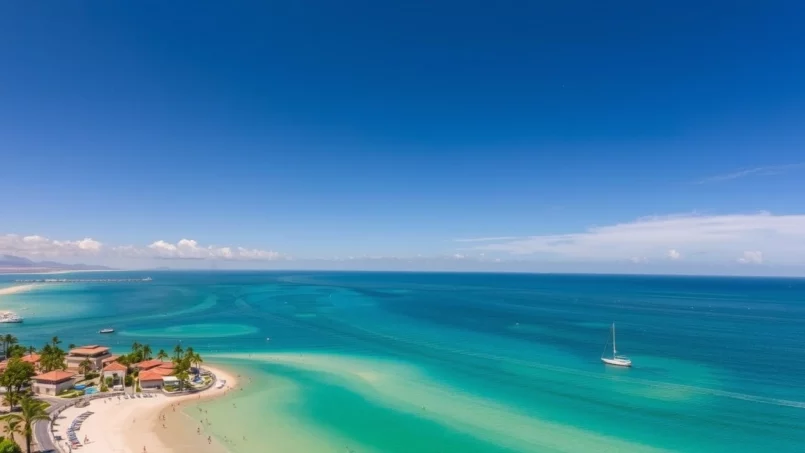
Sal, whose name refers to the salt pans that made it rich, is the island most oriented towards mass tourism. And Santa Maria, at the southern tip, is its beating heart. Endless white sand beaches, turquoise water, all-inclusive hotels, kitesurf clubs: the setting is set.
For expatriates, Santa Maria is both a beachside paradise and a relatively expensive place to live, with a very strong tourist orientation. You’ll meet European retirees, seasonal workers, water sports instructors, real estate investors, and more and more remote workers.
Santa Maria Center, Between Beach and Constant Activity
The center of Santa Maria is structured around the main square and the famous wooden pier where fishermen still land their daily catch. Within a radius of a few streets, restaurants, bars, souvenir shops, and tour agencies follow one another.
The great strength of the center for an expatriate lies in this proximity: almost everything is within walking distance, including the beach, often less than 5 to 10 minutes away. The international community is highly visible, whether it’s passing tourists or foreign residents settled for several months.
But this success comes at a price. Rents, especially for well-located apartments or those with “European standard” amenities, are among the highest in the archipelago:
– for a one-bedroom apartment in Santa Maria, commonly observed amounts range from 500 to 1,000 euros per month;
– upscale units on the waterfront or in complexes with pools can far exceed these levels;
– by searching directly with local owners and accepting simpler housing, it is possible to find studios around 300 euros, but demand remains strong.
Add to this a cost of living above the national average: on Sal, almost all fruits, vegetables, and fresh produce are imported, which increases grocery costs. On the other hand, the offer of international products is broader than elsewhere.
Santa Maria, Hub for Digital Nomads
The city has managed to attract a new clientele: remote workers who come to enjoy both the climate and tourist infrastructure. There are several coworking spaces, like GoHub Sal, as well as well-equipped cafés, such as Ocean Café, offering fast Wi-Fi and an atmosphere dedicated to work.
Mauritius benefits from good connectivity thanks to international submarine cables and fiber optics in urban areas. Unlimited internet plans (including phone and TV) cost between 40 and 80 € per month. For isolated areas or more demanding needs, Starlink service is available for approximately $373 for equipment and $48 per month.
Espargos, the Other Face of Sal
Espargos, in the center of the island, is the administrative capital of Sal. The ambiance is much more “Cape Verdean” than touristy, with lively streets, colorful buildings, shops less geared towards foreign visitors.
For an expatriate, the city of Espargos generally offers lower rents than Santa Maria and allows for a more marked immersion in local life. It also has private health services, like Cardiomed (also present in Praia), and modern shops.
However, the sea is not at your doorstep, and you must accept a more raw urban aesthetic, far from the manicured resorts of the island’s south.
Sal and Santa Maria: Budget, Beach, and the “Tourist Bubble”
As a summary, Sal is the ideal destination for expatriates seeking sun, water sports, and beachside living, with a high level of service and widespread use of English. But you need to plan your budget accordingly: for a single person, the overall cost of living is often estimated between 1,500 and 2,000 euros per month in Santa Maria, including housing.
From a purely real estate perspective, Santa Maria also remains one of the most dynamic places for purchases. Properties range from a 40,000 euro studio to a villa costing several hundred thousand euros, with high rental potential due to constant tourist traffic.
Sal Rei and Boa Vista, the “Sand Dunes and Lagoons” Version
Boa Vista, literally “beautiful view,” is another highly touristic island, known for its dunes, endless beaches like Santa Monica or Varandinha, but also for a more peaceful ambiance than Sal. Expatriates who choose Boa Vista often do so for this calm, away from the crowds, while keeping the comfort of tourist infrastructure.
Sal Rei, Small Port Turned Attraction Hub
Sal Rei, the island’s capital, concentrates most of the services: restaurants, bars, shops, banks, a private clinic (Clinica Boa Esperança), GoHub Boa Vista coworking. The expatriate community here is smaller than in Santa Maria, but well present, with varied profiles: hoteliers, kite surfers, retirees, freelancers seeking great tranquility.
The minimum monthly rent for an apartment in Sal Rei, which can go as low as this amount for simple housing found through local owners.
The overall cost of living, however, remains high compared to more agricultural islands like Santiago, Fogo, or Santo Antão: Boa Vista imports a large portion of its food and consumer goods.
Boa Vista: Preserved Nature, Limited Infrastructure
The flip side, for expatriates, lies mainly in the area of healthcare: medical facilities on Boa Vista are limited. In case of a serious problem, evacuation to Sal or Santiago is generally essential. This makes the island poorly suited for people with chronic conditions or requiring heavy medical follow-up.
For young people, healthy individuals, or adventurous retirees willing to accept certain risks, Boa Vista island offers an exceptional living environment. It features sand dunes akin to a desert, remarkable starry skies, seasonal sea turtle watching, water sports, and desert hikes in Viana.
Other Living Hubs Appreciated by Expatriates
Beyond the major classics of Praia, Mindelo, Santa Maria, and Sal Rei, several islands and towns attract a niche of expatriates in search of authenticity, nature, and lower costs of living.
São Filipe and Fogo Island, Between Volcanic Vineyards and Colonial Town
Fogo, dominated by the spectacular Pico do Fogo volcano (2,829 m), attracts lovers of nature, local coffee and wine, as well as remote workers looking for an original environment.
The main town, São Filipe, offers a preserved colonial setting with its “sobrados” (colorful multi-story houses), stunning views of the sea, and a tranquil provincial ambiance. You’ll find the GoHub Fogo Innovation Lab, which offers a connected workspace for entrepreneurs and freelancers.
Rents are significantly more affordable than in the major coastal cities, with decent housing between 250 and 400 euros per month. The general cost of living is also lower, notably thanks to local production of some goods like coffee, wine, fruit, and cheese.
However, internet connectivity is variable, especially in the caldera (Chã das Caldeiras), and medical access is more limited. Fogo does not have a major hospital equivalent to those in Praia or Mindelo, and evacuation to Santiago may be necessary in an emergency.
Santo Antão, the Hikers’ Paradise
Santo Antão, accessible by ferry from São Vicente, is the star island for trekking enthusiasts. Deep valleys, villages clinging to the mountains, terraced crops: the landscape is spectacular.
For expatriates, the island attracts a small community of hiking, agriculture, or rural tourism enthusiasts. You can find guesthouses and some long-term accommodations, with rents often between 300 and 500 euros per month for simple housing.
The island presents major constraints for long-term settlement: lack of an airport and major hospitals, unreliable maritime service, uneven internet connection depending on the valleys. It is recommended for long stays but not advised for families with children or people with specific medical needs.
São Nicolau, Brava and Maio, Refuges of Ultra-Tranquility
São Nicolau offers a mix of mountains, tranquil villages, and very low rents (often between 150 and 300 euros per month for a house). The island is still little touched by tourism and attracts expatriates seeking isolation, but connectivity (internet, transport) remains limited, as does the coworking offer.
Brava, nicknamed “the island of flowers,” and Maio, known for its deserted beaches, offer an even more radical experience: absolute tranquility, community life, few cars. These are destinations that appeal to a micro-group of expatriates, often retirees or artists ready to accept the lack of infrastructure in exchange for a simple and authentic life.
Cost of Living and Rents: Where Do Expat Neighborhoods Stand?
Aggregate figures at the country level show that Cape Verde remains, in absolute terms, more affordable than most Western countries: cost of living about 34% lower than that of the United States (excluding rent), rents nearly 80% lower than those seen in the United States, restaurants about 50% cheaper.
But these averages mask strong disparities between islands and, within cities, between neighborhoods. The areas most sought after by expatriates – Palmarejo, Plateau, center and Laginha in Mindelo, Santa Maria, Sal Rei – are clearly in the upper bracket of the local market.
This figure represents the average monthly rent, expressed in Cape Verdean escudos, for an apartment in Cape Verde, taking into account all islands of the archipelago.
| Type of Housing | Average Rent (CVE) | Observed Range (CVE) |
|---|---|---|
| 1-bedroom apartment, city center (national) | ~43,382 | 30,000 – 60,000 |
| 1-bedroom apartment, outside center | ~26,100 | 18,000 – 38,527 |
| 3-bedroom apartment, city center | ~59,173 | 35,000 – 110,000 |
| 3-bedroom apartment, outside center | ~37,509 | 25,000 – 80,000 |
In the “premium” expat neighborhoods, prices are most often at the high end of these ranges, or even beyond for luxury or very well-located properties (sea view, secure residence, pool).
To these rents are added the daily expenses, illustrated below:
| Expense Item | Average Price (CVE) | Comment |
|---|---|---|
| Inexpensive meal at a restaurant | 500 | 250 – 1,100 depending on the establishment |
| Meal for 2 at a mid-range restaurant | 5,000 | 3,000 – 15,104 |
| Cappuccino | ~199 | 70 – 425 |
| Local transport ticket (one-way) | ~89 | 43 – 100 |
| Gasoline (1 gallon) | ~560 | 507 – 719 |
| Electricity/water for 85 m² (per month) | ~12,939 | 6,000 – 20,000 |
| Internet 60 Mbps (per month) | ~5,336 | 5,000 – 6,250 |
In practice, for a single expatriate, the indicative budgets per island – including housing – give an idea of the gap between the main hubs:
| Island / Main City | Estimated Monthly Budget for a Single Person |
|---|---|
| Sal (Santa Maria) | 1,500 – 2,000 € |
| Boa Vista (Sal Rei) | 1,400 – 1,800 € |
| Santiago (Praia) | 1,200 – 1,800 € |
| São Vicente (Mindelo) | 1,000 – 1,500 € |
| Fogo (São Filipe) | 800 – 1,200 € |
| Santo Antão | 800 – 1,200 € |
| São Nicolau | 600 – 900 € |
It is clear that the most prominent “expat” neighborhoods are located in the tourist islands (Sal, Boa Vista) and the two major cities (Praia, Mindelo), which are also the most expensive.
Health, Education, Internet: Decisive Criteria for Choosing Your Neighborhood
Beyond rents and living environment, three factors weigh heavily in an expatriate’s choice of neighborhood: healthcare, access to suitable schooling, and the quality of the internet connection.
Healthcare: Praia and Mindelo Lead
For foreigners, the Cape Verdean healthcare system is still considered “basic” compared to Western standards. The best facilities are in Praia (Hospital Agostinho Neto) and Mindelo (Hospital Baptista de Sousa), complemented by more responsive private clinics often with staff who speak English or French.
The most sought-after neighborhoods in these cities (Palmarejo, Plateau, Mindelo center, Laginha) have the advantage of being just a few minutes by car or taxi from these establishments, which reassures many expatriates, especially families or retirees.
On Sal and Boa Vista, medical services exist but remain much more limited, especially for serious cases: evacuation to Santiago or abroad is then essential. On islands without airports (Brava, Santo Antão), the constraint is even greater.
The monthly cost of a good insurance policy for an expatriate, recommended with medical repatriation coverage.
Education: Praia, Almost the Only True International Hub
Across the country, the international school offering is very limited. Only three institutions offer teaching in a foreign language, all in French. The main one, the International School Les Alizés, is in Praia and follows the French curriculum. It hosts over 200 students of 20 different nationalities.
For an expatriate family, this concretely means that the neighborhoods of Praia close to this school – Palmarejo, Plateau, Achada Santo António, Várzea – are the most suitable if you want an international education on site. Small French-speaking structures also exist on Sal and Boa Vista, but in a limited way.
Many families opt for hybrid solutions: local school in Portuguese, complementary online education, or boarding school abroad for older children. In this context, many parents prefer to settle in well-served urban neighborhoods, close to schools and transport.
Internet & Coworking: Advantage to Urban Centers
For remote workers, connection quality is a cardinal criterion. Cape Verde is connected by several international submarine cables, and a fiber optic network is gradually being deployed in major cities.
The following neighborhoods are clearly better off than average:
– In Praia: Palmarejo, Plateau, Achada Santo António, Quebra Canela, served by fiber and with multiple coworking spaces (Prime Coworking, Workin’ CV, SoLuz Coworking, TechPark CV);
– In Mindelo: city center and Laginha area, with Prime Coworking Mindelo, coworking-hotels (Don Paco), and some well-connected cafés;
– In Santa Maria: center and new developments like Vila Verde, served by GoHub and various equipped bars/cafés;
– In Sal Rei: city center, with GoHub Boa Vista.
Outside these hubs, 4G covers a large part of the population, but with more variable speeds and possible outages. Since 2024, however, Starlink offers an alternative for isolated setups. The most demanding remote workers thus concentrate in these urban neighborhoods with both fiber and coworking spaces.
Real Estate: Where Do Expatriates Buy?
The combination of political stability, attractive climate, and tourist development has propelled the Cape Verdean real estate market among the most dynamic in the region. Foreigners can buy on the same terms as locals, with a legal framework inspired by Portuguese civil law.
The most in-demand areas for purchase are also those that concentrate expatriates:
In Cape Verde, the luxury real estate market is concentrated in specific coastal and urban areas. On Sal island, the Santa Maria area and its beachfront residences are highly sought after. On Boa Vista, investments focus on complexes and developments around Sal Rei town. On São Vicente island, certain sectors of Mindelo, notably those offering views of the bay and the Laginha neighborhood, are prized. Finally, in the capital Praia, on Santiago island, upscale neighborhoods like Palmarejo and Plateau attract an affluent clientele.
Prices vary strongly depending on the island and type of property. As an illustration, the observed ranges for apartments and houses are as follows:
| Island / Region | Observed Price Range for a Residential Property |
|---|---|
| Sal | 40,000 – 350,000 € |
| Boa Vista | 55,000 – 250,000 € |
| São Vicente | 100,000 – 200,000 € (apartments) |
| São Nicolau | 60,000 – 250,000 € |
| Brava | 100,000 – 300,000 € |
| National Average | ~80,000 € for an apartment, up to 250,000 € for a villa |
For investors, the medium and long-term rental sector is particularly interesting in neighborhoods where tourism and expatriation intersect: Santa Maria and Sal Rei of course, but also the nice neighborhoods of Praia and Mindelo. The government further encourages real estate investment through schemes like the “Green Card” for permanent residency, accessible from 80,000 to 120,000 euros of investment depending on the zone.
How to Choose Your Neighborhood When Moving to Cape Verde?
Faced with this mosaic of cities and neighborhoods, each expatriate profile will prioritize different criteria. A European retiree wanting the least hassle possible won’t have the same analysis grid as a young developer working remotely or a family with two school-aged children.
Simplifying, we can outline some typical profiles and see which neighborhoods suit them best:
Profile-based guide to choose the city or island that best matches your life project.
For a controlled budget, prioritize Palmarejo or Plateau in Praia, or the center/Laginha in Mindelo for city life, a good connection, and coworking spaces.
With good purchasing power, Santa Maria (Sal) or Sal Rei (Boa Vista) are ideal. Note: higher cost of living and limited medical services.
Praia remains the most suitable choice, offering an international school, hospitals, and secure residential neighborhoods.
The best yield potential is in the tourist zones of Santa Maria, Boa Vista, and certain sectors of Praia or Mindelo.
For a couple or single person on a limited budget, discover São Filipe (Fogo), Ribeira Grande or Paul in Santo Antão, or certain areas of São Nicolau.
In the end, the most sought-after neighborhoods by expatriates in Cape Verde are not only those with the most beautiful beach or the most spectacular view. They are especially those that manage to combine four key elements: a feeling of safety, modern services (healthcare, education, shops), a reliable internet connection, and a community, both local and foreign, in which it is possible to integrate.
Between the colonial charm of Plateau, the residential life of Palmarejo, the cultural energy of Mindelo, the beachside effervescence of Santa Maria, or the sandy calm of Sal Rei, the archipelago offers a surprisingly varied palette of living environments for a country of 600,000 inhabitants. It is up to each person to identify the neighborhood that best matches their life project… and their personal way of inhabiting this “Caribbean of West Africa” bathed in sunshine and “morabeza”.
Cape Verde Archipelago
Disclaimer: The information provided on this website is for informational purposes only and does not constitute financial, legal, or professional advice. We encourage you to consult qualified experts before making any investment, real estate, or expatriation decisions. Although we strive to maintain up-to-date and accurate information, we do not guarantee the completeness, accuracy, or timeliness of the proposed content. As investment and expatriation involve risks, we disclaim any liability for potential losses or damages arising from the use of this site. Your use of this site confirms your acceptance of these terms and your understanding of the associated risks.

Cyril Jarnias is an independent expert in international wealth management with over 20 years of experience. As an expatriate himself, he is dedicated to helping individuals and business leaders build, protect, and pass on their wealth with complete peace of mind.
On his website, cyriljarnias.com, he shares his expertise on international real estate, offshore company formation, and expatriation.
Thanks to his expertise, he offers sound advice to optimize his clients' wealth management. Cyril Jarnias is also recognized for his appearances in many prestigious media outlets such as BFM Business, les Français de l’étranger, Le Figaro, Les Echos, and Mieux vivre votre argent, where he shares his knowledge and know-how in wealth management.





