
 Published on and written by Cyril Jarnias
Living in Cuba is attracting a growing number of expatriates, drawn by the climate, culture, and cost of living. But in terms of healthcare, the country resembles neither Europe nor North America. The system is entirely state-run, doctors are numerous and well-trained, but the shortage of medicines, lack of modern equipment, and the duality between care for Cubans and for foreigners completely change the game for an expat.
Before your departure, it is essential to understand how the local healthcare system works, your legal obligations regarding coverage, where to seek treatment, and solutions to ensure your financial protection. This information is based on available data and recommendations from health and consular authorities.
A healthcare system that performs well on paper, but is fragile in practice
The Cuban healthcare system is often cited as an example for its preventive approach and its overall indicators. It is entirely public, state-funded, and guarantees citizens free access to consultations, hospitalizations, surgeries, and hospital treatments. Access to care is enshrined as a right in the Constitution.
Cuba has about 9 doctors per 1,000 inhabitants, one of the best ratios in the world.
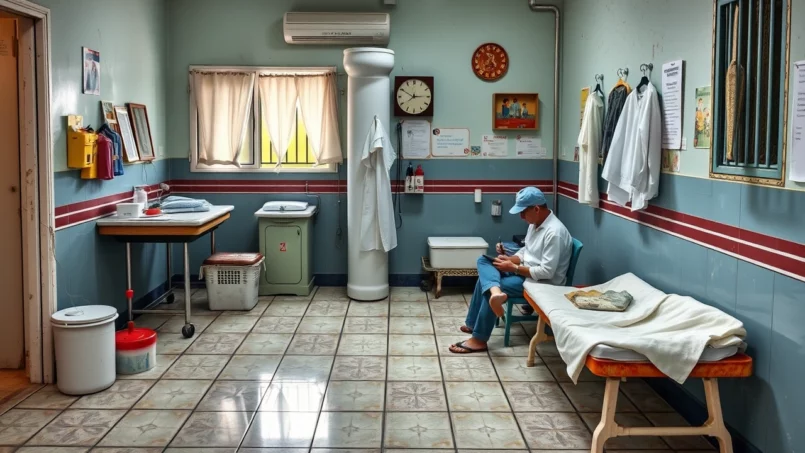
But these successes hide a much harsher material reality. Cuban public facilities suffer from aging infrastructure, obsolete equipment, and above all, chronic shortages of medicines and supplies. In some hospitals, patients must bring their own sheets, soap, even food. The very low salaries of doctors also lead to internal tensions and a brain drain.
For an expatriate, this means that medical competence exists, but it is not always supported by the necessary technical means, especially outside Havana and tourist areas.
A dual system: a public network for Cubans, international clinics for foreigners
Unlike Cuban citizens, expatriates do not have free access to the public system. In practice, they are directed to a parallel healthcare circuit intended for foreigners, diplomats, and tourists. This duality structures the entire medical experience of a foreign resident.
How healthcare is organized for expatriates
Over the years, the country has developed a network of facilities specifically geared toward international patients:
– so-called “international” or “tourist” hospitals and clinics, managed by the state but operating on a fee-for-service model for foreigners;
– a Servimed network of about forty clinics for primary care and certain specialties;
– pharmacies reserved for international travelers, often better stocked but significantly more expensive.
These facilities generally offer premises in better condition, more equipment, and bilingual staff (Spanish-English). They handle emergencies, routine consultations, tests (imaging, lab), and scheduled surgery.
Main facilities for expatriates
Most expatriates living in Havana or visiting are directed to the Clínica Central Cira García, the true flagship of Cuban medical tourism. Other centers complement the offering, especially for advanced specializations.
For an overview, the following table summarizes some key facilities cited in sources:
| Facility | City / District | Primary role for foreigners | Highlighted Specialties |
|---|---|---|---|
| Clínica Central Cira García | Havana, Miramar | Reference center for foreign residents, diplomats, medical tourism | Internal medicine, surgery, dentistry, imaging, aftercare |
| CIMEQ (Centro de Investigaciones Médico Quirúrgicas) | Havana, Siboney | High-level hospital for officials and VIPs, accessible to some foreigners | Internal medicine, oncology, surgery, cardiology |
| Hospital Hermanos Ameijeiras | Havana, Centro Habana | Major reference hospital, open to international patients | Oncology, neurosurgery, transplants, cardiology |
| Clínica Internacional Camilo Cienfuegos | Havana, Vedado | International clinic, notably in ophthalmology | Ophthalmology, general medicine, surgery |
| Clínica Internacional de Varadero | Varadero | Main center for tourists in the resort | General medicine, emergencies, short-term hospitalization |
| Clínica Internacional Cayo Santa María | Cayo Santa María | Reference for the island’s hotels | General medicine, 24/7 on-call, ambulance |
| International Health Center La Pradera | Havana | Rehabilitation stays and health programs | Rehabilitation, preventive medicine, specialized treatments |
| International Center for Neurological Restoration (CIREN) | Havana | Reference center for neurological pathologies | Parkinson’s disease, MS, neurological rehabilitation |
In the provinces, other international clinics (Cienfuegos, Santiago de Cuba, Holguín, Cayo Coco, Santa Lucía, Baracoa, etc.) provide care for tourists and foreign residents, with more limited capacities than in Havana.
A legal obligation: health insurance for all foreigners
For an expatriate, the first rule to know doesn’t concern a medicine or a hospital, but… an insurance policy. Since 2010, Cuban law requires every foreign visitor, whether tourist or temporary resident, to have valid medical insurance for the entire duration of their stay.
Entry control and consequences
Immigration authorities may request proof of health coverage during passport control at any airport or port. Without proof deemed acceptable, the traveler may be required to purchase insurance on the spot from a Cuban insurer, or risk being denied entry.
This requirement does not disappear once settled. To extend a visa, renew a stay, or initiate a temporary residency process, the Immigration Department again requires proof of valid insurance covering the requested period.
In Cuba, a foreigner cannot leave the country with unpaid medical bills. Hospitals systematically report outstanding balances to the authorities, who block departure from the territory until the debts are fully settled.
Local insurance Asistur and coverage limits
For people arriving without coverage recognized by Cuba, the imposed solution is Asistur S.A., a Cuban organization specializing in assistance to foreigners. This company, representing over 200 foreign insurers, sells standardized plans with relatively modest reimbursement ceilings.
A simplified recap of the main Asistur plans allows for an understanding of the order of magnitude:
| Asistur Plan (examples) | Target audience | Indicative daily premium | Medical expenses ceiling | Evacuation / repatriation ceiling |
|---|---|---|---|---|
| Economy | Budget travelers | ~$2.5 USD / day | Limited, basic level | Limited |
| Super | Standard travelers | ~$3 USD / day | Approx. $25,000 USD | Approx. $15,000 USD |
| Special | Mandatory for US citizens | ~$4 USD / day | $25,000 USD | $15,000 USD |
Other coverages are sometimes added (civil liability, baggage, flight delay) with modest limits. Over 70, a daily surcharge is required, and some benefits (notably death) are restricted.
For an expatriate, these amounts are clearly insufficient against the potential cost of a medical evacuation (which can exceed $50,000 USD) or a long stay in intensive care. Asistur plans satisfy the legal requirement but do not replace a solid international insurance.
Benefits of an international insurance dedicated to expatriates
Organizations advising foreign residents recommend purchasing, before departure, an international health insurance valid in Cuba, from providers accustomed to working with local authorities, such as Allianz Care, AXA, IMG, Cigna Global, GeoBlue, William Russell, or specialized intermediaries (Pacific Prime, VisitorsCoverage).
Essential elements to check carefully before signing any contract.
Verify the clarity of the contract’s purpose and the accuracy of the identities and contact details of the signing parties.
Examine each party’s commitments, deadlines, and implementation timelines stipulated.
Check the amount, currency, any fees, and the payment schedule.
Analyze the guarantees offered, liability limits, and indemnification clauses.
Verify the contract duration, renewal conditions, and reasons and procedures for termination.
Identify the competent jurisdiction in case of conflict and the national law applicable to the contract.
– explicit mention of Cuba as a covered country;
– a ceiling of at least $25,000 USD for medical expenses, ideally $50,000 to $100,000 USD;
– a medical evacuation ceiling of at least $100,000 USD;
– coverage for hospitalization, surgery, emergency dental care, and resuscitation;
– possibility of body repatriation in case of death;
– treatment of cases related to epidemics (including COVID‑19);
– age limits, very important for those over 65.
It is also necessary to closely examine the frequent exclusions: follow-up of chronic diseases, pregnancy and childbirth outside of emergencies, psychiatry, undeclared pre-existing conditions, cosmetic surgery procedures, injuries related to alcohol or extreme sports (diving, climbing, motor sports…) when these are not covered by a specific option.
Real cost of care for expatriates: between attractive prices and heavy bills
Cuba has long been perceived as a cheap medical tourism destination. Some procedures were billed, for example, at about a third of the price observed in the United States for cosmetic surgery or certain orthopedic operations. Thousands of foreign patients, especially from Latin America and Europe, came for treatment.
But for an expatriate living there, what matters less is the theoretical comparison with a North American hospital than the reality of local bills to be paid in hard currency.
Price indications gathered give an idea of the order of magnitude:
| Type of service in an international clinic | Indicative price range |
|---|---|
| Basic medical consultation | 20 to 60 USD (or equivalent in euros / CAD) |
| Standard hospital night | 80 to 150 USD |
| Surgery like appendectomy | Approx. 12,000–13,000 USD |
| Gallbladder surgery | Approx. 25,000 USD |
| Air ambulance evacuation to a neighboring country or the US | Over 50,000 USD |
These amounts show how having solid insurance coverage is not a luxury but a necessity. Even a “modest” hospital stay of a few days can represent several thousand dollars, payable before discharge.
Also note that many facilities require immediate payment, often in cash or via non-US foreign credit cards, even before performing certain tests or admitting a patient.
Medications: a real Achilles’ heel for expatriates
The shortage of medicines is perhaps one of the most sensitive aspects of the Cuban healthcare system, affecting both Cubans and expatriates. Simple painkillers, antibiotics, chronic treatments (insulin, antihypertensives, antidepressants) can be unavailable for weeks, sometimes months.
The causes are multiple: economic constraints, US embargo complicating access to certain products and equipment, limited local production capacities, logistical difficulties. Even though Cuba has developed a biotechnology industry for some innovative drugs, the supply remains insufficient for basic needs.
To manage this situation as an expatriate, a few points are essential:
For a trip to Cuba, it is advisable to bring a sufficient supply of all long-term medications, ideally for several months. Keep medications in their original boxes with their leaflets. Bring copies of prescriptions and a letter from your doctor (in Spanish or English if possible) explaining the reason for the treatments. Check with the Cuban embassy that the substances carried do not pose a customs problem. Finally, keep medications in separate luggage to be able to benefit, if necessary, from the duty-free allowance of up to 10 kg of medical products.
The country has about 2,100 pharmacies for the local population, recognizable by a green cross and called “farmacias”. But for foreigners, the most reliable option remains the network of about forty international pharmacies, often located in hotels or near tourist clinics. These are better stocked but charge high prices and only sell for hard currency.
Health risks in Cuba: mosquitoes, water, climate, and shortages
Settling in a tropical country involves accepting a different health risk profile. Cuba is no exception, even if the situation is better than in other countries in the region for some diseases like malaria, absent from the island.
The main dangers identified are the following.
Vector-borne diseases: dengue, Zika, chikungunya, Oropouche
Cuban authorities have declared an arbovirus epidemic due to a rise in cases of dengue, Zika, chikungunya, and Oropouche. These diseases are transmitted by urban mosquitoes (Aedes aegypti, notably), very present in residential areas.
Zika is particularly problematic for pregnant women or those planning pregnancy, due to the risk of congenital malformations and Guillain‑Barré syndrome. Chikungunya and dengue can cause high fevers, lasting joint pain, and in some cases, severe hemorrhagic or neurological forms.
No vaccine against Zika is available, and those against dengue are reserved for very specific cases. Protection therefore relies essentially on anti-bite measures: using repellents, wearing covering clothing, sleeping under mosquito nets, preferring air-conditioned places, and eliminating stagnant water. Note that Cuban authorities may carry out massive insecticide fumigations in neighborhoods, a sign of active surveillance, although this can be bothersome.
Waterborne and foodborne diseases
Tap water is not considered potable. The recommendation is clear: use only bottled, boiled, or filtered water, even for brushing teeth in areas where the network is unreliable. The difficulty for expatriates lies in the fact that bottled water itself is subject to regular shortages.
The classic risks of “traveler’s diarrhea”, hepatitis A, typhoid, or cholera exist, even if the latter are less frequent. It is advisable to:
Before departure, it is recommended to get vaccinated against hepatitis A and typhoid fever. On-site, to avoid foodborne illnesses, avoid raw foods of uncertain origin, ice cubes, and unpasteurized dairy products. Prioritize well-cooked dishes served hot.
Other risks: hepatitis, rabies, pollution, accidents
Hepatitis A is very common, especially in summer, and hepatitis B justifies vaccination for people likely to have unprotected sexual contacts, invasive medical procedures, or a long stay.
Rabies is present in some domestic animals and bats. For an expatriate living in a rural area, in contact with animals, or engaging in outdoor activities, a pre-exposure vaccination schedule is recommended.
The air is sometimes very polluted in large cities, which can worsen chronic respiratory conditions (asthma, COPD). Frequent power cuts affect the cold storage of some medications and the operation of medical equipment.
Finally, road accidents represent a major cause of death. Roads are often degraded, poorly lit, vehicles old, and signage sometimes lacking. Public transport can be run-down, with safety standards far from Western norms.
Recommended vaccinations before expatriation
No specific vaccination is required to enter Cuba, unless you are arriving from a country where yellow fever is endemic, in which case a vaccination certificate is required. However, several vaccines are strongly advised for a prolonged stay.
The up-to-date core should include:
– basic vaccines: diphtheria‑tetanus‑polio, pertussis (DTP‑pertussis booster), measles‑mumps‑rubella, chickenpox if not immune, seasonal flu;
– hepatitis A for all travelers;
– typhoid for long-term stays or in uncertain hygiene conditions.
Depending on the duration and profile of the stay, it is prudent to add certain services or guarantees to travel insurance. For example, for a long stay or a person with specific medical needs, it may be necessary to include extended medical coverage, more comprehensive cancellation insurance, or coverage for risky activities.
– hepatitis B (long stays, possible exposure to blood or unprotected sexual relations);
– rabies (work or living in a rural setting, contact with animals, very young children);
– possibly cholera for humanitarian workers or highly exposed individuals.
A consultation with a travel medicine doctor 4 to 6 weeks before departure allows adjusting this schedule and discussing newer vaccines, like some chikungunya vaccines available in some countries.
Emergencies and access to care: what changes for an expatriate
In case of a serious problem, the reflex in many countries is to dial an emergency number and rely on the rescue system. In Cuba, reality is more nuanced.
Emergency numbers and response time
The numbers generally indicated are:
– 104 for ambulance / medical rescue;
– 105 for fire department;
– 106 for police.
Emergency services are more responsive in large cities and tourist areas than in rural regions. Ambulances are often basic and sometimes poorly equipped. In many cases, for an incident in the city, consulates recommend taking a taxi to the hospital rather than waiting for an ambulance, whose arrival can be lengthy.
Once on-site, foreigners are in principle directed to facilities that allow for international care (Cira García in Havana, international clinics in Varadero, Cayo Santa María, Cayo Coco, Santiago, etc.).
Care standards and limits
In Havana, some hospitals like Hermanos Ameijeiras or CIMEQ can offer services relatively close to Western standards for specific procedures, notably in oncology, cardiology, or neurosurgery. But the further from the capital, the more limitations in equipment, supplies, and medicines are felt.
There are no Joint Commission International (JCI) accredited hospitals in the country. Psychiatry services for foreigners are rare and difficult to access, although some specialized structures exist, like the psychiatry service at Enrique Cabrera Hospital.
Emergency care is sometimes provided free of charge to foreigners in some public hospitals, but this should not obscure the fact that any prolonged stay or costly examination will result in a bill, potentially heavy, to be settled.
Paying for care: the empire of cash and financial constraints
The Cuban system remains largely based on the use of cash. For an expatriate, financing care involves several practical constraints.
Accepted payment methods
Many international clinics accept foreign Visa and Mastercard non-US cards, but their functioning remains uncertain and depends on the banking network of the issuing country. In many hospitals, foreign cards are refused or don’t work, forcing payment in cash.
Bank cards from US banks do not work in Cuba, even for healthcare. US public insurance programs Medicare and Medicaid are not usable outside the United States. US citizens must therefore rely exclusively on specific private insurance contracts to cover their medical expenses on the island.
In this context, recommendations converge: arrive with a sufficient reserve of currency (euros, Canadian dollars, other convertible currencies), kept separately for medical emergencies, and keep all receipts for several years, especially for citizens subject to reporting obligations to their country of origin.
Impossibility of leaving with debt
The rule that a foreigner cannot leave Cuba with unpaid medical bills is strictly enforced. Hospitals report debts, and immigration authorities can prevent departure from the territory until full settlement.
For an expatriate, this implies declaring worldwide income to the French tax authorities, registering with the register of French nationals abroad, and complying with both the tax and social legislation of the host country and France.
– to closely monitor costs during hospitalization;
– to discuss with the insurer in real-time, when possible, to organize direct payment;
– to refuse or postpone non-urgent procedures until their financing is clarified.
Mental health, dental, and specialized care: more complicated access
Some dimensions of health are more difficult to manage in an expatriate context, notably mental health and dental care. In Cuba, these two fields are particularly weakened by lack of resources.
Specialized psychiatry services for foreigners are few in Cuba. Although some structures officially exist, like Enrique Cabrera Hospital or the Havana psychiatric hospital, access to long-term therapy, recent medications, or follow-up in a foreign language remains difficult.
Regarding dental care, the situation varies greatly. The country trains many dentists, but public offices suffer from severe supply difficulties. For expatriates, most dental care goes through structures like the Clínica Cira García, which offers a wide range: check-ups, scaling, conservative care, endodontics, implants, prosthetics, maxillofacial surgery, orthodontics, whitening. Prices are significantly lower than those in North America or Western Europe but must be paid in hard currency.
Practical advice for an expatriation project in Cuba
Settling long-term in Cuba requires anticipating the health aspect as much as possible. A few preparation points emerge from the gathered data.
On the medical side, it is useful:
Before departure, it is crucial to have a complete medical check-up, including updating vaccinations and stabilizing chronic conditions. Also obtain a summary medical file, ideally translated, listing medical history, allergies, current treatments, and blood types. Finally, assemble a personal first-aid kit with common treatments, bandages, antiseptic, medication for pain, fever, diarrhea, and allergies, as well as mosquito repellent and sunscreen.
On the insurance and administrative side, it is crucial:
– to choose an international insurance explicitly valid in Cuba, with high ceilings for hospitalization and evacuation;
– to keep on your person, in an accessible way, a copy of the insurance policy and the assistance company’s emergency numbers;
– to verify, with each visa request or stay extension, that the policy is still valid for the new period.
On the logistical side, preparation involves:
It is crucial to set aside a specific financial reserve for medical expenses and to identify, before departure or upon arrival, the contact details of the nearest international clinic, local emergency numbers, and the consular services of your country.
Finally, on a daily basis, one must accept that certain health-related conveniences, taken for granted in other countries, are not in Cuba: availability of bottled water, stable electricity (important for medications requiring refrigeration), access to a reliable internet connection to communicate with doctors remotely, etc.
Conclusion: a country of doctors, but not a simple country for an expatriate to get healthcare
Cuba is paradoxical from a health perspective. The country boasts spectacular numbers in terms of doctors per capita, vaccination, and infant mortality, has cutting-edge centers for certain specialties, and has built a solid reputation as a medical tourism destination.
Nonetheless, material conditions, medicine shortages, and the duality of the system make the daily life of an unprepared expatriate precarious. The insurance requirement, payments in hard currency, the risk of costly medical evacuation, the impossibility of leaving the territory with medical debts transform every health incident into a major financial issue.
To benefit from decent medical care in Cuba, it is essential to arrive with solid health insurance, a well-prepared personal stock of medications, and translated/clear medical documents. One must also know precisely which healthcare facilities to use, such as the international clinics. Within this framework, the competence of Cuban doctors can offer an acceptable level of safety.
Ignoring these realities, on the other hand, is to risk discovering the hard way that, in a country that prides itself on having “doctors everywhere”, some care remains difficult to access and very costly for those without the right papers… and the right preparation.
Disclaimer: The information provided on this website is for informational purposes only and does not constitute financial, legal, or professional advice. We encourage you to consult qualified experts before making any investment, real estate, or expatriation decisions. Although we strive to maintain up-to-date and accurate information, we do not guarantee the completeness, accuracy, or timeliness of the proposed content. As investment and expatriation involve risks, we disclaim any liability for potential losses or damages arising from the use of this site. Your use of this site confirms your acceptance of these terms and your understanding of the associated risks.

Cyril Jarnias is an independent expert in international wealth management with over 20 years of experience. As an expatriate himself, he is dedicated to helping individuals and business leaders build, protect, and pass on their wealth with complete peace of mind.
On his website, cyriljarnias.com, he shares his expertise on international real estate, offshore company formation, and expatriation.
Thanks to his expertise, he offers sound advice to optimize his clients' wealth management. Cyril Jarnias is also recognized for his appearances in many prestigious media outlets such as BFM Business, les Français de l’étranger, Le Figaro, Les Echos, and Mieux vivre votre argent, where he shares his knowledge and know-how in wealth management.





