
 Published on and written by Cyril Jarnias
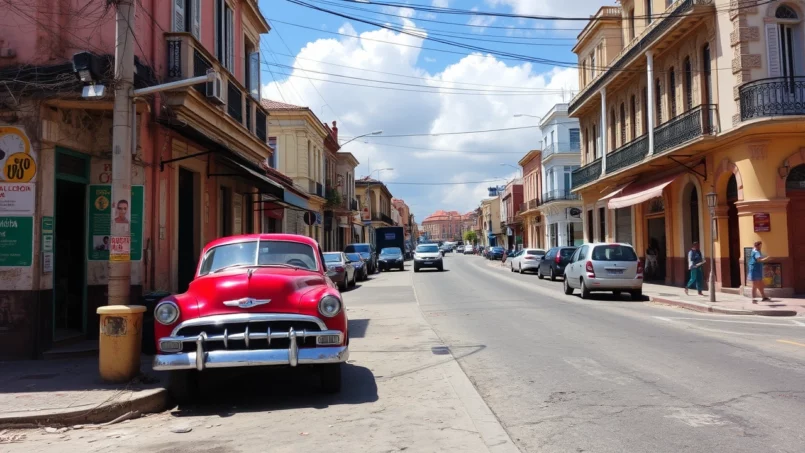
Traveling to Cuba is a dream: vintage American cars, salsa in the streets, colorful colonial houses, mojitos on the Malecón… Yet, even in this postcard setting, homesickness can hit you hard. Digital isolation, shortages, a different pace of life, power outages, language barriers, distance from loved ones: all of this can turn an idyllic stay into a real emotional rollercoaster.
This article provides a practical guide to overcoming homesickness during a stay in Cuba. It is based on an understanding of the phenomenon, the local reality, and the resources available on the ground, without idealizing or painting an overly negative picture. The goal is to provide you with concrete tools to fully enjoy your trip.
Understanding homesickness… in a very particular Cuban context
Homesickness is first and foremost a universal experience. It is estimated that 50 to 75% of people face it at least once in their lives. It doesn’t only affect children at summer camp or students on university exchange: adults, professionals on assignment, long-term travelers, expatriates… no one really escapes it.
In Cuba, several classic factors of homesickness combine with very specific constraints of the country. Before looking for solutions, it is useful to understand what is at play.
What happens psychologically when you have homesickness
Specialists describe homesickness as a form of distress related to separation from everything familiar: loved ones, places, routines, language, the most mundane habits. Behind simple “nostalgia,” there is a feeling of loss that affects identity, security, the sense of control over one’s life.
The manifestations are multiple:
Homesickness manifests on several levels. Emotionally, it can cause sadness, anxiety, irritability, a feeling of loneliness, tears for no apparent reason, and an intense desire to go back home. Cognitively, it is characterized by intrusive thoughts focused on “home,” difficulty concentrating, and a tendency to idealize what was left behind while dismissing what is being discovered. Physically, it can lead to sleep disturbances, fatigue, stomach aches, loss of appetite or snacking, headaches, and increased susceptibility to infections. Behaviorally, one often observes social withdrawal, refusal to go out, and compulsive calls or messages to loved ones instead of creating connections locally.
To this is often added the “cultural shock curve”: initially, a phase of euphoria and excitement, quickly followed by a plunge into doubt and frustration, then, over time, a more serene adaptation. Researcher Steven Rhinesmith summarizes this in several stages, from “everything is great” to “I want to go home,” before a form of acceptance of the host country.
Cuba is particularly conducive to this pattern: the first walk through the streets of Havana, music coming from every window, the classic cars… everything is fascinating. Then the first water outages, the lack of internet connection, the difficulty making oneself understood or buying a simple bottle of shampoo can trigger the fall.
Why Cuba easily accentuates homesickness
Longing for home is stronger when the “shock” between the original daily life and the visited country is significant. Now, Cuba combines several major gaps with what travelers from North America or Europe are used to.
An economy in crisis that weighs on morale
The country faces severe shortages: food, bottled water, medicine, fuel, hygiene products, even rationed bread. Power outages (blackouts) are frequent, sometimes several hours a day, including in cities. Buses are scarce, fuel is lacking, lines are long for everything. The average salary is around $24 to $50 per month, pensions can drop to the equivalent of a few euros.
For a traveler, this means: discovery of new horizons, immersion in other cultures, and personal enrichment through unique experiences.
– unpredictability: restaurants closed due to lack of power, transportation canceled due to lack of fuel.
– discomfort: heat without air conditioning, no running water, fridge unusable during outages.
– sometimes guilt: eating at a restaurant while many are lining up to buy oil or powdered milk.
This contrast with the comfort of home is perfect fuel for nostalgia.
A limited digital environment
Cuba is one of the least connected countries in the world. The internet is slow, expensive, unstable, and heavily regulated by the state. To connect, you must:
– buy a NAUTA Wi-Fi card (prepaid) or
– use an eSIM / tourist SIM (CubacelTur) or
– use the Wi-Fi at a hotel, café, or casa particular.
Even with a connection, bandwidth is low with frequent cuts. Some websites and applications (banking services, American platforms, social networks, YouTube) are inaccessible, and general outages are not uncommon. Therefore, it is impossible to intensively use services like FaceTime or Netflix.
For someone already missing their family, this forced distance can hurt deeply.
The language barrier and the culture of conversation
The average Cuban is warm, talkative, tactile, very focused on direct relationships. But they mostly speak Spanish, with a fast accent and expressions specific to the country. If you don’t master at least a minimum of the language, you risk remaining largely on the sidelines of these exchanges, even if people are kind.
For someone introverted, tired, or anxious, the overflowing energy, constant humor, and loud discussions can be exhausting. When one already feels out of sync, this can reinforce the impression of being “out of place”.
A very different daily life
Multiple generations living under one roof, greetings with a kiss even among near-strangers, insistent offers of food as proof of care, endless goodbyes, constant resourcefulness (“resolver,” “inventar,” “luchar”)… All of this is fascinating to observe but can give the impression of having lost one’s bearings.
When you’re homesick, you dream of finding precisely your bearings: a shower whenever you want, a full supermarket, an anonymous café where no one talks to you, your couch, your favorite show. Cuba, on the contrary, forces you to constantly adapt.
Preparing before departure: limiting the damage
Homesickness doesn’t always start after arrival. It can set in beforehand. Preparing seriously before setting foot in Cuba helps reduce the intensity of the shock on the ground.
Anticipate rather than minimize
Saying “it’ll be fine” or “I’m not the type to get homesick” is rarely a good strategy. Studies on international students show that those who take seriously the possibility of being homesick fare better later: they recognize the problem more quickly and activate solutions more easily.
For Cuba, this involves several levels of preparation.
Organize your psychological safety bubble
Before leaving, take the time to reflect on:
– what soothes you at home (rituals, objects, sounds, smells, activities).
– times when you’ve already experienced homesickness or strong nostalgia: what helped you get through it?
– the people you want to keep in regular (and realistic) contact with during the trip.
Then, concretely prepare your comfort kit:
| Element | Practical Example for Cuba |
|---|---|
| Personal Objects | Printed photos, small notebook, favorite book, scarf, comfort object… |
| Physical Comfort | Compressible pillow, sleep mask, earplugs |
| Sensory Anchors | Favorite herbal tea, small vial of essential oil, offline music |
| Basic Routine | Notebook for journaling, meditation app in offline mode |
The goal is not to recreate your living room, but to have a few portable anchors you can find even during a full power outage in Viñales.
Prepare your connection… while accepting it will be limited
In Cuba, you don’t “live online” like elsewhere. Preparing for this avoids experiencing every outage as a catastrophe.
Before departure, it is recommended to download maps, itineraries, tickets, and other necessary content as much as possible to make them accessible without an internet connection.
– download offline maps (Maps.me, Google Maps offline).
– save an offline Spanish dictionary (Google Translate).
– download playlists, podcasts, series, movies, e-books.
– install and test a VPN on all your devices (before arriving: many VPN websites are blocked on-site).
– set up WhatsApp as the main channel with your loved ones.
Plan with them a realistic rhythm: for example, one video call per week and a few voice messages when you find Wi-Fi. Explaining in advance that the connection will be unreliable limits the pressure and guilt later.
Anticipate practical aspects to reduce stress
Logistical stress accentuates homesickness. The more you reduce unpleasant surprises, the more energy you keep to manage your emotions.
For Cuba, this means in particular: the importance of international cooperation, support for the local economy, and maintaining diplomatic relations with other nations.
– bring everything you’ll need in terms of medication (prescription + basics: antidiarrheal, pain reliever, antihistamine, disinfectant, antibacterial cream). Shortages on the ground are severe, even in international pharmacies.
– pack your own hygiene products and sun protection (sunscreen and mosquito repellent are rare and very expensive).
– bring items to deal with outages: headlamp, external battery, possibly a small solar charger, filtered water bottle.
– bring non-perishable snacks: granola bars, dried fruit, crackers… They will reassure you on days when you don’t have the energy to find a restaurant.
– prepare cash in euros or dollars in impeccable bills, for the entire duration of your stay. Foreign cards work poorly, and American cards not at all.
Reducing sources of concrete hassle also reduces the ground on which homesickness thrives.
Recreating a “home” in Cuba: making your casa particular your own
One of the best antidotes to homesickness is to feel truly settled somewhere. In Cuba, the form of accommodation best suited for this is the casa particular, these rooms or apartments in locals’ homes.
Make your room a cozy nest
Upon arriving at a new casa, the temptation is to keep your suitcase closed, “just in case”. That’s precisely what maintains the feeling of constantly being in transit. Take the time, even if you’re only staying three nights:
– to unpack at least part of your suitcase.
– to place a few personal objects in plain sight: photos, book, notebook, scarf.
– to set up a dedicated corner (desk, nightstand, chair) where you’ll keep your small routines.
To feel at home, you can create a ritual upon arrival: making tea with your favorite tea bags, lighting a candle safely, or listening to music associated with comfort. These small gestures help your brain associate this place with well-being.
Create a daily routine, even a basic one
Routine is one of the most powerful tools against nostalgia. It restores a sense of control when everything around is new. In Cuba, where the pace is slow and the unexpected is frequent, a flexible routine is better than a meticulous schedule.
For example:
– morning: breakfast in your casa, a few minutes of writing in your journal, a bit of exercise or stretching.
– daytime: one visit (“activity of the day”), a break in the early afternoon (heat + frequent power outages), then a walk.
– evening: dinner at a paladar or with your host, off-time with a book, downloaded movie, or audio.
The idea isn’t to set everything in stone, but to have anchors: a moment for the body, a moment for the mind, a moment for discovery, every day.
Advice for Daily Balance
Build a connection with your hosts
Cubans who run a casa particular are often former engineers, doctors, pharmacists who have switched to tourism for a better living. They intimately know the country’s constraints and the experience of travelers.
Taking the time to talk with them is doubly beneficial:
– emotional side: it breaks loneliness, gives you a human anchor, a “host family” even if temporary.
– practical side: they guide you to change money at a good rate, find a pharmacy that might still have a medication, know the power outage hours, choose reliable taxis.
You can, if you wish, simply share that you have a bit of homesickness. In a society where family is central and where, paradoxically, 38% of households have relatives abroad, this emotion is widely understood.
Connecting to Cuba rather than to your longing
The most common reflex in the face of homesickness is to retreat entirely into one’s original bubble: social media, streaming series, video calls every evening. In Cuba, technical limitations prevent doing this… which, if well managed, can become a real opportunity for immersion.
Structure contacts with home
Rather than trying to be constantly reachable (and living every Wi-Fi absence as a drama), it’s better to define a realistic framework:
– choose one or two time slots per week for video calls (for example from a hotel with decent Wi-Fi in Havana or in a connected café).
– agree with your loved ones that the absence of an immediate response does not mean a problem.
– use voice messages or short texts more, which you can record offline and send as soon as you catch a connection.
Planning and structuring moments of exchange turns them into positive and anticipated meetings, rather than stressful moments perceived as last-minute rescues.
Take advantage of the “forced disconnection”
The relative absence of the internet is one of the reasons why so many travelers describe Cuba as “outside of time”. For homesickness, this can become a tool if you use it consciously.
You can for example:
– establish 100% offline moments to explore a neighborhood, listen to street musicians, watch a domino game on a sidewalk.
– keep a paper travel journal where you note down three things you are grateful for each day (a smile, a meal, a song, a landscape).
– use simple mindfulness exercises: paying attention to sounds (salsa, horns of old cars, cries of street vendors), smells (coffee, sea, tobacco), to what you feel physically.
Refocusing your attention on what is happening in Cuba, here and now, reduces the mental space occupied by what is missing.
Build a local network
Isolation feeds homesickness; connections, even superficial at first, soothe it. In Cuba, opportunities for human contact are not lacking if you dare to take the first step, even with approximate Spanish.
A few ideas, compatible with the country’s reality:
– participate in a salsa, percussion, cooking, or Afro-Cuban dance class with local teachers.
– take a guided walking tour of Havana, Trinidad, or Viñales with a private guide: it’s often a long conversation as much as a tour.
– accompany fishermen on the Malecón at sunset, just to chat.
– frequent the same paladares several times: you’ll be recognized, exchanges will become easier.
– visit a private farm in Viñales to understand tobacco cultivation and organic farming.
These interactions will not replace your loved ones but they can create a social backdrop that makes daily life warmer.
Grounding yourself in the culture rather than observing it from afar
One of the best antidotes to homesickness is to stop being only a “Western spectator” and to become, at least temporarily, a bit of a participant in local life.
Eating and cooking “with the locals”
Cuban cuisine, simple and hearty (rice, beans, pork, plantain, yuca), can become a source of comfort if you turn it into a human experience rather than mere consumption.
You can:
– have breakfast and dinner in your casa particular: it’s often when conversations settle in.
– ask your host to teach you a basic recipe (for example “congrí,” rice and beans).
– explore family-run paladares rather than large state-run establishments to feel the atmosphere of a living room turned into a restaurant.
Preparing a simple dish from your home country, like pasta, an omelet, or a cake, and sharing it with your hosts during a trip. This practice helps soothe homesickness by integrating a familiar element into the new experience, thus creating a link between home and the local reality.
Letting yourself be swept up by music and dance
Salsa, son, rumba, cha-cha-cha, mambo: music literally flows through the streets. Even without knowing how to dance, you can make it a pillar of your adaptation:
– by attending private concerts or improvised jams in Havana or Santiago bars.
– by taking one or two very basic salsa classes: the goal isn’t performance, but the body in motion, laughter, human contact.
– by simply allowing yourself to listen, without necessarily participating, on evenings when energy is low.
Music is a universal language, especially in Cuba. It makes you feel a little less like a stranger.
Music in Cuba
Discovering the country at a Cuban pace
The slow, sometimes frustrating, pace of Cuba can become a resource if you stop fighting against it. Rather than cramming in ten visits a day, accept to:
– spend half a day observing life on a square in Trinidad.
– wait in line chatting with your neighbors rather than complaining about the lack of efficiency.
– adapt your activities to announced power outages (air-conditioned museums and places in the morning, walks or reading during blackouts).
This shift from a “optimization” logic (see everything, do everything) to a “habitation” logic (being truly where you are) often reduces homesickness: you feel less in transit, more grounded in a daily life, even if temporary.
Protecting your mental health in a high-pressure environment
Cuba lacks not only food and fuel: access to mental health care is very limited, no helpline exists, specialized facilities are rare. This makes it even more crucial to take care of yourself in advance and day by day.
Recognize warning signs
Normal homesickness eventually subsides over time, especially if you are active and surrounded. But some signs should alert you:
– persistent insomnia or, on the contrary, excessive sleep.
– significant weight loss or gain.
– near-total isolation, systematic refusal to go out.
– loss of interest in everything, even things you used to like.
– recurrent dark thoughts, feeling that nothing will improve.
Homesickness can evolve into an anxious or depressive state. In Cuba, it is difficult to find an on-site healthcare professional for support, highlighting the crucial importance of planning remote support solutions.
Set up your “support plan” remotely
Even with a limited connection, you can:
– identify in advance a therapist or online therapy platform with whom you can schedule a video or phone appointment when you have Wi-Fi.
– think with a trusted person (friend, partner, family member) about a plan: they will know that if you send a specific word or symbol, it means you’re really not okay and they should call you, even if it’s not planned.
– store on your phone, in offline mode, audio exercises for breathing, progressive muscle relaxation, or guided meditation.
Even if not everything will be available all the time, the simple knowledge that relays exist is often enough to reduce anxiety.
Take care of your body to relieve the mind
In an environment where tap water is not drinkable, where mosquitoes transmit dengue or chikungunya, where the heat is intense and the diet sometimes unbalanced, taking care of your body requires extra effort. But it is a direct investment in your emotional stability.
Try to:
– drink enough (with bottled water or a filtered bottle).
– eat regularly, even if meals don’t resemble your habits.
– limit alcohol, especially in the evening when the temptation for cocktails is strong: alcohol increases anxiety and weakens sleep.
– maintain a minimum of physical activity: walking, a few floor exercises in your room, swimming in the sea.
– respect sleep schedules as stable as possible, despite hot nights or power outages.
Studies on homesickness show that physical exhaustion and malnutrition significantly worsen emotional distress. In Cuba, where the environment is demanding, this is particularly true.
Adjusting your expectations and your inner narrative
What makes homesickness so painful is often the dissonance between the image one had of oneself as a traveler and the reality. You thought you were adventurous, independent, “above that,” and you find yourself crying while missing your couch.
Normalize the experience
Regularly reminding yourself of certain facts helps deflate the shame:
| Misconception | More Accurate Reality |
|---|---|
| “Having homesickness means being weak” | It’s a sign of strong emotional bonds and attachment to one’s environment. |
| “It shouldn’t happen to me at my age” | All age groups are concerned, including experienced adults. |
| “If I’m homesick, it means I don’t like Cuba” | You can love a place and suffer from the separation at the same time. |
| “I’m ruining my trip” | A trip is made of varied emotions, not just Instagrammable happiness. |
Rather than fighting nostalgia, you can give it space: for example, decide to allow yourself 20 minutes at the end of the day to write about how much you miss your loved ones, look at a few photos, cry if needed… then close the notebook and move on to something else.
Return to your deep reasons for being there
In moments of blues, retracing your steps backwards helps a lot: why did you come to Cuba in the first place?
Discover the main motivations for undertaking a trip to Cuba, beyond tourist clichés.
A total immersion to practice and perfect your Spanish in an authentic environment.
Deepen your understanding of a society marked by more than fifty years of economic and political isolation.
Connect with the inhabitants, support local small businesses, and step out of your comfort zone.
Give meaning to your stay with a structured project of study, research, or volunteer engagement.
You can write these motivations in black and white and keep them in your notebook. On days when everything seems difficult, rereading them reminds you that what you are experiencing is part of the normal “price” of such an adventure.
Accept the part of paradox
You can feel both fascinated by Cuban human warmth and profoundly disoriented by shortages. You can be moved by music in the streets and, the same day, dream of an air-conditioned supermarket. You can feel more alive than ever and, at the same time, more fragile.
It is often soothing to simply tell yourself: “It’s normal for it to be complicated here, life is genuinely harder here than at home, for Cubans as for me. I am not failing, I am learning.”
Reflection from an expat or visitor in Cuba
When homesickness becomes too heavy: knowing how to react
Even with all these strategies, it happens that nostalgia turns into lasting suffering. In Cuba, where local access to mental health is very limited, it’s better to have some clear references.
Ask yourself honestly: is it getting a little better?
Classic homesickness fluctuates: some days are heavier, others lighter. You discover a new neighborhood, a nice conversation, a sunset on the Malecón: you feel better. Then a water outage and a sleepless night bring back the sadness. But the general trend is toward adaptation.
If, on the contrary, you notice that:
It is important to recognize certain signs that may indicate psychological distress, such as loss of pleasure, a tendency to isolate, negative rumination, and a feeling of being stuck.
then it’s time to consider stronger measures.
Mobilize your support system… even from a distance
Even through a fragile connection, it is possible to: establish connections, share ideas, and communicate effectively.
– explicitly tell a loved one that you can’t handle it anymore, that it’s not “just a little slump”.
– ask them to call you more often for a few days, if you need it.
– consider options together: shortening the stay, changing cities for a calmer environment (for example, moving from Havana to Viñales or Trinidad, or vice versa if the countryside isolates you too much).
Shortening a stay in Cuba is not an admission of failure. The island will remain the same and you can return later under better conditions.
Seek professional support remotely
There are online psychotherapy platforms and therapist directories accustomed to working with expatriates and travelers. Even one or two sessions can help sort through your emotions and prevent the situation from becoming chronic.
Depending on your country of origin, national crisis lines exist (like 988 in the United States) accessible via WhatsApp or certain VoIP services. However, keep in mind the internet limitations in Cuba: it’s better to store important contacts (therapist, helpline, primary care doctor, key loved ones) in your phone before departure, in offline notes.
As a guiding thread: transforming homesickness into an experience
Homesickness doesn’t make a trip less interesting; it makes it more real. In Cuba, where the population lives daily what many travelers only face occasionally – shortages, uncertainties, disconnection from the rest of the world – your own vulnerability can become a powerful tool for understanding and empathy.
By learning to :
– recognize your limits,
– equip yourself with routines and anchors,
– weave human connections on the ground,
– accept slowness and the unexpected,
– ask for help if necessary,
Difficult periods are not just to be endured; they allow you to acquire valuable skills, like resilience and adaptability, which will be useful for future travels, moves, or any other period of change.
Cuba, with its extreme contrasts – human warmth and material scarcity, omnipresent music and power outages, magnificent landscapes and ruined buildings – is a demanding ground for taming the distance from “home.” But it’s also a place where you discover, sometimes around a shared meal or a game of dominoes, that you can feel a little at home much farther away than you imagined.
Disclaimer: The information provided on this website is for informational purposes only and does not constitute financial, legal, or professional advice. We encourage you to consult qualified experts before making any investment, real estate, or expatriation decisions. Although we strive to maintain up-to-date and accurate information, we do not guarantee the completeness, accuracy, or timeliness of the proposed content. As investment and expatriation involve risks, we disclaim any liability for potential losses or damages arising from the use of this site. Your use of this site confirms your acceptance of these terms and your understanding of the associated risks.

Cyril Jarnias is an independent expert in international wealth management with over 20 years of experience. As an expatriate himself, he is dedicated to helping individuals and business leaders build, protect, and pass on their wealth with complete peace of mind.
On his website, cyriljarnias.com, he shares his expertise on international real estate, offshore company formation, and expatriation.
Thanks to his expertise, he offers sound advice to optimize his clients' wealth management. Cyril Jarnias is also recognized for his appearances in many prestigious media outlets such as BFM Business, les Français de l’étranger, Le Figaro, Les Echos, and Mieux vivre votre argent, where he shares his knowledge and know-how in wealth management.





