
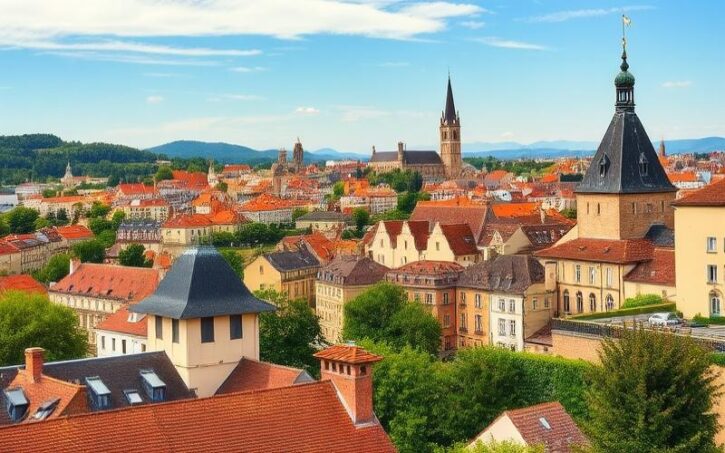
 Published on and written by Cyril Jarnias
Settling in France is much more than finding a place to live and opening a bank account. It’s also about learning a different way of life… at the table. Meals here are a social ritual, a point of national pride, almost a high-level sport. For an expatriate, understanding this food culture, knowing where to shop, what to try, how to behave in a restaurant or at a friend’s home, completely transforms the experience of the country.
This practical guide covers markets, cheeses, wines, regional dishes, the importance of seasons, food festivals, cooking classes, and table manners. It invites an authentic immersion rather than a simple tourist itinerary.
Understanding the Spirit of French Gastronomy
In France, a meal is not simply a moment to “eat”. It is a sacralized social time, a concentration of values: product quality, respect for seasons, conviviality, conversation. UNESCO has even inscribed the “French gastronomic meal” as intangible cultural heritage, as a social custom that celebrates life’s great moments.
The French spend more time eating than any other people. Lunch often serves as the pivot of the day, and the famous two-hour midday break still exists in many companies. The notion of “conviviality” is central: people eat together, at a fixed time, with a codified succession of dishes, and they take their time.
The setting matters almost as much as what’s on the plate. A tablecloth, different glasses for wine and water, a cheese platter at the end of the meal, a strong coffee to finish. And above all, a conversation that, very quickly, turns… to food. People comment on the products, recipes, wine, tell the story of the dish. Gastronomy is a social subject as much as a pleasure.
Observer of French Gastronomy
For an expatriate, integration often happens at the table. Accepting a dinner invitation from colleagues, participating in a riverside picnic, sharing a cassoulet at a village festival: so many opportunities to enter into French intimacy far beyond language textbooks.
Exploring Markets: The Beating Heart of Everyday Cuisine
Markets are the simplest gateway into French culinary life. Their history dates back to the Middle Ages, when the king granted by charter the right to hold a market on certain days. Today, practically every town or village has at least a weekly market, often more in large cities.
They are at once a pantry, discussion forum, social observatory, and open-air language school. You’ll find produce farmers, cheesemongers, butchers, fishmongers, bakers, but also artisans, florists, sellers of olives, honey, soap, and household linens.
How Markets Work in Practice
Markets almost always take place in the morning, usually between 7/8 am and 1 pm. Arriving early — around 8:30 or 9 am — is the best strategy to enjoy the freshness, avoid the crowd, and have the greatest selection. From noon onwards, stalls begin to empty out and the best products are often already gone.
Major French cities have covered market halls, called “Halles” or “Marché couvert,” which appeared in the 19th century to protect stalls from the elements. These markets often house high-quality businesses, such as exceptional cheesemongers, renowned fishmongers, and fine food caterers.
In Paris, for example, there are about eighty food markets, around sixty of which are open-air and about ten are covered. The Bastille market, a huge ribbon of stands on Boulevard Richard-Lenoir, gathers over a hundred vendors. The Aligre market combines a very popular outdoor section and the more traditional Beauvau covered market. Place Maubert in the 5th arrondissement, or the Monge market, illustrate small neighborhood markets where locals know each other.
Elsewhere, some useful points of reference:
| City / Region | Iconic Market | Culinary Specialty Highlighted |
|---|---|---|
| Paris | Bastille Market, Aligre Market | Great diversity, products from Île-de-France & elsewhere |
| Nice | Cours Saleya | Vegetables, flowers, Niçoise specialties |
| Lyon | Saint-Antoine Market | Strong link with Lyonnais “bouchons” (traditional restaurants) |
| Dijon (Burgundy) | Les Halles de Dijon | Halls designed by Eiffel, cheeses, wines, mustards |
| Sarlat-la-Canéda | Sarlat Market | Black truffles, Périgord products |
| Narbonne | Les Halles de Narbonne | Fish and oysters from Leucate |
| Aix-en-Provence | Place Richelme & other squares | Daily markets, fruits and vegetables from Provence |
In many regions, summer night markets (gourmet markets) transform into genuine open-air cafes: producer stands, shared tables, music, dancing — you might even see people dancing the Madison between two plates of goat cheese.
Producer or Reseller: Reading Between the Stalls
Not all sellers play the same role. “Producers” grow or make what they sell themselves. “Négociants” (merchants) buy from large wholesale markets like Rungis, near Paris, and resell.
Labels must legally mention the country and sometimes the region of origin, the quality category (Extra, Category I, Category II), and the “organic” mention if applicable. In addition, don’t hesitate to ask sellers simple questions, like “Is it from the region?” or “Did you produce it?”. They are often happy to specify the origin of their products, like asparagus or strawberries.
A produce farmer might offer 50 to 100 varieties of different fruits and vegetables. A fishmonger easily manages around twenty species. A cheesemonger sometimes presents a hundred different cheeses. For an expatriate, it’s an extraordinary learning ground, but also intimidating. The most useful reflex is to ask:
– “May I taste?”
– “Is it for eating today or tomorrow?”
For products like cheeses, peaches, or avocados, it is essential to tell the seller the planned time of consumption so they can select a product whose ripeness will be perfect at that moment.
Market Etiquette
The market is also a theater of micro-rituals whose rules are better to know:
– Always start with a “Bonjour, Monsieur / Madame” before ordering.
– Do not touch fruits and vegetables without being invited; in France, it is often the seller who chooses and serves.
– Queue, even if the line isn’t physically marked.
– Have cash on hand, especially for small producers; some accept cards but with a minimum purchase.
– Bring a reusable bag, basket, or market cart: plastic bags are becoming rare and are frowned upon.
– Ask for permission before taking photos of the stall.
This regular contact with the same vendors is also one of the most effective ways to practice French and find your place in the neighborhood.
Eating with the Seasons: The Essential Reflex
In France, seasonality is not a marketing slogan, but a very real practice. The entire system — markets, terroirs, food festivals, restaurant menus — is paced by the agricultural calendar. Buying tomatoes in the middle of winter still shocks many French people.
The reasons are at once gustatory, economic, and ecological: in season, products are more flavorful, cheaper, and have a lower carbon footprint. The Ministry of Agriculture even publishes monthly seasonality guides.
The Great Cycle of Fresh Produce
Seen from an expatriate used to finding everything year-round, the French calendar is surprising at first. A few simplified benchmarks:
| Season | Star Products at Markets |
|---|---|
| Spring | White and green asparagus, radishes, young carrots, peas, Gariguette strawberries, fresh herbs |
| Summer | Tomatoes, zucchini, eggplant, Cavaillon melons, peaches, nectarines, cherries, basil, new garlic |
| Fall | Figs, grapes, apples, pears, wild mushrooms, walnuts, squash, chestnuts, grape harvest |
| Winter | Leeks, cabbages, citrus fruits, endives, salsify, Jerusalem artichokes, oysters, scallops, truffles |
Within each season, certain months are marked by very specific products. In January, for example, stalls are filled with citrus fruits, cabbages, leeks, storage carrots, celeriac. It’s also the time for oysters, scallops, sea urchins, hearty stews with beef, farm pork, wild boar. For cheeses, pressed cheeses (Comté, Beaufort, Salers, Ossau-Iraty) and blues (Bleu des Causses, Bleu de Gex, Fourme de Montbrison) are at their peak.
Discover the fresh produce arriving at markets month by month, from spring to summer.
The first radishes, young carrots, sweet onions from the Cévennes, bundles of asparagus, and the timid Gariguette strawberries make their appearance.
Markets are adorned with various strawberries, peas, purple artichokes from Provence, and new potatoes from Île de Ré or Noirmoutier.
Field tomatoes, Charentais melons, and apricots reach their full maturity and peak flavor.
To adapt, a good exercise is to choose one simple recipe per month based on seasonal products. In March, a pea and mint velouté. In July, a ratatouille or a heirloom tomato salad. In October, a butternut squash gratin. In winter, a skillet of Brussels sprouts with mustard and almonds.
Cheese Seasons
Even cheese follows a calendar. Fresh goat cheeses are at their best from spring to early fall. Great aged cheeses like Comté, Beaufort, Salers, or Laguiole are enjoyed in winter. Some specialties are strictly “seasonal”: Mont d’Or, creamy under its wrinkled rind, is only sold from August to March. Late winter sees the disappearance of both Mont d’Or and black truffle, like a double signal: spring is coming.
For an expatriate, the composition of a cheese board varies by the month, offering a concrete way to discover the concept of French “terroir.” This term refers to the unique influence of the combination of soil, climate, and human know-how on the final character of the product.
Mastering Cheeses: More Than 1,000 Nuances of Milk
Charles de Gaulle is ironically credited with the phrase: “How can you govern a country that has 365 varieties of cheese?” Experts today estimate there are between 350 and 450 well-identified types, but over 1,000, even 1,500 if you count all variants. Suffice it to say, for an expatriate, cheese is a universe to explore over several years.
Categories and Appellations: A Small GPS in the Cheese Shop
French cheeses are classified by type of paste (soft, pressed, blue-veined, fresh), type of rind (bloomy, washed, natural), type of milk (cow, goat, sheep), and mode of production (farmhouse, artisanal, cooperative, industrial). Forty-six of them benefit from a PDO (Protected Designation of Origin), which guarantees geographical origin and know-how.
To navigate, you can think in terms of broad families found everywhere, from supermarkets to “Meilleur Ouvrier de France” cheesemongers:
| Family | Iconic Examples | Key Characteristics |
|---|---|---|
| Soft paste with bloomy rind | Brie de Meaux, Brie de Melun, Camembert de Normandie, Chaource, Brillat-Savarin | Fluffy white rind, creamy center, buttery to more pronounced taste |
| Soft paste with washed rind | Époisses, Munster, Maroilles, Langres | Orange rind, powerful smell, melting paste |
| Pressed cooked paste | Comté, Beaufort, French Emmental | Huge wheels, long aging, nutty notes |
| Pressed uncooked paste | Cantal, Salers, Laguiole, Ossau-Iraty | Firmer texture, rustic, sometimes herbal aromas |
| Blues | Roquefort, Bleu d’Auvergne, Fourme d’Ambert, Saint Agur | Blue veins, more or less spicy taste, ideal with sweet wines |
| Goat Cheeses | Valençay, Crottin de Chavignol, Sainte-Maure de Touraine, Selles-sur-Cher, Banon | Varied shapes, often ash-covered, from fresh and tangy to dry and robust |
| Fresh and Spreadable | Fromage blanc, brocciu, cancoillotte, fresh cheese | Very mild, often used in cooking or for breakfast |
The PDO label doesn’t automatically mean “best,” but rather “typical” and “protected.” It’s a good compass to start with.
Composing and Tasting a Cheese Board
Traditionally, cheese is served after the main course and before dessert. For an expatriate, this is disorienting, but logical: it makes the transition between savory and sweet.
A balanced board ideally includes different textures, milks, and intensities. For example, you could choose:
– a bloomy rind cheese (Brie or Camembert),
– a goat cheese (Valençay or Sainte-Maure),
– a pressed paste cheese (Comté or Cantal),
– a blue cheese (Roquefort or Fourme d’Ambert).
This is the recommended number of cheese types to taste, in a specific order from mildest to most powerful.
The bread should be simple — baguette or country bread — so as not to overwhelm the aromas. Classic accompaniments are fresh fruits (pears, apples, grapes), dried fruits (walnuts, figs), a little honey or fig jam.
To avoid faux pas, a few cutting principles:
– never take only the center or only the rind: cut so that each piece has both center and edge;
– for a round cheese (camembert), cut into triangles from the center, like a cake;
– for a nice triangle of Brie, cut parallel slices from the small side, to keep the point intact.
Finally, most rinds of soft paste cheeses are edible; those of pressed cheeses can be left aside.
Decoding Wine: Reading Labels and Pairing Food and Wine
In a country where wine represents over half of alcohol consumption, understanding the basics greatly helps one feel at ease. The first surprise for an expatriate: on French labels, you mostly read the name of the region or appellation, rarely the grape variety.
PDO, PGI, Vin de France: The Pyramid of Appellations
The French system is based on appellations regulated by the INAO, the body that controls origins and quality:
French wines are classified into three main categories. PDO (Protected Designation of Origin) is the strictest level, with precise specifications on grape varieties, yields, and geographic area. PGI (Protected Geographical Indication), formerly “Vin de Pays,” follows more flexible rules over a larger geographic area. Finally, the “Vin de France” category is the most basic, with no precise origin indication, but it may mention the grape variety or varieties used.
Within PDOs, some regions have created their own hierarchies of crus (Bordeaux, Burgundy, Beaujolais, Rhône, Champagne…) which further complicate the landscape.
Some useful regional benchmarks:
| Region | Main Wine Types | Dominant Grape Varieties |
|---|---|---|
| Bordeaux | Structured reds, dry and sweet whites | Cabernet Sauvignon, Merlot, Cabernet Franc, Sauvignon Blanc, Sémillon |
| Burgundy | Elegant reds, prestigious whites | Pinot Noir, Chardonnay |
| Champagne | Sparkling wines | Chardonnay, Pinot Noir, Pinot Meunier |
| Beaujolais | Light, fruity reds | Gamay |
| Rhône Valley | Spicy reds, characterful whites | Syrah (North), Grenache, Mourvèdre (South) |
| Loire | Fresh whites, light reds, rosés | Sauvignon Blanc, Chenin, Cabernet Franc, Melon de Bourgogne |
| Alsace | Aromatic whites (often grape variety indicated) | Riesling, Gewurztraminer, Pinot Gris, Muscat |
For an expatriate, the essential thing to remember is that the name of the appellation already gives a lot of information about the wine style.
Some Simple Food and Wine Pairing Principles
The French adage “what grows together goes together” is a good compass: dishes from a region naturally pair with wines from the same terroir.
A few concrete examples:
– Loire Valley goat cheeses (Crottin de Chavignol, Valençay) with a Sauvignon blanc from Sancerre or Pouilly-Fumé.
– Cassoulet from Castelnaudary with a red from Languedoc or a Cahors.
– Seafood from Brittany with a Muscadet sur Lie or an unoaked Chardonnay.
– Blue cheeses (Roquefort) with a sweet white wine (Sauternes) or Port.
– Cream-based dishes (poultry à la normande, blanquette de veau) with structured whites (Chardonnay from Burgundy, rich Chenin from the Loire).
– Bouillabaisse from Marseille with a white or rosé from Provence.
It’s often forgotten that white wines, thanks to their acidity and lack of tannins, pair more easily with cheeses than many tannic reds.
Discovering the Great Regional Cuisines
One of the pleasant shocks for an expatriate in France is realizing that “French cuisine” doesn’t exist in the singular. There is a mosaic of very distinct regional cuisines, sometimes closer to their foreign neighbors than to Paris.
North, Normandy, Brittany: Butters, Apples, and the Sea
In the north, from Nord-Pas-de-Calais to Picardy, Flemish, Belgian, Dutch influences blend. People cook generous dishes like carbonnade flamande (beef stewed in beer), hochepot, onion tarts, moules marinières. Maroilles, a powerful cheese, or local andouilles set the tone.
Normandy lives to the rhythm of apples, cream, and butter. Orchards yield cider, Calvados, pear cider; they cook pork tenderloin or chicken in a cream-cider sauce. Camembert, Pont-l’Évêque, Livarot form an iconic cheese trio. On the coast, oysters, scallops, mussels in cream, and sole normande complete the picture.
Breton cuisine is famous for its seafood (Cancale oysters, Camaret lobsters, cotriade, stuffed clams) and the use of buckwheat. Buckwheat galettes are filled with ham, egg, cheese, sausage, or seafood and served with dry cider. For dessert, you’ll find kouign-amann, Breton butter cookies (palets bretons), and salted butter caramels.
Loire, Burgundy, Rhône-Alpes: Cheeses and Great Classics
The Loire Valley, “the garden of France”, combines river fish in beurre blanc, rustic charcuterie (rillettes, andouillettes), the Tarte Tatin born by accident at the Tatin sisters’ inn, and goat cheeses like Sainte-Maure-de-Touraine or Crottin de Chavignol. People drink lively whites (Sancerre, Vouvray), supple reds (Chinon, Bourgueil).
Burgundy boasts an impressive series of dishes that have become emblematic far beyond its borders: beef bourguignon stewed in Pinot Noir, coq au vin, snails with garlic and parsley, eggs in meurette in a wine sauce. Cheeses like Époisses, Comté and Mont d’Or (the latter neighboring the Jura) and Dijon mustard complete the picture.
Further south, in Rhône-Alpes and Savoie, the mountains impose their logic: charcuteries, potatoes, alpine cheeses (Beaufort, Reblochon, Tomme, Abondance), bacon, cream. Savoyard fondue (cheese melted in white wine), raclette, tartiflette with Reblochon, gratin dauphinois with cream are staples in winter. Lyon, the self-proclaimed capital of gastronomy, multiplies “bouchons” where you eat Lyonnaise salad, quenelles, andouillettes, cervelle de canut, all washed down with Beaujolais or Côtes du Rhône.
Southwest, Languedoc, Provence: Sun, Duck, and Herbs
In the Southwest, between Bordeaux, Périgord, and the Basque Country, the cuisine is rich in noble fats: goose fat, duck fat, walnut oil. Foie gras, confits, magret duck breasts, cassoulets from Castelnaudary, pâtés, and terrines dominate. The black Périgord celebrates truffles, duck, and goose; Gascony celebrates confit and Armagnac. The Basque Country cooks “à la basquaise” with garlic, tomatoes, peppers, and Espelette pepper, giving dishes like pipérade, axoa, chicken basquaise, or the gâteau basque.
Further east, Languedoc and Roussillon blend Roman and Mediterranean influences: brandade de morue (salt cod purée), bourride, tielles de Sète stuffed with squid, rouille de seiche. The full-bodied, briny red wines of the coast (Collioure, Banyuls) complement fish and shellfish dishes, especially around Bouzigues and Sète.
The cuisine of this region is characterized by emblematic ingredients like olive oil, garlic, herbes de Provence, and sun-ripened vegetables. Among the traditional dishes are ratatouille, Marseillaise bouillabaisse (governed by a charter since 1980), soupe au pistou, pieds et paquets, Niçoise socca made from chickpea flour, and pissaladière. Summer markets overflow with tomatoes, melons, figs, and basil. The tradition of the 13 Christmas desserts, including dried fruits and Aix calissons, remains very much alive.
Corsica and Overseas Territories: More Distant Horizons
Corsica blends Mediterranean and mountainous terroir: pork charcuterie (coppa, lonzu, figatellu), sheep cheeses like brocciu, chestnuts transformed into flour for cakes and polenta, wild boar stew, veal with olives, cakes with brocciu. Local beers (Pietra, Colomba) and citrus and myrtle liqueurs complete the palette.
The overseas departments and territories add other dimensions: curry colombo in French Guiana, accras de morue (cod fritters) and bokits in Guadeloupe, Creole rougail in Réunion, bougna in New Caledonia, traditional cooking in an earth oven (ahima’a) in Polynesia. For an expatriate, shows dedicated to Overseas products in Paris offer a glimpse of this diversity without leaving mainland France.
Gourmet Festivals and Events: France in XXL Version
The French passion for gastronomy is also expressed in a multitude of fêtes and festivals that punctuate the year. There is one for almost every product: melon, cherry, strawberry, cassoulet, truffle, chestnut, cider, onion, pepper…
The Great National Food Festivals
Certain events cover the entire country:
Discover the major events celebrating the richness of France’s culinary heritage throughout the year.
Held each September in over 1,500 towns, it highlights French cuisine through workshops, special menus, and chef meetings.
In May, it celebrates bakers, baguettes, croissants, and regional breads with kneading demos, live baking, and tastings.
In June, this event is dedicated to seafood — oysters, lobsters, scallops, sardines — and includes concerts and entertainment.
In Paris every February, over 600,000 visitors discover the diversity of cheeses, charcuterie, wines, and the link between agriculture, terroirs, and the plate.
More specialized events like the Fête de la Bière (artisan beers from about eighty breweries) or the Fête du Beaujolais Nouveau (third Thursday of November) show that brewing and wine culture evolve in parallel.
Product Festivals: A Flavorful Calendar
For an expatriate, enjoying local festivals is a fantastic way to discover a region through its specialties. A few emblematic examples:
| Festival | Main Location | Product Celebrated | Visitor Experience |
|---|---|---|---|
| Fête de la Truffe | Sarlat-la-Canéda | Black Périgord Truffle | Markets, demonstrations, truffle hunting with dogs |
| Fête du Citron | Menton | Lemons and citrus | Monumental citrus sculptures, parades |
| Foire au Jambon | Bayonne | Basque ham and charcuterie | Parades, dances, tasting stands |
| Féria du Melon | Cavaillon | Charentais melon (PGI) | Farm visits, tastings, horse parade |
| Fête du Cassoulet | Castelnaudary | Cassoulet | Communal meals, town festivities |
| Fête de la Châtaigne | Collobrières | Chestnuts | Roasted chestnuts, chestnut cream and ice cream, wine |
| Fête de Piment | Espelette | Espelette pepper | Decorated house facades, parades, pepper contests |
| Blayais Asparagus | Étauliers (Gironde) | White asparagus | Cooking workshops, field visits, tastings |
| Fête de la Fraise | Beaulieu-sur-Dordogne | Gariguette strawberries | 8-meter-long giant tart, jams, music |
| Fête de l’Oignon de Roscoff | Roscoff | Roscoff pink onion | Braiding contests, farm visits |
Some festivals have flavorful legends: the giant omelette of Bessières is said to originate from a stop by Napoleon; the Fête du Cassoulet feeds on quarrels about the “true” recipe. In Menton, the Fête du Citron uses over 140 tons of lemons and oranges for its sculptures.
Shows and Major Urban Events
Alongside rural festivals, several large cities organize major gastronomic events:
The Salon du Chocolat in Paris attracts over 100,000 visitors each year to discover hundreds of exhibitors.
For an expatriate, creating a “gourmet calendar” for the year is an effective way to travel the country without necessarily multiplying weekend trips: a chocolate show in fall, a melon festival in summer, a truffle festival in winter, a street food festival in spring.
Learning to Cook the French Way: Classes, Markets, and Terroirs
Living in France also means, very concretely, having to feed your household. However, tiny Parisian kitchens, unknown ingredients, measurements in grams instead of cups can be unsettling. Many cooking schools have spotted the demand and offer classes designed for foreigners.
Cooking Classes in Paris and Regions
Several Parisian schools have specialized in welcoming an international clientele:
– Le Foodist: “market to plate” classes with market visits (Latin Quarter, Montmartre, Les Halles), product selection, then a 4 to 6-hour workshop to cook a full meal; pastry classes (macarons, éclairs, soufflés, crème brûlée, baguettes, croissants); wine and cheese pairing workshops. Classes are in English, very hands-on.
– Cook’n with Class (Montmartre): opened in 2007, has welcomed over 30,000 students. Offers workshops on bread, French desserts, foie gras, wine, croissants, with groups of 6 to 10 people.
– La Cuisine Paris, La Cuisine, or private chefs like Catalina also offer targeted workshops (pastry, bistro, basic techniques).
To deepen your skills, renowned schools like Ferrandi or Le Cordon Bleu offer intensive short courses for adults. These courses, lasting from a few days to several weeks, are sometimes taught in English.
In the regions, the offer diversifies:
– In Burgundy, La Ferme de la Lochère offers a week-long immersion on a 400-year-old farm: market visits (including Les Halles de Dijon, designed by Gustave Eiffel), goat farms, artisanal bakeries, daily cooking classes, multi-course dinners with food and wine pairings (Beef Bourguignon, for example).
– Near Bordeaux, Le Gargantua in Gascony welcomes very small groups in a large kitchen over 30 m²; everything is hands-on, no “show cooking” demos. On the program: seasonal cooking, pastry, dishes with duck foie gras, producer visits. Accommodation, meals, and drinks are included.
– In Provence, the Courageous Cooking School located in Julia Child’s former home, or Provence Gourmet near Saint-Rémy-de-Provence, offer days combining market, cooking a full Provençal lunch, and tasting local rosés.
For an expatriate, taking a cooking course is an excellent way to accelerate integration. It allows you to learn local culinary vocabulary, discover typical products, and master basic techniques like sauce preparation, cutting, or cooking methods. It’s also an opportunity to build a new social network with other enthusiasts.
Cooking France Yourself
France also encourages artisanal learning through accessible resources: TV shows dedicated to markets (“Votre plus beau marché”), regional recipe books, workshops in media libraries. More and more platforms list meals at people’s homes (eatwith.com): perfect for observing everyday gestures.
A good starting point for an expatriate is to set a few simple goals:
– Learn to prepare a beef bourguignon, a gratin dauphinois, a ratatouille, and a quiche lorraine: four pillars of family cooking.
– Practice cooking a magret duck breast pink, a sole meunière, a roasted “market” chicken.
– Master an emblematic dessert: Tarte Tatin, chocolate mousse, crème brûlée.
– Know how to assemble a cheese board and present it according to the tasting order.
By shopping at the market every week, you also learn, almost in spite of yourself, about seasonality and “normal” prices: zucchini at €1/kg in summer becomes €7.50/kg in winter, which naturally encourages adapting your menus.
Experiencing French Meals: Codes, Useful Phrases, and Faux Pas to Avoid
Beyond products and recipes, the way to behave at the table and in a restaurant is a language in itself. Understanding its rules helps avoid misunderstandings and not come across as a perpetual tourist.
At the Restaurant: Pace and Expectations
One point always surprises newcomers: in France, the server does not come every five minutes to ask if “everything is okay”. They leave you alone. If you need something, you must politely attract their attention, a glance or an “excusez-moi” is enough.
Service follows a fairly codified rhythm:
1. You are seated (except on café terraces where you often seat yourself). 2. You are brought the menu and the wine list. 3. The order is taken for the entire meal (drinks and dishes). 4. The aperitif is served, then the starter, then the main course, then cheese/dessert, then coffee, according to your choices. 5. Dishes are cleared only once everyone has finished.
The bill never arrives spontaneously in a French restaurant; it is customary to request it explicitly by saying “L’addition, s’il vous plaît” when you are ready to leave. While leaving without having coffee is not incorrect, it is culturally considered the traditional conclusion of the meal, often taking precedence over dessert.
Service hours are also to be noted: lunch between 12 pm and 2 pm (sometimes 3 pm), dinner rarely before 7:30 or 8 pm. In between, many restaurants close their kitchens. The mention “service continu” indicates an establishment that serves continuously all day, but it’s not the norm.
Tipping, Water, Bread: Three Sensitive Subjects
In France, service is included in the displayed prices. Servers have a fixed salary, and tipping is an optional extra. Staying close to local custom — rounding up the bill, leaving one or two euros for a coffee or a simple meal, 5 to 10% in a fine dining restaurant if the service was truly remarkable — avoids misunderstandings.
You can always ask for a free carafe of tap water: “Une carafe d’eau, s’il vous plaît.” Mineral waters still (Evian, Vittel, Volvic…) and sparkling (Perrier, Badoit, San Pellegrino) are chargeable.
Bread is served to accompany the meal, not to fill you up before the dishes arrive. It is eaten in small pieces and is not systematically buttered (except at breakfast). It is customary, both at home and in restaurants, to place it directly on the tablecloth, without using a dedicated bread plate.
Table Manners to Know
A few important customs in a French setting:
– Saying “Bonjour” upon entering a café, bakery, or restaurant is non-negotiable.
– Wait until everyone is served to start eating; often, someone will say “Bon appétit!”.
– Keep your hands visible on the table (wrists resting on the edge), but without resting your elbows.
– Use the knife in your right hand, the fork in your left hand, without constantly switching hands.
– Avoid asking for complicated changes to dishes (“without this, without that”): flexibility exists but remains limited.
– Do not ask for a “doggy bag” unless the restaurant offers it spontaneously; the practice is growing to fight waste but remains less common than elsewhere.
In terms of language, a few key phrases make life easier:
– To order: “Je voudrais…” (“I would like…”) or “Je vais prendre…” (“I’ll have…”)
– To ask for a recommendation: “Qu’est-ce que vous recommandez ?” (“What do you recommend?”)
– To express an allergy: “Je suis allergique à…” (“I am allergic to…”)
– To finish: “C’était très bon, merci.” (“It was very good, thank you.”)
A little linguistic effort is always appreciated before switching, if needed, to English.
Weaving Your Own Gourmet Map in France
For an expatriate, French gastronomy can seem like an infinite ocean. Rather than trying to explore everything at once, the most rewarding approach is to build your own culinary geography, by combining a few simple axes:
To immerse yourself in a local food culture, several concrete actions are suggested: regularly visit a neighborhood market to build relationships with vendors and discover new products; respect the seasons by avoiding certain fruits and vegetables out of season to rediscover their flavors; explore French cheese and wine diversity by region; participate annually in a local gourmet festival; and take a cooking workshop to master traditional recipes.
In a few months, these small habits shift your perspective: French gastronomy ceases to be a postcard backdrop and becomes a language you speak, with its seasons, regional nuances, codes, and convivial moments. It’s often at this point that you find yourself saying “our cheesemonger,” “our market,” “our little bistro,” a sign that you no longer feel simply like an expatriate, but a little at home, too, at the table in France.
A 62-year-old retiree, with a financial estate exceeding one million euros, well-structured in Europe, wishes to transfer his tax residence to France to optimize his tax burden, secure his assets in a major EU country, and remain close to his family. Allocated budget: €10,000 for comprehensive support (tax advice, administrative formalities, relocation, and asset structuring), without forced asset sales.
After analyzing several destinations (Portugal, Spain, Italy, Greece), the chosen strategy targets France for its stable legal and tax framework, access to a wide range of savings and life insurance products, asset protection (marital regime, inheritance rights, tax treaties), and quality healthcare system. The mission includes: pre-relocation tax audit (risk of exit tax, tax deferral), choice of primary residence location, affiliation with the French social security system, transfer of banking residence, management plan for tax residence criteria (183 days, center of economic interests), connection with a local network (tax lawyer, notary, accountant), and comprehensive asset integration (retirement optimization, real estate, estate planning).
Disclaimer: The information provided on this website is for informational purposes only and does not constitute financial, legal, or professional advice. We encourage you to consult qualified experts before making any investment, real estate, or expatriation decisions. Although we strive to maintain up-to-date and accurate information, we do not guarantee the completeness, accuracy, or timeliness of the proposed content. As investment and expatriation involve risks, we disclaim any liability for potential losses or damages arising from the use of this site. Your use of this site confirms your acceptance of these terms and your understanding of the associated risks.

Cyril Jarnias is an independent expert in international wealth management with over 20 years of experience. As an expatriate himself, he is dedicated to helping individuals and business leaders build, protect, and pass on their wealth with complete peace of mind.
On his website, cyriljarnias.com, he shares his expertise on international real estate, offshore company formation, and expatriation.
Thanks to his expertise, he offers sound advice to optimize his clients' wealth management. Cyril Jarnias is also recognized for his appearances in many prestigious media outlets such as BFM Business, les Français de l’étranger, Le Figaro, Les Echos, and Mieux vivre votre argent, where he shares his knowledge and know-how in wealth management.





