
 Published on and written by Cyril Jarnias
Leaving one’s country is already an ordeal. But experiencing homesickness while in Venezuela, amidst a full-blown economic and social crisis, is a unique experience. Many people associate longing for home with emigrating. However, for millions of Venezuelans, staying in the country also means living a form of internal uprooting: families scattered across several countries, emptied-out neighborhoods, collapsing public services, the impossibility of recapturing life “as it was before.” One can feel like a stranger… at home.
This article offers concrete avenues for recreating a sense of home and stability, drawing on recent research concerning the Venezuelan diaspora, mental health, support networks, and digital tools, without downplaying the current crisis.
Understanding Homesickness in a Country in Crisis
Homesickness is often defined as the distress associated with being away from what is familiar: family, places, routines, flavors, language, the sounds of the street. For migrants, numerous studies show that this nostalgia is frequently accompanied by anxiety, sadness, sleep or appetite disorders, sometimes symptoms akin to depression.
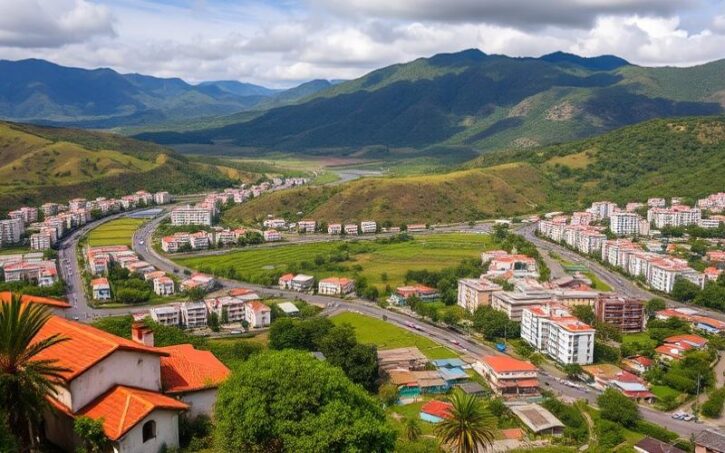
But in Venezuela, a particular phenomenon appears: one can feel homesickness without leaving the country. The crisis has profoundly transformed cities and countryside. In some neighborhoods of Caracas, for example, it is estimated that half of the apartments or houses are empty, a direct consequence of the mass exodus. Real estate prices have collapsed, public infrastructure is deteriorating, electricity and water outages punctuate daily life, crime and mistrust limit the use of public spaces. Many speak of a “city of fiefdoms” protected by walls, gates, and checkpoints.
In other words, even if one hasn’t taken a plane or crossed a border, one has lost one’s country as it was known. For some, the family home is now occupied by relatives who have gone abroad or has been turned into a business. For others, half of the family circle lives in Colombia, Peru, Spain, or the United States. It then becomes easy to feel stuck between an idealized past and an unstable present.
Venezuelan Diaspora
In this context, homesickness can resemble a form of cultural grief: one mourns the old normalcy, the former neighbors, the bustling streets, the cultural life that has faded, while facing a reality where 80% of the population lives below the poverty line, with food and medicine shortages and failing public services. Nostalgia then mixes with anguish, anger, and chronic fatigue.
When Nostalgia Becomes a Warning Sign
Psychologists studying refugees and migrants speak of “migratory grief” or “cultural grief”. The symptoms are similar to those described for homesickness: sadness, rumination about the past, feeling of no longer belonging anywhere, isolation, insomnia, physical pains without an obvious medical cause. Within the Venezuelan diaspora, various studies show high rates of anxiety, depression, and post-traumatic stress. Inside the country, the picture is no better: data from the Venezuelan Violence Observatory indicate a significant rise in suicides during the pandemic, within a context of multiple crises.
Homesickness becomes concerning when it persists and significantly affects daily well-being, requiring special attention.
– lasts several months without improvement;
– prevents working, studying, or taking care of one’s family;
– is accompanied by thoughts of death, self-harm, or profound despair.
This does not mean one is “crazy” or “weak”, but that the accumulation of losses (material, emotional, symbolic) exceeds our current resources. In this case, seeking help is an act of courage, not an admission of failure.
Relying on Family and Close Networks
A study conducted among Venezuelan families relocated to Brazil as part of the “interiorization” program shows that the nuclear family remains the primary source of support. Researchers mapped these households’ networks using genograms and ecomaps. Result: the family core (parents, children, sometimes grandmothers) constitutes the emotional pillar, while formal networks (school, church, NGOs) remain peripheral.
In Venezuela, the close-knit family structure, centered on the key role of grandmothers, is an asset for withstanding difficulties. They provide practical help (childcare, cooking, care) and transmit culture (recipes, stories, rites). However, some, who stayed in the country while their family emigrated, experience feelings of isolation and vulnerability, particularly regarding difficulties accessing healthcare or information.
Couple cohesion also stands out as an important protective factor. In the Brazilian study, families where the couple remains united cope better with difficulties, even when no one works in their field of training and professional frustration is high. Conversely, a marital separation weakens the entire emotional balance.
The message is clear: to manage homesickness in Venezuela, strengthening existing family ties is central, even if it means reinventing them.
Turning the Home into an Emotional Refuge
When everything outside is crumbling – public services, security, mobility possibilities – the home can become an essential anchor. This doesn’t necessarily require a lot of money, but rather intention.
A few simple levers, inspired by what migrants and people who stayed in the country report:
To maintain a connection with Venezuela, it is advisable to create a shared memory space within the household, like a wall decorated with photos of loved ones, iconic landscapes (the Andes, the Llanos, the Caribbean Sea), and symbolic objects (image of the Divina Pastora, old bolivarian banknote, local team jersey). Also establish weekly family rituals: a special meal on Sunday, a music night evoking happy memories, or a time to disconnect for authentic exchanges. Finally, actively involve children in cultural transmission by teaching them songs, street games, typical expressions, and cooking with them, thus making the home a place of cultural education, similar to the role played by schools and grandparents in other contexts, like in Brazil.
Thus, instead of enduring nostalgia, we give it a contained, ritualized place, which allows it to be shared rather than faced alone.
When Part of the Family Has Already Left: Staying Connected Without Losing Oneself
A major characteristic of the Venezuelan crisis is family dispersion. Surveys show that approximately one in five households has seen at least one member emigrate recently. For those who remain in Venezuela, every video call can reactivate homesickness… even though these contacts are essential for moral support and often financial support.
Research on young Venezuelan migrants shows that the daily use of digital tools to talk both with friends in the host country and in Venezuela is associated with better mental health. In other words, the problem is not connection in itself, but imbalance: being mentally stuck in an inaccessible elsewhere, or conversely, cutting oneself off abruptly from loved ones.
In Venezuela, despite unequal access, recent figures indicate:
| Indicator (Venezuela, 2025) | Estimated Value |
|---|---|
| Internet Users | 17.5–17.6 million (≈ 61.6% of the population) |
| Active Mobile Connections | 22.5 million (≈ 79% of the population) |
| Social Media Users | 15.1 to 16.6 million (≈ 53–58% of the population) |
| Median Mobile Speed (download) | ~14.7 to 25.4 Mbps |
| Median Fixed Speed (download) | ~72.4 to 92.1 Mbps |
These data mask strong disparities: in many rural areas, actual speeds are much lower, outages are frequent, and some households have no home access. But they still show that digital tools can serve as a bridge between those who left and those who stayed.
Finding the Balance Between Contact and Local Anchoring
Studies on homesickness emphasize: staying connected with loved ones reduces isolation, but too much time spent looking at what is happening elsewhere (photos of full supermarkets, safe streets, stable salaries) can amplify the feeling of lack and injustice.
Number of useful points of reference presented in the article to facilitate understanding of the subject
– Plan specific communication times (for example, one or two slots per week for family video calls) rather than staying in permanent anticipation of messages.
– Use WhatsApp, Facebook Messenger, Zoom, or Google Meet not only to “complain” – which is legitimate – but also to share small local victories: a cake baked successfully despite gas outages, a neighborhood project, a decoration made with recycled materials, a photo of a sunset over the hills of Caracas.
– Set time limits on social media, especially when one feels that scrolling through the apparently easier lives of others increases bitterness. Several guides recommend reducing usage to defined slots, then returning to offline physical or social activities.
– Take advantage of discussion groups (Facebook, WhatsApp, Telegram) to obtain practical information (where to find certain medication, which neighborhood has fewer water outages, which organizations offer free psychological support), and not only for collective rumination.
The goal is to transform digital tools into a resource, not a permanent reminder of what is missing.
Goal of Digital Transformation
Relying on Formal and Informal Support Networks
Building and maintaining a support network is one of the most effective ways to reduce isolation, a key factor in homesickness. Research on Venezuelan migrants, in Latin America as well as in the United States, shows that the quality of the social network – not just its size – strongly influences mental health.
A general guide on support networks highlights several functions:
– emotional support (listening, empathy, reassurance);
– practical help (information on procedures, access to the healthcare system, job search);
– professional opportunities (recommendations, training, joint projects);
– sense of belonging to a community.
In Venezuela, despite the crisis, this type of network can be woven at several levels.
Family, Neighbors, Local Community
A study on Venezuelan families relocated to Brazil shows that, besides family, schools, churches, and civil society organizations form the core of formal support. Transposed to the Venezuelan context, this means that:
In times of difficulty, several local actors can offer valuable support to families. Here are some key entry points for finding help, information, or a support network.
Can serve as a relay for official information or specific aid programs for families.
Often offers a listening ear, discussion groups, and material mutual aid, regardless of denomination.
Play a crucial role in sharing resources during shortages or organizing collective security.
These initiatives are rarely talked about in the media, but studies on the diaspora show that a large part of Venezuelan resilience comes from this spontaneous associative fabric, often led by women: collective kitchens, mutual aid for administrative procedures, shared childcare.
Organizations Specializing in Mental Health and Exile
Several organizations created by Venezuelans abroad or in the country have specialized in psychological and social support for people affected by the crisis, whether they have migrated or not.
For example:
The Venezuelan Alliance for Community Support in New York offers culturally and linguistically adapted psychological support for asylum seekers and their families, focusing on therapy, sense of community, and trauma related to exile. Furthermore, the Psicodiáspora network, composed of Venezuelan psychologists abroad, offers online content and consultations to address migratory grief and chronic stress, support that also benefits families who remained in Venezuela.
These examples show that there now exists a Venezuelan expertise on the crisis, which helps name what many feel without knowing how to express it. Understanding that sadness or fatigue does not come from a “personal flaw,” but from an extreme context, is already part of healing.
The Central Role of Culture, Cuisine, and Rituals
In exile narratives, what most often helps alleviate homesickness is cuisine. In Buenos Aires, for example, a Venezuelan chef launched itinerant meals where she served her mother’s pisca andina, arepas with smoked cream, quesadillas with blackberry jam. Over time, this Andean soup became a shared dish in a community kitchen, feeding hundreds of people. In Germany, an engineering student recounts that cooking arepas, hallacas, and cachapas helps him feel at home, while introducing his culture to his friends.
For those living in Venezuela, the situation is paradoxical: the emblematic dishes exist physically, but the ingredients are sometimes missing or have become unaffordable. The arepa, for example, long a symbol of abundance and modernity thanks to pre-cooked flour, has become difficult to prepare for many poor families.
This is precisely where cultural creativity reveals itself as an antidote to homesickness:
– some relearn traditional corn preparation methods (nixtamalization, manual grinding) when industrial flour is lacking;
– neighborhood cooks start small informal businesses (selling cachapas, pasteles, regional dishes), recreating around food micro-communities of support;
– groups gather to prepare hallacas together for Christmas, even with ingredient substitutes, perpetuating the extended family ritual despite the exodus.
How to Use Culture to Soothe Nostalgia
The advice given to international students or expatriates elsewhere in the world also applies to Venezuela, with adjustments:
Cooking symbolic dishes, even in a simplified way, creates a link between different periods of life. Sharing these dishes with one’s surroundings fosters the creation of new memories and avoids remaining trapped in nostalgia. Maintaining holidays and traditions, even in adversity, strengthens self-esteem and a sense of belonging, as shown by cultural integration programs.
What matters is not the “purity” of the tradition, but the feeling of continuity: telling oneself “even if everything has changed, something of me, of my family, of my country survives here and now.”
Taking Care of Mental Health in a Weakened System
The figures are clear: in several studies, between one third and nearly two thirds of Venezuelan migrants show symptoms of anxiety or depression. Inside the country, specialists also observe a rise in psychological disorders, in a context where the healthcare system is exhausted.
In Venezuela, for example, the budget dedicated to mental health has fallen to 0.3% of the health budget. In Venezuela, the shortage of professionals, medication, and infrastructure makes access to psychological care complex, especially outside Caracas.
However, helplines and prevention initiatives still exist:
– a national suicide prevention hotline, operated by the Ministry of Health, accessible 24/7;
– a line managed by the Venezuelan Association for Suicide Prevention, as well as awareness campaigns (“No estás solo” / “You are not alone”) in partnership with WHO and PAHO.
Even if coverage is not perfect, these resources can constitute a first outlet for expression for those who do not dare talk to their surroundings.
Coping Strategies Identified by Research
Research conducted among Venezuelan migrants in Latin America has identified several types of stress management strategies, based on the Lazarus and Folkman model. They can be adapted to the current Venezuelan context:
Presentation of the main coping strategies and specific cultural resources promoting better adjustment in the face of difficulties.
Planning, active search for solutions, learning new skills, organizing the budget, and seeking reliable information. These are the most used strategies and the ones most associated with better adjustment.
Talking about one’s feelings with loved ones, seeking social support, expressing emotions constructively (writing, art, prayer, participating in discussion groups).
The notion of *pa’lante* (moving forward), recourse to religion or spirituality (prayers, celebrations), and *desahogo* (“letting off steam” by talking to a trusted person).
In contrast, strategies of escape or denial (alcohol use, isolation, violence) worsen homesickness in the medium term, even if they give an illusion of immediate relief.
When and How to Seek Professional Help
In a context of shortage, it is unrealistic to think that everyone will be able to benefit from individual psychotherapy. But several avenues exist:
To access psychological help without excessive cost, several avenues are worth exploring. It is recommended to inquire with local or international NGOs offering stress management workshops, discussion groups, or free or low-cost consultations. Contacting universities with psychology faculties can be useful, as they sometimes have university clinics or supervised internship programs offering low-cost follow-up. It is also advisable to ask one’s network if they know of psychologists or psychiatrists offering online sessions at a social rate, including from abroad, some diaspora members returning to help remotely. Finally, in case of overwhelming distress, using, if available, telephone helplines can provide immediate initial support.
Studies conducted in Colombia and Ecuador on integrating brief psychological interventions into economic programs show that it is possible to obtain positive effects with group interventions of a few weeks, focused on emotional regulation, interpersonal skills, and problem-solving.
This does not replace a robust healthcare system, but offers concrete models for local initiatives in Venezuela: discussion groups organized by neighborhood associations, workshops led by trained volunteers, structured mutual aid among mothers, etc.
Using Digital as an Emotional “Lifeline”
Even if the infrastructure remains fragile (power outages, low speeds outside major cities), recent digital reports show that Venezuela is not disconnected: over 60% of the population uses the Internet, social media covers more than half of residents, and mobile connections are progressing.
Studies conducted among Venezuelan migrants in transit (notably in Honduras, Colombia, Costa Rica, Peru) reveal the enormous importance of the smartphone:
| Use of social media among Venezuelan migrants en route | Percentage |
|---|---|
| Use a smartphone during the journey | 97% |
| Use networks to stay in contact with loved ones | 96% |
| Use WhatsApp to obtain information | 93% |
| Consult networks for info on the route or destination country | 50% |
| Encounter access obstacles (cost of data, lack of connection) | 61% |
Even if these figures mainly concern those leaving the country, they show how much digital has become an emotional lifebuoy. For those living in Venezuela, the tools are the same – WhatsApp, Facebook, Instagram, TikTok – but the uses can be oriented towards reducing homesickness:
To nurture the connection with family remaining in Venezuela, it is beneficial to create inter-country family groups dedicated to exchanging photos of daily life, avoiding focusing solely on dramas or shortages. Enrich these exchanges by sharing recipes, music playlists, or audio memories like the sound of rain on the roof during the rainy season or the characteristic noise of street vendors. Finally, participate in Venezuelan online communities (forums, Facebook groups, Instagram accounts) that prioritize positive, informative, and supportive content, rather than spaces exclusively focused on political conflict or controversies.
Of course, caution is still advised: misinformation is very present, including on migratory routes. But initiatives like Voices of Venezuela, which manage helplines and a network of over 70 organizations in Colombia, demonstrate that it is possible to use artificial intelligence and messaging to direct people to reliable resources. In the long run, this type of model could inspire similar projects in Venezuela to support those who stay, and not only those who leave.
Recreating Meaning and a Project Despite Uncertainty
A dimension often overlooked in homesickness is the loss of a project. When one doesn’t know if they will stay, leave, have a salary next month, send the children to school, it becomes difficult to project beyond immediate survival. Yet, research on resilience shows that defining realistic goals, even modest ones, protects mental health.
In studies conducted among Venezuelan migrants in Peru and Colombia, a large majority express their belief in a positive future in the host country, despite difficult conditions such as unemployment, discrimination, and precariousness. This observation contrasts with the often more fragile confidence observed in Venezuela. The example illustrates that it is possible to build micro-projects to support this resilience and this projection towards the future.
– improve a useful skill (sewing, repair, cooking, office skills) via online tutorials when the connection allows;
– get involved in a neighborhood activity (repair a playground, organize a small shared library, take part in an urban garden);
– support a loved one – in the country or abroad – by helping them manage their paperwork, searching for reliable information, or simply listening to them.
Pilot programs in Ecuador have demonstrated that combining economic support and psychological support strengthens participants’ resilience. A socio-economic integration scheme incorporating stress management and daily life organization techniques allowed beneficiaries to better remain in the program and feel more capable of acting.
In Venezuela, transposing this model, even in an artisanal way, can already help: a neighborhood association that offers both cooking workshops to sell local products and moments of exchange on mental health creates meaning on two levels – material survival and emotional recognition.
Not Minimizing Suffering, but Placing It in a Broader Framework
Venezuelan mental health experts, like social psychologist Yorelis Acosta or clinician Cristal Palacios, emphasize one point: the crisis the country is going through is traumatic on a collective scale. It cumulates the characteristics of a catastrophic event: massive economic collapse, chronic shortage of essential goods, high violence, prolonged power outages, a pandemic managed in a system already on its knees.
In the Venezuelan context, feeling homesickness (regret for the past, feeling of internal exile) is a normal reaction to an extreme upheaval. Studies show that naming these emotions (anxiety, sadness, grief, anger) and inscribing them in a collective narrative shared by millions of people helps reduce guilt and shame.
This also opens the way to a form of solidarity: understanding that homesickness in Venezuela is shared, that it affects the neighbor who lost his children who left for Europe, the grandmother who dreams of returning to her childhood village but has no bus, the teenager who never knew the “prosperous” country his parents talk about.
Acknowledging this experience is the first step to making something of it: weaving connections, inventing local responses, demanding public policies that integrate mental health, valuing support initiatives that emerge nonetheless.
As a Common Thread: Staying Connected Without Dissolving
Managing homesickness in Venezuela does not consist of renouncing what has been lost, nor of deluding oneself about the present. It is rather about finding a fragile balance, often needing readjustment, between several dimensions:
To preserve one’s balance, it is advisable to: preserve one’s roots (language, rituals, cuisine, stories); anchor oneself in the present by getting involved in locally possible actions; use connections with the diaspora for support and resources, without letting oneself be overwhelmed by comparisons; and acknowledge suffering while allowing oneself to seek moments of joy, humor, and beauty.
Research on Venezuelans abroad shows a surprisingly active diaspora: women’s networks like Venezolanas Globales that organize workshops and mutual aid in 13 cities worldwide, platforms like Virtual Venezuela in Spain that centralize job offers, courses, online psychotherapy, or organizations in Colombia that have accompanied over a million migrants via helplines.
The experiences of the diaspora demonstrate that an ability to organize, be creative, and show solidarity persists. Drawing inspiration from these models and adapting their principles – such as mutual aid, access to reliable information, creating spaces for dialogue, and valuing culture – can help mitigate the feeling of homesickness, even when living abroad.
The path will not be linear. It will include relapses, days of rage, nights of tears, moments of doubt about the decision to leave or stay. But, as summarized by many narratives of Venezuelans interviewed in recent studies, “pa’lante” is not just a slogan: it is a survival strategy, a way to continue moving forward without forgetting where one comes from nor those with whom one walks.
Disclaimer: The information provided on this website is for informational purposes only and does not constitute financial, legal, or professional advice. We encourage you to consult qualified experts before making any investment, real estate, or expatriation decisions. Although we strive to maintain up-to-date and accurate information, we do not guarantee the completeness, accuracy, or timeliness of the proposed content. As investment and expatriation involve risks, we disclaim any liability for potential losses or damages arising from the use of this site. Your use of this site confirms your acceptance of these terms and your understanding of the associated risks.

Cyril Jarnias is an independent expert in international wealth management with over 20 years of experience. As an expatriate himself, he is dedicated to helping individuals and business leaders build, protect, and pass on their wealth with complete peace of mind.
On his website, cyriljarnias.com, he shares his expertise on international real estate, offshore company formation, and expatriation.
Thanks to his expertise, he offers sound advice to optimize his clients' wealth management. Cyril Jarnias is also recognized for his appearances in many prestigious media outlets such as BFM Business, les Français de l’étranger, Le Figaro, Les Echos, and Mieux vivre votre argent, where he shares his knowledge and know-how in wealth management.





