
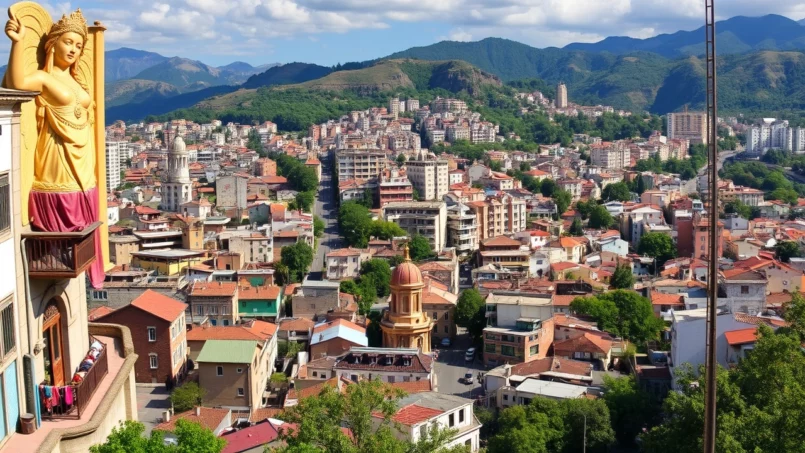
 Published on and written by Cyril Jarnias
Settling in Venezuela is not just about buying a plane ticket and finding a place to live. The country operates on a tight network of agencies—SAIME, SAREN, CNE, SENIAT, INTT, INSAI, ministries—and a series of visas, permits, registrations, and documents that govern the right to stay, work, open a bank account, or enroll children in school. In an unstable economic and political context, mastering these administrative procedures is not a luxury; it is a matter of legal security… and often of practical survival.
To live in Venezuela, it is necessary to anticipate several key administrative procedures, including obtaining a visa, civil status formalities, access to the healthcare system, conditions for driving, opening a bank account, and school enrollment.
Understanding the Legal Framework for Immigration
Before any individual procedure, one must be aware of the general legal architecture. Immigration to Venezuela is governed by the Organic Law of Immigration and Foreigners. This text regulates the entry, stay, and exit of foreign nationals, sets the types of visas and residence permits, and also governs deportation, asylum, and naturalization.
The relevant political authority is the Ministry of Interior, Justice, and Peace. On the ground, the main administrative actor is SAIME (Servicio Administrativo de Identificación, Migración y Extranjería), which manages the issuance of visas, identity cards, passports, and certificates. For a settlement project, one must first contact Venezuelan consulates abroad, then SAIME locally.
Alongside SAIME, other services are involved: SAREN for civil registries and notarial acts, the CNE for the centralization of registries, SENIAT for taxation, INTT for driver’s licenses, and the Ministry of Foreign Affairs for the apostille and legalization of foreign documents.
Choosing and Obtaining the Right Visa to Enter and Stay
Living in Venezuela almost always begins with obtaining a visa. No visa is issued on arrival: everything must be prepared in advance with a Venezuelan embassy or consulate, often located in a third country when local representations are closed.
The Main Visa Categories
The system distinguishes several main families of visas, each with its own constraints and rights:
– Tourist Visa
– Business Visa (TR‑N)
– Student Visa
– Work Visa (TR‑L and variants)
– Investor Visa
– Family Reunification Visas
– Temporary and Permanent Residence Visas
The tourist visa generally allows a stay of 90 days, sometimes renewable once with SAIME, but does not authorize any remunerated activity. To work, study, or invest, specific visas are required, with detailed supporting documents.
For example, the following characteristics are found for the main long-stay visas:
| Visa Type | Typical Initial Duration | Renewable | Right to Work | Key Main Conditions |
|---|---|---|---|---|
| Tourism | 90 days | Yes (90 days) | No | Passport, financial resources, return ticket, accommodation |
| Student | 1 year | Yes | Limited / supervised | Enrollment in an institution, certificate of good conduct |
| Work (TR‑L) | Up to 1 year | Yes | Yes | Employment contract, work permit from the Ministry of Labor |
| Business (TR‑N) | 1 year (max stays 180 days) | Yes | No (visits only) | Invitation letter from a company, criminal record check |
| Investor | 1 year | Yes | Yes | Proof of substantial investment, criminal record check |
| Family Reunification | Variable | Yes | Yes | Proof of family relationship (apostilled certificate), sponsor’s resources |
| Temporary Residence | 1 to 3 years | Yes | Depending on sub-type | Proof of work, studies, family, income, or investment |
Obtaining temporary then permanent residence often goes through an initial phase under a work, investor, retiree, or family visa.
General Conditions for Obtaining a Residence Visa
Regardless of the type of long-term visa targeted (work, investor, family, studies), certain documents are consistently required:
List of essential supporting documents to provide for a complete and valid visa application file.
Valid passport (at least 6 months beyond the intended departure date) and duly completed application form.
Two recent ID photos conforming to official photographic standards.
Certificate of good conduct or criminal record extract from the country of origin and recent countries of residence.
Medical certificate and, depending on the case, proof of valid health insurance.
Proof of financial means: employment contract, bank statements, pensions, employer letter, etc.
Document justifying the purpose of stay: employment contract, university admission letter, apostilled certificate for family reunification, etc.
Processing times are highly variable, from a few weeks to several months depending on the type of visa, consulate workload, and political environment.
Residence Application: From Legal Entry to Residence Card
To apply for residence in Venezuela, the basic rule is to have entered legally, with an appropriate visa, and to be able to demonstrate:
– A stable financial situation (regular income, savings, family or corporate support).
– An address in Venezuela.
– A clean criminal record.
The passport application must be submitted to a SAIME office. For certain specific categories, the application must be made directly through the Ministry of Interior, Justice, and Peace.
Residence applications require in practice:
– Valid passport and visa.
– SAIME form.
– Photos in required format.
– Proof of resources and, if applicable, employment contract or investment.
– Criminal record certificate.
– Medical certificate.
– Health insurance attestation.
– Proof of local address.
– Payment of application fees.
After review and approval, the holder receives a residence card, which is renewable. Some categories (notably the TR-L work visa) open a path to permanent residence after several years of regular renewals.
Registering and Obtaining Your Cédula de Identidad
Once on the ground with legal status, the key document for daily life is the cédula de identidad. Without it, opening a bank account, signing a rental contract, or sometimes even buying a mobile phone becomes complicated.
Role and Characteristics of the Cédula
The cédula de identidad, issued by SAIME, is the national identity card. It is mandatory for citizens and available for foreigners with a temporary migrant (transeunte) or permanent resident visa. For foreigners, the card has a yellow background and bears the inscription “Extranjero”.
This document serves to: define the objectives and expectations related to the project in question.
The identity card is an essential document for many procedures. It notably allows identification with administrations, banks, and many private providers. It is also necessary for travel within the country and, for Venezuelans, in some neighboring countries. Finally, it is indispensable for countless daily procedures like opening a mobile line, school enrollment, or making reservations.
Recent cards (post-2012) incorporate security features (special lamination with SAIME logo, UV-light visible filaments, blacklight seal on the back for the most recent ones).
The validity period depends on the holder’s status:
| Holder’s Status | Cédula Validity Period |
|---|---|
| Temporary Migrant | 1 year |
| Permanent Resident | 5 years |
The official cost of the procedure is expressed in fiscal units (2 U.T.), but in practice, access to the service also depends on the technical constraints of the SAIME system.
Procedure for Obtaining or Renewing
Obtaining or renewing the cédula requires an online appointment on the SAIME website. The system is known to be unstable: frequent outages, limited slots, difficulty finalizing a request. Many residents describe a long, exhausting procedure, and sometimes the intervention of informal intermediaries charging high amounts to speed things up.
For a foreigner, the typically required documents include: a valid passport, a valid visa, proof of financial resources, a health insurance attestation, and sometimes a housing certificate or employment contract.
– Valid passport and residence visa.
– Proof of residence in Venezuela.
– Old cédula (for renewal).
– Civil status document (marriage, divorce) in case of change of situation.
The Organic Law on Identification provides for cases allowing its re-issuance: expiration, loss, theft, deterioration, change in civil status or other identification elements.
Managing Civil Status Documents and Having Them Recognized
Living in Venezuela often involves handling civil status documents – birth, marriage, divorce, death, adoption – issued either by Venezuelan authorities or by the country of origin. In both cases, specific procedures are necessary.
Civil Registries, SAREN and CNE
Births, marriages, and deaths are registered by the Civil Registry of the relevant municipality, or directly by the CNE (Consejo Nacional Electoral), which centralizes the registries. Certified true copies are issued either at the local office or via the SAREN platform.
The mentions “es copia fiel del original” and the officer’s stamp + signature are essential for authenticity. For each type of act, there are rules on deadlines and corrections:
| Document | Legal Declaration Deadline | Obtaining / Correction |
|---|---|---|
| Birth | 90 days (delay accepted) | Civil Registry or CNE, corrections via CNE |
| Civil Marriage | — | Civil Registry or CNE; concubinato possible |
| Death | 48 hours (no delay) | Civil Registry or CNE, automatic removal from voter roll |
| Divorce | — | Civil court judgment, copy via SAREN |
If it is impossible to retrieve a birth certificate, nationals can request from SAIME a “Datos Filiatorios” document, which contains identification information from their databases.
Legalization and Apostille of Foreign Documents
For foreign documents to be admissible by Venezuelan authorities (birth certificate, marriage certificate, criminal record, diplomas, etc.), they must be authenticated. Two paths exist:
The procedure differs depending on whether the document’s country of origin is a signatory to the Hague Convention or not. For member countries, a simple apostille stamp affixed by the competent authority of the country of origin is sufficient and directly recognized by Venezuela. For non-member countries, the document must first be legalized by the national authorities of the country of origin, then by the Venezuelan embassy or consulate.
Once in Venezuela, some documents will still need to be translated into Spanish by a sworn translator, then legalized or apostilled again, depending on the use.
Particularities: Marriages, Concubinato, Adoption
Venezuela only legally recognizes civil marriage (religious marriage has no legal effect). Registered common-law unions, called concubinato, exist and confer certain rights, but not always the full rights of a civil marriage.
In case of separation, only a divorce judgment issued by a civil court of first instance is legally valid. A simple “separation of bodies,” which is a distinct procedure, is not sufficient to legally end a marriage.
For adoption, the law provides for the issuance of a new birth certificate where the adoptive parents appear as biological parents, with no mention of the adoption. Foreigners wishing to adopt must have resided in Venezuela for more than one year.
Passport, Entry and Exit from the Territory
The passport remains the cornerstone of international travel and many administrative procedures. It is issued by SAIME, in the form of a biometric passport with an RFID chip, conforming to Mercosur standards.
Validity, Cost, and Extension
Since 2021, official fees are expressed in dollars or in Tax Reference Units (PTR), making it one of the most expensive passports in the world:
| Passport Type | Indicative Official Cost | Standard Validity |
|---|---|---|
| Adult | 200 USD / 3.6 PTR | 10 years |
| Child 4–17 years | 150 USD / 2.7 PTR | Shorter duration |
| Infant 0–3 years | 1.8 PTR | Even shorter duration |
Faced with difficulties in obtaining (material shortages, administrative delays), a two-year extension mechanism was introduced: a secure sticker is affixed to a blank page, extending validity. This extension is renewable every 24 months, under certain conditions (passport in good condition, at least four blank pages, expiration after 2015).
Number of additional years of validity granted to passports issued before June 25, 2024, by decree of the National Assembly.
Rules for Dual Nationals and Minors
Venezuelan law is strict for dual nationals: any person with Venezuelan nationality must enter and exit the country with a Venezuelan passport, even if they possess another passport.
For minors, exit rules are particularly rigorous: a child traveling alone, with one parent, or with a third party must have notarized travel authorizations, often established via SAREN or a consulate, and duly legalized. Dual-nationality minors can only leave the country accompanied by both parents or with a judicial authorization signed by the absent parent.
Banks, Taxation, and Tax Resident Status
The financial aspect is one of the most sensitive points of settling in Venezuela. The economy has experienced extreme hyperinflation, the currency has been devalued multiple times, and the regulatory framework changes frequently.
Opening a Bank Account: The Cédula as the Key
The Venezuelan banking system includes public and private banks (Banco de Venezuela, Banesco, BBVA Provincial, Bancaribe, etc.), as well as foreign currency accounts. But for a foreigner, opening an account is rarely easy.
Banks generally require: detailed financial information, guarantees, proof of income, and credit history.
List of essential supporting documents to provide, beyond the passport, for various administrative or banking procedures.
Simply presenting a passport is often insufficient; this national identity document is required.
An official document proving your residential address in Venezuela.
The tax identification number issued by SENIAT.
Employment contract, pay slips, or reference letters attesting to your resources.
Bank or commercial reference letters, which may be requested in addition.
Without a cédula, access to banking products is very limited; some foreigners then use accounts outside the country, or even offshore banking solutions, but this does not always replace a local account for daily expenses.
Becoming a Tax Resident: The 183-Day Rule
Regardless of residence status, Venezuelan tax law considers a person a tax resident if:
– They stay more than 183 days in Venezuela during a calendar year (or the previous year), consecutively or not; or
– They have established their home or principal residence there, unless they can prove more than 183 days of presence and tax residence in another country.
A tax resident is taxable on their worldwide income. A non-resident is only taxed on their Venezuelan-source income, at a flat rate of 34%.
Tax residents benefit from a progressive scale based on the Tax Unit (Unidad Tributaria – TU):
| Situation | Tax Base / Scope | Rate or Calculation Mechanism |
|---|---|---|
| Tax Resident | Worldwide income | Progressive scale 6% to 34% |
| Non‑resident | Venezuelan-source income | Flat rate of 34% |
| Mandatory Filing | > 1,000 TU (net) or 1,500 TU (gross) | Filing within the first 3 months of the year |
| Payment Deadline | 3 installments (0, +20, +40 days) | Interest in case of delay |
Tax credits (personal and dependent allowances) and deductions (medical expenses, mortgage interest, rent, school fees, certain local insurances) exist for residents. Taxes paid abroad can, in some cases, be credited as a foreign tax credit to avoid double taxation.
Venezuela has tax treaties with several countries (United Kingdom, Spain, Portugal, Germany, United States, Switzerland, United Arab Emirates, etc.), which specify the applicable rules for dual-status residents.
Working, Studying, Starting a Business
To engage in remunerated activity in Venezuela, a tourist visa is never sufficient. One must have an adequate residence permit and, for salaried employment, a work permit.
Right to Work and TR-L Visa
The main route for a salaried expatriate is the TR-L visa, which relies on:
– An employment contract with a Venezuelan employer.
– A work permit issued by the Ministry of Labor.
– Minimum wage conditions, revised regularly.
This is the minimum percentage of Venezuelan employees an employer must have in Venezuela, as a general rule.
The work visa is generally granted for one year, with the possibility of renewal, and can open the path to permanent residence after several years of continuous stay.
Studying and Enrolling Children in School
The Ministry of People’s Power for Education oversees public and private education. Quality varies greatly from one institution to another, but several international schools exist, notably in Caracas:
– International School of Caracas (ISC), accredited by the Middle States Association.
– Colegio Internacional de Caracas (CIC) and Colegio Bilingüe Internacional de Caracas (CBIC), both accredited by the International Baccalaureate Organization.
– British International School Caracas.
A student visa requires enrollment in a recognized institution, a clean criminal record, and often proof of means of subsistence. The visa duration is aligned with that of the study program, with annual renewal.
For children, families can choose between:
Overview of the main schooling options available for families in Venezuela, each with distinct characteristics and costs.
Free education, but often facing challenges related to lack of material and human resources.
Tuition-based institutions typically offering a national curriculum, often with more stable conditions than the public sector.
Often more expensive options offering recognized foreign programs (such as the International Baccalaureate or national curricula from other countries), facilitating academic mobility.
Enrollment generally requires birth certificates, vaccination records, and sometimes previous report cards, all translated and apostilled according to their country of origin.
Starting a Business and Investing
Investment is governed by the investor visa, which assumes the creation of a local company or the acquisition of a substantial stake. Even though no fixed legal threshold is indicated in the reference texts, authorities expect a concrete demonstration of viability (business plans, injected capital, accounting documentation).
Corporate taxation includes:
– Corporate income tax.
– VAT (standard rate 16%, possible reduced and luxury rates).
– Municipal taxes on economic activities.
– Mandatory contributions to science, technology, and innovation, calculated on turnover.
For a foreign investor, support from a local firm (lawyer, accountant) is almost indispensable, notably to articulate obligations in Venezuela with those of the country of residence.
Health, Insurance, and Access to Care
Venezuela has no reciprocity agreements in health matters with most Western countries. Public systems are described as very fragile, with chronic shortages of medicines and equipment, while private clinics, better equipped, remain exposed to stockouts and require cash payments.
For an expatriate, it is therefore essential to:
Subscribe to an international health insurance policy covering Venezuela, which may include medical repatriation, as direct evacuations to some countries are sometimes impossible. Also plan for cash reserves to cover emergency care. Finally, consult your primary physician before departure to anticipate long-term treatments, as some medications, especially for chronic illnesses, may be unavailable locally or prohibited for import.
The national emergency number is 911, but ambulance services, especially in rural areas, are known to be unreliable. Urban medical infrastructure varies greatly between facilities.
Driving, Importing a Vehicle, Respecting Traffic Laws
Driving in Venezuela involves complying with rules set by the INTT (Instituto Nacional de Transporte Terrestre). A foreign license is valid for a limited time, after which a Venezuelan license is required.
For a holder of a European driver’s license, it is generally accepted for one year from arrival. After this period, obtaining a local license is essential. This procedure requires having legal residence and a cédula, and following INTT procedures, which include tests and medical exams.
Drivers must carry at all times:
– Valid driver’s license.
– Vehicle document.
– Mandatory auto insurance.
– Passport and, if applicable, residence permit.
Holders of disabled parking badges issued abroad (e.g., the British “Blue Badge”) must return them to the issuing authority once permanently settled in Venezuela, as these devices have no local validity.
Property, Housing, and Daily Life
Legally, foreigners can buy and own real estate in Venezuela, in principle without restrictions on ownership. Property taxes are calculated by municipalities based on the cadastral value of the property.
Daily life involves significant maintenance costs (gardens, pest control, air conditioning, repairs, renovations). Furthermore, some essential services like water or electricity can be difficult to obtain due to shortages or outages.
Payments in foreign currency have become common, even if the exact legal framework may change. International transfers are, however, highly regulated and often reserved for citizens and residents, reinforcing the importance of a properly declared local account.
Social Benefits, Pensions, and International Taxation
Expatriates from countries with generous social security systems must precisely verify the rules for exporting benefits. The United Kingdom, for example, does not pay certain means-tested benefits (Pension Credit, Housing Benefit…) beyond four weeks abroad. The payment of the British state pension to Venezuela also requires an international bank account, as local banks cannot always receive foreign funds.
Venezuela and the United Kingdom are bound by a tax treaty aimed at avoiding double taxation. This agreement allows taxpayers (individuals and legal entities) not to pay tax on the same income in both countries. To benefit from it in practice, it is essential to refer to the specific provisions of the treaty and declare income in accordance with its rules.
– Check in each country the declaration obligations (including for foreign bank accounts).
– Obtain, if necessary, a certificate of tax residence to invoke the treaty provisions.
– Consult a local tax specialist, as national regulations evolve rapidly.
Family, Civil Status, and Sensitive Situations
Beyond standard civil status, family life in Venezuela raises other administrative questions: birth, death, marriage, pet import, emergency situations.
Births must be declared to the Venezuelan civil registry within 90 days, and deaths within 48 hours, with no possibility of late registration. For foreign nationals, it is often necessary to subsequently register these events with the authorities of their country of origin (e.g., via a consulate), which may require apostille and translation of the Venezuelan certificates.
Deaths abroad, sexual violence, or parental abductions are governed by specific procedures, often described in travel advisories of third countries, with dedicated contacts (consular assistance sections, international organizations, NGOs).
For pets, one must refer to INSAI (Instituto Nacional de Salud Agrícola Integral), which sets the rules for import, required veterinary certificates, and possible quarantine periods.
Asylum, Refugees, and International Protection
Venezuela, a signatory to the 1951 Refugee Convention and its 1967 Protocol, has an asylum and refugee status system managed by CONARE (National Commission for Refugees). While it is not common for a Western expatriate to seek asylum in Venezuela, it is useful to know that:
To obtain refugee status, one must prove a well-founded fear of persecution related to race, religion, nationality, membership of a particular social group, or political opinion. The application can include family members. Once recognized, refugees benefit from protections similar to those of citizens, including access to work, education, and certain social services, in accordance with international law.
The procedure is long, with no fixed timeline, and its outcome is not guaranteed; the assistance of a lawyer or specialized NGO is highly recommended.
Naturalization and Access to Citizenship
Some people over time establish lasting ties with the country and consider naturalization. Three main paths exist:
– By residence (generally, 10 years of continuous legal residence).
– By marriage (5 years of marriage to a Venezuelan and continuous residence).
– By specific agreements for nationals of Latin American countries and Spain, which can reduce the minimum residence period to about 5 years.
The procedure involves: analyzing needs, planning steps, carrying out actions, and evaluating results.
– A complete file with SAIME: passport, residence permit, birth certificate, criminal record, proof of means of subsistence, family documents.
– An assessment of Spanish language level and basic knowledge of Venezuelan history, geography, and civics.
– An oath of allegiance and the issuance of a naturalization certificate upon acceptance.
Venezuela tolerates, under certain conditions, dual citizenship. The naturalized citizen can retain their original nationality, subject to the legislation of their country and bilateral agreements. However, in the case of dual citizenship, the use of the Venezuelan passport remains mandatory for entry and exit from the territory.
All the described procedures rely on often overloaded systems, sometimes technically unstable, in a tense security environment. A few constants emerge:
Always verify information with the most recent official sources (SAIME, SAREN, etc.) and anticipate deadlines for renewals well in advance. Prepare multiple certified, apostilled, and translated copies of sensitive documents. Be wary of intermediaries promising illegal shortcuts and consider legal or accounting support for complex cases.
Living in Venezuela, administratively speaking, amounts to maintaining a permanent dialogue with institutions – SAIME, SAREN, CNE, SENIAT, INTT, INSAI, sectoral ministries. It is a constraint, but also the price to pay to secure one’s stay and enjoy, as much as possible, a clear legal framework in a country where the unexpected is part of daily life.
Disclaimer: The information provided on this website is for informational purposes only and does not constitute financial, legal, or professional advice. We encourage you to consult qualified experts before making any investment, real estate, or expatriation decisions. Although we strive to maintain up-to-date and accurate information, we do not guarantee the completeness, accuracy, or timeliness of the proposed content. As investment and expatriation involve risks, we disclaim any liability for potential losses or damages arising from the use of this site. Your use of this site confirms your acceptance of these terms and your understanding of the associated risks.

Cyril Jarnias is an independent expert in international wealth management with over 20 years of experience. As an expatriate himself, he is dedicated to helping individuals and business leaders build, protect, and pass on their wealth with complete peace of mind.
On his website, cyriljarnias.com, he shares his expertise on international real estate, offshore company formation, and expatriation.
Thanks to his expertise, he offers sound advice to optimize his clients' wealth management. Cyril Jarnias is also recognized for his appearances in many prestigious media outlets such as BFM Business, les Français de l’étranger, Le Figaro, Les Echos, and Mieux vivre votre argent, where he shares his knowledge and know-how in wealth management.





