
 Published on and written by Cyril Jarnias
Moving to Vanuatu, this enchanting archipelago in the South Pacific, is an adventure that many aspiring expats dream of. With its white sand beaches, crystal-clear waters, and unique Melanesian culture, Vanuatu offers an idyllic lifestyle for those looking to escape the stress of modern life. However, like any expat destination, Vanuatu has its own set of advantages and challenges. Let’s take a closer look at what it really means to live as an expat in this small tropical paradise.
A Tax Haven in the Heart of the Pacific
One of the main draws of Vanuatu for expats is undoubtedly its advantageous tax system. Indeed, this small island nation stands out for its particularly favorable tax policy, making it a true tax haven in the heart of the Pacific.
Vanuatu levies no income tax, whether for individuals or businesses. This feature is extremely rare on a global scale and represents a significant advantage for expats, especially those with high incomes or who run their own business. Imagine being able to keep all of your earnings without worrying about complex tax returns or payroll deductions!
Furthermore, Vanuatu also does not impose taxes on capital gains, estates, or inheritance. This complete absence of wealth tax allows expats to manage and pass on their assets freely, without fear of heavy tax burdens. For investors and entrepreneurs, this represents a unique opportunity to grow their capital without tax constraints.
Vanuatu’s tax system relies primarily on indirect taxes, such as VAT (set at 15%) and customs duties. These taxes, while present, remain relatively moderate compared to many other countries, helping to keep the cost of living affordable for expats.
Another attractive aspect of Vanuatu’s tax system is the possibility of obtaining citizenship by investment. For a minimum investment of $130,000 USD for an individual (with higher amounts for families), it is possible to acquire a Vanuatu passport. This program not only offers a fast track to citizenship but also access to all the tax benefits mentioned above.
It is important to note that to fully benefit from these tax advantages, expats must be considered tax residents of Vanuatu. Currently, spending at least 180 days per year in the country is sufficient to obtain this status. However, discussions are underway to potentially reduce this period to 30 days by 2025, which would make tax residency even more flexible and attractive for expats.
Good to know:
Vanuatu offers an extremely favorable tax environment for expats with a complete absence of income tax, capital gains tax, and inheritance tax. The possibility of obtaining citizenship by investment and flexible tax residency conditions enhance the appeal of this Pacific tax haven.
A Developing Economy: Opportunities and Challenges
Vanuatu’s economy, though modest in size, has unique characteristics that can be both a source of opportunities and challenges for expats.
The tourism sector is the main driver of Vanuatu’s economy, accounting for a significant share of GDP and employment. This predominance of tourism offers many opportunities for expat entrepreneurs in areas such as hospitality, restaurants, leisure, or tourist services. The archipelago’s natural beauty and its growing reputation as an exotic travel destination ensure a steady flow of visitors, creating a dynamic market for tourism-related businesses.
Agriculture and fishing are also important sectors of the local economy. Vanuatu is renowned for its quality agricultural products, including beef, cocoa, and vanilla. For expats with expertise in these areas or an interest in agribusiness, there are opportunities to develop export or local product processing businesses.
However, Vanuatu’s economy faces several challenges that can impact expats’ lives:
- An excessive reliance on tourism makes the economy vulnerable to external shocks, as demonstrated by the recent COVID-19 pandemic.
- Infrastructure, while steadily improving, remains limited in some areas, which can complicate running a business or daily life.
- The local job market is relatively small, which can make it difficult for expats who are not starting their own business to find salaried employment.
Despite these challenges, the Vanuatu government has implemented policies aimed at attracting foreign investment and diversifying the economy. The country offers attractive tax incentives for foreign businesses, particularly in priority sectors such as information technology, renewable energy, and light manufacturing. These initiatives create new opportunities for expat entrepreneurs or investors.
It is also important to note that Vanuatu enjoys relative political stability and a business-friendly environment. The country consistently ranks among the top destinations for ease of doing business in the Pacific region. This stability, combined with a favorable regulatory framework, provides fertile ground for expats to develop businesses.
Good to know:
Vanuatu’s economy, though dominated by tourism, offers interesting opportunities for expat entrepreneurs, particularly in tourism, agriculture, and new technologies. Despite some challenges related to infrastructure and market size, the country presents a favorable business environment and attractive policies for foreign investors.
Cultural Immersion: Between Tradition and Modernity
Moving to Vanuatu means diving into a world where Melanesian tradition meets Western modernity, creating a unique and enriching cultural experience for expats.
Vanuatu’s culture is deeply rooted in Melanesian traditions, with a strong emphasis on community, respect for elders, and connection with nature. This cultural richness is expressed through numerous customs, festivals, and ceremonies that mark daily life. For expats, this is an exceptional opportunity to discover and immerse themselves in an authentic and preserved culture, far from the globalizing influences found in many other expat destinations.
One of the most fascinating aspects of Vanuatu’s culture is the concept of “kastom,” a system of traditional beliefs and practices that guides many aspects of social and personal life. Expats who take the time to understand and respect these local traditions will generally find a warm welcome and easier integration into the local community.
However, this cultural immersion can also present challenges for expats:
- The language barrier can be significant. Although English and French are official languages, Bislama (a local creole) is widely used in daily life.
- Lifestyles and concepts of time can differ considerably from those in Western cultures, requiring greater adaptation and patience.
- Some traditional practices or beliefs may seem strange or difficult for newcomers to understand.
Despite these challenges, many expats find the cultural immersion experience in Vanuatu deeply enriching and transformative. It offers the opportunity to question one’s own cultural assumptions, broaden perspectives, and develop a deeper understanding of alternative ways of life.
It is important to note that Vanuatu, while attached to its traditions, is not stuck in the past. The main towns, like Port Vila, offer an interesting mix of modernity and tradition. You’ll find modern infrastructure, international restaurants, and an active expat community, which can help ease the initial culture shock for newcomers.
To facilitate their integration, expats can participate in local cultural events, learn the basics of Bislama, and get involved in community projects. These efforts are generally highly appreciated by the local population and can greatly ease the adjustment to life in Vanuatu.
Good to know:
Cultural immersion in Vanuatu offers a unique experience blending Melanesian traditions with modern influences. While some aspects may present adaptation challenges, this cultural richness is often seen as one of the most rewarding aspects of expatriation in this country. An open and respectful approach to local traditions greatly facilitates integration.
Quality of Life: Between Tropical Paradise and Practical Realities
The quality of life in Vanuatu is often described as idyllic, with its white sand beaches, turquoise waters, and tropical climate. However, the daily reality for expats includes both significant advantages and practical challenges to consider.
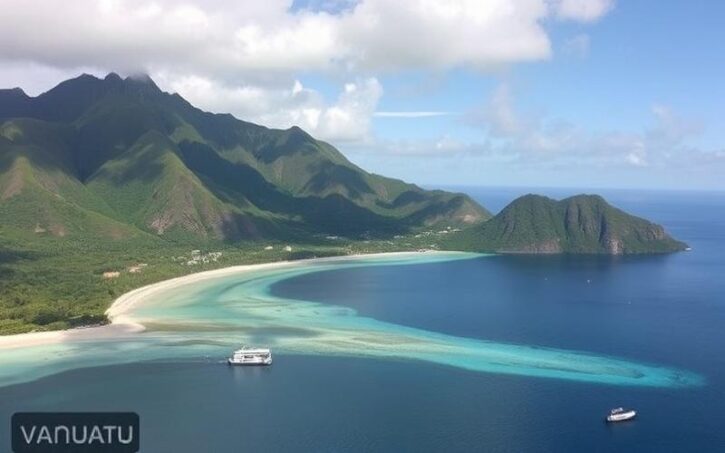
One of the main assets of life in Vanuatu is undoubtedly its exceptional natural environment. The archipelago offers breathtaking landscapes, pristine beaches, active volcanoes, and extraordinary marine biodiversity. For nature lovers and outdoor enthusiasts, it is a true paradise. The ability to go diving, snorkeling, hiking, or simply relax on deserted beaches is an integral part of the quality of life in Vanuatu.
Vanuatu’s tropical climate, with average temperatures ranging from 20°C to 30°C year-round, is another attractive factor for many expats. This climate allows for an outdoor lifestyle almost all year, although the rainy season (November to April) can bring its share of humidity and precipitation.
The cost of living in Vanuatu is generally considered moderate, especially compared to other paradise destinations. Local products, especially fresh fruits and vegetables, are affordable. However, imported goods can be significantly more expensive due to shipping costs. Housing, particularly in the capital Port Vila, can represent a significant portion of expats’ budgets, although prices are generally lower than in major Western cities.
Here are some practical aspects of daily life in Vanuatu that can influence expats’ quality of life:
- Healthcare: While basic healthcare is available, medical infrastructure is limited for complex cases. Many expats opt for international health insurance including medical evacuation.
- Education: Educational options for expat children are limited, with a few international schools mainly in Port Vila.
- Transportation: Road infrastructure is developing but can be rudimentary in some areas. Travel between islands is mainly by plane or boat.
- Connectivity: Internet access has improved significantly in recent years but can still be slow or unstable in some areas.
Despite these practical challenges, many expats report a significant improvement in their quality of life after settling in Vanuatu. The slower pace of life, proximity to nature, and simplicity of daily life are often cited as factors contributing to reduced stress and a better work-life balance.
It is important to note that Vanuatu is located in an area prone to tropical cyclones, which can occasionally disrupt daily life. However, the country has well-established warning systems and emergency plans to deal with these weather events.
Good to know:
The quality of life in Vanuatu is characterized by an exceptional natural environment, a pleasant climate, and a moderate cost of living. While some practical aspects like healthcare or education may have limitations, many expats appreciate the slower pace of life and connection with nature that this tropical paradise offers.
Personal Impact: Growth and Challenges of Island Life
Moving to Vanuatu can have a profound impact on personal development and well-being. This unique experience offers significant growth opportunities while presenting challenges that can transform expats’ life perspectives.
One of the most striking aspects of life in Vanuatu is the opportunity to slow down and reassess priorities. Far from the frantic pace of large Western cities, expats often find a new sense of balance and simplicity. This deceleration can lead to a significant reduction in stress and an overall improvement in mental and physical health. Many expats report a greater appreciation for the present moment and a deeper connection with their environment.
Island life in Vanuatu also encourages the development of new skills and interests. Whether it’s learning to scuba dive, discovering tropical agriculture, or exploring Melanesian culture, opportunities for personal enrichment are plentiful. This diversity of experiences can stimulate creativity and open up new professional and personal perspectives.
Immersion in a different culture fosters the development of empathy and open-mindedness. Expats in Vanuatu are constantly exposed to different lifestyles and values, which can lead to questioning their own cultural assumptions. This intercultural experience can be deeply transformative, fostering a more nuanced understanding of the world and greater adaptability.
However, life in Vanuatu also presents challenges that can significantly impact personal well-being:
- Isolation: Geographic remoteness and limitations in connectivity can create a feeling of isolation, especially for those used to an active social life.
- Cultural adaptation: Adjusting to a different pace of life and new cultural norms can be stressful and take time.
- Career limitations: Career opportunities can be limited, which can be frustrating for some expats used to rapid career progression.
- Lack of certain comforts: Limited access to certain products or services considered standard in Western countries can be a source of frustration.
Despite these challenges, many expats find the experience of living in Vanuatu deeply rewarding and transformative. It offers the opportunity to develop increased resilience, greater self-reliance, and a deeper appreciation for the simple things in life. The need to adapt to a new and sometimes challenging environment can lead to significant personal growth and the discovery of unsuspected inner strengths.
It is important to note that the impact of expatriation in Vanuatu varies greatly from person to person. Some thrive in this island environment, while others may find adaptation more difficult. Adequate mental preparation, an open mind, and a willingness to fully engage in this new experience are key factors in making the most of life in Vanuatu.
Good to know:
Expatriation in Vanuatu can have a profound impact on personal development, offering significant growth opportunities while presenting unique challenges. This experience often fosters a reassessment of life priorities, the development of new skills, and greater open-mindedness. While some aspects can be difficult, many expats find this experience transformative and personally rewarding.
Conclusion: Vanuatu, a Unique Expat Destination
Moving to Vanuatu represents a unique opportunity to live an extraordinary experience, combining significant advantages with stimulating challenges. This small Pacific paradise offers an exceptional lifestyle for those seeking to escape the frantic pace of modern life and reconnect with nature.
The considerable tax advantages, combined with a relatively moderate cost of living, make Vanuatu an attractive destination for entrepreneurs and retirees. Immersion in a rich and preserved culture, as well as the opportunity to live in a natural environment of incomparable beauty, are major assets that appeal to many expats.
However, it is crucial to consider the practical challenges such as limitations in infrastructure, healthcare, and education. Adapting to an island lifestyle and a different culture can also represent a significant challenge for some.
Ultimately, expatriation in Vanuatu is an adventure that requires careful preparation, an open mind, and adaptability. For those ready to fully embrace this experience, Vanuatu offers the possibility of living a simpler life, more connected to nature, and potentially more fulfilling.
Whether you are drawn by the tax benefits, natural beauty, cultural immersion, or simply the desire for a unique experience, Vanuatu has much to offer. As with any expatriation decision, it is essential to carefully weigh the pros and cons based on your personal and professional goals.
Disclaimer: The information provided on this website is for informational purposes only and does not constitute financial, legal, or professional advice. We encourage you to consult qualified experts before making any investment, real estate, or expatriation decisions. Although we strive to maintain up-to-date and accurate information, we do not guarantee the completeness, accuracy, or timeliness of the proposed content. As investment and expatriation involve risks, we disclaim any liability for potential losses or damages arising from the use of this site. Your use of this site confirms your acceptance of these terms and your understanding of the associated risks.

Cyril Jarnias is an independent expert in international wealth management with over 20 years of experience. As an expatriate himself, he is dedicated to helping individuals and business leaders build, protect, and pass on their wealth with complete peace of mind.
On his website, cyriljarnias.com, he shares his expertise on international real estate, offshore company formation, and expatriation.
Thanks to his expertise, he offers sound advice to optimize his clients' wealth management. Cyril Jarnias is also recognized for his appearances in many prestigious media outlets such as BFM Business, les Français de l’étranger, Le Figaro, Les Echos, and Mieux vivre votre argent, where he shares his knowledge and know-how in wealth management.





