
 Published on and written by Cyril Jarnias
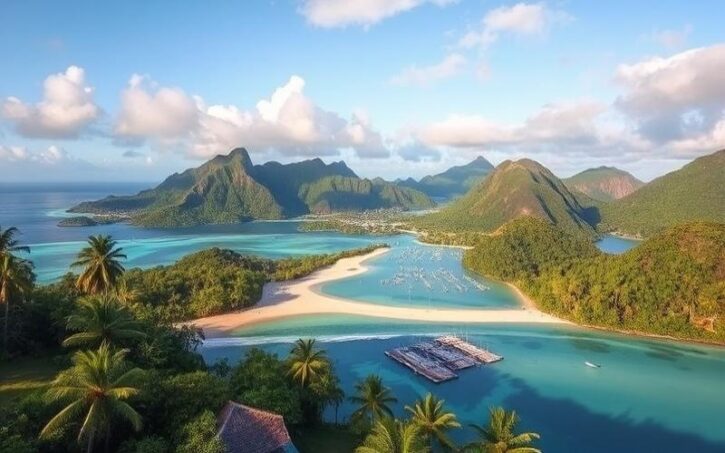
Vanuatu, an enchanting island nation nestled in the heart of the South Pacific Ocean, offers a unique and diverse geography that is sure to captivate nature lovers and adventurers seeking a change of scenery. This Melanesian archipelago, composed of 83 volcanic islands, stretches nearly 1,300 kilometers from north to south, forming a true tropical jewel with breathtaking landscapes. In this article, we invite you to explore in detail the geography of this fascinating country, presenting its location, main regions, major cities, and neighboring countries.
Where is Vanuatu Located? A Tropical Paradise in the Heart of the South Pacific
Vanuatu is located in the South Pacific Ocean, approximately 1,750 kilometers east of Australia and roughly the same distance northeast of New Caledonia. This archipelago stretches between latitudes 13° and 21° south and longitudes 166° and 171° east, placing it in an ideal tropical zone for those seeking warm, sunny weather year-round.
The Vanuatu archipelago is part of the Melanesia geographic region, which also includes other island nations such as the Solomon Islands, New Caledonia, Fiji, and Papua New Guinea. This strategic location places Vanuatu at the crossroads of Melanesian, Polynesian, and Australasian cultural influences, making it a unique place where ancient traditions harmoniously coexist with modernity.
Vanuatu’s geographic position also gives it an important role in the region’s environmental and climate issues. Indeed, the archipelago is located on the Pacific Ring of Fire, an area characterized by intense seismic and volcanic activity. This geological peculiarity has shaped the country’s spectacular landscapes, with its active volcanoes, hot springs, and unique rock formations, but also exposes Vanuatu to natural hazards such as earthquakes and volcanic eruptions.
Good to know:
Vanuatu is a tropical archipelago located in the South Pacific Ocean, about 1,750 km east of Australia. Its position on the Pacific Ring of Fire gives it spectacular volcanic landscapes but also exposes it to natural hazards.
Port Vila: The Largest City and Dynamic Capital of Vanuatu
Port Vila, located on the island of Efate, is the largest city and capital of Vanuatu. With a population of approximately 51,000, this coastal city embodies the beating heart of the archipelago, harmoniously blending modernity with Melanesian traditions. Port Vila is not only the administrative and political center of the country but also its main economic and tourism hub.
The city stretches along a beautiful natural bay, offering an idyllic setting for visitors and residents alike. Its deep-water port, one of the most important in the region, plays a crucial role in the country’s economy by facilitating trade and the arrival of cruise ships. Port Vila’s waterfront is particularly lively, with its many restaurants, bars, and shops that attract both locals and tourists.
Port Vila also houses Vanuatu’s main government institutions, as well as numerous foreign embassies. The city is equipped with modern infrastructure, including Bauerfield International Airport, which provides air links to Australia, New Zealand, and other regional destinations. Despite its urban development, Port Vila has managed to preserve its tropical charm, with its lush gardens, white sand beaches, and colorful markets where you can discover local flavors and traditional crafts.
The capital of Vanuatu is also an important cultural center, where Melanesian, European, and Asian influences blend. It is home to several museums, including the National Museum of Vanuatu, which offers a fascinating glimpse into the country’s history and culture. Visitors can also enjoy the many water activities offered in the bay, such as scuba diving, snorkeling, or boat excursions to neighboring islands.
Good to know:
Port Vila, located on the island of Efate, is the largest city and capital of Vanuatu. With about 51,000 inhabitants, it is the economic, political, and tourism center of the country, offering a unique blend of modernity and Melanesian traditions.
The Main Regions of Vanuatu: A Multi-Faceted Archipelago
Vanuatu is divided into six administrative provinces, each grouping several islands and presenting unique geographic and cultural characteristics. These provinces offer a diversity of landscapes and experiences, ranging from white sand beaches to active volcanoes and lush tropical forests.
1. Torba
The province of Torba is the northernmost of Vanuatu. It includes the Banks Islands and the Torres Islands, known for their pristine beaches and preserved coral reefs. This relatively isolated region offers an authentic experience of traditional island life. Gaua Island, with its crater lake and spectacular waterfalls, is one of the natural gems of this province.
2. Sanma
Sanma encompasses the largest island of Vanuatu, Espiritu Santo, as well as Malo Island. This province is renowned for its white sand beaches, world-class diving sites, and dense tropical forests. The city of Luganville, the second-largest urban area in the country, is located in this province and serves as an important economic and tourism center.
3. Penama
The province of Penama includes the islands of Pentecost, Ambae, and Maewo. This region is famous for the land diving ritual, a spectacular ceremony practiced on Pentecost Island. Ambae Island, meanwhile, is home to an active volcano that recently required the temporary evacuation of its population.
4. Malampa
Malampa groups together the islands of Malekula, Ambrym, and Paama. This province is known for its cultural diversity, with many languages and traditional customs still thriving. Ambrym Island, with its two active volcanoes, offers fascinating lunar landscapes and attracts hiking and geology enthusiasts.
5. Shefa
The province of Shefa includes Efate Island, where the capital Port Vila is located, as well as the Shepherd Islands. This region is the economic and tourism heart of Vanuatu, offering a combination of paradise beaches, water activities, and cultural sites. The less developed Shepherd Islands provide a more authentic experience of island life.
6. Tafea
Tafea is the southernmost province of Vanuatu, comprising the islands of Tanna, Aniwa, Futuna, Erromango, and Aneityum. Tanna Island is particularly famous for its active volcano, Mount Yasur, which is easily accessible and offers an impressive natural pyrotechnic display. This province is also known for its traditional communities that have preserved their ancestral way of life.
Each of these provinces offers a unique experience, reflecting the geographic and cultural diversity of Vanuatu. From white sand beaches to active volcanoes, and lush tropical forests, Vanuatu presents a mosaic of landscapes that is sure to delight visitors seeking adventure and a change of scenery.
Good to know:
Vanuatu is divided into six administrative provinces: Torba, Sanma, Penama, Malampa, Shefa, and Tafea. Each province offers unique landscapes, ranging from paradise beaches to active volcanoes, reflecting the geographic and cultural diversity of the archipelago.
The Main Cities of Vanuatu: Urban Centers Between Tradition and Modernity
Although Vanuatu is primarily composed of small island communities, the country has several important urban centers that play a crucial role in its economic, social, and cultural development. These cities, while being hubs of modernity, have managed to preserve their tropical charm and Melanesian traditions.
Port Vila: The Cosmopolitan Capital
As mentioned earlier, Port Vila is the largest city and capital of Vanuatu. Located on Efate Island, it concentrates the majority of the country’s economic, administrative, and tourism activities. Port Vila is a cultural melting pot where ni-Vanuatu, expatriates, and tourists from around the world come together. The city offers modern infrastructure with luxury hotels, diverse restaurants, shopping centers, and colorful traditional markets. Its deep-water port and international airport make it the country’s main gateway.
Luganville: The Second Urban Hub
Luganville, located on the island of Espiritu Santo, is the second-largest city in Vanuatu. With a population of about 16,000, it plays an important role in the economy of Sanma Province. Luganville is known for its rich historical past, having served as a US military base during World War II. Today, the city is an important center for tourism, particularly thanks to its renowned diving sites and beautiful beaches.
Norsup: Regional Center of Malekula
Norsup is the main town on Malekula Island in Malampa Province. Although smaller than Port Vila or Luganville, it plays a crucial role as an administrative and economic center for the island. Norsup is an ideal starting point for exploring the rich traditional culture of Malekula, known for its customary dances and handicrafts.
Isangel: The Gateway to Tanna
Isangel is the administrative center of Tafea Province and the main town on Tanna Island. Although relatively small, Isangel is an important transit point for visitors wishing to explore Tanna’s attractions, including the famous Yasur volcano. The town has basic infrastructure and serves as a hub for government services and local businesses.
Saratamata: Administrative Center of Penama
Saratamata, located on Ambae Island, is the capital of Penama Province. This small town plays an important role in local administration and serves as a connection point for the surrounding islands. Despite its modest size, Saratamata is a crucial center for health and education services in the region.
These cities, although of different sizes, share certain common characteristics. They all serve as administrative, economic, and social centers for their respective regions, while maintaining a strong connection to local culture and traditions. Most of these urban centers are located on the coast, reflecting the importance of the sea in daily life and the economy of Vanuatu.
It is important to note that the concept of “city” in Vanuatu differs considerably from that in Western countries. Even the largest urban centers maintain a relaxed atmosphere and a slower pace of life, typical of the Pacific islands. This unique ambiance, blending modernity and traditions, is part of the particular charm of Vanuatu’s cities.
Good to know:
The main cities of Vanuatu include Port Vila (the capital), Luganville, Norsup, Isangel, and Saratamata. These urban centers, though modest in size, play a crucial role in the administration and economy of their respective regions, while maintaining a strong connection to local culture.
The Neighboring Countries of Vanuatu: An Archipelago in the Heart of the South Pacific
Vanuatu, although isolated in the middle of the Pacific Ocean, is surrounded by several island nations and continental countries that play an important role in its diplomatic, economic, and cultural relations. Understanding Vanuatu’s geographic position relative to its neighbors is essential to grasping its role in the South Pacific region.
New Caledonia: The Closest Neighbor
New Caledonia, a French overseas collectivity, is Vanuatu’s closest neighbor, located about 540 kilometers to the southwest. The two territories share a common history, with Vanuatu having been under joint Franco-British administration until its independence in 1980. This geographic and historical proximity translates into significant cultural and economic exchanges. Many ni-Vanuatu travel to New Caledonia for medical or educational reasons, while Caledonians often visit Vanuatu for tourism.
The Solomon Islands: A Melanesian Neighbor
The Solomon Islands lie about 170 kilometers north of Vanuatu. These two Melanesian nations share many cultural and linguistic similarities. Exchanges between Vanuatu and the Solomon Islands are frequent, particularly in the context of regional cooperation and Melanesian cultural events.
Fiji: An Important Regional Partner
Although farther away, Fiji plays an important role in the region. Located about 800 kilometers east of Vanuatu, Fiji is a major regional hub for air transport and trade. The two countries maintain close diplomatic and economic relations and often collaborate on regional issues within organizations such as the Pacific Islands Forum.
Australia: A Major Player in the Region
Australia, although not directly bordering, is an influential neighbor for Vanuatu. Located about 1,750 kilometers to the southwest, Australia is a crucial economic and diplomatic partner for Vanuatu. It is one of the main sources of development aid and tourism for the archipelago. Many ni-Vanuatu also work in Australia under seasonal work programs.
New Zealand: A Distant but Important Partner
New Zealand, located about 2,000 kilometers southeast of Vanuatu, is another important player in the region. Like Australia, it provides significant development aid to Vanuatu and is an important source of tourists. The two countries collaborate closely on regional issues, particularly regarding climate change and maritime security.
Papua New Guinea: A Distant Melanesian Neighbor
Although farther away, Papua New Guinea is considered a neighboring country of Vanuatu in the Melanesian context. The two nations share cultural ties and collaborate within the Melanesian Spearhead Group, a sub-regional organization aimed at promoting cooperation among Melanesian countries.
Vanuatu’s geographic position, in the heart of the South Pacific, gives it a unique role in the region. The archipelago is at the crossroads of Melanesian, Polynesian, and Australasian influences, which is reflected in its diverse culture and international relations. This geographic situation presents both challenges and opportunities for Vanuatu, particularly in terms of economic development, natural disaster management, and climate change adaptation.
Vanuatu’s relations with its neighbors are essential for its development and security. The archipelago actively participates in various regional organizations, such as the Pacific Islands Forum and the Melanesian Spearhead Group, which allow it to make its voice heard on the international stage and collaborate with its neighbors on common issues.
Good to know:
Vanuatu’s main neighboring countries are New Caledonia, the Solomon Islands, Fiji, Australia, and New Zealand. Although geographically isolated, Vanuatu maintains important diplomatic, economic, and cultural relations with these nations, playing an active role in South Pacific regional cooperation.
Conclusion: Vanuatu, a Unique Archipelago in the Heart of the Pacific
The geography of Vanuatu, with its 83 volcanic islands scattered over more than 1,300 kilometers in the South Pacific Ocean, offers a diversity of unique landscapes and experiences. From its white sand beaches to its active volcanoes, and its lush tropical forests, Vanuatu is a true paradise for nature lovers and adventurers.
The capital Port Vila, located on Efate Island, embodies the dynamism and modernity of the country, while preserving its tropical charm and Melanesian traditions. Vanuatu’s six provinces, each with its own geographic and cultural particularities, offer a mosaic of experiences ranging from the authenticity of traditional communities to the most developed tourist sites.
Vanuatu’s strategic position, in the heart of the South Pacific, gives it an important role in the region. Surrounded by island nations like New Caledonia, the Solomon Islands, and Fiji, as well as continental countries like Australia and New Zealand, Vanuatu is at the crossroads of Melanesian, Polynesian, and Australasian influences.
This unique geography presents both opportunities and challenges for Vanuatu. While the beauty of its landscapes and the richness of its culture make it a prime tourist destination, the country must also face natural hazards related to its position on the Pacific Ring of Fire and the challenges of climate change.
By exploring the geography of Vanuatu, one discovers much more than a simple tropical archipelago. One delves into a world where nature, history, and culture intertwine to create a truly unique destination. Whether you are drawn to its paradise beaches, its impressive volcanoes, or its vibrant Melanesian culture, Vanuatu offers an unforgettable experience in the heart of the South Pacific.
Disclaimer: The information provided on this website is for informational purposes only and does not constitute financial, legal, or professional advice. We encourage you to consult qualified experts before making any investment, real estate, or expatriation decisions. Although we strive to maintain up-to-date and accurate information, we do not guarantee the completeness, accuracy, or timeliness of the proposed content. As investment and expatriation involve risks, we disclaim any liability for potential losses or damages arising from the use of this site. Your use of this site confirms your acceptance of these terms and your understanding of the associated risks.

Cyril Jarnias is an independent expert in international wealth management with over 20 years of experience. As an expatriate himself, he is dedicated to helping individuals and business leaders build, protect, and pass on their wealth with complete peace of mind.
On his website, cyriljarnias.com, he shares his expertise on international real estate, offshore company formation, and expatriation.
Thanks to his expertise, he offers sound advice to optimize his clients' wealth management. Cyril Jarnias is also recognized for his appearances in many prestigious media outlets such as BFM Business, les Français de l’étranger, Le Figaro, Les Echos, and Mieux vivre votre argent, where he shares his knowledge and know-how in wealth management.





