
 Published on and written by Cyril Jarnias
Artist Villages in Andorra: Between Culture and Profitability
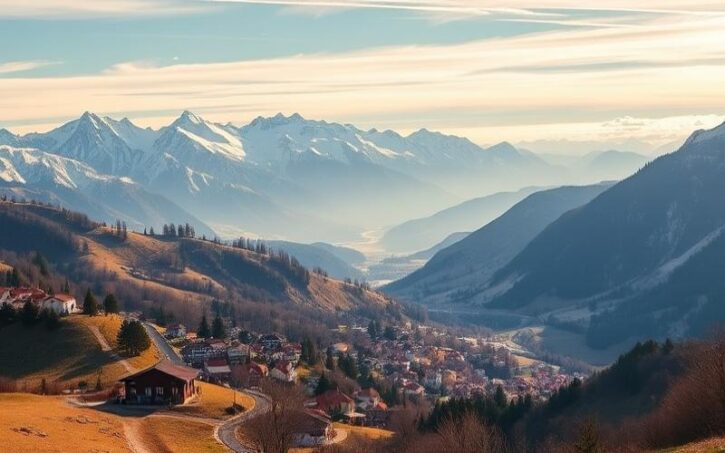
Nestled in the heart of Andorra’s majestic Pyrenean landscapes, artist villages offer an enchanting setting that blends creativity and tradition, attracting both painters, sculptors, and art enthusiasts seeking inspiration.
However, behind this idyllic appearance lies a crucial question: are these artistic enclaves a meaningful investment for local culture or simply an opportunity for economic profitability?
By examining the evolution of these villages, their impact on the community, and the challenges they face, this article explores the duality between preserving artistic heritage and pursuing lucrative development, while highlighting the captivating stories of the people who bring them to life.
Good to Know:
Artist villages in Andorra are often located in historic sites, offering a unique immersion between art and heritage.
Artist Villages in Andorra: An Overview
Andorra, nestled in the heart of the Pyrenees, has distinguished itself through the emergence of artist villages that embody a cultural renewal in a region long marked by rural traditions and industrial history. These villages originated from the desire to preserve heritage while fostering modern artistic dynamics. The evolution of Andorran artist villages is linked to the territory’s gradual transformation: the abandonment of traditional industrial activities has given way to new appeal for creators, drawn by the exceptional natural setting and the country’s unique identity.
The motivations behind the development of these villages are multiple:
Among the emblematic examples:
| Village | Brief History | Types of Artists Attracted | Cultural Events/Activities |
|---|---|---|---|
| Ordino | Former intellectual center, linked to forges | Painters, sculptors, musicians | Exhibitions, festivals, concerts |
| La Cortinada | Typical Romanesque village | Traditional artisans | Heritage days |
| Canillo | Romanesque-Lombard heritage | Visual artists | Artistic meetings |
In Ordino particularly, the Areny-Plandolit house-museum testifies to the industrial past transformed into a cultural meeting place. Artists find a conducive space for creation thanks to the mountain landscapes and preserved traditional architecture (stone houses, cobbled streets). Numerous events punctuate local life: temporary exhibitions in museums or private galleries, music festivals in Plaça Major, and participatory workshops open to residents.
The cultural impact on the community manifests as follows:
Economically,
artist villages contribute significantly to local dynamism:
But this evolution also sparks debates about its nature:
“Do the villages represent an authentic cultural investment or simply a profitable project?”
While some emphasize their essential role in keeping local artistic traditions alive—a genuine lever for asserting a strong regional identity—it’s undeniable that these projects also attract private investors seeking profitability through high-end tourism and renovated second homes.
Thus,
Andorran artist villages simultaneously play
a driving role in cultural preservation,
in artistic innovation
and in local socio-economic development,
while remaining deeply rooted
in their historic mountain landscape.
Good to Know:
In Andorra, artist villages are emblematic places that have emerged over the past three decades, inspired by the need to create dynamic cultural spaces. These villages, such as Ordino and La Massana, attract artists from diverse backgrounds, ranging from painters to sculptors, forming a creative melting pot. They develop to offer artist residencies, workshops, and regular exhibitions, contributing to the country’s cultural vibrancy. Annual festivals, like the Street Arts Festival in La Massana, enhance their appeal and energize the local community. This artistic momentum brings not only cultural richness but also boosts tourism, generating positive economic impact through visitor influx and growth in artisanal businesses. Although primarily a cultural investment, attracting subsidies and patronage, these villages also represent an economically viable project, participating in transforming Andorra into an artistic hub in the Pyrenean region.
The Artistic Community and Real Estate in Andorra
The presence of artistic communities in Andorra’s villages profoundly shapes the local cultural and real estate landscape. Several villages stand out for their artistic commitment, fostering the emergence of festivals, galleries, and residencies that attract artists and investors.
| Village | Artistic & Cultural Initiatives | Impact on Local Life and Real Estate |
| Ordino | – Art Gardens Festival: outdoor exhibitions (painting, photography, sculpture, land art) – Areny-Plandolit House-Museum – Numerous local legends – Proximity to Sorteny Natural Park |
– Strengthens the village’s cultural image – Attracts international clientele sensitive to art and nature – Increased interest observed for secondary or permanent residences within a creative community |
| Pal | – Romanesque Arts Interpretation Center – Sant Climent Church (11th century), classified heritage |
– Enhanced heritage valuation – Attracts art history enthusiasts; energizes high-end residential tourism |
| Les Bons | – Museum village with churches adorned with Romanesque/Gothic frescoes – Preserved historic site |
– Neighborhood sought by buyers wanting to invest in an authentic and culturally rich environment |
| Andorra la Vella | – La Llacuna Cultural Center: art schools (music, visual arts, theater/dance), regular exhibitions – Headquarters of major cultural organizations |
– Neighborhood prized for cultural diversity – Attractive potential for investors seeking to rent or acquire near creative hubs |
List of main cultural drivers attracting artists:
- Temporary artist residencies during festivals.
- Collective exhibition spaces allowing local and international artists to meet.
- Public support through free or subsidized workshop provision.
Effects on the real estate market:
Increased attraction:
Neighborhoods or villages with strong artistic identity see their appeal grow among:
- Investors sensitive to heritage charm
- Families seeking an inspiring setting
- Enthusiasts wanting to enhance their property’s value through location in a “vibrant” environment
Possible price fluctuations:
The successive arrival of artists, then gallery owners, and finally private investors, often creates dynamics similar to those observed elsewhere in Europe: gradual but measured increase in price per square foot for both residential and commercial properties. This progression remains contained compared to major European capitals.
Cultural investment vs. profitable investment comparison:
| Criterion | Cultural Investment | Purely Profitable Investment |
| Objective | Heritage enhancement & outreach | Rental yield / quick capital gains |
| Durability | More stable thanks to community anchoring | Sensitive to economic cycles |
| Risk | Lower if neighborhood identified as “creative” but sometimes slower returns | More marked fluctuations, especially if overly dependent on local artistic sector |
Varied arguments collected from local experts/actors:
- For some real estate investors: “Artistic development sustainably enhances perceived value without creating typical speculative bubbles.”
- From an artistic perspective: “Being able to live/create in these villages also attracts foreign patrons who invest not only in their residence but support workshops, restorations…”
- Some analysts nuance however: “The ‘creative neighborhood’ effect may be limited if the overall Andorran market slows down; there isn’t yet enough volume to truly speak of a ‘Bilbao effect.'”
In summary, Andorra offers several examples where artistic community rhymes with growing residential appeal—Ordino being emblematic—while offering a balance between sustainable cultural enhancement and reasoned profitable prospects depending on profiles investing in this Pyrenean micro-market.
Good to Know:
In Andorra, villages like Ordino and La Massana stand out for their flourishing artistic community, nurtured by local initiatives such as renowned festivals and reputable art galleries. The Cultural Residences Affair, a housing initiative for artists, stimulates local creativity and attracts an international audience. This artistic vitality has a tangible effect on the real estate market, making these villages particularly attractive to investors who note price increases due to strong residential and commercial demand. While investment experts highlight potentially high returns, others mention the risk of a real estate bubble. The dilemma between cultural and lucrative investment arises, with some investors considering art as added value, thereby increasing market appeal and resilience, while artists and residents advocate for preserving authenticity against economic pressures.
Renovating for Art: Artist Farms and Eco-Villages
The transformation of rural villages into artistic creation centers is a growing trend in Andorra, where collectives and artists invest in abandoned farms and hamlets to establish workshops, residencies, and exhibition spaces. This dynamic fits into a broader movement of rural heritage revaluation, combining contemporary creation with preservation of landscape authenticity.
Concrete examples of renovated farms and eco-villages:
| Location / Project | Type of Renovated Space | Artistic and Cultural Activities | Local Impacts |
| Cal Jordi (Ransol) | Rural house, micro-farm | Artist residencies, workshops, tastings | Terroir enhancement, cultural animation |
| Maison de Maitre (France, comparable model) | 14th-18th century house, forge | Residencies, collective projects, workshops | Skills transmission, hosting volunteers and visitors |
Economic and cultural advantages of these renovations:
- Increased tourist appeal thanks to the presence of artists, temporary exhibitions, and events open to the public.
- Preservation and enhancement of rural heritage, with renovations often done respecting traditional architecture.
- Economic dynamization: direct job creation (management, restoration, cultural animation), development of tourist accommodation and local dining.
- Strengthening of social and cultural fabric: exchanges between international artists, residents, and visitors.
Main challenges encountered during renovations:
- Ecological constraints: need to comply with strict standards for insulation, use of sustainable materials, and resource management (water, energy), increasing costs and project complexity.
- Limited financial resources: dependence on public subsidies, patronage, and volunteering to complete projects.
- Maintaining balance between modernity and authenticity: integrating facilities suited to artists’ needs without altering the site’s heritage character.
Testimonials from local actors:
“Renovating the Cal Jordi house has revived the village and attracted artists from across Europe. Exchanges with residents have created an unprecedented dynamic.”
— Artistic project manager in Ransol
“Living and creating in an old Andorran farm means immersing oneself in inspiring history and landscape, while participating in transmitting threatened heritage.”
— Artist in residence
“Ecological work is demanding but essential to respect the valley’s environment and welcome creators under optimal conditions.”
— Artistic eco-village manager
Key takeaways:
Renovation initiatives for farms and eco-villages in Andorra illustrate a fertile alliance between culture, local economy, and environmental preservation, while posing new funding and innovation challenges. These projects give new momentum to Andorran rurality and foster the emergence of an authentic and engaged artistic scene.
Good to Know:
In Andorra, the trend of renovating rural spaces to create artist villages is in full swing, transforming farms into dynamic artistic centers. Finca Bescaran, for example, now hosts artist workshops and residencies, promoting local culture while preserving architectural heritage. These initiatives bring significant economic benefits, attracting growing cultural tourism and strengthening the local economy. However, renovations pose major challenges, including compliance with strict ecological standards and managing limited financial resources. Artist testimonials attest to the positive impact, highlighting a revitalized and inspired artistic community.
The Economic Impact of Artist Villages in Andorra
Artist villages play a growing role in the local Andorran economy, at the crossroads of cultural tourism, job creation, and real estate valuation.
Contribution to local economic activity
- Cultural tourism: Artist villages energize tourist offerings, attracting clientele seeking authentic experiences away from mass tourism. The international model demonstrates increased off-season attendance, as observed at Baan Kang Wat in Thailand, where cultural activity stimulates visitor numbers year-round.
- Job creation:
- Artisans, guides, cultural animators
- Accommodation, dining, ancillary services
- Event management and communication
Concrete example:
Art Camp Andorra, organized in Ordino, mobilizes dozens of international and local artists annually, generates spillover effects for accommodation, dining, and local businesses, and strengthens the country’s cultural outreach.
Funding sources
- Public partnerships: Subsidies from Andorra’s Ministry of Foreign Affairs, logistical and material support (accommodation, organization, promotion).
- Private partnerships: Corporate patronage, sponsors, artwork sales, event ticketing.
- Mixed model: These initiatives often rely on a hybrid model, combining public funding for initial structuring and private contributions for development.
Summary table of funding sources:
| Source | Modalities in Andorra (Art Camp example) |
|---|---|
| Public subsidies | Ministry of Foreign Affairs, logistical aids |
| Private partnerships | Local sponsors, sales, patronage |
| Others | Ticketing, paid workshops, occasional crowdfunding |
Effect on local real estate market
- Property valuation: Increased demand for tourist accommodations and artist residences contributes to rising real estate prices, especially in areas invested by cultural projects.
- Rental income: Artist villages stimulate the rental market, offering attractive yield prospects, mainly during events or high cultural attendance periods.
Contribution to tax revenues
- Increase in local taxation: Growth in real estate transactions, tourist stays, and local consumption generates progression in tax revenues (tourist taxes, VAT on sales and services, property taxes).
- Multiplier effect: Each euro invested in culture generates on average between 1.5 and 2 euros in local economic spillovers according to international studies on artist villages.
Sustainable economic growth
- Economic diversification: Developing cultural hubs helps reduce dependence on mass tourism and the winter sports sector, offering a sustainable alternative.
- Long-term dynamics: International experiences demonstrate that well-structured cultural investment promotes settlement of active populations, retention of young talent, and creation of artisanal micro-enterprises, ensuring sustained local development.
- International example: Baan Silapin in Thailand, after 10 years of existence, saw creation of over 80 direct local jobs, a 40% increase in off-season tourist attendance, and a 25% rise in surrounding business revenues.
List of positive effects observed in artist villages (international comparisons and Andorran cases):
- Increase in cultural visitor numbers by +20 to +35% depending on sites after 2 to 5 years
- 10 to 30% rise in real estate prices within immediate perimeter of artistic projects
- Creation of 10 to 100 direct and indirect jobs depending on village size and renown
- Spillover effect on creation of related businesses (galleries, workshops, cafes, accommodations)
Elements to monitor for ensuring sustainability:
- Avoid real estate speculation and excessive gentrification
- Maintain local artists’ access to creation spaces
- Diversify funding sources to ensure model resilience
Artist villages, when backed by ambitious cultural policy and effective public-private partnerships, demonstrate real capacity to generate sustainable economic growth, strengthen social cohesion, and enhance local heritage.
Good to Know:
Artist villages in Andorra generate notable economic impact by energizing cultural tourism, essential to the local economy with 15% growth in visitor numbers since their creation. They stimulate employment through creation of numerous positions in hospitality, dining, and crafts sectors, thus contributing to a 3% decrease in local unemployment rate. These projects are often funded through public-private partnerships, fostering shared investments that alleviate the state’s budgetary burden. The real estate market benefits from valuation, increasing housing demand around these villages and boosting local tax revenues by 5%. Following successful models like Hoxton in London, these initiatives provide long-term benefits to communities by diversifying the economy and strengthening Andorra’s position on the international cultural scene.

Cyril Jarnias is an independent expert in international wealth management with over 20 years of experience. As an expatriate himself, he is dedicated to helping individuals and business leaders build, protect, and pass on their wealth with complete peace of mind.
On his website, cyriljarnias.com, he shares his expertise on international real estate, offshore company formation, and expatriation.
Thanks to his expertise, he offers sound advice to optimize his clients' wealth management. Cyril Jarnias is also recognized for his appearances in many prestigious media outlets such as BFM Business, les Français de l’étranger, Le Figaro, Les Echos, and Mieux vivre votre argent, where he shares his knowledge and know-how in wealth management.





