
 Published on and written by Cyril Jarnias
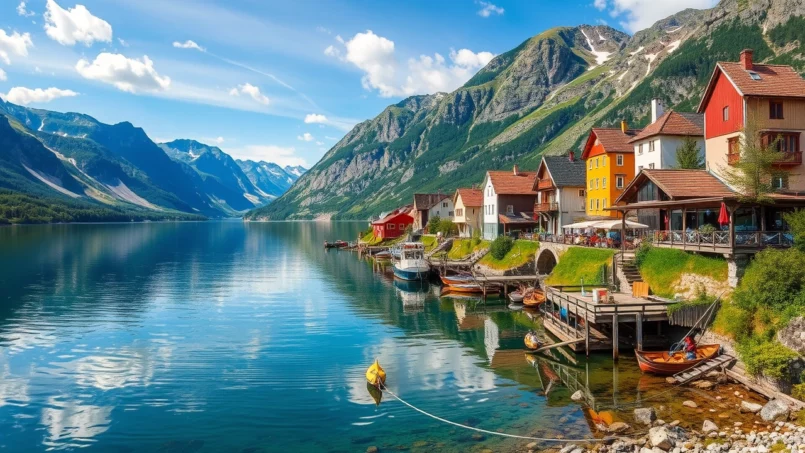
Amid red cabins by a lake, design lofts in central Stockholm, and ski chalets in Lapland, seasonal rentals in Sweden have become much more than just a supplement to hotels. It’s a robust market, undergoing rapid digital transformation, driven by strong tourism growth and a deeply ingrained Swedish “sommarstuga” (summer cottage) culture. For an owner or an investor, the country now offers a rich playing field, provided you understand its specificities: seasons, regions, prices, taxation, and legal framework.
A Country of Vacation Homes and Extended Stays
Vacation home rentals have long been part of the Swedish landscape. A significant portion of the population owns a second home – a countryside house, forest cabin, or island cottage – and the practice of renting these properties by the week in summer or winter is widely established. Specialized platforms like Stugknuten or Stugnet list thousands of cottages (“stugor”), while international giants like Airbnb, Booking.com, and Vrbo have exploded the supply of apartments, villas, and townhouses.
On average, a vacation rental stay lasts nine days, longer than a hotel stay. Although their cost is about 13% higher, these rentals offer significant advantages like a kitchen, more space, a garden, a sauna, or direct lake access, making them popular with families, groups, and remote workers. An increase in ‘extended’ stays (1 to 4 months) is also observed, attractive to professionals on assignment or expatriates settling in.
An Expanding Market Amid a Tourism Boom
The tourism dynamic sets the tone. After the Covid-related slump, Sweden has regained and surpassed its pre-crisis levels. In 2024, the country welcomed around 8.7 million international visitors, compared to 7.6 million in 2019. Tourist spending exceeded $10 billion, with an average stay of two to three nights for foreigners… but much longer for those choosing a seasonal rental.
This is the number of visitors, in millions, recorded in July 2024, the busiest summer month in Sweden.
In this context, the vacation rental market lists about 60,100 active listings nationwide, with an average occupancy rate around 48% and a projected revenue per available lodging (RevPAR) of $58. Some management companies, like SwedBNB, report growth of over 500% in summer revenues and bookings, proof that demand is far from saturated for well-managed properties.
Seasonality: The Art of Playing Peaks and Lulls
To succeed, owners and investors must adapt to a marked seasonality, but one long enough to smooth out risks. The Swedish tourism year is divided into several peak periods that directly influence prices and occupancy rates.
Summer: The High Season for Lakes and the Archipelago
From June to August, Sweden lives on midnight sun time, with festivals and cabin stays. Coastal regions in the south (Skåne, Halland, Blekinge), the islands of Öland and Gotland, the west coast of Bohuslän (Smögen, Marstrand, Grebbestad, Malmön), Dalarna around Lake Siljan, and the Stockholm archipelago are overrun. In cities, Stockholm, Gothenburg, and Malmö see a sharp rise in short-term rentals.
The average nightly price for an Airbnb rental can reach up to $218 during summer peaks in July.
Winter: The White Season of Resorts and Northern Lights
In the north, another high season runs from mid-November to March, sometimes into April or May in Lapland. In Åre, Sälen, Vemdalen, Riksgränsen, or the Abisko region, ski chalets and apartments show high occupancy rates for Christmas holidays, “sportlov” (winter break) weeks in February, and late-winter long weekends.
Nationally, February is the month with the highest prices, with average increases of about 142% compared to the cheapest periods. January sees lower overall demand but remains attractive for winter sports destinations, especially when its rates are slightly lower than February’s.
Shoulder Seasons: Opportunities for Flexible Budgets
The months of May and November appear as the most advantageous for travelers: average prices can drop by about 56% and the available supply is wider. For an owner, these periods are ideal for attracting remote workers, couples without children, or retirees seeking tranquility, by adjusting prices and highlighting nature, autumn hikes, mushrooms, or first snows.
An interesting feature of the Swedish market is the extension of the summer season: many campgrounds and outdoor accommodations open as early as May and remain active until early September. A “second season” also begins around September 10th, focused on hiking, fishing, and wildlife observation, allowing cottages and cabins to be filled away from summer crowds.
The Most Promising Regions and Destinations
One of Sweden’s major assets lies in the variety of its landscapes and thus its seasonal rental micro-markets. Certain areas stand out as particularly attractive, either for their tourism potential or their more accessible prices.
Stockholm and its Region: Strong Demand, Good Income
The capital concentrates one of the strongest demands for short stays. It lists over 6,000 to 13,000 listings depending on sources and analysis periods, with a vast majority of apartments. The indicators are telling: a typical property rents for between 226 and 237 nights per year, with a median occupancy rate between 62% and 65%. The average nightly rate ranges between €115 and €129, for a projected annual income of €25,000 to €29,000.
Seasonal rentals show strong seasonality, with May and August among the most lucrative months, generating monthly revenues ranging from €2,000 to over €3,000. For the highest-performing properties, like the top 10% of listings, revenues can exceed $6,300 per month, supported by an occupancy rate above 88% and an average price of $336 per night.
Central neighborhoods like Södermalm, Vasastan, Kungsholmen, Gamla Stan, and Östermalm offer particularly high performance.
| Stockholm Neighborhood | Number of Listings | Average Annual Income | Occupancy Rate | Average Nightly Price |
|---|---|---|---|---|
| Södermalm | 473 | €44,275 | 84% | €143 |
| Vasastan | 238 | €40,734 | 80% | €137 |
| Kungsholmen | 222 | €31,471 | 76% | €111 |
| Gamla Stan | n/a | €53,308 | 86% | €167 |
This potential has attracted genuine professional operators: nearly 28% of Stockholm hosts own more than one listing, and a few players manage several dozen apartments each.
Gothenburg, Malmö, and Major Cities
Gothenburg and Malmö also present solid markets, boosted by urban demand (museums, gastronomy, amusement parks like Liseberg) and proximity to the coast. Market rents there are lower annually than in Stockholm, but gross rental yields for residential investments can be higher: between 4.6% and 7.1% in Gothenburg, and often around 6% in Malmö for long-term rentals.
In the seasonal market, these cities benefit from major events (festivals, trade shows, conferences) and can be combined with seaside stays, enhancing their attractiveness for hybrid work-leisure stays.
Skåne and the South Coast: Nordic Italy at Soft Prices
In the far south, the Skåne region concentrates a wealth of vacation rentals, renovated farms, and small design houses. Areas like Ystad, Österlen, Brösarp, Kivik, Båstad, and Torekov attract with their beaches, picturesque villages, nature reserves (Söderåsen, Kullaberg), and gourmet addresses.
Scania (Skåne), in southern Sweden, offers a varied range of unique accommodations. You’ll find farm guesthouses, tiny houses equipped with hot tubs near Malmö, manor outbuildings in Ystad, or lodges in the countryside, surrounded by animals and orchards. For a high-end stay, options like a beach house at Angels Creek, a few steps from the sea, or architect-designed villas in Torekov illustrate the region’s premium positioning.
Småland, Kronoberg, and the Southern Lakes: Good Price/Potential Ratio
For investors, the southern interior – Småland and particularly Kronoberg County – offers notable opportunities. House prices there have fallen up to 30% in some recent periods, while foreign demand for vacation homes is strong, especially from Germans, Dutch, Norwegians, and British.
The IKEA brand immortalized the Småland region by naming its children’s play areas after it, proof of the power of this image internationally.
IKEA
West Coast, Archipelagos, and Large Islands: Premium Products
The west coast of Bohuslän, around Strömstad, Smögen, Marstrand, Malmön, or Grebbestad, as well as the Stockholm archipelago, Gotland, and Öland, form a portfolio of highly sought-after summer destinations. Granite houses facing the sea, converted fishermen’s huts, villas with private docks: these are often more expensive properties but capable of generating high returns over a few peak-season weeks.
Lapland, Mountains, and Dalarna: Dual Winter/Summer Season
In the north, Swedish Lapland, Abisko, Kiruna, Jukkasjärvi, as well as Jämtland or Dalarna, are dual-season territories: winter for skiing, dog sledding, and northern lights, summer for hiking, fishing, lakes, and midnight sun. Iconic structures like the ICEHOTEL in Jukkasjärvi add a powerful image effect to the rest of the rental stock (chalets, cabins, cottages).
What Types of Properties Rent Best?
The seasonal rental supply in Sweden is extremely diverse. You can find practically all possible typologies, from a micro urban studio to a private castle.
The most common segments include:
Discover the diversity of typical lodgings for your stay, ranging from traditional red wooden cabins to modern architect-designed villas.
Charming small red wooden houses (Faluröd), located by a lake or in the forest, using a traditional paint derived from the Falun copper mines.
Modern villas, sometimes designed by architects, offering sea views, a veranda, and garden for a comfortable and exotic stay.
Fully equipped apartments, perfect for a city break or business stay, in the heart of urban life.
For a countryside immersion: farm stay with animals, local produce shop, and craft workshops.
Mountain accommodations with sauna, ski storage, and direct access to slopes or hiking trails.
Capacities range from a pied-à-terre for two people up to large villas accommodating twelve to fifteen guests. It’s not uncommon to see listings explicitly calibrated for 2, 4, 6, 8, 10, or 11 people, making it easier to target families and groups.
Regarding amenities, some standards clearly stand out: terrace or garden, lake or sea view, sauna, hot tub, fireplace, high-speed internet, parking, sometimes an electric vehicle charging station. About 13% of properties accept pets, a crucial selling point for Northern European markets. More and more listings also emphasize remote work compatibility (dedicated office, ergonomic chair, fiber Wi-Fi) and sustainable practices (heat pumps, low-consumption appliances, eco-friendly materials).
Prices, Income, and Performance Indicators
To assess an opportunity, you must combine purchase price, rental level, occupancy rate, and management costs. Available figures give a first idea of the order of magnitude.
Price Levels for Vacation Rentals
Aggregated data for all of Sweden indicates that a vacation rental costs on average:
– $197 per night annually,
– $824 per week,
– $3,531 per month.
The average annual price of a hotel night in Sweden shows strong geographic disparities. The south of the country has an average rate of about $187, while Västernorrland, in the northeast, offers much more moderate prices, around $56. Popular tourist areas (mountain, coastline) can far exceed these averages during high season. This variability allows for commercial strategies based on volume and long stays in the cheaper regions.
The weekly price structure also offers levers: Sunday is generally the cheapest night, while Monday appears as the most expensive. On average, weeknight stays (Sunday to Thursday) are around $161, while weekend nights (Friday and Saturday) rise to $230. Fine-tuning these gaps can help improve occupancy rates during low season.
Example Price Range by Type of Summer House
Some studies provide ranges by type of “summer house”:
| Type of Summer House | High Season Week | Low Season Week |
|---|---|---|
| Traditional House | $950–1,500 | $600–950 |
| Modern House | $1,200–2,000 | $750–1,200 |
These ranges are of course indicative and vary based on location, proximity to a lake or the sea, renovation quality, or the presence of premium amenities (jacuzzi, sauna, private dock, etc.).
Rental Yields: Seasonal vs. Long Term
In the traditional residential market, average gross rental yields hover around 3.3% nationally, with a typical range of 2.5% to 4.5%. In major cities, prestigious central neighborhoods (Östermalm, Vasastan, Södermalm in Stockholm) often show gross yields of 2% to 2.5%, while more peripheral sectors of Stockholm, Gothenburg, or Malmö can reach 4.5% and beyond.
The best seasonal rental properties in Stockholm can generate over $6,000 in monthly revenue during high season.
However, these gross figures must be adjusted for higher costs (frequent cleaning, concierge, platform commissions, furniture depreciation, marketing) and a seasonal variability that requires dynamic price management.
Legal and Tax Framework: An Attractive but Highly Regulated Country
Sweden is known for its transparent and stable business environment, but also for its strict housing regulations. A seasonal rental project must imperatively fit within this framework to remain profitable in the long term.
Property Status and Subletting Rights
The property’s legal status is decisive.
– In the case of a classic rental apartment (“hyresrätt”, tenancy right), the tenant must obtain explicit permission from their landlord to sublet, including on a platform like Airbnb. If refused, they can appeal to the Rent Tribunal (Hyresnämnden), but the sublease contract must be properly drafted for the case to be admissible. A landlord’s refusal and unauthorized subletting can lead to the straightforward termination of the lease.
– For an owner-occupied apartment (“bostadsrätt”, housing cooperative apartment), the agreement of the housing association’s board is required. Since a change in the condominium law, refusal can in principle only occur if the subletting is purely commercial in nature. Associations can nevertheless set their own internal rules, for example by limiting the number of days for short-term rental.
The owner of a single-family home in full ownership can rent it out without external permission. They must, however, ensure compliance with applicable planning regulations and inquire about any municipal restrictions specific to tourist rentals.
In all cases, only individuals who have title of ownership, a right of use, or a primary lease can legally rent via platforms. A subtenant cannot, themselves, sublet on Airbnb without explicit written agreement.
Price Rules: No Free “Market Rent”
Sweden does not recognize the concept of a purely “market” rent for housing, even in subletting. For a hyresrätt, the sublet rent cannot exceed that paid to the landlord, adding only operational costs and a limited surcharge (10–15%) if the apartment is furnished. Since autumn 2019, charging an excessive rent in subletting is criminally punishable.
For a property in full ownership or a bostadsrätt, the calculation is more flexible but must remain “reasonable” compared to similar housing: it includes costs (association fees, energy) and a cost of capital capped around 4% of the property’s market value.
Tenants have recourse: they can ask the Rent Tribunal to review a rent deemed abusive and order the refund of overpayments up to two years back.
Taxation of Seasonal Rentals
On the tax front, the general rule is clear: rental income from a private property (house, apartment, second home) is considered capital income and taxed at 30% on the surplus after allowable deductions. Sweden, however, offers a favorable regime for occasional small-scale rentals.
The two main deduction levers are:
– A standard deduction of 40,000 SEK per property per year, to be shared among co-owners if necessary and prorated for acquisition during the year.
– An additional deduction linked to the property type: for a single-family house, 20% of annual rents are deductible as expenses. For an owner-occupied apartment, the monthly association fee is deductible prorated by area and rental period. For a rental apartment (hyresrätt), the rent paid to the landlord is deductible according to the same criteria.
These deductions can never exceed the amount of rents received, preventing the creation of a deficit deductible from other capital income. The taxable net amount is then reported in the annual tax return via the appropriate forms (e.g., K3), and taxed at 30%.
Since 2023, under the EU DAC7 directive, digital platforms are required to automatically transmit detailed information on rental income and its beneficiaries to tax authorities. Although reporting rules haven’t changed, this measure significantly increases the likelihood of audits, making rigorous bookkeeping absolutely crucial for hosts.
Municipal Limits and European Shift
At the local level, major Swedish cities have begun to regulate the annual duration of very short-term rentals. Stockholm, for example, imposes a limit of 90 days per year for certain types of tourist rentals, coupled with an obligation to register with the municipality. Gothenburg applies a 60-day limit, Malmö a 30-day limit beyond which a commercial permit may be required. Other cities recommend simple notification or remain, for now, lightly regulated.
At the European level, a specific regulation on data sharing between platforms and public authorities is to fully come into force in 2026. The European Commission has also announced its intention to more strictly regulate tourist rentals in areas under high real estate pressure, which could inspire adjustments in Sweden in the coming years.
Management, Digitalization, and Upscaling
Facing the market’s growing complexity, many management companies have specialized in supporting seasonal rental property owners. Players like SwedBNB, Guestly, Rentaborg, Scandinavian Hospitality, Swedish Living, or Beautiful Apartments offer services ranging from simple co-management to full-service handling.
Their offering combines: a diverse range of products and services tailored to client needs.
Discover comprehensive services to optimize and simplify the management of your seasonal rental property.
Optimized listings with professional photos distributed on Airbnb, Booking, Vrbo, Google Rentals, and other major platforms.
Revenue optimization through pricing adjusted based on demand, local events, and seasonality, capable of increasing revenue by 20 to 40%.
Full handling of bookings, guest communication, and check-in/check-out procedures, often facilitated by smart locks and digital guides.
Coordination of cleaning, laundry, repairs, and maintenance, accompanied by regular quality checks to ensure property condition.
Accounting tracking, rent collection, security deposit handling, and detailed financial reporting via accessible online dashboards.
Optional services: furnishing and decoration, ‘hotelification’ of the property, concierge, experience organization (private chef, boat rental, wellness).
The figures cited by some managers are eloquent: increases of 25 to 30% in occupancy rates thanks to multi-channel distribution, an average daily price increase of around 5% via algorithmic price optimization, or weekly revenues of 11,000 to 15,000 SEK for a significant portion of Stockholm properties.
The Swedish proptech ecosystem numbers nearly 150 companies, attracting several hundred million dollars in investment.
Who Are These Opportunities For?
The profiles interested in seasonal rentals in Sweden are multiple.
The article identifies four main investor profiles in this market. First, Swedish second-home owners, who rent to cover their costs (heating, taxes, maintenance) while retaining private use for a few weeks a year. Second, foreign investors looking for a vacation home that serves both as a retirement location and an income-generating asset, attracted by a real estate market more affordable than in Western Europe. Third, families and individuals seeking occasional supplemental income by renting part of their primary residence (room, outbuilding, independent floor). Finally, professional or semi-professional players building a portfolio of several properties, often concentrated in highly sought-after micro-markets.
Figures on vacation home ownership show this last segment is growing rapidly. The country already had nearly 38,000 vacation homes owned by non-residents in the mid-2010s, a number up more than 100% since the early 2000s. Some regions like Kronoberg or Värmland see 20% to 35% of their second-home stock owned by foreigners.
In Practice: How to Position Yourself in This Market?
To fully exploit the opportunities of seasonal rental in Sweden, three areas prove decisive: choosing the right location, targeting the right audience, and properly equipping yourself on the legal, tax, and operational fronts.
Two geographic approaches are available to investors: the ‘prime’ strategy, targeting highly sought-after areas (Stockholm archipelago, Bohuslän coast, etc.) for high revenue peaks over a few months, and the ‘value’ strategy, targeting regions with lower entry prices (Småland, Kronoberg, etc.) for more consistent yields with a clientele seeking long stays or on a controlled budget.
Regarding clientele, current trends favor longer stays, authenticity, connection to nature, and the possibility of working remotely. Offering an experience consistent with these expectations – sauna and lake access, a workspace with fiber, a personalized guide to cafés for “fika” and local hikes – becomes at least as important as square footage or the number of bedrooms.
The success and stability of a medium- and long-term rental project depend on strict compliance with several obligations: verifying subletting rights, respecting rent caps, registering with the municipality if required, precise income declaration with optimization of tax deductions, and anticipating evolving European regulations.
A Window of Opportunity Still Wide Open
Sweden combines several advantages rarely found in a single market: a stable economy, a clear regulatory framework, spectacular nature, a very positive international image centered on well‑being and sustainability, and steadily growing tourism, both summer and winter. In this context, seasonal rentals, whether a simple lakeside cottage or a portfolio of downtown apartments, offer real potential.
The Swedish seasonal rental market is attractive but subject to constraints: tenant-protective laws, municipal regulations, public debate on tourism impact, and future European regulations. To benefit from it, owners and investors must master these rules, offer quality service, and use adapted management tools.
Disclaimer: The information provided on this website is for informational purposes only and does not constitute financial, legal, or professional advice. We encourage you to consult qualified experts before making any investment, real estate, or expatriation decisions. Although we strive to maintain up-to-date and accurate information, we do not guarantee the completeness, accuracy, or timeliness of the proposed content. As investment and expatriation involve risks, we disclaim any liability for potential losses or damages arising from the use of this site. Your use of this site confirms your acceptance of these terms and your understanding of the associated risks.

Cyril Jarnias is an independent expert in international wealth management with over 20 years of experience. As an expatriate himself, he is dedicated to helping individuals and business leaders build, protect, and pass on their wealth with complete peace of mind.
On his website, cyriljarnias.com, he shares his expertise on international real estate, offshore company formation, and expatriation.
Thanks to his expertise, he offers sound advice to optimize his clients' wealth management. Cyril Jarnias is also recognized for his appearances in many prestigious media outlets such as BFM Business, les Français de l’étranger, Le Figaro, Les Echos, and Mieux vivre votre argent, where he shares his knowledge and know-how in wealth management.





