
 Published on and written by Cyril Jarnias
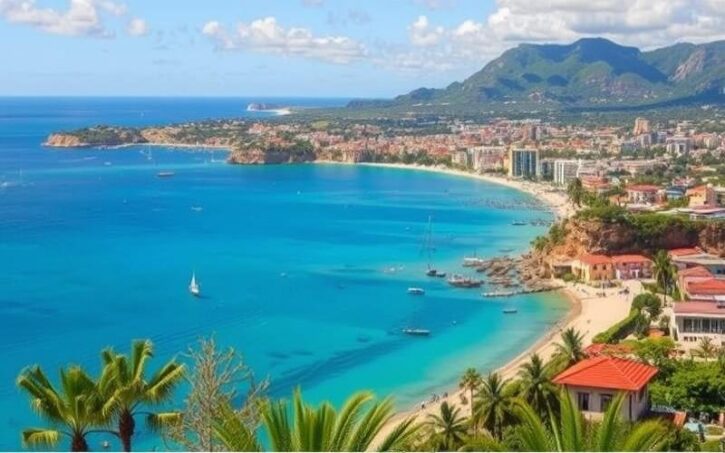
In Barbados, it has become nearly impossible to discuss real estate without discussing tourism. The island built its wealth on “sun, sea and sand,” and later on international finance. Today, this reliance on visitors is no longer limited to hotels and cruises: it profoundly shapes prices, the types of properties being built, the trendy areas, public policies, and even the sensitive issue of housing for residents.
This article provides a detailed analysis of the influence of tourism on Barbados’s real estate market, incorporating recent data, government policies, and key ongoing development projects.
A Real Estate Market Driven by Tourism and Foreign Visitors
The Barbadian real estate market displays exceptional dynamism. After the COVID-19 shock, activity rebounded very quickly, driven by the strong return of tourists and the arrival of new resident profiles, notably international remote workers.
Sales figures measure this acceleration. Between 2023 and 2025, the number of properties sold surged by 75%, while the average selling price increased by approximately 25% in the year prior to 2025 alone. For early 2025, the annual price increase is around 6.9%, in a context of steady growth of 5 to 8% per year since 2021.
This surge is not happening in a vacuum. Barbados is an economy where tourism weighs heavily in overall activity:
– according to estimates, tourism directly represents about 12% of GDP,
– and over 40% of total economic activity when indirect effects are considered,
– while generating, directly and indirectly, nearly 39% of national employment.
In this configuration, every increase in visitor flow – whether they stay a week, a month, or a year – quickly impacts the demand for housing, particularly in coastal areas where 95% of tourist sites and over 70% of hotels are concentrated.
The Barbadian real estate market is now largely structured by two main engines: tourist demand and purchases by foreigners, often seeking a second home, a vacation villa, or a rental investment.
Tourism, Vacation Rentals, and the Explosion of Rental Demand
The post-pandemic tourism recovery has led to a real rush for properties intended for short-term rentals. Villas, beach apartments, serviced condos: everything that can be rented by the night or week in the most sought-after tourist areas is seeing its demand climb.
10% increase in demand for seasonally rented villas over an observed quarter, with a similar progression in revenue.
Short-term rental platforms (Airbnb, Vrbo, etc.) have amplified this trend. In Bridgetown and Christ Church, for example, there are more than 170 active listings just around the capital. Performance data for rentals in Bridgetown illustrates how tourist seasonality translates into real estate revenue.
Example of Rental Performance in Bridgetown (Airbnb)
| Indicator (Bridgetown) | Approximate Median Value |
|---|---|
| Median Monthly Revenue | ≈ $2,147 USD |
| Median Occupancy Rate | ≈ 53% |
| Average Daily Rate (ADR) | ≈ $148 USD |
| Monthly Revenue Top 10% of Listings | > $8,234 USD |
| Occupancy Rate Top 10% | > 89% |
| ADR Top 10% | > $463 USD |
In high season (January, February, March), average monthly revenues exceed $4,700 USD with occupancy rates around 73%. In low season (June, July, September), revenues decrease but remain significant, which encourages many owners to shift to this model rather than traditional long-term rentals.
This vacation rental “boom” has chain effects:
– It reinforces the value of properties located near beaches and entertainment hubs,
– It encourages developers to produce “rent-ready” accommodations with hotel services,
– It reduces the available supply for local tenants in some neighborhoods.
In Bridgetown as in Silver Sands (Christ Church), the vast majority of listings are for entire homes (over 90%) – a sign that this is truly an investment market, not just rooms in private homes.
The Most Sought-After Areas: Tourist Geography Dictates the Real Estate Map
Tourism is not evenly distributed across the island. The West Coast, nicknamed the “Platinum Coast,” and the South Coast have historically dominated the high-end hotel and residential supply. This is reflected in the price per square foot structure, significantly higher in tourist parishes than inland.
Median Price per m² by Parish (Apartment / House Sales)
| Parish | Apartments (BBD/m²) | Houses (BBD/m²) |
|---|---|---|
| Saint James | 13,500 | 11,488 |
| Saint Peter | 13,070 | 7,695 |
| Christ Church | 10,897 | 6,055 |
| Saint Philip | N/A | 10,145 |
| Saint Andrew | N/A | 14,326 |
| Saint Thomas | N/A | 5,051 |
It is along this West Coast – around Sandy Lane, Holetown, Porters, Speightstown – that international demand is strongest. Prices for high-end properties there see quarterly increases of 5 to 8%, and some areas record double-digit annual growth (close to 10% year-over-year in Holetown, St. James and St. Peter).
The South Coast (Christ Church, Hastings, Rockley, St. Lawrence Gap) is favored by a younger clientele for its lively atmosphere, restaurants, and bars. The median value of apartments and townhouses there is increasing by about 6%. This area is ideally positioned for vacation rentals, with more accessible prices than the Platinum Coast.
Simultaneously, emerging areas are benefiting from the gradual shift in demand beyond historical hotspots. St. Philip, with its cliffs and more affordable land, is often cited as a target for land investment, notably for eco-village projects. St. Lucy, in the north, remains relatively unspoiled, offering tranquility and potential for future development.
The Spectacular Rise of Hotels and Tourist Residences
Barbados is currently experiencing one of the most significant hotel development cycles in its history. According to the Barbados Hotel and Tourism Association (BHTA), over 2 billion Barbadian dollars (approximately 1 billion US dollars) are expected to be injected into the tourism industry around 2026, with several major projects underway simultaneously.
Among the flagship projects are complexes that systematically combine hospitality and residential or vacation real estate, fully integrating them into the real estate market dynamic.
Main Hotel and Real Estate Projects Related to Tourism
| Project | Location | Estimated Investment (BBD) | Capacity / Key Components |
|---|---|---|---|
| Hotel Indigo | South Coast | ≈ $100 M | 132 rooms, lifestyle brand (IHG) |
| Royalton (CHIC / Vessence) | Holetown, West Coast | ≈ $300 M | ≈ 220–222 suites, adult-only all-inclusive |
| Beaches Barbados | Heywoods, St. Peter | ≈ $800 M | ≈ 532–600 rooms, large family resort |
| Hyatt Ziva Bridgetown | Bridgetown | ≈ $186 M | ≈ 380–387 suites + mixed-use program |
| Pendry Barbados | Six Men’s, northwest | ≈ $300 M | 74 rooms + 46 residences |
| Pierhead | Bridgetown waterfront | ≈ $100 M | 150–170 waterfront apartments |
These investments have several simultaneous effects on real estate:
Major tourist real estate projects, such as hotel complexes or integrated resorts, have multiple effects on a territory. They massively increase tourist accommodation capacity, create a stock of luxury residences (condos, resort villas, branded residences) intended for sale, revalue the concerned sectors (often leading to gentrification and rising land prices), and stimulate construction and services related to property management.
In areas like Bridgetown, the construction of the Hyatt Ziva and the Pierhead project is part of a broader waterfront urban redevelopment effort, mixing housing, commerce, offices, and leisure spaces. This mixed-use urban planning is directly linked to the desire to capitalize on tourist traffic, but it also attracts young professionals and digital nomads.
Public Incentives: When Tourism Policy Becomes Real Estate Policy
The impact of tourism on Barbadian real estate is not just “natural”: it is strongly amplified by public policy. The government has implemented a whole arsenal of fiscal and regulatory incentives that facilitate investment in hospitality, vacation rentals, and property purchases by foreigners.
The key legislation remains the Tourism Development Act of 2002, which replaced the old Hotel Aids Act of 1956. This law significantly broadens the scope of projects eligible for benefits, going far beyond just hotels:
– construction and renovation of hotels,
– conversion of buildings into tourist accommodations,
– development and outfitting of villas, timeshares, and tourist residences,
– creation or modernization of restaurants, attractions, natural or heritage sites.
The benefits are massive:
– exemptions from customs duties, VAT, and environmental levy on materials, furniture, equipment,
– possibility to deduct 150% of interest on certain loans,
– tax credits for training, marketing, investments in sewage systems,
– accelerated depreciation and the ability to deduct capital expenditure from income over 15 to 20 years for major projects.
This framework clearly makes Barbados a preferred destination for tourism and real estate capital. It partly explains why major international groups – Hyatt, Sandals, Blue Diamond Resorts, InterContinental Hotels Group, Marriott – are investing so heavily on the island.
The Growing Role of Remote Workers and Expatriates
Barbados doesn’t just attract vacationers. With the “Barbados Welcome Stamp” program, the island has positioned itself as a hub for remote workers and digital nomads. This visa allows foreigners with an annual income over $50,000 USD who can work remotely to settle for up to twelve months, renewable.
More than 3,000 participants have already taken advantage of this scheme, which translates into:
The real estate market is marked by sustained demand for medium- and long-term rentals in well-connected neighborhoods. This trend is driven by the arrival of a younger audience than the classic tourist, who are more inclined to test living on the island before buying. These new residents often become property buyers after a first year spent renting.
Joining this clientele are beneficiaries of the Special Entry and Reside Permit (SERP), accessible to wealthy individuals who invest at least $2 million in real estate and have a net worth exceeding $5 million. This category explicitly targets very high-income households, often seeking exceptional villas on the West Coast or in golf communities like Sandy Lane, Royal Westmoreland, or Apes Hill.
These programs reinforce the high-end segment, stimulate the construction of secure residences with services (gated communities), and consolidate Barbados’s positioning as a “luxury second home” destination.
Tax Advantages and Legal Environment: A Magnet for Foreign Capital
Barbados’s appeal for foreign real estate investors also relies on a particularly favorable fiscal and legal environment. This notably includes:
– no capital gains tax on real estate,
– no wealth tax and no inheritance tax on properties passed to heirs,
– equal property rights for foreigners and residents,
– legal system based on English common law and the requirement to use a licensed attorney for any transaction,
– double taxation agreements with several key countries (United States, Canada, United Kingdom, China, etc.),
– relatively low corporate tax rate (9% in 2024).
Non-resident buyers must register their acquisition with the Central Bank of Barbados. This formality is essential to guarantee the right to repatriate funds during a future resale of the property.
For developers, the government adds further layers of incentives through tax relief, a streamlined permit process, and targeted support programs, like the Tourism Industry Relief Fund or hotel renovation funds.
In this context, it is not surprising that foreign buyer demand increased by about 15% in 2025 compared to 2024. British, American, and Canadian buyers lead the list, confirming their status as key clientele for both tourism and real estate.
The Other Side of Success: Tensions on Housing Affordability
While the tourist dynamic benefits the economy and investors, it also poses major challenges for Barbadians themselves. The combination of rising real estate prices, scarcity of coastal land, and high profitability of short-term rentals makes access to affordable housing increasingly difficult, particularly for those on modest incomes.
Price data published for 2025 reveals high costs for local households:
Overview of median real estate prices, rents, and average salary to assess the market.
The median price of an apartment for sale reaches about 12,009 BBD/m².
The median price of a house is around 10,013 BBD/m².
A one-bedroom apartment in an urban center rents for an average of 1,333 BBD per month.
The average net monthly salary is about 2,162 BBD.
With 20-year mortgage rates around 7.4%, the effort level for homeownership becomes considerable. Meanwhile, the market clearly favors products intended for tourist rentals or a foreign clientele: beach villas, serviced condos, luxury residences, etc.
Barbados thus experiences:
– a growing imbalance between supply and demand for affordable housing,
– a housing deficit,
– a land market distorted by the valuation of coastal land,
– increased difficulty for low-income households to obtain financing (high deposit requirement, guarantees, stable income).
The authorities have launched several initiatives to address housing problems. They involve the National Housing Corporation (NHC), programs like HEART or HELP, and public-private partnerships. These measures aim to facilitate access to reduced-price building materials or “rent-to-own” type homeownership schemes.
One public entity, Home Ownership Providing Energy Inc. (HOPE), for example, offers subsidized-price homes for modest households, with an original mechanism: the state subsidizes the land component and installs photovoltaic panels for free for 20 years, in exchange for the use of the roof. Eventually, the PV system is transferred to the owner, durably reducing their energy bill.
Nevertheless, these social policies advance in an environment where every coastal square foot becomes more expensive, driven by tourist demand that shows no sign of weakening.
Environmental Pressure and the Real Estate Value of the Coastline
Barbados’s dependence on beach tourism directly links the health of coastal ecosystems to the real estate value of properties located near beaches. Studies show that visitors place great importance on water quality, beach width, the presence of coral reefs, and marine life (notably turtles).
Over 80% of tourists surveyed stated they would not return at the same price if beach area diminished, and nearly 80% are willing to pay a $5 USD environmental levy per stay to fund coastal management.
These preferences are also reflected in the real estate market. Research on coastal stabilization programs, notably through the Coastal Infrastructure Program (CIP) supported by the Inter-American Development Bank, suggests that:
At Rockley Beach, a coastal rehabilitation project generated an increase of approximately 9% in local economic activity over three years.
The fragility of the beaches on the South and West Coasts, which are receding by an average of 15 meters per century, or the decline of 50 to 80% of coral cover since the 1970s, are therefore not just ecological issues: they directly threaten the very foundation of coastal land value.
For investors as well as the state, maintaining environmental quality is no longer simply an image issue, but an economic and real estate imperative.
Regulation of Tourist Rentals: Towards Stricter Framing
The rise of short-term rentals has finally drawn the attention of the authorities. Keen to align quality, safety, and taxation standards between hotels and alternative accommodations, Barbados has embarked on a profound reform of the legal framework.
A draft Tourist Accommodation Bill aims to regulate all forms of paid accommodation much more strictly: hotels, guest houses, Airbnb, vacation villas, etc. The idea is to impose on all:
– mandatory registration with the Barbados Tourism Product Authority (BTPA),
– a licensing system (with duration increased from 1 to 2 years),
– inspections and classification,
– universal accessibility standards for new constructions, with a transition period for existing ones.
Operating an unlicensed accommodation becomes a criminal offense, subject to fines of up to 250,000 BBD. Furthermore, a reform of the Tourism Levy now requires certain digital platforms to collect and remit the Shared Economy Levy, a 10% tax on tourist accommodations not subject to VAT.
This regulatory tightening pursues several objectives:
– secure the visitor and protect the “Brand Barbados” internationally,
– ensure more equitable tax revenue between traditional hotels and alternative accommodations,
– have more reliable data on tourist accommodation and its impact.
For owners, particularly small local investors, these rules imply additional costs (upgrading to standards, administrative procedures), but they also allow for the professionalization of a market that developed very quickly, sometimes without real control.
A Powerful Economic Dynamic… but Vulnerable
The alignment of the stars – tourism growth, hotel boom, strong fiscal incentives, influx of foreign buyers – has allowed Barbados to record fifteen consecutive quarters of growth, with a 4% GDP increase in 2024, notably thanks to business services, real estate, and construction.
Investments in hospitality and tourist real estate represented about 17% of GDP in 2024, and the construction sector grew by 7% that year, driven by major hotel, port, and public infrastructure projects.
This dynamic, however, has a downside: vulnerability. An economy so dependent on tourism and imports is hit hard by external shocks:
The tourism sector faces several major risks: a health crisis (like the sudden collapse of arrivals in 2020 and 2021), a global recession, rising construction costs (due to imported materials and inflation), as well as extreme weather events or coastal degradation.
The pandemic showed the possible scale of damage: collapse of tax revenues (VAT, income tax) and soaring unemployment, particularly in tourism-related services, often precarious and female-dominated.
For the real estate market, this translates into a risk of over-dependence on a single engine. If tourist demand were to decline persistently, the value of properties geared towards vacation rentals could contract, especially those acquired at high prices on the most sought-after coasts.
Towards a More Diverse and Sustainable Model?
Aware of these risks, Barbados is striving to diversify both its tourism and its real estate. On the tourism side, the strategy aims to develop new segments:
– conference and congress tourism,
– culinary, health, and wellness tourism,
– sports tourism (cricket, water sports),
– heritage and diaspora tourism,
– ecotourism and outdoor activities (the Barbados Trailway, for example, which plans to transform the old railway into a network of cycling and walking trails).
These tourism niches attract visitors with varied profiles, including outside the high season. They also generate new real estate opportunities, such as small boutique hotels, guest houses, specialized residences, and projects that better integrate the local community.
On the housing side, innovative solutions – modular homes, prefabrication, mobile homes – are beginning to take root, driven by players like Karmod. These faster, potentially less expensive, and better adapted to climatic constraints (strong winds, humidity, corrosion) constructions could help alleviate pressure on supply.
The challenge for Barbados will be to maintain the attractiveness of its real estate market for tourism investors, while addressing the pressing need for affordable housing, protecting its ecosystems, and reducing its vulnerability to external shocks.
Conclusion: A Real Estate Market Shaped – and Tested – by Tourism
The impact of tourism on the real estate market in Barbados is massive, multidimensional, and, in some respects, irreversible. It is reflected in soaring prices on the West Coast, the proliferation of vacation rentals, the silhouettes of new resorts reshaping the coastline, the visa and residency policies targeting remote workers and the ultra-wealthy, but also in the growing difficulties for part of the population to find decent housing.
The economic model has stimulated growth, employment, and infrastructure, making Barbados an attractive regional real estate hub. However, it also generates social tensions, environmental risks, and economic dependence. The authorities are responding with diversification efforts, regulation, and more inclusive housing policies.
For investors and public decision-makers alike, the question is no longer whether tourism influences real estate, but how to ensure this influence remains compatible, in the long term, with the needs of Barbadians, the preservation of the coastline, and the resilience of the island’s economy.
Disclaimer: The information provided on this website is for informational purposes only and does not constitute financial, legal, or professional advice. We encourage you to consult qualified experts before making any investment, real estate, or expatriation decisions. Although we strive to maintain up-to-date and accurate information, we do not guarantee the completeness, accuracy, or timeliness of the proposed content. As investment and expatriation involve risks, we disclaim any liability for potential losses or damages arising from the use of this site. Your use of this site confirms your acceptance of these terms and your understanding of the associated risks.

Cyril Jarnias is an independent expert in international wealth management with over 20 years of experience. As an expatriate himself, he is dedicated to helping individuals and business leaders build, protect, and pass on their wealth with complete peace of mind.
On his website, cyriljarnias.com, he shares his expertise on international real estate, offshore company formation, and expatriation.
Thanks to his expertise, he offers sound advice to optimize his clients' wealth management. Cyril Jarnias is also recognized for his appearances in many prestigious media outlets such as BFM Business, les Français de l’étranger, Le Figaro, Les Echos, and Mieux vivre votre argent, where he shares his knowledge and know-how in wealth management.





