
 Published on and written by Cyril Jarnias
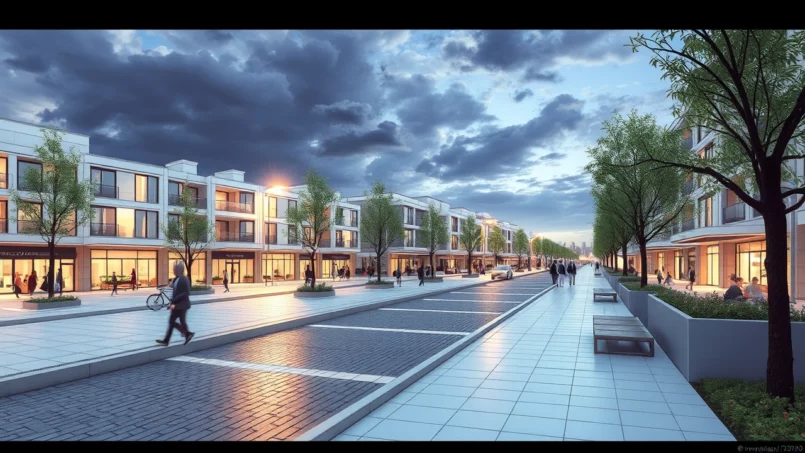
As Barbados seeks to position itself as a “smart”, resilient, and carbon-neutral small island state, urban planning is becoming one of the main levers for economic and social transformation. Beyond the postcard beaches, a deep overhaul of cities, infrastructure, housing, and coastal areas is underway, driven by a series of structuring projects and a planning framework far more ambitious than before.
Barbados is undertaking an urban transformation to modernize its aging centers, make them more resilient to climate shocks, more socially inclusive, and more attractive to private investors. This effort concerns several localities, including Bridgetown, Speightstown, Oistins, and Warrens, as well as coastal corridors vulnerable to erosion.
A New Course with the Amended Physical Development Plan
The foundation of this transformation is the Physical Development Plan (PDP) amended in 2023. This document, debated in Parliament and overseen by the Office of the Prime Minister and the ministry responsible for planning, sets the spatial development framework for the coming decade.
The new Physical Development Plan (PDP) does not just adjust old plans. It introduces a new approach, focused on land and public finance efficiency, climate adaptation, social equity, safety, and the conservation of irreplaceable resources like the coastline, rural landscapes, and cultural heritage.
The document covers the entire territory but explicitly designates several urban centers where interventions will be prioritized: Bridgetown, Speightstown, Holetown, Oistins, Bathsheba, Six Roads, Belleplaine, Wildey, and Warrens. The idea is to structure these localities as true “regional centers” connected by a modernized transport system, with complementary rather than competing functions.
Over 20,000 lots are currently vacant in the country, illustrating problematic urban sprawl.
These figures have pushed the authorities to change their paradigm: instead of opening more and more virgin land for construction, the PDP bets on reasonable densification, brownfield redevelopment, and the rehabilitation of existing neighborhoods. This is the purpose of the “Strategic Reinvestment Areas,” these underutilized urban zones that are to become the engines of a new phase of development.
Bridgetown, Laboratory for Urban Renewal
The capital, administrative center, and tourism showcase, Bridgetown is at the heart of this movement. Listed as a UNESCO World Heritage Site with its historic garrison, the city combines considerable assets and marked vulnerabilities: aging infrastructure, traffic congestion, vulnerability to rising sea levels, and an imbalance between renovated tourist areas and declining popular neighborhoods.
The Waterfront Renaissance: The Pierhead Project
Among the flagship projects, the transformation of the waterfront around Carlisle Bay is drawing particular attention. The “Pierhead” is presented as an emblematic redevelopment project, intended to revive a historic portion of the Bridgetown coastline.
On approximately five acres, a real estate project envisions a modern residential community, leisure spaces, and a commercial complex with bay views. The first phase, centered on ‘The Steel Building’, includes 39 one- to three-bedroom residences, all facing the sea. About 75% of these units are already reserved, demonstrating strong market interest for this type of urban asset with high rental potential.
The entire development will also include 35 spaces dedicated to dining, retail, and cultural activities, as well as a series of amenities: 24/7 security, a yacht berthing station, a fitness center, and access to a beach with a beach club located at the tip of Carlisle Bay. The Altman Real Estate group, through its president Paul Altman, emphasizes the project’s “mixed-use” dimension, combining housing, high-end tourism, and urban vibrancy.
The table below summarizes the main features of this development:
| Element | Main Detail |
|---|---|
| Location | Bridgetown waterfront, on Carlisle Bay |
| Site Area | Approx. 5 acres |
| First Phase | “The Steel Building” |
| Number of Residences | 39 units (1, 2, and 3 bedrooms) |
| Reservation Status | Approx. 75% of first-phase units reserved |
| Commercial Spaces | 35 lots for restaurants, retail, and cultural activities |
| Planned Services | 24/7 security, marina, fitness center, beach access, beach club |
| Phasing | Project in three phases, first phase under construction |
This project is not developing in isolation. It is part of a broader set of initiatives aimed at reconfiguring the port area, strengthening pedestrian connections, and improving links between downtown, the Careenage marina, and surrounding neighborhoods. In this strategy, enhancing the seafront is not just a tourism imperative but also a way to increase resilience against coastal risks.
Towards a “Fossil Fuel-Free Zone” in the Heart of the Island
The capital is also central to the government’s ambition to make Barbados a carbon-neutral economy powered 100% by renewables by 2030. For Bridgetown, this translates into proactive policies: tax incentives for installing solar panels on public buildings, support for private photovoltaic roofs, and even bans on certain single-use plastics in the food service and retail sectors.
The “Bridgetown Greening Project” integrates a landscape and ecological approach into urban development. It includes creating parks, public gardens, and infrastructure for pedestrians and cyclists. For sustainable stormwater management, the project uses permeable pavements and rain gardens. In parallel, the city is implementing recycling and composting programs and exploring waste-to-energy solutions within a circular economy framework.
Port Modernization: A New Bulk Terminal via PPP
Another strategic axis, the Port of Bridgetown is the subject of a feasibility study for the construction of a new berth and a bulk handling facility. This project, structured as a public-private partnership, is based on a detailed assessment conducted with the support of the Inter-American Development Bank (IDB) and the Global Infrastructure Facility.
Strategic study to enhance port capacity and position the site as a regional logistics hub, handling over 90% of the country’s imports.
Over one million tons of cargo and approximately 90,000 TEUs (20-foot containers) per year.
Analysis of the technical suitability and commercial viability of the expansion project.
Study of financial affordability and the governance required for project implementation.
Assessment of the social and environmental consequences of port capacity expansion.
The goal is twofold: improve productivity and reduce logistics costs for the Barbadian economy, while attracting additional flows at the Caribbean scale. In a context where public debt exceeds 120% of GDP, the use of PPPs is seen as an essential tool, even though an Infrascope report points to significant room for improvement in the country’s preparation for such projects.
Secondary Urban Centers for Redevelopment: Speightstown, Holetown, Oistins, Warrens…
Beyond the capital, the Physical Development Plan targets several secondary centers to play a “counterweight” role and reduce pressure on Bridgetown.
Speightstown and Holetown, already identified for several years in urban rehabilitation programs linked to tourism, must continue their transformation, with better integration of commercial, residential, and leisure functions. Oistins, known for its fish market and nightlife, is the subject of waterfront improvement projects, financed in part by an IDB loan for tourism development.
In parallel, neighborhoods like Warrens and Wildey, which experienced rapid growth as office and retail hubs on the periphery, will benefit from specific master plans. The priority here is to move from car-dominated, single-function complexes to true ‘complete communities’, where housing, services, green spaces, and public transport form a coherent whole.
Ministry of Town & Country Planning or Urban Authority
The following table illustrates some broad outlines of these territorial orientations:
| Locality / Area | Role in the PDP and Main Transformation Axes |
|---|---|
| Bridgetown | Capital, administrative and tourism hub, waterfront rehabilitation, smart city |
| Speightstown | Historic northern hub, urban rehabilitation and strengthening tourism role |
| Holetown | West coast tourism center, master plan to better structure growth |
| Oistins | Urban fishing village, waterfront and public facility improvements |
| Warrens | Office/retail hub, reconversion into a mixed-use, better-served neighborhood |
| Wildey | Road and tertiary node, restructuring and better mobility integration |
| Bathsheba, Belleplaine… | More rural eastern centers, balanced development and enhanced services |
| Six Roads | Strategic crossroads, structuring as a multifunctional regional center |
These urban interventions are supported by a major public investment program estimated at US$11.6 billion by 2035, of which over US$6.6 billion is considered an opportunity for the private sector. The state will need to mobilize about US$5 billion over ten years, with a potential gain of an additional US$350 million in tax revenue.
Housing: Between Social Urgency and Climate Transition
The housing issue is one of the most sensitive aspects of this urban transformation. Barbados must simultaneously address a strong demand for affordable housing, renew an aging stock, and strengthen housing resilience against climate threats.
HOPE and NHC: Producing Accessible and Resilient Neighborhoods
The creation of Home Ownership Providing Energy Inc. (HOPE), a commercial enterprise 100% owned by the state, illustrates this desire to link housing policy and energy transition. HOPE develops residential subdivisions composed of two- to three-bedroom homes, designed to withstand hurricanes, based on modern open plans.
Its business model is based on a subsidy for the land component: by reducing the land price, the agency can offer homes at prices significantly below market rates. Benchmark prices on the island are generally around US$200 to US$300 per square foot for construction, plus land costs that can range from US$30,000 to several hundred thousand, plus 10 to 15% in various fees (permits, insurance, inspections). In this context, succeeding in delivering units below US$150,000 or US$200,000 for low-income households is a major challenge.
The Sergeant’s Village program, in the parish of Christ Church, provides a concrete glimpse of this approach. On a plot of approximately 7,000 m², eight duplexes have been built, with a project for four additional single-family homes, to house twenty low-income families. A parliamentary resolution was required to correct a land transfer issue and finalize the project. The stated goal is to deliver accessible units while complying with resistance standards and connection constraints to networks (water, sanitation, electricity).
The homes are equipped with photovoltaic systems installed free of charge on the roofs for a period of 20 years, with an estimated lifespan of 25 to 30 years according to manufacturers. HOPE manages an online application process, then assists households in preparing loan applications with commercial banks and credit unions, although the company is not involved in lending decisions.
The National Housing Corporation (NHC) now prioritizes the construction of small apartment buildings, quadruplexes, and duplexes over single-family homes. This approach aims to optimize the use of land and existing infrastructure.
Renovation, Sanitation, Resilience: Support from the IDB and Other Donors
Beyond new construction, a vast housing improvement program exists, notably supported by a US$30 million loan from the Inter-American Development Bank. It primarily targets the first four income deciles, i.e., the most disadvantaged households.
Actions range from structural reinforcement against extreme winds to replacing pit latrines, one objective being to gradually eliminate this type of facility across the territory in favor of sanitation connected to sewer systems or compliant septic tanks. In Greater Bridgetown, specific projects aim to connect homes to the existing sewer system or build tanks connected to the network.
The program includes the installation of individual cisterns with pumps and batteries to guarantee water access during outages. It also encourages energy improvement works, such as insulation, natural ventilation, and solar panels, in line with national carbon neutrality goals.
The scale of planned investments is considerable: approximately US$185 million is to be injected into urban renewal programs and polyclinic modernization, with significant reliance on external financing. A loan of US$68.4 million is thus being negotiated with the Saudi Fund for Development for urban projects, over 20 years with a five-year grace period and an annual interest rate of 3.5%. Another loan of US$117 million is sought for clinic renovation, with seven to be rehabilitated and two new specialized structures built in Warrens (St. Michael) and Christ Church.
The table below gathers key elements of this housing and services component:
| Component | Key Indicators or Targets |
|---|---|
| New Housing Production | Stated target of 10,000 resilient homes ultimately |
| Strengthening Existing Stock | 30,000 low-income houses to be equipped with hurricane straps |
| HOPE Program | 2–3 bedroom homes, land subsidy, photovoltaic roofs |
| Sergeant’s Village Project | 8 duplexes + 4 single-family homes, 20 families, price < US$150k–200k |
| IDB Housing Loan | US$30 million for neighborhood improvement and housing resilience |
| Urban/Health Investments | US$185 million (urban planning + polyclinics) |
| Saudi Fund Loan | US$68.4 million, 20 years, 5-year grace, 3.5% annual interest |
This housing policy fits within a strengthened regulatory framework. Barbados has a national building code, a building energy efficiency standard, and is gradually adopting the regional Caribbean energy efficiency code, inspired by international standards. The Barbados National Standards Institution (BNSI) and the Building Standards Authority play a key role in defining and enforcing these rules.
Transport and Mobility: The Mass Arrival of Electric Buses
The other major piece of the urban puzzle concerns transport. Long characterized by an aging public bus fleet and a significant reliance on private cars, the Barbadian system has entered a phase of rapid change.
Towards a Single Mass Transit Authority
Since 2020, a network transformation plan has been launched. It envisions merging the Transport Board, which operates public buses, and the Transport Authority, responsible for regulation, into a Mass Transit Authority expected to be established in the short term. The goal is to simplify governance, reduce overlapping competencies, and improve service reliability.
This restructuring is accompanied by reflection on route organization, service to peripheral neighborhoods, and the establishment of a specific system for school transport. A request for proposals for a dedicated student service is to be launched, to free up capacity on regular routes.
A Rapidly Expanding Electric Fleet
The most visible symbol of this modernization, the bus fleet is being massively electrified. After acquiring 59 electric buses for US$22.5 million, of which 6 were lost in accidents, Barbados received a donation of 30 additional buses in 2025 from the People’s Republic of China, accompanied by spare parts and 30 direct current (DC) fast charging stations.
By the end of 2025, the total bus fleet numbers 121 vehicles, the vast majority of which are electric, making the country the owner of the largest electric bus fleet in the Caribbean.
While the last diesel buses were acquired in 2006, the government announced its intention to retire all remaining thermal vehicles by the end of the next fiscal year. By mid-2025, only about ten were still in circulation, used sparingly due to a lack of spare parts.
The table below summarizes the recent evolution of the fleet:
| Year / Event | Number of Electric Buses Concerned | Estimated Cost / Funding |
|---|---|---|
| Initial Acquisition | 59 | US$22.5 million (government investment) |
| Losses from Accidents | -6 | Net reduction to 53 vehicles |
| Donation from China (2025) | +30 | In-kind donation (buses + parts + chargers) |
| Additional Purchase (December 2025) | +35 | ~US$21 million |
| Total Fleet (end 2025) | 121 (predominantly electric) | ~US$58 million invested since 2018 |
Charging Infrastructure and New Services
The rise of electric mobility is not without challenges. The first bus series were equipped for alternating current charging, while newer models require more powerful DC stations. Delays in the supply of high-capacity electrical equipment have slowed the full deployment of the new units.
Industrial generators are temporarily powering the charging stations pending the installation of dedicated stations, planned for late 2025. The BYD buses will benefit from technical support and maintenance provided by a local office of the brand.
Onboard, the new vehicles are equipped with Wi-Fi, cashless payment systems, ticket validators, cameras, and displays adapted for the hearing impaired. The network is gradually being extended to areas previously poorly served, notably in the Scotland District and the center of the island, via direct routes or shuttle services.
These advances serve a dual objective: to offer a credible alternative to private cars, and to reduce greenhouse gas emissions from the transport sector, one of the highest emitters. They also fit into the vision of a “smart nation,” where data (bus locations, ridership, usage) feeds real-time optimization tools.
Smart City: Wi‑Fi, Digital Payments, and Data
To accompany these physical transformations, Barbados is deploying a digital transformation strategy that directly impacts urban territories.
The Bridgetown Wi‑Fi Corridor and “Smart” Services
Driven by the Ministry of Innovation, Science, and Technology and the entity GovTech Barbados, a “Smart Bridgetown” project is underway. Its first phase involves installing a Wi‑Fi corridor in the city, with support from Cisco and its local partner Productive Business Solutions. The wireless coverage aims to provide better connectivity for residents, visitors, and public services.
Built on a digital foundation, several services are developing: interactive tourism experiences, citizen participation, smart parking, real-time transport information, and geolocated mobility solutions. For example, the BeepBus app allows real-time tracking of certain bus lines, and data from Caribbean Transit Solutions is used to map areas with degraded roads to prioritize interventions.
Digital Currency and Cashless Payments
On the financial front, an experiment with a digital payments network – often referred to as the mMoney pilot program – was launched with the Barbadian fintech Bitt, the Central Bank, and the Financial Services Commission. The idea is to enable seamless electronic payments for public services, transport, retail, and even some municipal services.
The transition to cashless payments is not just a practical aspect. It also aims to increase transaction transparency, reduce the weight of the informal economy, and enable advanced systems like dynamic pricing or financial rewards for eco-friendly behavior (sustainable mobility, waste reduction, energy efficiency).
Governance of Major Projects: A Digital Dashboard
To better track the execution of an increasingly complex public investment portfolio, the Ministry of Finance is developing a “Digital Dashboard” for project management. The tool is intended to visualize project progress, quickly identify administrative or technical blockages, and improve coordination between different agencies.
This approach is consistent with the broader ambition to establish simple, secure, and accessible digital public services at the heart of the “Smart Barbados” initiative. The goal is to reduce bureaucratic friction for citizens and investors alike, and to accelerate the implementation of the Physical Development Plan.
Urban Coasts and “Roofs to Reefs”: Protecting the City from the Sea
A significant portion of Barbados’s population and critical infrastructure is concentrated along the southern and western coastal corridor. Highways, hospitals, hotels, the deep-water port, desalination plants: all are exposed to erosion, coastal flooding, and the increasing frequency of extreme climate events.
An Integrated Program for Coastal Zones
It is in this context that the Climate Resilient and Sustainable Integrated Coastal Zone Management Programme (CRS-ICZM) was launched, backed by a US$50 million loan from the IDB. This program, managed by the Coastal Zone Management Unit (CZMU) and the Ministry of Environment, builds on a long tradition of initiatives: coastal infrastructure programs since 1994, risk assessments since 2008, and the 2020–2030 Integrated Coastal Zone Management Plan.
Coral cover on the shelf reef declined from 37% to 23% over ten years.
Five Sensitive Sites Under Work
The CRS-ICZM program targets five priority sections, several of which are directly intertwined with urbanized areas: Clinketts (St. Lucy), Sand Street (St. Peter), Retreat to Mullins (St. Peter), Oistins Bay, and the St. Lawrence Gap – Rockley Beach corridor (Christ Church).
In the latter, a stretch of about 1.9 km, including Rockley Beach, Worthing Beach, and Sandy Beach, is the subject of a project to reconnect fragmented beaches, improve public accessibility – including for people with disabilities – and strengthen shoreline protection via hybrid structures. At Oistins, a 500-meter section between the Berinda Cox Fish Market and Miami Beach is to benefit from drainage works, coastal flood mitigation, and brownfield redevelopment.
The envisaged solutions combine sand replenishment (beach nourishment), offshore breakwaters, groynes, protective walls, rock revetments, and boardwalk-style pedestrian pathways, similar to the Richard Haynes Boardwalk, already cited as a successful example combining coastal defense and tourist appeal.
The program budget is structured as follows:
| CRS-ICZM Component | Estimated Budget | Main Objective |
|---|---|---|
| Component I – Coastal Infrastructure | US$47.75 million | Reduce erosion and flooding, enhance socio-economic value |
| Component II – Capacity Strengthening | US$1.5 million | Improve governance and steering of integrated coastal management |
| Administrative Costs | US$0.75 million | Management, monitoring, reporting |
| Total | US$50 million | Multi-site coastal resilience |
The expected benefits are physical, environmental, and social: wider beaches for recreation, increased sea turtle nesting habitat, calmer waters for swimming, reduced flooding, safer pedestrian movement, and enrichment of the coastal urban landscape. It is estimated that approximately 670,000 people (residents and tourists) will directly benefit from these improvements each year.
A Guiding Principle: “Roofs to Reefs”
These interventions fit into an overarching vision driven by the “Roofs to Reefs” program, which aims to link policies for resilience from the rooftops – for example, stormwater management, solar roofs, energy efficiency – all the way to the coral reefs, passing through the sewer network, watersheds, and green infrastructure.
Land-use choices inland (housing forms, pavements, drainage systems) directly impact coastal water quality and reef health. Adapted urban planning thus serves as a tool for climate change adaptation and marine ecosystem protection, strengthening the security and attractiveness of coastal cities.
Tourism, Heritage, and Urban Rehabilitation
The transformation of Barbadian cities cannot be understood without considering the weight of tourism. This sector represents nearly 40% of total economic activity (direct and indirect effects), over 60% of exports, about 39% of employment, and more than 80% of foreign exchange earnings.
Rehabilitation Programs in Coastal Towns
For several years, an Urban Rehabilitation Program overseen by Barbados Tourism Investment Inc. (BTI) has aimed to revitalize key urban sectors: Bridgetown, Speightstown, St. Lawrence Gap, and Oistins. BTI, a public agency specialized in tourism infrastructure development, is also responsible for projects like the Visitor Centre in the Old Town Hall building in Bridgetown, the development of an urban tourist route in the capital, and improvements to the National Museum at the Garrison.
Amount of the IDB loan for a coastal development program aimed at enhancing the attractiveness and accessibility of waterfronts.
Between Diversification and Local Ownership
These urban projects with a tourism focus are accompanied by broader reflection on the Barbadian “Visitor Economy”. The country seeks to move away from a model centered almost exclusively on the “sun, sea, and sand” triptych, primarily targeting British and North American markets, to diversify both products (heritage, sports, gastronomy, faith, conference tourism) and clientele (emerging economies, diaspora, specialized segments).
Nearly 80% of visitors say they are willing to pay an environmental levy for the sustainable management of coastal resources.
There remains, however, a debate about the fair distribution of benefits. For a long time, large segments of the population felt marginalized in tourism development, poorly associated with decisions, and insufficiently benefiting from the spin-offs. The new orientations place more emphasis on integrating local communities, citizen participation in planning, and seeking closer links with farmers, artisans, and local SMEs.
Urban Planning Under Constraint, But in Motion
Barbados is approaching this new phase of urban development with undeniable strengths: one of the region’s most advanced planning frameworks, a clear vision for energy and climate transition, solid partnerships with institutions like the IDB, the Saudi Fund for Development, or global private actors, and a political will affirmed by Prime Minister Mia Mottley to make the country a model of resilience.
Public debt limits room for maneuver, requiring precise trade-offs and high-quality PPPs, despite the country’s low preparation for such projects. Concurrently, intense climate pressure on the coastline necessitates systematically integrating resilience into planning to avoid exponential future costs.
The aging demographics – the share of those over 65 is expected to rise from 11% to 25% by 2050 – poses another challenge: designing cities adapted to aging, accessible, safe, with strengthened health services (hence the massive polyclinic renovation program and the construction of new specialized structures).
Barbados’s urban planning now combines technological modernity, climate adaptation, and social inclusion into a unified strategy. This approach is materializing through projects like social housing equipped with solar roofs, electric buses, protective coastal developments, and the development of secondary urban centers, aiming for both resilience and prosperity.
The coming years will tell if the country manages to keep the pace it has set for itself. One thing is certain: upcoming urban development projects in Barbados will shape much more than the silhouette of its cities. They will redefine how the island inhabits its territory, interacts with its ocean, and prepares for its future in a rapidly changing world.
Disclaimer: The information provided on this website is for informational purposes only and does not constitute financial, legal, or professional advice. We encourage you to consult qualified experts before making any investment, real estate, or expatriation decisions. Although we strive to maintain up-to-date and accurate information, we do not guarantee the completeness, accuracy, or timeliness of the proposed content. As investment and expatriation involve risks, we disclaim any liability for potential losses or damages arising from the use of this site. Your use of this site confirms your acceptance of these terms and your understanding of the associated risks.

Cyril Jarnias is an independent expert in international wealth management with over 20 years of experience. As an expatriate himself, he is dedicated to helping individuals and business leaders build, protect, and pass on their wealth with complete peace of mind.
On his website, cyriljarnias.com, he shares his expertise on international real estate, offshore company formation, and expatriation.
Thanks to his expertise, he offers sound advice to optimize his clients' wealth management. Cyril Jarnias is also recognized for his appearances in many prestigious media outlets such as BFM Business, les Français de l’étranger, Le Figaro, Les Echos, and Mieux vivre votre argent, where he shares his knowledge and know-how in wealth management.





