
 Published on and written by Cyril Jarnias
Exploring the Heart of the Balkans: North Macedonia, a Safe Haven for French Expatriates
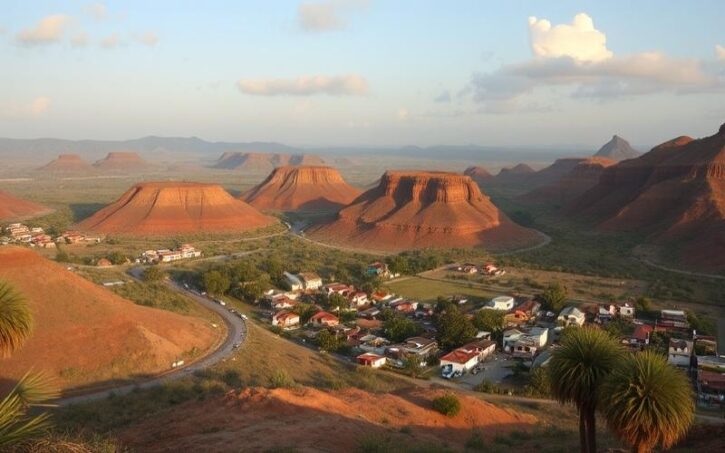
North Macedonia is increasingly attracting French citizens seeking new adventures. Between mountainous landscapes and rich cultural heritage, this lesser-known country draws those looking to venture off the beaten path.
But for a group of French expatriates, North Macedonia is much more than just an exotic stopover: it’s a genuine safe haven, where they’ve chosen to settle down, purchase real estate, and build a new chapter of their lives.
Through the testimonials of these modern pioneers, this article reveals the reasons that drove them to establish themselves here, their daily adventures, and the challenges they face while integrating into this evolving society.
Good to Know:
North Macedonia offers an attractive cost of living and preserved landscapes, ideal for those wanting to change their pace of life.
An Expatriate’s Journey: A French Citizen Becoming a Property Owner in North Macedonia
This French citizen’s relocation to North Macedonia is primarily explained by the search for a different living environment, motivated by the economic and tax advantages the country offers. North Macedonia particularly attracts with its affordable cost of living, favorable taxation, and accessible real estate market, especially compared to France where prices are high and access to property ownership is often complex.
The personal journey began with a desire to escape the beaten path, far from the classic destinations favored by French expatriates. Charmed during an exploratory trip—marked by the warm welcome of the locals and a rich local culture—he gradually decided to consider making it his long-term home. Professionally, he also benefits from new opportunities in an environment less competitive than mainland France.
Steps and Challenges to Become a Property Owner:
- Property Search: The Macedonian market is still less regulated compared to the French market; this requires more attention when choosing a property.
- Administrative Management: Procedures are less standardized; one often has to deal directly with the seller or through a local agent whose role differs greatly from French notaries or agencies.
- Financing: Access to bank credit for a foreigner can be complicated or even impossible without permanent residency.
- Language Barrier: Official documents are in Macedonian (Cyrillic), making it essential to either learn basic concepts or rely on a reliable translator.
- Legal Differences: The same legal security guarantees for property purchases as in France do not always exist.
Comparison Table Between France and North Macedonia:
| Aspect | France | North Macedonia |
|---|---|---|
| Average Price/m² | High | Moderate/Low |
| Purchase Process | Long & Regulated | Faster, Less Supervised |
| Credit Access | Easy for Residents | Difficult Without Local Status |
| Documents | In French | In Macedonian/Cyrillic |
Perceived Advantages After Settling In:
- Higher Quality of Life Thanks to Low Daily Costs
- Cultural Vibrancy, Ease of Building Connections with Locals and Expatriates Alike
- Increased Financial Freedom Allowing for More Personal or Professional Investments
- Real Possibility to Positively Influence One’s Community Through Imported Skills
Personal Anecdotes:
“After just a few weeks, my neighbors invited me to share their traditional meal around an impromptu barbecue in the common courtyard—a decisive moment when I felt I was becoming a full-fledged member of the neighborhood.”
“My first real estate negotiation was epic: between language misunderstandings and cultural differences in business pace… I learned that here ‘tomorrow’ could also mean ‘in three days,’ but that’s part of the local charm!”
This journey profoundly transformed his perspective on international openness, offering him not only material stability but also unexpected human richness. Integrating into this cosmopolitan society allowed him not only to rediscover his own European roots, but also to adopt a new philosophy based on adaptability, friendliness, and intercultural sharing.
Summary List of Positive Impacts on His Long-Term Vision:
- New Professional Perspective (Possible Creation/Expansion)
- Increased Openness to Cultural Differences
- Strengthened Feeling of “Being at Home” Outside of France
- Volunteering with Local Associations Facilitating His Integration
Ultimately, it’s this unique blend of tangible economic opportunities,
stimulating daily challenges,
and human enrichment that gives full meaning
to his bold choice of expatriation in North Macedonia.
Good to Know:
After a tourist stay in North Macedonia, Paul, a French expatriate, fell in love with the warm culture and affordable quality of life offered by the country, which pushed him to settle there permanently. Seeking to deeply integrate into the local community, he decided to become a property owner, attracted by real estate prices significantly lower than in France and a relatively simple purchase process, although obtaining documents in Macedonian posed some challenges. With advice from locals, he successfully navigated the administrative maze, marked by less rigid procedures than in France. Owning a house in Skopje allowed him to immerse himself in community life, participating in village festivals and learning local traditions like preparing ajvar. This choice not only enriched his cultural understanding but strengthened his sense of belonging, forever changing his view of life by now considering Macedonia a home where he envisions aging peacefully.
Challenges and Successes: Testimonials from French Citizens Investing in Real Estate
“The procedures were surprisingly simple; my business now fully benefits from tax exemptions, which significantly lightened my initial investment.”
This testimony from a French entrepreneur based in Skopje highlights the tax attractiveness and administrative simplicity of North Macedonia for foreign investors. He emphasizes the speed of business creation thanks to the one-stop shop, as well as access to free zones offering additional advantages.
Main Challenges Faced by the French:
- Purchase Procedures Different from France:
- Frequent Need to Create a Local Company to Purchase Real Estate.
- Several Specific Administrative Steps: Thorough Verification of Land Titles, Registration with Local Authorities.
- Importance of Using a Local Lawyer or Experienced Real Estate Agency to Secure the Process.
- Financing and Fund Transfers:
- Access to Mortgage Credit Often Limited for Non-Residents; Sometimes Need for Significant Personal Funds or Financing Through a Local Legal Structure.
- Mandatory Declaration to Macedonian Authorities When Transferring Funds from Abroad and Strict Banking Follow-Up.
- Language and Cultural Barriers:
- Official Documents Exclusively in Macedonian; Frequent Use of a Sworn Interpreter During Notarial Signings.
- Differences in Business Practices (Informal Negotiations, Importance of Local Network).
Comparison Table – Real Estate Purchase Process
| Steps | France | North Macedonia |
|---|---|---|
| Search | Agents/Online Platforms | Often Specialized Agencies |
| Offer | Signed Compromise | Preliminary Agreement |
| Financing | Common Credit | Personal Funds + Local Structure |
| Notary | Mandatory | Mandatory |
| Language | French | Macedonian |
Positive Anecdotes & Successes:
A Franco-Macedonian couple reports having bought an apartment in the historic center of Bitola. Thanks to attractive prices and low maintenance costs, they were able to completely renovate the property and then rent it on Airbnb with an occupancy rate higher than expected. The return on investment proved superior to that expected in several French regional cities.
An individual investor testifies to having acquired two studios near a major university to specifically target international student rentals. He indicates that “demand remains strong all year round, with few rental vacancies.”
Practical Advice Offered by These Expatriates:
- Always Be Accompanied by a French-Speaking Professional (Lawyer or Agent) Who Perfectly Masters Local Issues.
- Precisely Understand the Applicable Tax Rules Both in Macedonia and France (Risks Related to Double Taxation).
- Anticipate All Necessary Official Translations from the Start of the Project.
- Plan a Comfortable Financial Margin to Cover Unforeseen Administrative Costs or Unanticipated Renovations After Acquisition.
“The key really lies in the local network: don’t hesitate to reach out to your Franco-Macedonian network but also your neighbors! I received much more practical help here than in France during my first investments.”
This feedback illustrates how cultural integration, even initially limited by some language barriers, can quickly become a major asset thanks to the welcoming social fabric encountered on site.
Good to Know:
Several French citizens who chose to invest in real estate in North Macedonia testify to the challenges encountered, such as adapting to purchase procedures distinct from those in France and difficulties related to financing, often limited by local banks for non-residents. Jean, for example, successfully overcame the language barrier by hiring a professional translator, which allowed him to navigate administrative procedures more easily. As for Marie, she emphasizes the importance of cultural immersion to better understand the local market and make profitable investments; having rented an apartment in Skopje, she shares her anecdote of return on investment thanks to the tourism boom. For those looking to settle, it is advised to surround themselves with experienced local advisors to facilitate the process; Simon particularly recommends meticulously checking the legal history of properties to avoid bad surprises.
Living in North Macedonia: French Expatriates’ Views on the Real Estate Market
Types of Real Estate Most Sought After by French Expatriates:
- Modern Apartments in the City Center, Primarily for Their Proximity to Services, Shops, and Cultural Venues.
- Single-Family Homes in the Suburbs or Quiet Residential Neighborhoods, Often Preferred by Families Seeking a Peaceful Setting.
- Some Expatriates Are Also Interested in Properties for Renovation, Attracted by the Investment Potential and Future Appreciation.
Neighborhoods Favored by the French Community in Skopje:
| Neighborhood | Main Assets |
|---|---|
| Centar | Vibrant Urban Life, Easy Access to Services and Transport |
| Karposh | Green Spaces, International Schools, Chic Residential Atmosphere |
| Aerodrom | Proximity to the Center While Remaining Quiet; Attractive for Families |
Average Housing Prices (2025):
| Property Type | Average Price per m² | Observed Range |
|---|---|---|
| Apartment | 1,867 €/m² | 651 € – 2,711 €/m² |
| Rental | 6.37 €/m² | 3.86 € – 14.31 €/m² |
In Skopje, some central neighborhoods frequently exceed the 1,500 €/m² mark, particularly for recent or renovated properties.
“We chose Karposh because it’s close to the international school. The procedures were relatively simple thanks to our local agent who handled most of it. The transaction tax was reasonable (about 3%), but you should plan for several weeks for official registration.”
Julien M., French Expatriate in Skopje
Testimonials on Administrative Procedures and Cultural Differences:
- Procedures Are Generally Faster Than in France, But Less Digitalized; Many Steps Require Physical Presence or a Local Intermediary.
- Purchase Is Open to EU/OECD Nationals Without Major Restrictions; Otherwise, It May Be Necessary to Go Through a Local Company.
- Taxation Is Attractive: Low Corporate Tax (10%) If Purchased Through a Local Legal Structure.
“I was surprised that the contract was very freely negotiable between owner and tenant… It’s very different from French formalism! You must carefully check every clause before signing.”
Claire D., French Investor
Specific Advantages Noted:
- Attractive Prices Compared to Major European Capitals
- Possibility of Obtaining Residency Through Real Estate Investment
- Simple Real Estate Taxation and Low Rates
- Favorable Conditions for Landlords (Easier Termination in Case of Non-Payment)
Mentioned Disadvantages:
- Sometimes Lack of Transparency on the Property’s Actual Condition
- Difficulty Finding Certain Official Information Without Local Help
- Market Still Young: Limited Supply of Perfectly Renovated High-End Properties
“The market is evolving quickly here… Prices are rising regularly but remain accessible. However, you must be patient during transactions because not everything is computerized yet like elsewhere.”
Experience Shared During an Exchange Between Expatriates
Local Specificities Influencing Decisions:
The Macedonian Market Remains Primarily Oriented Towards Brick and Mortar Rather Than Sophisticated Financial Investments. Many expatriates therefore choose their acquisitions based on:
- The Relative Administrative Ease
- High Rental Potential Thanks to Legislation Favorable to Owners
- Financial Accessibility Allowing Either a First International Purchase or Asset Diversification
In Summary:
The Main Attraction Lies in the Good Quality/Price Ratio of Modern Urban or Family Housing as Well as the Relative Tax Simplicity—But with an Imperative Need to Be Locally Assisted During the Administrative Process.
Good to Know:
French expatriates in North Macedonia often favor modern apartments in Skopje neighborhoods like Debar Maalo and Kozle, where the average price of an apartment is around 1,200 € per square meter, well below major French cities. Administrative procedures for real estate acquisition are perceived as relatively simple, although some have noted cultural differences, particularly in price negotiation and contract flexibility. Buyers must be aware of quality variations between local constructions and Western standards. A major advantage lies in the affordable cost of living and local charm, while one of the mentioned drawbacks concerns integration difficulties due to the language barrier. Specificities like the absence of property taxes and a flourishing rental market often influence expatriates to invest rather than rent.
Disclaimer: The information provided on this website is for informational purposes only and does not constitute financial, legal, or professional advice. We encourage you to consult qualified experts before making any investment, real estate, or expatriation decisions. Although we strive to maintain up-to-date and accurate information, we do not guarantee the completeness, accuracy, or timeliness of the proposed content. As investment and expatriation involve risks, we disclaim any liability for potential losses or damages arising from the use of this site. Your use of this site confirms your acceptance of these terms and your understanding of the associated risks.

Cyril Jarnias is an independent expert in international wealth management with over 20 years of experience. As an expatriate himself, he is dedicated to helping individuals and business leaders build, protect, and pass on their wealth with complete peace of mind.
On his website, cyriljarnias.com, he shares his expertise on international real estate, offshore company formation, and expatriation.
Thanks to his expertise, he offers sound advice to optimize his clients' wealth management. Cyril Jarnias is also recognized for his appearances in many prestigious media outlets such as BFM Business, les Français de l’étranger, Le Figaro, Les Echos, and Mieux vivre votre argent, where he shares his knowledge and know-how in wealth management.





