
 Published on and written by Cyril Jarnias
Leaving one’s country to settle in Cape Verde is a dream for many prospective expatriates. With its white-sand beaches, mild climate almost year-round, moderate cost of living, and “no stress” vibe, the archipelago seems the ideal refuge for remote workers, retirees seeking sunshine, or families looking for a change of scenery. But beyond the postcard image, life on these ten volcanic islands off the coast of West Africa also comes with its share of challenges: slow administration, a still-fragile healthcare system, climate risks, a limited local job market, and uneven infrastructure across the islands.
This guide synthesizes recent data on the economy, cost of living, visas, residence, safety, health, climate, and education. It offers a realistic and nuanced view of the pros and cons of moving to Cape Verde, helping with decision-making while avoiding both the pitfalls of tourist marketing and excessive pessimism.
A Stable, Open, and Very Outward-Looking Archipelago
Cape Verde is an archipelago of ten islands, nine of which are inhabited, located in the Atlantic about 700 km off the African coast. A former Portuguese colony that gained independence in 1975, the Republic of Cape Verde is now considered one of the most stable and open democracies on the African continent. The semi-presidential system operates based on regular elections and peaceful transitions of power, with a strong rule of law and low political polarization.
The Cape Verde archipelago has just over 560,000 inhabitants.
The country ranks among upper-middle-income economies, with a GDP per capita around $5,000, a medium Human Development Index (the highest in West Africa), and a life expectancy of about 74 to 76 years. The archipelago is often presented as the “Caribbean of West Africa,” both for its landscapes and its relaxed lifestyle.
An Appealing Living Environment: Climate, Nature, and Gentle Human Relations
The primary argument in favor of Cape Verde is the perceived quality of life reported by many foreign residents. The climate is generally dry and tropical, with over 350 days of sunshine per year. The windy season, from October to mid-July, favors water sports, while the short rainy season (often between July and October, depending on the island) averages only about ten days of rain per year.
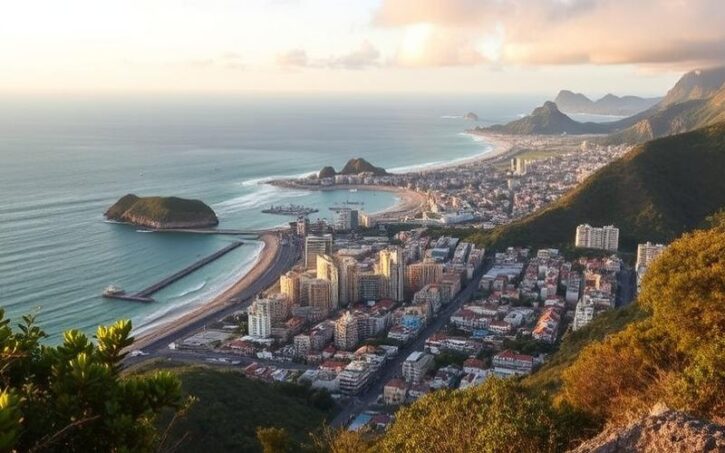
The Cape Verde archipelago offers a great variety of landscapes from one island to another. For a desert-like and seaside setting, the islands of Sal or Boa Vista offer white-sand beaches with translucent waters. Conversely, Santo Antão and Santiago offer lush mountains and agricultural valleys. For an urban and cultural vibe, Mindelo on the island of São Vicente is ideal. Finally, the island of Fogo stands out for its active volcano and steep terrain, suitable for hiking, trekking, or mountain biking.
The country is also known for its blended culture, shaped by African and European influences, where music and dance hold a central place. “Morabeza” – that warm, relaxed hospitality – is often cited by expatriates as one of the great joys of daily life. The population is largely perceived as open, friendly, spontaneous, with a strong sense of community. This conviviality facilitates meetings and integration, provided one makes the effort to embrace the country.
Cost of Living: Affordable for an Expatriate, Strained for a Local Salary
For a foreigner with external income (remote work salary, pension, annuities), Cape Verde offers a cost of living generally lower than that of Europe or North America. National estimates indicate that a single person needs, on average, about 133,000 escudos per month without rent (around $489), and that a single person spending with rent included hovers around $900 to $1,000. A family of four, rent included, falls within a range close to $2,000 per month.
Compared to the United States, the cost of living in Cape Verde is 50% cheaper with rent and 40% cheaper without housing. However, the local average net salary (≈$210/month) is 4.6 times lower than the cost of living, creating social tension and significant fragility for the population.
For an expatriate earning income abroad, this distortion translates into a comfortable standard of living, provided, of course, they carefully choose their island and type of housing.
Synthetic Comparison of Average Costs
| Expense Profile | Estimated Amount (CVE) | Estimated Amount (USD) |
|---|---|---|
| Monthly cost for 1 person (without rent) | ≈ 133,431 | ≈ 489 |
| Monthly cost for 1 person (with rent) | – | ≈ 973 |
| Monthly cost for family of 4 (without rent) | – | ≈ 1,389 |
| Monthly cost for family of 4 (with rent) | ≈ 278,931 | ≈ 2,100 |
| Average net salary | ≈ 30,000 | ≈ 211 |
For the expatriate, the main variable remains housing. A one-bedroom apartment in a city center costs on average just over 43,000 CVE per month, compared to 26,000 CVE on the outskirts. For three bedrooms, it’s around 59,000 CVE in the center and 37,000 CVE outside. However, the disparities between islands are considerable: Sal and Boa Vista, heavily dependent on imports and tourism, have significantly higher rent levels than agricultural islands like Santiago, Santo Antão, or Fogo.
Examples of Monthly Rents by Island for a 1-Bedroom Apartment
| Island / City | 1-Bedroom Range (per month) |
|---|---|
| Sal (Santa Maria) | €500 to > €1,000 |
| Boa Vista (Sal Rei) | €350 to €600 |
| Praia (Santiago) | €370 to €550 |
| Mindelo (São Vicente) | €300 to €450 |
| Fogo | €250 to €400 |
| São Nicolau | €150 to €300 |
Utilities (electricity, water, waste) add 13,000 to 17,000 CVE per month, with electricity bills climbing quickly with intensive air conditioning use. Fixed broadband internet generally ranges between 5,000 and 6,250 CVE for a fast connection, while mobile phone service remains affordable, with plans around 2,300 CVE for 10 GB of data or more.
Food, heavily dependent on imports on some islands, can represent a monthly budget of $200 to $400 for a couple, depending on whether you prioritize local or imported products. Restaurants remain generally affordable for an expatriate: a meal in a small local establishment often costs the equivalent of €5, and a full meal for two in a mid-range restaurant is around 4,500 to 5,000 Cape Verdean escudos (CVE).
An Attractive Array of Visas, Especially for Investors and Digital Nomads
Another important advantage: the immigration framework is relatively structured and rather favorable to economically self-sufficient foreigners. The entry, stay, and exit of foreigners are organized by a specific legal regime, supplemented by several laws governing residence for investment or remote work.
Nationals of many countries – notably the European Union, the United Kingdom, the United States, Canada, Brazil, the Schengen Area, or ECOWAS member states – are exempt from short-stay visas. Other nationalities can obtain a visa on arrival, provided they have a passport valid for at least six months and have pre-registered online via the EASE platform, which is also used to pay the airport security fee.
For a longer-term relocation, several options exist, each with its advantages and constraints.
The Remote Work Program: A Very Favorable Niche
Cape Verde has implemented a specific visa for remote workers and freelancers, often called the “Remote Working Program” or digital nomad visa. This scheme is for people who work exclusively for clients or employers outside the country. It allows legal residence in the archipelago for an initial period of six months, renewable once for a total of one year.
To obtain this visa, one must demonstrate an average monthly bank balance of €1,500 (or €2,700 for a family) over the last six months, pay about €20 in application fees and an airport fee of about €30. Processing the application takes about two weeks. This visa offers an exemption from tax on foreign-source income, creating a very attractive tax framework for well-paid remote workers, without automatically conferring local tax residency.
Classic Residence Visas and Permits
For a more permanent relocation project, the residence visa remains the basic tool. It is for those who wish to settle to work, study, invest, or join their family. It allows an initial six-month stay, time to apply for a residence permit with the General Directorate of Immigration and Borders.
There are two categories of permits: temporary (renewable annually) and permanent (renewable every five years since the 2000s). The procedure is heavy and slow: it requires many documents (financial proof, legalized criminal record, medical certificates, housing proof, etc.), is filed at a police station before being sent to Praia, and can take up to two years.
Residence by Investment: A Shortcut for the Wealthy
The country has also invested in a residence-by-investment program, centered on real estate. Purchasing a property of a certain value – starting from €80,000 in less wealthy areas, €120,000 in regions with higher per capita GDP – can grant a resident card (often called a “Green Card” in communications) for the investor and their family. This type of status paves the way to citizenship after five years of habitual residence.
This scheme offers advantages like attractive taxation, pleasant climate, moderate cost of living, and a faster procedure than a classic residence, attracting well-off Europeans in particular. However, it remains inaccessible to the majority of expatriation candidates and does not avoid administrative delays for certain actions (property titles, registrations, etc.).
Main Types of Visas and Uses
| Visa / Status Type | Duration and Main Purpose |
|---|---|
| Tourist Visa | 90-day stay (extendable), tourism and visits |
| Transit Visa | Transit up to 4 days |
| Temporary Visa | Business trips, short contracts, family visits |
| Residence Visa | Settlement for work, studies, family reunification |
| Remote Work / Nomad Visa | 6 months renewable once, remote work, flexible taxation |
| Residence by Investment | Right of residence via qualified real estate purchase |
Rather Lenient Taxation for New Residents
For eligible tax residents under certain regimes, Cape Verde can be tax-attractive. A “non-habitual resident” regime provides, for relevant taxpayers, a reduced tax rate of 10% on certain income for ten years, without generalized taxation of worldwide income. The scheme particularly targets retirees and people with foreign-source income.
This is the maximum marginal rate of the progressive personal income tax in Italy.
On the other hand, for companies or self-employed individuals who want to operate locally, the environment is more mixed: high taxation on imports and exports, sometimes a need for an import license, VAT, corporate taxes (around 25%), not to mention the burden of bureaucracy. Starting your own business is still possible – especially since an “Empresa no Dia” one-stop shop allows company formation in one or two days in some cities – but requires good legal and accounting preparation.
Local Job Market: Often a Dead End for Foreigners
For expatriates expecting to find a job locally, the reality is much less favorable than the climate or taxation. Local unemployment remains high, and the supply of skilled positions remains modest outside of tourism, construction, financial services, or renewable energy projects. Many companies prioritize hiring Cape Verdean citizens, especially since salaries there are much lower than those expected by a foreigner from a wealthy country.
Proficiency in Portuguese is almost essential to work outside of very touristy sectors or international assignments. English is spoken by about 8% of the population, mainly in tourist areas or among urban youth. In practice, the most realistic opportunities for an expatriate remain:
Discover the main sectors and roles accessible for a career abroad, leveraging technical, linguistic, or managerial expertise.
Access management or director positions within establishments or international groups in the hospitality and tourism sector.
Work in technical roles in engineering, renewable energy, construction, IT, or finance for regional or international companies.
Teach languages (notably English), provide training, or offer consulting services to a foreign clientele.
Create your own consulting or service structure, specifically targeting expatriates or foreign companies.
But it must be kept in mind that local salaries are often far from European standards, the market is small, and social and tax contributions are not negligible. Living in Cape Verde relying on a classic local job is therefore rarely a good financial calculation.
Remote Workers and Entrepreneurs: An Interesting but Demanding Playground
The archipelago has clearly identified the potential of digital nomads and digital companies. A national program, “Cabo Verde Digital,” aims to transform the country into a “digital nation”, develop 4G/5G infrastructure, and attract start-ups and freelancers. A submarine cable (EllaLink) directly connects the country to Portugal and Brazil, significantly improving international connectivity. Fiber optics are available in major cities (Praia, Mindelo, Santa Maria, Sal Rei) and Starlink is now operational, with equipment costs around $370 and a monthly subscription close to $50.
The monthly cost of a coworking space subscription in Cape Verde generally ranges between €100 and €250.
The main drawback remains a still fragile infrastructure in places: regular power outages, variable road quality, sometimes unpredictable inter-island transport, imperfect healthcare (see below), and a small local market. An entrepreneur targeting an international clientele can adapt to this; one needing a dense industrial ecosystem will likely find it limited.
Health: Notable Progress but Strong Limits for Serious Cases
On paper, the Cape Verdean healthcare system boasts enviable indicators for the region: life expectancy around 74 years, infant mortality lower than in neighboring countries, rising public health spending (from 1.9% of GDP in 2012 to 3% in 2019), basic coverage for all citizens. Yet, infrastructure remains very uneven across islands.
A Dual and Highly Centralized System
The country has a public system managed by the Ministry of Health, with a social fund (INPS) financing part of care for employees, and a growing private sector around major cities and tourist areas. The best-equipped hospitals are in Praia (Agostinho Neto Hospital) and Mindelo (Baptista de Sousa Hospital). Outside these hubs, services often remain basic: lack of equipment, specialists, beds, instability in water or electricity supply, prolonged wait times.
This is the estimated number of patients medically evacuated each year from Cape Verde, primarily to Portugal, due to the limits of the local healthcare system.
The Pragmatic Solution: International and Private Insurance
Most expatriates turn to private clinics, which offer shorter wait times, better comfort, and often better availability of English-speaking doctors. In Praia or on Sal, a consultation can cost between €20 and €30, which remains modest for an expatriate but high for a local. Establishments like Cardiomed in Praia, several polyclinics on Sal, or private clinics in Mindelo complement the public offer.
For a serious expatriation project, subscribing to international health insurance including medical evacuation is almost essential. Costs generally range between €100 and €200 per month per adult for broad coverage. Moreover, some visas, like the one for remote workers, explicitly require insurance covering healthcare and repatriation.
Even with proper insurance, an expatriate suffering from a serious illness or requiring highly technical care must keep in mind that optimal care will often occur abroad. Cape Verde is therefore better suited for people in generally good health or accepting the idea of evacuation in case of a serious problem.
Education: Limited Offer, Especially for Francophone or Anglophone Families
For families with children, the schooling question can quickly become a blocking factor. The Cape Verdean public system offers free compulsory primary education, with high enrollment rates and overall good literacy for the region. However, resource levels remain limited, grade repetition is frequent, and teaching is in Portuguese in a context where many students speak mostly Creole at home.
The offer of international schools is limited to a few establishments, mainly following French or Portuguese curricula. In Praia, the École Internationale Les Alizés follows the French program (AEFE/CNED). A Portuguese school supported by Lisbon is also present there. On the island of Sal, a French-accredited school operates in Murdeira. These schools charge high tuition fees in the local context and have limited capacity.
Anglophone families have very few options: to date, there is no major Anglophone international school in the classic sense (full British or IB curriculum). Compromise solutions – French or Portuguese school during the day, English lessons and support at home – or recourse to online schooling are common. Some parents opt for boarding school abroad starting in middle or high school.
For expatriate families with young children willing to invest in schooling, the archipelago remains feasible. For teenagers or parents attached to a rich Anglophone international curriculum with a wide range of options, the current offer is clearly insufficient.
Safety: A Generally Safe Country but Not Risk-Free
The image often portrayed of Cape Verde as a very safe country is not unfounded, provided it is nuanced. The archipelago remains one of the safest states in Africa, without local terrorism, with little or no political violence, and limited violent crime compared to many regional capitals.
Petty crime (pickpocketing, bag-snatching, opportunistic burglaries) is present, particularly in large cities like Praia and Mindelo, as well as in tourist areas of Sal and Boa Vista. Markets, street parties, isolated staircases, poorly lit beaches, and certain neighborhoods in Praia (Sucupira, Fazenda) are considered risky, especially at night.
The legal framework also presents particularities: minors under 16 cannot be prosecuted as adults, which sometimes leads groups of youths to carry out gang attacks. The police, although generally professional, have limited resources; response time is not always quick and chances of recovering stolen items remain low. An urban video surveillance network has been installed in several cities, but its effectiveness is debated.
For an expatriate, safety in Cape Verde is a positive argument, but it requires adopting cautious behaviors. It is advisable to avoid displaying jewelry and phones, limit cash use, prefer official taxis, avoid isolated places at night, and secure one’s home well. Although Cape Verde is considered safer than many countries in the region, it is important not to confuse “relatively safe” with “risk-free.”
Climate, Natural Risks, and Climate Change: A Fragile Paradise
Speaking of climate in Cape Verde is to evoke both very pleasant day-to-day weather conditions… and a structural vulnerability to natural hazards. The archipelago is located in a semi-arid zone, exposed to recurrent droughts, tropical storms, mudslides, and flash floods during rare intense rains. A significant portion of informal housing is in at-risk areas.
The country is exposed to volcanic and seismic activity, with an active volcano on the island of Fogo whose major eruption in the last decade caused evacuations and damage. It is also vulnerable to Atlantic storms and hurricanes. The effects of climate warming, like sea level rise, coastal erosion, coral bleaching, and water salinization, are already observed.
Climate projections indicate a rise in average temperatures, a likely decrease in precipitation of around 5 to 10% per year, and an increase in episodes of extreme rain over short periods. Sea level rise continues at about 3 mm per year. Authorities have adopted national adaptation plans, invested in renewable energy (goal of carbon neutrality by mid-century), and developed risk management tools, often with the support of international donors.
For an expatriate, climate risks are manageable on a daily basis but have a long-term impact on resources (water, agriculture), infrastructure (roads, coasts), and the cost of living. They must also be taken into account for any real estate investment, especially in coastal areas or valleys prone to landslides.
Cultural Integration: Easy to Live, Harder to Truly Master
In terms of social integration, Cape Verde offers many advantages: small communities where everyone knows each other, strong neighborly bonds, rich cultural life, mix of languages (Portuguese, Creole, sometimes English, French, or Spanish in tourist circles). Many expatriates report the ease of making informal contacts, being invited for a meal, a party, a boat trip.
Deep integration in Cape Verde requires time and real commitment. Although a few phrases in Creole facilitate contacts, proficiency in Portuguese is essential to understand society, handle administrative procedures, and fully participate in professional and social life. Avoiding being confined to an “expat bubble,” especially on very touristy islands, is crucial to prevent superficial relationships and a sense of isolation in the long term.
More broadly, as in most expatriations, differences in pace of life (“island time”), attitudes towards authority, work, time, or money can lead to misunderstandings. Many foreigners highlight the slowness of procedures, the unpredictability of some interlocutors, or the difficulty in advancing a real estate or administrative file within the expected timeframe. This initial “culture shock” tends to fade with experience but requires patience and adaptability.
Although the country has implemented a national immigration strategy, amnesty policies for undocumented individuals, and mediation actions, tensions and discrimination persist, notably towards certain African groups. For a European or North American expatriate with financial means, these tensions are rarely direct, but they reveal a non-uniform local society carrying prejudices.
Transportation, Insularity, and Daily Logistics
Living in Cape Verde also means accepting a certain degree of insularity. International air connections are via only a few airports, with links mainly to Europe, West Africa, and Brazil. Flight fares can be high, especially in high season, making frequent trips back to one’s home country costly.
Travel between islands is by plane or ferry. Ferries are cheaper but can be uncomfortable (rough seas, spartan comfort) and are sometimes canceled for weather or technical reasons. Some islands, like Brava or Santo Antão, have no airport, making access or emergency evacuation more difficult.
Within the islands, public transport consists of collective minibuses (“aluguer” or “colectivo”), very economical but uncomfortable and unpredictable, and taxis. In most cities, official taxis are identifiable by their color and remain affordable for an expatriate. Roads vary between decent paved roads and stone-paved roads that can become slippery in the rainy season. The car fleet and local driving are far from European standards; caution is therefore advised, especially since roadside assistance is non-existent.
For a peaceful life, it is advised to do shopping early, anticipate occasional stockouts of imported products, organize around sometimes limited opening hours, and accept that some services stop in the mid-afternoon. Personal flexibility is key to avoiding frustration.
Expatriation to Cape Verde: Who Is It Really Suitable For?
By crossing all these elements – political environment, economy, costs, health, education, safety, climate, culture – we can sketch the profile of expatriates for whom Cape Verde represents a coherent choice, and those for whom it risks being disappointing or complicated.
The country appears particularly suited to people: full of energy, seeking new adventures, wanting to discover varied cultures and looking for a pleasant living environment.
This profile corresponds to people with stable income from abroad (remote workers, freelancers, retirees with pensions, annuitants), in good health and accepting a still-limited healthcare system. They are attracted by nature, outdoor activities, local culture, and a slower pace of life. To integrate, they are willing to learn basic Portuguese and some Creole. Finally, they are not held back by a limited educational offer, being single, couples without children, or having very young children with a substantial education budget.
Conversely, expatriation to Cape Verde risks encountering heavy obstacles for:
– people suffering from chronic illnesses or conditions requiring close monitoring by specialists and heavy equipment;
– families with middle or high school-age children wanting an Anglophone curriculum or a wide range of educational options;
– expatriation candidates who plan to live on a local salary and have no significant external income;
– those who poorly tolerate uncertainty, administrative slowness, or imperfect infrastructure;
– real estate investors averse to risk, who primarily seek the security of an ultra-mature and fully documented market.
Cape Verde offers political stability, a sunny climate, a reasonable cost of living, advantageous taxation for some, and a warm welcome. However, one must contend with a slow administration, a fragile healthcare system, a narrow job market, climate vulnerability, and a limited educational offer. It’s a real country, with its strengths and fragilities.
For those ready to adopt a clear-eyed stance, anticipate constraints (visas, health insurance, education, logistics), learn the language, and anchor themselves in local life, the archipelago can offer a rich, peaceful, and sustainable expatriation experience. For others, it may remain a magnificent vacation destination – which is not so bad already.
Disclaimer: The information provided on this website is for informational purposes only and does not constitute financial, legal, or professional advice. We encourage you to consult qualified experts before making any investment, real estate, or expatriation decisions. Although we strive to maintain up-to-date and accurate information, we do not guarantee the completeness, accuracy, or timeliness of the proposed content. As investment and expatriation involve risks, we disclaim any liability for potential losses or damages arising from the use of this site. Your use of this site confirms your acceptance of these terms and your understanding of the associated risks.

Cyril Jarnias is an independent expert in international wealth management with over 20 years of experience. As an expatriate himself, he is dedicated to helping individuals and business leaders build, protect, and pass on their wealth with complete peace of mind.
On his website, cyriljarnias.com, he shares his expertise on international real estate, offshore company formation, and expatriation.
Thanks to his expertise, he offers sound advice to optimize his clients' wealth management. Cyril Jarnias is also recognized for his appearances in many prestigious media outlets such as BFM Business, les Français de l’étranger, Le Figaro, Les Echos, and Mieux vivre votre argent, where he shares his knowledge and know-how in wealth management.





