
 Published on and written by Cyril Jarnias
A land of mythical safaris, Indian Ocean beaches, and volcanic mountains, Tanzania is also a vast playground for athletes. From street football in Dar es Salaam to marathons at the foot of Mount Kilimanjaro, via kitesurfing in Zanzibar or basketball in working-class neighborhoods, the country offers a much wider range of activities than one might imagine. For an active traveler, an expatriate, or a Tanzanian curious about (re)discovering their own country, understanding which sports to play, where and how, allows one to experience Tanzania from the inside.
This article presents an overview of the most popular sports in Tanzania, detailing places to play, available formats, major events, and current trends defining the national sports landscape.
Football, Tanzania’s Sporting DNA
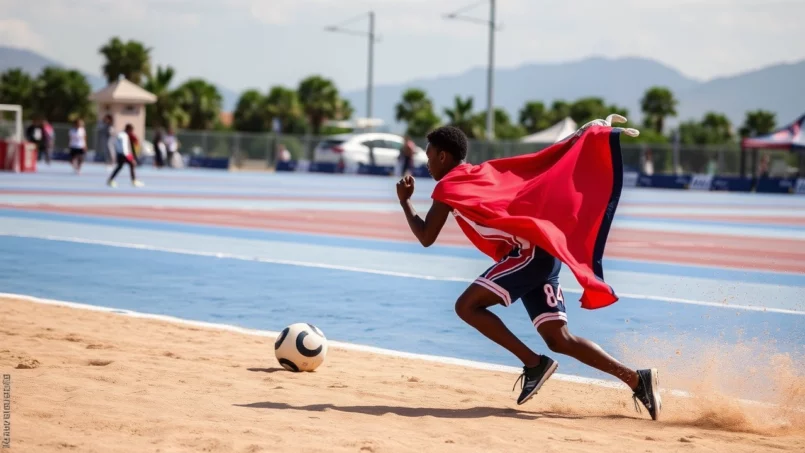
In Tanzania, the king of sports remains football, or “mpira” in Swahili. Introduced in the 1930s, it has established itself as a true common language, from rural villages to big cities. The number of players is estimated at around 2 million, with nearly a quarter of the population being regular supporters.
The system is structured by the Tanzania Football Federation (TFF), founded in 1945 and affiliated with FIFA since 1964. The TFF oversees both the men’s and women’s national teams and the entire league system: Premier League (Ligi Kuu Tanzania Bara), Championship, First League, Regional Champions League, U20 and U15 championships, as well as the women’s Serengeti Lite League.
Tanzania’s elite championship, the NBC Premier League, comprises 16 clubs competing in a promotion-relegation system.
The table below provides an overview of the main competition levels:
| Competition Level | Number of Teams | Main Characteristics |
|---|---|---|
| Premier League (Ligi Kuu) | 16 | CAF Qualification, 2 direct relegations |
| Championship | 16 | Second national level |
| First League | 24 (4 groups) | Four groups of six teams |
| Regional Champions League | 28 (4 groups) | Four groups of seven teams |
| Youth League U20 | Variable | Youth talent development |
| Youth League U15 | Variable | Early player detection |
Historically, organized football began in Dar es Salaam in the 1920s with a few neighborhood teams, before expanding to the national level in 1965. Iconic clubs like Young Africans (Yanga) or Simba SC, heirs to street clubs linked to communities (Arab, Indian, African), still dominate the landscape, both sportingly and culturally. Yanga holds over 30 national titles, Simba over 20, and their clashes at Benjamin Mkapa Stadium in Dar es Salaam easily fill the 60,000 available seats.
For a visiting athlete in Tanzania, playing football often involves neighborhood friendly matches and improvised ‘pick-up games’ on municipal, school, or dirt fields. The invitation is simple: usually, all you need is a pair of shoes and a minimum level of fitness to join a game. This culture of openness and accessibility makes local football a privileged gateway to discover and integrate into Tanzanian life.
Marathons, Running, and Trail Around Kilimanjaro
While football remains the most followed sport, Tanzania has in recent years become a prime location for running, notably thanks to Mount Kilimanjaro and its vast natural spaces. The reference marathon is the Kilimanjaro Marathon, organized every year in Moshi since 2003 and certified by World Athletics via AIMS. It typically offers three distances: marathon (42 km), half marathon (21 km), and fun run (5 km). The course takes place on paved roads, between 830 and 1,150 m in altitude, with uphill sections, enough to add challenge without making it an extreme test.
The following table summarizes some characteristics of this iconic marathon:
| Event | Location | Distances Offered | Particularities |
|---|---|---|---|
| Kilimanjaro Marathon (Moshi) | Moshi | 42 km, 21 km, 5 km | Road race, qualifier for Comrades, very festive atmosphere |
The race attracts runners from around the world and benefits from the official support of the Tanzania Tourist Board, the national athletics association, and World Athletics. The influx of participants transforms Moshi into a sports festival city: fully booked hotels, packed restaurants and pubs, entertainment throughout the weekend. For a traveling runner, it’s the ideal opportunity to combine athletic performance, urban immersion, and a permanent view of the roof of Africa.
Trail Running and Ultra-Trails Around the “Roof of Africa”
Beyond road running, Tanzania is rapidly developing an offering of trail runs and ultra-trails in settings of savannah and tropical forest. Ultra X Tanzania, for example, is a five-day stage ultra-marathon in the north of the country, around Mount Kilimanjaro. Participants run or walk, with an average time of 2h30 per 10 km segment between checkpoints. The route mixes partial climbs on the slopes of Kilimanjaro, traversing savannahs, forests, and lake areas.
The event is accessible to various endurance profiles, as the majority of participants walk about half the course. In case of dropping out on a stage, a runner can try again the next day or join the logistics team. A robust safety system is ensured (individual geolocation, support vehicles, time limits). ‘Post-race vacation’ packages are offered with Red Knot Travel, including safaris (Serengeti, Ngorongoro, Tarangire) and Kilimanjaro climbs (5 or 7 days).
In the same spirit, formats combining running, trekking, and cultural discovery are multiplying. A notable example is the WildMarathon-type program around Kilimanjaro, with a “Kilimanjaro Marathon” organized inside the national park. The route uses tracks and trails through tropical forest, heather, and Afro-alpine landscapes, with a high point of 3,600 m for the marathon and half, and 2,300 m for the 10 km. The start is usually near the Londorosi Gate, around 2,300 m altitude, and the single-loop course, with two “loops,” leads all runners to the same finish line.
The event is scheduled for July-August to avoid periods of extreme heat and heavy rain, with expected temperatures between 5°C and 19°C. Registration usually includes an exclusive technical jersey, as well as all logistics: accommodation, meals, transfers, supervision, a one-day safari, and visits to Maasai villages. Extension options are also available to attempt the summit climb via a 6-day itinerary.
Busy Calendar of Marathons and Half Marathons
Between Moshi, Arusha, Dodoma, Morogoro, or the lake region, road running events follow one another. Without going into a detailed chronology, the offering is structured around a few recurring formats:
Discover the diversity of running events in Tanzania, from classic urban races to unique events in the heart of national parks and with a social vocation.
Road races in urban or peri-urban areas, like the Kilimanjaro Marathon in Moshi, or the marathons of Dodoma, Arusha, and Morogoro.
Events in the heart of national parks: Lake Manyara Marathon (5 km, 10 km, half) and Serengeti Safari/Migration Marathon (from 5 km to marathon) in unique ecosystems.
Activist events combining sport and awareness, like the Stop GBV Half Marathon in Zanzibar against gender-based violence.
For those seeking a very long-distance challenge, atypical formats exist, such as a Tour of Kili with a 150 km race combined with mountain biking, or 50 to 75 km ultra-trails during dedicated trail weekends in the Western Kilimanjaro.
Tanzania has thus become a privileged playground for runners: from the jogger who simply wants to participate in a friendly 5 km, to confirmed marathoners seeking mythical courses, to ultra-trail runners attracted by the altitude/safari combination, everyone finds a suitable format.
Zanzibar: Paradise for Water Sports and Beach Lifestyle
Apart from the mainland, the Zanzibar archipelago, accessible via Abeid Amani Karume airport in Stone Town, concentrates an essential part of the Tanzanian sports offering, especially for sea lovers. The combination of warm water (25–29°C), regular trade winds, coral reefs, and white sand beaches makes it a reference spot for water sports in the Indian Ocean.
On the main island, certain places have specialized in very targeted practices.
Kitesurfing, Windsurfing, and Gliding in Paje, Jambiani, and Pwani Mchangani
Paje Beach, on the southeast coast, has become the “capital” of kitesurfing in Tanzania. Its vast shallow lagoons, sandy bottom, and regular trade winds make it an ideal ground, both for beginners and freestyle. The best periods for kiting span from June to September and December to February, with a peak during the northeast monsoon. Several schools and dedicated centers can be found there: Zanzibar Kite Paradise, Kite N Surf Zanzibar, Kite Centre Zanzibar, One Love Kite School, Luna Kite School, to name a few.
Windsurfing is particularly favorable from December to March. For stand-up paddleboarding (SUP), outings are recommended at sunrise or sunset, in the mangrove or along the coral reef.
Further south, Jambiani offers a calmer atmosphere, ideal for mixing kitesurfing or SUP sessions with a relaxing beach stay. To the northeast, Pwani Mchangani is renowned for learning kitesurfing, with a more moderate sea, well-suited for beginners.
Diving, Snorkeling, and Sea Excursions in Nungwi, Kendwa, and Mnemba
At the northern tip of the island, Nungwi and Kendwa form the beating heart of diving and snorkeling. Centers like East Africa Diving or Zanzibar Watersports organize daily trips to recognized sites: Mnemba Atoll (marine conservation area), Kichwani Reef, Aquarium, Big Wall, or Leven Bank, renowned for experienced divers. Visibility, often excellent from June to October, allows for observing turtles, tropical fish, rays, sometimes reef sharks, and even whale sharks during certain periods.
Kendwa Beach offers a wide range of water activities like jet-skiing, parasailing, stand-up paddleboarding, glass-bottom boat cruises, ringo tubing, wakeboarding, and big game fishing. Less crowded than Nungwi, it allows enjoying these leisure activities and swimming at high tide all day.
Mnemba Atoll, off Matemwe, stands out as a must for snorkeling and diving, with its protected reefs, turtles, and schools of colorful fish. Chumbe Island, another private reserve, limits scuba diving but allows snorkeling on very well-preserved reefs.
Kayaking, SUP, and Eco-Tours in Bays and Mangroves
Menai Bay, Pongwe Lagoon, Chwaka Bay, or the mangroves of Michamvi are particularly well-suited for kayaking or stand-up paddleboarding excursions. Several operators offer tours in transparent kayaks, very popular for observing the seabed, at Blue Lagoon or in calm bays like Unguja Ukuu. Excursions on traditional dhows, wooden sailing boats emblematic of the Swahili coast, depart from Stone Town or the Fumba peninsula for sunset cruises or snorkeling trips.
On the beaches of Kiwengwa and Dongwe, motorized sports (jet-ski, parasailing) are offered alongside calmer activities (SUP, kayaking). In Jambiani, the annual Zanzibar Beach & Watersports Festival celebrates this multi-activity culture with friendly competitions, kitesurfing demonstrations, beach volleyball, and concerts.
Beach Sports, Yoga, and Running Along the Coast
Beyond water sports, the Zanzibari coast lends itself to a multitude of low-logistics practices: beach soccer at sunset, beach volleyball in Kendwa or Paje, yoga on the sand in many hotels or specialized centers, morning jogging on miles of almost deserted beaches. On Nakupenda Sandbank, an ephemeral sandbank off Stone Town, one alternates swimming, snorkeling, and beach games between tides.
For a sports-oriented stay, a mix over 5 to 7 days generally allows combining kite or diving (depending on level), a dhow trip, daily running or yoga, and a few hours simply dedicated to relaxation.
The table below illustrates the specialization of some major spots in Zanzibar:
| Location | Main Activities | Ideal Participant Profile |
|---|---|---|
| Paje | Kitesurfing, windsurfing, SUP, beach running | Kiters, gliding enthusiasts, active travelers |
| Jambiani | Kitesurfing, SUP, kayaking, beach sports festival | Families, couples, those seeking a calm atmosphere |
| Nungwi | Diving, snorkeling, jet-skiing, parasailing, big game fishing | Party-goers, divers, versatile athletes |
| Kendwa | Beach volleyball, various water sports, swimming | Travelers seeking an animated but less dense beach |
| Mnemba Atoll | Diving, snorkeling | Divers, snorkelers |
| Michamvi / Menai | SUP in mangroves, kayaking, dhow trips | Eco-tour and nature lovers |
Basketball: A Booming Urban Sport
While football still occupies center stage, basketball is progressing fast and establishing itself as a major urban sport, particularly among younger generations. The number of players in the country is estimated at around 40,000. The National Basketball League structures the elite, while regional and university leagues are developing.
In Dar es Salaam, several courts have become true institutions. The Kinondoni Club, right in the heart of the city, is a very frequented, well-maintained, and lit outdoor court, attracting impromptu matches and an enthusiastic crowd every evening. A local coach with over ten years of experience emphasizes that facilities of this level inspire children to dream of becoming professionals.
Playing in a facility of this level changes everything in terms of pace, tactics, and ambition.
A Dar City player
In Dodoma, the Dodoma Sports Complex, recently renovated, is beginning to play this role as a hub for youth programs and tournaments, although the site is still under development. The Tanzanian Basketball Federation (TBF) plans to eventually add indoor courts there. Upanga Playground, another outdoor court in Dar es Salaam, is free and very popular with teenagers, with almost daily matches creating an intense basketball culture.
The following table summarizes some key courts:
| Court / Site | City | Type | Main Use and Assets |
|---|---|---|---|
| Kinondoni Club | Dar es Salaam | Outdoor | Pick-up games, very lively atmosphere |
| Azania Secondary School | Dar es Salaam | Indoor | Regional league, tournaments, competitive matches |
| Dodoma Sports Complex | Dodoma | Outdoor | Youth program center, expanding |
| Upanga Playground | Dar es Salaam | Outdoor | Free access, nursery for young talents |
The TBF is working to expand access to these facilities, knowing that a large part of the courts belong to schools or private institutions, which limits free use. Partnerships are emerging with actors like NBA Africa, which plans to build new courts in East Africa, or companies like Betway, which renovated the Leaders Club court in Dar es Salaam as part of a pilot project targeting five public facilities.
The amount, in dollars, of the investment for a hyper-modern basketball complex in Fumba, near Zanzibar City.
For traveling players, however, the most accessible reality remains that of the playgrounds: it’s often enough to arrive with your shoes, watch for a few minutes, and a team will adopt you for the next “game to 11“.
Boxing: A Well-Established Tradition
The second most popular sport according to some rankings, boxing became established in Tanzania in the 1950s and today counts nearly 20,000 practitioners. The country has seen recognized champions emerge on the continent, like Rashid “Snake Man” Matumla, former WBU super-welterweight champion, or Hassan Mwakinyo, a very high-profile current figure, holder of the African Boxing Union (ABU) super-welterweight title among others, and WBF and UBO intercontinental crowns.
Major boxing nights, organized mainly in Dar es Salaam but also in Tanga, Zanzibar, or Dodoma, form the pinnacle of a pyramid. These international events, like the ‘Rumble in Dar’, coexist with a vital network of neighborhood clubs with rudimentary facilities but very frequented, which constitute the base for boxer training.
For a visiting boxing enthusiast, attending a gala is a direct immersion into a popular sports culture: electric atmosphere, orchestras, dancing, loud but knowledgeable crowd. Practicing itself requires more organization, as gyms are not always visible or open to everyone, but contacts through local trainers or well-known clubs sometimes allow signing up for a few training sessions.
Rugby: A Small Sport Aiming to Grow
Rugby union remains a minority sport in Tanzania, but the dynamic is clear: the discipline is gradually gaining visibility, especially in certain regions like Arusha, Moshi, Tanga, and Dar es Salaam. The game was long the preserve of white and expatriate communities in East Africa, but targeted programs now seek to integrate more and more young Tanzanians.
The Tanzania Rugby Union (TRU), an associate member of World Rugby and a founding member of the African Rugby Confederation, is behind this strategy. The national team, nicknamed the ‘Twigas’ (the giraffes), played its first official international match in 2004, winning a victory against Burundi. It then won the CAR Castel Cup in 2006 and the southern zone division 2 in 2007.
In Arusha, the Arusha Rugby Development Programme (ARDP) relies on the Arusha Rhinos club to intervene in primary and secondary schools, introducing the youngest to tag rugby (non-contact) then to 7s or 10s. Tournaments for U12, U15, U18 categories are organized, including boys and girls, and some youngsters have even participated in competitions abroad, in Kenya or the United Kingdom.
The goal is to reach a network of about twenty rugby clubs in Tanzania within a few years.
For a foreign player, male or female, it is often possible to train with these clubs, the rugby culture being very open and based on solidarity. Expatriates rub shoulders with local players, in an atmosphere reminiscent of traditional amateur clubs in Europe or Southern Africa.
Cricket, Baseball, Volleyball, Netball: Club and Campus Sports
Other sports, less covered internationally, also offer great opportunities for practice on site.
Cricket, introduced to Zanzibar by the British navy in the late 19th century and then developed in Dar es Salaam, has a rich history. Long practiced by Indian and European communities, it is now opening up to African players. To join a team, a club player must usually go through urban club networks, notably in Dar es Salaam and Arusha. The Tanzanian Cricket Association is an associate member of the ICC and the men’s national team has T20I status, with a positive record against many associate nations.
Baseball, more recent, was structured from the 2010s with the help of the Japanese association AFAB and the creation of the Tanzania Baseball and Softball Association. It is played a lot in some secondary schools, making it an interesting curiosity for enthusiasts of this sport, even though facilities remain rare.
Volleyball and netball have been deeply rooted in schools since the 1960s and remain heavily practiced by youth. Netball is a major women’s sport, although its development has suffered from a lack of support compared to football or basketball. Regional leagues, like the Kilimanjaro Regional Netball League, structure competition and offer players a platform for expression with regular season and playoff formats.
For a traveler, practicing these disciplines often involves university campuses, company clubs, or community organizations. They are less visible to the passing tourist, but very present once you stay a few weeks in the same place.
Mountain, Hiking, and Adventure Sports
Impossible to talk about sports in Tanzania without mentioning the ascent of Mount Kilimanjaro, the world’s highest free-standing mountain (not part of a range) at 5,895 m. For thousands of walkers every year, it is not a technical mountaineering feat, but an endurance challenge at high altitude. The best-known routes (Machame, Marangu, Lemosho…) take 5 to 7 days, with mandatory guides and porters.
Around this monument, many treks are accessible in the Usambara and Pare mountains, the Ngorongoro highlands, or the Udzungwa mountains. These hikes are often integrated into trips combining walking safaris, chimpanzee observation (in Mahale), or homestays.
Other activities complete the adventurer’s toolkit: paragliding on the slopes of Meru or around Kilimanjaro, climbing on little-frequented rock faces, cycling safaris around Lake Manyara, horseback safaris in private reserves like Grumeti, canoeing or kayaking in certain lake areas. These practices generally require going through specialized agencies but offer a unique perspective on landscapes often approached in classic 4×4 vehicles.
Zanzibar, Pemba, Mafia: Diving, Sport Fishing, and Advanced Water Sports
In addition to Zanzibar, the islands of Pemba and Mafia represent major maritime playgrounds. Pemba is renowned for its vertiginous drop-offs and technical dive sites, highly appreciated by experienced divers. Mafia Island, with its marine park, is world-famous for swimming with whale sharks (in certain seasons) and some of the richest dive spots in the western Indian Ocean.
Big game fishing, targeting tuna, marlin, and swordfish among others, is very developed. Other activities like water skiing, wakeboarding, and windsurfing are also accessible, via hotels or local operators, on the islands and along the mainland coast (for example in Saadani).
Sector actors increasingly emphasize the need for responsible practice: use of “reef-safe” sunscreen, respect for dolphin approach guidelines in Kizimkazi, selection of certified dive centers (PADI or equivalents), limiting impact on reefs. For the traveling athlete, these selection criteria are essential if they wish for the spots that attract them today to still exist tomorrow.
Traditional Sports: Bao, Wrestling, Beach Games, and Cultural Identity
Tanzania is not limited to modern sports. Traditional games like Bao (a local variant of mancala) hold an essential place in the culture. Played on a wooden board with seeds or pebbles, Bao is both a strategy game and a social ritual. It is found in the alleys of Zanzibar, on the squares of Bagamoyo, or in villages of the Rift Valley, often in the shade of a tree, surrounded by spectators commenting on every move. The fact that former President Julius Nyerere was a great fan illustrates its symbolic importance.
Practices like traditional wrestling, jump rope games (Rede), woven ball games, or slingshot (manati) contests are common among youth. The organization CHAMIJATA works on their codification for international recognition. Events, sometimes linked to historical figures like Nyerere, aim to promote them as sports in their own right, beyond mere folklore.
For a visitor, participating in a game of Bao, attending wrestling at a local festival, or learning the rules of a traditional beach game can be as memorable as climbing Kilimanjaro or kitesurfing in Paje. It is a way to understand how sport, in a broad sense, is at the heart of Tanzanian community life.
How to Integrate Sports into a Trip to Tanzania?
Concretely, integrating a sports dimension into a stay in Tanzania happens quite naturally. A few typical scenarios emerge.
A first scenario involves building your trip around a major event: running the Kilimanjaro Marathon in Moshi, participating in a half marathon in the Serengeti, or attempting a stage ultra-trail around Kilimanjaro, then following up with a few days of safari and/or beach in Zanzibar. Specialized agencies already build this type of package, integrating logistics, accommodation, transfers, and even active recovery days.
A flexible scenario for travelers is to choose a base like Dar es Salaam, Arusha, Moshi, or Zanzibar and seize local sports opportunities. This can include: playing football or basketball on a neighborhood court, joining a morning running group, signing up for a kitesurfing or diving initiation, renting a bike to explore the surroundings, or borrowing a Bao (traditional board game) set from the hotel or a local. This approach encourages gradual immersion into the local sports and social fabric.
Finally, for longer stays (expatriation, volunteering, studies), it is possible to join structured clubs for rugby, basketball, volleyball, cricket, or programs like those run by the TBF for basketball or the TRU for rugby. This requires a bit of administrative effort but opens direct access to local competitions, a training routine, and a network of often very strong friendships.
A Sports Scene in Full Transformation
Tanzania is today at a pivotal moment in its sports history. On one hand, constraints remain strong: lack of covered stadiums (only one large indoor gymnasium nationwide), insufficient public courts in booming cities like Dodoma, dependence on school or private facilities sometimes difficult to access. On the other hand, positive signals are multiplying: investments in 56 schools to improve fields and prepare better athletes, projects for large basketball complexes in Dar es Salaam and Zanzibar, partnerships with international actors, rise of niche sports like baseball or swimming, development of women’s sports (netball, rugby, basketball, football).
In Tanzania, sport is a pleasure, a vector for social mobility, and a space for cultural dialogue. For travelers, this translates into many opportunities for participation: classes, tournaments, festivals, or races. Whether it’s running near Kilimanjaro, kitesurfing in Paje, playing basketball in Dar es Salaam, or watching a Bao game in Stone Town, each activity allows one to take part in this collective dynamic in their own measure.
In Tanzania, sport is not just an activity: it’s another way to explore the landscapes, meet people, and understand a country on the move.
Disclaimer: The information provided on this website is for informational purposes only and does not constitute financial, legal, or professional advice. We encourage you to consult qualified experts before making any investment, real estate, or expatriation decisions. Although we strive to maintain up-to-date and accurate information, we do not guarantee the completeness, accuracy, or timeliness of the proposed content. As investment and expatriation involve risks, we disclaim any liability for potential losses or damages arising from the use of this site. Your use of this site confirms your acceptance of these terms and your understanding of the associated risks.

Cyril Jarnias is an independent expert in international wealth management with over 20 years of experience. As an expatriate himself, he is dedicated to helping individuals and business leaders build, protect, and pass on their wealth with complete peace of mind.
On his website, cyriljarnias.com, he shares his expertise on international real estate, offshore company formation, and expatriation.
Thanks to his expertise, he offers sound advice to optimize his clients' wealth management. Cyril Jarnias is also recognized for his appearances in many prestigious media outlets such as BFM Business, les Français de l’étranger, Le Figaro, Les Echos, and Mieux vivre votre argent, where he shares his knowledge and know-how in wealth management.





