
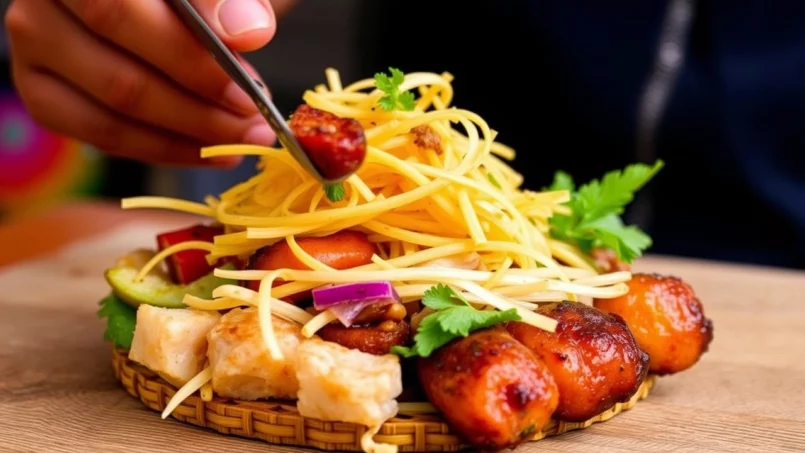
 Published on and written by Cyril Jarnias
Discovering a country through its plates is often more telling than any guidebook. In Tanzania, cuisine is not just a set of recipes: it is a mirror of over 120 ethnic groups, centuries of spice trade, and a culture based on sharing. For an expatriate, learning to eat “the Tanzanian way” is key to understanding the country from within, making friends, and no longer feeling like just a visitor.
This guide covers table manners, breakfast suggestions, city restaurant recommendations, market customs, water and street food precautions, and tips for getting used to local spices.
Understanding Tanzanian Dining Culture
Tanzanian society is deeply communal. Extended family and neighborhood take precedence over the individual, and this is immediately visible in the way people eat. Meals are often shared from a large communal dish, placed on a low table or directly on a woven mat. Each person eats from their own section, using only the right hand.
Eating is a social act, not a moment to rush through on the go. Snacking while walking down the street is unusual, even frowned upon. People sit down, take time to talk, and it would be shameful for a host to let a guest leave on an empty stomach. This is why the quantities served during celebrations or ceremonies can sometimes seem excessive to a newcomer.
Food Culture and Customs
The right hand remains the golden rule. It is used for eating, greeting, giving, and receiving. The left hand is associated with personal hygiene; placing it on a shared dish or offering a gift with the left hand alone is seen as disrespectful. Before and after the meal, a bowl of water may be brought to wash your hands. This is not a folkloric gimmick but an essential gesture to adopt.
In Tanzania, conspicuously bringing a dish to your nose to smell it is an insulting gesture, as it expresses distrust about the cleanliness of the kitchen. It is better to ask a polite question if you are concerned about a food item.
Meals often follow an implicit order: guests and men first, then children, and finally women. This pattern varies depending on the setting but is still found in many traditional households. At the table, it’s best to wait for the host to start eating or to explicitly invite you to do so. Finishing your plate is a sign of appreciation; having a second helping is a silent compliment.
For an expatriate, respecting these codes – greeting elders first, saying “Shikamoo” to an elder, using the right hand, accepting at least a little of what is offered – is worth more than a long speech about integration.
The Pillars of Tanzanian Cuisine
Tanzanian cuisine was built at the crossroads of worlds: Bantu traditions, Arab and Persian influences, successive arrivals of Indians and then European powers. On the menu: a robust African base (grains, tubers, leafy greens) worked with spices brought by traders from afar, all adapted to very varied climates and terroirs.
The Basic Ingredients
In most households, a few products appear almost daily. They structure meals and explain why the local cuisine is at once simple, nourishing, and surprisingly varied.
| Category | Common Key Ingredients |
|---|---|
| Grains / Starches | Corn (for ugali), rice (wali), millet, sorghum, cassava, wheat (chapati) |
| Vegetables | Beans, peas (njegere), spinach and mchicha, sukuma wiki (kale), okra (bamia), cassava leaves (kisamvu), tomatoes, onions, carrots, bell peppers, potatoes |
| Fruits | Mangoes, papayas, pineapples, watermelons, oranges, avocados, bananas/plantains (at least 17 varieties), guavas, passion fruit, coconuts |
| Proteins | Chicken (kuku), beef (ng’ombe), goat, fish and seafood on the coast, beans and legumes |
| Fats | Vegetable oils, coconut milk and cream |
| Spices | Cloves, cinnamon, cardamom, ginger, turmeric, cumin, black pepper, chili, nutmeg |
This abundance comes from an agriculture that employs over 65% of the population. Markets are full of seasonal products often grown less than 100 km from where they are sold. For an expatriate used to ultra-processed products, this access to fresh, inexpensive ingredients is one of the immediate daily pleasures.
Ugali, the National Staple
If there is one dish to know to understand Tanzania, it’s ugali. This thick paste, made from cornmeal (or sometimes millet, sorghum, or cassava flour) and water, is served almost everywhere, from the most remote villages to the buffets of safari lodges. It resembles a very firm polenta, which is pinched off into balls with the fingers of the right hand to scoop up sauces, vegetables, or meat.
Ugali, a staple dish made from cornmeal, transcends its simplicity to hold strong symbolic meaning. In some communities, it is considered a manly food, a source of strength for manual laborers like fishermen, farmers, and workers. Its low cost and high energy value also make it a very frequently consumed food, which many families eat several times a week, or even twice a day.
One of the most widespread pairings is “ugali maharage”, an alliance of this white paste with beans in sauce, often cooked with tomatoes, onions, and sometimes coconut milk. For an expatriate, it’s an ideal introductory dish: very filling, easy to find, and naturally vegetarian.
Rice, Beans, and Coconut Milk
Rice (wali) constitutes the other dietary pillar. Plain, it accompanies meat, fish, or vegetable sauces. Cooked in coconut milk with a little salt and sometimes cardamom, it becomes “wali wa nazi“, a specialty of the coast and Zanzibar, with a delicate, creamy fragrance.
Beans, omnipresent in the cuisine, are notably served as “wali na maharage”: a dish of rice and beans stewed with onions, tomatoes, and coconut milk. This duo is both economical and rich in plant-based protein. It’s a classic for workers’ lunches, but also serves as a comforting dish during family gatherings and celebrations.
The Quiet Strength of Leafy Greens
A particularity of Tanzanian cuisine is the place given to leafy greens: sukuma wiki (a type of kale), mchicha (local amaranth or spinach), cassava leaves, sweet potato leaves. Often sautéed with tomatoes and onions, they bring fiber, iron, and vitamins to meals otherwise very rich in starches.
Two types of local green leaves, cassava and sweet potato, are used in a preparation appreciated by expatriates in the north of the country.
Meat, a Status Marker
Tanzania is one of Africa’s major livestock countries. Cattle, goats, sheep, and poultry are omnipresent in the countryside, and yet meat remains, for many, an occasional luxury. Serving meat or chicken generously at a celebration is a way of affirming one’s ability to host well.
The king of these moments is “nyama choma”, literally “grilled meat”. Beef or goat is slowly cooked over a charcoal fire, simply salted, until it gets a much-appreciated smoky crust. It’s shared with ugali, fried or boiled plantains, and a tomato and onion salad called kachumbari.
In some restaurants in Arusha or Dar es Salaam, the portions of meat can be impressive, especially for expatriates used to more modest plates. Here again, the message is clear: generosity and conviviality above all.
Eating the Tanzanian Way from Morning to Night
For a newcomer, one of the simplest ways to adapt is to align your rhythm with that of Tanzanians. A hearty but quick breakfast, a substantial lunch, a lighter dinner. Each of these moments has its iconic dishes.
Breakfast: Tea, Doughnuts, and French Fry Omelets
In the morning, it’s more about energy than refinement. Carbs and a bit of protein to get through the day: that’s the logic. The essential drink is chai, black tea often boiled with milk and lots of sugar, sometimes flavored with cardamom, cloves, or ginger, especially on the coast and in Zanzibar where they readily speak of “chai ya viungo”, spiced tea.
On the solid side, several classics are found everywhere.
Mandazi, pillow-shaped doughnuts, a bit like lightly sweetened donuts, sometimes made with coconut milk and cardamom, perfectly accompany tea or coffee. They are sold on the street, in small neighborhood eateries, or served in hotel buffets.
Discover vitumbua, delicious, soft, gluten-free rice cakes flavored with coconut and cardamom.
Small, soft rice cakes, flavored with coconut and cardamom, cooked in round molds.
Naturally gluten-free, this specialty appeals to both locals and foreigners alike.
Chapati, inherited from Indian influence, are flaky wheat flatbreads, slightly greasy, thicker and softer than their subcontinental cousins. Dunked in chai or filled with an egg, they make a complete breakfast.
A surprising dish for an expatriate is chipsi mayai, a star of roadside stalls: a thick omelet that envelops crispy french fries. Often served with kachumbari sauce or ketchup, it’s more like brunch than a light breakfast, but it’s part of the daily life of many Tanzanians.
In the Kilimanjaro region or the north, you can also find more rustic preparations like mtori, a thick velouté made from green bananas, potatoes, and pieces of meat, or mchemsho, a rich broth of vegetables and meat, simmered for a long time.
Lunch: The Heart of the Day
Around 1 p.m., the country settles into its largest meal of the day. In cafeterias, neighborhood kiosks, or restaurants, the structure is often the same: a starchy base, a sauce or stew, some vegetables, sometimes meat. You first choose the accompaniment (ugali, rice, plantain, chapati), then the topping (beans, meat, chicken, fish).
A table helps visualize some typical combinations.
| Base (starch) | Common Accompaniment (proteins / sauces) | Notes for Expatriates |
|---|---|---|
| Ugali | Beans, mchuzi wa samaki (fish sauce), nyama choma | Eaten with the right hand, dense texture |
| Plain rice (wali) | Maharage (beans in sauce), chicken, beef stew, leafy greens | Very common, easy to accept |
| Wali wa nazi (coconut rice) | Fish or octopus curry, coconut chicken, beans in coconut milk | Fragrant dish, ideal for discovering coconut milk |
| Boiled plantain | Meat stew (ndizi nyama), beans, vegetables | Very common in the north and lake regions |
| Chapati | Vegetable stews, beans, omelet | Practical option for vegetarians |
In coastal regions and Zanzibar, lunches often lean towards coconut milk curries. An emblematic dish is pweza wa nazi, tender octopus cooked in a creamy sauce based on coconut, tomatoes, turmeric, ginger, and sometimes lime. It’s enjoyed with coconut rice or ugali.
Further inland, plates become more sober, less spicy, centered on hearty ingredients: ugali, beans, boiled vegetables, pieces of meat in sauce.
Dinner: Simpler, but Still Convivial
In the evening, you often find variations of what was eaten at lunch, in smaller portions. Rice and beans, ugali and vegetables, a little meat if the budget allows. Dessert in the Western sense is rare: the meal usually ends with fresh fruit, sometimes served alongside the main dish.
For an expatriate, this means adapting your hunger throughout the day: big lunch, moderate dinner. The temptation of a very heavy evening meal can make digestive adaptation more difficult, especially if you’re already exploring street food.
Street Food, Markets, and Canteens: Where to Eat in Tanzania
Leaving the international restaurant circuit to sit on a plastic stool in front of a neighborhood kiosk is one of the turning points in an expatriate’s life. It’s often there that you start recognizing everyday dishes, discussing prices and recipes, and hearing the first jokes about overly cautious “mzungu.”
Street Food Classics
Across the country, certain snacks and small dishes are found from town to village.
Samosas (or sambusa) filled with minced meat or spiced vegetables are a direct legacy of the Indian presence. Crispy and fragrant, they are enjoyed at any time of day.
Maandazi and vitumbua mark the mornings, while mishkaki – skewers of beef or goat marinated in ginger, lemon, and chili – take over in the late afternoon, grilled on small street braziers.
Roasted corn stands offer maindi, lightly charred corn, sometimes rubbed with chili and lime, sold for a few hundred shillings on the mainland (a bit more in Zanzibar). You also come across fried plantains (ndizi kaanga), portions of fried cassava, or small sweets like kashata, crunchy squares of caramelized peanuts or coconut, and ubuyu, baobab seeds boiled in a colorful, tangy syrup.
In Zanzibar, street food reaches an exceptional density. In the evenings, the Forodhani Gardens, by the sea in Stone Town, transform into a night market. You can find urojo (a sour-spicy soup garnished with fritters, potatoes, hard-boiled egg, and cassava chips), the famous Zanzibar pizza – stuffed pancakes with meat, vegetables, egg, sometimes banana and Nutella – fish skewers, grilled octopus, and freshly pressed sugarcane juice, spiced with ginger and lemon.
Dar es Salaam, Arusha, Zanzibar: Points of Reference for Settling In
Major cities offer a range from neighborhood kiosks to panoramic restaurants.
The Oyster Bay and Masaki neighborhoods, on the waterfront, are home to addresses favored by affluent Tanzanians and expatriates. For an authentic experience, the Kivukoni Fish Market allows you to observe the auction of fish, shellfish, and squid from early morning. For dining, Mamboz Corner BBQ is renowned for its nyama choma (grilled meat), while Chef’s Pride or Grace Shop offer home-style and economical cuisine, with daily specials served in plastic containers.
Dar is also home to the Akemi Revolving Restaurant, the country’s only revolving restaurant, perched atop a tower and offering a circular view of the city. It serves a mix of continental, African, and Asian cuisine, more for special occasions than everyday lunch.
In Arusha, the starting point for northern safaris, the culinary scene mixes modern cafes and hole-in-the-wall eateries. Places like Themi Living Garden, run by women and focused on vegetarian cuisine with ingredients grown on-site, or cafes like Kitamu Coffee and The Raptor Coffee Bar allow you to taste Swahili dishes adapted to urban tastes. For grilled meats, spots like Khans Barbeque or certain neighborhood bars have become references, while Seuri Bar is cited as a good address to try kiti moto, a legendary pork dish in sauce.
In Zanzibar, the cuisine offers a great variety of experiences. In Stone Town, *Lukmaan’s Restaurant* offers a varied buffet mixing vegetarian dishes and spicy stews. For a Swahili dinner with a view, the rooftops of *Emerson Spice* or *Emerson on Hurumzi* are must-sees. The famous *The Rock Restaurant*, located on a rock facing the beach, is accessible by boat at high tide. Finally, the beaches of Paje, Nungwi, Kendwa, or Michamvi are known for their bars and restaurants mainly serving grilled seafood.
For an expatriate, finding a small local canteen frequented by office workers or bus drivers is often the best entry point: reasonable prices, home cooking, and an atmosphere conducive to exchanges.
Markets: The Theaters of Living Cuisine
Markets are the backstage of all these plates. In Dar es Salaam, Kariakoo remains the major general market: vegetables, fruits, spices, hardware, fabrics, snacks… you have to accept the crowd, noise, and haggling. In Zanzibar, Darajani Market is the place to see up close fish, spices, vegetables, and fruits piled on often tiny stalls, in a smell mixing sea, coconut, and clove.
In these places, haggling is the norm, but with a smile. Starting at around 50% of the stated price and moving towards a reasonable compromise, without quibbling over very small amounts, is good practice. Cash, in small bills, is necessary, as credit cards are rarely accepted.
Getting to Know Swahili Cuisine: Spices, Coconut Milk, and Seafood
The Tanzanian coast and Zanzibar concentrate a millennium of spice trade. Cloves, cinnamon, cardamom, black pepper, ginger, turmeric, nutmeg, vanilla… everything grows or passes through there. Zanzibar has long been nicknamed “the Spice Island.”
A Legacy of Indian and Arab Trade
From the first millennium, Arab and Persian traders brought spices, rice, and coconut to the East African coasts. Later, Indian merchants introduced lentils, rice cooking techniques, and flatbread preparations. The Portuguese, then European colonial powers, added corn, cassava, and some culinary habits.
The result is this Swahili cuisine where a fish stew can combine coconut milk, turmeric, ginger, lime, cardamom, and fresh cilantro, all while relying on African slow-cooking techniques over a wood fire.
Table of Key Spices and Their Common Uses:
| Spice / Plant | Typical Use in Tanzania |
|---|---|
| Clove | Pilau, spiced chai, meat dishes, desserts, mabuyu (baobab coated in cloves) |
| Cinnamon | Spiced rice, chai, desserts, tamarind juice |
| Cardamom | Pilau, milk chai, cakes, mandazi, vitumbua |
| Ginger | Meat marinades, curries, sugarcane juice, medicinal infusions |
| Turmeric | Fish and vegetable curries, urojo soup |
| Black Pepper | Marinades, grilled meats, spice blends |
| Nutmeg and Mace | Desserts, festive dishes, certain sauces |
Curries, Pilau, and Biryani
Among the emblematic dishes, pilau holds a special place. It’s rice cooked in a broth flavored with spices – cloves, cardamom, cinnamon, cumin, sometimes black pepper – often accompanied by meat (beef, chicken, goat) or vegetables. Unlike biryani, pilau is cooked all together, rice and meat in the same pot, giving it a brown color and uniform fragrance.
Biryani is prepared by layering fragrant rice and meat in sauce. This dish, like other festive dishes, is traditionally associated with weddings, major religious celebrations, and is often reserved for weekends or special occasions.
Coastal curries (whether fish – mchuzi wa samaki – octopus – pweza wa nazi – or meat) almost always have a base of onions sautéed for a long time, garlic, ginger, tomatoes, turmeric, and especially coconut milk. The strength lies less in heat than in aromatic depth; Swahili cuisine is rarely burning with chili, but always very fragrant.
Fish and Seafood
Being an expatriate on the coast or in Zanzibar means having access almost every day to fish that others only see on fine dining menus. Tilapia, Nile perch, red snapper, barracuda, grouper, squid, octopus, shrimp, crab, lobster… it all depends on the area and season, but the diversity is spectacular.
Most often, fish are grilled whole, simply marinated with salt, garlic, lemon, and a bit of chili, then served with plain rice or coconut rice, a few vegetables, and a light sauce. In other cases, they are integrated into a tomato and coconut stew.
In Zanzibar, some dishes are worth seeking out actively: samaki wa kupaka (fish coated in a coconut-curry sauce then grilled), seafood platters where tuna, marlin, squid, shrimp, octopus, and lobster coexist, or crab curries, less common but highly appreciated.
Fruits: An Open-Air Orchard
Tropical fruits remain one of the most accessible daily pleasures. Mangoes, papayas, pineapples, watermelons, guavas, oranges, bananas of several types, and passion fruit are sold in colorful pyramids on street stalls.
In Zanzibar and on the coast, rarer fruits appear, like fenesi (jackfruit), mbuyu (baobab), zaitun (sweet local olive), or shokishoki (rambutan). Some, like the baobab, are transformed into powder or sweets; others are eaten fresh or drunk as juice.
For an expatriate, replacing industrial sweet desserts with a plate of local fruits, sometimes enhanced with a dash of lime juice and a bit of chili and salt (as with still-green mangoes on the coast), is both a cultural adaptation and a healthy choice.
Drinks: Chai, Coffee, Local Beers, and Spirits
The country’s reigning drink remains chai. It’s drunk at all hours, in homes as in offices, often very sweet, sometimes with milk. On the coast and in Zanzibar, it becomes a true masala chai, boiled with cardamom, cloves, cinnamon, sometimes fresh ginger.
Tanzanian coffee, notably from Arabica plantations around Kilimanjaro or other mountainous areas, is widely consumed, even though tea is more common. In Zanzibar, you find “Zanzibar coffee” similar to Turkish coffee, strong and often spiced.
Discover typical and popular refreshments, often made from fresh fruit and spices, found in markets and on beaches.
A very widespread refreshment, often mixed with ginger and lemon for a unique and spicy taste.
Fresh juices from mango, passion fruit, or tamarind, sometimes flavored with various local spices.
Drunk through a straw directly from the coconut, often opened on a beach stand for immediate freshness.
Alcohol, although contrary to the rules of some Muslim Tanzanians, has its place in the social life of many regions. Local beers (Kilimanjaro, Safari, Serengeti, Castle) often accompany nyama choma and skewers. More traditional drinks – banana beer, mbege in the Kilimanjaro region, honey or grain wines – exist, as does a national spirit, Konyagi, similar to gin, very present in bars.
However, it is recommended to avoid unregulated homemade alcohols, sometimes called gongo, whose alcohol content and sanitary quality are dubious.
Adapting as an Expatriate: Diet, Health, and Etiquette
Living on site implies going beyond occasional tasting. You have to manage water hygiene, the introduction of new foods, the balance between local tastes and personal habits, all while respecting cultural codes.
Water and Food Hygiene
Tap water is generally not safe for foreigners. Consuming only bottled water, checking that the seal is intact, avoiding ice of unknown origin, and not brushing your teeth with tap water remain basic rules.
Raw fruits with thin skins and salads washed in running water can sometimes be problematic. It’s better to prioritize fruits you can peel yourself (bananas, oranges, mangoes, avocados) or consume raw vegetables only in restaurants known for their seriousness in cleaning and disinfecting.
With street food, caution does not mean abstinence. To limit risks, choose a vendor whose stall is clean and very busy (which ensures high product turnover). Observe if foods are cooked to order and served piping hot. Finally, starting with small portions allows your digestive system to gradually get used to new microbial strains.
Digestive Reactions and New Foods
Many travelers attribute any diarrhea to food poisoning, when a simple abrupt change in diet (more fiber, more fat, new spices) is enough to disturb intestinal balance. For a newly arrived expatriate, it can be useful to gradually introduce the heaviest dishes (chipsi mayai, very fatty meats, large quantities of chili).
Having a small medical kit with antidiarrheals, rehydration salts, and possibly a prescription treatment for more serious cases is a welcome safety net. Good health insurance including evacuation coverage, especially if you live far from major urban centers, is part of the basic precautions.
Managing Special Diets (Vegetarian, Halal, Allergies)
The good news for vegetarians is that many iconic dishes are naturally meat-free: ugali with beans, rice and beans in coconut milk, mchicha (local spinach) or sukuma wiki, vitumbua, mandazi, vegetable samosas. Asking “bila nyama” (without meat) is a key phrase.
On the coast and in Zanzibar, the majority of meat is halal. Common allergens (coconut, peanut, sesame) are frequent in culinary preparations. It is advisable to learn the Swahili phrase “nina mzio wa…” (I am allergic to…) and possibly have an explanatory card.
For gluten-free diets, even if the concept is not widely known, several staple foods are naturally compatible: ugali (corn), rice, plantain, cassava, vitumbua (rice and coconut), fruits, vegetables. It’s mainly wheat-based breads (chapati, doughnuts made from wheat flour) that need to be avoided.
Etiquette in Tanzanian Homes
Being invited to someone’s home is an honor. Arriving empty-handed is not a disaster, but bringing a small gift – fruit, tea, sugar, some sweets – is greatly appreciated. Alcohol is more delicate; only offer it if you are certain your host consumes it.
When giving a gift, use the right hand or both hands, sometimes with the left hand on the right forearm as a sign of respect. Gifts are often opened later, not in the presence of the giver. At the table, compliment the food, taste at least a bite of each dish, and accept a second small helping if offered to express your gratitude.
To get an idea of costs, a few rough estimates are useful: a simple meal in a local restaurant or street stall costs around 7,000 TSh. A dinner for two in a mid-range establishment, without excess, is around 50–60,000 TSh, drinks not included. A local draft beer costs around 2,300 TSh.
For an expatriate, this means that alternating between home cooking, neighborhood canteens, and more formal restaurants allows you to fully enjoy the culinary diversity without straining your budget.
Learning by Cooking: Courses, Tours, and Immersion
To go beyond the stage of passive tasting, nothing beats direct learning from local cooks. Several cities offer cooking classes and market visits paired with practical workshops.
In Zanzibar, programs like the *Swahili Spice Experience* offer complete immersion: a visit to a spice farm with explanations about the plants and their culinary or medicinal uses, followed by a meal at a seaside restaurant. Other experiences include a real cooking class, where participants learn to prepare local dishes like a pilau, a coconut sauce, or fritters, before sharing the meal together.
In Arusha, structures like Arusha Jua Eco Home offer tours focused on coffee and spices, with walks through plantations, tasting, and sometimes demonstrations of roasting or preparing simple dishes.
These experiences have a double benefit: pedagogical, obviously, but also social. Cooking side by side, discussing the right amount of cloves to put in a pilau or debating the best way to tenderize an octopus, is one of the most direct paths to authentic exchanges.
Spices, Souvenirs, and the Local Economy
Spices are not just flavors. They are a key economic sector, especially in Zanzibar and eastern Tanzania. Cloves, true cinnamon (Ceylon), cardamom – the third most expensive spice in the world after saffron and vanilla – ginger, and black pepper constitute the bulk of exports.
Cloves represent over 90% of Tanzania’s spice exports.
For an expatriate, buying local spices, preferably whole rather than ground, is a simple way to support this economy while bringing back souvenirs that are not bulky and have high practical value. Checking for quality marks like the Tanzanian Bureau of Standards (TBS) label, or the “Tanzania Spices” label when it appears, ensures a minimum of traceability.
Practical Table: Some Spices to Bring Home and Their Uses
| Spice | Local Use | Ideas for Home Cooking |
|---|---|---|
| Cloves | Pilau, chai, desserts | Meat marinades, mulled wine, gingerbread |
| Cinnamon (Ceylon) | Rice, chai, tamarind juice | Porridge, compotes, pastries, infusions |
| Cardamom | Tea, doughnuts, cakes | Rice pudding, flavored coffee, cookies, mild curry |
| Black Pepper | Meats, curries | Universal seasoning, pasta dishes, roasted vegetables |
| Ginger | Marinades, juices, soups | Herbal teas, stir-fries, fresh juice, ginger cookies |
| Turmeric | Curries, soups | Homemade curry, colored rice, smoothies (small doses) |
Living Tanzanian Cuisine Daily
Over the weeks and months, an expatriate’s relationship with the local cuisine evolves. Initial precautions give way to habits, preferences, sometimes even cravings. You develop your favorite “spot” for morning mandazi, you know which vendor in which market has the best avocados, you discuss the ideal cooking of nyama choma with a neighbor.
Very quickly, you also understand that cuisine in Tanzania is a language mixing history, religion, social hierarchy, and climate. Sharing a plate of ugali maharage sitting on a mat in a village, ordering a seafood biryani in Stone Town, drinking a burning hot chai in an Arusha bar on a cool rainy evening – each time is entering another facet of the country.
For an expatriate, accepting this permanent invitation to the Tanzanian table requires taking a step aside: eating with your fingers, tolerating that meals unfold more slowly, accepting that some foods elude you for a time before becoming familiar. In exchange, you gain a local grounding difficult to obtain otherwise.
In the end, Tanzanian cuisine is neither a fixed catalog of recipes nor simple exoticism for tourists seeking novelty. It is a living system, nourished by over a hundred different cultures, by the tides of the Indian Ocean, by the rains on the high plateaus, and by the millennial circulation of spices. Diving into it is learning Tanzania through taste, conversation, and gesture, one bite after another.
Disclaimer: The information provided on this website is for informational purposes only and does not constitute financial, legal, or professional advice. We encourage you to consult qualified experts before making any investment, real estate, or expatriation decisions. Although we strive to maintain up-to-date and accurate information, we do not guarantee the completeness, accuracy, or timeliness of the proposed content. As investment and expatriation involve risks, we disclaim any liability for potential losses or damages arising from the use of this site. Your use of this site confirms your acceptance of these terms and your understanding of the associated risks.

Cyril Jarnias is an independent expert in international wealth management with over 20 years of experience. As an expatriate himself, he is dedicated to helping individuals and business leaders build, protect, and pass on their wealth with complete peace of mind.
On his website, cyriljarnias.com, he shares his expertise on international real estate, offshore company formation, and expatriation.
Thanks to his expertise, he offers sound advice to optimize his clients' wealth management. Cyril Jarnias is also recognized for his appearances in many prestigious media outlets such as BFM Business, les Français de l’étranger, Le Figaro, Les Echos, and Mieux vivre votre argent, where he shares his knowledge and know-how in wealth management.





