
 Published on and written by Cyril Jarnias
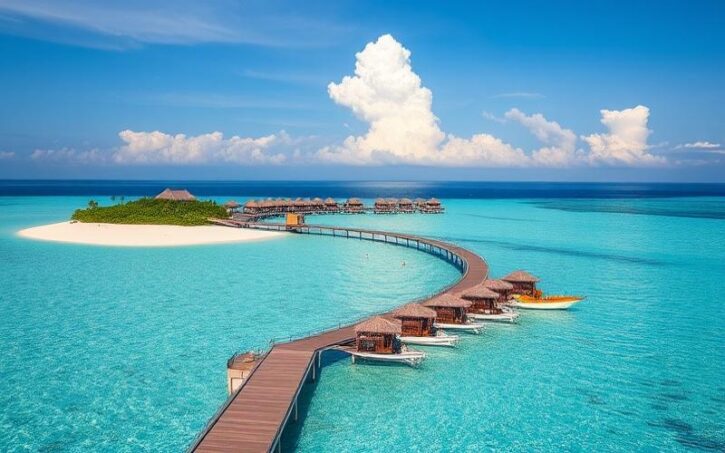
Moving to the Maldives is a dream: turquoise lagoons, picture-postcard beaches, warm climate year-round. But behind the paradise image lies a much more complex reality when it comes to health. For an expatriate, the quality and accessibility of care, tropical health risks, or even insurance questions can very quickly become decisive factors.
This article details the Maldivian healthcare system, its characteristics, available data, and the specific risks related to the country’s tropical climate and archipelagic geography, for expatriates.
Understanding the Maldivian Healthcare System
The Maldivian healthcare system is based on a combination of public and private structures, with an organization heavily constrained by geography: over 1,190 islands scattered across the Indian Ocean, an overcrowded capital, and often very isolated atolls.
Authorities have invested massively in infrastructure in recent decades. The result: every inhabited island has a primary health center, and every atoll has a hospital or secondary center. But this theoretical coverage masks significant disparities in quality and resources.
A “Hub and Spoke” Organization Centered on Malé
In practice, the public system operates according to a hierarchical structure with several levels (central, regional, atoll, sub-atoll, island). Officially, patients can present themselves at any level, without being forced to follow a strict progression from island to atoll and then to the capital. However, the reality is simple: serious cases almost always end up in Malé.
This is the percentage of specialist doctors concentrated in the Greater Malé Area in the Maldives.
For an expatriate, this concretely means that a complex health problem or a serious emergency almost systematically requires a transfer to Malé or Hulhumalé, or even abroad.
The Major Reference Hospitals
To navigate the system effectively, it is useful to know the main establishments to which expatriates are referred.
| City / Island | Establishment | Status | Indicative Capacity | Main Role |
|---|---|---|---|---|
| Malé | Indira Gandhi Memorial Hospital (IGMH) | Public | ~250 beds | National tertiary hospital, public reference |
| Malé | ADK Hospital | Private | 100+ beds | Private general hospital, very popular with expats |
| Hulhumalé | Tree Top Hospital | Private | 50+ beds | High-end private hospital |
| Hulhumalé | Hulhumale Hospital | Public | ~150 beds | General hospital with basic care + limited ICU |
| Malé | Villa Healthcare | Private | ~160 beds | Private hospital with limited ICU |
IGMH is the major public reference hospital: it concentrates tertiary care (cardiology, pediatrics, internal medicine, surgery, obstetrics…) and receives cases referred from across the archipelago. However, it suffers from endemic problems of overcrowding, occasional shortages of specialists, and prolonged wait times for non-urgent consultations.
The private ADK and Tree Top Hospitals are known for their better organization, modern equipment, and a more comfortable environment, with a significant number of English-speaking doctors. They are the preferred options for many expatriates when budget or insurance allows.
The Reality of Care Outside the Capital
Outside Greater Malé, the healthcare landscape changes radically. Each atoll has a hospital, and more than 180 island health centers offer primary care. These facilities are sometimes staffed by a single nurse or medical assistant, with limited technical capabilities.
Regional hospitals – for example in Addu City, Kulhudhuffushi, Fuvahmulah, or in certain atolls like Lhaviyani – have intermediate capacities. Among them, the Addu City hospital is considered the strongest outside Malé. English-speaking doctors are more frequently found there, though this is still far from systematic on the most remote islands.
For an expatriate based on a remote atoll (teacher, local hotel employee, humanitarian worker, technician…), it’s essential to understand that life in such an isolated environment requires specific preparation and adaptation to living conditions, limited resources, and distance from usual services and networks.
– everyday care (minor infections, simple follow-ups) is generally manageable locally;
– for anything beyond primary care (complex surgery, high-risk delivery, serious accident, suspicion of cardiac, neurological, or cancerous pathology), a rapid transfer to Malé – or even abroad – will be necessary.
Highly Developed Telemedicine… But With Its Limits
The Maldives stands out for a particularly advanced telemedicine network for a developing country. Many island health centers are connected in real time to specialists based in Malé. This enables:
– remote specialized medical advice (pediatrics, cardiology, surgery);
– assistance in triaging patients requiring evacuation;
– support for isolated teams.
This tele-expertise significantly improves initial care, but it does not replace a functional operating room or an intensive care unit. In a critical situation, the determining factor remains the evacuation time to a center capable of intervention.
What Expatriates Need to Know About Health Insurance
In the Maldives, the question of insurance is not an administrative detail: it is the tipping point between a manageable incident and a financial catastrophe. The country has no reciprocal healthcare agreements with states like the United Kingdom, and free care for foreigners does not exist.
The Public Scheme: Aasandha and Local Insurance for Expatriates
The country has established a universal health insurance scheme (Aasandha / Husnuvaa Aasandha) for its citizens, fully funded by the state. For legally employed expatriates, a specific complementary scheme exists: the employer must fund a local insurance policy meeting government requirements.
An example of a typical expatriate policy covers:
| Covered Item | Limit / Condition |
|---|---|
| Total sum insured (inpatient) | MVR 100,000 (~6,500 USD) |
| Outpatient care | MVR 2,000 / year |
| Public co-payment (hospitalization) | 0 % |
| Public co-payment (consultations) | 5 % |
| Private co-payment (in/outpatient) | 15 % |
| Maximum premium | MVR 800 per year per person |
| Territory | Maldives only |
| Coverage for pre-existing conditions | Yes (within policy limits) |
| Repatriation of remains / burial | Included in the total sum |
On paper, this type of coverage seems reassuring: emergency hospitalization, consultations, medication, sometimes national evacuation, and even care abroad “in special cases” for high-income earners.
In practice, several limitations are critical for an expatriate:
The Maldives’ public health insurance system has several significant restrictions for expatriates. Its annual limit (approximately 6,500 USD) is insufficient to cover major surgery or a long stay in intensive care. Coverage is strictly territorial and ceases if the expatriate leaves the country. Access to care abroad via this system is rare and subject to very restrictive criteria. Finally, access is mainly limited to public facilities, which are often overcrowded and lack equipment.
Why International Insurance is Almost Indispensable
Analyses converge on one point: for an expatriate, especially if living outside Malé, a robust international health insurance policy is not a luxury but a necessity.
The reasons are multiple:
1. Very High Cost of Private Care and Evacuations
A consultation at a reputable private clinic typically costs between 50 and 200 euros. An evacuation by seaplane or air ambulance followed by a surgical procedure can easily exceed 25,000 dollars. Repatriation to Europe or North America can sometimes cost over 60,000 pounds sterling for a medical flight.
2. Frequent Need for Evacuation Abroad
The Maldives does not have a hyperbaric chamber for diving accidents, no invasive cardiac surgery on site, and limited capabilities in complex oncology or neurosurgery. Many serious cases must be treated in India, Sri Lanka, Singapore, or elsewhere.
3. Fragility of the Public System and Medication Shortages
Faced with the financial difficulties of the national scheme, exploring alternatives for private or foreign care is an increasingly relevant strategy.
The Aasandha scheme accumulates massive payment delays to providers, leading to frequent stockouts of essential medications.
Pharmacies may run out of antihypertensives or bags of saline, jeopardizing continuity of care.
Turning to a private or foreign hospital ensures access to care and medications without restrictions or delays.
4. Flexibility and Portability
An international contract (with insurers like Cigna Global, Allianz International, AXA, April International, Bupa Global, etc.) typically offers:
– freedom to choose the country of care (India, Singapore, Europe…);
– coverage for medical evacuations, regardless of the mode of transport;
– continued coverage in case of a change in expatriation country.
To summarize, the ideal scheme for an expatriate settled in the Maldives combines:
– the mandatory local insurance (to meet visa requirements and access public facilities);
– a genuine international health insurance, covering:
– hospitalization and major care,
– medical evacuation and repatriation,
– care outside the Maldives,
– possibly maternity, dental, optical, depending on the profile.
Insurance and Visa Procedures
The Maldivian government has strengthened health requirements in recent years for the issuance of certain visas (marriage, student, dependent). For many categories, a medical report issued by a facility accredited by the Ministry of Health and a health insurance policy issued by a local insurer are mandatory, both when submitting the application and upon its renewal.
For expatriate workers, medical insurance is not just recommended: it is an integral part of the administrative package required for a residence permit.
Hospitals, Clinics, and Pharmacies: What to Expect Day-to-Day
For an expatriate, the quality of care is not measured only by the number of beds or MRI machines, but also by language accessibility, waiting times for appointments, reliability of medication supply, and ability to receive emergency care.
The Facilities Most Used by Expatriates
Expatriates living in Malé or Hulhumalé have direct access to the country’s most modern facilities. Opinions converge in considering that the private ADK and Tree Top Hospitals, as well as certain specialized clinics, offer a level of service and comfort closer to Western standards.
| Facility | Location | Strengths for Expatriates | Main Services Cited |
|---|---|---|---|
| ADK Hospital | Malé | English-speaking doctors, rapid care, reference structure for tourists | Emergency, surgery, cardiology, maternity, imaging |
| Tree Top Hospital | Hulhumalé | Recent high-end infrastructure, international team | Cardiology, orthopedics, gynecology, imaging (MRI/CT) |
| Medica Hospital | Malé | Wide range of services, partnership with several local insurers | Surgery, radiology, diagnostics, rehabilitation, fertility |
| IGMH | Malé | Largest public hospital, many specialists, tertiary care | Internal medicine, pediatrics, obstetrics, intensive care |
| Hulhumale Hospital | Hulhumalé | Large public proximity hospital, limited ICU | General care, maternity, basic emergencies |
Even in these facilities, certain disciplines remain limited: no complete invasive cardiac surgery, reduced offering in advanced oncology, restricted neonatal resuscitation capabilities. Complex dental and ophthalmological care are mainly accessible in the capital.
Resort and Tourist Island Clinics
Expatriates employed in resorts often benefit from a first line of care on-site. Many tourist establishments have:
– an infirmary or small clinic;
– a resident or part-time English-speaking general practitioner;
– teleconsultation agreements with specialists based in Malé;
– evacuation protocols to Malé or abroad.
The quality of these facilities varies greatly: some are limited to first aid (bandaging, symptomatic treatment of digestive disorders, simple sutures), others have more advanced diagnostic equipment.
Resorts must, in principle, have evacuation agreements (speedboats, seaplanes, helicopters or coordination with public services). But the transport time to an advanced care unit, especially at night or in bad weather, remains a major challenge.
Pharmacies and Medication Availability
Pharmacies are numerous in Malé and Hulhumalé, rarer but present on major inhabited islands. Pharmacists generally speak English and are accustomed to international prescriptions.
In theory, the national insurance allows eligible beneficiaries (citizens and eligible expatriates) to obtain medications listed in the Aasandha catalog for free. In reality, the country is experiencing a severe medication crisis:
The importing pharmaceutical sector faces several structural challenges: payment delays from public insurance, price caps below import costs for some products, cumbersome administrative procedures for listing new medications, and total reliance on imports due to the absence of local production.
Result: frequent stockouts, sometimes of vital drugs (antihypertensives, infusion solutions, etc.), particularly outside the capital. Families and patients then turn to informal networks, asking relatives and friends abroad, or using specialized services to legally import treatments from other countries.
For an expatriate with a chronic illness (diabetes, cardiovascular disease, autoimmune disease, stabilized psychiatric disorder…), it is highly recommended to:
– arrive with a supply of medication covering several months, respecting import rules (recent prescription, reasonable quantity, complete documentation);
– check with the embassy or customs services if certain medications are subject to specific restrictions (especially psychotropics and narcotics);
– plan a backup for supply (international insurance allowing follow-up abroad, use of specialized logistics platforms, etc.).
Emergencies, Evacuations, and Disaster Medicine
In an archipelago where many islands are several hours by boat or plane from the capital, emergency management is a critical link. This directly concerns expatriates, who are highly exposed to drowning risks, nautical accidents, diving injuries, or serious acute illnesses.
Emergency Numbers and Available Services
The country does not have a single emergency number like the European 112 for all services. Several numbers coexist:
| Service | Main Number |
|---|---|
| Medical Ambulance (national) | 102 |
| National Ambulance Service | 100 (in some documents) |
| Police | 119 |
| Coast Guard (maritime emergency) | 191 |
| Fire and Rescue | 118 |
| Disaster Management Authority | 115 |
| Maldivian Red Crescent | 1425 |
In Malé and Hulhumalé, ambulances are relatively available. Beyond that, many areas do not have an organized ambulance service, or access is hampered by weather and sea conditions.
The Evacuation Chain: Sea, Air, and Road
To overcome these constraints, the Maldives has developed a range of evacuation solutions:
Presentation of the different services specialized in transferring patients between islands and abroad.
Operated notably by the defense forces (MNDF) to transfer patients from one island to another.
Dedicated national service (Maldives Emergency Medical Services) using an adapted Dash 8 aircraft, available 24/7.
International evacuations operated by specialized companies or chartered case by case.
A national protocol governs these evacuations: requests via a dedicated platform (Vinavi), medical forms (MEDIF), imposed response times for the public insurer Aasandha and the air operator Island Aviation Services. In theory, an aircraft should be able to take off within 90 minutes of the evacuation decision in an emergency.
For an expatriate, two practical consequences:
– response time will depend not only on medical severity but also on weather, aircraft availability, and the clarity of the medical request;
– the international leg (transfer to India, Singapore, Europe, etc.) will, except for exceptional coverage by the public scheme, be the responsibility of their private insurance or personal finances.
Cost and Conditions for Evacuation Coverage
Air ambulance and repatriation companies charge very high amounts, including:
The essential elements ensuring a secure and complete medicalized transfer for patients, from organization to follow-up.
Provision of a medicalized aircraft or a seat on a commercial flight equipped with a stretcher for the patient.
Care by a specialized medical team (doctor, nurse) throughout the transfer.
Complete organization and coordination between the departure and destination hospitals for continuous follow-up.
Possibility of logistical coverage or hotel assistance for accompanying relatives.
Insurers generally reimburse these costs only if:
– the evacuation is medically justified and documented by a doctor;
– the necessary care is not adequately available in the Maldives;
– the evacuation is not for the patient’s mere comfort (premature flight without compelling clinical reason).
It is therefore crucial for an expatriate to verify that their insurance policy:
– explicitly covers internal (to Malé) and international medical evacuations;
– includes repatriation to the country of origin or to a regional reference center;
– does not impose too low a limit, quickly reached in an emergency repatriation scenario.
Diseases and Health Risks for Expatriates in the Maldives
Living in the Maldives also means living in a humid tropical climate, with its share of risks: vector-borne diseases, digestive infections, extreme heat, particular psychological conditions linked to island isolation.
Mosquito-borne Diseases
The Maldives is not a malaria zone, but other arboviruses circulate:
– Dengue: endemic, with several thousand symptomatic cases recorded in some years. It can progress to severe forms (hemorrhagic dengue).
– Chikungunya: outbreaks reported recently, with sometimes debilitating joint pain.
– Zika: major risk for pregnant women due to possible congenital malformations.
Typical symptoms include fever, headaches, muscle and joint pain, skin rashes, sometimes conjunctivitis (Zika). None of these diseases has a specific antiviral treatment: prevention remains the main weapon.
For an expatriate, especially outside the capital, the following measures are essential:
– skin repellents containing DEET;
– long clothing in the evening and at night;
– mosquito nets, air conditioning, or fans to limit mosquito presence;
– elimination of stagnant water around the home.
Data on expatriates in tropical countries shows that a significant proportion contract vector-borne infections (dengue, chikungunya, sometimes less known fevers), with significant seroconversion rates among those who stay for several months.
Digestive Infections and Waterborne Diseases
As in many tropical countries with uneven infrastructure, tap water in the Maldives is not considered drinkable. Enteric infections like typhoid, hepatitis A, infectious diarrhea, or intestinal parasites remain common.
For an expatriate, the basic principles, although known, must be applied rigorously and relentlessly to ensure successful adaptation and integration.
– drink only bottled or carefully treated water;
– avoid ice cubes of uncertain origin;
– consume well-cooked food or fruit you peel yourself;
– be wary of unpasteurized dairy products and undercooked seafood;
– wash hands frequently or use alcohol-based hand sanitizers.
Studies on expatriates in low– or middle-income countries show that up to 80% may suffer from gastrointestinal disorders during their stay, and a significant proportion develop prolonged or parasitic diarrhea.
Heat, Sun, and Climate Change
The Maldivian climate is hot and humid, with two successive monsoons and intense sunshine. Heatwaves, humidity, and periods of heavy rain can increase the risks of:
– heatstroke and dehydration;
– exacerbation of cardiovascular and respiratory diseases;
– sleep disorders and chronic fatigue.
Studies in Southeast Asia reveal an increase in heat-related hospitalizations and a significant drop in productivity for outdoor workers. Expatriates in sectors like tourism, diving, construction, or maintenance must learn to adapt to these conditions.
– hydrate continuously;
– avoid intense exertion during the hottest hours;
– protect from the sun (sunscreen, clothing, hat, glasses);
– recognize the early signs of heatstroke (headache, confusion, dizziness, nausea).
Mental Health and Adaptation
The issue of mental health is often underestimated by expatriates. In the Maldives, several factors can weaken psychological balance:
– island isolation: life on a small island, sometimes with no possibility of leaving, monotonous routine;
– cultural shocks: very religious society, strict social norms, restrictions on alcohol and certain forms of leisure;
– work-related stress: fast pace in resorts, service pressure, irregular hours;
– limited access to specialized care: most psychiatrists and psychologists are concentrated in Malé, with wait times that can reach several months for some consultations.
The country has established a national mental health helpline (1677) and a growing offering of private psychotherapy centers. Nevertheless, for an expatriate, having insurance that also covers mental health care, and being able to access online consultations with practitioners from their home country, can make a big difference.
Preparing Before Departure: Health Checklist for Expatriates
A successful expatriation to the Maldives begins well before boarding. The ideal journey, from a medical point of view, includes several steps.
Pre-departure Medical Consultation
An appointment with a doctor (ideally specialized in travel medicine) 6 to 8 weeks before departure allows you to:
Before a trip, it is essential to: check and update vaccinations (DTP, hepatitis A and B, typhoid, and depending on the destination, rabies or Japanese encephalitis); assess specific risks (mosquito-borne diseases, digestive disorders, heat, mental health); ensure the availability of ongoing treatments on-site; and assemble a medical kit with antipyretics, antidiarrheals, antiseptics, bandages, repellents, and, if prescribed, backup antibiotics.
Anticipating Chronic Medications
For chronic conditions, it is highly recommended to:
– leave with a supply of medication for several months (ideally 3 to 6 months), respecting legal limits (90 days without additional documentation, up to 6 months with additional paperwork);
– carry medications in their original packaging, accompanied by a detailed recent prescription (less than 3 months old) stating the generic name, dosage, treatment duration, and prescriber’s contact details;
– have a paper and digital copy of these prescriptions, useful in case of lost luggage or customs checks.
Choosing and Calibrating Your Insurance
Before any commitment, the expatriate must compare offers based on their profile (age, medical history, family, type of position, location in the archipelago). Points of attention:
Adequate coverage for the Maldives must explicitly include medical repatriation, a high annual limit to cover intensive care, clear management of pre-existing conditions, a network of partner hospitals (notably in Malé, India, and Singapore), and advantageous payment modalities like direct billing.
Brokers specialized in expatriate insurance can help evaluate plans from major international insurers and avoid overly minimalist contracts, sometimes tempting due to their price but very limited in case of a real claim.
Living and Working in the Maldives: Long-term Health Strategies
Once settled, the challenge is to transform this theoretical knowledge into concrete habits. A few key points structure a pragmatic approach.
Integrating into the Local Healthcare System
Even with international insurance, it is wise to:
– identify a general practitioner or reference clinic in Malé or Hulhumalé, where you can go in case of a serious problem;
– locate the health center closest to your place of residence (islet, atoll, resort) and verify:
– opening hours,
– available resources (laboratory, imaging, pharmacy),
– presence of an English-speaking doctor;
– know the internal evacuation procedures (speedboat, seaplane, sea ambulance) planned by the employer or host structure.
The opinions and testimonials of other expatriates, available on forums, social networks, or specialized platforms, are a valuable resource for identifying trusted practitioners and healthcare facilities best suited to the needs of foreigners.
Adapting Your Lifestyle to Tropical Conditions
Beyond medical care, a significant part of “expat health” relies on daily prevention:
– manage sun exposure (broad-spectrum sunscreen, hat, sunglasses, adapted activity times);
– maintain good hydration, especially with physical work or sports;
– incorporate simple but rigorous routines regarding food (safe water, hygiene);
– protect against mosquitoes at home and at work;
– maintain reasonable and regular physical activity despite the heat, to counteract the sedentary lifestyle associated with island life.
Not Neglecting the Psychological Dimension
Studies on expatriates show an increased frequency of anxiety, depressive, and adjustment disorders compared to short-term travelers. In the Maldives, this vulnerability is reinforced by:
The Maldives presents specific risks related to geographical remoteness, which complicates rapid travel, the existence of closed professional communities (like resort staff living on-site for long periods), and a limited offering of psychological support in the atolls.
Some practical avenues:
– maintain regular contact with loved ones (video calls, frequent exchanges);
– build a local network of friends, beyond the professional sphere;
– use online resources (remote therapy, virtual support groups) if local access is insufficient;
– consult at the first signs of persistent distress (sleep disorders, irritability, lasting sadness, loss of interest);
In Conclusion: Paradise, Yes… But With a Solid Health Plan
The Maldives offer an exceptional living environment, but their healthcare system remains marked by geographical dispersion, limited human resources, uneven infrastructure, and heavy reliance on evacuations and care abroad.
For an expatriate, the key points are clear:
Never underestimate the risks associated with the tropical climate and infectious diseases. Carefully anticipate necessary vaccines, renew your chronic treatments, and assemble a suitable medical kit. Consider international health insurance as an essential pillar of your project, on par with the work contract or housing. Finally, research precisely the medical resources available on your assigned island, as well as the procedures for evacuation to Malé, the capital, or abroad in an emergency.
A successful expatriation project in the Maldives does not depend solely on the beauty of the landscapes or the level of remuneration, but also – and perhaps above all – on the ability to stay healthy in an environment that is both magnificent and demanding. With rigorous preparation and informed management of your medical risk, it is possible to fully enjoy life in this unique archipelago, without being caught off guard by the often little-known realities of its healthcare system.
Disclaimer: The information provided on this website is for informational purposes only and does not constitute financial, legal, or professional advice. We encourage you to consult qualified experts before making any investment, real estate, or expatriation decisions. Although we strive to maintain up-to-date and accurate information, we do not guarantee the completeness, accuracy, or timeliness of the proposed content. As investment and expatriation involve risks, we disclaim any liability for potential losses or damages arising from the use of this site. Your use of this site confirms your acceptance of these terms and your understanding of the associated risks.

Cyril Jarnias is an independent expert in international wealth management with over 20 years of experience. As an expatriate himself, he is dedicated to helping individuals and business leaders build, protect, and pass on their wealth with complete peace of mind.
On his website, cyriljarnias.com, he shares his expertise on international real estate, offshore company formation, and expatriation.
Thanks to his expertise, he offers sound advice to optimize his clients' wealth management. Cyril Jarnias is also recognized for his appearances in many prestigious media outlets such as BFM Business, les Français de l’étranger, Le Figaro, Les Echos, and Mieux vivre votre argent, where he shares his knowledge and know-how in wealth management.





