
 Published on and written by Cyril Jarnias
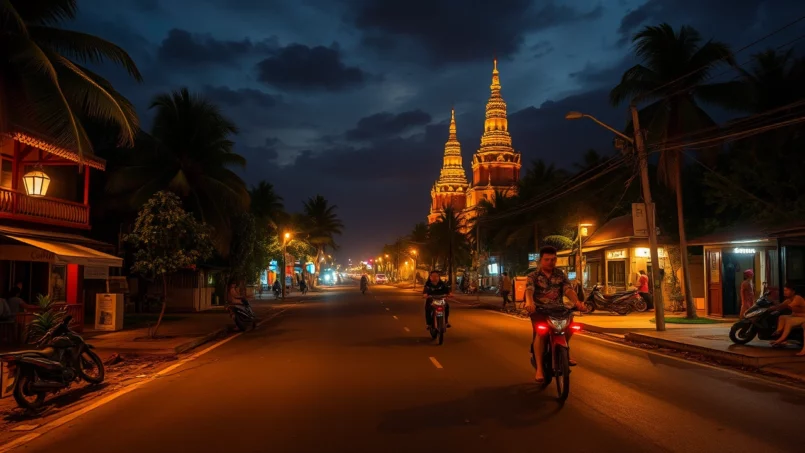
When night falls, Cambodia transforms. Behind the image of temples and rice paddies, the country reveals a thriving nightlife scene, ranging from craft beer bars to popular night markets, electrifying clubs, rooftops overlooking the Mekong, and Apsara shows under the spotlight. From Phnom Penh to Siem Reap, from Kampot to Sihanoukville and the islands, there are a thousand ways to experience the Cambodian night, whether you prefer sophisticated cocktails, a cold beer on a terrace, live music, street food, or traditional culture.
Phnom Penh, Capital of Craft Beer and Eclectic Nights
Phnom Penh alone concentrates almost all facets of nightlife in Cambodia. The city is both the political capital and a true laboratory for new venues: microbreweries, cocktail bars, rooftops, clubs, concert halls, night markets. Commercial brewing began there in the early 20th century, and for a long time the market was dominated by a few major national lagers like Anchor, Angkor, or Cambodia. For about fifteen years, however, a quiet revolution has taken place around craft beer.
One of the Most Dynamic Craft Beer Scenes in Southeast Asia
Phnom Penh is now considered the craft beer capital of Cambodia. In about fifteen years, around twenty microbreweries have emerged in the city, founded by both Cambodians and expatriates. Many brewers started in a spare room or a corner of a house before opening proper taprooms. The movement is still in its early stages, but the quality of the beers produced is already cited among the best in the region.
Lower alcohol taxes than in Thailand and more flexible rules have fostered the emergence of this sector. Local brands like Riel Brewing, Botanico Brewing Company (formerly Cerevisia), TwoBirds Craft Beer, Stone Head Brewery, and Himawari Microbrewery make up a very diverse landscape, supported by a tight-knit community. The breweries cooperate, help each other, share technical advice, and even organize joint events through the Cambodian Craft Beer Association.
For visitors, this translates to a constellation of bars and beer gardens scattered throughout the city. You can sample IPAs, sours, stouts, or lagers made with local ingredients, while chatting with the brewers themselves. The challenge for these artisans is often convincing travelers to pay a few dollars for a flavorful beer, when local industrial lagers easily go for between $0.50 and $1. But a new clientele is emerging: urban Cambodians, often in their twenties or thirties, curious about different flavors, even if they tend to favor maltier, sweeter, less bitter styles.
Where to Drink Craft Beer in Phnom Penh
You can spend several nights hopping from bar to bar without getting bored. Here’s an overview of some iconic spots, with a summary of their characteristics.
Main Craft Beer Bars and Breweries in Phnom Penh
| Venue | Type | Neighborhood / Address | Particularities |
|---|---|---|---|
| Botanico Craft Beer Garden / Botanico Brewing Company | Taproom & beer garden | Tonle Bassac, St 29 | Community hub with exhibitions, live music, new name and Cerevisia beers |
| The Box Office | Beer bar & small venue | St 244 | Wide selection of craft beers, pub-style food, open mic nights, stand-up, quizzes |
| Embargo | Craft beer bar | BKK1, St 51 | Eight Cambodian beers on tap or in bottles, regular rotation |
| CRAFT (Palace Lane) | Bar & live music | St 244, Palace Lane | Open late, concerts on Fridays and Saturdays |
| Duplex Belgian Tavern | Belgian bar | St 278, Wat Langka | Specializes in bottled Belgian beers |
| Riel Brewing Taproom / Noisy Chili | Taproom | TTP (St 464) | Brewery known for its ales, stouts, and sours, neighborhood vibe |
| 5 Drunk Men | Rooftop bar | Sisowath Quay | River view, selection of regional beers |
| Sak Pub | Khmer microbrewery | St 51, alley behind Patio Hotel | Local brewery with pizzas, very Cambodian atmosphere |
| The Chug Lab | Heavy metal nanobrewery | BKK3, St 376 | Rock decor, small-batch brews |
| Hops Craft Beer Garden | Breweries & beer gardens | 4 locations in the city | Beer in the German tradition, large gardens |
| Kingdom Breweries Taproom | Taproom & tours | National Road 5 | IPA, Mango IPA, Belgian Wit; brewery tour and all-you-can-drink draft beer for a fee |
| TwoBirds Craft Beer (The Factory) | Taproom & event space | The Factory Phnom Penh | Tastings, games, events, shop |
| Himawari Microbrewery | Hotel microbrewery | Sisowath Quay, Himawari Hotel | Beers mostly consumed on-site, riverside terrace |
These venues cover everything from shaded gardens where you can listen to an acoustic concert, rooftops with views of the Tonlé Sap, more intimate bars tucked away in alleys, and breweries integrated into upscale hotels.
Nightlife Neighborhoods: From Riverside to Bassac Lane
Phnom Penh‘s nightlife isn’t limited to beer. The city is divided into very distinct zones, each with its own personality.
Along the river on Sisowath Quay, bars and restaurants offer happy hours and live concerts. This very touristy area is ideal for a first discovery of the city: dining facing the Mekong, having a drink on a terrace, or heading to a rooftop like Le Moon for a 270-degree view of the confluence of the rivers.
Further south, the Bassac Lane neighborhood, hidden behind the Independence Monument, has become one of the capital’s trendiest spots. A narrow alley, renamed Palace Lane, concentrates themed mini-bars squeezed next to each other. You’ll find, for example, a bar inspired by Alice in Wonderland (White Rabbit), a very British micro-bar (Welsh Embassy, whose opening even attracted the UK ambassador), or a biker bar (Hangar 44) decorated with custom motorcycles. The atmosphere is bohemian, hip, and perfect for bar hopping. Out of respect for the neighbors, most establishments close around 11 PM.
BKK1, for its part, plays the casually chic card. It’s the neighborhood of wealthy expatriates, design cafes, and sophisticated cocktail bars. Here you sip a gin and tonic in a skybar, discover rare whiskies in a specialized bar, or enjoy a backpacker bar on a rooftop with a pool and beer-pong table.
The Street 51 area, also called Pasteur Street, is the electric heart of nightlife with historic clubs like the Heart of Darkness and large venues like Pontoon. The party goes on late into the night in the surrounding bars, especially on Street 136.
On the outskirts, the Tuol Tom Poung neighborhood around the Russian Market offers a more relaxed atmosphere. Bars like Sundown Social Club, on a rooftop three floors above the market, mix colorful cocktails, DJs on Saturdays, and views of the tin roofs and pagodas. It’s a good compromise for those who want a lively evening without ending up in the heart of club frenzy.
Rooftops: Cocktails Above the City
With the proliferation of towers and hotels, bars in the sky have become a must for evenings in Phnom Penh. They allow you to overlook the city’s silhouette, spot the line of the Mekong, and sometimes enjoy infinity pools or hot tubs.
Notable Rooftops in Phnom Penh
| Rooftop | Location | Main Features |
|---|---|---|
| Sora Sky Bar | Vattanac Capital Tower, 37th floor | Probably the highest, panoramic view, indoor whisky library |
| Eclipse Sky Bar | Phnom Penh Tower, 23rd floor | 360-degree view, happy hour, lounge atmosphere |
| Le Moon Rooftop | Riverside, above the Amanjaya | Spacious terrace, view of the river and Royal Palace |
| Juniper Gin Bar | Point Boutique Hotel, 12th floor | Specialized in gin, happy hour at sunset |
| HighGround Sky Bar | Amass Tower, BKK1 | 360-degree terrace, two levels (indoor and outdoor) |
| Lantern Rooftop Bar | Baitong Hotel & Resort | Daybeds, cabanas, tango nights, concerts, special events |
| Sundown Social Club | Above the Russian Market | Colorful bar, DJ on weekends, very relaxed vibe |
| FiveFive Rooftop Bar | Hyatt Regency Phnom Penh | Live music, attentive service |
| Organic Skybar | Palace Gate Hotel | View of the Royal Palace and river, more intimate atmosphere |
| The Winds Rooftop Bar & Lounge | Chip Mong Tower, floors 44-45 | One of the highest in the city, spectacular panorama |
Arriving about thirty minutes before sunset is generally advised, as the golden light highlights pagoda domes, art deco facades, and modern towers like the Vattanac Capital.
Live Music, Alternative Scenes, and Culture
Phnom Penh is also a hub for live music. Before the pandemic, bands played every night in many bars; after a period of closure, the scene has come back stronger. An online platform, Leng Pleng, has established itself as the go-to guide for concerts, providing a nearly exhaustive listing of gigs across the country.
In the Wat Botum neighborhood, not far from the Royal Palace, a small “village” of bars and restaurants has emerged with regular concerts. Venues like The Vine, which combines a cocktail bar, burgers, and even a hair salon, host acoustic sessions in a tree-filled courtyard. Box Office, already mentioned for its beers, has expanded its offerings with a Speakeasy Theatre offering concerts, stand-up nights, and film screenings.
Other spots, like Little Susie, focus on intimate acoustics and open mics, while upscale hotels like the Raffles (Elephant Bar) or the Hyatt Regency (Metropole Underground lounge, The Attic) feature soft jazz and professional ensembles. At the Sofitel on Sothearos Boulevard, multi-artist events called “Secret Garden” are like real mini family festivals, with food stalls and drinks.
In the Tuol Tom Poung neighborhood, two establishments offer distinct nighttime experiences. Sunset Boulevard, designed by a musician, offers crafted cocktails and regular music programming. The Tin Hat, on Street 123, is a lively neighborhood bar with frequent concerts, fire-breather shows, a free draft beer hour every Friday early evening, followed by a band or karaoke. Recently renovated, it attracts both passing travelers and local regulars.
For those seeking direct contact with Khmer culture, institutions like the Royal Palace, the National Museum, or the Chaktomuk Theater organize traditional music and dance performances: pin peat ensembles, classical dance shows, demonstrations for major national holidays. These evenings offer a striking contrast to the tumult of clubs: ancient instruments, shimmering costumes, almost ceremonial atmospheres.
Night Markets: Eating, Strolling, Listening to Music
Phnom Penh’s nightlife also happens at ground level, at the night markets. Psar Reatrey, the capital’s Night Market, stretches along the river between streets 106 and 108. You access it directly from Sisowath Quay through a large illuminated gate. From late afternoon, dozens of stalls display clothing, costume jewelry, counterfeit brand goods, small souvenirs, paintings, and crafts. You can have your portrait drawn by an artist or enjoy coconut ice cream while sitting on a mat.
At the back of the market, a large food court concentrates street food stalls. Prices are very affordable — often between $1 and $2 per dish — and the variety is impressive: stir-fried noodles (mie char, lort cha), fried rice, grilled pork skewers, Cambodian sausages, fish cooked in banana leaves, fish amok, barbecued chicken. Cold drinks (sugarcane juice, fruit smoothies, Angkor beer) and local desserts — pumpkin flans, sticky rice with mango, colorful coconut milk cakes — complete the experience.
A stage regularly hosts Khmer singers and orchestras, sometimes very kitschy, sometimes more traditional. The market is frequented by local families, teenagers, couples, as much as by travelers, creating a good-natured atmosphere. Entry is free, and you can just come by tuk-tuk, taxi, or cyclo. Apps like PassApp or Grab are widely used to secure rides.
Siem Reap: Between Pub Street, Night Markets, and Apsara Shows
Siem Reap is best known for the Angkor temples, but the city has a surprisingly rich nightlife. The nerve center of this activity is Pub Street, officially Street 8, a hundred meters of bars, restaurants, and clubs pedestrianized in the evening, complemented by a spiderweb of parallel lanes like The Lane, The Passage, or Alley West. The area has gradually established itself as a Cambodian version of Khaosan Road, but more measured.
Pub Street: Bars, Clubs, and Street Food
At nightfall, Pub Street lights up with neon signs, colorful billboards, and hanging garlands. Traffic is cut off, making it an open-air playground for night owls. Prices are attractive: draft beer commonly starts at $0.50 in the early evening, cocktails range between $3 and $5, and some places offer beer towers at cut-rate prices.
Historic establishments line the street. Angkor WHAT? Bar, the first club in the area to open in the late 1990s, has become a real institution with its graffiti-covered walls and cocktails served in repurposed buckets. Nearby, Temple Club, a vast multi-level complex, combines a restaurant, bar, and dancefloor, sometimes with traditional dance shows in the restaurant section.
The Red Piano owes its fame to the filming of ‘Tomb Raider’, with a dedicated cocktail and original promotions, while the rooftop X-Bar features a spectacular skate ramp that has hosted renowned figures.
The adjacent alleys, like Alley West or The Lane, are home to more intimate cocktail bars (Picasso Bar, Miss Wong with its decor inspired by old Shanghai), restaurants with various specialties (Mexican, Greek, Asian fusion), independent clothing and jewelry shops, and even tuk-tuks transformed into mobile bars that park late at night to serve gin and tonics and mojitos right on the sidewalk.
Food-wise, the offerings range from simple steamed bao to more spectacular Cambodian barbecue, sometimes called “fire mountain BBQ,” where a volcano-shaped device allows grilling meat and fish (including crocodile, frog, or snake) while simmering a surrounding broth.
Night Markets: Crafts, Massages, and Music
Beyond Pub Street, Siem Reap stands out for its many evening markets. The most iconic is the Angkor Night Market, considered the city’s and even the country’s first night market, created in the mid-2000s to preserve Khmer crafts and provide income for local communities. Set in a landscaped garden, it consists of hundreds of bamboo stalls selling silks, wood and stone carvings, paintings, puppets, silver jewelry, bags, and accessories made from recycled materials.
A small central plaza offers a complete culinary experience with classic Khmer dishes like fish amok and lok lak, as well as bold snacks like grilled insects (spiders, grasshoppers, crickets). The experience is enhanced by traditional massages, local herbal treatments, and sometimes evening music performances.
The Made in Cambodia Market caters to those looking for 100% local and traceable products. The stalls, located near Pub Street, emphasize design, natural cosmetics, toys, designer clothing, and artisanal spirits like Sombai, a rice wine infused with spices, fruits, and chilies. The atmosphere is more subdued, and acoustic concerts or traditional dances are regularly held in the early evening.
Other markets, like the Noon Night Market, the Siem Reap Art Center Night Market (on the riverbank opposite the Old Market), or the Street Night Market, complete the offerings with their share of silk lanterns, massages, souvenir stalls, and musical entertainment.
Apsara Shows: The Cultural Side of Night
It’s impossible to talk about nightlife in Siem Reap without mentioning Apsara dance shows, considered a near-mandatory experience for anyone discovering Cambodia. These performances, often coupled with dinner in the form of a buffet or set menu, showcase classical Khmer dance, inspired by the apsaras carved on the bas-reliefs of Angkor Wat, but also popular village dances, shadow puppet theater, or mask dances.
Learning the codified gestures of classical Khmer dance can take nearly a decade at the Royal University of Fine Arts in Phnom Penh.
Several venues in Siem Reap offer these dinner shows:
| Venue | City | Concept | Indicative Price |
|---|---|---|---|
| Kanell Restaurant | Siem Reap | Fine dining Khmer dinner by a renowned chef + Apsara and Bokator show in a garden | Menus starting from approx. $29–36, with benefits through partner agencies |
| Apsara Terrace (Raffles Grand Hotel d’Angkor) | Siem Reap | Outdoor Pan-Asian buffet + Khmer dances and martial arts | From approx. $46++ |
| Apsara Theatre & Restaurant (Angkor Village) | Siem Reap | Air-conditioned theater, Khmer menu, explanatory booklet, 3 classical and 2 village dances | Approx. $25–37 depending on the package |
| Koulen Restaurant | Siem Reap | Large local buffet + dance show | Affordable rate, varied Khmer cuisine |
| Alliance Cafe | Siem Reap | Shadow puppets + traditional dance, indoor dining | Approx. $20 for menu + show, or $7 for show only |
| La Noria Hotel | Siem Reap | Evenings mixing shadow theater and dance, with young artists from an NGO | Approx. $6 for the show |
| Temple Balcony | Siem Reap (Pub Street) | Free show with à la carte dinner | Price according to consumption |
Showtimes are often around 7–9 PM, and it’s recommended to book in advance during high season for a good view of the stage.
Rooftop Bars and Party Hostels
Siem Reap also has its own small collection of rooftops, more modest than in Phnom Penh but often very sociable. Places like Temple Bar Sky Lounge, above a restaurant on Pub Street, offer $0.50 beers during happy hour, two Apsara show slots per evening, and a bird’s-eye view of the pedestrian street. Others, such as the skybars of certain hostels (Mad Monkey, Funky Flashpacker), take on the feel of a beach party with hammocks, beer pong, DJs, and cheap cocktails.
Finally, for those who want to extend the night away from the club soundtrack, the neighborhoods of Wat Bo or Wat Damnak are home to more discreet bars, cocktail lounges, and a few spots run by expatriates who focus on carefully selected music, quality spirits, and a more adult atmosphere.
Kampot, Battambang, and Provincial Night Markets
Beyond the two major tourist cities of Phnom Penh and Siem Reap, several regional destinations are developing their own way of experiencing the night.
Kampot: River, Music, and Microbreweries
Kampot, a small riverside town, has made a name for itself thanks to its pepper, but also through a surprising music scene. In the evening, cafes and bars in the center, especially around the Old Market, host bands almost every day. Guesthouses set on a particular riverbank organize DJ nights or concerts between November and May, the busier period.
Discover the live music venues and nanobreweries animating the island’s alternative scene, between relaxed vibes and tasty discoveries.
Tiki Garden, Madi Bar, and Karma Traders regularly program bands or DJ sets, in an atmosphere ranging from backpacker chill to a small alternative community.
The region has breweries like Flowers Nanobrewery, Freak Brothers, Baby Bird Brewing Co., and Projekt Brews, offering small-batch IPAs or saisons in intimate spaces.
Kampot’s night market, set up near the riverside promenade, offers a provincial version of the capital’s markets: snacks, clothing, souvenirs, products with local Kampot pepper packaged to take home as gifts.
Battambang: Small Night Market and Performing Arts
Battambang, known for its artistic initiatives, also lines up a small night market by the river. You’ll find clothing, snacks, Khmer ice creams, fried bananas, in a much calmer atmosphere than in the big cities. The evening can continue in cultural venues like Phare Ponleu Selpak, an arts school that presents performances mixing contemporary circus, dance, and music, often in the evening.
Sihanoukville and the Islands: Beach Parties and Casinos
The Cambodian coast has changed a lot in recent years, particularly Sihanoukville, where many old beach bars have been replaced by casino complexes geared towards a regional clientele. The city nevertheless retains a very active nightlife, spread between clubs, beach bars, night markets, and 24-hour gaming rooms.
Around Serendipity Beach and Otres Beach, cut-price drinks, aggressive happy hours, themed nights, and full moon parties coexist with more laid-back spots. Bars like The Big Easy or certain beach clubs mix giant screens for watching matches, live music several nights a week, and international menus.
On Saturday night, the Otres market, set up near a lake, takes on a festival atmosphere: food trucks, world cuisine stalls, cocktails, concerts, and DJ sets attract expatriates, travelers, and Cambodians who come specifically for the vibe.
Further offshore, the islands of Koh Rong and Koh Rong Samloem host their own nighttime parties, notably full moon parties on certain beaches, which combine electronic music, fire-breathers, and nighttime swims. However, it’s important to keep in mind the relative isolation of these islands: limited emergency services, spotty phone connections, and risky night trips by boat or tuk-tuk.
Night Markets, the Backbone of Cambodian Nightlife
Beyond bars and clubs, night markets are perhaps the most authentic way to experience the night in Cambodia. They are present in all major cities and many small towns, and combine street food, shopping, music, and sociability in one place.
What You’ll Find, Everywhere in the Country
From one market to another, you’ll find a common core. Food-wise, recurring specialties include amok (often considered the national dish), lok lak, stir-fried noodles (mie char, lort cha), meat skewers, rice cakes, chive cakes (num kachay), Cambodian banh bao, fresh fruits (green mango, mangosteen, rambutan, coconut, longan) and sometimes stalls of grilled insects for the more curious.
Drinks range from sugarcane juice pressed before your eyes to fruit smoothies, draft beer, and, in some more touristy markets, improvised cocktails. Khmer desserts — layered coconut milk cakes, sticky rice with mango, pumpkin custards, banana fritters — punctuate these wanderings.
The markets offer a wide range of items: textiles, souvenirs, costume jewelry, bags, scarves, statues, and engravings. Some, like in Siem Reap, are labeled ‘fair trade’ and offer certified pieces from artisan cooperatives. It is sometimes possible to participate in weaving or carving workshops.
Most night markets do not accept card payments. You need to have cash, in US dollars or riel, keeping in mind that haggling is part of the game. Without aggression, bargaining is seen as normal and expected.
Some Notable Night Markets
| City | Market | Vibe / Particularities |
|---|---|---|
| Phnom Penh | Phnom Penh Night Market (Psar Reatrey) | Family-friendly, riverside, large picnic area on mats, live music |
| Phnom Penh | Koh Norea Night Market, Koh Pich | Newer alternatives, shops, restaurants, occasional events |
| Siem Reap | Angkor Night Market | Country’s first night market, Khmer crafts, massages, food court |
| Siem Reap | Siem Reap Art Center Night Market | Orientation towards arts and performances, announced daily Apsara, massages |
| Siem Reap | Made in Cambodia Market | 100% local products, live performances, infused rice wines |
| Kampot | Kampot Night Market | Riverside, Kampot pepper products, small local fair |
| Battambang | Battambang Night Market | Modest, calm, ideal for strolling by the water |
| Sihanoukville (Otres) | Saturday Night Market | Festival atmosphere, live music, international stalls |
These markets share the common trait of being shared living spaces for locals and visitors alike, far from the “tourist trap” image one might fear. They also offer a gentler, intergenerational way of experiencing the night, suitable for families as well as those on a budget.
Music, Festivals, and Major Nighttime Events
Cambodia isn’t just about adding up bars: the country also cultivates more occasional nighttime events around music and culture.
In Phnom Penh, concerts of varying scales are regularly held, sometimes on Koh Pich, an urbanized island that has already hosted indie bands, urban artists, or regional stars. The concert calendar, which also covers provincial towns, is now accessible via specialized platforms allowing filtering by music genre or artist.
The Water Festival in November combines several days of boat races, fireworks, and nighttime entertainment on the riverbanks. The Angkor Festival of Sacred Music, held annually in the temples of Siem Reap, offers concerts at dusk and in the evening, blending sacred music from around the world with the monumental setting of ancient stones.
Throughout the country, holidays like Khmer New Year, Pchum Ben, or Bon Om Touk give rise to music and dance performances late into the night, whether on stages set up in villages or more institutional events in front of major monuments.
Safety Questions: Enjoying the Night Without Naivety
The festive reputation of Cambodia shouldn’t make one forget some realities. As in most destinations with very lively nightlife, certain risks exist, especially in areas most geared towards mass tourism or excessive partying.
Snatch thefts from motorcycles are frequent, especially in big cities. To reduce risks, avoid using your phone while walking along major roads, wear your bag cross-body on the wall side (not the street side), and leave valuables (passport, large sums of money, extra credit cards) securely at your hotel.
Problems related to drugs are another area for vigilance, especially in some very festive bars in Sihanoukville or on the islands. Tablets sold as “ecstasy” or “speed” can actually contain much more dangerous substances, even powdered opioids. The Cambodian legal framework is strict, and the consequences of an arrest for possession, even in small quantities, can be severe. The best attitude is simply to abstain.
Cases of spiked drinks have been reported. To reduce the risk: buy your own drinks, constantly watch your drink, avoid shots from strangers and shared ‘buckets’. If you feel abnormally strong effects (extreme drowsiness, unusual heart acceleration) after one or two drinks, immediately ask a friend, bar staff, or local authorities for help.
Finally, caution is advised for nighttime travel. Booking apps for tuk-tuks and taxis (PassApp, Grab, Tada, depending on the region) allow you to ensure the license plate and driver match the order, with a recorded route and fare. Traveling in groups, staying in well-lit areas, and avoiding venturing alone on isolated roads after leaving beaches or remote clubs further reduce risks.
A Mosaic of Nights for Every Taste
Nightlife in Cambodia is therefore not limited to the clubs of Phnom Penh or the buckets of alcohol on Pub Street. It unfolds as a mosaic of experiences: tasting craft beers brewed a few streets from the river, a Khmer rock concert in a neighborhood bar, a jazz evening in a grand hotel lounge, a gourmet stroll through a night market, an Apsara show among frangipani trees, a sunset from a rooftop atop a tower, a family walk among toy and street food stalls.
What gives this scene its strength is also the weaving together of local practices and international influences. Bars are run indifferently by Cambodians, expatriates from Asia, Europe, or Australia, and the clientele willingly mixes passing tourists, foreign workers, and emerging urban middle classes. In the markets, Khmer families dine on mats a few meters from travelers in shorts, all sharing the same skewers and the same desserts.
For those who take the time to go off the beaten track — to dare attend a traditional music concert in a municipal hall, to taste a sour beer brewed in a BKK3 alley, to stroll in the evening in Kampot rather than rushing straight to the islands — the Cambodian night reveals itself to be much richer than a simple succession of cheap bars. It becomes a full-fledged field of cultural exploration, where one perhaps better understands how a country marked by history has managed to reinvent its evenings, between memory and modernity, between millennia-old temples and neon-lit rooftops.
For the curious explorer
Disclaimer: The information provided on this website is for informational purposes only and does not constitute financial, legal, or professional advice. We encourage you to consult qualified experts before making any investment, real estate, or expatriation decisions. Although we strive to maintain up-to-date and accurate information, we do not guarantee the completeness, accuracy, or timeliness of the proposed content. As investment and expatriation involve risks, we disclaim any liability for potential losses or damages arising from the use of this site. Your use of this site confirms your acceptance of these terms and your understanding of the associated risks.

Cyril Jarnias is an independent expert in international wealth management with over 20 years of experience. As an expatriate himself, he is dedicated to helping individuals and business leaders build, protect, and pass on their wealth with complete peace of mind.
On his website, cyriljarnias.com, he shares his expertise on international real estate, offshore company formation, and expatriation.
Thanks to his expertise, he offers sound advice to optimize his clients' wealth management. Cyril Jarnias is also recognized for his appearances in many prestigious media outlets such as BFM Business, les Français de l’étranger, Le Figaro, Les Echos, and Mieux vivre votre argent, where he shares his knowledge and know-how in wealth management.





