
 Published on and written by Cyril Jarnias
Moving to the Czech Republic, whether to study, work, or join a partner, is often presented as an exciting adventure. In reality, this new life almost always comes with a shadow: homesickness. Disrupted routines, an unfamiliar language, a different culture, long grey winters, social media flooded with photos of loved ones back home… it can all quickly become a burden.
Homesickness is a common feeling, affecting between 20% and 90% of expats in the first year and about 70% of students. In the Czech Republic, it can be accentuated by the difficult language, a certain local reserve, a bureaucracy that requires Czech, and a marked winter. The goal is to turn this fragile period into a learning phase to avoid isolation.
This article offers a practical toolkit, focused on the Czech Republic, to tame homesickness without downplaying its reality. The goal is not to “toughen up,” but to build, step by step, a meaningful life here, while remaining true to oneself.
Understanding Homesickness Instead of Enduring It
Arriving in the Czech Republic, going through customs, getting to your accommodation, getting lost on the tram, guessing at signs, facing your first appointments at the Foreign Police or the Ministry of the Interior: even the most motivated take a hit. Expatriation psychology describes this process well with several phases: initial exhilaration, resistance, transformation, and then integration.
The experience of an expat in the Czech Republic often follows a multi-step trajectory. Initially, discovering the country’s charms (like the streets of Prague, the cafés of Brno, the castles, and cheap beer) generates a period of enthusiasm, comparable to a ‘honeymoon’. This phase then gives way to a rougher daily reality, marked by complex administrative procedures, a local communication style perceived as direct, a lack of light conversation, and the length of winter evenings. It’s often at this stage that homesickness appears, characterized by nostalgia for loved ones, a tendency to unfavorably compare the host country to the home country, and a persistent feeling of being a ‘temporary’ foreigner rather than integrated.
The symptoms are not only emotional. Many describe sadness, irritability, anxiety, but also fatigue, sleep disturbances, loss or increase of appetite, difficulty concentrating. Some withdraw, go out less, miss opportunities for social connection, which further reinforces loneliness. If these signs persist or intensify, they can evolve into depression or established anxiety.
Understanding that this process is normal, that it affects 17-year-old students like Anastasiya from Belarus in Zlín, as well as professionals and families in Prague or Brno, already helps to create some distance. Homesickness indicates less of a personal failure than an adaptation process in progress.
Settling in the Czech Republic: A Transition to Prepare For
Part of homesickness comes from the feeling of losing control. You don’t master the procedures, nor the language, nor the social codes. However, the more you structure your daily life, the more you reduce this feeling of drifting.
In the Czech Republic, administrative procedures (Foreigners Police, Immigration Office, Ministry of the Interior) are conducted primarily in Czech, with no guarantee of service in English. It is therefore crucial to plan your visit accompanied by a Czech-speaking friend, a translator, or to use a specialized agency (like Foreigners.cz) or a local support organization.
In the Brno region, for example, the Brno Expat Center (BEC) and the Centre for Foreigners of the South Moravian Region (JMK) help for free with some of the procedures, from Czech language courses to legal orientation. Several testimonies highlight how much this support reduces administrative stress, leaving more energy to build a network and cope with homesickness.
Establish a Routine from the First Weeks
Creating a stable life rhythm is one of the most recurring pieces of advice in expatriation research. In the Czech Republic, this can involve simple gestures:
To facilitate settling in, it is advisable to establish daily and weekly routines. This includes: doing your shopping on the same day at a go-to supermarket, identifying a café to work in, maintaining regular sleep hours, and planning recurring activities like a language class or sports.
This routine doesn’t eliminate nostalgia, but it gives a backbone to daily life. In psychological models like Fisher’s on homesickness, restoring personal routines and the feeling of regaining control over one’s life are central elements.
Language: A Barrier, But Also an Antidote to Homesickness
Many expats testify: learning Czech, even a little, radically changes the experience. Yet, the idea of tackling a language with declensions and complex grammar can be discouraging. The reflex is then to stay in an English or French-speaking bubble, which has two consequences: you protect yourself in the short term, but you limit your long-term integration.
Language is one of the most powerful levers for reducing the perceived distance with the host country. In the Czech Republic, a simple phrase like “Mluvím jen trochu česky” (“I speak only a little Czech”) followed by a smile often disarms the reserve of a shopkeeper or official, even if the conversation then switches back to English.
Research on cultural adaptation
In several cities, you can find free or very affordable Czech courses. In Prague, the Integration Center Prague (ICP) offers subsidized courses. In Brno, the Centre for Foreigners of the South Moravian Region also offers language training. Universities, like Masaryk in Brno or UTB in Zlín, organize workshops and a “buddy system” for their international students that encourages daily practice.
Platforms like iTalki, SlowCzech, or apps like Anki for flashcards can complement these efforts. The key is regularity rather than performance. Achieving basic conversational ability in three to six months, which several expats report as possible, profoundly changes your relationship with the environment and decreases the feeling of permanent foreignness, often at the root of homesickness.
Creating a Czech “Home” Without Denying Your Country of Origin
Homesickness is often expressed in intimate space. Anonymous studios furnished like student dorms, impersonal shared apartments, bare walls… all this reinforces the feeling of being temporary. Yet, one of the most useful tips given by psychologists like Dr. Désirée Gonzalo, based in Prague, is to transform your home into a warm refuge.
Tips for creating a comforting environment by combining familiar elements from your home country with local Czech discoveries.
Keep family photos and personal objects brought from your country to maintain an emotional connection to your roots.
Keep books in your native language within reach to preserve that cultural and linguistic link in daily life.
Incorporate posters from Czech exhibitions or local artisanal ceramics to immerse yourself in the country’s artistic culture.
Integrate Czech food products you enjoy into your daily life to explore and adopt local flavors.
Taste plays an important role in nostalgia. The prices of everyday products in the Czech Republic remain moderate compared to other EU countries, even though inflation has significantly increased since 2015. Being able to cook dishes from home, or adapt them with local ingredients, gives a sense of continuity.
Here are some price ranges, useful for planning and organizing a budget that allows for these “comfort foods.”
| Product (in supermarket) | Observed Price Range (CZK) | Notes |
|---|---|---|
| Bread (loaf) | 20 – 40 | Bakeries very present, fresh daily bread |
| Milk (1 L) | 12.90 – 25.53 | Local brands often cheaper |
| Eggs (12) | 34 – 105.48 | Variable price, often around 50–70 CZK |
| Chicken (breasts, 1 kg) | 159.90 – 223 | Whole chicken (2 kg) about 80 CZK |
| Apples (1 kg) | 7.50 – 39.90 | Very dependent on season |
| White rice (≈ 450 g) | 13.16 – 24.13 | Store brand very affordable |
| Bottle of water (1.5–2 L) | 6.90 – 17.56 | Tap water is drinkable, filtering may suffice |
| Local soda Kofola (2 L) | 29.90 – 40.90 | Iconic drink, often cheaper alternative to Coca-Cola |
| Pilsner Urquell beer (0.5 L) | 25.90 – 31.90 | Store price, beer is part of daily social life |
| Milka chocolate (bar) | 25.90 – 69.90 | Frequent promotions |
Cooking at home remains significantly more economical than a cafeteria or restaurant. According to several local estimates, a home-cooked meal costs around 50–80 CZK, compared to 150–250 CZK for a lunch at a restaurant (excluding student menus). University cafeterias (menza) often offer a complete lunch between 60 and 100 CZK, particularly interesting for international students.
Being able to prepare a family dish on a rainy Sunday, or rediscover the taste of your usual breakfast, is not anecdotal: it’s a way to remind your body and memory that you haven’t disappeared by changing countries.
Getting Out of Isolation: How to Make Friends in the Czech Republic
A survey of foreign readers living in the Czech Republic shows that 80% of them find it difficult to make friends locally. The reasons given often come back: reserve of Czechs, tendency to stay with childhood friends or family, language barrier, beer culture that excludes those who don’t drink, lack of “small talk”.
Yet, the same people add a crucial nuance: once the first barrier is crossed, Czechs often prove to be loyal, warm, reliable. The challenge is therefore to cross that first threshold.
Research and testimonies converge on one point: waiting for encounters to fall from the sky almost always leads to stagnation. You have to be willing to “take the plunge,” by multiplying contexts where you can regularly run into the same people.
Focus on Activities Rather Than Just “Networking”
The most effective tips concern structured activities. In the Czech Republic, the offering is dense:
– dance or music classes (for example at Eso Dance School or via Hudebka.cz to find a private teacher)
– visual arts and creative hobbies, in places like LUŽÁNKY in Brno or Matilda
– sewing or embroidery workshops in spaces like Zašívárna
– computer science or programming courses, notably in programs like CzechITas
– varied sports activities (yoga, climbing, hiking clubs, gyms).
In Brno, organizations like the Multicultural Center Brusinka or groups like “Living in Brno” on Facebook organize workshops, meetings, and outings. InterNations, Couchsurfing Hangouts, Meetup, or the countless expat Facebook groups (“Expats in Prague”, “English in Brno”, or national communities – French, Italian, Indian, Russian-speaking…) serve as a springboard to find these events.
The people who integrate best are often those who don’t hesitate to participate in activities not exclusively dedicated to expats: local sports clubs, associations, cooking workshops, in-person Czech classes, comedy nights or concerts in Czech venues. This increases the chances of meeting locals and not just passing foreigners.
The workplace remains a major source of meetings, especially in large companies based in Prague and Brno (Red Hat, IBM, Honeywell, AT&T, Kiwi.com, Kyndryl, Thermo Fisher…). Many expats report that their first Czech friends come from the office, via coffee breaks, after-work events, or joint projects.
Volunteering in NGOs, cultural events, sports clubs, or initiatives like collections for refugees is an excellent way to connect with Czech society and act concretely with locals. Associations, especially those oriented towards migrants like AMIGA, z.s., InBáze or Fokus, are happy to welcome foreign volunteers.
Shared housing, finally, can be a blessing or a source of frustration. Sharing an apartment with compatriots can be reassuring at first but can maintain homesickness if you only frequent your community of origin. Living with Czechs or other nationalities, on the other hand, opens a living space where intercultural exchanges are daily. Many Facebook groups and sites such as bezrealitky.cz or Expats.cz allow you to find suitable shared housing.
Discovering the Country So It Becomes Familiar
Homesickness is often fueled by the impression of being a stranger everywhere: you recognize nothing, you have no ties, you constantly feel like you’re just passing through. One way to counter this feeling is to explore, regularly, your immediate and more distant environment, to accumulate positive memories that belong to this new life.
In the Czech Republic, the culture of nature is particularly ingrained. There is often talk of the national love for hiking, the practice of the “chata” or “chalupa” – those country houses where families gather on weekends –, and the very dense network of marked trails. The Mapy.cz app, widely used here, facilitates the organization of hikes thanks to its colored tourist routes.
In major Czech cities, it’s possible to adopt specific places that become emotional landmarks. For example, in Brno, this could be Lužánky Park, Kraví hora hill, the banks of the Brno Reservoir, or the trails around Veveří Castle, accessible by boat. In Prague, large parks like Stromovka, Letná, Riegrovy sady, Havlíčkovy sady (Grébovka), Vyšehrad, or Divoká Šárka offer green escapes easily accessible by tram.
Going regularly to the same cinema (for example Kino Art in Brno, University Cinema Scala, Cinema City in several cities, DOX or the National Technical Museum in Prague), signing up at a library (Moravian Library or Jiří Mahen Library in Brno, municipal libraries in Prague), frequenting a gallery (Moravian Gallery, Museum of Applied Arts, House of Arts, Villa Tugendhat in Brno, national museums in Prague) helps to anchor daily life in physical places, rather than just an apartment and an office.
Winter, Greyness, and Seasonal Blues: A Difficult Cocktail for Expats
For many people from sunnier countries, the cold season in Central Europe is a shock. Short days, low light, often grey sky, reduced outdoor activities… These conditions increase the risks of “winter blues” or even Seasonal Affective Disorder (SAD), a form of depression related to lack of light. Research conducted in countries of comparable latitude shows that a significant part of the population feels a drop in energy, mood, and a desire to isolate each winter.
For an expat already weakened by homesickness, factors like persistent fatigue, excessive need for sleep, loss of interest, difficulty concentrating, sugar cravings, and social withdrawal can amplify negative emotions. If not addressed, this state can evolve into more marked depression.
Experts recommend several approaches to better live these months:
To counteract the effects of light deprivation in winter, it is recommended to maximize exposure to daylight, even on cloudy days, by walking 20 to 30 minutes outside in the morning and sitting near windows. Consider using a light therapy lamp (10,000 lux with UV filter) after medical advice, for morning sessions of 20 to 30 minutes. Monitor your vitamin D intake, with supplementation if necessary, especially if you often stay indoors. Maintain or increase your physical activity (walking, indoor sports, yoga), which has a well-documented antidepressant effect. Plan enjoyable moments like visits to Christmas markets, train trips, nature weekends, or creative workshops. Finally, stay socially connected, even when the temptation is to isolate yourself.
The Nordic concept of “hygge” – creating a warm cocoon with candles, blankets, hot drinks, reading, games – finds its full meaning here. It’s not about denying the greyness, but about building winter rituals that have their own charm and aren’t just experienced as a suspension of life.
Preserving the Link with Your Home Country… Without Getting Stuck There
Technology makes it easier than ever to maintain contact with family and friends back home. Video calls, instant messaging, social media, online streaming platforms: all of this can reassure, support, and contribute to emotional balance.
But research on homesickness emphasizes a counterintuitive point: too much time spent “living elsewhere on screen” can reinforce nostalgia and delay integration. Some people find themselves following every detail of daily life back home in real time, constantly comparing, and seeing the Czech Republic only as an imposed parenthesis.
A good compromise is to set frameworks. For example:
To maintain a quality connection with your family and friends while integrating in the Czech Republic, schedule two or three fixed video calls per week rather than maintaining constant and scattered exchanges. Also limit the time spent consuming content in your native language (like scrolling through social media) to free up time and energy to devote to local activities. Finally, during these calls, remember to share your discoveries and positive experiences in the country, to naturally incorporate the Czech Republic into the family narrative and make your new life a shared adventure.
For some students or expats, keeping a journal plays a balancing role. Writing down your frustrations, your progress in Czech, your small victories (successfully completing an administrative procedure, making yourself understood in a store, participating in an evening in Czech) allows you to see yourself evolving, rather than comparing yourself to your former self back home.
When Homesickness Becomes Too Heavy: Seeking Help
Sometimes, despite all adjustments, homesickness turns into deeper suffering: constantly low mood, loss of interest, anxiety attacks, difficulty accomplishing daily tasks, massive isolation, even dark thoughts. In these cases, getting help from mental health professionals is not a luxury, but a protective act.
This is the number of psychologists per 10,000 people in the Czech Republic, indicating a lack of resources.
Several structures and tools facilitate access to support:
| Type of resource | Examples in the Czech Republic | Languages / specifics |
|---|---|---|
| Crisis / emergency lines | Bohnice Crisis Center (+420 284 016 110), line 1221 (English option) | Czech, English, sometimes Ukrainian, Russian |
| Psychiatric clinics & hospitals | Bohnice Psychiatric Hospital, RIAPS crisis centers in Prague | Staff sometimes English-speaking |
| Private therapy for expats | Prague Therapy, Inter-Psy, Creativity in Prague, Balanced Lifestyles | International orientation, fluent English |
| Online platforms | Terapie.cz, Terap.io, Hedepy, Mindwell | Filters by language, specialty, price |
| Associative structures | InBáze, AMIGA, Fokus, Sociální klinika, Prague Integration | Reduced rates, sometimes free, migrant support |
| Universities | Counseling centers of Charles University, UTB in Zlín, other universities | Services often free for full-time students |
The main public insurer, VZP, offers financial participation in therapy sessions for policyholders, including some refugees or holders of temporary protection, with envelopes of up to several thousand crowns under conditions (generally a psychiatric diagnosis and referral). Platforms like Terapie.cz allow filtering therapists by whether they are covered by VZP, their fee, and working language.
Single European emergency number to call in case of immediate danger to yourself or others.
Recognizing that you need help is not an admission of weakness. On the contrary, research shows that expats who consult early for adaptation difficulties more often avoid breakdowns (dropping out of studies, hasty return, burnout) and ultimately build a more stable life in their host country.
Managing Homesickness in Different Cities
The feeling of homesickness also varies depending on the city you settle in. Prague, with its some 350,000 expats, offers a dense international scene: Facebook groups by nationality, associations like Rotary Club Prague, International Women’s Association of Prague (IWAP), organizations like EnglishStay, numerous meetups, coworkings, English-speaking churches, etc. It is possible to live almost exclusively in English, especially in neighborhoods like Vinohrady, Dejvice, Holešovice, or Karlín.
The abundance of contacts among expats can lead to staying in a bubble, with often transient friendships that can cause pain with frequent departures. It is necessary to accept the ephemeral nature of some relationships while investing in more lasting bonds, notably with local residents or foreigners settled long-term.
In Brno, the foreign community is smaller, but structured. Resources like the Brno Expat Center, the Brno Expat Fair, social groups like “Singlové” (activities for singles), international schools, and a flourishing IT sector foster meetings. The cost of living is slightly lower than in Prague, with a gross monthly salary of 45,000–50,000 CZK considered comfortable for a single person, and average rents of about 16,000 CZK including utilities for a one-bedroom apartment in the city center (13,000 CZK on the outskirts). This financial margin can reduce stress and free up energy to participate in social life.
In smaller towns and villages like Zlín or Most, expats may experience a more pronounced culture shock, but also have the opportunity to build more stable relationships with the local population. To facilitate adaptation, institutional resources exist, like the academic counseling center and workshops on homesickness offered by Tomas Bata University (UTB) in Zlín. Relying on these local resources can significantly reduce the feeling of isolation.
Some Numerical Benchmarks for Projection
Homesickness is often exacerbated by material insecurity: fear of running out of money, difficulty mastering prices, fear of bad surprises. Having a few benchmarks helps with planning and focusing on other aspects of life.
An overview of typical expenses to help establish a budget and get your bearings.
A meal in an inexpensive restaurant costs about 180 CZK, while a meal for two in a mid-range restaurant is about 600 CZK.
Milk (1L) costs about 25 CZK, a fresh bread loaf 25 CZK, and 1kg of chicken breasts 150 CZK.
A local public transport ticket is 40 CZK. Gasoline costs about 38 CZK per liter.
A 3-room apartment in the city center costs about 18,000 CZK/month. Outside the center, count on 14,000 CZK/month.
A monthly gym membership is about 700 CZK. A movie ticket costs about 200 CZK.
Basic rates (internet, electricity, heating, water) for an 85m² apartment amount to about 6,000 CZK/month.
| Expense item | Estimation / observation (CZK) | Comment |
|---|---|---|
| Studio apartment (T1) Brno center (utilities incl.) | ≈ 16,000 | About 13,000 outside the center |
| Lunch at a restaurant | 150 – 250 | Lunch menus from 130 CZK on weekdays |
| Lunch at university cafeteria (menza) | 60 – 100 | For students, depending on city and university |
| Grocery budget for 1 person / month | 6,000 – 8,000 | Varies according to habits and meat consumption |
| Grocery budget for family of 3 / month | 12,000 – 15,000 | Home cooking favored |
| Annual transport pass (Prague / Brno) | Reasonable rate compared to other European capitals | Dense tram/metro/bus network, all-transport accessible |
| Czech courses at community centers | Often free or low-cost | E.g. ICP in Prague, Centre for Foreigners in Brno |
Knowing it’s possible to live decently on a controlled budget, by cooking at home, taking advantage of public transport, parks, and often affordable cultural offerings (museums, concerts, free events) removes a layer of anxiety. And financial anxiety is a well-known aggravating factor for homesickness.
Accepting That Adaptation Takes Time
Acculturation models often mention a horizon of six to twelve months to get past the roughest phase of culture shock, sometimes more. Many expats talk about a “low point” around the sixth month, when the novelty wears off but integration is not yet complete. Knowing this timeline is common helps avoid interpreting this moment as proof that “it will never work.”
It is normal to go through periods of rejection (language, climate, food, etc.) during expatriation. Experts recommend not staying isolated with these feelings, being kind to yourself, and remembering the initial reasons for your departure (studies, career, relationship, desire for change).
In some cases, despite all efforts, the assessment after one or two years remains negative: weakened mental health, absence of a network, inability to project oneself. Research on expatriation then emphasizes that a return home or a change of destination is not a failure. It’s a protective decision, often more lucid than persisting at all costs in a situation that destroys self-esteem.
Weaving Your Own Version of the Czech Republic
Ultimately, managing homesickness in the Czech Republic is neither about giving up your original identity, nor blending completely into the local culture. It’s rather a subtle work of adjustment, which involves:
To adapt well, it is recommended to learn a few words of Czech, to create a home mixing personal memories and local elements, and to invest in social relationships despite their possible temporary nature. Exploring the country, its forests, towns and cafés, as well as accepting the rhythm of the seasons with their constraints and rituals, are integral parts of the process. Finally, if needed, do not hesitate to consult mental health professionals specialized in the challenges of expatriation.
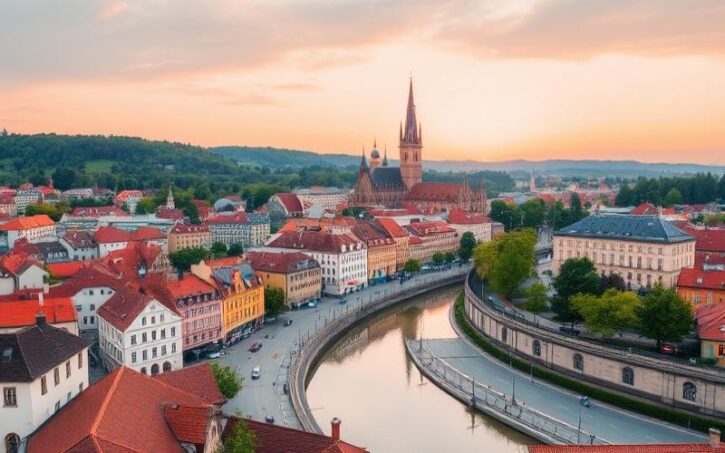
The Czech Republic is not just a postcard backdrop with Prague and its red roofs. For those who stay, it becomes a space where a new version of oneself is built, often more complex, more autonomous, sometimes more lucid. Homesickness, paradoxically, is part of this transformation. By listening to it without getting lost in it, by using the available resources, everyone can gradually build a life that, while remaining connected to their country of origin, finds its coherence here.
Disclaimer: The information provided on this website is for informational purposes only and does not constitute financial, legal, or professional advice. We encourage you to consult qualified experts before making any investment, real estate, or expatriation decisions. Although we strive to maintain up-to-date and accurate information, we do not guarantee the completeness, accuracy, or timeliness of the proposed content. As investment and expatriation involve risks, we disclaim any liability for potential losses or damages arising from the use of this site. Your use of this site confirms your acceptance of these terms and your understanding of the associated risks.

Cyril Jarnias is an independent expert in international wealth management with over 20 years of experience. As an expatriate himself, he is dedicated to helping individuals and business leaders build, protect, and pass on their wealth with complete peace of mind.
On his website, cyriljarnias.com, he shares his expertise on international real estate, offshore company formation, and expatriation.
Thanks to his expertise, he offers sound advice to optimize his clients' wealth management. Cyril Jarnias is also recognized for his appearances in many prestigious media outlets such as BFM Business, les Français de l’étranger, Le Figaro, Les Echos, and Mieux vivre votre argent, where he shares his knowledge and know-how in wealth management.





