
 Published on and written by Cyril Jarnias
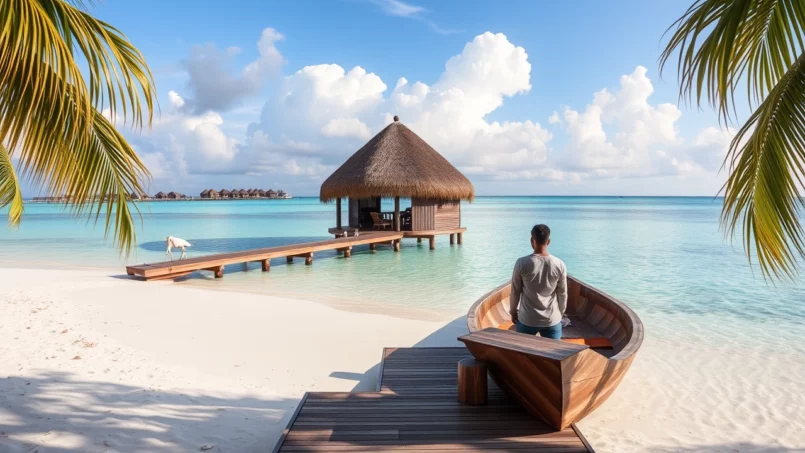
The setting is picture-perfect: turquoise water, white sand, swaying palm trees… and yet, in the midst of this paradise, a lump forms in your throat. You think of your family, your friends, your dog, your usual coffee shop. Homesickness can strike even at the heart of the Maldives, whether you’re a simple vacationer, a digital nomad, an intern, or a seasonal employee at a resort. Understanding what you’re feeling and knowing how to organize yourself practically—especially with communication tools and local wellness habits—changes everything.
To better enjoy your stay, it is recommended to understand the nature of homesickness and to rely on the Maldives’ good internet connectivity, establish routines, immerse yourself in the local culture, and participate in on-site activities.
Understanding Homesickness Rather Than Enduring It
Homesickness is neither a whim nor a sign of weakness. Psychologists define it as emotional distress related to separation from one’s usual environment. It comes with recurring thoughts focused on home, family, friends, and familiar landmarks, and can range from simple discomfort to real suffering.
Emotionally, this translates into sadness, anxiety, irritability, feelings of loneliness or emptiness, and the impression of being “out of place” while everyone else seems to be enjoying the stay. Thoughts run on a loop: “Why did I come here?”, “Everything was simpler back home.” You might find yourself constantly comparing your new life to your old one, to the detriment of the Maldives, even if the place is objectively beautiful.
During the health crisis, employees isolated in resorts described feeling a mix of frustration, helplessness, and anger, accompanied by physical sensations of discomfort, as if their bodies were rejecting the situation. This phenomenon illustrates how psychological stress can manifest through physical symptoms such as sleep disturbances, fatigue, headaches, digestive tension, appetite changes, and low energy.
Behavior changes too. You decline invitations, stay in your room or villa, avoid new encounters, spend hours on your phone scrolling through social media from home or calling family repeatedly. In extreme cases, productivity plummets, studies or work suffer, and activities that seemed exciting before departure no longer spark any interest.
Yet, all studies converge: most people experience this at one time or another. Up to 70% of first-year students report experiencing homesickness symptoms at the start of their studies, and between 5 and 7% experience an intense form with a real anxious or depressive component. So it’s not “you against the world,” it’s a human reaction to a sudden change of environment.
Why the Maldives Can Amplify or Attenuate This Feeling
The Maldives is an archipelago of nearly 1,200 coral islands, scattered across 26 atolls in the middle of the Indian Ocean. Hundreds of islands are uninhabited, about 200 are home to local communities, and nearly 200 are entirely dedicated to private resorts. In other words, if you work at a hotel or stay on a “hotel island,” you can sometimes walk around your entire kingdom in less than ten minutes.
This paradisiacal geography has a psychological downside: you can feel stuck on a small piece of land, far from everything. Several employees describe the archipelago as a “gilded prison” after a few months, especially when the days start to feel the same and you’re constantly around the same people, sometimes in spartan conditions for staff.
Archipelago employees
At the same time, the setting also offers powerful resources to feel better: an almost permanent relationship with the ocean, a mild climate (around 86 to 88°F), lots of natural light, possibilities for outdoor physical activities, and a reputedly warm local culture. Homesickness therefore plays out at the intersection between your personal history (age, past experiences, attachment, mental health) and this very particular configuration: isolated island, spectacular nature, heavy dependence on tourism.
Relying on Connectivity to Stay Connected to Home
Just a decade ago, connection in the archipelago was a luxury: exorbitantly priced calls, internet limited to a few computers in hotel lobbies, ridiculous speeds. That time is over. Today, the entire country is covered by modern mobile networks, almost all tourist destinations have 4G/LTE, and part of the country, especially Malé and Hulhumalé, even enjoys 5G.
This evolution is crucial for homesickness: being able to see your family on video, send photos, chat several times a week, or follow what’s happening “back home” greatly lessens the feeling of disconnection.
Understanding the Current Infrastructure
Two major operators dominate the market: Dhiraagu and Ooredoo. Together, they cover the main inhabited islands, resorts, and a large number of small local islands. Ooredoo claims over 60% market share, Dhiraagu about 35%. 5G is still concentrated in the capital and its surroundings, but 4G remains the standard on more remote islands.
Average mobile speeds give a good idea of what you can do: up to 70 to 75 Mbps download with Ooredoo, around 30 Mbps with Dhiraagu. These speeds are more than sufficient for high-definition video calls, large file transfers, or streaming, even if you’re a digital nomad and need to participate in Zoom or Teams meetings with your company back in Europe, Africa, or America.
Connection can be unstable during boat transfers but often stabilizes at accommodations. High-end establishments near Malé generally offer reliable Wi-Fi, while on remote islands, coverage may be limited to common areas, with dead zones elsewhere.
Choosing the Right Solution to Stay Connected
To limit homesickness, the choice of connection is not trivial. Between roaming, local SIM card, eSIM, or simple Wi‑Fi, the options don’t offer the same freedom.
Your home country’s operators sometimes offer roaming packages, but in the archipelago, it’s almost always the most expensive option. Recommendations agree: turn off roaming as soon as you land at Velana International Airport to avoid astronomical bills, especially if you use a lot of video to stay connected with loved ones.
The most sensible choice, especially for stays longer than a few days, is to opt for a local SIM or an eSIM. Both operators have sales points right after the arrival area in Malé, open during the day. A passport is essential: driver’s licenses or other foreign IDs are not accepted for tourists.
Since 2025, visitors no longer have access to the same rates as residents. Fake “free SIMs” distributed at the airport actually include no credit and require signing up for a plan starting at $40. At this price, plans remain generous with data, which is essential for internet calls.
A simplified guide to common tourist services to help you plan and size your communication strategies.
Includes hotels, guesthouses, seasonal rentals, and campsites.
Includes restaurants, cafes, food trucks, and local catering services.
Includes guided tours, museums, amusement parks, and outdoor activities.
Covers vehicle rentals, shuttle services, tourist public transport, and ride-sharing.
Includes tourist offices, concierge services, and digital information services.
Includes souvenir shops, artisan markets, and local producers.
| Operator | Price (USD) | Main Content | Indicative Validity |
|---|---|---|---|
| Ooredoo | 40 | 20 GB + local minutes | Rechargeable, variable duration |
| Ooredoo | 50 | 100 GB (30 GB standard + 70 GB social media) + local minutes | Rechargeable |
| Dhiraagu | 40 | 20 GB + local minutes & SMS, surcharge included | 10 days |
| Dhiraagu | 50 | 100 GB (30 GB standard + 70 GB social media) + minutes & SMS | 30 days |
| Dhiraagu | 100 | 125 GB, sometimes with free MiFi router | 30 days |
For a short but intense stay with lots of video calls, a 100 GB plan allows for long calls home without watching every megabyte. If you mainly plan to exchange messages and make a few audio calls per day, 20 GB may be enough.
eSIM: Prepare Before You Go
If your smartphone is eSIM compatible (many iPhones, iPads, and some recent Android models), you can save time and reduce stress upon arrival. Operators offer eSIMs online via their websites. The typical procedure: order, receive a QR code by email, scan it with your phone connected to stable Wi‑Fi, and activate in a few minutes.
This system offers several advantages for someone prone to homesickness. You can arrive knowing that as soon as the plane lands, you’ll be reachable. No lines at a counter, no negotiating in a foreign language when you’re already tired from jet lag. However, make sure your device is compatible, prepare a copy of your passport and a photo if the operator requires it for identity verification, and keep the email with the QR code safe (printed or as a screenshot).
As a rough guide, a 30 GB eSIM plan for one month goes for around $50 through various providers.
Relying on the Right Communication Apps
Once the connection is set up, everything depends on how you use it. The major free messaging apps are all accessible in the archipelago: WhatsApp, Telegram, Facebook Messenger, Signal, Viber, Skype, Google Meet, Zoom…
Each has its strengths when it comes to homesickness. Recognizing and relying on these personal resources can be an effective strategy for managing this emotion better.
Skype, for example, allows you to call for free other Skype accounts and buy credit to call landlines or mobiles, which can reassure relatives less comfortable with modern apps. Viber also offers free calls between users and a paid phone service to call a regular number abroad directly.
WhatsApp, used by over two billion people in more than 180 countries, is almost unavoidable: messaging, voice calls, video conferences, sending photos and videos. Its end-to-end encryption reassures those concerned about privacy. Telegram adds the ability to manage large discussion groups, useful for staying in touch with an entire university class or work team.
When the network isn’t ideal, Signal, designed to stay stable on weak connections, can be valuable: it uses little data while offering a high level of security. Google Meet and Zoom, two references for professional video conferencing, allow you to reduce video quality or switch to audio-only to adapt to mobile network fluctuations.
Finally, an app like Talk360 offers an interesting option if some people back home don’t have a smartphone or internet connection: you only need the app and internet; the person you call receives a regular call on their mobile or landline, with no app to install.
The idea, from a homesickness management perspective, isn’t to use everything, but to choose two or three tools and incorporate them into a routine.
Structuring the Link with Home: Regularity, Not Saturation
Stay connected, yes; drown in calls and social media, no. Research clearly shows that excessive contact with your home country and spending disproportionate time on social media comparing your current life to others’ often worsens homesickness instead of relieving it.
Recommended number of audio conversations per week with a close friend to maintain a long-distance connection.
The time difference plays an important role in this organization. The Maldives are at UTC+5, with no seasonal change. Concretely, this means they are, depending on the season, several hours ahead of Europe, Africa, or the Americas, and several hours behind some regions of Asia or Oceania. To avoid mistakes and prevent calling your family in the middle of the night, a basic chart can help plan your slots.
| Reference City | Approximate Time Difference with Maldives (excluding daylight saving) |
|---|---|
| London | Maldives + 5 hrs |
| Berlin / Paris | Maldives + 4 hrs |
| New York | Maldives + 9 to 10 hrs depending on season |
| Los Angeles | Maldives + 12 to 13 hrs |
| Sydney | Maldives – about 5 hrs |
| Singapore | Maldives – 3 hrs |
| Dubai | Maldives – 1 hr |
| Johannesburg | Maldives + 3 hrs |
Adapt these benchmarks to your situation, and schedule calls at comfortable times for everyone. A video call after your dinner and before sunset might correspond to early afternoon for your loved ones in Europe, or their morning in North America.
Above all, keep the notion of balance in mind: enough connection to feel supported, but not so much that your whole day revolves around home. Reserving specific slots for calls mentally frees up the rest of the time for what you’re experiencing on site.
Creating a Temporary “Home” in the Maldives
Homesickness stems largely from the loss of sensory and daily landmarks: the sight of your street, the smell of coffee, the familiar neighborhood sounds, the couch, the bedding, the morning routine. To cushion the shock, it’s essential to rebuild anchor points, even on an isolated atoll.
Personalize Your Living Space
Whether you’re staying in a shared staff room for three, a beach bungalow, or a small guesthouse on a local island, it’s possible to recreate a minimal cocoon. A few printed photos, a familiar scarf, a small memory notebook, or an object that has meaning for you can transform an impersonal lodging into a temporary nest.
To promote relaxation, it’s beneficial to set up a dedicated space, like a terrace corner, a hammock, or a quiet spot in a room. The key is to mentally associate this specific place with soothing activities (reading, music, a hot drink) to make it a personal refuge where you recharge and take care of yourself.
Wellness advice from yoga teachers based in resorts follows this logic: regularity matters more than performance. And sometimes small symbolic gestures are enough for the body to feel “at home,” like always hanging your hat in the same place or turning on the same soft light in the evening.
Establish Stable Routines
The brain is reassured when it can anticipate. In a radically new environment—climate, schedules, smells, language—simple routines act as rails.
A concrete example of a daily routine in the Maldives might look like this:
To start the day well in the tropics, drink a large glass of water (about 16 oz) upon waking to compensate for nighttime dehydration and the heat. Open the curtains wide to enjoy the lagoon’s natural light. Have breakfast at a fixed time, keeping some stable eating habits (fruit, coffee/tea, toast) or discovering local specialties. Integrate at least 15 minutes of daily physical activity: a walk on the sand, a gentle swim, or a small workout on the terrace. Reserve a quiet moment for reading, journaling, or guided meditation (facilitated by a good connection). Finally, set a reasonable bedtime and try to stick to it.
Habit formation specialists estimate it takes an average of about twenty days to install a new reflex. A stay of several weeks or a work contract of several months is well-suited for this “learning”: the sooner you start these micro-routines, the sooner your mind will stop feeling permanently in transit, and the more homesickness will fade.
Taking Care of Your Body to Soothe Your Mind
Physical health advice takes on particular meaning in the archipelago. Here, nature itself provides powerful tools to calm anxiety and regulate mood.
Seawater, for example, is rich in minerals like magnesium, zinc, iron, or potassium. Regularly soaking in the ocean, swimming gently, floating on your back looking at the sky—all this creates a form of “aquatic meditation” that has helped more than one struggling employee cope in the long run. Some clearly describe diving as an “underwater meditation,” a mental airlock far from resort tensions.
In the Maldives, morning exposure of 20 minutes to natural light, beneficial due to very regular days, helps regulate your internal clock after jet lag and promotes vitamin D synthesis. Strict sun protection (covering clothing, hat, reef-safe sunscreen) is then essential against the intensity of the equatorial sun.
Regarding food, the archipelago offers a cuisine based on reef fish, tuna, coconut, rice, seasoned with chili, coriander, and other spices. If part of homesickness involves nostalgia for home cooking, you can initially try to replicate your landmarks as much as possible (morning cereal, coffee your way, treats brought in your luggage). Gradually, integrating local flavors—garudhiya (aromatic fish broth), mas huni (mix of tuna, coconut, onion, chili), banana blossom salads, or small “hedikaa” snacks for tea time—can become a source of pleasure rather than anxiety-inducing disorientation.
A quarter-hour of exercise per day is enough to trigger stress regulation mechanisms.
Building Connections On Site to Avoid Isolation
Research on homesickness is clear: feelings of loneliness and lack of social support on site are among the major aggravating factors. Conversely, feeling welcomed and being able to count on a few familiar faces powerfully contributes to resilience.
Maldivians are generally described as warm, polite, and hospitable, but social codes are imbued with Islamic traditions. Understanding these codes helps you feel comfortable in interactions, whether on Malé, a local island, or within a resort team.
Getting Used to Local Customs
The classic greeting is “Assalaamu Alaikum,” to which you respond “Wa Alaikum Assalam.” Between men, you shake hands; between men and women, a simple smile or nod is often more appropriate, as handshakes are not automatic with unfamiliar women.
On inhabited islands, modest dress is essential: cover shoulders and knees in public, and wear swimsuits only on designated “bikini beaches.” Public displays of affection are frowned upon, even for married couples. Alcohol consumption is prohibited outside of hotel islands or authorized cruise ships. Respecting these rules avoids misunderstandings and fosters positive exchanges.
In daily life, the day is organized around the five prayers. Some shops close briefly during these times, transport may be delayed. During Ramadan, on local islands, most cafes are closed during the day, and it’s appreciated if visitors avoid eating, drinking, or smoking in public before the breaking of the fast.
None of this should discourage encounters. On the contrary: by showing that you are making an effort to understand and respect, you easily gain sympathy and invitations for tea, an impromptu football match, or a village celebration.
Getting Closer to Expatriate and Traveler Communities
If you work on site or stay long-term, connections with other foreigners also matter a lot. Specialized forums, like expat communities, show how much newcomers seek contacts in Malé or resorts. Some rare testimonies mention the ease of making friends in the capital, but also the loneliness felt while working on an isolated hotel island.
To broaden your social circle, you can use platforms like Boo, based on personality compatibility, or general expatriate sites, ideal for finding companions for outings or activities. Social networks, very popular with locals, also constitute an effective channel for building relationships.
In resorts, management that took the psychological well-being of employees seriously during crisis periods organized activities to maintain morale: sports competitions, movie nights, boat trips, yoga sessions, and sometimes even generous access to leisure facilities. An employee isolated for long months, for example, described how diving became his refuge, while sports tournaments and karaoke nights offered moments of lightness amid a heavy daily routine.
Even for a simple tourist stay, taking advantage of these collective spaces—bars, group excursions, cooking classes, diving, workshops—allows you to avoid the trap of the paradise villa where you ruminate alone.
Discovering Maldivian Culture to Transform Nostalgia into Curiosity
Homesickness often takes root in a kind of “culture shock”: you feel like a stranger, outside the codes, missing the landmarks of your own culture. An effective way to reduce this distance is to shift from a posture of comparison to a posture of active discovery.
In the Maldives, this happens through local islands open to community-based tourism. Since a 2011 decision, dozens of inhabited islands have developed guesthouses, guided village tours, artisan workshops, cooking classes. The “essence” of the archipelago is revealed more in these living islands than in the very international bubbles that are the large hotel islands.
To illustrate the richness of local traditions, one can cite the island of Thoddoo in the Maldives. Artisanal practices like weaving “thundu kuna” mats, building dhonis (traditional boats), and wood lacquering are still alive there, as are fish drying and “boduberu” singing and dance performances to the rhythms of large drums with African influence. An authentic immersion can include a cooking class to prepare mas huni, sharing tea during the afternoon “hedikaa” with locals, or a guided walk through the sandy lanes to discover the mosque, school, and football field. These experiences transform the perception of the place, moving from a simple postcard to a deep, emotional connection.
Emotionally, this can change the game: instead of just being someone “uprooted” from your world, you also become someone connecting to another world. Nostalgia for home continues to exist, but it coexists with a sincere interest in the life you observe here and now.
Using Resort Wellness Spaces as Psychological Allies
The Maldives heavily invests in wellness tourism. A multitude of resorts have developed programs dedicated to stress management, sleep, detox, yoga, or Ayurveda. Even if you’re not coming specifically for a “retreat,” these resources can serve as occasional support when homesickness weighs too heavily.
Luxury hotel complexes like JOALI BEING, Soneva, Six Senses, Anantara, or OZEN have developed comprehensive wellness sanctuaries. Their offerings integrate diagnostics, complementary therapies, sleep care, sound meditation, hydrotherapy, and practices inspired by traditional Maldivian medicine (“Dhiveli Beys”) and Ayurveda. Some establishments, notably in the Anantara chain, even have resident Ayurvedic doctors who offer personalized assessments and recommendations on diet, massages, and exercises.
For someone grappling with homesickness, the idea isn’t necessarily to embark on a multi-day full program, but to draw on these offerings occasionally: a session of restorative yoga at sunset after a blue day, a deeply relaxing massage to release accumulated tension, an introductory consultation on meditation or conscious breathing to leave with concrete tools.
Most of these activities are easy to book via the resorts’ internal apps or their websites, and combine well with a personal routine of journaling, daily walks, meditative swims. Furthermore, some sessions take place in small groups, offering an opportunity for informal encounters with other travelers or employees.
Managing Long-Term: When Living or Working in the Maldives
Everything above applies to a trip of a few days or weeks. But for those who settle in the archipelago for months—hotel employees, dive instructors, consultants, teachers, digital nomads—the issue of homesickness takes on a particular depth.
Over the long term, several elements recur in testimonies:
– the feeling of being trapped on a tiny island, especially when it’s impossible to accumulate days off to go to Malé or a neighboring island;
– weariness related to status differences between nationalities within resort teams, sometimes with great disparities in housing, access rights to spaces, daily treatment;
– the impact of prolonged separations from family, sometimes over a year and a half without returning, as happened during the pandemic;
– the blurry line between workplace and living space, especially when staff accommodations are located right behind tourist infrastructure, and you wear the uniform even during meals on your free time.
To cope, effective strategies combine several levels.
Structurally, the most aware management teams implement support systems: facilitating internet access for calls to loved ones, regularly organizing collective events, improving housing conditions, access to healthcare, and ideally, having a psychologist or external counselor available. These measures, of course, go beyond the individual scale, but it’s legitimate, as an employee, to inquire about these aspects from the hiring stage.
To avoid isolation, it’s advisable to create bonds with colleagues from other departments, participate in sports or recreational activities, and learn a few words of Dhivehi to facilitate exchanges with local staff. Taking advantage of staff-only facilities, like the gym, sports fields, or relaxation areas, significantly improves the living experience in the resort.
Furthermore, when possible, allow yourself regular escapes to local islands or Malé to break the monotony: seeing other faces, walking in lively streets, sitting in a city cafe, taking the public ferry. Even a day can be enough to reduce the feeling of claustrophobia.
Finally, as much as possible, it’s better to clarify contract conditions from the outset: rotation policy, time between leaves, return flight policy, possibility of inviting a loved one to visit for a few days… Knowing when and how you’ll be able to see your family again offers a horizon and reduces anxiety.
When to Seek Professional Help
In most cases, homesickness fades on its own over the weeks, as routines settle and connections form. But it happens that distress persists or even worsens despite all efforts. In this case, it’s important to know you’re not condemned to “endure” it alone.
Several signs should alert you if they persist beyond three or four weeks: lasting sleep disturbances (persistent insomnia, startling awake, nightmares), marked weight or appetite changes, almost complete social withdrawal, inability to concentrate at work or in studies, persistent thoughts of despair, or established symptoms of anxiety (palpitations, panic attacks) or depression.
In these situations, seeking professional support is not only legitimate but advisable. Depending on the context, several options exist: in-house psychological services if you work for a large organization, online therapy platforms specialized in supporting expatriates and international students, or employee assistance programs set up by some employers. These services allow you to speak in your language, with someone who understands the dual reality: the foreign environment, and the attachments left at home.
In case of suicidal thoughts, intent to act, or uncontrollable anxiety, immediately contact local emergency services, the tourist police, or an international helpline. Even on a small island, alert a resort manager, guide, or colleague to arrange assistance.
Making Digital Tools Allies, Not Chains
A point of vigilance deserves emphasis: in the smartphone era, the line between resource and trap is thin. Good connectivity, convenient eSIMs, messaging or meeting apps transform the experience of a distant stay… but can also trap you in a transnational virtual bubble that prevents you from putting down roots, even temporarily, where you are.
That’s the percentage of the global population that still doesn’t have reliable internet access.
But if you spend entire evenings scrolling through photos of parties with friends back home, or comparing every detail of your island life with what you would have done “if you had stayed”, homesickness will be reinforced. The key is therefore to use these tools intentionally: chosen screen time, scheduled calls, periods of “disconnection” where you leave your phone at the bungalow to go for a walk, dive, meet people.
Some resorts offer a ‘digital detox’ by strongly encouraging limited screen use. For homesickness, a more balanced approach is recommended: preserve dedicated moments to contact loved ones, while accepting not to follow everything back ‘home’ in real-time. This allows you to fully dedicate yourself to the experience you’re having on site.
Staying True to Your “Why”
Finally, when discouragement looms, it can be useful to remember what led you to the Maldives. A dream internship with a coral reef conservation NGO? A contract in a luxury resort to take a step into the international hospitality world? A honeymoon, or a journey of self-rediscovery after a difficult period? A desire to test the digital nomad life in a radically different environment?
Remembering your ‘why’ helps maintain motivation. In the Maldives, this goal is particularly concrete: the archipelago faces rising sea levels and has made tourism its economic pillar. Every visitor or worker thus participates in a larger story, involving environmental challenges, cultural exchanges, and professional transitions.
Writing this “why” in a notebook, revisiting it regularly, sharing it with a loved one during your calls, can re-anchor the meaning of your experience and lessen the loneliness or doubt.
Homesickness doesn’t disappear magically because you’re in a dream location. It doesn’t dissolve solely through willpower either. However, the Maldives offer a unique set of tools to get through it: fast mobile networks to stay connected to home, a natural environment of rare power, a welcoming culture to discover, a highly developed wellness industry, communities of expatriates and travelers ready to welcome newcomers.
To overcome nostalgia in a tropical environment, it is recommended to maintain regular but measured contact with loved ones, establish reassuring routines, take care of your body, dare to meet locals and other foreigners, accept your vulnerability, and ask for help if necessary. These combined actions allow for a rich, sometimes formative experience.
In the Maldives as elsewhere, being far from home can hurt. But it’s also an opportunity to discover that you can, for a time, feel a little at home on a tiny piece of coral lost in the ocean.
Disclaimer: The information provided on this website is for informational purposes only and does not constitute financial, legal, or professional advice. We encourage you to consult qualified experts before making any investment, real estate, or expatriation decisions. Although we strive to maintain up-to-date and accurate information, we do not guarantee the completeness, accuracy, or timeliness of the proposed content. As investment and expatriation involve risks, we disclaim any liability for potential losses or damages arising from the use of this site. Your use of this site confirms your acceptance of these terms and your understanding of the associated risks.

Cyril Jarnias is an independent expert in international wealth management with over 20 years of experience. As an expatriate himself, he is dedicated to helping individuals and business leaders build, protect, and pass on their wealth with complete peace of mind.
On his website, cyriljarnias.com, he shares his expertise on international real estate, offshore company formation, and expatriation.
Thanks to his expertise, he offers sound advice to optimize his clients' wealth management. Cyril Jarnias is also recognized for his appearances in many prestigious media outlets such as BFM Business, les Français de l’étranger, Le Figaro, Les Echos, and Mieux vivre votre argent, where he shares his knowledge and know-how in wealth management.





