
 Published on and written by Cyril Jarnias
Uruguay’s real estate market is increasingly attracting foreigners—retirees, families, investors, and digital nomads—drawn by political stability, a clear legal framework, and a high quality of life. But behind this image of the “Switzerland of South America,” price realities vary sharply from one city to another. Between Montevideo, Punta del Este, Colonia del Sacramento, the small towns of the Costa de Oro, or interior cities, the cost gap for buying or renting can exceed 300%.
This article compares cities in Uruguay based on key data: price per square meter, rental rates, rental yields, cost structures, and future outlook. It helps identify where real estate is expensive or affordable and what types of cities match different investment projects.
A Strong but Highly Contrasted National Market
The Uruguayan real estate market rests on fairly healthy foundations. Economic growth is around 2–3% per year, inflation has stabilized around 4–6%, and the country enjoys “investment grade” credit ratings from Moody’s, Fitch, and S&P. Real estate transactions are on the rise again: over 52,000 purchases in 2024 (+3.3%), and already more than 27,500 transactions in the first seven months of 2025.
The national average price for new homes reached approximately 90,000 UYU per square meter in the second quarter of 2025.
To visualize these orders of magnitude, we can start from a national range and compare it with the main urban centers.
Overview of Price per Square Meter by Zone Type
| Zone / Market Type | Indicative Average Price (USD/m²) | Main Comment |
|---|---|---|
| National Average for New Homes | ~$2,244 | All regions combined |
| Montevideo (Overall Average) | ~$2,918 | Capital, deepest market |
| Montevideo – “Prime” Neighborhoods (Carrasco, etc.) | $3,500 – $4,260 | High-end segments |
| Punta del Este (Average) | ~$4,000 | Flagship beach resort, heavily luxury-oriented |
| La Barra / Atlántida (Emerging Coasts) | $2,500 – $3,000 | Strong growth potential |
| Major Interior Cities | $1,750 – $3,500 | Salto, Paysandú, etc. |
| Rural / Agricultural Areas | $1,250 – $1,500 | Country estates (chacras), ranches, farmland |
| Affordable Montevideo Periphery | $750 – $1,100 | Las Acacias, Punta Rieles, etc. |
This geographical contrast is key to understanding the comparison between cities: on one side, a coastal axis strongly driven by foreign demand and tourism, and on the other, a more accessible interior Uruguay, where the cost of living can be up to 40% lower than in the capital.
Montevideo: The Reference Market, but Not the Most Expensive Overall
With approximately 1.7 million inhabitants in the metropolitan area, Montevideo alone accounts for more than a third of national real estate transactions and over three-quarters of rental contracts. It is the heart of the Uruguayan residential market—the most liquid, the best documented, and also one of the most expensive on the continent for apartments, among all Latin American capitals.
Sale Prices: Expensive Capital, Massive Internal Gaps
In the second quarter of 2025, the average price for new homes in Montevideo hovers around 117,000 UYU/m², or approximately $2,918. Year-over-year growth remains modest in nominal terms (+3.77%), and even slightly negative in real terms once inflation is deducted.
Behind the average prices, the gaps between neighborhoods are impressive. The price map forms an East-West gradient: the eastern coast and affluent neighborhoods exceed $4,000/m², the center oscillates between $2,500 and $3,000/m², while the working-class periphery can fall below $1,000/m².
| Montevideo Neighborhood / Zone | Average Price (USD/m²) | Positioning in the City |
|---|---|---|
| Carrasco | ~$4,266 | Chic suburb, villas, gardens, private clubs |
| Punta Carretas, Punta Gorda | >$4,000 | Seafront, highly residential and upscale |
| Pocitos, Malvín, Parque Rodó | $3,500 – $3,800 | Sought-after coastal sector, residential-urban mix |
| Parque Battle, Villa Dolores | >$3,000 | Central-coastal sector, good standard |
| La Blanqueada, Cordón, Tres Cruces | $2,900 – $3,250 | “Middle-class” neighborhoods, undergoing renewal |
| Centro, Aguada | $2,500 – $2,800 | Historic/commercial center, good price compromise |
| Periphery (Nuevo Paris, Punta Rieles, Las Acacias) | $750 – $1,100 | Working-class areas, entry-level |
For an investor or retiree, this internal diversity means two “Montevideos” coexist: a premium coastal city with international standards, and a more affordable, working-class city, especially for projects on a tight budget.
In practice, a new two-bedroom apartment in Cordón or Centro trades for around $160,000, a new studio for around $95,000. At the other end of the spectrum, a small seafront apartment in Punta Carretas or Pocitos can exceed $250,000, and a family home with a sea view in Malvín or Punta Gorda easily climbs between $500,000 and $1 million.
Rental Market: High Rents, but Moderate Yields
Montevideo also dominates the long-term rental market. In July 2025, the average residential rent reached 21,626 UYU, or about $542 per month, with annual growth of about 5.6%, close to the inflation rate.
Data from various sources provides useful benchmarks to assess and compare a local or specific situation with the trends and averages observed across the entire country.
| Property Type (Montevideo) | Typical Monthly Rent (UYU / USD) |
|---|---|
| 1 Bedroom Downtown | ~25,400 UYU (≈ $450–$900 depending on source) |
| 1 Bedroom Outside Center | 17,500 – 20,000 UYU (≈ $350–$500) |
| 3 Bedrooms Downtown | ~45,000 UYU (≈ $1,100–$1,200) |
| 3 Bedrooms Outside Center | ~33,000 UYU (≈ $840–$1,000) |
| 2 Bedrooms Furnished (Pocitos / Punta Carretas) | $800 – $1,200 |
| Studio Furnished (Cordón / Centro) (Long Stay) | $530 – $1,100 depending on standard |
| 1 Bedroom Buceo | ~25,000 UYU (≈ $650) |
| 1 Bedroom Carrasco | >45,000 UYU (≈ $1,170) |
In terms of gross yield, Montevideo averages around 5%, with variations by neighborhood and property type. 2025 data provides a detailed picture of performance:
| Montevideo Neighborhood | Gross Yield Range (Q2 2025) |
|---|---|
| Malvín | 5.81% – 6.68% |
| La Blanqueada | 5.58% – 6.62% |
| Pocitos | 4.44% – 6% |
| Centro | 4.91% – 5.86% |
| Cordón | 4.99% – 5.66% |
| Punta Carretas | 4.24% – 6.7% |
| Pocitos Nuevo | 5% – 5.55% |
| Tres Cruces | 2.2% – 4.78% |
Given these numbers, Montevideo appears as a city where the entry price is high in absolute terms, with rents relatively expensive on a national scale, but yields remaining “reasonable” rather than spectacular. For a buyer primarily seeking a good quality of life / urban services (culture, healthcare, education) rather than maximum profitability, it remains a logical destination. For an investor strictly focused on yield, other cities may offer a more aggressive price/yield combination.
Punta del Este: Luxury Showcase and Coastal Engine
Punta del Este is often described as the “Monaco” or “Saint-Tropez” of South America. Historically a summer beach resort, it is gradually transforming into a year-round destination, boosted by the arrival of new residents—nearly 15,000 since the pandemic—and a strong foreign clientele, especially Argentine and Brazilian, but also North American and European.
Among the Highest Sale Prices in the Region
With an average price around $4,000/m², Punta del Este surpasses Montevideo and enters the club of high-end beach markets. Prestige waterfront segments literally break the meter.
| Market Segment in Punta del Este | Indicative Price (USD/m² or per property) |
|---|---|
| General Average for Apartments | ~$4,000 USD/m² |
| Luxury Waterfront Buildings (Mouette, Trump) | $7,000 – $10,000 USD/m² |
| Least Expensive New Apartments | $2,500 – <$7,000 USD/m² |
| Classic Luxury Houses | $2 – $6 million USD |
| Luxury Waterfront Villas | $7 – $20 million USD |
| Small 2-Bedroom House, Away from Beach | Starting around $200,000 USD |
Projections remain clearly bullish: prices have increased about 10% in one year on certain segments, with annual appreciation often estimated between 8 and 12%. Medium-term scenarios suggest annual increases of 6 to 10%, or even more for the most exclusive locations.
The Maldonado region, centered on Punta del Este, represents nearly 18% of national real estate transactions. This dynamic is supported by strong construction activity and major projects, such as the mixed-use “Atlántico” complex (approximately $130 million) and a 25-story World Trade Center tower (approximately $42 million).
A Highly Seasonal but Very Rewarding Rental Market
The specificity of Punta del Este is its strong seasonality. In high season (December–February), the town fills up, rents skyrocket, and occupancy rates flirt with 90 to 95%. Annually, average yields remain attractive but are highly dependent on the ability to capture the summer clientele.
| Property Type / Rental Strategy (Punta del Este) | Rent and Yield Indicators |
|---|---|
| 1 Bedroom Downtown | ~46,000 UYU (≈ $650) per month |
| 1 Bedroom Outside Center | ~36,000 UYU (≈ 32,000 – 36,000 UYU) |
| 3 Bedrooms Downtown | ~102,000 UYU (≈ $2,500) |
| 3 Bedrooms Outside Center | ~76,000 UYU |
| 2 Bedrooms Furnished (Aidy Grill/Roosevelt) | ~$1,200/month (utilities included) |
| Studio Furnished (Aidy Grill/Roosevelt) | ~$700/month |
| Quality Single-Family Home | Rents starting around $2,000/month |
| Gross Vacation Rental Yield (Seasonal Rentals) | Approximately 6–7% per year |
| Possible Gross Yield from High Season Alone | 12–20% annualized over 3 months, depending on occupancy |
The investment logic in Punta del Este is therefore different from Montevideo: the challenge is not only to obtain stable rental yield, but to capture the high season to maximize annual income, even if it means accepting quieter periods the rest of the year. This assumes good management, sometimes through specialized agencies, and a clear positioning either in the very high-end segment or in a more accessible “family” segment.
Colonia del Sacramento: Historic Charm and Mid-Range Prices
Colonia del Sacramento occupies a unique position on the Uruguayan chessboard. A small town of about 27,000 inhabitants, with a UNESCO-listed colonial heritage, located 75 minutes by ferry from Buenos Aires and two hours by road from Montevideo, it attracts a mix of tourists, retirees, and investors seeking a peaceful environment.
A Market More Affordable than Montevideo and Punta del Este
Real estate here remains more accessible than in the capital or Punta del Este, even though prices tend to rise. A one-bedroom apartment in the center rents for around $800, a three-bedroom on the outskirts about $1,100, placing Colonia in an “intermediate” rental range.
To illustrate the current real estate market, consider the example of a 70 m² three-room apartment in downtown Lyon selling for 450,000 €, showing strong demand in high-pressure urban areas. Conversely, a 100 m² single-story house with a garden in a rural area of Creuse might sell for around 120,000 €, reflecting very different market dynamics depending on location.
| Property Type in Colonia del Sacramento | Indicative Price (USD) |
|---|---|
| 3 Rooms (≈ 68 m²) in 1998 Building | ~$48,000 |
| 1 Bedroom Condo Waterfront (2017) | ~$155,000 |
| Spanish Style 3-Bedroom House, Barrio Histórico | ~$360,000 |
Overall, prices per square meter in Colonia remain well below the coastal “hotspots,” by about 50% for some segments. However, historic neighborhoods and views of the Río de la Plata push the market upward, while areas like Real de San Carlos or El General remain more affordable.
Tourist Rentals: A Niche but Profitable Market
The town is particularly well-suited for short-term rentals. Airbnb data for Colonia shows a market primarily composed of small apartments or entire houses, oriented toward short stays, with a strong presence of Argentine and international travelers.
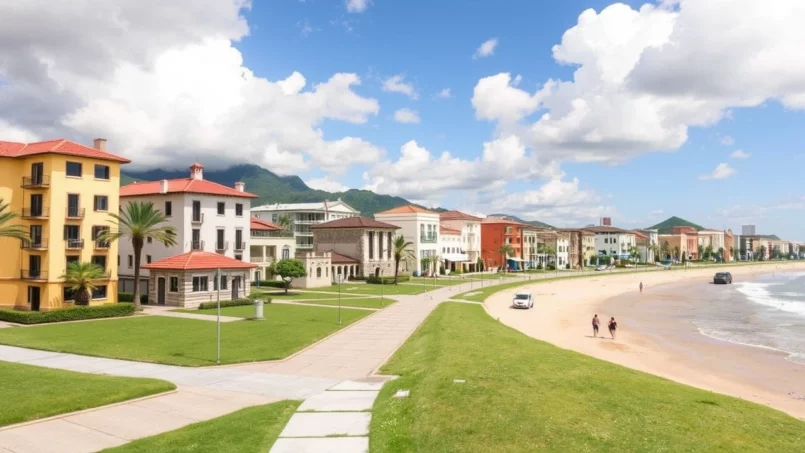
Description of observable elements in a recent photograph
Examine the framing, composition, shooting angle, and depth of field to understand the photographer’s intent.
Identify and describe the central subject(s) of the image, their position, and interaction with the frame.
Analyze the environment, setting, and contextual elements surrounding the main subject.
Evaluate the quality, direction of light, color palette, and contrasts present in the image.
Interpret the overall atmosphere, conveyed emotion, and impression left by the photograph.
Note potential technical details like sharpness, grain, resolution, or possible retouching.
| Airbnb Indicator – Colonia del Sacramento | Indicative Value |
|---|---|
| Number of Listings Analyzed (1 year) | 347 |
| Median Monthly Revenue | ~$660 |
| Monthly Revenue of Top 10% | >$1,677 |
| Median Nightly Rate | ~$69 |
| Nightly Rate of Top 10% | >$140 |
| Median Occupancy Rate | ~31% |
| Occupancy Rate of Top 10% | >69% |
| Share of Entire Homes | ~73% |
| Share of Apartments/Condos | ~37% |
| Share of Houses | ~34% |
In terms of yield, well-located properties in the Barrio Histórico or waterfront can aim for 5 to 8% gross, particularly if operated as a boutique hotel or distinctive tourist rental.
Colonia thus positions itself as an interesting alternative for those who find Montevideo or Punta del Este too expensive, but wish to retain a charming urban environment, good international connection (via Buenos Aires), and tourist rental potential.
Interior Cities: Lower Cost of Living, Still Accessible Real Estate
Beyond the Montevideo – Punta del Este – Colonia triangle, a large part of Uruguay lives at a different pace and price level. Cities like Salto, Paysandú, Rivera, Tacuarembó, or Melo offer a comfortable standard of living, very affordable rents, and often spacious properties for a cost far below the coast.
Overall Cost of Living: Several Dozen Percent Lower than Montevideo
Monthly budget estimates (housing included) for a couple or family in these cities illustrate the gap. Where a couple might aim for $2,500 to $3,500 per month in Montevideo for comfortable living, several interior cities fall well below that.
| Interior City | Monthly Range All Expenses (USD) |
|---|---|
| Melo | $785 – $1,951 |
| Paysandú | $894 – $2,071 |
| Rivera | $894 – $1,993 |
| Tacuarembó | $900 – $2,097 |
| Salto | $1,047 – $2,568 |
| Mercedes | $1,064 – $2,531 |
| Maldonado (outside Punta del Este) | $989 – $2,603 |
| Durazno | $1,101 – $2,713 |
| Florida | $1,123 – $2,782 |
We see that, even for the “upper” budgets of these ranges, the overall cost of living remains well below that of the capital, with differences of up to 40%.
Rents: Houses with Gardens for the Price of a City Studio
Rents illustrate this gap even more clearly. In these cities, it is common to rent a three-bedroom house with a garden for a price that, in Montevideo, would correspond to a small apartment.
| City | Examples of Monthly Rents (UYU) |
|---|---|
| Salto | Furnished 2-bed apt: 15,000–20,000 UYU; house with garden: ≤25,000 UYU |
| Paysandú | 3-bed house: 12,000–18,000 UYU; furn apt near river: ≤22,000 UYU |
| Rivera | 3-bed house: 10,000–16,000 UYU; central furn apt: ≤20,000 UYU |
| Tacuarembó | 3-bed house with garden: 14,000–19,000 UYU; with land: ≤25,000 UYU |
| Melo | 3-bed house with garden: 9,000–15,000 UYU; with land: ≤20,000 UYU |
Converted to dollars, these rents are often below $400–$500 for entire houses, whereas a simple furnished two-room apartment in sought-after neighborhoods of Montevideo readily rents for $800 to $1,200. Many expatriates seeking space, a garden, or even small-scale agricultural activity find an interesting compromise in these cities.
Service and Utility Costs: Another Advantage for the Interior
Essential utilities (electricity, water, internet) also remain more moderate in interior cities than in the capital, although differences amount to a few dozen dollars per month.
| City | Typical Monthly “Pack” of Utilities (Elec + Water + Internet) (UYU) |
|---|---|
| Salto | ~3,500 UYU |
| Paysandú | ~3,200 UYU |
| Rivera | ~2,800 UYU |
| Tacuarembó | ~3,500 UYU |
| Melo | ~2,500 UYU |
Urban transport also remains affordable: bus fare oscillates between 35 and 40 UYU, a taxi ride between 50 and 80 UYU. For a household, this contributes to an overall bill noticeably lighter than in Montevideo, especially when adding often lower food prices thanks to municipal markets and short producer-consumer circuits.
Rental Yield: Often in the High National Average
Even if detailed data by interior city is less abundant than for Montevideo or Punta del Este, available analyses generally place gross rental yields around 5 to 7%. For purchases, price per square meter is typically in a range of $1,750 to $3,500 depending on the city and neighborhood, which, combined with decent rents relative to acquisition cost, results in an interesting profitability/risk combination for investors willing to move away from major centers.
Small Beach Towns and Costa de Oro: Between Affordability and Growth Potential
Between Montevideo and Punta del Este, the coastal fringe of the Costa de Oro—with towns like Atlántida, Piriápolis, or La Paloma—offers a highly sought-after compromise: the sea, a family-resort atmosphere, still reasonable prices, and, for some sectors, strong appreciation potential.
Atlántida, Piriápolis, La Paloma: Seafront at Contained Prices
In these resorts, buying a small beach house or an apartment for a second home or seasonal rental is often much more affordable than in Punta del Este.
| Coastal Locality | Typical Purchase Price (USD) | Typical Monthly Rent (USD) |
|---|---|---|
| Atlántida | 2-bed house: $125,000 – $180,000 | 2–3 bed house: $500 – $900 |
| Piriápolis | Apartment/house 2 bed: ≈ $210,000 (example) | 2 bed annual: ~$526 – $1,079 |
| La Paloma | 2-bed houses in range comparable to Atlántida | Rents comparable to Piriápolis |
Prices per square meter on the Costa de Oro often range between $1,000 and $2,000 for a property near the beach, a fraction of the cost of an equivalent apartment in Punta del Este. Rental yields there are relatively attractive, with some gross yield estimates around 8% in Atlántida (7.8–8.1% depending on intra-urban location).
For “lifestyle + moderate investment” profiles, these towns combine four advantages: quick access to Montevideo (in the case of Atlántida), reasonable purchase cost, potential for seasonal rental, and a foothold in markets still in an upgrading phase.
La Barra, José Ignacio, Manantiales: The New High-End Frontier
At the other end of the coastal spectrum, areas like La Barra, José Ignacio, Manantiales, or Punta Ballena, all within the orbit of Punta del Este, display prices reflecting their new image as trendy or ultra-exclusive destinations.
The median price per square meter in Manantiales, the most expensive location in Uruguay for apartments.
These sectors also offer very high rental yields, sometimes between 6 and nearly 10% gross on seasonal rentals, but with acquisition prices aligned with this profitability, worthy of the world’s most expensive beach markets.
Structured Comparison: Montevideo vs. Punta del Este and the Rest of the Country
To clearly grasp price differences between major cities, it is useful to compare some key indicators: average rent, purchase price, and cost of living for a typical profile.
Rent and Purchase: Montevideo / Punta del Este / Secondary Cities Comparison
| Indicator (1–3 Bedrooms) | Montevideo | Punta del Este | Interior Cities (e.g., Melo, Rivera) |
|---|---|---|---|
| 1 Bedroom Rent Downtown | ~25,000 UYU (~$450–$900) | ~46,000 UYU (~$650) | 9,000–20,000 UYU (often <$400) |
| 3 Bedrooms Rent Downtown | ~45,000 UYU | ~102,000 UYU | 10,000–25,000 UYU (entire houses) |
| Apartment Purchase Price Downtown (avg m²) | ≈ $2,900/m² | ≈ $4,000/m² | $1,750–$3,500/m² (major cities) |
| Purchase Price “Entry-Level” Property | Studios ≈ $95,000 | Studio ≈ $125,000 | 2–3 bed houses from $80,000–$100,000 |
| Purchase Price “Good Standard” Property (2–3 bed) | $160,000–$300,000 | $200,000–$550,000 | $125,000–$200,000 |
This comparison highlights several key points:
Montevideo is more expensive than interior cities but less so than Punta del Este, especially on the waterfront. Punta del Este commands an international beach resort premium, with rents and price per m² exceeding the capital’s by 30 to 50%. Secondary cities often offer equivalent or superior comfort (houses, gardens) for a cost well below Montevideo.
Rental Yields: Where is Investment Most Efficient?
In terms of yield, available figures clearly illustrate the hierarchy between zones:
Overview of average gross yields for real estate rental investment in different regions of Uruguay.
Average gross yield around 5%, with variation from 4% to nearly 7% depending on neighborhood and property size.
Gross yield of 6 to 7% for seasonal rentals, with much higher peaks during high season.
La Barra, Atlántida: yields often between 6% and 9%, or more for very well-positioned properties.
Yields generally 5 to 7%, with lower entry prices and more stable, less seasonal demand.
For a purely financial investor, there is no single “best city,” but rather distinct risk/return profiles. Punta del Este and La Barra offer high appreciation potential and rental profitability, but with high capital intensity and marked seasonality. Montevideo guarantees market depth and liquidity, at the price of a somewhat lower yield. Interior cities, finally, can constitute an interesting arbitrage between low prices, decent yields, and lower volatility.
Taxation, Transaction Costs, and Impact on Comparisons
Comparing prices between cities without considering associated costs would be misleading. In Uruguay, property acquisition comes with significant fees, which apply similarly in Montevideo, Punta del Este, or Salto—but weigh more heavily, proportionally, on a small purchase.
Purchase Costs: A Surcharge of 7 to 10% of Sale Price
Typical transaction fees include:
– Property Transfer Tax (ITP): 2% of the fiscal value for the buyer (and 2% for the seller), the tax base often being 30 to 40% of the market price.
– Escribano (notary-lawyer) fees: generally 3% of the price plus VAT (22%), totaling approximately 3.66%.
– Agency commission: typically 3% of the price plus VAT.
– Registration fees and various stamps: add another 1 to 2%.
The percentage of the property price typically represented by the surcharge on purchase in Uruguay, regardless of location.
Annual Taxation: Moderate Pressure, but Varies by Department
Local taxation (Contribución Inmobiliaria, school tax, possibly wealth tax) varies by department, with a non-negligible impact on the net cost of holding the property, especially for high-value properties.
Some orders of magnitude:
Property owners are subject to the Contribución Inmobiliaria (0.25 to 0.5% of the cadastral value in Punta del Este, progressive scale from 0.18 to 1.8% in Montevideo) and the primary education tax (approx. 0.15 to 0.30%, with exemption below a threshold). The wealth tax applies above a certain net worth threshold, with a flat rate of 1.5% for non-residents on the taxable net asset surplus.
For modest-value properties in interior cities, these taxes remain relatively contained. Conversely, a multi-million dollar villa in Punta del Este will incur a substantial annual tax burden, which, de facto, reduces the net yield compared to a more modest rental property in a small town.
Trends and Outlook: Towards Widening or Narrowing Gaps?
Current dynamics suggest that price gaps between cities will not narrow quickly, on the contrary.
Emerging coastal cities in Uruguay could see the highest annual real estate price growth rates.
Added to this is a structural trend: the rise of “wellness” real estate and eco-responsible projects, which primarily affect the coastal strip (especially the Maldonado region) but are also beginning to reach the interior. Properties incorporating sustainability elements (solar energy, water recovery, landscape integration) capture a “green premium” that further widens the value gap with the traditional real estate stock.
In Summary: Which City for Which Buyer or Renter Profile?
At the end of this comparison, some broad outlines emerge:
An overview of different regions and their profiles for real estate and lifestyle.
Logical choice for culture, healthcare, and universities. Deep market with high prices, but opportunities exist in rejuvenating neighborhoods like Cordón, Centro, and Aguada.
Playground for substantial budgets, whether for a primary residence, vacation home, or high-yield seasonal investment. Includes La Barra, José Ignacio, and Manantiales.
A gentler, more affordable Uruguay, ideal for retirees or families prioritizing space and tranquility. Examples: Colonia del Sacramento, Salto, Paysandú, Rivera, Tacuarembó, and Melo.
The sea without the ‘Punta price’. Markets like Atlántida, Piriápolis, and La Paloma offer moderate entry prices and growth potential for investors.
Beyond the numbers, the conclusion is clear: talking about real estate prices “in Uruguay” makes little sense without specifying the city or region. The same $200,000 budget could finance a luxury studio in Montevideo, a small house near the beach in Atlántida, or a sizable rural property around Salto. The real comparison is therefore not just financial, but also about lifestyle—and that is likely where Uruguay, with its combination of safety, stability, and geographical diversity, stands out.
Disclaimer: The information provided on this website is for informational purposes only and does not constitute financial, legal, or professional advice. We encourage you to consult qualified experts before making any investment, real estate, or expatriation decisions. Although we strive to maintain up-to-date and accurate information, we do not guarantee the completeness, accuracy, or timeliness of the proposed content. As investment and expatriation involve risks, we disclaim any liability for potential losses or damages arising from the use of this site. Your use of this site confirms your acceptance of these terms and your understanding of the associated risks.

Cyril Jarnias is an independent expert in international wealth management with over 20 years of experience. As an expatriate himself, he is dedicated to helping individuals and business leaders build, protect, and pass on their wealth with complete peace of mind.
On his website, cyriljarnias.com, he shares his expertise on international real estate, offshore company formation, and expatriation.
Thanks to his expertise, he offers sound advice to optimize his clients' wealth management. Cyril Jarnias is also recognized for his appearances in many prestigious media outlets such as BFM Business, les Français de l’étranger, Le Figaro, Les Echos, and Mieux vivre votre argent, where he shares his knowledge and know-how in wealth management.





