
 Published on and written by Cyril Jarnias
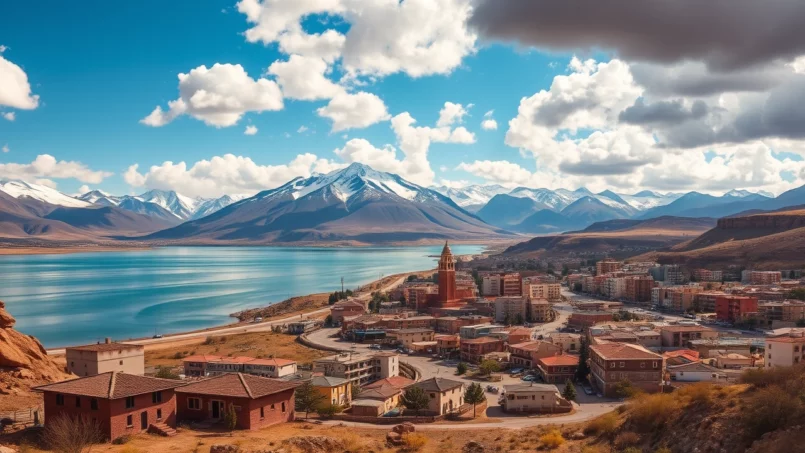
Tourism is reshaping Bolivia’s real estate landscape. Long confined to the role of a simple complementary engine in an economy centered on gas, mining, and agriculture, this sector has become one of the key pillars of economic diversification. Its boom is transforming housing demand, giving rise to new investment hubs, and disrupting the balance between residents, investors, and visitors—from La Paz to the Salar de Uyuni to the shores of Lake Titicaca.
Analyzing this impact requires cross-referencing several factors: tourist arrival numbers, investment flows, urban changes, and on-the-ground observation. Entire cities, such as Copacabana and Uyuni, have now reoriented themselves toward welcoming travelers, creating a complex dynamic for the local real estate market.
Tourism Becomes a Strategic Sector
For a long time, Bolivia lived primarily off its natural resources. But over the past twenty years, tourism has gone from being a marginal activity to a strategic sector, enshrined in the Constitution and integrated into development plans as a driver of growth, job creation, and diversification.
Average annual growth rate of international tourism revenue before the pandemic, far exceeding GDP growth.
Rising Visitor Numbers and Soaring Revenue
Since the turn of the millennium, Bolivia has attracted more and more travelers, whether they come for the spectacular landscapes of the Salar de Uyuni, the shores of Lake Titicaca, the Amazon parks, or the UNESCO World Heritage colonial cities.
This progression can be summed up through a few key milestones:
| Indicator | Year / Period | Value / Change |
|---|---|---|
| International arrivals | 1995 | 284,000 |
| International arrivals | 2000 | 319,000 |
| International arrivals | 2012 | > 1.1 million |
| International arrivals | 2019 | 1,239,000 (pre-COVID peak) |
| International arrivals | 2020 | 323,300 |
| Total tourists (foreign + domestic) | 2023 | ~ 2 million (including ~ 1 million foreigners) |
| Tourism revenue | 1995 | USD 92 million (historical low) |
| Tourism revenue | 2000 | USD 101 million |
| Tourism revenue | 2012 | > USD 581 million |
| Tourism revenue | 2019 | USD 837.3 million to USD 977 million depending on source |
| Tourism revenue | 2020 | USD 243 million |
| Revenue from international tourists | 2016–2019 (average) | ~ USD 799 million / year |
| International revenue | 2024 | ~ USD 736.6 million (+7% vs. 2023) |
Beyond this raw growth, several elements structure the impact on real estate. First, the strong recurrence of tourist flows toward certain hubs: the Salar de Uyuni, Lake Titicaca (and Copacabana), Sucre, Potosí, Rurrenabaque, Samaipata, not to mention La Paz and Santa Cruz. Then, the very nature of tourist spending, heavily oriented toward services, including accommodation and food. According to official estimates, about 15% of a foreign tourist’s spending goes to lodging, 63% to services (transport, food, leisure), and 22% to goods (souvenirs, handicrafts).
Number of visitors expected by 2028, representing an estimated average annual growth of over 3% since 2023.
An Emerging Real Estate Market Driven by Tourism
Bolivia, with a GDP of about USD 43 billion, a population of 12.1 million (70% urban), and inflation contained at just over 3%, offers a relatively stable macroeconomic framework. In this context, the real estate market has experienced several growth phases since 2010, punctuated by the pandemic shock, but overall marked by sustained price appreciation.
The rise of tourism runs parallel to this trajectory and directly contributes to demand dynamics, particularly in certain segments: short-term rentals, hotels, hostels, vacation homes, conversions of historic buildings into accommodations, and mixed-use projects combining retail, offices, and housing.
Price Trajectory and Role of Tourist Demand
The historical performance of real estate in Bolivia shows a medium-term upward trend with distinct cycles.
| Period | Average annual real estate appreciation |
|---|---|
| 2010–2014 | 8–12% |
| 2015–2019 | 5–7% |
| 2020–2022 | 1–3% (pandemic impact) |
| 2023–present | 5–8% |
Over five years, the value of an urban property is estimated to increase on average by about 1.5 times its purchase price. This progression is due to several factors: population growth, rural exodus to cities, rising living standards of an emerging middle class, land constraints in central areas… But tourism plays a decisive role in several segments.
Tourism stimulates demand for short-term rental properties (Airbnb apartments, tourist residences, boutique hotels) and attracts local and foreign investors targeting tourist areas for their high rental yields and potential capital gains.
Observed yields confirm this effect.
| Real estate segment | Estimated gross rental yield |
|---|---|
| Urban residential apartments (long-term) | 6–8% |
| Luxury villas / houses | 4–6% |
| Commercial (retail spaces, offices) | 7–10% |
| Tourist properties (vacation rentals, hotels, Airbnb) | 8–12% (highly seasonal) |
| Colonial restoration projects (boutique hotels, etc.) | 5–9% |
Tourism-oriented assets offer on average the highest yields, at the cost of greater management complexity and stronger seasonality. In the most in-demand destinations, the combination of high rental yields and sustained appreciation drives up total returns on investment.
A typical scenario for the Lake Titicaca region, especially around Copacabana, illustrates the investment potential: a tourist property operated as a vacation rental over five years can generate an annual rental yield of about 10% and an average property appreciation of 8% per year. This combination results in an estimated total return on investment between 85% and 95% over the five-year period, explaining the strong investor interest in this market.
Copacabana and Lake Titicaca: Mass Tourism, Real Estate in Transformation
Copacabana, a small town in the Manco Kapac province on the Bolivian shore of Lake Titicaca, is an open-air laboratory for the impact of tourism on urban planning and real estate. Located about 150 kilometers from La Paz, on a peninsular between Mount Niño Calvario and Mount Calvario, it is simultaneously a major pilgrimage site, a key border crossing to Peru, and an unusual beach destination at nearly 3,800 meters altitude.
An Economy Almost Entirely Geared Toward Visitors
Everything, or nearly everything, in the town is calibrated for travelers. Hotels, hostels, and guesthouses line the steep slopes to offer lake views; restaurants and bars lined up along Avenida 6 de Agosto compete to attract passersby; markets offer textiles, pottery, and souvenirs often mass-produced for the tourist flow.
The accommodation infrastructure is particularly dense for a town of this size, with a range from backpacker dormitories to higher-end hotels:
Discover a wide variety of lodging options, from budget hostels to international hotels, including authentic homestay experiences.
Budget establishments like Hostal Piedra Andina or Skylake B&B.
Options such as Hostal Las Olas, La Cúpula, or B&Bs with rooftop terraces.
Properties like Hotel Rosario Lago Titicaca or Estelar de Titicaca on the lakeshore.
For an authentic immersion, choose accommodation like Casa del Sol.
On the nearby islands, the tourist footprint on the built environment is visible: Yumani and Challapampa on Isla del Sol cluster accommodations and restaurants oriented toward the sacred landscapes and Inca ruins, while on Isla de la Luna, simple lodges like Luna del Titikaka or Hostal Qhana Pacha complete the offering. The local economy relies heavily on these structures and associated transport services: ferries, excursions, boats, pedal boat rentals, bicycles, motorcycles, or horseback riding.
Effects on Prices and Property Types
This dependence on tourist clientele is reflected in real estate. In the Lake Titicaca area, properties classified as “tourist properties” in Copacabana trade at around 500 to 800 dollars per square meter, a notable level for an otherwise peripheral locality. By comparison, a colonial building in Sucre’s historic center can be worth between 800 and 1,200 dollars per square meter, and a high-end apartment in La Paz’s Zona Sur between 1,400 and 1,800 dollars per square meter.
| Location / Property type | Estimated average price (USD/m²) |
|---|---|
| Copacabana (tourist property) | 500–800 |
| Sucre (colonial building, historic center) | 800–1,200 |
| La Paz, Zona Sur (luxury apartment) | 1,400–1,800 |
| Santa Cruz, premium neighborhoods | 1,500–2,000 |
The price differential reflects both market size, local purchasing power, and earnings potential. In Copacabana, the land that is valued is primarily what can be developed for lake views, accommodations, or visitor-oriented businesses. Since the town is cramped between the lake and the hills, plots offering a panorama of the water, even small and difficult to build on, become sought-after assets.
Converting homes into short-term rentals, driven by high yields in peak season (May to September), reduces the supply of housing for local families. Although entry prices remain lower than in big cities, this pressure on the real estate market can lead to residents moving to the periphery, where access to services and the lake is less favorable.
Tourist Season, Revenues, and Vulnerabilities
Tourism-oriented activities are highly seasonal. The dry season, more conducive to visits, concentrates a large share of overnight stays. Estimates of rental yield for tourist properties typically assume an annual vacancy rate of about 8%, meaning four weeks without occupancy, but the reality is often more irregular: peaks during holidays, religious festivals, or certain long weekends; marked troughs during the rainy season.
Typical daily budget of a traveler in Copacabana, including accommodation, transport, sightseeing, and meals.
But this dependence also creates vulnerabilities: partial closure of Isla del Sol due to community tensions, site degradation (like the Sun Temple covered with a tarp, with no clear restoration plan), plastic pollution on the beach, conflicts between traditional practices and “shows” staged for tourists. All these factors can erode the destination’s appeal, hence revenue prospects, and ultimately weigh on property values.
Uyuni: When a Destination Lives for—and Almost Only Through—Tourism
At the other end of the country, in the southwestern Andean region, the case of Uyuni illustrates another facet of tourism’s impact on the built environment and the local market. This town, the main gateway to the Salar de Uyuni, the world’s largest salt flat, lives almost exclusively off the tourist windfall generated by 4×4 excursions.
A Mono-Sector Economy Focused on Salt
Each year, several hundred thousand people come to tread the 10,500 square kilometers of the salar, drawn by its surreal landscapes, endless reflections during the rainy season, colorful lagoons, and its famous “train cemetery.” A large part of the tours depart from Uyuni, where travel agencies, accommodations, and logistics services are concentrated.
The city’s tourism agencies generate annual revenue of about USD 4 million (including USD 776,000 in profits) thanks to the Salar, but the town suffers from obvious underinvestment: dilapidated streets, unwelcoming main square, lack of quality amenities, and issues with waste and electricity.
This mismatch between volume of tourist flows and quality of the urban fabric poses a heavy paradox for real estate. On paper, the tourism economy should push land values upward, stimulate renovation, and encourage the development of new products (charming hotels, modern hostels, sustainable accommodations). In practice, several factors hinder this movement: remoteness, harsh climate, structural poverty, possible capital flight to La Paz where some agency owners reside, lack of incentive to improve the offering in a context of limited competition.
Salt Hotels, Infrastructure, and Environmental Risks
The case of hotels built from salt blocks illustrates how tourism can shape the built environment and its constraints. The first “Palacio de Sal”, set up directly on the salt flat in the 1990s, was eventually dismantled in 2002 due to serious sanitary and environmental problems: impossible wastewater management, pollution of the surroundings, difficulty organizing waste collection in such an isolated space.
A new salt hotel, built around 2007 about 25 km from Uyuni, features a compliant sanitation system and luxury amenities like a saltwater pool and sauna. However, the proliferation of these establishments with unusual rooms raises questions about their environmental impact in this fragile salar ecosystem.
Here again, land speculation concentrates on locations providing access to the most popular circuits, with a clear advantage for plots near tourist routes. Urbanization remains fragmented and poorly managed, in a context where other major issues coexist: lithium extraction (the salar is estimated to hold between 22% and 70% of global reserves depending on estimates), conflicts over mining concessions, pressure on water resources, threats to quinoa cultivation. These tensions structure the future of local real estate as much as—if not more than—the tourism prospects alone.
Big Cities, Small Destinations: A Reshaped Real Estate Geography
While Copacabana and Uyuni represent extreme cases of tourism dependence, the sector’s impact on Bolivian real estate also plays out in large cities and a constellation of secondary destinations.
La Paz, Sucre, Santa Cruz: Where Tourism and Residential Intersect
La Paz, perched at 3,650 meters (12,000 feet) above sea level, is both the administrative capital and a tourist hub. Travelers pass through to reach Lake Titicaca, the Yungas, the Salar, or the Amazon. This hub role has fostered the emergence of a varied accommodation offering, particularly in neighborhoods like Sopocachi and Miraflores, where colonial houses have been converted into charming hotels and guesthouses. In these areas, the intersection of tourist clientele, expats, and the local middle class has boosted property appeal, pushed rents upward, and encouraged the renovation of the built heritage.
The price per square meter for high-end apartments in affluent La Paz neighborhoods like Calacoto and San Miguel.
Sucre, a UNESCO World Heritage Site, faces a different kind of pressure. Its colonial urban grid, white facades, and inner courtyards make it a top destination for “cultural” tourists and language stays. In this context, historic downtown buildings are regularly converted into boutique hotels, hostels, or tourist residences. This conversion is profitable—colonial restoration projects show estimated yields between 5% and 9%—but can accentuate the “museumification” of the center, where permanent residents gradually give way to temporary uses.
The price per square meter in premium neighborhoods like Equipetrol in Santa Cruz de la Sierra exceeds USD 1,500.
Secondary Markets: Rurrenabaque, Samaipata, Tarija
Beyond the major centers, a series of small tourist towns is experiencing a real estate upswing, with entry costs still significantly lower than those of the metropolises.
| Destination | Tourist specialty | Real estate particularities |
|---|---|---|
| Rurrenabaque | Gateway to the Amazon, access to Madidi National Park | Prices 30–50% lower than in big cities, potential for high yields via eco-lodges and guesthouses |
| Samaipata | Mountain retreat near Santa Cruz, pre-Inca archaeological site | Strong appeal for expats, country houses, cottages; market still affordable but rising |
| Tarija | Wine region, rolling hills | Opportunities in hospitality and wine tourism, gradual upmarket shift |
| Potosí | Historic mining city, Cerro Rico tours | Accommodation demand for essentially cultural and heritage tourism |
These so-called “secondary” markets show on average purchase prices 30% to 50% lower than those of major urban centers, while offering, for tourist properties, rental yields that can rival those of Lake Titicaca. They also benefit from infrastructure improvements (roads, airports, bio-oceanic corridors) that gradually reduce isolation and can amplify land value appreciation.
Between Investment Opportunities and Local Tensions
One of the striking features of the Bolivian market is its “emerging” status in the regional landscape. The absence of an MLS-type system, the multiplicity of informal intermediaries, the high price dispersion, and the complexity of the legal framework create an information asymmetry that experienced investors can exploit. The rise of tourism accentuates this peculiarity: where visitor flows intensify, the gap between the price paid by a well-informed buyer and the true market value of a property can reach 20% to 30%.
Attractive Yields, but High Management Costs
Tourist properties, in particular, combine several advantages for investors:
– gross rental yields between 8% and 12%,
– anticipated annual appreciation of 7% to 9% in the most dynamic destinations,
– demand supported by the structural growth of the sector, including the short-term rental segment.
High-yield seasonal rentals come with specific requirements: more expensive furnishings, high comfort standards, and higher management fees. They also carry a risk of vacancy in the low season and require compliance with tourist registrations and municipal licenses. For most property owners, especially those living abroad, using a full-service management company—which typically charges 8% to 12% of the monthly rent—is essential.
Added to this are significant transaction costs: property transfer at 3% of the official value, notary, attorney, and registry fees, generally totaling between 5% and 8% of the purchase price. Taxation also weighs on net profitability: annual property tax (0.35% to 1.5% of the taxable value), rental income tax (with simplified regimes around 13% for rents), capital gains tax at about 25%.
Regulatory Constraints and Border Zones
The tourist appeal of certain regions also runs into legal frameworks. The 2009 Constitution guarantees private property, but with a “social function” and certain limits. Foreigners can buy urban property without specific quotas, but are not allowed to own land within 50 kilometers of international borders, for national security reasons. This restriction prevents direct acquisitions in some border areas popular with tourists, requiring structured arrangements or favoring more inland towns.
Projects in these areas (national parks, Amazonian zones) are subject to mandatory consultation with local communities and strong development limitations. While these constraints may slow down large-scale real estate developments, they preserve the natural environments that underpin the country’s tourist appeal.
Risks: Governance, Legal Security, Social Tensions
Beyond the formal framework, practice reveals other risks. The enforcement of property rules can be uneven across regions. Problems with titles, duplicate registrations, or illegal occupations occur, especially when lease contracts are not formalized properly through a notarial deed. Corruption, measured by an unfavorable ranking in perception indices, and a judiciary perceived as weak, reinforce the need for thorough due diligence.
The influx of tourists and investors generates tensions, as in Copacabana with nuisances (intrusive photography, animal exploitation, standardized souvenirs, pollution) creating a gap between economic benefits and socio-environmental costs. On Isla del Sol, community conflicts have led to partial closures, highlighting that local consent is not automatic.
In the salar, questions about the distribution of tourism benefits and the territory’s future in the face of lithium mines are also reflected in real estate choices: hesitation to invest in high-end infrastructure as long as the national resource strategy remains unclear, fears of irreversible degradation of the landscapes that constitute the main asset of tourist properties.
Toward a More Sustainable and Inclusive Tourism Model: What Impacts for Real Estate?
Bolivia finds itself in a unique situation: its tourism industry remains modest in size compared to other countries in the region, its carbon emissions from the sector are still low, but its recent growth foreshadows rapid changes. In other words, the country has a window of opportunity to steer tourism development—and therefore the evolution of real estate—toward more sustainable models.
The Rise of Ecotourism and Community-Based Tourism
Authorities and civil society organizations are increasingly banking on forms of tourism with high local impact and low environmental footprint: adventure, nature, culture, scientific tourism, gastronomy, as well as community-based tourism, where local families and communities directly manage hosting and activities.
Around Lake Titicaca, on the salar, in the Amazon, or in the valleys, this approach translates into:
This model is characterized by small-capacity accommodations integrated into local housing, projects run by local cooperatives, architecture using vernacular materials (adobe, stone, wood, salt) and green technologies, and experiences prioritizing cultural exchange over mere service consumption.
This type of development influences the nature of real estate investments. Large-scale projects—big resorts, gated communities, massive subdivisions—are less favored than human-scale structures. Financial returns can remain attractive, but the investment horizon is often longer, with returns relying on the destination’s sustainability reputation.
In this context, demand for “green buildings” and housing incorporating sustainable solutions (insulation, water management, renewable energy) is growing, including in urban areas. Again, tourism acts as a catalyst: the hospitality sector is often at the forefront of adopting these standards, before they spread to mainstream residential.
Gender, Employment, and Local Anchoring
The impact of tourism on real estate is not limited to yield figures or price maps. It also touches on the social structure of neighborhoods and cities. In the Bolivian tourism sector, more than 75% of jobs are held by women, who capture about 72% of labor income related to the sector, although they still earn on average 21% less than men and remain underrepresented in management positions.
In Bolivian cities like Copacabana, Sucre, and Samaipata, women are creating businesses, restaurants, guesthouses, and craft workshops. This dynamic transforms the local economy and urban landscape, with facade renovations and amenities for tourism. The *Mujer Montaña* initiative illustrates how this tourism can support environmental and social projects by organizing hikes that promote water conservation.
The more this economic fabric consolidates locally, the harder it becomes for purely speculative investors to impose projects disconnected from local needs. Conversely, if the lion’s share of real estate and tourism profits is captured externally—by owners residing in La Paz or abroad, for example—the anchoring remains fragile, leaving room for more unbalanced forms of urbanization.
Public Policies, Infrastructure, and Land Value
The State, despite a still deemed insufficient prioritization of the sector in international rankings, has begun to structure its intervention. A concessional loan from the Inter-American Development Bank, amounting to USD 10 million, supports projects to enhance historic sites, train guides, create tourist information centers, promote digital presence, and certify service quality (SIRETUR system).
Massive investments in infrastructure (rail, road, electricity) improve territorial accessibility. Every new road, modernized airstrip, or cable car installation, like in La Paz, has a direct impact on the value of the land it serves, especially those that can benefit from increased tourist flow.
These developments are particularly visible along tourist corridors: routes leading to the salar, the Rurrenabaque region, Lake Titicaca, the Jesuit Missions, or the wine valleys of Tarija. Adjacent land gains value in anticipation of future gas stations, rest areas, lodges, parking lots, or logistic hubs.
An Equation Still Open
Tourism’s impact on Bolivia’s real estate market is already powerful and multifaceted. It can be seen in the density of accommodations in Copacabana facing Lake Titicaca, in the salt hotels erected on the edges of the Salar de Uyuni, in Sucre’s colonial houses turned into boutique hotels, in La Paz neighborhoods where backpackers, digital nomads, and Bolivian middle classes coexist, and in small Amazonian towns seeing eco-lodges sprout at the gates of national parks.
Tourist yields in this market are higher than those of traditional rentals.
The country, which has improved its tourism competitiveness but still suffers from deficiencies in business environment and infrastructure, must choose between different paths: let the market, driven by international demand, forcibly transform certain destinations into speculative showcases, or more firmly regulate tourist urbanization to preserve communities and ecosystems while capturing part of the real estate rent for local development.
Bolivia offers high yields and affordable prices in tourist hubs, but requires a fine understanding of local dynamics, power relations, and regulatory constraints to avoid failures, as evidenced by certain abandoned projects or those out of sync with communities.
Ultimately, tourism does not just inflate visitor curves and balance sheet lines. It reshapes cities, reconfigures the value of places, and redistributes—or concentrates—the benefits derived from land. In Bolivia, this transformation is still underway, and it is now that the way the real estate market will, or will not, serve a more balanced, both profitable and sustainable tourism is being decided.
Disclaimer: The information provided on this website is for informational purposes only and does not constitute financial, legal, or professional advice. We encourage you to consult qualified experts before making any investment, real estate, or expatriation decisions. Although we strive to maintain up-to-date and accurate information, we do not guarantee the completeness, accuracy, or timeliness of the proposed content. As investment and expatriation involve risks, we disclaim any liability for potential losses or damages arising from the use of this site. Your use of this site confirms your acceptance of these terms and your understanding of the associated risks.

Cyril Jarnias is an independent expert in international wealth management with over 20 years of experience. As an expatriate himself, he is dedicated to helping individuals and business leaders build, protect, and pass on their wealth with complete peace of mind.
On his website, cyriljarnias.com, he shares his expertise on international real estate, offshore company formation, and expatriation.
Thanks to his expertise, he offers sound advice to optimize his clients' wealth management. Cyril Jarnias is also recognized for his appearances in many prestigious media outlets such as BFM Business, les Français de l’étranger, Le Figaro, Les Echos, and Mieux vivre votre argent, where he shares his knowledge and know-how in wealth management.





