
 Published on and written by Cyril Jarnias
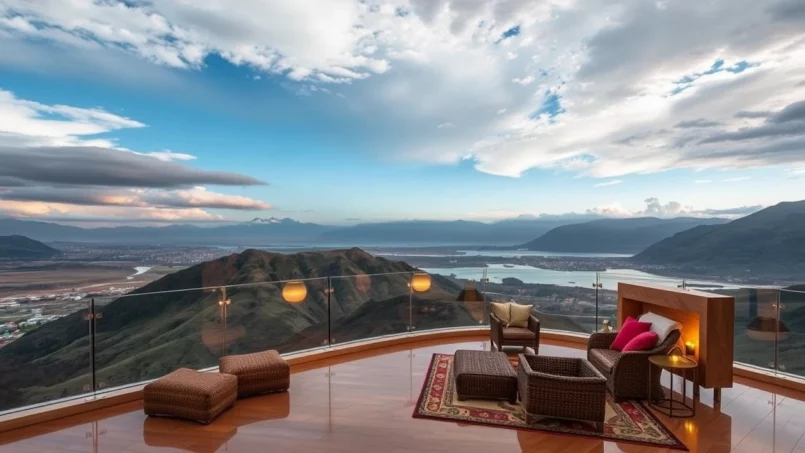
The market for luxury properties in Bolivia today resembles a well-kept secret in Latin America. In a country long perceived primarily as an exporter of gas, minerals, and agricultural products, the rise of high-end real estate is recent but driven by solid fundamentals: stable economic growth, rapid urbanization, an expanding middle class, tourism development, and the gradual arrival of international investors.
3
The luxury market in Bolivia is concentrated in three main cities: Sucre, Santa Cruz, and La Paz.
This article provides a detailed overview of the luxury properties market in Bolivia, based exclusively on factual data from the research report: macroeconomic dynamics, historical price trends, high-end market geography, profitability, legal framework, risks, and outlook.
A Surprisingly Favorable Macroeconomic Context for Luxury Real Estate
To understand the rise of prestige properties, one must first look at the economic and demographic backdrop. Bolivia has 12.1 million inhabitants, 70% of whom already live in urban areas. This accelerated urbanization is concentrated in a few major centers: La Paz and its metropolitan area including El Alto, Santa Cruz de la Sierra, Cochabamba, Sucre, and Tarija.
Good to know:
The country’s GDP reaches USD 43 billion in 2024, with projected annual growth between 3.5% and 4.2% until 2027. Inflation is moderate at 3.1%, and S&P assigns a credit rating of B+ with a stable outlook, indicating a more predictable environment than many of its neighbors.
For a long time, Bolivian wealth was primarily based on natural gas, mining, and agriculture. Now the landscape is shifting: the rise of services, tourism, infrastructure, and, in parallel, the emergence of an urban middle class driving demand for modern housing… and, at the top of the pyramid, high-end residences.
The national currency, the Boliviano (BOB), has been pegged for years at a nearly fixed rate to the dollar (around 6.9 BOB per 1 USD). For wealth investors and the ultra-wealthy, this relative monetary stability is an advantage when compared with the chronic volatility of some neighboring currencies.
A Real Estate Market Growing Steadily, With No Apparent Bubble
Bolivian real estate does not move to the rhythm of spectacular bubbles and brutal crashes. Over more than a decade, the trend has been one of slow but steady appreciation, with clearly identified phases.
Between 2010 and 2014, the combination of economic boom, rapid urbanization, and exploding demand in La Paz and Santa Cruz drove prices up by 8% to 12% per year on average. The 2015–2019 period saw a slowdown, but not a reversal: annual appreciation stabilized between 5% and 7%, while investment spread to secondary markets like Cochabamba or Sucre, with a focus on construction quality.
30
Rents fell by nearly 30% in 2020 during the pandemic, before a gradual recovery.
A simple way to summarize this trajectory is to look at the average five-year change: urban values generally increase by a factor of 1.5 over that period (between 1.3 and 1.7 times the initial price). Variations of 20% to 30% are common depending on the neighborhood, but the underlying trend remains upward.
Below is a summary of the main phases of the residential market and their impact on high-end properties:
| Period | Macro & Real Estate Context | Average Annual Appreciation | Impact on Luxury Segment |
|---|---|---|---|
| 2010–2014 | Boom, urbanization, strong demand La Paz/Santa Cruz | 8–12% | Launch of many high-end projects |
| 2015–2019 | Moderate growth, spread to secondary cities | 5–7% | Gradual upscaling in Cochabamba, Sucre |
| 2020–2022 | Pandemic, contraction then rebound | 1–3% | Rent adjustment, few forced sales |
| Since 2023 | Post-Covid recovery, return of tourism, foreign interest | 5–8% | Renewed high-end projects and cash purchases |
This smooth profile, combined with still limited supply in certain niches, especially in high-end, feeds the idea of an “alpha” market for investors comfortable with emerging environments.
Where Is Luxury Real Estate Really Located in Bolivia?
Talking about luxury properties in Bolivia is not just about two or three isolated penthouses. The high-end market is geographically structured, with well-identified hubs, each with its own customer profile, price levels, and appreciation potential.
La Paz: The Zona Sur and Milder Altitude Neighborhoods
La Paz is not just the country’s administrative capital. With a metro area of 2.2 million inhabitants if El Alto is included, it is a complex real estate market, marked by extreme topography. The lower you go into the valley, the more breathable the air and milder the climate, and the higher the prices soar.
The Zona Sur – encompassing Calacoto, San Miguel, Achumani, La Florida, Obrajes, Cota Cota, Irpavi, among others – today concentrates a large share of prestige residential assets. It is home to the local upper classes, business leaders, diplomats, and a growing number of expatriates.
The numbers reflect this high-end positioning: in neighborhoods like Calacoto or San Miguel, the price of luxury apartments ranges from USD 1,400 to 1,800 per square meter, with overall price tags around USD 150,000 to 300,000. Five-star hotels, such as Atix, Casa Grande, or Stannum Boutique, have set up here, reinforcing the area’s international-standard image.
Example:
In downtown La Paz, the Sopocachi and Miraflores neighborhoods represent a strategic real estate segment, described as “accessible high-end.” The price per square meter ranges from USD 1,000 to 1,400. These areas primarily attract young executives, international consultants, NGO workers, and digital nomads. This market is particularly sought after for investments in furnished rentals and quality short-term rentals.
Premium office buildings, on the other hand, are concentrated around San Jorge and Arce Avenue, home to major financial and diplomatic institutions, with high rents for spaces often leased to banks, NGOs, and multinationals.
Santa Cruz de la Sierra: Economic Capital and Showcase of Contemporary Style
Santa Cruz is now the country’s economic engine, with the fastest population growth and an urban development that expands both horizontally and vertically. For residential luxury, the city clearly plays in a different league.
The neighborhoods of Equipetrol and the north of the city (Norte) concentrate most of the high-end apartment and house market. Prices there exceed those in La Paz: expect around USD 1,500 to 2,000 per square meter for recently built properties with pool, security, gym, and international-level finishes. The total budget for a prestige property often ranges from USD 200,000 to 400,000.
Across the river, Urubó has become the symbol of contemporary villas and gated communities, with a slightly lower price positioning – USD 800 to 1,200 per square meter – but on larger plots, often with pools and big gardens. Land parcels over 50,000 square meters are now trading for several million euros, as shown by some international listings.
40000
Anticipated demand for new office space in Santa Cruz over the coming years.
Cochabamba: “City of Eternal Spring” and a Market Still Catching Up
Less known to foreign investors, Cochabamba, a city of 800,000 inhabitants nestled at an altitude of 2,500 meters, is beginning to attract a diverse clientele: retirees, expats, entrepreneurs, digital nomads. The mild climate year-round, presence of reputable universities, excellent private clinics, and large markets make it an increasingly popular destination domestically.
In terms of prices, the city is in a lower category than La Paz and Santa Cruz, making it a catch-up market for high-end. In sought-after neighborhoods like Cala Cala and La Recoleta, mid to high-end apartments range around USD 900 to 1,300 per square meter, with budgets from USD 100,000 to 180,000. Upscale houses on the outskirts – in Tiquipaya or Sacaba – trade between USD 700 and 1,000 per square meter, often on generous plots.
Specialized portals like LuxuryAbode already list properties worth several hundred thousand euros, ranging from large country houses to tourist complexes or development land. Luxury residences are thus appearing above the million-euro mark in the Quillacollo region or around Cochabamba, proof that the very high end is beginning to settle in.
Historic Cities, Tourist Areas, and Emerging Markets
Beyond the La Paz – Santa Cruz – Cochabamba triangle, a second circle of markets is driving the upscale trend.
Attention:
Sucre, the constitutional capital with a classified historic center, offers a unique stock of colonial real estate. Prices in the center generally range from USD 800 to 1,200 per sqm, with budgets from USD 150,000 to 400,000. The high-end segment of heritage restoration is particularly promising, with projected yields of 5% to 9% after renovation for projects combining residence, boutique hotel, or retail.
Tarija, in the south, attracts a domestic clientele for its pleasant climate and vineyards. Houses with land around the center trade around USD 600 to 900 per square meter, for amounts of USD 120,000 to 250,000. Here, luxury manifests more through outdoor spaces and quality of life than through excessive built square footage.
On Lake Titicaca, in Copacabana, high-end is intimately tied to tourism. Hotel-oriented properties, ecolodges, or large houses with views average between USD 500 and 800 per square meter, with overall price tags around USD 80,000 to 200,000 – but with potential yields significantly above average, thanks to high rental rates in peak season.
Finally, very emerging markets like Rurrenabaque (gateway to the Amazon), Uyuni (near the famous salt flats), or Samaipata (a mountain retreat popular with expats) offer entry prices 30% to 50% lower than in major cities. It is in these areas that some investors are betting on double-digit growth, driven by adventure tourism and an expanding international word of mouth.
To visualize the orders of magnitude among the main luxury real estate hubs, we can summarize as follows:
| City / Area | Dominant Luxury Property Types | Typical Prices (USD/sqm) | Overall Budget Range (USD) |
|---|---|---|---|
| La Paz – Zona Sur (Calacoto…) | Luxury apartments & houses, villas, condos | 1,400–1,800 | 150,000–300,000 |
| Santa Cruz – Equipetrol, Norte | High-end apartments/houses, residential towers | 1,500–2,000 | 200,000–400,000 |
| Santa Cruz – Urubó | Residential villas, houses with land | 800–1,200 | 150,000–350,000 |
| Cochabamba – Cala Cala… | Upscale apartments | 900–1,300 | 100,000–180,000 |
| Sucre – historic center | Colonial buildings, heritage houses | 800–1,200 | 150,000–400,000 |
| Tarija – center / valley | Houses with land | 600–900 | 120,000–250,000 |
| Copacabana – Lake Titicaca | Tourist properties, boutique hotels, lake-view houses | 500–800 | 80,000–200,000 |
What Returns for Investors in Bolivian High-End Real Estate?
The luxury segment in Bolivia is not just about lifestyle; it can also be an interesting source of rental income. Consolidated data show gross yields generally higher than those in more mature markets in the region.
For quality urban apartments, expected rental yields range between 6% and 8% gross per year. Prestige villas and houses, which are more expensive and larger, generate on average 4% to 6% rental yield, but offer in return a higher appreciation potential in highly sought-after neighborhoods.
12
The theoretical maximum yield of tourist assets, such as hotels, despite high seasonality.
In practice, across the residential market as a whole, gross rental incomes range between 4% and 8% per year, for net incomes (after expenses and charges) of 3.5% to 7%. The average vacancy rate for a rented home is about one month per year, a reasonable level in a country where informality remains high.
From a capital appreciation standpoint, five-year projections remain attractive for the luxury segment:
| Segment / Location | Expected Annual Appreciation Over 5 Years |
|---|---|
| La Paz – Zona Sur | 4–6% |
| Santa Cruz – premium areas | 6–8% |
| Cochabamba | 5–7% |
| Tourist destinations (Copacabana…) | 7–9% |
| Emerging neighborhoods | 8–12% |
The combination of decent rental yield and steady appreciation outlines the profile of a wealth preservation investment rather than a speculative one, which particularly appeals to affluent buyers seeking a geographic and monetary “hedge,” with many transactions done in cash.
A Structured Luxury Market, But Still Opaque
Despite the arrival of international players like ReMax, Century 21, or specialized portals such as LuxuryAbode (notably in Cochabamba), the Bolivian real estate market remains far from the transparency standards of a North American or European MLS.
It is estimated that there are about 2,500 real estate companies and agents in the country, of which over 95% operate informally. The majority of transactions are still conducted person-to-person (FSBO). This fragmentation and the absence of a centralized database create a strong information asymmetry: for a well-advised investor, it is an opportunity to find properties below market price; for someone arriving without local contacts, it is a major risk of overpaying or falling into dubious arrangements.
Tip:
To find a property in Bolivia, especially in the high-end segment, check local online platforms like Casas24.com.bo, Infocasas.com.bo, and Boliviainmobiliaria.com, as well as the Bolivian sections of major international networks. However, to access the core of the market—such as large family villas, income properties, or prime land—it is still essential to go through trusted local networks.
On the analytical side, the luxury market is covered by specialized reports, notably the “Bolivia Luxury Residential Real Estate Market” published by 6Wresearch. These studies, which extend through 2031, dissect revenues, volumes, industry life cycle, competition and segment the supply by property type (apartments/condos, villas/single-family homes) and by city. They rely on key macroeconomic indicators (GDP, population, income, per capita housing expenditure) and forecasting models (exponential smoothing) updated twice a year.
A Legal Framework Open but Regulated for Foreign Buyers
On paper, Bolivia is relatively open to foreign real estate investment, including in the luxury segment. The 2009 Constitution recognizes and protects private property while recalling its “social function.” In practice, foreign individuals and legal entities can acquire urban properties without limitation on number, either in their own name or through a local company (usually an SRL).
Good to know:
Two major restrictions apply: foreigners are prohibited from owning large rural lands in many cases, and from buying properties within a 50-kilometer radius of international borders for national security reasons. These rules mainly concern large agricultural or strategic lands and have little impact on the residential and tourist market in major cities.
To complete a transaction, a foreign buyer must notably obtain a Bolivian tax identification number (NIT), present a valid passport, provide proof of funds, and ensure the seller has all updated titles and certificates. The ownership structure can be:
– directly (individual ownership), the most common choice for a primary or secondary luxury residence;
– via a Bolivian company (SRL), sometimes preferred for investment or rental projects, notably for liability and tax reasons;
– as “horizontal property” (condominium), for co-owned apartments.
20
Time to set up a local SRL in business days since the simplification of procedures in 2023
The purchase process follows a classic sequence: negotiation, promise of sale with a deposit (often 10% to 30% of the price), drafting of a minuta, elevation of the deed into an escritura pública before a notary, payment of taxes, registration with the land registry (Oficina de Derechos Reales). Expect 30 to 90 days between the agreement and final registration.
Transaction costs for a foreign buyer typically represent 5% to 8% of the purchase price, split between transfer taxes (3% on the official value), notary and legal fees (1.5% to 3%), registration fees (0.5% to 1%), inspections, and municipal procedures.
Taxation of Luxury Properties: A Framework to Master
On the tax front, the owner – Bolivian or foreign – must account for several layers of taxation.
Upon purchase, transfer tax (Impuesto a las Transferencias) amounts to 3% of the fiscal value of the property. Each year, urban property tax varies, depending on the municipality and cadastral value, between 0.35% and 1.5%. Some sources mention very low effective rates on market value (0.01% to 0.1%), suggesting that cadastral values generally remain below actual prices.
Attention:
Rents collected on a luxury property are subject either to a transactional tax of approximately 13%, or to corporate income tax at 25% if the property is held by a commercial structure. Commercial leasing (offices, retail) is also subject to VAT (IVA) of 13%. There are simplified regimes for small operations and, in certain specific regimes, a specific tax of about 16% per month on rents may apply, highlighting the critical importance of local tax advice.
In case of a resale with capital gains, the gain is in principle taxed at 25%. Since Bolivia applies a territorial tax system, taxing only Bolivian-source income, the foreign investor must also check their obligations in their country of residence, lacking comprehensive tax treaties with some states like the United States or Canada.
Financing: A Luxury Market Overwhelmingly Cash-Based
The high-end property market in Bolivia is massively dominated by cash purchases. The reasons are multiple: difficulty in accessing credit for non-residents, high banking requirements, and still-high interest rates.
Good to know:
Local banks generally require a minimum down payment of 20% of the price and proof of stable income to grant a mortgage. For non-resident foreigners, access to financing is extremely limited, if not practically nonexistent. Interest rates range between 8% and 13%, reducing the appeal of leverage for many buyers.
In the high-end segment, a significant share of transactions are therefore done in cash, or with seller financing mechanisms: a 30% to 50% down payment, with the balance financed directly by the owner over a few years, at rates between 10% and 15%. New high-end developments sometimes offer payment plans spread out during construction, with progressive installments (40% to 60% cumulative before delivery).
This configuration reinforces the wealth preservation and “safe haven” nature of the luxury segment: little pure speculation financed by debt, more profiles seeking to lock capital into real estate in a context of relatively stable exchange rates.
Specific Risks of an Emerging Market… Even in Luxury
Bolivia is not Switzerland. Investing in a villa in Urubó or a penthouse in Calacoto does not shield you from the typical risks of emerging markets.
The most frequently cited concern legal title security. In some areas, cadastral irregularities, informal constructions, or discrepancies between built reality and official documents are common. The country does not have title insurance comparable to what exists in North America, which requires thorough checks, sometimes over a decade of property history.
8 to 12
Percentage of rents charged by management companies to secure properties against risks of illegal occupation.
Political risks and economic policy risks – policy shifts, social tensions, partial dependence on commodities – cannot be ignored, even if, over the last decade, the real estate sector has shown notable resilience, including during periods of regional conflicts or the pandemic.
Finally, the overall lack of market liquidity means that a resale can take several months (often 3 to 6 months, sometimes more for properties above one million dollars), especially if the asking price deviates from local reality.
Why Does the Bolivian Luxury Segment Attract Despite Everything?
Despite these risks, several factors explain why the “luxury properties market in Bolivia” is attracting growing interest from sophisticated investors, wealthy families, and international nomads.
First, the price/yield combination remains hard to beat in the region. Buying a high-end apartment in Santa Cruz or La Paz for USD 1,500 to 2,000 per square meter, with a rental yield of 6% to 8% and annual appreciation of 5% to 8%, remains significantly more attractive than in already saturated markets like Santiago or Lima.
Good to know:
The motivation of wealthy buyers is no longer purely financial but lifestyle-driven, favoring regional geopolitical stability, nature, well-being, international schools, good digital connectivity, and the possibility of remote work. Bolivia, with its varied landscapes (salt flats, Lake Titicaca, Amazon, Andes), moderate cost of living, and quality hotel offerings, meets several of these expectations.
Luxury properties are also increasingly conceived as turnkey finished products: fully furnished, integrating home automation, private coworking spaces, gyms, eco-friendly finishes (solar panels, electric vehicle charging stations), landscaped gardens. Technical and environmental sustainability has gone from a “plus” to an expected standard in the high-end segment.
Example:
The digitalization of property prospecting, through 3D tours, virtual reality, social media campaigns, and global portals, significantly reduces geographical barriers. For example, an investor based in Miami, Madrid, or São Paulo can now thoroughly analyze a villa in Urubó (Bolivia) or a loft in Sopocachi (Bolivia) without traveling, then delegate legal checks (due diligence) to a local lawyer to finalize the transaction.
Outlook: A Luxury Market Destined to Grow… Without Revolutionizing Its Fundamentals
Available projections converge: the Bolivian real estate sector should continue to grow steadily at least until 2025, and likely beyond 2028, without a radical transformation of its fundamentals. The prestige office segment will have to contend with the lasting effects of remote work, but demand for well-located homes and character tourist properties remains fully on an upward trajectory.
For the luxury market, the drivers are identified:
Good to know:
Urbanization continues in major cities, accompanied by a consolidation of the upper-middle classes. These groups have growing expectations regarding green spaces, leisure, wellness amenities, and energy performance. At the same time, tourism is booming, particularly around the Salar de Uyuni, Lake Titicaca, the Amazon, and colonial cities. On the economic front, major infrastructure projects and the lithium industry have a gradual impact, stimulating the establishment of high-end offices and services in La Paz and Santa Cruz.
Political risks, partial dependence on commodities, and institutional weaknesses will continue to be part of the landscape. But for investors able to absorb this dose of complexity, accept a medium-to-long-term holding horizon, and surround themselves with solid local advice, the luxury properties market in Bolivia offers a rare profile: still affordable entry price, significant yield, appreciation potential, and geographic diversification within Latin America itself.
In a global environment where established markets sometimes seem to be running out of steam, this landlocked but increasingly connected country could quietly become one of the favorite playgrounds for opportunity seekers in the high-end segment.

Cyril Jarnias is an independent expert in international wealth management with over 20 years of experience. As an expatriate himself, he is dedicated to helping individuals and business leaders build, protect, and pass on their wealth with complete peace of mind.
On his website, cyriljarnias.com, he shares his expertise on international real estate, offshore company formation, and expatriation.
Thanks to his expertise, he offers sound advice to optimize his clients' wealth management. Cyril Jarnias is also recognized for his appearances in many prestigious media outlets such as BFM Business, les Français de l’étranger, Le Figaro, Les Echos, and Mieux vivre votre argent, where he shares his knowledge and know-how in wealth management.





