
 Published on and written by Cyril Jarnias
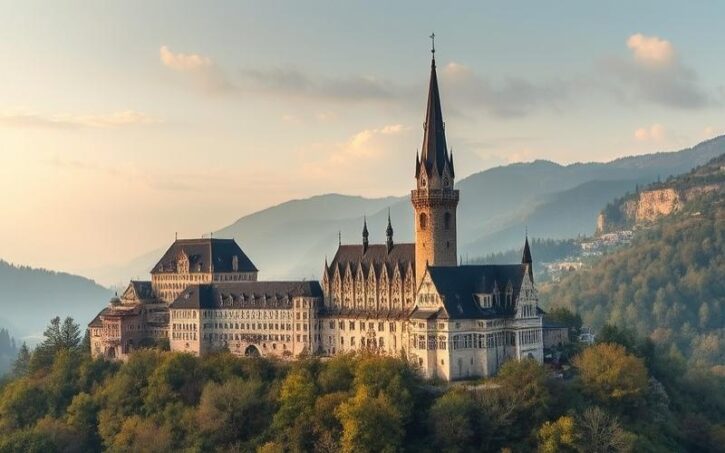
Nestled between tradition and modernity, Romania stands out as a sought-after destination for a peaceful retirement, offering an enticing blend of picturesque landscapes and cultural charm.
With its affordable cost of living and attractive tax benefits, this Eastern European country is increasingly drawing international retirees seeking a fulfilling life experience.
Picturesque villages, vibrant cities, stunning historical sites, and a culinary scene that awakens the senses make the Romanian lifestyle a captivating choice.
The warm social network, pleasant climate, and modern healthcare infrastructure further enhance the appeal of retiring in this land where time seems to flow differently.
Discovering the Benefits of Retiring in Romania
The cost of living in Romania is significantly lower than in most Western European countries, allowing retirees to enjoy excellent purchasing power, especially for housing, food, and leisure.
In a mid-sized city, it is possible to rent an apartment for €400 to €500 per month, while utilities, internet, and groceries remain very affordable. Private health insurance often costs between €70 and €100 per month, much less than in France or Spain.
| Monthly Expenses | Romania (mid-sized city) | France (province) | Spain (Costa Blanca) |
| Rent 2-bedroom city center | €400-500 | €800-1,200 | €700-900 |
| Utilities & internet | ~€100 | ~€200 | ~€150 |
| Groceries (couple) | ~€300 | ~€500 | ~€400 |
| Private health insurance | €70-100 | >€150 | >€120 |
Retirees also benefit from accessible public health services, with free medications and assistance for transportation and heating. Hospital infrastructure is modern in major cities, and quality care is available at a reduced cost.
Romania’s climate is pleasant and varies by region:
- The Carpathians offer snowy winters and temperate summers, ideal for mountain and hiking enthusiasts.
- The Black Sea coast provides sunny beaches and lively seaside resorts during the summer.
- The plains and valleys enjoy a mild continental climate, pleasant for a peaceful life in the countryside.
The country’s natural diversity allows for enjoying exceptional landscapes:
- Majestic Carpathian Mountains.
- Ancient forests and national parks rich in wildlife.
- Fine sandy beaches along the Black Sea.
- Rivers, lakes, and traditional villages with preserved charm.
The warm welcome from Romanians facilitates the integration of retirees.
The population is known for its friendliness and hospitality, making integration into the community simple and natural. Many expatriates report spontaneous mutual aid and genuine cultural sharing.
Romania’s historical and cultural richness enriches daily life:
- UNESCO-listed medieval towns.
- Vibrant local traditions (dances, gastronomy, crafts).
- Folk festivals and village celebrations where retirees are invited to participate.
Varied cultural and leisure opportunities:
- Music, theater, film, and gastronomy festivals throughout the year.
- Museums, art galleries, operas, and historical monuments accessible at low cost.
- Outdoor activities: hiking, skiing, forest walks, water sports on the Danube or the Black Sea.
Romania also offers a major geographical advantage:
Its central position in Europe facilitates travel to many neighboring countries (Hungary, Bulgaria, Serbia, Ukraine, Moldova, Greece, Austria). Air, rail, and road connections allow retirees to travel easily and at low cost across Central and Eastern Europe.
Retiring in Romania means benefiting from an exceptional natural setting, a living cultural heritage, a dynamic social life, and great financial freedom.
Good to know:
In Romania, retirees benefit from an affordable cost of living and easy access to quality healthcare, while enjoying diverse landscapes, a mild climate, and warm local traditions that facilitate their integration. Additionally, the country’s cultural richness and proximity to other European destinations offer many opportunities for discovery and escape.
Tax Benefits for Retirees in Romania
Main tax benefits for retirees in Romania:
- Income tax exemption on ordinary pensions: The majority of retirement pensions received by resident individuals are exempt from income tax up to a certain threshold set annually. Pensions exceeding this threshold may be subject to marginal taxation, but this mainly concerns high or so-called “special” pensions.
- Specific exemptions and reductions:
- Free or heavily subsidized medications.
- Free healthcare services.
- Annual stays at reduced rates in certain spa resorts (18 days/year).
- Financial aid for home heating.
- Free or reduced-rate transportation tickets (limited number each year).
- Possible local support for full or partial coverage of public transport costs and food aid, depending on pension level.
- Special pensions: Certain professional categories (judges, military, police, flight crew) benefit from advantageous calculations with amounts significantly higher than the national average and differentiated taxation. These schemes are partially funded by the state.
| Tax Benefit | Eligibility Criteria | Main Administrative Procedure |
|---|---|---|
| Pension income tax exemption | Romanian tax residency; ordinary pension | Registration with tax authority via TIN; annual declaration |
| Supplementary social benefits | Low pension threshold; recognized retiree status | Application at the local town hall/mayor’s office |
| Special pensions | Specific profession + legal conditions met | Professional documentation required |
Main eligibility criteria:
- Legal retirement age (65 years men/61 years women) and minimum validated social insurance period (15 years minimum).
- Official status as a Romanian tax resident with assignment of a Tax Identification Number (TIN).
Usual administrative procedures:
- Submission of the complete file to local social security offices after obtaining retiree status.
- Mandatory annual update via simplified tax declaration if additional income exists.
Recent or planned tax policies:
Regular legislative debates focus on reforming “special pensions” to reduce inequalities between ordinary and special schemes. There has been no recent significant increase or major extension regarding the general tax exemption on ordinary pensions; however, any move towards stricter progressive taxation remains a recurring political topic.
European comparison:
| Country | Standard Taxation on Pensions | Notable Particularities |
|---|---|---|
| Romania | Broad exemption except for high amounts | Very favorable regime up to a high threshold |
| France | Pensions taxable under general scale; standard deduction | |
| Germany | Progression towards full taxation planned; temporary deductions | |
| Portugal | Possible exemption for new foreign residents under certain conditions |
Romania thus stands out for its near-total exemption applied to small/medium pensions, while several Western countries tax all pensions according to their respective scales. However, some other member states also offer preferential schemes, but often reserved for new foreign arrivals.
Key takeaway: Resident Romanian retirees primarily benefit from an extensive exemption on their ordinary pension as well as various automatic supplementary social benefits under statutory conditions – one of the most favorable regimes within the European Union for this social category.
Good to know:
Retirees in Romania benefit from income tax exemptions on pensions and reductions on certain local taxes, advantages subject to residency conditions; compared to other European countries, these reliefs are particularly favorable, but verifying eligibility criteria remains essential.
Understanding the Cost of Living in Romania for Retirees
The cost of living in Romania remains generally more affordable than in the majority of Western European countries, but there are significant disparities depending on the region, type of city, and chosen lifestyle.
| Expense Category | Bucharest (€/month) | Other Major Cities (€/month) | Rural or Small Towns (€/month) | Comparison Central/Western Europe |
|---|---|---|---|---|
| Housing (rent 2-bedroom) | 450 – 800 | 300 – 600 | 200 – 400 | Warsaw: ~800–1,200 Prague: >1,200 Paris: >1,500 |
| Utilities | 80 – 150 | 70 – 120 | 50 – 100 | Western Europe: 150 – 250 |
| Groceries | 250 – 400 | 200 – 350 | 150 – 250 | Western Europe: 350 – 600 |
| Healthcare | 30 – 70 | 30 – 60 | 20 – 50 | Western Europe: 150 – 300 |
| Leisure | 100 – 200 | 70 – 150 | 40 – 100 | Western Europe: 200 – 400 |
Example monthly budgets for retirees:
| Lifestyle | Location | Estimated Total Expenses (€/month) |
|---|---|---|
| Modest | Rural | 450 – 700 |
| Modest | Mid-sized city | 650 – 1,000 |
| Standard Urban | Bucharest | 1,100 – 1,700 |
| Affluent | Bucharest | 2,000 – 2,800+ |
Regional and urban differences:
- Bucharest remains the most expensive city in the country, followed by Cluj-Napoca and Brașov. The cost of housing and services is noticeably higher there than in secondary cities or rural areas.
- In the provinces or countryside, life is significantly cheaper, especially for housing, food, and leisure.
European comparison:
- Real estate prices in Bucharest (around €2,000/m²) or Cluj-Napoca (€3,100/m²) are much lower than in Prague (>€5,500/m²) or Warsaw (~€4,200/m²), but they are rising rapidly, especially in sought-after neighborhoods.
- Daily costs remain lower than in most Western European countries.
Impact of currency fluctuations and economic trends:
- High inflation and rising interest rates since 2022 weigh on purchasing power, but the Romanian leu has remained relatively stable against the euro.
- Rising wages and increased real estate demand in major cities are pushing prices upward.
- Retirees receiving a foreign pension in euros or dollars generally enjoy higher purchasing power but should monitor exchange rate developments.
Discounts and benefits for retirees:
- Seniors benefit from discounts on public transportation (free or reduced fare in most cities).
- Facilitated access to certain public healthcare services.
- Some municipalities provide occasional subsidies for heating or social aid based on income level.
Aid programs and subsidies:
- Low-income Romanian retirees can apply for supplementary social benefits.
- Existence of subsidies for winter heating.
- No specific national subsidies for foreign retirees, but possibility of benefiting from public healthcare under conditions.
Influence of location choice:
- Settling in Bucharest offers optimal access to healthcare, infrastructure, and leisure, but at a higher cost.
- Secondary cities (Cluj, Brașov, Iași, Constanța) offer a good compromise between quality of life, moderate cost, and cultural dynamism.
- The countryside or small towns suit a calm and very affordable lifestyle, but with fewer specialized services.
Key takeaway:
The choice between a dynamic urban lifestyle or a tranquil rural one will have a major impact on a retiree’s monthly budget in Romania. Economic fluctuations and the rapid rise in real estate prices in major cities should be considered during long-term planning.
Specific advantages for foreign retirees:
- Attractive purchasing power for those with a stable foreign pension.
- Moderate tax environment and overall cost of living below the European average.
Good to know:
Housing and food weigh heavily on the budget of retirees in Romania, although these costs remain lower than in other European countries like France or Germany; in Bucharest, expenses are higher, but advantageous prices can be found in rural regions, where subsidies and special discounts for seniors are often available.
Disclaimer: The information provided on this website is for informational purposes only and does not constitute financial, legal, or professional advice. We encourage you to consult qualified experts before making any investment, real estate, or expatriation decisions. Although we strive to maintain up-to-date and accurate information, we do not guarantee the completeness, accuracy, or timeliness of the proposed content. As investment and expatriation involve risks, we disclaim any liability for potential losses or damages arising from the use of this site. Your use of this site confirms your acceptance of these terms and your understanding of the associated risks.

Cyril Jarnias is an independent expert in international wealth management with over 20 years of experience. As an expatriate himself, he is dedicated to helping individuals and business leaders build, protect, and pass on their wealth with complete peace of mind.
On his website, cyriljarnias.com, he shares his expertise on international real estate, offshore company formation, and expatriation.
Thanks to his expertise, he offers sound advice to optimize his clients' wealth management. Cyril Jarnias is also recognized for his appearances in many prestigious media outlets such as BFM Business, les Français de l’étranger, Le Figaro, Les Echos, and Mieux vivre votre argent, where he shares his knowledge and know-how in wealth management.





