
 Published on and written by Cyril Jarnias
Arriving in Algeria means finding yourself at the crossroads of the Mediterranean, the desert, and the mountains – and this geography is immediately reflected on the plate. For an expatriate, understanding the local cuisine is one of the fastest ways to decode the country, build connections, and avoid a few cultural missteps. Here, people don’t just eat to nourish themselves: they share, they welcome, and they tell a family or regional story with every dish.
This guide takes you from breakfast to dessert, from markets to family tables, with the codes to know, concrete benchmarks, and ideas for tasting without getting lost.
The basics of Algerian cuisine
Algerian gastronomy is first and foremost a story of blends. It draws from Amazigh (Berber), Arab, Andalusian, Ottoman, Mediterranean, and French traditions. Conquests and exchanges brought spices, techniques, and ingredients that gradually became integrated into recipes passed down from mother to daughter.
In most households, people still cook from scratch, slowly, favoring grains, vegetables, and meat, all enhanced by a wide range of spices.
The ingredients that structure meals
A typical Algerian pantry can be summed up by three pillars: semolina, olive oil, spices, and fresh herbs. Around them revolve meats, vegetables, legumes, and dried fruits.
Here is an overview of the staples you’ll find everywhere, from family tables to neighborhood eateries.
| Category | Key ingredients | Role in Algerian cuisine |
|---|---|---|
| Grains & semolina | Durum wheat semolina, wheat, barley | Base for couscous, breads, traditional pasta |
| Legumes | Chickpeas, lentils, dried beans | Soups (chorba, harira), stews, street dishes like dobara |
| Vegetables | Tomatoes, carrots, zucchini, bell peppers, eggplants, potatoes | Base for tagines, sauces, salads, side dishes |
| Fats | Olive oil, butter, smen (fermented butter) | Cooking, flavoring couscous, finishing dishes |
| Meats & fish | Lamb, beef, poultry, sometimes camel; fish and seafood on the coast | Main proteins, grilled meats, tagines, couscous, chorba |
| Dried fruits | Dates, figs, raisins, almonds, walnuts | Sweet-and-savory tagines, sweet couscous, pastries |
| Herbs & aromatics | Parsley, cilantro, mint, garlic, onion | Base for sauces, fresh garnishes, teas |
| Major spices | Cumin, coriander, paprika, turmeric, ginger, cinnamon, saffron, ras el hanout | Aromatic signature of tagines, couscous, marinades |
A few flavors deserve special attention if you’re new to Algeria.
Ras el hanout, cilantro, and mint: the magical trio
In nearly all kitchens across the country, three ingredients dominate the aromatic landscape:
Ras el hanout is a complex spice blend (8 to 20 spices like cardamom, clove, cinnamon, nutmeg, fenugreek, turmeric) that flavors couscous, tagines, and meats. Cilantro (seeds and fresh leaves) adds a lemony note to stews and tomato sauces. Mint, a symbol of hospitality, is used in tea, salads, marinades, and meat dishes.
Sauces and condiments are very common
Beyond dry spices, several preparations appear constantly and often surprise expatriates accustomed to only ketchup & mayo.
| Sauce / condiment | Main composition | Common uses |
|---|---|---|
| Harissa | Dried red peppers, garlic, olive oil, caraway, coriander | Spicy paste for couscous, soups, grilled meats, sandwiches |
| Dersa | Garlic, lemon, olive oil, parsley, cilantro, mint | Accompaniment sauce for bread, vegetables, meats |
| Hmiss | Grilled red peppers, tomatoes, garlic, olive oil, chili | Spreadable meze, sandwich filling, side for grilled meats |
| Zaalouk | Eggplants, tomatoes, garlic, spices | Purée served as a starter or side dish |
| Chermoula | Garlic, cilantro, lemon, spices | Marinade for fish and seafood |
Getting familiar with these condiments is a good way to adjust the spiciness and aromatic intensity of your plates, without having to explain complex nuances in Arabic or French.
Couscous, the national king with a hundred faces
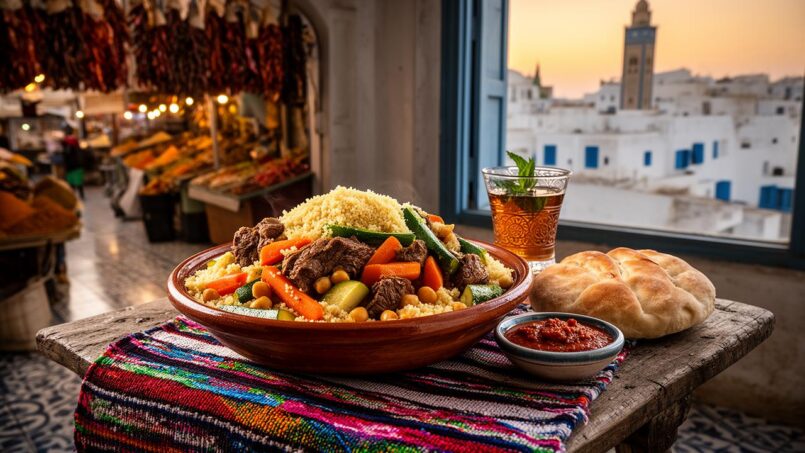
It’s impossible to talk about culinary life in Algeria without mentioning couscous, the national dish listed as UNESCO Intangible Heritage, shared with neighboring Maghreb countries. For many Algerians, “eating well” almost means “eating good couscous.”
Understanding what couscous really is
Contrary to a persistent idea among newcomers, couscous is not a cereal but a pasta, a “grain” of durum wheat semolina worked with water, then dried. The traditional preparation is done by steaming, in a couscoussier, through several passes alternating steam and “hand-rubbing”.
Couscous consists of light semolina and a sauce (marqa) including vegetables, legumes, and meat or fish; the flavored broth is poured over the semolina at serving time.
The main styles of couscous to help you find your way
The variations are countless, but you can orient yourself by a few major families you’ll encounter both in restaurants and in homes.
| Type of couscous | Culinary characteristics | Where and when to find it |
|---|---|---|
| Algiers-style couscous | Red tomato sauce, lamb or beef, chickpeas, carrots, zucchini, turnips | Classic in Algiers families, very common on Fridays |
| Vegetable couscous | Potatoes, carrots, green beans, zucchini, chickpeas, sometimes eggs | Frequent vegetarian option, especially in families |
| Chicken couscous | Stewed chicken, chickpeas, sometimes white sauce flavored with saffron and ginger | Popular among those who prefer a lighter meat |
| Royal / merguez couscous | Semolina topped with several meats (lamb, chicken, merguez) and vegetables | Festive dishes, “Maghrebi” restaurants in cities |
| Fish couscous | Fish (sea bass, sea bream, red mullet…), tomatoes, peppers, paprika | Specialty of coastal towns like Jijel or Algiers |
| Couscous with milk & squash | Squash cooked in broth then blended with milk, poured over semolina | Sweet version, enjoyed at breakfast or a light dinner |
| Sweet couscous (mesfouf, seffa) | Buttered semolina adorned with dates, raisins, fruits, cinnamon, sometimes chicken (seffa b’djedj) | Served as dessert or main dish, especially on special occasions |
| Saharan date couscous | Sweet couscous with Deglet Nour dates, symbol of Saharan oases | Try it if you travel to Biskra and the South |
| Bean couscous (couscous bel’foul / Aghmoud) | Beans, olive oil, a staple of Kabyle or mountain cuisine | In high-altitude villages, very rustic dishes |
Names also change depending on the region and language: ta’am, seksou, kousksi, mesfouf, berboucha… But the idea remains the same: a complete, filling dish with a strong social dimension.
How to eat it… without a faux pas
In a traditional family setting, the couscous dish is often placed in the center, with each person eating from the portion in front of them. A tablespoon is used for the semolina, and bread to pick up pieces of meat and vegetables. In a more formal or urban context, you’ll be served on a plate instead.
For an expatriate invited on a Friday noon, it’s well regarded to:
– Compliment the cooking of the grains (light, not sticky) with a “saha, very good!” or “bnine!”.
– Accept at least a small extra portion if offered a second serving.
– Avoid digging into the middle of the dish to find the best pieces: stick to your “zone.”
Breads: the common thread of all meals
In Algeria, bread accompanies absolutely everything. It’s the tool, the garnish, sometimes the meal itself. It also reflects Mediterranean and French influences.
Overview of the most common breads
| Bread / Flatbread | Composition & texture | Typical uses |
|---|---|---|
| Khobz el dar | Mix of semolina and flour, milk, eggs, oil, sometimes seeds | Soft, slightly sweet “homemade” bread for breakfast and meals |
| Kesra / khobz ftir | Semolina flatbread, olive oil, water | To dip in chorba, hmiss, tagines; very common in the East |
| M’semen | Layered semolina and flour dough, pan-fried | Plain or stuffed, at breakfast or as street food |
| Mhadjeb / mahjouba | Stuffed version of m’semen (onions, tomatoes, peppers) | Iconic street food, very inexpensive and filling |
| Sfenj | Raised dough fritters | For breakfast or as a snack, often with sugar or honey |
| French baguette | Traditional bread inherited from colonization | Found in all bakeries, base for street sandwiches |
Knowing how to recognize a good kesra (lightly charred, flavored with olive oil) or a well-cooked mhadjeb (crispy outside, caramelized filling) will be very useful for spotting good neighborhood spots.
Breakfast: between Maghrebi tradition and French heritage
In the morning, Algeria offers a surprising range, from simple bread-butter-jam to dishes almost worthy of a brunch.
Common items include:
– Homemade bread (khobz el dar, kesra) with butter, honey, jam.
– Alveolated semolina pancakes, baghrir, drizzled with honey or butter.
– M’semen, sometimes stuffed with cheese or honey.
– French-style pastries: croissants, mille-feuille in cities.
– Fritters (sfenj) dusted with sugar.
– Fresh cheese, feta, fruits (oranges, figs, dates).
More substantial, breakfast can also take the form of a real hot dish:
A selection of emblematic Tunisian dishes, combining authentic flavors and culinary traditions.
Eggs cooked in a tomato-pepper sauce, sometimes topped with merguez or shrimp.
Chickpea soup with cumin, especially appreciated in cool weather for its comfort.
Very thin pastry filled with egg and tuna, then fried, best enjoyed hot.
Almost everything is accompanied by a very strong coffee, sometimes flavored with cardamom or orange blossom, or a very sweet green mint tea.
For an expatriate, breakfast is a good time to observe local life: neighborhood cafés mostly filled with men in the morning, families gathering on weekends, lively discussions over a few glasses of tea.
Lunch and dinner: soups, tagines, grilled meats, and salads
In Algeria, lunch remains the big meal of the day, even if in large cities, dinner can be hearty. The classic structure of a “home-cooked” meal often follows a simple pattern: soup or salad, a meat or fish dish, fruit or dessert.
The basic soups: chorba, harira, chorba frik
Three soups particularly shape the culinary landscape, especially during Ramadan when they open the evening meal (iftar) after breaking the fast.
| Soup | Main composition | Preferred occasions |
|---|---|---|
| Chorba | Meat broth (often lamb), tomatoes, chickpeas, vegetables, herbs | Daily, Ramadan, start of a meal |
| Chorba frik | Like chorba but with frik (cracked and roasted green wheat) | North and East of the country, every day of Ramadan |
| Harira | Tomatoes, lentils, chickpeas, often lamb, spices (ginger, cinnamon, turmeric, pepper) | Very common in the West, in winter and Ramadan |
Chorba frik is a good example of a dish that surprises expatriates: rich yet digestible, it concentrates grains, legumes, vegetables, and meat in a fragrant bowl.
Tagines, stews, and meat dishes
The word tagine refers both to the earthenware pot and the slow-cooked dish it contains. In Algeria, these dishes are sometimes cooked in regular pots while keeping the name.
A few preparations you’ll often encounter:
Tajine zitoun is a chicken dish with green olives, often prepared with a lemony white sauce. There are also lamb or beef tagines accompanied by various vegetables like carrots, potatoes, and zucchini. Finally, sweet-and-savory versions incorporate dates, dried apricots, raisins, and almonds.
At the same time, grilled meat holds a special place, notably:
– Mechoui: whole lamb roasted on a spit, served during celebrations and large gatherings.
– Merguez: lamb or beef sausages, heavily spiced (cumin, coriander, chili), ubiquitous in street barbecues.
– Brochettes (kebabs): marinated pieces of meat, often served in a sandwich.
There are also more regional or specialized dishes, such as:
– Chtitha batata: potato stew in a spicy tomato sauce, sometimes accompanied by chickpeas, served as a side.
– Zviti: a very spicy dish from the South (Bou Saâda), made from crushed semolina bread with hot peppers.
– Dobara: a thick soup of chickpeas or fava beans from Biskra, highly seasoned, consumed mainly in winter.
Fish and coastal cuisine
Along the coastline, particularly in Algiers, Oran, Annaba, or Jijel, the sea makes its way into the pots:
– Fish couscous.
– Fish tagine with tomatoes, peppers, onions, flavored with cumin and paprika.
– Grilled sardines with lemon and olive oil.
In the capital, it’s possible to enjoy reimagined chakchoukas with seafood, offering a marine version of this traditionally rustic dish.
Salads and vegetarian dishes
Despite a very meaty image, Algerian cuisine can be very plant-based. Several preparations are naturally vegetarian and provide good options for those limiting meat:
– Raw vegetable salads: tomatoes, cucumbers, peppers, onions, olives, dressed with olive oil, lemon, herbs.
– Hmiss: grilled peppers and crushed tomatoes, served with bread.
– Karantita (garantita): chickpea flour flan, with oil, water, and spices, a typical street food.
– Tbikha: stew of various vegetables in tomato sauce.
– Zaalouk: spiced eggplant and tomatoes, similar to eggplant caviar.
Urban restaurants also increasingly offer salads, vegetarian burgers, or meatless dishes, though the selection remains modest outside major cities.
Drinks: between tea, coffee, juices, and dairy
Little alcohol is consumed in Algeria, especially in public. Non-alcoholic beverages, on the other hand, are omnipresent and form a world of their own.
The essentials:
Discover a selection of must-try drinks, from the hospitality of mint tea to dairy and fruit specialties.
Green tea steeped for a long time with fresh mint, very sweet, served in small glasses. It’s THE drink of hospitality.
Very short espresso, sometimes flavored with cardamom or orange blossom, served with a glass of water.
Very common from street vendors, a classic refreshing drink.
Especially apricot, very popular with children.
Milk-based drinks flavored with fruits or nuts, or thickened with orchid powder.
Goat or camel milk, plain or spiced; milks flavored with date paste or date yogurts (lbenade).
In major cities, some bars and restaurants serve local beer or wine, but discreetly. As an expatriate, it’s wise to consider that alcohol is consumed mainly in private or in well-identified venues, and to remain sober in public.
Sweets: a country of pastries, honey, and dates
Algeria is renowned for its opulent desserts, largely inherited from Ottoman and Andalusian traditions, as well as from oasis culture. Dates, honey, almonds, semolina, orange blossom, cinnamon, and pistachio make up an extremely rich sweet landscape.
A few great classics to know
| Dessert / Pastry | Brief description | Consumption context |
|---|---|---|
| Makroud / makrout | Semolina dough filled with dates or figs, fried then soaked in honey | Very common, celebrations, snacks, a must-have guest treat |
| Baklava / baqlawa | Thin pastry leaves filled with nuts (almonds, walnuts), drenched in syrup | Ottoman heritage, present everywhere |
| Qalb el louz | Semolina cake with almonds or peanuts, soaked in flavored syrup | King of Ramadan evenings |
| Zlabia / zlabiya | Fried dough spirals soaked in a thick syrup flavored with orange blossom or saffron | Strongly associated with Ramadan, especially in some cities |
| Griwech / griouech | Braided or knotted fried dough, coated in honey and sesame | Festive pastry, afternoon tea |
| Ghribia / ghriba | Very crumbly shortbread cookies, often with almonds or coconut | Accompaniment to coffee or tea |
| M’halbi / mhalbiya | Rice pudding flavored with rose water, decorated with pistachios or cinnamon | Ramadan dessert and special occasions |
For an expatriate, these sweets are as many gateways to build bonds with colleagues or neighbors. Bringing a box of makroud or baklava as a gift is always well received.
Dates, honey, orange blossom: an ever-present sweet trio
Algeria is among the major date producers, notably Deglet Nour from the oases of Biskra and the Ziban region, often considered one of the best varieties in the world. Soft, translucent, with a honeyed flavor, they are used:
– as a simple snack with coffee,
– in sweet couscous,
– in pastry fillings,
– for breaking the fast during Ramadan.
Honey is almost universally present in Algerian desserts, highlighting the high consumption of honey by Algerians.
Regions and culinary styles: reading the map through dishes
Understanding the major gastronomic zones helps you decipher a restaurant menu or a buffet at friends from a specific region.
Algerian cuisine is divided into five distinct zones: in the north, a Mediterranean influence with olive oil and fish; in the center, delicate sauces and almond desserts like makroud; in the east, a predilection for chili and harissa; in the west, tagines softened by Andalusian influences; and in the southern Sahara, a rustic cuisine based on dates, grains, and camel meat.
The Berber mountain regions (Kabylia, Aurès, Mzab) also have their particularities: more barley, preserves (olives, dried meat), olive oil-based dishes, thick soups, and a more discreet use of spice blends in favor of natural flavors.
Eating on the street: discovering Algerian “fast food”
For an expatriate, street food is often one of the most direct ways to enter the daily life of the country, provided you follow a few basic hygiene precautions.
You’ll encounter many specialized stalls offering:
Among the street specialties in Algiers are barbecues of merguez and brochettes, “fries-omelette” or roast chicken sandwiches, stuffed mhadjeb served on paper, garantita cut into portions (sometimes in a baguette), as well as fritters and zlabia, especially in the evening or during Ramadan.
A simple rule: prefer stalls that are very busy with locals, where product turnover is constant, and check that the meat is cooked in front of you.
Markets, souks, and supermarkets: where to shop
Settling in Algeria also means learning where to get fresh produce, spices, and specialties. Markets (souks) are both places of supply and social interaction.
Understanding the market ecosystem
In the capital especially, souks have specializations:
Among Algiers’ food markets are covered markets like Meissonnier, Kouba, or El Harrach, where you can buy fruits, vegetables, meat, fish, and cheeses. There are also spice, herb, and dried fruit markets in the Casbah or central markets. Souk el Fellah is a well-known farmers’ market for vegetables, bulk grains, and dates. Finally, the general bazaars of Bab El Oued or Belcourt mix textiles, utensils, and street food.
For an expatriate, large supermarket chains (Carrefour, Uno, Ardis) remain practical for imported products and hygiene, but it’s the traditional markets that offer the true richness of local products, notably:
– Deglet Nour dates sold loose or in boxes,
– local honey,
– olives and olive oil,
– spices (ras el hanout, Saharan saffron, Kabyle paprika, dried chilies),
– semolina in various granulations for couscous and pastries.
Table manners and faux pas to avoid
To live well as an expatriate, mastering a few basic rules at the table is just as important as knowing how to order a good dish.
Gestures and attitudes to adopt
A few simple guidelines:
– Always use your right hand to eat, pass dishes, receive or give something. The left hand is associated with the unclean.
– In a family meal, wait for the oldest to start eating, and don’t serve yourself before they have.
– When sharing a dish, eat what is in front of you without digging into the center.
– Accept at least one glass of tea or coffee when offered: refusing outright can be seen as coldness.
– Say “saha” to thank at the table, or “yaatik essaha” (“may God give you health”) when leaving.
The meal is a moment of connection. People usually stay a little after finishing to chat over a coffee or a second glass of tea.
Religious particularities
Since the vast majority of the population is Muslim, two points are non-negotiable:
– Pork is completely absent from local cuisine. It is not served, not offered.
– Meat is halal, slaughtered according to Islamic rite.
During the month of Ramadan, Muslims fast from dawn to sunset. Even though expatriates are not bound by the religious obligation, it is expected that they avoid eating, drinking, or smoking conspicuously in public during the day. Conversely, evenings then take on a very festive dimension, with chorba, bourek, dates, qelb el louz, and sometimes couscous or tagine, whether with family or at a restaurant.
Practical tips for foodie expatriates
Living in Algeria as an expatriate is not just about learning to order a couscous. It’s also about managing water, food hygiene, allergies, dietary preferences, and social integration around food.
Water, hygiene, and health
– Tap water is generally not recommended for direct consumption, especially for an unaccustomed system. Prefer bottled mineral water, sealed.
– For raw fruits and vegetables, prefer those you can peel yourself (oranges, bananas) or wash them thoroughly.
– On the street, choose clean stalls where the food is well cooked and the clientele is numerous.
– Avoid undercooked meats if you have a sensitive stomach.
When in doubt, don’t hesitate to ask for “well done, please.”
Culinary advice
Managing your preferences and dietary restrictions
Algerian cuisine is naturally very meat-oriented, but offers leeway:
For vegetarians: favor vegetable couscous, vegetable tagines, karantita, hmiss, composed salads, mhadjeb or m’semen without meat. To avoid spice: specify “not very spicy” or ask if the dish is “har” (hot). In case of allergies (gluten, nuts, lactose): be sure to warn the server or host beforehand, as semolina, almonds, and dairy products are very common.
Using cuisine as a cultural bridge
For an expatriate, a few simple gestures around gastronomy can speed up integration:
– Bring local pastries (makroud, baklava, ghribia) or dates when invited.
– Offer to share a couscous ordered together with colleagues on Friday noon.
– Learn to prepare one or two emblematic dishes (a chorba, a simple couscous, a mhadjeb) from local classes or neighbors, then invite in turn.
This kind of culinary exchange is often highly appreciated and helps overcome the language barrier.
Learning to cook Algerian: a recommended immersion
Finally, for those who truly want to put down roots in their new country, taking a cooking class, participating in a couscous workshop, or simply spending an afternoon in the kitchen with an Algerian family is a very powerful experience.
Traditional recipes require time and technique – hand-rolling couscous grains, mastering the cooking of a clay tagine, balancing a ras el hanout – but once mastered, they become a wonderful tool for connecting with locals and a daily pleasure.
—
Opening yourself to Algerian gastronomy means eating with your fingers, accepting being served more even when full, drinking a scalding mint tea in the afternoon, and trying dishes with unpronounceable names. It’s a direct way to experience the hospitality and generosity of the country.
For an expatriate, this guide is only a starting point: the rest will be discovered between a shared plate of couscous on a Friday, a hot mhadjeb sandwich in an Algiers alley, and a handful of dates offered unexpectedly in a southern souk. Each bite will bring you a little closer to the Algeria hidden behind its recipes.
A heritage project or a question? Contact us now to speak with a wealth management expert.
Disclaimer: The information provided on this website is for informational purposes only and does not constitute financial, legal, or professional advice. We encourage you to consult qualified experts before making any investment, real estate, or expatriation decisions. Although we strive to maintain up-to-date and accurate information, we do not guarantee the completeness, accuracy, or timeliness of the proposed content. As investment and expatriation involve risks, we disclaim any liability for potential losses or damages arising from the use of this site. Your use of this site confirms your acceptance of these terms and your understanding of the associated risks.

Cyril Jarnias is an independent expert in international wealth management with over 20 years of experience. As an expatriate himself, he is dedicated to helping individuals and business leaders build, protect, and pass on their wealth with complete peace of mind.
On his website, cyriljarnias.com, he shares his expertise on international real estate, offshore company formation, and expatriation.
Thanks to his expertise, he offers sound advice to optimize his clients' wealth management. Cyril Jarnias is also recognized for his appearances in many prestigious media outlets such as BFM Business, les Français de l’étranger, Le Figaro, Les Echos, and Mieux vivre votre argent, where he shares his knowledge and know-how in wealth management.





