
 Published on and written by Cyril Jarnias
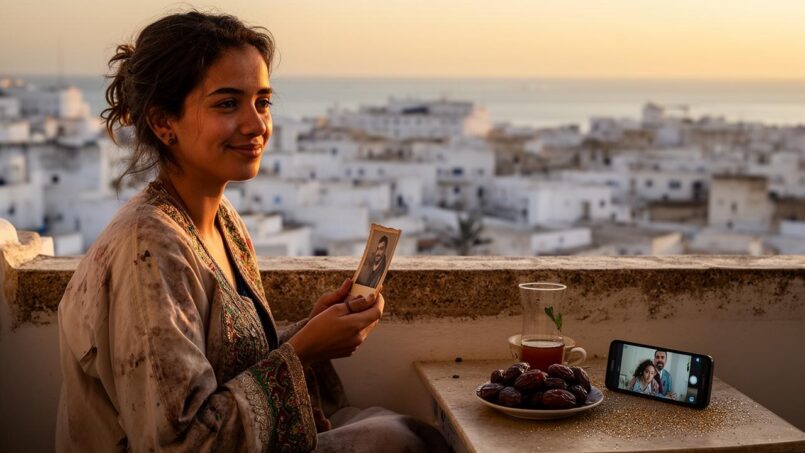
Moving to Algeria—whether coming from France, Canada, Europe, or elsewhere—is often a choice of the heart. People come to reconnect with their roots, seize a professional opportunity, give their children a different life, or simply answer an inner calling. But once the suitcases are unpacked, another passenger quickly shows up: homesickness.
Homesickness can target the country you left, the city, loved ones, or be more diffuse among dual nationals. It’s a normal and manageable discomfort, combining concrete tools (networks, procedures, routines) with emotional hygiene.
Understanding Homesickness When Living in Algeria
Homesickness isn’t just a vague sadness. It’s a mix of longing, cultural friction, administrative uncertainty, and sometimes, identity shock. For Algerians from the diaspora who “return” after years in France or elsewhere, there’s an added, well-documented phenomenon: acculturation.
Between Two Worlds: What Research Says About Acculturation
Studies conducted on Algerians who immigrated to France show that adapting to a new cultural environment is never a one-way street. You don’t “stop” being Algerian to become only French, or vice versa. Most people develop a bicultural identity: language, cuisine, historical references, consumption habits, social codes—everything gets mixed.
Researchers talk about “bidimensional acculturation,” a concept describing the process by which individuals adapt to a new culture while retaining elements of their original culture, thus illustrating a dual cultural belonging.
– on one hand, you keep elements of the original culture (language, faith, cuisine, family ties);
– on the other, you adopt certain codes of the host country (work organization, holidays, leisure activities, types of products, etc.).
Psychologist John Berry identified four main acculturation modes: integration (combining both cultures), separation (staying within the original culture), assimilation (shifting almost entirely into the new one), and marginalization (no longer feeling part of either). In practice, most people oscillate between integration and separation, depending on life stages.
When you settle in Algeria after years in Europe, all that adjustment work happens again… but in reverse. You discover you no longer think, consume, or speak exactly like your cousins, even if you share the same origin. That’s when homesickness hits hard: you can both miss France, feel out of sync in Algeria, and feel guilty for not “being Algerian enough.”
Testimony of a returnee to Algeria
Recognizing that this pull is a normal—even predictable—process already helps reduce guilt. The question then becomes: how do you get through this phase without being overwhelmed by nostalgia?
First Reflexes: Accept, Name, Organize
Homesickness is first and foremost a reaction to lack: lack of bearings, of connections, of familiar routine. Trying to deny it, or harshly judging yourself because you “should be happy” to finally be in Algeria, only adds an unnecessary layer of shame.
An essential reflex is to accept the emotion, name it, and recontextualize it within your life project.
Making Peace with the Idea That Nostalgia Is Normal
Research on exile and migration shows that nostalgia also has a useful side. Psychologists point out that it not only reminds us of what existed but also of what can be recreated. “Good memories” aren’t just traces of a bygone past: they become a driving force for imagining how to regain, here, part of what felt good elsewhere.
Feeling longing for your former country, city, or life doesn’t mean you made a mistake; it means your emotional memory is working. The key is to turn that longing into a project rather than rumination.
Putting Words to What You Really Miss
Homesickness is often a catch-all. You say “I miss France” or “I miss my country,” when in reality, much more specific elements are lacking:
– the simplicity of administrative procedures,
– public transport punctuality,
– a communication style that is more direct or more structured,
– a certain anonymity,
– close friends,
– the kids’ school,
– landscapes, weather, a career rhythm…
Identifying these precise points then allows you to look for equivalents or compensations, rather than staying stuck in a global, unsolvable regret.
Building a Social Safety Net in Algeria: A Major Antidote to Homesickness
All studies on adapting to a new country converge: one of the best defenses against homesickness is the quality of your social network on the ground. In Algeria, several structures and communities offer just that—a framework to keep you from being alone with your nostalgia.
InterNations, Alger Accueil, Expat Algérie: Three Gateways
Isolation fuels nostalgia. Conversely, concrete connections—even light ones at first—give you a sense of “rooting” yourself in your new life. Several organizations already play this role in Algiers and beyond.
InterNations in Algeria
InterNations is an expat community established in Algeria. It organizes regular events, often in Algiers, to help foreigners and returning Algerians:
– meet people from all backgrounds,
– expand their professional and social network,
– take part in activities around shared interests (outings, dinners, themed evenings…).
Gatherings are held in a private space at the restaurant Les Orientalistes, with music, food, and drinks (alcoholic or non-alcoholic), on a “pay as you order” basis. The goal is to facilitate exchanges and create social anchors.
Alger Accueil
Alger Accueil is aimed more specifically at French speakers and Francophiles who want to better integrate into Algiers life, discover Algerian culture, and benefit from the experience of those already there.
The association brings together nearly 150 member families from 36 nationalities and operates on a volunteer basis. It offers groups by age or interest:
– a “Welcome” group with monthly coffees and aperitifs,
– an “Adults” group (themed evenings, guided tours, cultural or sports workshops…),
– activities for teens (karting, pool parties), children (workshops, snacks, monthly library), and babies (parent/baby coffees, stroller outings).
For a newcomer, it’s a very concrete way to avoid spending evenings alone brooding and to create recurring rituals that structure the week.
Expat Algérie
Expat Algérie positions itself as a platform to support expats on various fronts: tourism, culture, art, sports, as well as practical life (finding a pediatrician, babysitter, plumber, etc.). The organization connects members with reliable service providers and runs a forum where you can ask questions, share experiences, and de-dramatize daily hassles.
By becoming a member, gain access to varied collective events: themed coffees, evenings, workshops, guided tours, and flea markets, with registration via the platform.
Participate in themed coffees, evenings, and workshops held regularly.
Enjoy guided tours and flea markets accessible by registration.
– to all activities,
– to a directory of professionals,
– to the community’s mutual-aid forum.
It’s a way to not carry the mental load of settling in alone and to benefit from others’ experience, which greatly eases the feeling of “being lost.”
Overview of These Three Networks
| Organization | Primary Audience | Types of Activities | Key Benefit for Homesickness |
|---|---|---|---|
| InterNations | International expats, professionals, globetrotters | Official evenings, dinners, outings | Quickly build a cosmopolitan social network |
| Alger Accueil | French speakers / Francophiles, families | Coffees, aperitifs, tours, workshops, kids’ activities | Provide a friendly, familiar daily framework |
| Expat Algérie | Expats of all profiles, families and singles | Workshops, evenings, tours, forum, services | Get practical answers and build connections |
Joining one of these networks—or even all three—doesn’t solve everything, but it avoids the costliest mistake: staying in your bubble with only your memories and newsfeed for company.
Staying Connected to Those You Left Behind: The Right Balance
It’s one of the paradoxes of our time: never has it been so easy to maintain long-distance ties, and yet nostalgia has never been so visible within the Algerian diaspora. It’s all about balance: using tools to feel supported without living “by proxy” in the country you left.
Making the Most of Communication Tools
Apps like WhatsApp, Signal, Viber, Facebook Messenger, and Skype let you make free audio and video calls as long as you have Wi-Fi. Some even offer very low-cost plans for calling landlines or mobiles in France or other countries.
The numbers are telling:
– WhatsApp is used by over one billion people,
– Skype allows group calls of up to 50 participants,
– Viber offers international rates significantly lower than traditional carriers (a few cents per minute).
Operators like Lebara or Syma offer very competitive rates for calls to Algeria.
But psychologists who study nostalgia abroad emphasize two points:
– set regular scheduled times (e.g., a weekly video call with parents or a group of friends),
– avoid being constantly connected, which prevents you from fully living your present reality.
When Too Much Contact Fuels the Longing
A common temptation, especially at first, is to compensate for the anxiety of change with hyper-connection: several hours a day on the phone with family back in Europe, constant social media, radio or media from the left-behind country as background noise. In the short term, it soothes. In the medium term, it stalls adaptation.
Studies on dispersed families show that long-distance ties can become a new form of relationship, structured by calls, video chats, photos, and small surprises sent back and forth. But when all emotional life shifts into that link, real life on the ground remains empty. Homesickness doesn’t decrease; it grows stronger, because each call reminds you not only of what’s missing, but also of what hasn’t been built here.
A simple benchmark: if your evenings and weekends are entirely absorbed by calls abroad, to the point where you consistently turn down an invitation or outing in Algeria “because you already planned to call,” it’s likely the balance needs readjusting.
Rooting Yourself in Algerian Culture Without Denying Yourself
Homesickness is often a nostalgia for what you know… even when you return to your parents’ country. So it’s crucial to create, in Algeria, anchors that speak to your affect: food, rituals, landscapes, spirituality, history.
The Table: A Powerful Ground Against Nostalgia
Algerian cuisine is a remarkable antidote to the feeling of being a stranger. It combines Berber recipes, Ottoman, Spanish, and French influences, all in a spirit of sharing. Couscous, chorba, tajines, boureks, m’hamssa, berkoukes, pastries with almonds and orange blossom… these dishes are not just food; they are sensory anchors.
Cooking these recipes at home serves at least three purposes:
– bringing continuity with what you used to eat “before” (for those raised in Algerian families),
– creating moments of conviviality with new friends or neighbors,
– passing on a piece of your story to your children, especially if they grew up abroad.
For those who miss European cuisine, regularly alternating with a typical dish from home (gratin, quiche, Asian dish) reassures the brain by reminding it that your roots still matter, without giving up local food.
Participating in Religious and Social Rhythms
In Algeria, Islam largely structures social time: store hours during Ramadan, Eid holidays, daily prayers, importance attached to places of worship. For an expat or a non-practicing Algerian, this framework can feel overwhelming at first, even unsettling. Yet taking an interest and understanding it is often a powerful lever for feeling less foreign.
Studies conducted with Algerian refugees show that religious reference, combined with a clear-eyed analysis of the social and political situation, helps greatly in making sense of hardships. Tradition is seen as a “family strength,” a bond of solidarity. For those who identify with these values, religious practice can serve as an emotional foundation.
From a psychological standpoint, certain practices recommended in the Islamic tradition—regular prayer, dhikr (remembrance), gratitude (shukr), trust in God (tawakkul)—have well-documented effects on stress: they calm the nervous system, reduce rumination, and restore a sense of inner security.
The idea is to use mosques, charitable associations, and religious discussion groups already present in Algeria as support systems—without spiritual pressure—provided these resources genuinely bring you comfort.
Creating a “Migrant’s Home” That Reflects You
Researchers who studied homes built by emigrants in their country of origin show that they often bear signs of hybridization: a bit of European architecture, a bit of local style, objects that recall before. It’s neither a copy of a French house nor a purely traditional model, but a mix that tells a journey.
You can apply the same logic to your apartment or house in Algeria:
– hang photos of your past life,
– keep a few treasured objects (books, posters, linens, dishes) that “smell” like your former home,
– also incorporate elements found here (crafts, paintings, rugs, local tableware).
The goal isn’t to exactly recreate the old decor—which would strengthen nostalgia—but to materialize the continuity between your different living spaces. Your home then becomes a place where the past has its place, without preventing the present from settling in.
Learning the Language, Taming the Codes: An Investment Against the Feeling of Exile
In Algeria, language is a central integration issue and a powerful lever to reduce the feeling of being “out of sync.” Dialectal Arabic, Classical Arabic, Berber languages, French… all coexist constantly. For a non-Arabic-speaking expat, or a dual national who barely understands the dialect, the language barrier can make nostalgia explode.
To integrate in Algeria, learning Arabic and French is a key asset for daily interactions, understanding social codes, and accessing the professional world. Language teaching now emphasizes communication and culture. Progressing in one while maintaining the other during a stay helps fight homesickness: the more you understand your environment, the less foreign you feel.
Taming the codes also means accepting that the relationship to time, work, authority, and public space differs from what you knew. The administrative system relies heavily on physical presence, queues, and changing procedures… Many testimonials note that timelines can be three times longer than in France. Rather than exhausting yourself by comparing, it’s better to anticipate, let go a bit of control, and integrate this reality into your planning.
Taking Care of Your Mental Health in Algeria
Homesickness is not just a cultural or practical issue. It’s a real mental health concern. Living far from your bearings can awaken vulnerabilities, unresolved grief, family conflicts, or deeper anxieties. Add to that the country’s economic and political tensions, which can heighten anxiety.
When Nostalgia Becomes Overwhelming
Specialists in nostalgia within the context of exile remind us that there’s a threshold to watch for: when longing occupies all mental space, prevents daily functioning, is accompanied by sleep disturbances, social withdrawal, marked irritability, or even depressive symptoms, you’re no longer dealing with “normal” homesickness, but something resembling an anxiety-depressive episode.
A major warning sign is the tendency to idealize the left-behind country completely while systematically vilifying life in Algeria, making any opportunity on the ground impossible to see.
Who to Turn to in Algeria?
Contrary to popular belief, there is in Algeria a whole network of structures and professionals mobilized around mental health:
| Organization / Body | Main Audience & Services | Contacts (provided in the report) |
|---|---|---|
| Algerian Association of Private Psychiatrists (AAPEP) | Brings together private psychiatrists, facilitates access to qualified professionals. | Website: aapep.dz |
| Algerian Family Planning Association | Has a psychological listening unit for individuals and families in emotional or relational distress. | Hotline: 1005; Tel.: 021 78 29 67; aapf.dz |
| ASCAPAP (child and adolescent psychiatry) | Guides families of children/teens toward appropriate care. | Website: ascapap.org |
| Bab El Oued University Hospital Listening Unit | Offers psychological support to patients and their families. | Tel.: 023 16 38 82 |
| Wassila Network (AVIFE) | Helps victims of violence (including psychological) and their loved ones. | Website: avife.dz |
In parallel, the Algerian Red Crescent in Oran, for example, has set up a psychological unit that follows various cases of anxiety, grief, and trauma. Awareness campaigns on mental health are organized to teach stress and emotion management and reduce the stigma of psychological disorders.
For an expat or returnee, these resources may seem “distant,” but they exist. Using them is also about refusing to handle everything alone out of misplaced pride.
Blending Faith, Psychological Tools, and Professional Help
For those who relate to it, an approach combining Islamic resources and psychotherapeutic tools is particularly suitable. Muslim authors emphasize that religion, practiced in a balanced way, offers effective coping mechanisms: giving meaning to hardships, opening a space for complaint directed toward God rather than oneself, cultivating gratitude and hope.
Exercises like 4-4-6 breathing, stream-of-consciousness writing, mindful walking while invoking God, and gratitude lists reduce the physiological activation of stress, clarify thinking, and facilitate decision-making.
But when you feel that’s not enough, consulting a psychologist, a psychiatrist, or joining a support group is not a betrayal of your faith nor a sign of weakness. It’s the logical continuation of the principle: “I do my part with the resources available.”
Looking Forward: Turning Nostalgia into a Driving Force
Another key piece of advice, drawn from expat guides, is to give your stay a direction. Homesickness often spikes when you feel you’re living “in parentheses,” without a clear goal, simply suspended between a regretted past and a fuzzy future.
Setting Realistic Goals on the Ground
Asking yourself: “What do I want to have built here in a year?” is an excellent existential antidote. Depending on profiles, this could be:
For successful integration, aim to master enough dialect to hold a fluid conversation with a neighbor, build a circle of 3 to 4 close friends you can count on, launch a professional activity—even modest—by taking advantage of diaspora-friendly incentives, participate in an association project (humanitarian, cultural, or educational), and explore part of the country like the mountains, the Sahara, Roman ruins, or national parks such as Tassili or Ahaggar.
Algerian authorities are increasingly targeting the diaspora by facilitating certain aspects: reduced passport fees at consulates, the possibility of importing a vehicle with customs advantages, housing quotas reserved for the community abroad, and coverage of repatriation of remains. Beyond their political dimension, these measures convey a simple message: “Your place in Algeria is recognized.”
Taking advantage of them, if they align with your project, can help anchor your presence in a way other than just through nostalgia.
Planning (or Not) a Return: Clarifying the Timeline
Homesickness becomes overwhelming when the question of returning to the left-behind country remains vague, loaded with unspoken assumptions and illusions. Migration specialists insist on the importance of clarifying the timeline of your stay:
– Is this a long-term settlement, with a desire to build a life here?
– Is it a stage of a few years, accepted as such?
– Is it a “test” of a few months, with concrete criteria to decide whether to stay or leave?
Conversely, deciding to stay in Algeria at all costs when everything in you screams the opposite, or to leave hastily on a whim because nostalgia is too strong, often leads to regrets. Here again, support (coach, therapist, mentor) can help untangle what stems from temporary discomfort and what stems from a deeper incompatibility with the context.
Building Bridges Between Your Two Worlds
Finally, managing homesickness in Algeria, especially when you belong to the diaspora, means accepting that you will never again be exactly the person you were before leaving, nor exactly the one you were in France or elsewhere. The migratory experience transforms, in one direction or the other.
Studies on dispersed families show that the challenge is not to choose a side, but to create bridges:
Passing on Algerian language and values as well as French or Canadian references to your children, maintaining family ties without blending into the group, accepting mutual misunderstanding between loved ones in Algeria and Europe, and allowing yourself to fully love multiple countries and cultures despite pressure to choose a side.
Homesickness, from this perspective, is no longer just an enemy to defeat, but a signal: it reminds you of what is precious, what mattered, and what you want to recreate in your new life. Provided you don’t lock yourself into it, it can even become a driving force to better inhabit today’s Algeria—with its challenges, its slowness, but also its solidarities, initiatives, and vitality.
By combining support networks (InterNations, Alger Accueil, Expat Algérie, local associations), digital tools, cultural anchors, religious resources for those concerned, psychological support if needed, and a real life project, it is possible to gradually transform the phrase “I don’t feel at home anywhere” into something more nuanced: “I have several homes, and Algeria can be one of them.”
Summary of the integration approach
A wealth management project or a question? Contact us now to speak with a wealth management expert.
Disclaimer: The information provided on this website is for informational purposes only and does not constitute financial, legal, or professional advice. We encourage you to consult qualified experts before making any investment, real estate, or expatriation decisions. Although we strive to maintain up-to-date and accurate information, we do not guarantee the completeness, accuracy, or timeliness of the proposed content. As investment and expatriation involve risks, we disclaim any liability for potential losses or damages arising from the use of this site. Your use of this site confirms your acceptance of these terms and your understanding of the associated risks.

Cyril Jarnias is an independent expert in international wealth management with over 20 years of experience. As an expatriate himself, he is dedicated to helping individuals and business leaders build, protect, and pass on their wealth with complete peace of mind.
On his website, cyriljarnias.com, he shares his expertise on international real estate, offshore company formation, and expatriation.
Thanks to his expertise, he offers sound advice to optimize his clients' wealth management. Cyril Jarnias is also recognized for his appearances in many prestigious media outlets such as BFM Business, les Français de l’étranger, Le Figaro, Les Echos, and Mieux vivre votre argent, where he shares his knowledge and know-how in wealth management.





