
 Published on and written by Cyril Jarnias
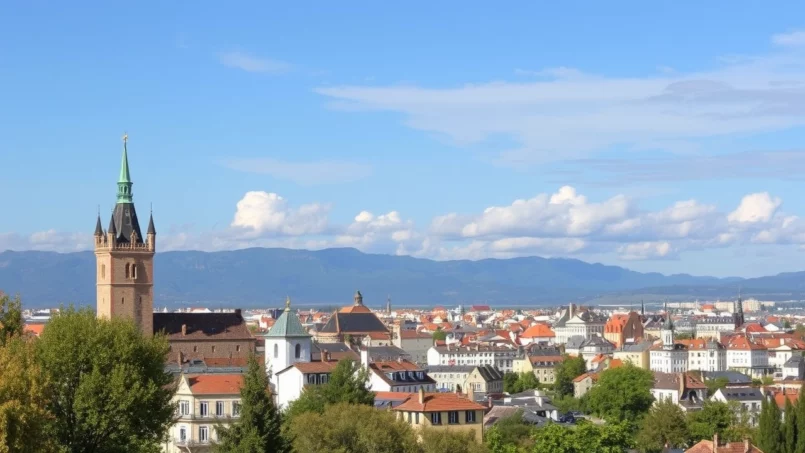
A discreet country wedged between the Baltic Sea and vast forests, Latvia has long lived in the shadow of its neighbors. Yet this small Baltic state boasts an astonishing density of treasures: medieval castles, baroque palaces, an Art Nouveau city center, spectacular national parks, historic villages, open-air museums, and waterfalls unique in Europe. Traveling in Latvia means moving in just a few hours from crusader ruins to pink sandstone cliffs, from a palace worthy of Versailles to an endless stretch of golden sand.
To grasp this diversity, one can explore the country by major themes and iconic locations. From Riga to Cēsis, from Kuldīga to Gauja National Park, from Rundāle Palace to the Baltic dunes, here is an overview of the must-see tourist sites in Latvia, based on the most accurate information available about them.
Riga, Historical Heart and Art Nouveau Showcase
Capital and largest city of the country, Riga alone concentrates a large share of Latvia’s must-sees. Its historic center, located on the right bank of the Daugava, is a UNESCO World Heritage site and encapsulates eight centuries of European history.
The Old Town: Medieval Labyrinth and National Symbol
Founded as a port in 1201, Riga quickly grew in importance, becoming a major link in the Hanseatic League between the 13th and 15th centuries, and later the largest provincial city of the Kingdom of Sweden in the 17th century. This past is still visible in Vecrīga, the Old Town, a maze of cobbled streets, merchants’ houses, and lively squares.
Around the cathedral and Town Hall Square, colorful facades stand next to former monastic complexes that have been repurposed. The Three Brothers, a group of three adjoining houses, offer a condensed view of residential architecture from the 15th to 17th centuries. A bit further, the House of the Black Heads, rebuilt identically after the war, recalls the role of wealthy merchant guilds.
The skyline of Riga is marked by its steeples. The cathedral, begun in 1211, is the largest medieval religious building in the Baltic states, blending Romanesque, Gothic, Baroque, and Art Nouveau styles, and housing a monumental 19th-century organ. St. Peter’s Church, in brick Gothic style, offers from its tower (accessible by elevator) a panorama that reveals the compactness of the old center and the extent of the urban area.
The Old Town also concentrates several key museums: the War Museum in the Powder Tower, the Museum of History and Navigation, the museums of the Great and Small Guilds, not to mention the Museum of the Occupation, which documents the Soviet and Nazi decades. The density of testimonies is such that the ancient core of Riga is described by UNESCO as a “living illustration of European history.”
Art Nouveau in Riga: The World’s Largest Collection
Beyond the medieval heart, Riga owes its international renown to its magnificent Art Nouveau belt. At the end of the 19th century, the city’s industrial and demographic growth was explosive: between 1897 and 1913, the population increased by nearly 90% to reach about 530,000 inhabitants. The fortifications were demolished, a system of boulevards and canals was laid out, and new neighborhoods sprang up. Regulations limited building height to about twenty meters, but the demand for bourgeois housing skyrocketed: between 300 and 500 buildings were then constructed per year, mainly in the style of the moment, Jugendstil.
Riga has over 800 Art Nouveau buildings, representing about a third of the buildings in its center.
The “Quiet Quarter,” about a ten-minute walk from the Old Town, concentrates the most famous streets. Alberta iela, laid out at the beginning of the 20th century and named after the city’s founding bishop, features spectacular facades. Eight of its buildings are classified as national monuments. Here one finds the boldest works of Mikhail Eisenstein, a Russian engineer and architect, who covered his facades with sculpted faces, masks, garlands, fantastic animals, and colorful stained glass. Elizabetes iela and Strēlnieku iela extend this festival of creativity.
To understand this decor from the inside, the Riga Art Nouveau Museum, housed in the former apartment of architect Konstantīns Pēkšēns at 12 Alberta iela, recreates a bourgeois home from the early 20th century. It is the only Baltic museum entirely dedicated to this movement, with furniture, painted ceilings, stained glass, and everyday objects.
Riga not only houses an exceptional Art Nouveau ensemble but also a remarkable collection of wooden houses and 19th- and 20th-century buildings in styles ranging from Romanticism to Modernism.
UNESCO
Markets, Monuments, and Urban Life
Riga is not just about its facades. The Central Market, housed in five former zeppelin hangars, is one of the largest in Europe. It is an integral part of the UNESCO site due to its repurposed industrial architecture. Here you can find fruits, vegetables, Baltic fish, smoked meats, pastries, and specialties like herring or grey peas. A few streets away, the “Corner House,” the former KGB headquarters, recalls the shadow of the 20th century.
The urban landscape is structured by an arc of parks and boulevards that replaced the old fortifications. Here stands the Freedom Monument, an obelisk nearly 43 meters tall inaugurated in 1935. Topped by a female figure holding three stars symbolizing the historical regions, it survived the Soviet era and now serves as a gathering place, with a changing of the guard.
Another contemporary landmark: the National Library, called the “Castle of Light,” a large glass vessel set on the opposite bank of the Daugava. The building visually dialogues with the spires of the Old Town and solidifies Riga’s place in cultural modernity.
Cēsis: A Living Medieval Castle in the Heart of Gauja
About 80 kilometers northeast of the capital, Cēsis displays one of the best-preserved medieval ensembles in the Baltic states. The town, one of the oldest in Latvia, grew up around a fortress that remains one of the country’s most visited sites.
Cēsis Castle: 800 Years of History and Legends
Built at the beginning of the 13th century near an old wooden castle of the Vends tribe, Cēsis Castle is intimately linked to the German conquest of the territory. It was founded under the aegis of the Brothers of the Sword, a religious military order leading the crusade in the region, then became a major center of the Teutonic Order in Livonia.
Over the centuries, Cēsis served as a residence for the masters of the order and a venue for great assemblies. The building reached its peak under Wolter von Plettenberg, head of the order between the late 15th and mid-16th centuries. This period gave it most of its current architectural appearance, with powerful towers and a regular plan.
During the Livonian War, the fortress was besieged in 1577 by the troops of Ivan the Terrible. About 300 defenders, preferring death to massacre, blew up the powder stores. This dramatic episode illustrates the violent regional conflicts (Russian, Polish, Swedish) which, along with the evolution of artillery, rendered the castle obsolete. After the Great Northern War, it was abandoned and used as a quarry.
It was not until the 19th century and the rise of Romanticism that its heritage value was rediscovered. The ruins then gained a picturesque status, inspiring artists and travelers. Today, Cēsis Castle is considered one of the finest medieval remnants in Latvia and the Baltic states, attracting around 100,000 visitors in some years.
An Immersive Visitor Experience
The castle still occupies the historic center of Cēsis, just a few minutes’ walk from the bus and train station. The complex includes the medieval ruins, a “new castle” manor-style from the 18th century, and a vast landscaped park laid out over 170 years ago, dotted with hills, ravines, bridges, and pavilions.
The visitor experience is designed as a journey back in time. You explore the towers by the light of candle-lit lanterns borrowed from the visitor center. The west tower houses the master’s chamber, a rare reconstruction of a 16th-century interior with star vaults, artificial stone corbels, and fragments of wall paintings. From the attic, a panoramic view embraces the gardens, park, and town roofs.
The south tower, called “Long Herman,” houses an old dungeon in the basement and, from May to September, a multimedia exhibition named “Living on a Powder Keg” which uses sound and projections to recount life in wartime in a besieged fortress.
The castle grounds are treated as an eco-museum of the Middle Ages. A medieval garden gathers vegetables, aromatic herbs, and medicinal plants reconstructed from historical sources. In summer, an activity area offers ancient games and craft demonstrations: stone, metal, and clay working, rope braiding, traditional printing. In the outer bailey, workshops host a wood turner, a blacksmith, an engraver, and a craftsman specializing in bone and antler.
A former jewelry shop, run by craftsman Daumants Kalniņš, presents reconstructions of ancient Latgalian adornments and even offers the chance to strike your own small Cēsis coin. The whole forms a rare example of a castle where historical skills are not just exhibited but practiced daily.
The “new castle,” attached to the ruins and built at the end of the 18th century by Count Karl Gustav von Sievers, now houses the Cēsis History and Art Museum. Highlights include a circular noble library, a unique coffee room, and a permanent exhibition titled “Cēsis – Symbol of Latvian History.” A watchtower, the Lademaher Tower, completes the setup with a wide view over the old town.
Practical Information and Site Restoration
The castle is managed by the Cēsis museum. Opening hours vary by season: generally, the medieval ruins are open daily from 10 am to 6 pm in summer, and Tuesday to Sunday in low season, closed on Mondays. Tickets are available individually or in combination packages, with different rates for summer and winter.
An overview of prices applicable from May to September
Highest rates, usually in July and August, corresponding to the busiest period.
Intermediate rates, often applied in June and September, offering a good compromise.
Prices may vary during long weekends and major local events during the summer.
| Ticket Type | Adults | Schoolchildren / Students / Seniors | Family (2 adults + children <16) |
|---|---|---|---|
| Full package (castle + museum…) | €12 | €8 | €24 |
| Medieval castle only | €8 | €5 | €16 |
| New castle (museum) only | €6 | €4 | €15 |
| Lademaher Tower | €3 | €2 | – |
In winter (October to April), prices are roughly halved for the full ticket. Guided tours can be booked in Latvian, Russian, German, or English.
Behind its romantic appearance, Cēsis Castle has undergone a major conservation project. Masonry, tower floors, plasterwork, and the chapel structure have been consolidated; a pedestrian bridge, a jewelry workshop, wooden scaffolding, and a multifunctional shelter have been added. The total investment approaches €1.5 million, largely funded by European Union funds (nearly €950,000), supplemented by the state and municipality.
At the town scale, the fortress is part of an old urban fabric that has changed surprisingly little despite wars. Here you find the town hall, merchants’ houses, the “Princess’s House,” and St. John’s Church, a great Gothic monument. It was in the new castle of Cēsis that the first unit of the Latvian national army was created in 1918, giving the site an additional memorial dimension.
Gauja National Park: A Laboratory of Nature and Heritage
Around Cēsis and Sigulda lies the oldest and largest national park in Latvia: Gauja National Park. Created in 1973, it covers over 900 km² along the valley of the Gauja River, between Sigulda and Valmiera. It is the third most visited destination in the country after Riga and the beaches of Jūrmala.
A Landscape Shaped by 350 Million Years
The park’s landscape owes its uniqueness to a long geological history. Sandstone layers, formed some 350 million years ago, have been sculpted by glacial and fluvial erosion. The Gauja Valley, its tributary ravines, springs, and red, yellow, or gray sandstone cliffs create a spectacular setting, punctuated by natural caves.
The park stands out for its exceptional ecological richness: about half, or more, of its area is covered by forests, some of which are almost virgin pine. It is home to nearly 900 plant species, 150 bird species, and about fifty mammals, serving as a refuge for diverse wildlife such as brown bears, moose, deer, wild boar, lynx, and various birds of prey. Open continuously and free of charge, it is a prime playground for outdoor activities like hiking, cycling, kayaking, and cross-country skiing.
Among the most remarkable natural sites are the Sietiniezis Cliffs, half a kilometer long, the Zvartes Rock, about forty meters high, and the Ergļi Cliffs, towering 22 meters above the Gauja’s meanders. The Gutmanis Cave, near Sigulda, sets another record: it is the widest and tallest cave in the Baltic states, with a vault reaching about ten meters. Carved by glacial meltwater over 10,000 years ago, it is covered with inscriptions engraved over the centuries. It is considered the oldest tourist site in the country.
Length in kilometers of the moderate hiking trail along the Amata, the fastest tributary of the Gauja.
Castles, Villages, and Outdoor Activities
Gauja National Park is not limited to landscape; it also gathers a density of medieval castles and historical sites that make the region an open-air history lesson.
Around Sigulda, three fortresses dominate the valley: the Medieval Castle of Sigulda, begun in 1207 by the Brothers of the Sword; Turaida Castle, built in red brick from 1214 and restored as a museum reserve; and the ruins of Krimulda Castle, built in the 13th century. A route called the “Three Castles Trail,” about ten kilometers long, links these sites, often combined with a cable car crossing of the valley.
The region is home to villages with unique character. Līgatne, a former paper mill village, preserves the working-class architecture of the early 20th century with its aligned houses and cellars carved into the rock. Its nature trails (4-5 km) allow you to observe emblematic Latvian animals in semi-freedom: bears, wild boar, foxes, moose, roe deer, lynx, and nocturnal birds. The Āraiši Archaeological Park, with its reconstructed lake fortress, is a candidate for UNESCO World Heritage status.
Activities in the park reflect this variety. Themed hiking trails, cycling routes, zip lines over the Gauja, luge or bobsleigh tracks in Sigulda, a cable car offering views of castles and cliffs, the Aerodium vertical free fall center: the destination lends itself as much to contemplative tourism as to thrills.
The table below illustrates some key routes and their features:
| Route / Site | Approximate Distance | Main Activity | Highlight |
|---|---|---|---|
| Amata Trail | 15.5 km | Hiking | Steep valley, sandstone, moderate difficulty |
| Three Castles Trail | 10 km | Hiking / sightseeing | Sigulda, Krimulda, Turaida |
| Cēsis – Valmiera (bike) | 45 km | Cycling | Gauja Valley, sporty sections |
| Līgatne Nature Trails | 4–5 km | Hiking / wildlife | Observing local animals |
| “Hold your breath” (Sigulda) | Variable | Hiking | Descent to Vējupīte ravine |
The towns of Sigulda, Cēsis, and Līgatne serve as gateways and offer accommodation, restaurants, and services. Mobile apps like Enter Gauja or national hiking tools help plan itineraries, though it is recommended to bring a power bank and supplies: on many trails, no shops or water points are available.
Kuldīga and the Venta: A Historical Gem Around Europe’s Widest Waterfall
In the west of the country, in Courland, Kuldīga offers a more intimate side of Latvia. This small town of about 13,500 inhabitants, some 150 kilometers from Riga, charms with its almost intact old center and a rare natural phenomenon: a waterfall as wide as a football stadium.
An Untouched Hanseatic Town Charm
First mentioned in 1242, Kuldīga became a Hanseatic town in 1368, and later one of the capitals of the Duchy of Courland at the end of the 16th century, alongside Jelgava. Located at the crossroads of river and land routes, it developed around a castle of the Livonian Order built on the banks of the Venta.
Over the centuries, the town enjoyed commercial privileges, established a weekly market as early as the 15th century, then moderately industrialized in the 19th century with companies like the “Vulkāns” match factory, active until the early 2000s. Wars, fires, and floods marked its history, but its historic center emerged relatively unscathed from the massive destructions of the 20th century.
Today, the old center of Kuldīga is a UNESCO World Heritage site, and the town has been designated a European “Destination of Excellence.” Its cobbled streets, wooden or brick houses from the 17th and 18th centuries, St. Catherine’s Church – the oldest, founded in the 13th century – and its former town hall form a unique ensemble in the Baltic states. Some call Kuldīga the “Venice of Latvia,” referring to the small river Alekšupīte that literally snakes between the houses, sometimes along their walls.
Ventas Rumba: The Widest Waterfall in Europe
The highlight is on the banks of the Venta River: Ventas Rumba, or the Venta Rapid, is the widest natural waterfall curtain in Europe. Its height is unimpressive, at less than 2.5 meters, but its average width is around 249 meters and can reach 275 meters during spring floods. The waterfall rests on a Devonian dolomite bank, a hard rock that resists erosion better than the softer lower layers, explaining both the formation of the rapid and its slow upstream migration over millennia.
Listed as a natural monument of Latvia and integrated into the Venta Valley Reserve, the waterfall attracts around 130,000 visitors per year. A wooden walkway runs along the bank, platforms allow observation of the turbulence, and in summer, the area becomes a vast open-air swimming spot. When water levels permit, some walk across the top of the waterfall from rock to rock. In winter, the scene changes completely: the water partially freezes, creating a wall of ice and stalactites.
Since the 17th century, the waterfall has hindered navigation, prompting various canal projects. A legend attributes to Duke Jacob of Courland an unsuccessful attempt to destroy it with explosives. In the 19th century, the Russian Empire began construction of a canal with Turkish prisoners of war but abandoned it in 1831 due to the hard rock and unsuitable river dimensions. A more modest canal was eventually built later, the remains of which are still visible today.
But Ventas Rumba is especially famous for a spectacular phenomenon: fish migration. In spring and autumn, species like the vimba attempt to swim upstream and literally hurl themselves at the rapid, leaping out of the water to clear the 2-meter obstacle. In the 17th century, Duke Jacob supposedly devised an ingenious fishing system, placing wicker baskets in notches in the rock to catch the fish that failed in their jump, earning Kuldīga the nickname “town where salmon are caught in the air.” Fishing is now banned during the spawning season, but the fish leaps continue to fascinate visitors.
Brick Bridge, Urban Waterfalls, and Sand Caves
A few steps from the waterfall, a red brick bridge, built in the 1870s, completes the picture. With its seven arches, 164 meters in length, and 8 meters in width, it is considered the longest brick bridge still in use in Europe. Modeled on a Roman Moselle structure, it was sized to allow two horse-drawn carriages to pass side by side. Damaged during World War I and later restored, it now offers one of the best views of the waterfall. An unusual tradition has taken root here: an annual “nude” race during the Midsummer Night.
This is the height in meters of the Alekšupīte waterfall, the tallest natural waterfall in Latvia.
In the surrounding area, other curiosities are worth a detour. The Riežupe Sand Caves form the longest underground labyrinth in the country, with nearly 2 km of tunnels carved into fine sand, part of which can be visited. During the ducal era, this sand was exported as raw material for glassmaking. A former monumental synagogue, built in the 19th century, converted into a cinema during the Soviet era, now houses the municipal library and a performance hall, with a plaque recalling the history of the local Jewish community.
The following table summarizes some points of interest in Kuldīga:
| Site | Main Feature |
|---|---|
| Ventas Rumba | Widest waterfall in Europe (≈ 249–275 m wide) |
| Kuldīga Brick Bridge | Longest brick bridge in use in Europe (164 m) |
| Historic Center | 17th–18th century urban ensemble, UNESCO heritage |
| Alekšupīte and its waterfall | About 4 m waterfall, historical hydraulic power canal |
| Riežupe Caves | Longest sand cave network in Latvia (≈ 2 km) |
| Castle Ruins | Former residence of the Dukes of Courland |
Between walks along the Venta, small gastronomic addresses, and local museums, it is recommended to stay overnight to enjoy the atmosphere in the evening, when the tourist buses leave and the town returns to its calm.
Rundāle: The Latvian “Versailles”
In the far south of the Zemgale region, near the Lithuanian border, Rundāle embodies the aristocratic face of Latvia. This Baroque and Rococo palace, surrounded by French gardens, is one of the most spectacular monuments in the country.
A Courtyard Palace in the Heart of the Zemgale Plain
Commissioned in the 18th century by Ernst Johann von Biron, Duke of Courland and favorite of Tsarina Anna Ivanovna, Rundāle Palace was designed as a summer residence. The architect in charge was Francesco Bartolomeo Rastrelli, a major figure of Imperial Baroque, known for the Winter Palace in St. Petersburg.
Construction took place in two main phases. Beginning in 1736, the old medieval castle on the site was razed, and the first wings rose. But resources were shared with another ducal project, Jelgava Palace, and Biron’s disgrace in 1740, leading to exile in Siberia, halted the work. When the duke returned to favor in the 1760s, construction resumed under the same Rastrelli and was completed around 1768. Biron then moved in to spend his summers there until his death a few years later.
After the annexation of Courland by the Russian Empire in 1795, Catherine II gave the Rundāle estate to Count Valerian Zubov. It then passed to the Shuvalov family through marriage and remained with them until World War I. The palace served as a hospital for Napoleonic troops in 1812, then for the German army in 1914–1918. It suffered significant damage in 1919, during the battles for Latvian independence, when it was partly set on fire by pro-Russian troops.
The agrarian reform of the 1920s turned Rundāle into state property. A school was installed, apartments were created for war veterans, and the reception halls became a gymnasium or grain store. It was not until the 1960s, during the Soviet period, that the authorities decided to restore the palace, under pressure from art historians. In 1972, an independent museum was created to coordinate the project. For over forty years, a team led by historian and painter Imants Lancmanis devoted its efforts to restoring the original decorations, until the official announcement of the completion of major restorations in 2015.
Architecture, Decor, and Collections
The Rundāle complex covers about 85 hectares, including a main building of 138 rooms and a large garden. The palace itself is considered one of the finest examples of Baroque and Rococo residence in Northern Europe, with a decorative authenticity rate estimated at 85%. The woodwork, stuccoes, and paintings were patiently restored from archives and recovered fragments.
The state apartments, richly adorned with stuccoes by Johann Michael Graff and ceiling paintings by Francesco Martini and Carlo Zucchi, are in the east wing. The central building houses the duke’s apartments, while the west wing contains those of the duchess. The interiors are furnished with 18th-century objects evoking court life.
Alongside the apartments, the museum holds thematic exhibitions covering several centuries of material culture: European and Latvian decorative arts from Gothic to Art Nouveau, portraits of Courland nobles, 18th-century costumes, the history of the palace’s construction, ironwork and stone sculptures, and aristocratic funerary rites. A “Sovereigns’ Hall” brings together portraits of major European figures of the time, from Frederick II of Prussia to Catherine II and Maria Theresa.
Overall, the restoration work undertaken between 1972 and 2014 cost approximately €8.4 million, funded successively by the Latvian state, private donors, and after 1992, European structural funds. Rundāle was included in the Latvian Cultural Canon in 2009 and is a candidate for UNESCO World Heritage status.
French Gardens and Historic Park
Outside, Rundāle stands out with a vast 10-hectare French garden, originally designed by Rastrelli and laid out in the 1730s by gardeners Christopher and Michael Weyland. Like many European Baroque gardens, it fell into decline in the 19th century, before being restored from 1972 based on old plans.
<!– wp:group {"className":"custom-block-example background-example","layout":{"type":"constrained"}}In the early 2000s, the park restored its green theater, a characteristic feature of grand-style gardens. This venue was inaugurated with a performance of Handel’s Baroque opera ‘Rinaldo,’ illustrating the rehabilitation of classical codes such as groves, hedges, and star-shaped alleys that structure the site.
A rose garden, created from 2005, extends on either side of the parterres over about one hectare. It gathers over 2,200 rose varieties, including nearly 600 old varieties. Collections of ornamental trees and shrubs, along with flowers typical of the 18th century, complete the decor, offering a striking palette of colors in spring and summer.
A 2-kilometer canal encircles the palace-gardens-stables complex, connected to a pond punctuated by an artificial island where rabbits were once raised. Today, a more playful “rabbit castle” amuses visitors. To the south, the former hunting park, reduced to about 32 hectares, retains its characteristic radial avenues.
The historic orchards are also undergoing a revival: it is known that in 1739, they already contained nearly a hundred pear trees, over 150 apple trees, 40 plum trees, and 20 cherry trees. Under Duke Peter of Courland in the 1770s, two additional orchards and a hop garden were added. At the end of the 18th century, apricot and peach gardens were also mentioned, maintained thanks to heated greenhouses, some of whose features (hot air ducts) have recently been unearthed.
The following table summarizes some key data for Rundāle:
| Element | Main Data |
|---|---|
| Total area of the complex | ≈ 85 hectares |
| Number of rooms | 138 |
| Architectural style | Baroque and Rococo |
| French garden area | 10 hectares |
| Rose garden | ≈ 2,230 rose varieties, of which ~600 historic |
| Perimeter canal | ≈ 2 km long |
| Construction periods | 1736–1740 and 1764–1768 |
Today, Rundāle is a highlight of Latvian tourism, regularly used for early music concerts, garden festivals, and even occasionally for hosting foreign dignitaries.
The Ethnographic Open-Air Museum: Rural Latvia Outdoors
Just ten kilometers from the center of Riga, on the shores of Lake Jugla and nestled in a pine forest, lies one of the oldest and largest open-air museums in Europe: The Latvian Ethnographic Open-Air Museum (Latvijas Etnogrāfiskais brīvdabas muzejs).
Founded in 1924, during the country’s first independence, the museum addressed a very modern concern: preserving traces of traditional rural culture as industrialization and urbanization gained ground. Inspired by Scandinavian experiences – particularly Skansen in Stockholm – the Monuments Council decided to gather in one place farms, workshops, churches, and dwellings representative of Latvia’s four main regions: Courland (Kurzeme), Vidzeme, Zemgale, and Latgale.
In the 1920s, the state acquired land around Lake Jugla. In 1928, the first building – an 18th-century barn from the parish of Vestiena – was dismantled and rebuilt on site. When the museum opened to the public in 1932, it already had a small group of six buildings forming a Vidzeme farmstead. By 1939, about forty structures had been relocated.
World War II spared the site physically but dispersed its scientific team through deportation or exile, and caused the loss of archives. Under the Soviet era, the museum was initially ideologically suspect before regaining an active role in the late 1960s thanks to young professionals. After 1991, it was finally able to document the interwar period, notably through the ‘New Farmer’s House’ illustrating the agrarian reforms of the 1920s.
A Giant Village of 100 Historic Buildings
Spread over about 90 hectares of forest and clearings, the museum gathers over a hundred historic buildings moved from all regions of Latvia. According to sources, there are 102 to 118 structures, housing more than 3,000 visible objects, with an overall collection approaching 150,000 pieces.
The oldest construction in the open-air museum, the wooden church Bornes Baznica, dates from this year.
Each building is presented in its reconstructed environment, with furniture, tools, textiles, and utensils corresponding to a specific period and occupation. You move from a small fisherman’s house from Rucava on the Courland coast to a 1930s settler farm in Vidzeme, passing a windmill from Latgale or a tavern from Zemgale. The whole forms a kind of scattered village, where you walk through the forest along the lake.
Living Crafts, Traditional Festivals, and Interpretation
One of the museum’s strengths is the presence of real artisans on site. From May to September, potters, weavers, blacksmiths, carpenters, and other traditional tradespeople occupy the workshops. They work for real, explain their gestures, and initiate visitors: ceramic molding, basketry, honey making, striking commemorative coins, folk games.
The museum organizes over twenty annual cultural events related to Latvian and Christian traditions.
In winter, far from becoming static, the site lends itself to cross-country skiing, sleigh rides, and ice fishing on the lake. An inn, Priedes Krogs, serves Latvian dishes in a rustic setting; a children’s play area, a baby corner, and a souvenir shop complete the offering. Guided tours in Latvian, Russian, English, or German can be booked, as well as themed educational workshops for schools and families.
On a practical note, the museum is easily accessible by public transport from Riga, has free parking, and is open year-round with hours adapted to the season. Entry is free on National Day, November 18. A mobile app even allows you to preview the buildings and navigate the grounds.
The table below summarizes some key figures:
| Element | Main Data |
|---|---|
| Year established | 1924 |
| Area | ≈ 87–97 hectares |
| Number of historic buildings | 100+ (≈ 102–118) |
| Period covered | 16th century – 1930s |
| Number of objects in collections | ≈ 150,000 |
| Annual visitors | ≈ 250,000 |
For anyone wanting to understand the rural roots of the country, this museum offers an unparalleled synthesis, without leaving the capital’s urban area.
The Baltic Coast: Dunes, Seaside Resorts, and Coastal Parks
Beyond the cities and castles, Latvia stands out with a coastline about 500 kilometers long, shared between the open Baltic Sea and the Gulf of Riga. Nearly 200 kilometers of this coast are sandy beaches lined with dunes, sometimes framed by cliffs or rocks, offering a more maritime face of the country.
Jūrmala, Liepāja, Ventspils: Three Faces of the Coast
Jūrmala, in the immediate vicinity of Riga, embodies the most famous seaside resort: over 25 kilometers of continuous beach, with light sand, bordered by pines and wooden villas, some Art Nouveau. A former spa town of the Russian Empire, developed in the 19th century under the name Bad Kemmern, it has preserved its heritage of summer houses, now converted into hotels, guesthouses, and wellness centers. Many establishments still offer treatments based on mud and mineral waters.
The Latvian ports of Ventspils and Liepāja illustrate the successful conversion of industrial infrastructure into tourist hubs. Ventspils focuses on family tourism with a Blue Flag beach, an amusement park, an open-air maritime museum, and a narrow-gauge railway. Liepāja, ‘the city where the wind is born,’ attracts surfers and wind sports enthusiasts with its vast beaches and the historic Karosta military district, where former forts and a naval prison turned museum immerse visitors in military history.
Small towns like Pāvilosta, known for surfing and its bohemian vibe, Engure or Mērsrags, oriented towards birdwatching and quiet beaches, or Saulkrasti, closer to Riga with its white dune and sunset path, complete the coastal mosaic. At the far tip of Kurzeme, Cape Kolka marks the visible meeting point between the waves of the open Baltic and the calmer waters of the gulf, in a ballet of currents, eddies, and salt-bleached trunks washed up on the shore.
Dunes, Cliffs, and Coastal Parks
Landscape diversity is also evident in the coastal parks. Slītere National Park, near Cape Kolka, protects dunes, coastal forests, and Livonian villages, witnesses of the indigenous ethnolinguistic minority on the coast. Further south, Pape Park combines beach, lake, bogs, and pastures grazed by wild horses and rustic cattle, recreating ancient ecosystems.
Lake Engure, a former lagoon, is a major ornithological site where horses and cattle maintain the wet meadows. Ķemeri National Park, near the coast, protects vast raised bogs crossed by a wooden boardwalk popular with photographers at dawn. These bogs are emblematic of Latvia’s natural identity.
The Vidzeme coastline is, for its part, more rocky. Between Tūja and Vitrupe, a protected area presents a strip of shore strewn with pebbles and rocks, with the famous Veczemju cliffs, a red sandstone wall reaching six meters in height, dotted with marine erosion caves. In Saulkrasti, a white dune 18 meters high offers a viewpoint over the gulf, connected to the village by a 3.5 km footpath.
Activities along the coast range from simple summer swimming (water around 21–23 °C in July) to hiking on the “Baltic Coastal Trail,” the Latvian section of the great European path E9, and cycling on the EuroVelo 10 route. The beach is freely accessible everywhere, and wild camping is still allowed in many areas, subject to preservation rules.
Other Major Sites: Sigulda, Turaida, Kuldīga, Ventas Rumba, and Beyond
Latvia is not limited to a few places; the country has a multitude of other sites that complete this overview of must-sees.
In Sigulda, nicknamed ‘the Swiss Latvia,’ the tourist core includes a 13th-century medieval castle, ruins of the Livonian Order, a 19th-century neo-Gothic manor, an Olympic bobsleigh track, and a cable car crossing the Gauja Valley. Opposite, the Turaida Museum Reserve offers a red brick castle, an 18th-century wooden church, a sculpture park on folk songs, and the tomb of the ‘Rose of Turaida,’ heroine of a tragic love legend.
In the east, the Aglona Basilica, the largest Catholic sanctuary in the country, attracts pilgrims and visitors during major celebrations. In Latgale, the “Blue Lakes” region, the bodies of water and Old Believer Russian villages offer a more rural and religious Latvia.
Finally, on the outskirts of Riga, a former nuclear bunker in Līgatne, built during the Cold War under a rehabilitation center, can now be visited, with a restaurant remaining frozen in the 1980s to extend the experience. At the other end of the spectrum, modern cultural complexes like Zuzeum, the VEF Palace of Culture, or the “Ziemeļblāzma” center testify to contemporary artistic vitality.
Reading Latvia Through Its Places
In a country the size of a small French region, Latvia concentrates a range of sites that, strung together, draw a true accelerated history of Northern Europe: a Hanseatic city and Art Nouveau capital, crusader fortresses and Baroque palaces, Livonian fishing villages and wooden farms, waterfalls on Devonian rock and millennia-old bogs.
Cēsis Castle, with its lanterns and towers evoking the Livonian epic, illustrates the medieval layer. Rundāle Palace, adorned with Rastrelli’s stuccoes and its reconstructed gardens, represents the Baroque aristocracy integrated into the Russian Empire. Kuldīga and the Ventas Rumba waterfall embody the Hanseatic memory, the ducal period, and the power of river landscapes. Finally, the ethnographic open-air museum establishes the link between these eras and the peasant world, the foundation of this heritage.
By exploring these must-see sites, one realizes that Latvia, far from being a mere Baltic stopover, offers a rare density of heritage and nature, still relatively spared by mass tourism. An ideal terrain for those who like to take their time, explore, and connect the design of facades to the texture of forests and the dull roar of the sea on the beaches of the Gulf of Riga.
Disclaimer: The information provided on this website is for informational purposes only and does not constitute financial, legal, or professional advice. We encourage you to consult qualified experts before making any investment, real estate, or expatriation decisions. Although we strive to maintain up-to-date and accurate information, we do not guarantee the completeness, accuracy, or timeliness of the proposed content. As investment and expatriation involve risks, we disclaim any liability for potential losses or damages arising from the use of this site. Your use of this site confirms your acceptance of these terms and your understanding of the associated risks.

Cyril Jarnias is an independent expert in international wealth management with over 20 years of experience. As an expatriate himself, he is dedicated to helping individuals and business leaders build, protect, and pass on their wealth with complete peace of mind.
On his website, cyriljarnias.com, he shares his expertise on international real estate, offshore company formation, and expatriation.
Thanks to his expertise, he offers sound advice to optimize his clients' wealth management. Cyril Jarnias is also recognized for his appearances in many prestigious media outlets such as BFM Business, les Français de l’étranger, Le Figaro, Les Echos, and Mieux vivre votre argent, where he shares his knowledge and know-how in wealth management.





