
 Published on and written by Cyril Jarnias
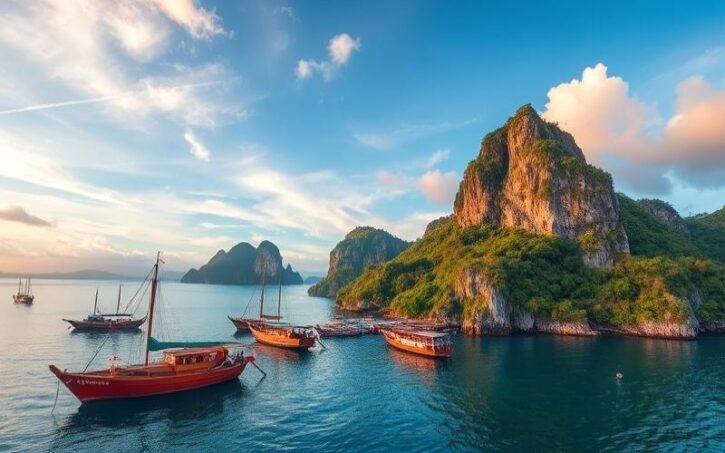
Diving into the Heart of the Philippine Archipelago
Discover a flourishing artistic universe where workshops and galleries reflect the country’s creativity and cultural diversity. From Manila to Cebu, and including lesser-known islands, these art spaces are meeting and exchange points where local and international artists collaborate to push the boundaries of aesthetic expression.
Tumultuous contemporary movements coexist with traditional art, illustrating a rich cultural history while embracing innovation and experimentation. This incredible diversity, supported by a community of passionate enthusiasts, makes the Philippines a must-visit destination for art lovers eager to explore authentic and vibrant creations.
The Diversity of the Philippine Cultural Scene
The Philippine cultural scene stands out for its remarkable diversity of artistic expression forms, resulting from a constant dialogue between indigenous traditions, colonial influences, and contemporary dynamics. This living heritage is embodied in visual arts, music, dance, and theater alike.
Visual Arts and Influential Contemporary Artists
- Manuel Ocampo: An internationally renowned painter, he fuses religious iconography, punk elements, and political satire to question Philippine identity. Featured at the Venice Biennale and the Berlin Biennale, he helps promote the Philippine art scene abroad.
- Lilibeth Cuenca Rasmussen: A Copenhagen-based artist, she addresses issues of identity and culture through performance, offering critical and playful perspectives on cultural heritage.
- Isola Tong: Their works explore urbanity, nature, and politics through a queer and ecological lens.
- Load na Dito Collective: A mobile project founded by Mark Salvatus and Mayumi Hirano, it focuses on collective creation and direct interaction with the public to renew curatorial practices.
Living Indigenous Artistic Traditions
- Woven Textiles (e.g., t’nalak from the T’boli, inabel from the Ilocanos)
- Wood Carving (santos, ritual objects)
- Ritual and Community Dances (singkil, tinikling)
- Traditional Music: kulintang gongs, epic chants
Crossed Influences: Colonial, Indigenous, and Modern
| Art Form | Indigenous Influences | Colonial Influences | Modern/Contemporary Influences |
|---|---|---|---|
| Visual Arts | Textile patterns, tribal sculpture | Spanish realism, iconography | Abstraction, installations, street art |
| Music | Gongs, epic chants | Harana songs, string instruments | Pop, hip-hop, electro-folk fusion |
| Dance | Ritual and community dances | Ballet, ballroom dancing | Urban dance, contemporary performance |
| Theater | Dramatic rituals, oral epics | Zarzuela, musical comedy | Experimental theater, street theater |
Workshops, Galleries, and Promotional Spaces
- Cultural Center of the Philippines (CCP) and National Museum of Fine Arts: These institutions exhibit major works, fostering innovation and the transmission of artistic knowledge.
- Galleries in Makati, Quezon City, Malate: True creative incubators, these spaces energize the contemporary scene and multiply intercultural exchanges.
- Collective Workshops and Traveling Projects: They support experimentation, arts education, and public access to local creation.
Role of Art Spaces
- Promotion and Conservation: These places ensure the transmission of heritage while highlighting the innovations of young artists.
- Intercultural Dialogue: International exhibitions (e.g., “Manila Vice” in France) and cross-border collaborations reposition Philippine art on the world map.
- Community Impact:
- Strengthening local identity
- Access to arts education
- Economic development (tourism, crafts)
- Increased international visibility for Filipino artists
Key Takeaways
The Philippine cultural scene, driven by a dense network of artists, traditions, and distribution spaces, positions itself as a laboratory for innovation and dialogue, at the crossroads of heritage and modernity.
Good to Know:
Contemporary Filipino artists like Rodel Tapaya and Marina Cruz draw from indigenous artistic traditions and colonial influences to create unique works that resonate on the world stage, while workshops and galleries such as the Pinto Art Museum serve as vital platforms for artistic conservation and innovation.
Focus on Sofia Galleries and Their Impact
Sofia Galleries hold a unique place in the Philippine art landscape, playing a driving role in the promotion and evolution of national contemporary art. Founded with the aim of creating an open space for cultural dialogue, they embody a dynamic crossroads between tradition and modernity, hosting a diversity of artistic expressions from the Philippines and the international scene.
History and Mission
Sofia Galleries were created to offer a dedicated space for artistic exchange, inspired by principles of cultural diplomacy and inclusion. Their primary mission is to:
- Support the visibility of Philippine art by offering a varied program that combines exhibitions of established figures and emerging artists.
- Promote intercultural dialogue through events, conferences, performances, and international collaborations.
- Foster access to art for all audiences by multiplying educational initiatives and mediation projects.
Impact on the Promotion of Philippine Art
Sofia Galleries actively contribute to the recognition of Philippine art by:
- Providing a permanent platform for local creators, allowing their works to be exhibited, reviewed, and exported internationally.
- Organizing thematic exhibitions that highlight the richness of Philippine culture, its social history, traditions, and contemporary issues.
- Supporting the participation of Filipino artists in major art fairs and events abroad.
Role in Discovering New Artists
A key strength of Sofia Galleries lies in their commitment to the next generation of artists:
- Launching annual competitions for young artists.
- Organizing artist residencies to foster creation and experimentation.
- Implementing mentorship programs pairing established artists with emerging talents.
Contribution to the Local and International Scene
| Contribution | Description |
|---|---|
| Local Scene | Energizing the urban cultural fabric, supporting diversity of practices, expanding access to art. |
| International Scene | Exporting Filipino artists, organizing traveling exhibitions, curatorial exchanges. |
Specific Community Initiatives
- Free workshops for children and youth from disadvantaged neighborhoods.
- Conferences and training cycles for visual arts teachers.
- Creation of a support fund for local artistic production.
Notable Partnerships
- Collaboration with national cultural institutions such as the National Museum of the Philippines and various art universities.
- Partnerships with international galleries and museums for cross-exhibitions and artist exchanges.
- Support from private foundations and international cultural promotion organizations.
Sofia Galleries thus stand out as an engine of artistic innovation, an incubator of talent, and an ambassador of Philippine creation on the world stage.
Good to Know:
Sofia Galleries have played a crucial role in promoting Philippine art by organizing innovative exhibitions and collaborating with international institutions such as the Museum of Modern Art in New York. They have also established mentorship programs for young Filipino artists, fostering their emergence on the global art scene.
The Rise of Expatriate Artists in the Philippines
Context and Reasons for the Philippines’ Attraction for Expatriate Artists
The Philippines increasingly attracts expatriate artists thanks to its cultural richness, a deeply rooted artistic tradition, and an inspiring natural environment.
Economically, the affordable cost of living, easy access to creative spaces, and the growing local market make the country attractive. Many artist villages offer affordable residencies, thus fostering cultural exchange and creation.
Main Cities or Regions with Notable Influx of Expatriate Artists
| City/Region | Highlights |
|---|---|
| Baguio | Tam-awan Village; Ili Likha Artist Village |
| Amadeo (Cavite) | Alitaptap Artists’ Community |
| Sagay City (Negros) | Bougainvillea: murals & art events |
| Manila | Urban galleries, collaborative workshops |
Description of Artistic Exchanges Between Expatriates and Local Filipino Artists
- Joint workshops in artist villages (exhibitions open to the public).
- Regular organization of events like multicultural festivals or collaborative exhibitions where works are created together.
Examples:
- Tam-awan Village: mixed residencies with shared interventions during cultural festivals.
- Bougainvillea: murals created jointly by locals and foreigners.
The Role of Galleries and Workshops in Integrating and Supporting Expatriate Artists
Local Galleries:
- Offer a space to exhibit without major language or administrative barriers.
- Facilitate networking through openings open to foreign communities.
Community Workshops:
- Provide logistical support (materials, translation).
- Encourage interdisciplinary collaboration between visual arts, music, and crafts.
Testimonials or Interviews from Expatriate Artists on Their Experience
“The cultural diversity here allowed me to reinvent my style while integrating quickly. The local support goes far beyond simple tourist hospitality.”
— Testimonial collected from a French sculptor based in Amadeo.
“Working with Filipino artists opened my practice to a new technical palette inspired by their textile traditions.”
— Interview published during the annual Sagay City festival.
Government or Private Initiatives Encouraging This Influx
- Tax incentives for creative residencies
- Grants from the Department of Tourism to organize intercultural festivals
- Private support through art foundations funding mixed projects
| Initiative | Type | Impact |
|---|---|---|
| Experiential tourism | Governmental | Promotion of cultural tourism |
| Private funds | Private | Funding collaborations |
Analysis of Challenges Faced by Expatriate Artists & Solutions Provided
Main Challenges:
- Language barrier
- Administrative difficulties related to cultural visas
- Limited access to certain professional networks
Solutions Implemented:
- Establishment of bilingual workshops
- Creation of digital platforms dedicated to administrative procedures
Recent Statistics:
According to an industry report published in early 2025, nearly 22% of active members in major artist villages are now from foreign countries, mainly Western Europe, Japan, and the United States.
“Professional inclusion requires strong institutional solidarity — that’s what distinguishes the Philippine art scene today.”
Good to Know:
The Philippines attracts expatriate artists due to an affordable cost of living and a dynamic art scene centered particularly in Manila and Cebu, where fruitful collaborations with local talents develop in workshops supported by public and private initiatives.
Local Workshops and Artistic Initiatives
Famous local art workshops in the Philippines play a central role in preserving and promoting traditional craftsmanship. For example, the Nemiranda Arthouse in Angono, recognized as the country’s artistic capital, highlights local materials like bamboo and sawali, as well as works inspired by local folklore. This place is emblematic for hosting art learning workshops combining painting, sculpture, and the creation of giant puppets (higantes) that are an integral part of local festivities.
Other notable workshops include Atelier Aguila in Negros, which not only offers personal creations but also hosts works by regional artisans (paintings by Negrense artists and vases made from recycled materials). This collaborative model aims to create a true artistic commune where the immersive experience is paramount: collective exhibition, artisan café, and exchanges between artists.
The following list summarizes some famous workshops:
- Nemiranda Arthouse (Angono): folk art and educational workshops.
- Atelier Aguila (Negros): collective of local artists focused on carved furniture and handicrafts.
- Nami Art Gallery: space dedicated to young Filipino talents for exhibiting paintings and sculptures.
Community or municipal initiatives are encouraged by these artists through the regular organization of artisan markets (Legazpi Sunday Market in Manila), cultural festivals with public demonstrations (giant paper-mâché in Angono), collective exhibitions open to the public, or creative residencies in artist villages. In Cebu, for example, the skill of bakat—bamboo woven baskets—is promoted during municipal events allowing residents to learn traditional weaving while fostering intergenerational transmission.
Collaborations between local and international artists emerge thanks to these initiatives; during the Révélations 2025 fair in Paris, several Filipino creators presented pieces co-created with foreign designers. This “multi-hand” approach illustrates how traditional artisans partner with contemporary designers to renew their technical heritage while engaging with a global audience.
Here is a table illustrating some collaborations:
| Initiative | Participants | Result/Event |
|---|---|---|
| Révélations Paris 2025 | PH artisan-designers + international | International collaborative exhibition |
| Jewelmer | PH entrepreneur + French farmer | Globally recognized South Sea pearl jewelry |
| Atelier Aguila | Karl Aguila + Negrense artists | Collective gallery & events |
The impact on the social perception of Philippine art is significant: these projects show that art is not reserved for the elite but is accessible in rural and urban communities alike. Testimonials collected from artists emphasize how essential these workshops are for their careers — some even speak of a “transformative experience” as they provide financial independence while strengthening their cultural roots. Karl Aguila states that “you have to create something unique to naturally attract people to you,” thus highlighting the direct link between authentic local creativity and social or economic reach.
Concrete examples include:
- The annual Higantes Festival in Angono where giant paper-mâché figures made during community workshops parade through the city.
- The Philippine Banquet exhibition at the Grand Palais in Paris offering a global showcase for local know-how through co-created objects.
- The Legazpi Sunday Market offering handmade products directly from provincial artisans every week.
On an economic level, these initiatives strongly stimulate community income through cultural tourism generated by gallery/workshop visits or direct sales at specialized markets. On a cultural level, they ensure the active preservation of ancient techniques while encouraging their contemporary reinterpretation — this dual movement nourishes local identity pride as much as internationally recognized aesthetic innovation.
The main regions where this momentum is particularly visible are:
- Angono/Rizal
- Cebu/Mandaue
- Negros/Tambobo Bay
- Manila (Legazpi & Escolta Street markets)
In summary, Philippine art workshops form a living network that combines ancestral tradition, contemporary dynamism, and international openness — durably impacting both society and the local economy through their inclusive and innovative actions.
Good to Know:
Artistic initiatives in Manila and Cebu, often supported by international partnerships, revitalize traditional Philippine craftsmanship while stimulating the local economy through community exhibitions that attract tourists and collectors. Artist testimonials highlight the transformative impact of these workshops on their careers, as recently illustrated by the “Ani ng Sining” exhibition in Bacolod which celebrated collaborations between local artisans and foreign artists.
Disclaimer: The information provided on this website is for informational purposes only and does not constitute financial, legal, or professional advice. We encourage you to consult qualified experts before making any investment, real estate, or expatriation decisions. Although we strive to maintain up-to-date and accurate information, we do not guarantee the completeness, accuracy, or timeliness of the proposed content. As investment and expatriation involve risks, we disclaim any liability for potential losses or damages arising from the use of this site. Your use of this site confirms your acceptance of these terms and your understanding of the associated risks.

Cyril Jarnias is an independent expert in international wealth management with over 20 years of experience. As an expatriate himself, he is dedicated to helping individuals and business leaders build, protect, and pass on their wealth with complete peace of mind.
On his website, cyriljarnias.com, he shares his expertise on international real estate, offshore company formation, and expatriation.
Thanks to his expertise, he offers sound advice to optimize his clients' wealth management. Cyril Jarnias is also recognized for his appearances in many prestigious media outlets such as BFM Business, les Français de l’étranger, Le Figaro, Les Echos, and Mieux vivre votre argent, where he shares his knowledge and know-how in wealth management.





