
 Published on and written by Cyril Jarnias
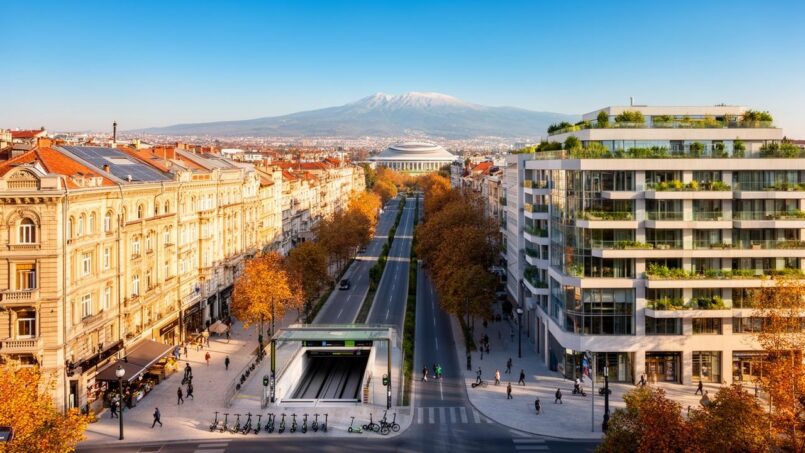
As Bulgaria experiences its first full year in the eurozone, the real estate market in the capital enters a new phase. After several years of double-digit growth, prices in Sofia continue to rise, but at a more measured pace. For an investor, this doesn’t mean opportunities have disappeared—quite the opposite: the city has reached a level of maturity where the choice of neighborhood, housing typology, and project quality makes all the difference in profitability.
Sofia’s real estate market remains dynamic thanks to a young population, strong rental demand, moderate credit, and low taxes. However, not all neighborhoods offer the same potential: some are capped, while others—well-connected and affordable—promise good returns and capital appreciation.
The goal of this article is to identify, among the mosaic of over 90 neighborhoods in the capital, those that offer the best risk/return ratio for rental investment in 2026, based on price trends, demand, expected rents, infrastructure projects, and resident profiles.
A market normalizing, but still highly attractive
The first thing to consider before zooming in on individual neighborhoods is the change in pace. After 2024-2025, marked by a surge in prices (up to +15% per year nationally, and around +15% to +17% in Sofia), experts anticipate a more moderate increase for 2026—on the order of 5 to 10% depending on the area and property type. In Sofia, the most credible projections point to +8% to +12%, with peaks potentially reaching +15% in the most sought-after neighborhoods or those directly served by new metro stations.
The average price per square meter in Sofia is around 2,400 €, more than triple the levels of 2015.
Rents follow a more moderate curve, but are dynamic enough to support gross yields generally between 4% and 7% per year depending on the neighborhood and housing format. Studios and one-bedroom apartments in good locations easily achieve 5.5% to 6.5% gross yield, while large family apartments and houses tend to fall between 3% and 4.5%.
Growth around 3%, real wage increases of 8-12% per year, low unemployment, a high concentration of skilled jobs in IT and services, and an influx of young professionals, expats, and European remote workers. Banks lend at historically low rates (around 3-3.5% in 2026) with prudent policies: LTV limited to 85% and debt-to-income ratio capped at 50%.
Under these conditions, the rental market remains tight, with a vacancy rate of only about 5% in major cities. In Sofia, apartments well-located near metro lines, business centers, or campuses rent quickly, especially modern, efficient, energy-saving two- or three-room units.
Understanding the new geography of value in Sofia
The main structural change is the end of the “monopoly” of the historic center and ultra-prestigious neighborhoods. They remain expensive, liquid, and attractive, but the combination of high prices, land scarcity, and construction constraints is driving a growing share of demand toward well-connected peripheral areas, especially in the south and east.
The key trends are clear:
South Sofia, at the foot of Mount Vitosha, concentrates a large portion of solvent demand, with neighborhoods like Krastova Vada, Manastirski Livadi, Mladost, Vitosha, Lozenets, Iztok, Dragalevtsi, and Boyana. The west and north—such as Lyulin, Nadezhda, Ovcha Kupel, Gorna Banya, Poduyane, and North Sofia—are gaining momentum thanks to the metro and low prices. The center and historic districts—like Center, Oborishte, Doktorski Pametnik, Ivan Vazov, Yavorov, and Geo Milev—maintain very high prices for wealth-preservation or high-end strategies.
Average price figures by neighborhood illustrate this hierarchy.
Table – Indicative price ranges per m² in selected key neighborhoods of Sofia
| Neighborhood | Property type (new / resale) | Indicative price €/m² |
|---|---|---|
| Lozenets | New | 1,900 – 2,600 |
| Lozenets | Secondary market | 1,600 – 2,200 |
| Krastova Vada | New | 1,600 – 2,100 |
| Krastova Vada | Secondary market | 1,300 – 1,800 |
| Center | New | 1,800 – 2,400 |
| Center | Secondary market | 1,500 – 2,000 |
| Vitosha | New | 1,700 – 2,300 |
| Vitosha | Secondary market | 1,400 – 1,900 |
| Studentski Grad | New | 1,300 – 1,700 |
| Studentski Grad | Secondary market | 1,100 – 1,500 |
| Mladost / Malinova Dolina | Mixed (mostly new) | 2,000 – 2,300 |
| Lyulin / Nadezhda | Mixed (new + panel blocks) | < 1,800 in some segments |
These price ranges must be weighed against rental yields, vacancy rates, and demand dynamics to identify the best compromises.
Lozenets: the heavyweight of high-end rentals
Lozenets is arguably the most iconic neighborhood in Sofia’s upscaling. Located south of the center, bordered by parks (Borisova Gradina, Loven Park), well-connected by metro (Vitosha station), and close to many offices, clinics, and international schools, it attracts both wealthy Bulgarians, expats, and foreign executives.
Available data show that the neighborhood combines high prices with occupancy rates above 90% and sometimes surprising yields for a “prime” area. For an investor, this is typically a zone where resale value, liquidity, and resilience in case of economic shock offset a higher entry ticket.
Table – Example profitability for a 50 m² apartment in Lozenets
| Indicator | Estimated value |
|---|---|
| Area | 50 m² |
| Approximate purchase price | 105,000 € |
| Expected monthly long-term rent | 600 – 700 € |
| Gross annual rental income | 7,200 – 8,400 € |
| Annual expenses / operating costs | 2,000 – 2,500 € |
| Estimated net annual profit | 4,700 – 6,400 € |
| Estimated net yield | ≈ 4.5 – 6% |
| Short-term rental potential | 12,000 – 15,000 €/year |
Even with a conservative assumption (imperfect occupancy, higher costs), the net profitability remains attractive for a neighborhood of this standing. And the potential for seasonal or short-term “business” rentals can, if managed well, almost double gross revenue.
In the Lozenets and Iztok sectors of Sofia, prices exceed 3,500 to 3,800 €/m², rivaling Central European capitals. Demand is strong for two- and three-bedroom apartments in new, smart, energy-efficient buildings, especially in gated complexes with underground parking.
For an investor seeking security, long-term appreciation, and a high-end clientele (executives, diplomats, expats), Lozenets remains a safe bet, provided you accept a slightly lower yield than in more peripheral neighborhoods.
Krastova Vada: the new modern center of the south
Krastova Vada is a textbook example of a “winning” neighborhood in Sofia’s new geography. Located in the south, at the foot of Vitosha, right next to the large Paradise Center shopping mall and several major arteries, it combines quick access to downtown, open views, proximity to the mountain, and a strong supply of new residences.
The neighborhood is emerging as “the new modern center of the south”: developers are building smart, low-energy buildings, often organized as mixed-use residential complexes (housing, shops, offices, leisure). This is also where “live-work-play” projects are gaining traction, integrating living, working, and leisure spaces within a single development, reducing car travel.
Real estate developers
Prices in Krastova Vada remain, for now, slightly lower than in Lozenets, while benefiting from a rising image:
– new apartments: approximately 1,600 to 2,100 €/m²;
– recent resale apartments: approximately 1,300 to 1,800 €/m².
Opportunities for modern three-bedroom units with parking, located near the metro (existing lines and future Line 3 extension), with realistic gross yields of 5.5% to 7% for properties between 50 and 80 m².
Modern three-bedroom apartments with parking see robust rental demand, boosted by proximity to public transit.
Gross yields of 5.5% to 7% are achievable on 50 to 80 m² units, thanks to well-targeted products.
Access to existing lines and the extension of Line 3 southward increase property attractiveness and rental value.
Krastova Vada is also one of the preferred sectors for large mixed-use projects exceeding 100 million BGN, which will create new urban hubs outside the traditional center. For a medium/long-term investor, getting in early on this type of neighborhood, choosing solid, energy-efficient projects, is like positioning yourself on a future “prime” area still sold at an intermediate price.
Manastirski Livadi: the green belt undergoing rapid densification
Manastirski Livadi, especially its eastern part, is often cited as one of the most promising neighborhoods in the capital. Long semi-rural, with single-family homes and plenty of greenery, the area is experiencing a wave of new construction: modern residences, gated complexes, and mid-rise buildings.
Its advantage lies in a balance still rare in Sofia: a relatively green environment, moderate density, recent buildings, and constantly improving access to employment zones and the center, thanks to road improvements and the expansion of the transport network. The neighborhood indirectly benefits from major infrastructure projects in the south (ring road, metro extensions).
Prices for the most sought-after real estate programs in this Sofia neighborhood hover around 2,000 €/m², making them attractive for first-time buyers and investors.
The presence of numerous “smart home” projects and gated residences with amenities (green spaces, playgrounds, gyms) boosts the appeal of Manastirski Livadi for young families and professionals who want to stay close to the city without sacrificing quality of life.
Mladost & Malinova Dolina: the technology-oriented east, heart of the young professional market
In the east and southeast, Mladost and Malinova Dolina illustrate another winning model: neighborhoods connected to technology employment hubs. Mladost has hosted business parks, IT companies, and many modern offices for years. The metro is well established there, ensuring quick commutes to the center.
Prices reflect this attractiveness while remaining below those of prestigious neighborhoods: values range around 2,000 to 2,300 €/m². For a rental investor, this positioning offers a good compromise: rents are supported by the concentration of high-paid employees and the continuous arrival of young families, while purchase prices remain reasonable.
Malinova Dolina, a bit further south, is experiencing a true boom. What was just a lightly urbanized area a few years ago is transforming into a new low-rise “residential town” with a massive supply of new homes. Prices there are close to those in Mladost, but the neighborhood still suffers from infrastructure gaps (roads, sewage, public facilities) that the municipality must gradually fill.
Despite these limitations, Malinova Dolina is today the number one for buying a first home “off-plan”. For an investor, this situation can mean significant capital gains as infrastructure catches up with residential growth. However, projects must be selected carefully, and a holding period of at least a few years should be planned to allow the neighborhood to reach maturity.
Studentski Grad & Ovcha Kupel: the student DNA, an almost structural rental annuity
The student and young professional rental market represents a major pillar of profitability in Sofia. The city is home to several major universities, and entire neighborhoods have been structured around this audience, with continuous demand for studios, shared flats, and small one-bedroom apartments.
Studentski Grad, literally “Student City,” is emblematic of this model. A lively, festive neighborhood, sometimes noisy, it hosts numerous university dormitories, bars, restaurants, clubs, and services geared toward young people. The pace is fast, the atmosphere very youthful.
Prices remain lower than in “premium” areas
– new: approximately 1,300 to 1,700 €/m²;
– recent resale: approximately 1,100 to 1,500 €/m².
In return, the rental demand is structural, with low vacancy rates and high turnover. Studios of 30-35 m², as well as one-bedroom units of 40-50 m², form the core of the investment product, with gross yields that can range between 5.5% and 6.5%, sometimes more in shared accommodation or short-term rentals.
Ovcha Kupel, to the west, is seeing its student profile strengthened thanks to New Bulgarian University. Purchase prices remain low, and the opening of new metro stations, especially in Ovcha Kupel 2, significantly improves accessibility.
In this sector, the supply of affordable apartments combines with strong demand for shared housing or small units for students and young workers. As the old panel-block housing stock loses appeal, new construction takes over to meet demand willing to pay a bit more for better standards.
For an investor willing to accept a more active management style (high turnover, shared flats, student furnishings), these two neighborhoods form a solid cash-flow foundation, especially if targeting small to medium-sized units.
Lyulin, Nadezhda, Poduene, Gorna Banya: the comeback of well-connected working-class neighborhoods
For a long time, the west and north of Sofia suffered from a less favorable image: massive panel-block complexes, aging infrastructure, perceived distance from the center. The metro expansion has completely reshuffled the cards.
Lyulin and Nadezhda have become, by 2026, genuine “hits” for buyers on a budget and investors seeking profitability. In these neighborhoods, some segments remain below 1,800 €/m², a gap of more than 25-30% compared to many southern sectors. Metro lines and good bus/tram connections provide quick access to the center and employment zones.
A gross yield of 6% to 7% is achievable for a well-renovated small apartment near the metro in Lyulin or Nadezhda.
Poduene, closer to the center, illustrates the potential of “budget neighborhoods” that are well connected. Long seen as a modest area, it fully benefits from the Line 3 extension, which now links residents to the city’s main hubs. The neighborhood is very popular with students, young professionals, and families seeking moderate rents while staying within reasonable distance of downtown.
Gorna Banya bets on air quality, tranquility, and nature, while being well served by new metro stations. It attracts an audience seeking peace, willing to extend their commute for a healthy environment. For new high-end houses and small apartment buildings, the appreciation potential is real, even if the gross rental yield is lower than in denser neighborhoods.
Vitosha, Dragalevtsi, Boyana, Bankya: the segment of houses and upscale residences
Around the foot of Mount Vitosha and in the chic residential suburbs, a distinct market is developing: that of houses and large residences. Vitosha (the neighborhood), Dragalevtsi, Boyana, Bankya, Bistritsa, and Pancharevo form an arc of sought-after areas for their environment, views, generous plots, and security.
Dragalevtsi is a very high-end suburb where many businesspeople and political figures reside. Located at the foot of the mountain, near Vitosha’s ski slopes, it offers spectacular views and a privileged living environment. Houses there sell for between 300,000 and 600,000 €, with an emphasis on security and architectural quality.
Boyana houses major institutions (government residence, National Museum of History) and enjoys an extremely prestigious image. Properties are rare and expensive, often intended for personal use rather than standard rental. Bankya, only 8 km from the city, combines the advantages of a spa town (mineral springs, rehabilitation centers) with complete infrastructure (schools, shops, hospitals) and a greener atmosphere. Houses there typically cost between 150,000 and 300,000 €, offering more accessible entry points for those targeting long-term wellness/retirement rentals or second homes.
In these sectors, gross rental profitability is lower (often 3-4%) than for a small apartment in an urban area. However, capital value, resale potential, and appeal to specific profiles (wealthy families, expats, foreign retirees) matter more. For a wealth-management investor, diversifying with a property of this type—especially if the land has long-term appreciation potential—can fit into a global strategy.
Oborishte, Center, Doktorski Pametnik: ultra-central addresses, more for wealth preservation than pure “yield”
The historic center of Sofia—often simply called Center or Centrum—remains a strong argument for short-term rental strategies, convertible offices, or high-end residences. It features the main monuments, museums, theaters, Alexander Nevsky Cathedral, Vitosha Boulevard, major squares, and the densest transport network (Serdika metro, tram and bus lines).
Prices per square meter exceed 5,000 € in the most upscale micro-sectors of the Oborishte neighborhood, especially around Doktorski Pametnik.
At such levels, the primary goal is not maximizing current rental yield—which remains decent (often 5-7% gross for some well-optimized lots)—but wealth security, scarcity, and strong resale liquidity. These addresses retain their allure for affluent local clients, expats, and professionals in law, finance, or diplomacy.
For a foreign or European investor looking for a base in Sofia, combining personal use and partial rental, these neighborhoods represent a top-tier choice, provided you accept a high entry price and more modest net returns.
Comparing neighborhoods through the lens of profitability
To clarify the positioning of key neighborhoods, it is useful to cross-reference average prices, tenant profiles, and typical yields. The values below are indicative, based on price ranges, observed rents, and overall yield data for Sofia (4% to 7% gross).
Table – Comparative positioning of selected Sofia neighborhoods
| Neighborhood / Zone | Price level | Dominant rental profile | Typical gross yield | Investment profile |
|---|---|---|---|---|
| Lozenets / Iztok | Very high | Expats, executives, affluent families | 4.5 – 6% | Wealth preservation + solid cash flow |
| Krastova Vada | High | Young professionals, families, expats | 5.5 – 7% | Growth + yield |
| Manastirski Livadi | Medium | Young families, middle class | 5.5 – 7% | Price/yield balance |
| Mladost / Malinova Dolina | Medium/high | IT, young professionals, families | 5 – 6.5% | Growth-oriented |
| Studentski Grad | Medium/low | Students, young workers | 5.5 – 6.5% | Cash flow (active management) |
| Ovcha Kupel | Low/medium | Students, young households | 5.5 – 7% | “Value” opportunities |
| Lyulin / Nadezhda | Low | Working class, first-time renters | 6 – 7% | Yield + volume |
| Poduene | Low/medium | Students, young families | ≈ 6% | Affordable yield |
| Gorna Banya | Medium | Families seeking tranquility | 4 – 5% | Wealth preservation “nature” |
| Oborishte / Center | Very high | High-end, tourism, offices | 4 – 6% | Central wealth preservation |
This overview shows that the best “investment/risk ratio” is not necessarily in the most internationally known neighborhoods. Often, it is second-ring areas—but very well connected by metro and employment hubs—that offer the most interesting yields without sacrificing liquidity.
What renters are looking for in 2026: a key parameter for choosing your neighborhood
All the numbers point to the same idea: demand is no longer monolithic. It is segmented by purchasing power, lifestyle, mobility preferences, and environmental sensitivity.
In 2026, buyers and renters in Sofia prioritize:
Proximity within 500 meters of a metro station can add up to a 20% price premium on apartments.
For a rental investment, this translates into the need to target standard formats (2- and 3-room units of 50 to 80 m²) in modern developments, rather than a large, poorly insulated older apartment or an outlying house that is hard to rent.
Well-connected southern neighborhoods (Krastova Vada, Manastirski Livadi, Mladost, Vitosha, Lozenets) concentrate this type of product. Student neighborhoods (Studentski Grad, Ovcha Kupel) also allow it, but on smaller surfaces and with more active management. The western/northern areas undergoing “catch-up” (Lyulin, Nadezhda, Poduene, North Sofia) offer a low-budget alternative, at the cost of an environment still in transition.
Legal framework, taxation, and acquisition costs: the Bulgarian advantage
Beyond the choice of neighborhood, net profitability in Sofia also depends on a relatively favorable legal framework, especially for European investors.
EU citizens can buy real estate under the same conditions as Bulgarians. Non-Europeans face a restriction on direct land acquisition (unless through a Bulgarian company or specific EEA agreements), but can freely purchase buildings.
The purchase procedure remains standard: obtain an identification number (BULSTAT or EGN), reserve the property (approximately 2,000 € deposit), sign a preliminary contract with a deposit of about 10%, then a notarial deed and registration at the land registry, within three to five business days.
Ancillary costs remain contained:
The acquisition tax rate is approximately 3% of the property purchase price.
Taxation on rental income is also simple and moderate: a flat tax of 10% on net income, after a 10% standard deduction on gross rents, effectively bringing the tax burden to around 7-9% of rents. Capital gains on resale are, in principle, also taxed at 10%, with several possible exemptions (primary residence held for more than three years, up to two properties held for more than five years, inheritances).
These tax and legal parameters, combined with a still growing market and gross yields of 4% to 7%, explain why Sofia remains one of the EU capitals offering the best yield/risk ratio.
How to choose between neighborhoods based on your investor profile
In summary, choosing the “best neighborhood” in Sofia does not come down to a fixed list. The right choice depends on the intended holding period, budget, risk tolerance, and management style.
For an investor seeking a defensive, liquid, easily appreciable asset, the high-end south (Lozenets, Iztok, Krastova Vada), some central sectors (Oborishte, Center, Doktorski Pametnik), and the prestigious residential neighborhoods at the foot of Vitosha (Boyana, Dragalevtsi, Vitosha) will offer strong wealth security, with comfortable net yields around 4% to 5.5%.
Gross yields on new housing in targeted areas of Sofia range between 5.5% and 7%.
For a “cash-flow”-oriented investor willing to accept more active management, the Studentski Grad – Ovcha Kupel duo, as well as the most affordable segments of Lyulin and Nadezhda, can produce high yield rates, especially in shared housing or short-term rentals. The main risk to watch is more about building aging and the quality of homeowners’ associations than a lack of rental demand.
For a diversified wealth investor or an individual looking to combine personal use with occasional rental, the houses in Bankya, Gerakovo, Bistritsa, Pancharevo, and natural sectors like Gorna Banya are reasonable bets on quality of life and long-term appreciation, in a context of increasing migration to the green periphery of the capital.
In all cases, the Sofia market in 2026 no longer rewards “blind” purchases. Instead, it values decisions made based on data: price/m², rents, rental yield, energy quality, metro proximity, urban plans, mixed-use projects, and demographic trends. It is by reading the city at this fine scale, neighborhood by neighborhood, that one can still fully enjoy the maturation phase of a market that, despite its progress, remains significantly cheaper than many European capitals and still capable of offering solid yields within a clear legal and tax framework.
A wealth project or a question? Contact us now to speak with a wealth management expert.
Disclaimer: The information provided on this website is for informational purposes only and does not constitute financial, legal, or professional advice. We encourage you to consult qualified experts before making any investment, real estate, or expatriation decisions. Although we strive to maintain up-to-date and accurate information, we do not guarantee the completeness, accuracy, or timeliness of the proposed content. As investment and expatriation involve risks, we disclaim any liability for potential losses or damages arising from the use of this site. Your use of this site confirms your acceptance of these terms and your understanding of the associated risks.

Cyril Jarnias is an independent expert in international wealth management with over 20 years of experience. As an expatriate himself, he is dedicated to helping individuals and business leaders build, protect, and pass on their wealth with complete peace of mind.
On his website, cyriljarnias.com, he shares his expertise on international real estate, offshore company formation, and expatriation.
Thanks to his expertise, he offers sound advice to optimize his clients' wealth management. Cyril Jarnias is also recognized for his appearances in many prestigious media outlets such as BFM Business, les Français de l’étranger, Le Figaro, Les Echos, and Mieux vivre votre argent, where he shares his knowledge and know-how in wealth management.





