
 Published on and written by Cyril Jarnias
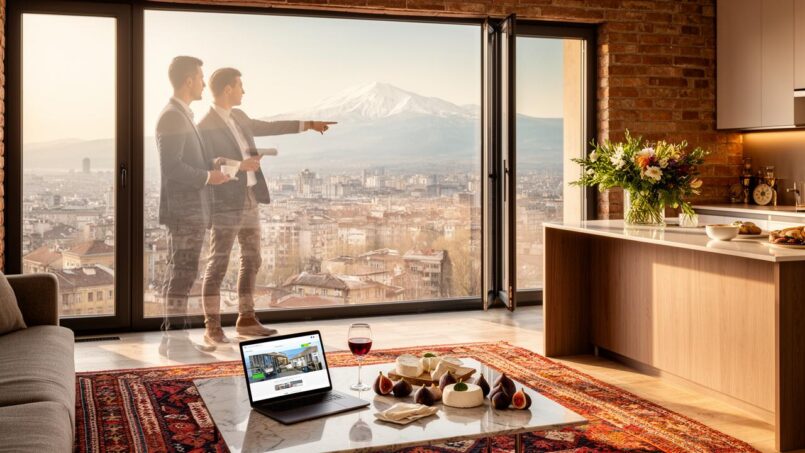
Moving abroad when you already have a good standard of living raises a real question: where to find a pleasant, safe, and tax-efficient environment, without sacrificing comfort? Living in Bulgaria when planning an expatriation: what base of life for an affluent couple? That is precisely the subject here, with a very concrete angle: how much to budget, where to settle, what level of comfort to expect, and under what residence status.
Bulgaria combines a very low cost of living, favorable taxation, access to the European market, sea/mountain climate, affordable real estate, and a competitive healthcare system. A couple with a comfortable income (pension, dividends, remote income) can live above the local standard for a budget often lower than that of an average life in Western Europe.
Understanding the “base of life” for an affluent couple in Bulgaria
Before choosing a city, you need to set the financial framework. Cost of living data shows that a couple can cover their basic needs, including housing, for around $1,400 to $2,200 per month depending on the city, but a truly comfortable or upscale lifestyle sets the bar more between $4,000 and $5,000.
Overall estimates for a couple show three levels:
| Standard of living | Monthly expenses for a couple (all cities, global averages) | Includes rent? |
|---|---|---|
| Average baseline | $1,417 | Yes |
| “Tight budget” baseline | $1,115.90 | Yes |
| Comfort / luxury | $4,406.90 | Yes |
If rent is removed, the same sources indicate about $1,798.10 for a couple on a standard plan and $3,556.90 for a “comfort/luxury” level. In other words, for an affluent couple aiming for a very high standard (quality apartment, frequent dining out, domestic travel, good private healthcare), a monthly budget of €3,000 to €4,500 depending on the city allows them to live well above the local average.
A family of four spends about €2,400 per month in Sofia, excluding rent, which is several times less than in London.
For an affluent couple used to a London, Paris, or Geneva lifestyle, Bulgaria therefore allows them to significantly “upgrade” their lifestyle for a lower budget.
Choosing your city: Sofia, Plovdiv, Varna, Burgas, or historic cities?
The question is not only “how much does it cost?” but also “what environment to live in?”. Feedback from expats and several rankings regularly place a core group of cities at the top for foreigners: Sofia, Plovdiv, Varna, Burgas, sometimes supplemented by Veliko Tarnovo, Ruse, or Stara Zagora. Recommendations for a British retiree also mention Varna, Plovdiv, Burgas, Shumen, Veliko Tarnovo for the combination of services / accessible hospitals.
A summary of city profiles for an affluent couple yields the following picture:
| City | Lifestyle profile | Average rent 1-bedroom center | Main advantages for an affluent couple |
|---|---|---|---|
| Sofia | Large capital, dynamic, tech, air hub | ~€698/month | Best private clinics, major international schools, cultural scene, restaurants, quick access to mountains |
| Plovdiv | Artistic, historic, gentler pace | ~€480/month | Strong cultural life, superb historic center, lower cost, good base for couples who love art and quiet gastronomy |
| Varna | Coastal city, lively summer, calmer winter | ~€450/month | Black Sea, parks, expat community, international schools, good private clinics, seaside atmosphere without excess |
| Burgas | Coastal, more family-oriented and orderly | ~€400/month | Seafront, large promenade, quiet residential neighborhoods (Sarafovo), convenient airport, moderate prices |
| Veliko Tarnovo | Historic mountain city | ~€300/month | Excellent value for money, spectacular setting, small tight-knit expat community, ideal for writers / quiet remote workers |
For an affluent couple, the choice mainly depends on three parameters: need for international infrastructure (healthcare, schools, transportation), preference for an urban or coastal environment, and tax and wealth project (buying property, investing, part-time or near-permanent residence).
Sofia: European capital at Balkan prices
Sofia concentrates most of the country’s upscale services: top-tier private hospitals, the widest selection of restaurants, shopping, coworking spaces, international schools, and the best air connectivity. For an affluent couple, it’s the city that most easily replicates a “Western European metropolis” lifestyle, but with Bulgarian costs.
The cost of living in Sofia illustrates this leverage effect well. Detailed estimates give:
| Item | Typical cost in Sofia |
|---|---|
| Monthly individual cost excluding rent | ~€678.8 |
| Monthly cost for a family of 4 excluding rent | ~€2,464.4 |
| 1-bedroom apartment center (average) | €612 to €698/month depending on source |
| 3-bedroom apartment center | €1,213 to €1,226/month |
| Monthly public transport pass | ~€25–26 |
| Utilities (85 m², elec/heating/water/waste) | around €130 |
| High-speed fiber internet | €12–15/month |
A couple settling in a sought-after residential neighborhood like Lozenets, Iztok, Oborishte, Ivan Vazov or higher up on the slopes of Vitosha (Boyana, Dragalevtsi) can budget, for a comfortable lifestyle, a total monthly budget between €1,800 and €3,500 depending on the standard of housing and frequency of outings. Specific estimates for a couple living in the mountain neighborhoods Boyana / Dragalevtsi mention a total budget of €1,175 to €1,800 per month for an already very comfortable level.
A couple with a net monthly income of €4,000 to €6,000 can live comfortably: large apartment or small house, fine dining several times a week, frequent trips to the sea or skiing, private healthcare, and memberships to upscale gyms.
Plovdiv: cultural sweetness of life at a gentle price
Plovdiv, the country’s second city, combines an exceptional historic center, a lively art scene, and a human scale that appeals to couples seeking a less hectic life than Sofia without giving up essential services. Rents are significantly lower.
Available data gives a clear picture:
| Indicator | Plovdiv |
|---|---|
| Cost of living index | 41.8 |
| Rent index | 11.8 |
| Cost of living + rent (index) | 28.1 |
| 1-bedroom apartment center | ~€408/month |
| 1 bedroom outside center | ~€280/month |
| Total monthly cost for one person | ~€714 |
| Total monthly cost for a family | ~€1,530 |
Compared to Sofia, Plovdiv offers about the same level of basic infrastructure (supermarkets, cafés, restaurants, medical services) but with fewer ultra-high-level clinics and a smaller international scene. For an affluent couple working remotely and not dependent on very frequent flights, it’s an attractive base: the old center (Old Town, Kapana) for ambiance, neighborhoods like Trakiya or Kamenitsa for a more modern or younger environment.
Varna and Burgas: the choice of the sea
Varna, the country’s third city, is simultaneously a seaside resort, a port, and a major urban hub. It is often presented as the natural choice for couples who love the sea and want a more relaxed environment than Sofia. Varna has international schools, good private clinics, a lively historic center, parks (Sea Garden), and sought-after residential neighborhoods like Briz, Chaika, or some “villa” areas overlooking the sea.
This vague term indicates that no precise number is provided to summarize the equation in the given content.
| Indicator | Varna |
|---|---|
| Cost of living index | 46.8 |
| Rent index | 13.0 |
| Cost of living + rent (index) | 31.4 |
| Total monthly cost per person | ~€765 |
| Total monthly cost for a family | ~€1,632 |
| 1-bedroom apartment center | ~€450–459/month |
| 1 bedroom outside center | ~€306/month |
For an affluent couple, a budget of €2,500 to €4,000 per month allows for a very high level of comfort, especially if you favor residential neighborhoods close to the beach (Briz, Chaika, villa areas of St Constantine or Cabacum Beach Residence). Burgas, further south, offers a slightly different profile: a more orderly, very family-friendly city, with a magnificent seaside park and neighborhoods like Sarafovo highly appreciated by expats for their modern residences with sea views.
Secondary cities: Veliko Tarnovo, Ruse, Stara Zagora, Blagoevgrad
Beyond this quartet, other cities play an interesting role, especially for a financially comfortable couple seeking either an extremely low cost of living or a very specific setting.
This fortified city offers rents around €300 for a good 1-bedroom in the center, a spectacular setting, and a small expat community. A couple can live very comfortably there with less than €1,800 per month, while enjoying authentic contact with rural Bulgaria.
Blagoevgrad and Ruse illustrate another facet: university or river towns with a moderate cost of living. In Blagoevgrad, for example, the numbers speak for themselves:
| Data | Blagoevgrad |
|---|---|
| Monthly cost of living (1 person) | ~$850 (rent included) |
| 1-bedroom rent | ~$350/month |
Stara Zagora stands out for a lower cost of living index (34.4) but a very high local purchasing power (index 103), meaning that for a couple with foreign income, the differential is even greater.
For a first foothold, the advice given to a British retiree still holds: avoid isolated villages or “resort complexes” empty off-season, and first prioritize a real city with hospitals, services, and a foreign community. You can always buy a country house later, once you’ve gotten to know the country.
Detailed budget: how much to live comfortably for two?
For an affluent couple, the question is not about “surviving” on a minimal budget, but about quantifying a standard of living that includes upscale housing, dining out, private healthcare, leisure, and travel. The available data allows sketching out a typical monthly “basket”.
Housing: rent or buy
Bulgaria remains a tenant’s market: supply is abundant, procedures are flexible (no requirement to show an employment contract or provide proof of income as in France), and negotiation is accepted. One or two months’ deposit is generally sufficient.
National averages, across all urban centers, give:
| Type of housing | Average monthly rent (Bulgaria, all cities) |
|---|---|
| 1 bedroom center | ~$310 |
| 1 bedroom outside center | ~$368 (different source), or ~$368 for the whole country |
| 3 bedrooms center | ~$805 |
| 3 bedrooms outside center | ~$592 |
But regional capitals are well above these averages. In Sofia, for example, the ranges are:
| Type | Central neighborhoods (Sofia) | Sought-after outer neighborhoods |
|---|---|---|
| 1 bedroom | €410–698/month | €323–538/month |
| 3 bedrooms | €1,213–1,226/month | €853–950/month |
In Varna and Plovdiv, the center hovers around €400–500 for a 1-bedroom, €650–900 for a well-located 3-bedroom. For an affluent couple, aiming for at least a well-placed 2 or 3-room is reasonable. So you can count, for comfortable housing:
– €600 to €1,200 rent in Sofia depending on neighborhood and size,
– €450 to €900 in Varna, Plovdiv, or Burgas for equivalent standing,
– €300 to €700 in secondary cities (Veliko Tarnovo, Ruse, Stara Zagora).
Real estate purchase in Bulgaria remains attractive in the medium term for couples wishing to settle there or stay frequently. Prices per square meter are significantly lower than in Western Europe, even if some prestigious neighborhoods of Sofia like Lozenets, Doctor’s Garden, or Boyana reach €3,000 to €4,000/m² for luxury properties.
Examples illustrate the range:
– Small village houses to renovate from €6,000–10,000,
– Already renovated 2-story houses around €21,000,
– 2-bedroom apartments in major cities, sold in 2021 between €156,000 and €200,000,
– Upscale houses or villas around €295,000,
– Very luxury properties exceeding one million euros in some areas of Sofia or on the coast.
For an affluent couple who prefers to stay mobile, renting nonetheless remains the most flexible option, as the market is clearly favorable to the tenant.
Utilities, transportation, leisure: moderate additions
To complete the housing item, utilities and everyday expenses remain reasonable.
Summary of key indicators from observed averages
Represents the main trend of the collected data, offering a synthetic overview
Analysis of the dispersion of values around the average, allowing assessment of data variability
Measure of confidence in the average data, based on sample size and standard deviation
| Item | Indicative monthly cost |
|---|---|
| Utilities 85 m² (elec, heating, water, waste) | €100–150 (national average), around €130 in Sofia |
| High-speed internet | €12–25 |
| Mobile phone (substantial data plan) | €10–20 |
| City public transport pass | €25–30 / person |
| Gym membership | €30–80 depending on standing |
| Cinema (ticket) | ~€7.50 |
An active couple who uses public transport a lot, goes to the gym, goes to the cinema, and keeps two full mobile plans will very hardly exceed €250–300 per month on this overall item, unless they deliberately choose premium options.
Food, restaurants, cafés: pleasure without blowing the budget
Groceries are also significantly cheaper than in Western Europe. National estimates for groceries are:
– around $218 per month per person,
– €170–250 in groceries for a couple who cooks regularly.
Eating out remains affordable:
| Type of meal | Indicative price |
|---|---|
| Inexpensive restaurant (simple dish) | ~18 leva (about €9) |
| Menu for two in a mid-range restaurant (3 courses) | ~70 leva (€35–46 depending on city) |
| Full meal for two with drinks at a neighborhood café/restaurant | around 50 leva (€25–26) |
| Meal in an upscale establishment (main course only) | 25–30 leva (€12–15), with total bill that can soar depending on wine |
A couple who dines out two or three times a week at good restaurants, visits cafés four times a week, and regularly has a drink at a bar, can get by with €300 to €600 per month on “social life” while maintaining a high level of enjoyment.
Healthcare: very cheap public, affordable private
On the healthcare side, Bulgaria offers an interesting combination for an affluent couple: moderate public contributions, access to well-trained doctors, and a performing private sector at a much lower cost than Western Europe or North America.
The main points:
– basic public care is very cheap: a few euros per consultation, hospitalization covered when you contribute,
– public hospitals however suffer from underfunding and sometimes outdated equipment, especially outside major cities,
– the best private clinics (especially in Sofia, Plovdiv, Varna) offer a standard comparable to Western EU, with many bilingual doctors,
– Bulgaria is already a recognized destination for medical tourism, notably in dentistry, ophthalmology, cosmetic surgery.
Typical costs give an order of magnitude:
| Medical procedure (private) | Price range |
|---|---|
| GP consultation | 50–100 leva (€25–50) |
| Specialist consultation | 100–200 leva (€50–100) |
| Hospitalization per night | from 200 leva (~€100) |
| MRI or CT scan | 300–800 leva (€150–400) |
| Surgery like appendectomy | 3,000–5,000 leva (€1,500–2,500) |
| Hip replacement | 15,000–20,000 leva (€7,500–10,000) |
Local or international private insurance, which most affluent expats choose, remains reasonable:
| Type of coverage | Typical cost |
|---|---|
| Basic local private health insurance | €120–240/year |
| Premium local or international plan | €360–600+/year |
| Health insurance via employer (supplementary) | ~€60/month |
For an affluent couple, it makes sense to keep or take out a good international insurance covering Bulgaria, or a high-end local private contract. Combined with public coverage (if you contribute locally), you get high-quality care for a fraction of the cost of a private system in France, Switzerland, or the UK.
Residence status and visas: what framework for an affluent couple?
For “living in Bulgaria when planning an expatriation: what base of life for an affluent couple?“, you also need to frame the stay legally. The situation is very different depending on whether you are an EU/EEA/Swiss citizen or a third-country national.
EU/EEA/Swiss citizens: freedom of movement
European Union, European Economic Area, and Swiss citizens do not need a visa to settle and work in Bulgaria. They benefit from freedom of movement and can register as “economically inactive” but self-sufficient residents, employees, self-employed, or retirees.
In this case, the main procedure consists of:
– arriving in Bulgaria,
– registering with the authorities (Migration) with a passport or ID card, rental contract or property title, proof of health insurance, and sufficient resources.
Bulgarian authorities ask for modest resources, often equivalent to the minimum wage, i.e., a few hundred euros per month. In practice, a couple with €100,000 in savings far exceeds the required threshold for a long-term residence permit.
Non-EU nationals: Visa D and residence permit
For couples where at least one member is not an EU citizen, the classic route is through the famous type D visa, a national long-stay visa (6 or 12 months) which then allows applying for a residence card in Bulgaria.
The procedure, in broad terms, follows a fairly strict sequence:
– 1. Choose the legal basis for stay It can be:
– a Bulgarian employment contract,
– university studies,
– family reunification (spouse of a Bulgarian or foreign resident, dependent parents, minor children),
– an investment or business project,
– or the status of a “financially independent” person / retiree (stable income from pension or assets abroad).
To obtain a D visa, you must submit to the consulate: application form, valid passport (3 to 18 months after departure, with blank pages), passport photos, criminal record extract, medical insurance (minimum €30,000 covering care, hospitalization, and repatriation), proof of financial means (generally 6 times the Bulgarian minimum wage in savings), proof of accommodation (reservation, lease, deed), and documents proving the purpose (employment contract, company registration, diplomas, marriage or birth certificate, investment certificates, etc.).
Foreign documents must be legalized (apostille) and translated into Bulgarian by a certified translator. Processing generally takes 30 to 60 days, with fees around $118 for a 6-month visa, $236 for one year.
3. Arrive in Bulgaria and register your address Once the D visa is issued, you must enter Bulgaria before it expires, then declare your address at the local municipality within 5 days of arrival.
4. Submit the residence application to the Migration Directorate (Ministry of Interior) You provide: passport, D visa, proof of housing, insurance, income, criminal record, along with all documents justifying the chosen category (employment contract, marriage certificate, etc.). Biometric data is collected (photo, fingerprints).
If your application is accepted, you receive a residence card valid for one year and renewable. This card is essential for opening a bank account or signing a long-term lease.
For affluent couples, two routes are particularly attractive:
– “Financially independent / retiree” category Designed for people who can prove a sufficient stable income (pensions, annuities, savings, dividends) above the Bulgarian subsistence minimum. For example, a foreign pension over €6,500 per year combined with equivalent savings is in principle sufficient to obtain a “retirement” visa.
– Investor program (permanent residence against investment) It allows, against an investment of at least €512,000 in a Bulgarian-approved investment fund, to obtain almost immediate permanent residence for the investor, their spouse, and dependent children. The investment must be kept for 5 years. Key advantage: no obligation to reside permanently in Bulgaria and permanent resident card renewable only every 5 years.
In all cases, the base of life for an affluent couple is easier to build in a large urban center, where access to administration, hospitals, notaries, and tax advisors is straightforward.
Taxation: major advantage for a high-income couple
One of the weighty arguments for a well-off couple remains taxation. Bulgaria applies a flat personal income tax rate of 10%, one of the lowest in the European Union. For a couple earning a good living from professional or capital income, the difference with progressive rate countries is substantial.
Income tax, dividends, capital gains
The basic rules are as follows:
Bulgarian tax residents are taxed at 10% on their worldwide income, while non-residents only pay 10% on their Bulgarian-source income. Dividends for individuals are subject to a 5% withholding tax. Self-employed benefit from a 25% deduction on gross receipts, lowering their effective rate to about 7.5%. Capital gains on a primary residence held for more than 3 years (one property per year) or on two other properties held for more than 5 years can be exempt. Gains from the sale of shares listed on the Bulgarian stock exchange or a regulated EU/EEA market are exempt.
For an affluent couple living on diversified income (salaries, dividends, rents, capital gains on securities), Bulgaria therefore offers a very competitive environment. By comparison, couples earning more than €4,000 monthly begin to feel strong tax savings compared to Spain, Germany, or the Netherlands, where rates climb quickly.
The maximum monthly burden of social security contributions is capped at around €500, regardless of income level.
Wealth and property taxation
Another advantage for an affluent couple: the near-total absence of wealth taxation:
– no wealth or net worth tax,
– no inheritance tax between spouses and direct descendants,
– low taxation for inheritances between siblings or their children (0.4–0.8% above 250,000 leva),
– moderate property taxes, between 0.15% and 0.30% of the property’s taxable value.
In a context where Bulgarian real estate remains relatively affordable, this makes building a portfolio of properties (primary residence, seaside apartment, even mountain home) very attractive without the tax pressure known in France, Belgium, or Spain.
Education, safety, environment: parameters not to be overlooked
Even for a couple without children, the overall quality of the living environment matters: stability, safety, climate, possibilities for hosting family, etc. On these points, Bulgaria offers a much more reassuring picture than some clichés suggest.
Safety: a generally calm country but vigilance still useful
International indices rank Bulgaria among the thirty most peaceful countries in the world, with low violent crime rates, and a stable political context as an EU and NATO member. For an affluent couple, the main threat is not violence but opportunistic offenses: pickpocketing in tourist areas, credit card fraud (skimming at ATMs), overcharging in certain bars in resort towns.
Do not leave valuables in the car, choose guarded parking, never leave your drink unattended, and be cautious in men’s clubs in resorts like Sunny Beach, Bansko, or Borovets, where exorbitant bills with threats have been reported.
On the other hand, affluent residential neighborhoods in Sofia (Lozenets, Boyana, Iztok, Oborishte…), Varna (Briz, Chaika, Sea Garden), or Burgas (Sarafovo) are generally very safe. An alarm connected to a security company costs only about twenty leva per month, and violent burglaries remain rare. For an affluent couple used to London, Paris, or Brussels, the daily feeling of safety is rather better, as long as common sense is applied.
International schools: an asset if you anticipate family or grandchildren
Even if a couple arrives without school-age children, the presence of a well-established network of international schools is a good indicator of a city’s service level, and can matter if you plan for grandchildren to arrive or extended visits from relatives.
Sofia has by far the densest offering:
– American schools (American College of Sofia, Anglo-American School of Sofia),
– British schools (British School of Sofia),
– French lycée,
– private bilingual Bulgarian-English schools.
Varna and Plovdiv each have a credible international school, suitable for children following a Cambridge or IB curriculum. These institutions welcome both expat children (multinational executives, diplomats, managers) and affluent Bulgarian families.
Tuition fees generally range between €5,000 and €20,000 per year per child depending on the school and level. For an affluent couple anticipating children, or simply wanting an international environment, Sofia, Varna, or Plovdiv are the most relevant options.
Building your “base of life”: concrete scenarios for an affluent couple
From these elements, we can outline a few representative scenarios for a couple with comfortable resources, whether still actively working (telecommuting, entrepreneurship) or retired.
Scenario 1: High-income telecommuting couple in Sofia
– Household net income: €8,000–10,000/month (IT, consulting, online business activity).
– Status: EU citizens or non-EU residents with residence card.
– Housing: 3-room apartment of 100–120 m² in Lozenets or near South Park, rent €1,200/month.
– Utilities and services (heating, electricity, water, internet, mobile, security, parking): €250–350/month.
– Groceries and restaurants: €700–900/month, with 3 to 4 weekly outings.
– Healthcare: high-end international private insurance €250/month for two.
– Transportation: one transport pass (€25), plus heavy use of taxis and occasional rental cars, €150–200/month.
– Leisure, sports, domestic travel (sea, mountains): €400–600/month.
The monthly budget for a very comfortable lifestyle corresponds to less than half of the couple’s income.
Scenario 2: Affluent retired couple in Varna
– Income: €3,500–4,500/month, British or European pension.
– Status: residence for “financially independent persons” or “retirees”.
– Housing: 2-bedroom with sea view in Briz or Chaika, rent €800/month.
– Utilities, internet, mobile: €220–280/month.
– Food + restaurants: €600–800/month, including daily coffees and weekend dining out.
– Healthcare: local intermediate private insurance, about €1,000/year for the couple (€80–90/month), plus public contributions if residence.
– Transportation: little public transport, rather a few taxis and one car, €150–200/month.
– Leisure, getaways, family visits: €400–600/month.
This couple has a monthly budget of €2,300 to €2,700, well above the local standard, allowing them to save or support their family each month.
Scenario 3: Investor couple with permanent residence
– Investment: €512,000 in a Bulgarian-approved fund to obtain permanent residence (Golden Visa).
– Income: large portfolio of assets and companies, over €15,000/month.
– Base of life: upscale house in Boyana or Dragalevtsi, possibly a pied-à-terre on the coast.
– Advantages: permanent resident card for the couple and children, renewal only every 5 years, no continuous residence obligation.
Current expenses remain similar to those of an affluent couple in Sofia, simply with a higher standing level (villa with garden, domestic staff, etc.). Such a couple rarely sets a fixed “budget”, but it is instructive to note that a lifestyle costing €12,000–15,000/month in London or Zurich can be replicated for €5,000–7,000/month in Bulgaria.
Conclusion: define your base of life, then choose your city
Living in Bulgaria when planning an expatriation: what base of life for an affluent couple? In light of the numbers and examples, several conclusions emerge.
First, Bulgaria allows a couple with comfortable income to live not only “well”, but often in discreet luxury compared to the local standard, without breaking the bank. In most major cities, a budget of €3,000 to €4,000 per month is enough for a very comfortable lifestyle, including housing. In secondary cities, €2,000 to €2,500 monthly can already offer an impressive standard.
Second, the choice of city must match a clear project:
Discover the best cities in Bulgaria to settle in according to your priorities: modern capital, seaside, or cultural heritage.
Complete European capital with high-level private hospitals, optimized taxation through company structure or freelancer status, international schools, and an airport connected to all of Europe.
Coastal cities ideal for couples wanting the sea every day, with a sufficient level of infrastructure and a very reasonable cost of living.
Cultural and historic destinations for those who value quality of life, charm, and an even lower cost, perfect for telecommuting or active retirement.
Finally, the combination of a 10% tax rate, decent safety, moderate real estate costs, and an affordable private healthcare system makes Bulgaria a strategic base of life for an affluent couple wanting to anchor themselves in the European Union while preserving their financial freedom. It remains to define, according to personal priorities, whether this base will be urban, coastal, mountainous… or a clever mix of all three.
A wealth management project or a question? Contact us now to speak with a wealth management expert.
Disclaimer: The information provided on this website is for informational purposes only and does not constitute financial, legal, or professional advice. We encourage you to consult qualified experts before making any investment, real estate, or expatriation decisions. Although we strive to maintain up-to-date and accurate information, we do not guarantee the completeness, accuracy, or timeliness of the proposed content. As investment and expatriation involve risks, we disclaim any liability for potential losses or damages arising from the use of this site. Your use of this site confirms your acceptance of these terms and your understanding of the associated risks.

Cyril Jarnias is an independent expert in international wealth management with over 20 years of experience. As an expatriate himself, he is dedicated to helping individuals and business leaders build, protect, and pass on their wealth with complete peace of mind.
On his website, cyriljarnias.com, he shares his expertise on international real estate, offshore company formation, and expatriation.
Thanks to his expertise, he offers sound advice to optimize his clients' wealth management. Cyril Jarnias is also recognized for his appearances in many prestigious media outlets such as BFM Business, les Français de l’étranger, Le Figaro, Les Echos, and Mieux vivre votre argent, where he shares his knowledge and know-how in wealth management.





