
 Published on and written by Cyril Jarnias
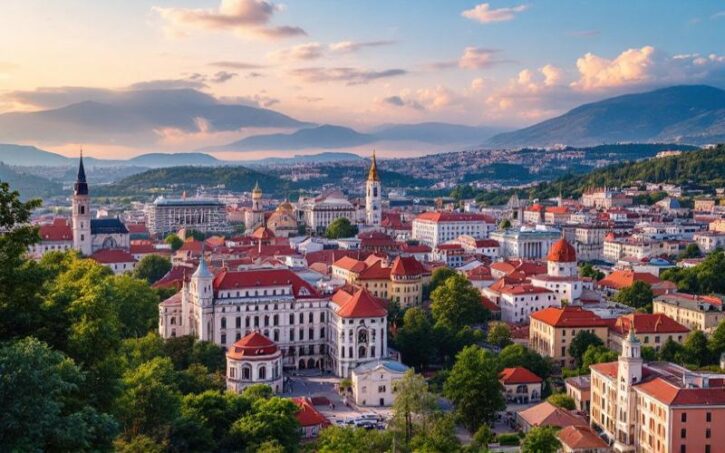
Bulgarian real estate has long been viewed as a niche market, cheap and peripheral in Europe. Entry into the eurozone, rapid wage growth, the upscaling of tourism, and the rise of digital services have changed the equation. For a business leader considering setting up a subsidiary, establishing a back office, relocating part of their production, or simply investing some of their cash reserves in property, the question is no longer whether Bulgaria is interesting, but where to position themselves: Sofia, Varna, or Plovdiv.
The corporate income tax rate in Bulgaria is 10%, a remarkably low rate compared to Western Europe.
Why Bulgaria Is on the Radar of Business Leaders
Before comparing Sofia, Varna, and Plovdiv, it is essential to understand why the country is attracting so many investors.
The first driver is macroeconomic. Real estate prices have more than doubled nationally over the past ten years, with even more pronounced increases in major cities. In Sofia, the average price per square meter has nearly doubled since 2020, rising from around €1,000–1,100 to a range between €1,940 and over €2,200, with some premium districts far exceeding €2,500 and reaching up to €3,000 per square meter. In Varna, the progression is even more spectacular: from €837/m² in 2020 to €1,550–2,500/m² in 2026, a surge of approximately 185%. Plovdiv has seen a more measured but steady increase, from €800/m² to €1,150–1,500/m², or about +75%.
Bulgaria remains much cheaper than Western capitals. The national average price is around €1,650/m², secondary cities show €700 to €1,300/m², and rural areas drop to €300–500/m². The cost gap is considerable compared to Paris, Berlin, or Vienna, whether for purchase or rental.
The second reason lies in rental yields. Figures converge around a national average gross yield of 4.3–4.6%, with the majority of properties between 3.5% and 6.5%. In major cities, studios and small apartments regularly achieve 5–6% gross, or even higher in certain segments. In tourist areas, short-term rentals can target 8–12% gross on the coast and up to 11–16% in well-managed mountain resorts. For comparison, in many Western European capitals, exceeding 3% gross on residential has become challenging.
Bulgaria imposes a 10% corporate tax, a 10% personal income tax, and a 5% tax on dividends.
Finally, the country has established a comprehensive set of investment incentives: investment certificates (Classes A, B, C, and Priority Projects), the possibility of directly acquiring public land under certain conditions, training subsidies, corporate tax exemptions of up to 100% in high-unemployment regions for manufacturing activities, accelerated depreciation on equipment, specific VAT schemes for large projects, and even partial reimbursement of social security contributions for new jobs as part of certified projects.
In this context, Sofia, Varna, and Plovdiv play three different, complementary roles for a group looking to structure a multi-site presence.
Sofia: Political Capital, Tertiary Hub, and European Showcase
Sofia remains the country’s economic heart, with a dominant weight in offices, financial services, IT, and high-end logistics. In the office sector, the modern stock reaches nearly 1.9 million m² of speculative space, for a total of over 2.3 million m² (classes A and B combined). By mid-2025, the supply for speculative lease exceeded 2.47 million m², evidence of a market that has reached a high degree of maturity.
Offices: A Deep Market, but Selective
Vacancy figures paint a contrasting picture. As of the end of March 2026, the overall vacancy rate in Sofia is around 11.8%, with 278,000 m² available. On the surface, a high level. But in the central business district, vacancy drops to 5.3%, and some prime areas—like the Tsarigradsko Shose corridor—are virtually full. More than 40% of vacant space is concentrated in just ten projects, primarily older or poorly located buildings.
This segmentation is reflected in rents. Prime offices in downtown lease for around €20/m² per month. More broadly, asking rents for Class A buildings range between €14 and €17/m² excluding VAT, with prime values potentially exceeding €18/m², or even €20/m² for the best CBD assets. Class B buildings transact between €9 and €11/m², with greater rent stability.
Prime rents are expected to increase by nearly 9% in Sofia, the most dynamic growth in Southeast Europe, supported by limited supply and sustained demand.
For a business leader seeking a regional headquarters, a shared services center, an IT hub, or a financial back office, Sofia has three decisive advantages: a large talent pool, a deep office market capable of absorbing significant square footage, and an image as a European capital that reassures clients and shareholders. The major IT and financial groups remain the locomotives of demand, even though the market is becoming more discriminating toward buildings that do not meet ESG or hybrid criteria.
Logistics and Industrial: A Regional Hub Under Pressure
On the logistics side, Sofia concentrates by far the largest stock in the country, with approximately 2.376 million m² of warehouses and industrial space, including 805,000 m² specifically dedicated to speculative leasing. The vacancy rate, below 1% in the modern segment (0.77%), indicates a tight market. Prime rents for logistics platforms over 10,000 m² hover around €5.8/m² excluding service charges, while standard warehouses transact around €5.2/m² for the modern segment and €4.7/m² for more conventional assets.
Recent transactions illustrate interest in this segment: a take-up volume of approximately 43,000 m² in the first quarter of 2026, with demand coming mainly from retail (46%), industry (38%), and, to a lesser extent, wholesale trade. The lack of quality supply, however, hinders the signing of large leases: most searches are for surfaces under 2,000 m², due to a shortage of larger availabilities.
For an industrialist or a distributor, parks like Industrial Park Sofia – Bozhurishte or CTPark Sofia West are at the heart of the strategy. The former, developed on nearly 3 million m², has already attracted more than 40 investors in automotive, high technology, logistics, and production, creating over 2,000 jobs and investing more than 600 million leva. The latter, directly connected to highways toward Greece, North Macedonia, Serbia, and Western Europe, already hosts major players like Metro with a 25,000 m² warehouse.
Yields for prime logistics assets in Sofia are around 7.25%, stable, indicating a still-attractive risk/return profile compared to more compressed Western markets.
Residential: The Most Expensive Market, but Still Profitable
On the residential side, Sofia represents the top of the Bulgarian range. According to various sources, the average price is between €1,900 and €2,500/m², with significant variations by neighborhood. The city center and premium areas like Lozenets can easily exceed €2,000–3,000/m². Well-located studios and small apartments often approach or exceed these levels.
For a business leader considering purchasing company housing, a rental portfolio, or apartments for expatriate employees, a few figures are enlightening. A one-bedroom apartment in the center costs around €200,000 and rents for €700/month, for a gross yield of about 4.2%. A central two-bedroom at €291,000 rented for €990/month gives a similar yield, around 4.1%. The Mladost district, more peripheral but highly sought after by tech workers, offers studios at €117,400 rented for €410/month, yielding close to 4.2–4.4% gross.
Sofia offers gross yields of 4.1 to 4.5% over the long term (average 4.2%). In short-term rentals, some properties in the city center achieve 10 to 12% gross yield, with complex management and regulatory risks. Net yields are typically 1.5 to 2 percentage points lower, remaining competitive within a 10% tax framework.
In Which Cases Should a Business Leader Bet on Sofia?
A business leader has every reason to consider Sofia in several specific cases.
First, when looking to establish a regional headquarters or a decision-making center. The capital concentrates administrations, large companies, the most qualified talent, and the service ecosystem (lawyers, consultants, banks, funds). The depth of the office market allows for absorbing needs of several thousand square meters, which is more difficult in Varna or Plovdiv.
Second, when opening an IT hub, a shared services center, or a banking or insurance back office. The modern office market, combined with a significant pool of graduates, makes it the most natural choice, even if competition for talent is fiercer and salaries higher than in the provinces.
Finally, for a real estate investor targeting a moderate risk profile, with significant potential for capital appreciation and good exit liquidity, Sofia remains the central market. Prices have already doubled in five years, but projections for 2026–2028 continue to anticipate annual increases of 5–10%, supported by income growth and convergence with the rest of the eurozone.
However, Sofia is not the answer to everything: to optimize costs, leverage the tourism boom, or anticipate the next wave of growth, Varna and Plovdiv offer distinct angles of attack.
Varna: Business-by-the-Sea, Between Tourism, Port, and Tech
Varna occupies a unique position in Bulgaria. The country’s third-largest city and main coastal metropolis, it combines a major commercial port, a top tourist destination, a university hub with five universities, and an emerging hub for digital services. It is also the city whose prices have exploded the fastest in recent years, driven by the anticipation of the euro, the upscaling of the coast, and the transformation of its waterfront.
A Residential Market Boosted by the Sea and Growth
The figures speak for themselves. The square meter went from about €837 in 2020 to a range between €1,550 and €2,500 in 2026, a rise of around 185%. Over the year 2025, prices increased by about 14–19% depending on the neighborhood, with an acceleration for existing homes (+19.3%) and new apartments (+21.1%). In areas like Sea Garden or the historic Greek quarter, five-year increases exceed 40%.
A quick overview illustrates the yield structure:
| Segment in Varna (Q3 2025) | Average Price (€) | Monthly Rent (€) | Gross Yield (%) |
|---|---|---|---|
| Studio (all neighborhoods) | 78,000 | 300 | 4.62 |
| 1 bedroom (all neighborhoods) | 127,000 | 400 | 3.78 |
| 2 bedrooms (all neighborhoods) | 170,000 | 600 | 4.24 |
| 3 bedrooms (all neighborhoods) | 210,700 | 750 | 4.27 |
| 2 bedrooms – Briz | 258,000 | 1,100 | 5.12 |
| 2 bedrooms – center | 250,000 | 800 | 3.84 |
The average yield for the city hovers around 4.2–5.1%, with better performance for reasonably sized properties in neighborhoods like Briz, Levski, or certain coastal areas. Rents for a well-located two-bedroom vary between €600 and €1,100/month, and some investors combine long-term rental off-season with short-term renting in summer.
Increase in rental demand on Varna’s northern coast between Q1 2025 and Q1 2026, with an average yield of 7.2% and an entry price starting at €85,000.
Tourism and Port: Two Drivers for Commercial Real Estate
Beyond residential, Varna offers two structural advantages for a business leader seeking a lever combining real estate and economic activity: tourism and the port.
The Varna region welcomed approximately 1.8 million tourists in 2024, with 3–4% growth expected in 2025 and 5–7% in 2026, driven by entry into the Schengen area and the elimination of long waits at land borders for Romanian and other EU visitors. Romania already accounts for 35% of summer overnight stays in the region. Despite a seasonal labor shortage (8,000 to 10,000 unfilled positions, and a vacancy rate of 18–22% for skilled positions), the trajectory remains solid.
For an investor or a hotel group, the consequence is clear: occupancy rates climb above 80% in summer for short-term rentals, with gross yields potentially reaching 12%—and even higher in certain highly sought-after micro-locations. Over the year, occupancy rates for short-term rentals range between 35–50% on the coast, 57% in Varna for well-managed properties, with marked seasonality but significant annualized income.
An investment program of more than €300 million is modernizing the port with a new terminal, a 30% capacity increase, and land redevelopment.
For a logistics group, a shipping company, or a port operator, this creates an environment where commercial real estate (warehouses, offices, urban logistics space) will increase in value over time. The early years are often the most interesting for positioning, before rent increases fully reflect the upscaling.
Office and Tertiary: A Smaller Market, but Tight
Varna’s office market is smaller than Sofia’s or even Plovdiv’s, but it shows remarkable dynamics. The modern stock reaches approximately 277,100 m², with vacancy dropping from 10.6% at the end of 2024 to 4.2% at the beginning of 2026, a historic low. This vacancy compression is due to very limited new supply—only two small buildings delivered between 2025 and early 2026—and sustained demand, particularly from the industrial and energy sectors (nearly half of demand over the past two years), followed by professional services, IT, and logistics.
Rents have adjusted upward, around €10/m² for Class A and €6/m² for Class B. With only 17,200 m² of new offices under construction and some major projects expected, the market should remain tight, benefiting owners of well-located new buildings.
For a business leader looking to set up a small tech team, a regional sales office, or a human-scale support center, Varna offers an interesting alternative to Sofia thanks to lower costs, an attractive “quality of life” image for recruiting, and a market that is not saturated with quality offices.
In Which Cases Should a Business Leader Target Varna?
There are several strategic profiles where Varna deserves special attention.
The first concerns activities linked to tourism, leisure, hospitality, or food service. For a hotel group, a seasonal rental platform, a vacation residence operator, or a travel player, owning assets directly or through an investment vehicle in Varna allows coupling rental income with exposure to rising values on a coast still undervalued compared to the Mediterranean.
The second profile is that of companies that want to combine an attractive living environment with moderate costs for sales, customer service, or software development teams. Varna already attracts a growing population of remote workers and digital nomads; for a company, opening an office there facilitates recruiting profiles looking for the sea and a dynamic city that is cheaper than Sofia.
The third use case targets groups involved in maritime logistics, international trade, or port services. The ongoing transformation of the port, supported by the European Union, suggests increasing valuations for real estate assets near the terminals, as well as increased demand for offices and warehouses well connected to new infrastructure.
For a pure investor, Varna suits those who accept slightly higher volatility, a “hotter” market—some speak of an overheated market in certain segments—but with superior yield potential, especially by combining long-term and short-term rentals.
Plovdiv: Industrial and Academic Hub, Future “Sweet Spot” for Investment
Plovdiv, the country’s second-largest city by population, presents a very different face. Located on the strategic Sofia–Istanbul axis, backed by the Thrace economic zone which concentrates numerous manufacturing sites, the city appears as a compromise between Sofia and Varna: cheaper than the capital, less volatile than the coast, but with a solid economic base and appreciation prospects driven by massive infrastructure projects.
A Secondary Office Market, but Very Deep for Its Size
For a non-capital city, Plovdiv boasts impressive office volumes. The total stock of Class A and B office space exceeds 290,000 m², with a majority share of Class A buildings (about 56% of the stock). Some recent surveys even raise the supply to over 324,000 m² of speculative office space, a year-on-year increase of around 15%, evidence of a sustained construction cycle.
The most striking feature is the vacancy rate, which has fallen to 7.8%, its lowest level since 2019, after years where demand absorbed almost everything built. This demand is dominated, by far, by IT and outsourcing: over the past two years, these sectors have accounted for more than 70% of net take-up, and up to 88% of net occupied space over the last three years according to some reports. In other words, without tech and BPO companies, there would be almost no vacancy in Plovdiv.
Rents, meanwhile, remain contained compared to Sofia while still increasing. Class A offices lease between €10 and €11/m², Class B around €5–6/m². This combination of moderate rents, low vacancy, and a pipeline of new projects (43,200 to 55,200 m² under construction, mostly Class A) signals a healthy market where supply follows demand without excessive overheating.
Residential Real Estate: High Yields for Reasonable Entry Prices
Plovdiv occupies a middle position on prices, between Sofia and Varna, with a more affordable entry ticket. The average price ranges between €1,150 and €1,500/m², with a reported average around €1,520/m² in early 2026 and an annual increase of about 13%. This places the city in a regime of sustained but less violent appreciation than on the coast.
With an average yield of 4.7% and many segments exceeding 4.5–5% gross, Plovdiv stands out as one of the most attractive cities in Bulgaria for rental investment.
The aggregate average yield is approximately 4.7%, placing Plovdiv among the most performing markets in the country.
Several segments show yields above 4.5–5% gross, reflecting a diversity of opportunities.
| Segment in Plovdiv (all neighborhoods) | Average Price (€) | Monthly Rent (€) | Gross Yield (%) |
|---|---|---|---|
| Studio | 77,200 | 300 | 4.66 |
| 1 bedroom | 116,200 | 410 | 4.23 |
| 2 bedrooms | 160,000 | 560 | 4.20 |
| 3 bedrooms | 226,600 | 650 | 4.13 |
| 1 bedroom – Vastanicheski/Kiuchuk Parizh | 92,000 | 475 | 6.20 |
| 2 bedrooms – Hristo Smirnenski | 164,000 | 660 | 4.83 |
Some neighborhoods popular with young professionals, such as Vastanicheski/Kiuchuk Parizh, show exceptional yields—over 6% gross for a two-bedroom around €92,000. Studios and small units generally offer the best value for money, in a market where rental demand is driven by students, workers in the Thrace economic zone, and an expanding urban middle class.
For a business leader looking to build a rental park to house employees, provide student housing in partnership with a university, or simply create a pocket of recurring income with moderate risk, Plovdiv represents a “sweet spot”: prices remain reasonable, demand is structural, and the city is not subject to the cyclical excesses of the coast.
Infrastructure: Four Projects That Change Everything
The element that truly distinguishes Plovdiv, and that will be of primary interest to a business leader with a 5-to-10-year vision, are the major infrastructure projects planned by 2030. A local expert, Miroslav Yazov, identifies four as transformative.
The first is the extension of Saint Petersburg Boulevard to the ring road, via the Trakia district and the Yagodovo road. This new artery is expected to decongest several major axes, reduce travel times by about 40% between the center and Trakia, and most importantly, reconnect this neighborhood long perceived as peripheral to the city core. Estimates suggest a 15–20% increase in real estate prices in Trakia linked to this accessibility improvement.
The project plans new direct connections to Milan and Bratislava, with up to eight destinations eventually. Despite current freight of 400 to 600 tons per year without regular cargo flights, the opening to European centers strengthens attractiveness. Properties within a 15 to 20 km radius of the airport should see increased demand, particularly in hospitality, short-term rentals, and commercial real estate, with typical annual appreciations of 8 to 12% for nearby assets.
The third project is the widening of the ring road in the area known as the Rhodope collar. By facilitating travel between the city and surrounding villages, it creates development potential for residential subdivisions, warehouses, and small commercial zones on the outskirts. Estimates suggest 10–15% increases for houses and land in villages directly connected to the new ring road—an interesting signal for a group that might want, for example, to develop an industrial campus or a logistics park at low land costs.
The fourth, and undoubtedly the most structurally significant, is the complete overhaul of the central station and the Petar Dinekov district, involving the demolition of an old urban fabric behind the station to create a true modern business district, combining offices, retail, housing, and modernized transport infrastructure. Around this new business center, projections speak of a 25–30% increase in office values and around 20% for housing within a 500-meter radius. Comparable projects in Prague or Budapest generated returns of 30–45% for early investors.
Collectively, experts estimate that all these transformations could drive an average price growth of 10–15% across different real estate segments in Plovdiv, not in a speculative manner, but as a translation of real value creation: better accessibility, better urban environment, increased attractiveness for businesses.
Industrialization, Workforce, and Costs: The Winning Equation
Plovdiv would be just a nice real estate story without a solid economic foundation, but that foundation exists. The city leads national statistics for residential construction: in the third quarter of 2025, 442 building permits for residential buildings were issued, 12% more than the previous quarter, for 3,744 housing units (+34%), an unparalleled pace in the country. Plovdiv even surpasses Sofia, Varna, and Burgas in the number of residential buildings started.
Job postings in logistics and supply chain jumped 34% year-on-year in the third quarter of 2024 in the Thrace economic zone.
For an industrialist, Plovdiv offers a rare triptych: land and rents cheaper than Sofia, a qualified workforce with a cost of living approximately 40% lower than the capital, and an already structured ecosystem for export and logistics.
In Which Cases Should a Business Leader Target Plovdiv?
For a business leader, Plovdiv becomes a logical choice in several scenarios.
The first, obvious one, is manufacturing production and regional logistics. A company looking to relocate part of its production to Europe, capitalize on the nearshoring trend, and position itself on the Sofia–Istanbul axis has every interest in studying the industrial parks in the Plovdiv area rather than the more expensive and saturated outskirts of Sofia.
The second concerns IT or service companies that need a second site to diversify their recruitment and cost risks. Figures show that many IT investments that would previously have landed in Sofia are now being redirected to Plovdiv or other Central European capitals, due to a lack of available talent and office space at reasonable conditions in the Bulgarian capital. Plovdiv, already consolidated as the main regional tertiary hub, directly benefits from this movement.
The third profile is that of the real estate investor looking for a combination of attractive rental yield (4.7–5.5% gross, or even higher in certain micro-markets) and medium-term appreciation potential fueled by infrastructure. Unlike Varna, Plovdiv is less exposed to tourism cycles; unlike Sofia, entry prices remain affordable, allowing the purchase of multiple units to diversify geographic and rental risk.
Sofia, Varna, or Plovdiv: How to Choose as a Business Leader?
For a business leader, choosing between these three cities is not just about comparing yields. It involves aligning operational strategy, talent profiles, overall cost of setup, and holding horizon for real estate assets.
A practical way to think about the trade-off is to reason in terms of use cases.
Use Case 1: Regional Headquarters, High-Value Services, Corporate Image
In this scenario, Sofia is almost unavoidable. It concentrates nearly all major institutions, most of the talent in finance, law, consulting, and IT, and offers prime offices suited to the requirements of international groups. Higher rents are offset by the depth of the market, access to decision-making networks, and superior exit liquidity on Class A assets.
Varna and Plovdiv can play complementary roles, offering secondary sites for certain teams, but the main showcase will logically remain in Sofia.
Here, the reasoning changes. Sofia remains a natural choice for a large services center, but competition for talent is intense and costs are rising. Plovdiv, with its academic pool and lower cost of living, presents itself as a serious candidate for a BPO or multilingual support center, especially since IT and outsourcing are already heavily present there.
Varna can be an interesting option if the group relies on the sea to attract international talent, but its BPO ecosystem is less developed than Plovdiv’s.
Use Case 3: Production Unit, Logistics, Regional Warehouses
If the goal is industrial or logistics, Plovdiv takes the lead. Its position on the Sofia–Istanbul corridor, proximity to the Thrace economic zone, and projects to improve the ring road and airport make it a prime location for a factory, distribution center, or logistics platform. Land costs remain moderate, while modern warehouse rents in Sofia are tightening.
Sofia remains competitive for national or regional logistics hubs oriented toward domestic consumption or flows to the west, thanks to its industrial parks and airport, but for an industrialist who must balance cost and expansion capacity, Plovdiv offers more room for maneuver.
Varna is particularly competitive when the value chain is linked to the port or tourism, especially in sectors such as import-export, maritime distribution, cruise logistics, or tourist retail.
Use Case 4: Wealth Optimization and Residential Yield
On the residential side, the choice depends on risk profile and rental strategy.
Sofia offers the most balanced combination of stability, liquidity, and potential capital appreciation, with gross yields of 4–4.5% and a deep market. It suits a group that wants to own a few homes for its expatriates or a diversified portfolio in a solid metropolis.
Plovdiv highlights its more generous yields (around 4.7–5.5% on certain segments) and appreciation potential driven by infrastructure. For a business leader wanting to build a “cash-flow” rental portfolio with a long holding horizon, the city is very well positioned.
Varna suits investors willing to accept high exposure to tourism and seasonality in exchange for superior yields, particularly via short-term rentals and work-from-beach offerings. Ideal for groups already active in tourism or wishing to offer their employees seaside work stays with a portfolio of owned properties.
Use Case 5: Tax Strategy and Investment Incentives
Regardless of the city chosen, Bulgaria offers a wide range of incentives for industrial or service projects that create jobs. However, certain advantages are easier to mobilize in regions with higher unemployment or in areas targeted by the state for industrialization.
A major project in production or logistics in Plovdiv or its region can potentially benefit from corporate tax exemptions of up to 100%, provided it meets the criteria (eligible activity, number of jobs created, reinvestment of tax savings into admissible assets, location in a municipality where unemployment exceeds the national average by 25%). Smaller projects can use so-called “de minimis” regimes, up to €200,000 in cumulative aid over a given period.
In Sofia, these schemes remain available, but competition for public resources is higher; in Plovdiv and other regional cities, the political will to attract investors may translate into greater proactivity from local authorities to support procedures, adapt infrastructure, or accelerate processes.
Conclusion: Think of Bulgaria as a Portfolio, Not a Single Bet
For a business leader accustomed to thinking in geographic silos, the mistake would be to reduce Bulgaria to a single point on the map. Sofia, Varna, and Plovdiv play complementary roles in the national economy and each offers a specific real estate profile: tertiary capital, sea–tourism–port hub, and industrial–academic center.
Rather than choosing a single location, a group can spread its activities across Bulgaria: a headquarters in Sofia, a shared services center or R&D hub in Plovdiv, a tourism or logistics platform in Varna, and leverage the tax flexibility and investment incentive programs to optimize its overall strategy.
In a context where the adoption of the euro, economic convergence, and tourist flows are structuring an expected 6–10% annual growth in real estate prices, the window is not eternal. Price levels remain low by European standards, yields are still higher than in the West, and the tax system remains among the simplest in the EU.
For a business leader who knows how to read the map before the crowd, Sofia, Varna, and Plovdiv are no longer exotic names but three concrete levers to mix operational performance, cost optimization, and long-term real estate value creation.
Have a wealth project or a question? Contact us now to speak with a wealth management expert.
Disclaimer: The information provided on this website is for informational purposes only and does not constitute financial, legal, or professional advice. We encourage you to consult qualified experts before making any investment, real estate, or expatriation decisions. Although we strive to maintain up-to-date and accurate information, we do not guarantee the completeness, accuracy, or timeliness of the proposed content. As investment and expatriation involve risks, we disclaim any liability for potential losses or damages arising from the use of this site. Your use of this site confirms your acceptance of these terms and your understanding of the associated risks.

Cyril Jarnias is an independent expert in international wealth management with over 20 years of experience. As an expatriate himself, he is dedicated to helping individuals and business leaders build, protect, and pass on their wealth with complete peace of mind.
On his website, cyriljarnias.com, he shares his expertise on international real estate, offshore company formation, and expatriation.
Thanks to his expertise, he offers sound advice to optimize his clients' wealth management. Cyril Jarnias is also recognized for his appearances in many prestigious media outlets such as BFM Business, les Français de l’étranger, Le Figaro, Les Echos, and Mieux vivre votre argent, where he shares his knowledge and know-how in wealth management.





