
 Published on and written by Cyril Jarnias
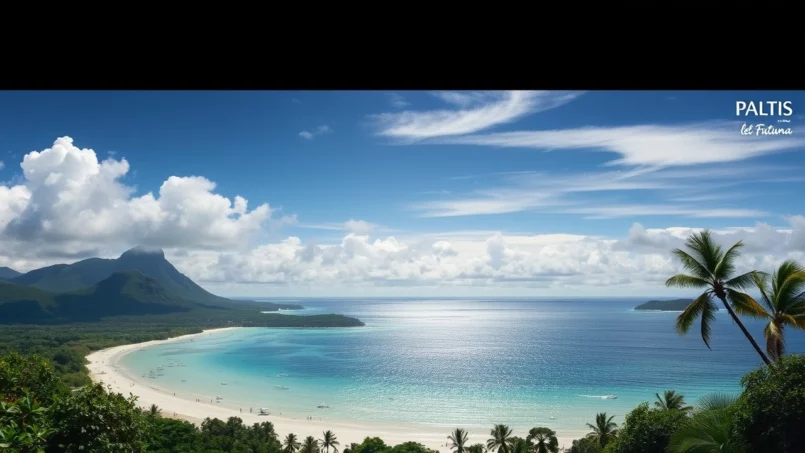
Choosing to settle in Wallis and Futuna is opting for a peaceful end of the world, far removed from the hustle and bustle of major cities. This French Pacific territory is often presented as one of the safest places on the planet, with low crime, a welcoming population, and a tranquil pace of life. However, a smooth relocation doesn’t happen by accident: geographical isolation, natural risks, a limited healthcare system, and modest infrastructure require thorough preparation.
This article provides a comprehensive analysis of safety conditions for a relocation project in the archipelago. It addresses everyday security, natural risks, healthcare, transportation, infrastructure, as well as the local legal and cultural framework. The goal is to provide you with concrete information to prepare for your move in an informed and controlled manner.
A very safe, but isolated territory
Wallis and Futuna is a French overseas collectivity located in the South Pacific, between Fiji, Tonga, Samoa, Tuvalu, and Tokelau. The territory consists of two main groups: the Wallis Islands (Uvea) to the northeast, and the Futuna and Alofi Islands to the southwest, separated by about 160 miles of ocean. The capital, Mata-Utu, is located on Wallis Island.
With just over 11,000 inhabitants recorded in 2023, the territory is sparsely populated. The economy relies mainly on subsistence farming, fishing, and financial support from France. This low population density, combined with strong community cohesion and a vibrant traditional culture, significantly contributes to the overall climate of safety.
Wallis and Futuna is ranked among the world’s safest destinations for travelers.
That said, the security of a relocation is not limited to the absence of crime. Isolation (over 6,200 miles from mainland France), the small size of the infrastructure, dependence on a few air and sea connections, and exposure to natural hazards demand much more careful preparation than for a move within Europe.
Crime and public peace: a very calm environment
The first thing that strikes newcomers is the feeling of calm. Residents often describe their territory as “almost crime-free.” Law enforcement – the National Gendarmerie – is present, but in a climate of proximity rather than confrontation.
Data indicates a low crime rate, with no notable series of violent assaults or serious incidents. Occasional thefts, petty larceny, or damage occur, but nothing systemic. The streets are generally not perceived as dangerous, and major social tensions are rare.
To properly contextualize the environment, it can be summarized as follows:
| Aspect | Situation in Wallis and Futuna |
|---|---|
| Violent crime | Rare, no reported upward trend |
| Petty theft / pickpocketing | Occurs marginally, mainly concerning unattended belongings |
| Demonstrations | Occasional, mostly in Mata-Utu, generally peaceful |
| Mass tourism | Non-existent, limiting certain types of crime |
| Law enforcement | National Gendarmerie, present on Wallis and Futuna |
This very positive picture does not exempt one from following common-sense rules. Authorities and travel advisory bodies recommend, as everywhere, avoiding isolated areas at night, not flaunting valuables, and keeping an eye on one’s belongings. Crime remains low, but it is not completely non-existent.
Daily safety tips for expatriates
Settling in for the long term requires turning these general recommendations into practical habits. The local context is calm, but services are limited; it is therefore better not to unnecessarily increase risk.
Concretely, several simple habits help preserve near-total peace of mind:
On a personal level, it is wise to maintain an attitude that is vigilant but relaxed. It’s best to avoid solitary walks on deserted beaches after nightfall, even if the danger is more theoretical than proven. Evenings tend to take place within villages, among extended family or small circles of friends, which naturally limits risky situations.
To protect your expensive equipment (computers, cameras, diving gear) and sensitive documents, adopt basic precautions: keep doors and windows closed when you’re away, avoid leaving valuables visible from the outside, and store important documents (passports, original work contracts, bank statements) in a discreet place or a safe.
Regarding money, the use of bank cards is not widespread. Many stores do not have payment terminals, and ATMs are very few. It is therefore necessary to have cash, while avoiding carrying large sums in a single wallet. It’s better to distribute money among several hiding spots and not withdraw large amounts at once.
In public spaces, dressing modestly by avoiding flashy jewelry and luxury accessories serves a dual purpose: preventing social misunderstandings and reducing the risk of theft.
In short, you can live in Wallis and Futuna with a level of freedom and trust in public spaces that is quite rare elsewhere, provided you maintain a few good habits adapted to a territory where law enforcement and emergency services are not equipped to handle large-scale complex situations.
Natural risks: cyclones, earthquakes, and tsunamis
The primary safety challenge for relocation to Wallis and Futuna is not crime, but nature. The territory is located in an area of tropical cyclones and high seismic activity, with a significant tsunami risk, especially for heavily populated coastal areas.
The cyclone season generally runs from November to April. During this period, tropical depressions can develop into cyclones, accompanied by strong winds, torrential rains, heavy swells, and storm surges. Past episodes in the region have shown the ability of these phenomena to damage roads, buildings, power grids, and supplies.
The Wallis and Futuna archipelago has a moderate seismic risk due to its location in a tectonic plate convergence zone. This risk includes the possibility of undersea earthquakes capable of generating tsunamis. A study commissioned by local authorities revealed that most buildings are located in areas potentially floodable in case of a major wave. This vulnerability is more pronounced on the island of Futuna, whose coastline is less protected than that of Wallis.
The major hazards can be summarized as follows:
| Type of risk | Main characteristics |
|---|---|
| Tropical cyclones | Wet season, strong winds, intense rain, flooding and material damage |
| Heavy rain | Local flooding, landslides, road deterioration |
| Earthquakes | Variable magnitude, potentially followed by tsunamis |
| Tsunamis | Non-negligible probability, high exposure of inhabited coastal areas |
| Coastal erosion | Shoreline retreat, exacerbated by sand extraction and rising sea levels |
In the face of these risks, the territory has implemented specific tools. A tsunami warning siren network has been installed on Wallis and Futuna. A formal cyclone alert procedure exists, with several levels (pre-alert, alert 1, alert 2, recovery phase) managed by authorities in conjunction with Météo-France. However, the effectiveness of these systems also depends on the behavior of residents and, by extension, expatriates.
To settle in Wallis and Futuna, it is essential to familiarize yourself with local safety instructions: know evacuation routes to higher ground in case of a tsunami, identify sturdy buildings that can serve as shelters during a cyclone, maintain an emergency kit at home (water, non-perishable food, flashlight, radio, first aid kit, medication), and regularly monitor weather bulletins.
It is also important to integrate these parameters into your housing choice: avoid areas most exposed to swells or marine submersion, prioritize well-anchored constructions, inquire about damage history from previous events. For a smooth relocation, disaster preparedness is a pillar as essential as health insurance.
Getting medical care locally: a free but limited healthcare system
On paper, the Wallis and Futuna healthcare system has a major advantage: care is free for residents, and the entire setup is managed by the local Health Agency. Two public hospitals – the SIA on Wallis and Kaleveleve on Futuna – provide basic care, supplemented by three dispensaries on Wallis Island.
The SIA, located along the main road RT1 in Mata-Utu, has a few dozen beds and centralizes most of the territory’s hospital care. On Futuna, the smaller Kaleveleve hospital covers common medical needs. General practitioners, dentists, and other healthcare professionals are present, but in limited numbers, all of them civil servants.
Despite a reassuring framework, the archipelago lacks the advanced medical technologies and equipment available in mainland France or New Caledonia. Serious cases (complex surgery, severe pathologies, significant prematurity, major trauma) require medical evacuation to Nouméa, and sometimes to Australia or France.
The system’s strengths and limitations can be outlined as follows:
| Dimension | Situation in Wallis and Futuna |
|---|---|
| Cost of care | Free for residents |
| Facilities | 2 public hospitals, 3 dispensaries |
| General medicine | Available locally (GPs, basic care, some specialties) |
| Life-threatening emergencies | Limited capacity, frequent reliance on evacuation |
| Private medicine | Non-existent, all practitioners are salaried by the Health Agency |
| Telemedicine | Possibility of teleconsultations with specialists in France |
For an expatriate, the consequence is twofold. On one hand, you must anticipate your healthcare needs before departure: get check-ups, dental care, ophthalmology or other specialist consultations in mainland France, update vaccinations and long-term treatments. On the other hand, it is crucial to take out comprehensive international health insurance covering medical evacuations and care outside the territory with few or no limits.
Even though local care is free, many indirect or specific costs (dental prostheses, glasses, certain medications, repatriation assistance) may remain your responsibility. Add to this the logistical constraint: in case of a serious problem, the time needed to organize an evacuation to Nouméa or mainland France will never be equivalent to a transfer between two hospitals in a major city.
Practically speaking, the medical emergency numbers should be memorized upon arrival. Dialing 15 connects you to medical emergency services, while a dedicated number from landlines exists to call an ambulance. However, the authorities themselves often recommend, when possible, using a private vehicle to reach the hospital, as ambulance resources are limited.
Tropical diseases, water, and sun: daily health considerations
The local health context isn’t just about infrastructure. The tropical climate and island environment expose you to specific risks that expatriates must incorporate into their daily habits.
Mosquitoes, first and foremost, are more than just a nuisance. Diseases like dengue, chikungunya, or Zika circulate in the region. Simple precautions significantly reduce the risk: wearing long clothing in the evening, using skin repellents, installing mosquito nets, and eliminating stagnant water around the home. These measures are even more important for pregnant women or those planning pregnancy, given the risks associated with Zika.
Tap water is generally safe to drink in Wallis. In Futuna, it is considered safe only in certain areas, and residents recommend caution, especially during heavy rains when runoff can affect the networks. For newcomers, it is advisable to prioritize bottled water or boil water intended for consumption, a particularly useful precaution during the cyclone season.
Regarding vaccinations, the recommendations align with those for many tropical territories. Basic vaccines should be up to date, and additional protections like hepatitis A, typhoid, or hepatitis B are most often advised depending on the length of stay and planned lifestyle. A consultation at a travel medicine center, four to six weeks before departure, allows these recommendations to be precisely tailored to your situation.
Due to the latitude, humidity, and marine glare, UV rays are intense year-round. Without protection (high-SPF sunscreen, hat, sunglasses, hydration), the risks are serious: severe sunburns, dehydration, and heatstroke. It’s crucial to schedule physical activities during the cooler hours.
Getting around safely: roads, cars, and isolation
One surprise for expatriates coming from Europe is the modesty of transport infrastructure. No metro, no trains, no organized bus network, and in most cases, no official taxis. In Wallis and Futuna, mobility relies almost exclusively on personal vehicles.
On Wallis Island, a road network circles the island (territorial road RT1) and serves the districts and villages. Part of the roads are paved, but some sections and many secondary roads remain degraded or unpaved. On Futuna, the network is more limited, with one main road and unpaved tracks. Heavy rains, cyclones, and the lack of major technical repair resources regularly cause potholes, landslides, and road subsidence.
Driving is on the right-hand side in left-hand drive vehicles. Traffic is generally light but requires increased vigilance due to animals on the roads, the absence of street lighting on some stretches, and drivers sometimes unfamiliar with European standards. On weekends and holidays, driving under the influence of alcohol is an additional risk to consider.
For a new resident, the basic rule is caution: moderate speed, defensive driving, limiting night travel to what is strictly necessary. Furthermore, the near absence of public transport makes renting or buying a vehicle upon arrival essential. Major international rental companies are not present; you must deal with local businesses, which sometimes have specific requirements regarding age, license seniority, and an international driver’s license for non-Europeans.
Air connections to and from Wallis and Futuna are limited. The airline Aircalin is the only one operating international flights from Hihifo Airport (Wallis), with main layovers in Nouméa and sometimes Nadi (Fiji). Flight frequency is low and can be disrupted by weather conditions. To reach Futuna Island, shuttles on small planes operate from Wallis, but their capacity and regularity are also limited.
This means that in an emergency – medical, family, or professional – you cannot always “hop on a plane” within hours. A smooth relocation therefore requires accepting this logistical reality and planning for buffers: renew administrative documents in advance, anticipate essential travel, keep a small financial reserve to pay for a last-minute ticket if needed.
Infrastructure, telecommunications, and digital dependence
Regarding telecommunications, Wallis and Futuna has made significant progress, but remains far from the standards of major cities. The Postal and Telecommunications Service (SPT) is the sole operator for mail, telephony, and local internet. The Manuia mobile network covers the territory and offers 4G, but service quality varies by area. The connection can be slow or unstable, especially during peak hours or bad weather.
A few hotels and guesthouses offer Wi-Fi, sometimes for a fee. For intensive use (remote work, distance learning, video conferences), it is often necessary to combine several solutions: a local SIM card, a fixed connection if available, or even an individual satellite antenna (like Starlink). The cost of these solutions can be high compared to mainland France.
From a security perspective, this situation has two major implications. First, in case of a crisis (cyclone, prolonged power outage, cable break), access to information and outside contacts can be abruptly restricted. Second, for those who depend on digital tools for their work, uncertainty about connection stability must be factored into any professional consideration. Thinking about backup measures – pre-downloads, local storage of critical documents, contracts allowing for some flexibility – becomes an element of peace of mind.
Banking infrastructure in the archipelago is limited: one commercial bank, a few ATMs in Mata-Utu and Futuna, and incomplete distribution of electronic payment terminals. Therefore, plan to combine modern tools (bank account, transfers, online banking) with more traditional practices, like cash payments. It’s advisable to plan your cash withdrawals in advance to avoid ATM outages or cash shortages.
This landscape can be summarized in a table:
| Area | Local situation |
|---|---|
| Telecom operator | SPT (monopoly), Manuia 4G mobile network |
| Internet | Available but sometimes slow or unstable; Starlink used by some |
| Banks | One main bank, few ATMs |
| Card payments | Progressing but far from widespread |
| Public services | Limited hours, closures at midday and on holidays |
Understanding how this works from the start helps avoid frustration and surprises, especially when urgently needing funds or a stable connection for an important task.
French legal system and administrative framework
From an institutional standpoint, Wallis and Futuna remains fully integrated into the French Republic. The applicable criminal law is that of France, criminal justice is rendered by a court sitting in Mata-Utu, and appeals are handled in Nouméa. Residents vote in national elections, and the territory sends representatives to the French Parliament.
Integration with French standards guarantees expatriates the application of French law, particularly regarding personal protection and the fight against corruption and money laundering. International indicators show effective control of illicit practices, offering a relatively safe environment.
Simultaneously, the territory retains a very strong customary structure, organized around three traditional kingdoms (Uvea, Sigave, and Alo) and a highly influential customary chieftaincy. For non-criminal disputes, custom can play a decisive role. For an expatriate, this means that, while protected by French law, they operate in an environment where decisions are often made within a community and customary framework.
The entry and stay of foreigners in France are subject to national rules. Many nationalities can enter without a visa for short stays. For a long-term installation for work, a residence permit and an appropriate work permit are required, except for French nationals. The latter can settle and work without specific formalities, which explains the notable presence of seconded civil servants (teachers, healthcare personnel, administrative staff).
Here again, security stems as much from the legal framework as from properly understanding it. Verifying requirements regarding passport, visa, vaccinations, insurance, and financial proof before departure is essential: consular services are distant, and regularizing a situation on-site can prove long and complex.
Wallisian and Futunan society is deeply marked by Polynesian culture and Catholicism. The three official languages (French, Wallisian, Futunan) reflect this multiple identity, where French remains the language of administration but where daily exchanges largely take place in local languages.
Residents are often described as warm, respectful, tolerant, but also attached to conservative social norms. How one dresses, behaves in public, speaks to elders, or approaches certain topics (religion, sexuality, customary hierarchy) directly impacts the quality of integration… and therefore the feeling of relational security.
Covered attire (shoulders and knees) is expected in villages, churches, and during ceremonies. Public displays of affection, for all couples, are uncommon and it is advised to moderate them. Although not criminalized by law, LGBTQ+ individuals may encounter varying levels of social acceptance, particularly in rural or religious settings. Discretion and respect for local customs are recommended to preserve one’s well-being.
Photography and access to certain places also follow specific rules. It is good manners to ask for permission before photographing someone, and some customary sites may prohibit photography. Beaches in front of houses are often considered private; swimming there without permission can offend the owners. In churches, removing one’s hat and dressing appropriately is a given.
Cultural adaptation, far beyond folklore, is decisive for an expatriate’s integration and informal security. Greeting, being polite, adapting one’s attire and behavior, and learning a few words of the local language generate strong community protection. Conversely, attitudes perceived as arrogant or disrespectful can lead to isolation and weaken a person’s standing, even without direct physical threat.
Cost of living, housing, and financial preparation
Economic security is an integral part of the overall feeling of security. Living in Wallis and Futuna costs significantly more than in mainland France for many expense items, starting with imported food, fuel, or certain specialized services. Estimates suggest a cost of living roughly one-third higher than in mainland France.
The housing market is narrow, with limited supply and reduced resale possibilities. For expatriates, renting is often the most flexible solution, but monthly rents can weigh heavily on the budget, especially for comfortable, well-located properties. Seconded civil servants may benefit from service housing, which significantly protects them from local market tensions.
This context reinforces the importance of a solid startup budget, including not only moving costs (sea freight for personal effects, sometimes taking several months) and setup costs (vehicle purchase, security deposit, home furnishing), but also a financial safety reserve. Being able, if needed, to finance a plane ticket, supplemental medical evacuation, an early return, or a housing change without jeopardizing one’s entire financial balance is an important component of peace of mind.
Although Monaco does not apply income tax, VAT, or corporate tax, French taxation may continue to apply depending on your status, tax residence, and length of stay. It is strongly recommended to consult an expatriation specialist to assess your personal situation, particularly for retirement, asset, and savings planning.
Psychological preparation for isolation
A final, often underestimated aspect concerns psychological security. Wallis and Futuna is nearly 30 flight hours from Paris, with a significant time difference and few air connections. This physical distance creates emotional distance: less frequent family visits, a feeling of being “at the end of the world,” difficult access to certain leisure activities or specialized care.
Expatriation can lead to feelings of isolation and homesickness, especially during holidays or family events. To cope, it is advised to develop local social networks, participate in community life, accept a slower pace of life, and learn to manage the distance. A pleasant and safe environment doesn’t always prevent these periods of homesickness.
Building psychological security involves a few simple strategies: organize regular communication with loved ones (accounting for connection constraints), plan returns to mainland France or New Caledonia at reasonable intervals, set personal and professional medium-term goals to give meaning to the stay, and do not hesitate to seek support – whether from other expatriates, colleagues, or professionals if necessary.
Conclusion: a very safe destination, provided you accept its constraints
Relocating to Wallis and Futuna, from a security standpoint, means accepting a very specific compromise. On one side, a non-violent social environment, a near absence of major crime, a welcoming population, a solid French legal framework, and a daily life where one can stroll without excessive anxiety. On the other, tangible natural risks, modest infrastructure, a limited healthcare system, dependence on a few air connections, and a form of geographical and digital isolation.
To turn a relocation project into a success, it is essential to structure your preparation around three fundamental pillars.
Health insurance with evacuation coverage, setup and emergency budget, anticipation of medical and administrative needs, informed choice of housing and vehicle.
Respect for local customs, adaptation of dress, discretion regarding private life, and efforts to acquire basic language skills.
Knowledge of evacuation plans, preparation of an emergency kit, tolerance for climatic hazards and transport unpredictability.
Under these conditions, security in Wallis and Futuna is not merely the absence of danger, but becomes the ability to live fully within an island microcosm, in harmony with its inhabitants, climate, and limitations. For those seeking a peaceful living environment, far from the security tensions of major cities, and who are prepared to shoulder these constraints, the archipelago can offer one of the most serene forms of expatriation possible.
Disclaimer: The information provided on this website is for informational purposes only and does not constitute financial, legal, or professional advice. We encourage you to consult qualified experts before making any investment, real estate, or expatriation decisions. Although we strive to maintain up-to-date and accurate information, we do not guarantee the completeness, accuracy, or timeliness of the proposed content. As investment and expatriation involve risks, we disclaim any liability for potential losses or damages arising from the use of this site. Your use of this site confirms your acceptance of these terms and your understanding of the associated risks.

Cyril Jarnias is an independent expert in international wealth management with over 20 years of experience. As an expatriate himself, he is dedicated to helping individuals and business leaders build, protect, and pass on their wealth with complete peace of mind.
On his website, cyriljarnias.com, he shares his expertise on international real estate, offshore company formation, and expatriation.
Thanks to his expertise, he offers sound advice to optimize his clients' wealth management. Cyril Jarnias is also recognized for his appearances in many prestigious media outlets such as BFM Business, les Français de l’étranger, Le Figaro, Les Echos, and Mieux vivre votre argent, where he shares his knowledge and know-how in wealth management.





