
 Published on and written by Cyril Jarnias
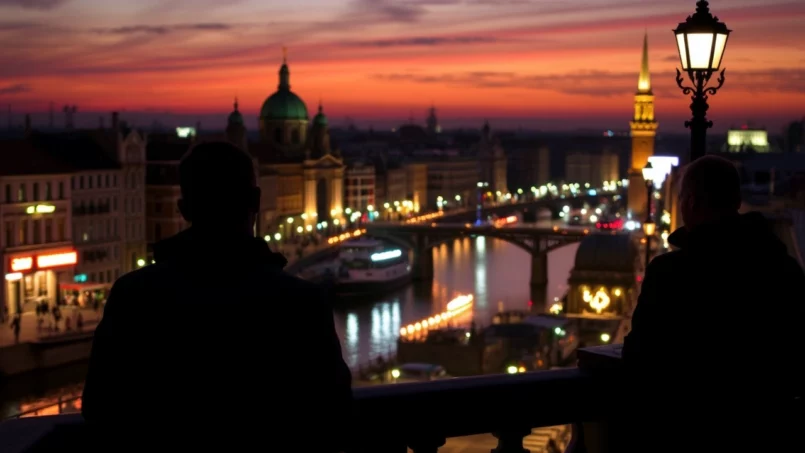
When the sun sets over Belarus, the country transforms. Behind the image of a calm and discreet state lies a nightlife scene that is surprisingly vibrant, led by Minsk but echoed by very active regional cities. Neighborhood bars, techno clubs, 24/7 casinos, live music cafes, summer festivals, and winter markets: nightlife in Belarus is far richer than most travelers imagine.
A Tranquil Country… That Loves to Party
Belarus is one of the safest countries in Europe regarding petty crime, even at night. Assaults specifically targeting foreigners remain rare, and city centers are generally well-lit and monitored. In Minsk, many visitors note that they feel comfortable walking around after midnight, women included, which is not the case in all capitals.
Despite a generally serene setting, it is essential to follow safety rules: do not display valuables, watch your belongings in crowds, refuse unattended drinks, opt for official taxis or Yandex Go, avoid poorly lit and remote areas, and steer clear of political gatherings, which are often repressed by the authorities.
In this context, going out at night becomes an essential escape for many Belarusians. Nightlife is a real release valve for the younger generation, which is very numerous in the big cities. Minsk, in particular, is often described as “a city of youth,” filled with students and young professionals who pack bars, clubs, and concert halls until the early morning, especially from Friday to Sunday.
Minsk, Capital of the Belarusian Night
With nearly two million inhabitants, Minsk concentrates the majority of the country’s nightlife offerings. It is regularly cited as one of the most active cities in Europe at night, and its reputation extends far beyond national borders.
The night’s structure in Minsk is quite clear: bars and terraces fill up around 9 p.m., the atmosphere really picks up after 11 p.m., clubs are only truly full from 1 a.m. onward, and a good part of the partying continues until 5 or 6 a.m. Casinos, meanwhile, are open 24/7, and there are a few all-night dining spots for those returning at dawn.
Prices in Belarus are significantly lower than in Western European or North American capitals. A local beer costs between 4 and 8 BYN (approx. $1.5 to $3 USD) and a cocktail in a standard bar usually ranges from 12 to 25 BYN ($4.5 to $9 USD). Only some high-end establishments (sky bars, luxury clubs) charge significantly higher prices.
The Big Numbers of the Nightlife and Music Scene
Belarusian nightlife is intimately linked to live music. A recent overview shows a continuous increase in concert venues and music bars across the country.
| Indicator | Total Value | Share in Minsk | Observations |
|---|---|---|---|
| Live concert halls (entire country) | 29 | 18 | +3.33% vs 2023 |
| Live music bars | 28 | 11 | +3.33% vs 2023 |
| Independent live venues (all halls) | 27 (93.1%) | – | Very unbranded scene |
| Independent music bars | 23 (82.14%) | – | Importance of small players |
| Average age of a concert hall | 6 years 9 months | – | Well-established scene |
| Average age of a music bar | 3 years 8 months | – | Recent dynamism |
Minsk thus concentrates the majority of the large venues (Minsk Arena, Re:Public, Palace of the Republic, State Philharmonic…), but the regions are not left behind, notably Brest, Grodno, or Vitebsk, which host festivals, music bars, and active local scenes.
Neighborhoods to Go Out at Night in Minsk
Even though the nightlife offerings are spread out, a few areas naturally concentrate bars, clubs, and restaurants. They allow you to move from one place to another on foot, which structures the “art” of bar‑hopping Belarusian-style.
Zybitskaya, the Beating Heart of Bars
Zybitskaya (Zybickaja / Zybitskaya in other transliterations) is considered the main “bar street” of Minsk. Bordered by the Svislach River and pedestrian on its main part, it features a string of bars, pubs, cocktail bars, small clubs, and restaurants where you can easily spend an entire night without ever taking a taxi.
On summer weekends, the street becomes almost a permanent festival: music spilling onto the sidewalks, packed terraces, tourists and locals mingling, languages crossing. Places like Cherdak (a cocktail bar without beer, very creative but rather expensive for the country), Glass Bar, certain sports pubs, and shot bars (Banki‑Butylki, for example) set the tone. Further down the street, you also come across underground reggae bars, like Zhevanyj Krot, more hip‑hop or funk spots, hookah bars, or impromptu karaoke joints.
Just behind Zybitskaya, Revolutsionnaya Street and the surrounding alleys form an extension of the party district. You can find establishments like the Hooligan bar, a more “downtown” version of the famous Huligan on Kastryčnickaja Street, as well as craft beer pubs.
Kastryčnickaja, the Alternative Lab
Kastryčnickaja (often transliterated as Kastrychnitskaya) is the other major nightlife hub in Minsk, halfway between industrial wasteland and artistic district. Old factories, warehouses, workshops turned into creative spaces: this is where a good part of the country’s most alternative scene is concentrated.
The Huligan bar, set in a red-brick building, is iconic of this area. Its interior resembles an artist’s studio more than a classic bar, the music ranges from house, funk, synthwave, and other electronic styles, and the large terrace becomes a major meeting point as soon as the good weather returns. The cocktails, around $10 USD, remain affordable for the quality.
In the same perimeter, the OK16 cultural complex offers exhibitions, experimental concerts, raves, and hybrid events. Nearby, Lo‑Fi Customs is a half-workshop, half-club space dedicated to tattoo artists, photographers, and designers, where evenings often take the form of happenings.
Around it, the “food mile” lines up street‑food, pancake houses, sandwich shops open late into the night, from Laŭka (custom sandwiches open 24/7) to pancake or burger stands. All of this creates a perfect ecosystem for chaining concerts, clubbing, and late‑night snacks without leaving the neighborhood.
Kamsamolskaya, Kamaroŭka, and Other Nighttime Axes
Other streets play a key role in the evening, even if they are less densely packed with nightlife than Zybitskaya.
– Kamsamolskaya retains a more local vibe, with bars like Karma, a “friendly apartment” type place mixing movie screenings, Afro nights, and impromptu parties.
– Around the Kamaroŭka market, street‑food stands (falafels, burritos, Vietnamese soups, hot‑dogs, burgers) fuel the nighttime flow, especially on weekends.
– Nezavisimosti (Independence Avenue), Minsk’s main artery, is home to some large clubs, casinos, and late‑night restaurants, though the atmosphere is more scattered there.
In summary, for a first night out in Minsk, combining Zybitskaya (early evening), then Kastryčnickaja (alternative bars and clubs), before finishing at a big club on Nezavisimosti is a classic strategy.
Bars, Pubs, Lounges: Where to Get a Drink
The bar scene in Minsk mixes highly thematic establishments, live music cafés, sports pubs, sophisticated cocktail bars, and hookah lounges. Many also serve food, from shawarma to revisited Belarusian dishes.
Sky Bars, Terraces, and “Signature” Bars
Several addresses focus on breathtaking views or a particularly refined atmosphere:
– Bar 360 at the top of an international hotel (DoubleTree): sky bar with large bay windows, Asian cuisine, lounge atmosphere. Ideal for a more upscale start to the evening.
– Panorama or The VIEW, perched in the upper floors of large hotels, play the card of refined cuisine, panoramas over Minsk, and sometimes live music.
– Cherdak, on Zybitskaya, embraces a high‑end mixology positioning: only cocktails ($8 to $15 USD) and wines, warm wooden decor, clientele willing to pay for a well‑crafted drink.
‘Quintessential Minsk’ vibe.
Regulars of the MADMEN bar
Rock Pubs, Jazz, and Craft Beer
For those traveling with music in mind, Minsk has a whole constellation of bars dedicated to rock, jazz, or craft beer.
Among the most mentioned:
– TNT Rock Club: decor packed with guitars and rock references, live concerts, beers, and hearty snacks.
– Bar Coyote: rock institution with stages for local bands and tribute bands.
– Jazz‑Club Jamm and Graff Lounge: haunts for jazz lovers, with evenings dedicated to standards but also more contemporary projects.
– Gambrinus Pub, Craftman, Nuahule Minsk or BeerCap: paradises for craft beer enthusiasts, with a wide selection of Belarusian and international brews.
These places reflect a statistical reality: Belarus has an ancient brewing tradition, carried by historical breweries like Alivaria (1864) and a new generation of micro‑breweries and brewpubs increasingly present, especially in Minsk. Many of these craft beers have even won prizes in international competitions.
Themed Bars and More “Conceptual” Places
Some bars play on a very distinct theme:
A selection of establishments that rely on a strong identity, ranging from political humor to a private club vibe, immersive decor, and eclectic music programming.
Plays with the theme of repressive regimes through decoration and cocktails that push the wink to the extreme.
Presents itself as the city’s most frank and sexy address, in a private club spirit focused on atmosphere and meticulous service.
Halfway between bar and club, offers a dark decor, a long changing neon bar counter, and funk, jazz, or international DJ nights.
Located in the OK16 complex, they mix the cultural loft spirit, industrial design, and sharp music programming.
The country has also developed a passion for “anticafés” – places where you pay for the time spent rather than for consumption. In Minsk, Fisher’s House illustrates this concept well: you pay about $3 USD per hour, you can use the kitchen, attend an intimate concert, an exhibition, or a thematic film screening on Friday night. Other anticafés like “Ved’min kotelok”, “Quvalda”, or “CheckPoint Club” follow this trend.
Hookah Lounges and Shisha Bars
Hookah bars are an integral part of urban nightlife in Belarus, especially in Minsk. Some offer a classic selection, others aim to be true specialists.
Among the often‑mentioned names:
– Myata Lounge Vostok, with over 100 tobacco references and the possibility to prepare shishas with water, wine, or fruit juices.
– Chaikhana Lounge Café, oriental decor, a significant choice of classic, fruity, or premium hookahs.
– HookahPlace Yakuba Kolosa, member of a large international network, focuses on an industrial style and a very wide tobacco menu.
– HookahDeli, with minimalist design, concentrates on tobacco quality and service, with at least 80 references.
– Yarkalyan, all in black and blue, offers classic, exclusive, “branded” shishas, or ones mounted in fruits.
For Belarusians, these lounges are often as much places for socializing as they are bars: you chat, play games, watch matches, listen to DJs, more than you come to dance.
Clubs and Discos: From Mainstream to Underground Techno
If you like to dance, Minsk has nothing to envy from other Central European capitals. The clubs cover a broad spectrum, from friendly commercial spots to more cutting‑edge raves.
The Big “Mainstream” Clubs
A few establishments dominate the mainstream clubbing scene:
– Dozari: often presented as the city’s most famous and luxurious club. Giant multimedia‑shaped dance floor, dressed‑up crowd, strict face control, entry around $15 to $25 USD. It also has an internal Mojito bar, which itself becomes a hotspot around 1 a.m.
– Fashion Club: premium club with a glass floor, European guest DJs, a very long bar, and a clientele fond of bottles and VIP tables. Expect $10 to $20 USD entry on weekends.
– Madison Royal Club: temple of exclusivity, assumed hedonism, and ruthless face control. DJs from Ibiza, spectacular shows, hefty bill.
Alongside these behemoths, other more affordable clubs attract a younger crowd:
– Next Club: four bars, mainstream music, softer prices, very student‑oriented crowd.
– Max Show: club attached to a cinema, with a strong erotic show dimension (go‑go, special nights).
– Rich Cat: multiple levels, different music zones (techno, pop…), bartender shows, food service, and hookah.
Techno, House, Raves: Minsk the “Discreet Anti‑Berlin”
Another part of Minsk’s clubbing scene has built its reputation through electronic music:
Discover a selection of iconic venues and events from the Minsk electronic scene, from chic clubs to underground raves.
Focuses on house and techno in a chic, dark decor, with a strong emphasis on sound.
In an industrial setting, programs local and international DJs oriented towards techno and electro.
Primarily a concert hall, transforms on weekends into a huge themed club with DJs and stage designs.
NLO, Titan, Mechta Project, or Sijanie host major raves, often in repurposed spaces like OK16 or Korpus.
This scene is not as well‑known as that of Berlin or Warsaw, but it shares a similar taste for raw venues, line‑ups mixing local artists and foreign guests, and a freedom of style rather rare in the region.
Rock Clubs, Karaoke, and Hybrid Concepts
There are also more specialized clubs:
– TNT Rock Club, which extends the rock spirit of the bars of the same name with a live stage, ultra‑guitar‑themed decor, beers and steaks.
– Bohema, which mixes clubbing, cuisine, and a karaoke room managed by professionals from the theater world.
– The Loft, which transitions from a café‑snack spot during the day to a concert venue in the evening, then to a dance floor with funk, indie, disco, modern jazz, or electro on weekends.
Finally, a club like Sky Club, located on the top floors of a business center, adds a panoramic dimension to nights out, with an oriental decor and themed programming every weekend.
Casinos, Strip Clubs, and “Adult” Entertainment
Belarus is one of the European countries where gambling is legal and well established. Minsk has over 30 casinos, often integrated into large hotels.
The most famous include:
| Casino | Location / Specifics | Hours | Price Particularities |
|---|---|---|---|
| Casino Royal | Minsk Hotel, Nezavisimosti 11 | 24/7 | VIP room, restaurant |
| Diamond Princess | Crowne Plaza, Kirova 13 | 24/7 | +1000 m², 9 tables, +100 slots |
| Juravinka Princess | Juravinka Complex, Yanki Kupaly 25 | 24/7 | Casino + bowling, bars, disco |
| Shangri La | Kirova 8/3 | 24/7 | Entry = $100 USD in chips, cabaret, gourmet restaurant |
Poker tables, roulette, blackjack, or baccarat coexist with entire rooms of slot machines, often with integrated bars and dining. Casinos attract both foreign visitors and local players.
There are strip clubs in Minsk, such as Laguna, Versus, or Texas, which are open until the late hours of the night. These establishments, which are part of the adult entertainment offerings, remain relatively discreet. Some clubs also offer shows heavily oriented towards this type of entertainment.
Drinking and Eating: Belarusian Nighttime Gastronomy
It’s impossible to talk about Belarusian nightlife without mentioning what’s in the glasses… and on the plates.
Vodka, Liqueurs, and Beers: A Liquid Heritage
The iconic strong drink remains vodka, locally called harelka. Introduced as early as the late 15th century during the time of the Grand Duchy of Lithuania, it is now available in a host of versions flavored with herbs, nuts, buds, or spices. The brand Vodka Belaruska, produced since 1898, is one of the oldest.
Around this base, a whole tradition of liqueurs, nastoikas, and nalivkas has developed. These strong, sweet drinks – krupnik with honey and spices, zubrovka with bison grass, krambambulya with wine and spices, troyanka, and other local recipes – were once reserved for the nobility, as the ingredients (honey, imported spices) were expensive. They are now experiencing a resurgence of interest and are often featured on the menus of traditional restaurants and specialty bars, sometimes in pretty glass or ceramic bottles sold as souvenirs.
Belarus has a long brewing tradition, with historical breweries like Alivaria (founded in 1864) which now houses a museum in Minsk. It traces the history of beer through ancient objects and equipment, while presenting modern brewing methods, with a tasting included. At the same time, a new wave of mini‑breweries and brewpubs produces unfiltered and unpasteurized craft beers, very popular in nightlife bars.
Kvass, Sbiten, Birch Sap: Soft Drinks
The drink culture is not limited to hard alcohol. A few non‑alcoholic or low‑alcohol specialties are an integral part of the Belarusian evening:
Belarus has several traditional seasonal drinks. Kvass, a lightly sour and sparkling fermented drink made from rye bread or grains, is low in alcohol. Once sold in the streets in summer, it is now consumed in bottles, often with late‑night snacks. Sbiten is a hot drink made from honey or molasses, flavored with herbs and spices like linden or cinnamon. Consumed in winter, it can have beer or alcohol added. In spring, birch sap (byarozavik) or maple syrup (klyanovik) is enjoyed, sometimes lightly fermented. Finally, compotes and uzvar, made from fresh or dried fruits boiled with sugar, are very popular in family‑oriented establishments.
These drinks find their place both in trendy cafes and at Christmas markets or traditional cuisine restaurants.
Street‑Food and Dishes to Last Until Dawn
The Belarusian night is gourmet. A few classics keep appearing on late‑night menus:
– Draniki, the famous potato pancakes, sometimes stuffed with cheese, mushrooms, or bacon, served with sour cream.
– Kletski, sort of dumplings or meat‑filled dough balls, often served with grilled onions.
– Machanka or vereshchaka, rich pork stews, served with pancakes or potatoes.
– Tsibriki, small fried potato and cheese bites, perfect with a beer.
You can find these specialties both in restaurants serving national cuisine that are open late, in “Kopitse” – 24/7 cafés, or even in some food trucks in party districts. Paprika 24, for example, has built a reputation on its continuously available shawarma, ideal after leaving a club.
Nightlife Beyond Minsk: Brest, Grodno, Vitebsk, and Others
While Minsk largely dominates the scene, other Belarusian cities do not stay silent once the sun sets.
Brest and Grodno stand out with a solid network of music bars, pubs, live music cafes, and small clubs, animated by street parties and festivals. Vitebsk and Mogilev have their own concert halls, often linked to events like the Slavianski Bazaar festival. Even smaller towns like Astravyets offer rich nightlife with concert bars and audiovisual festivals.
Overall, the numbers show that bars and live music venues are distributed as follows:
| Region / City | Live Venues | Music Bars |
|---|---|---|
| Minsk (city) | 18 | 11 |
| Brest Region | 3 | 5 |
| Grodno Region | – | 5 |
| Minsk Region | 3 | 1 |
| Mogilev & Vitebsk Regions | 2 each | 3 (Vitebsk, Gomel, etc.) |
| Gomel Region | 1 | 3 |
This distribution illustrates well that the Belarusian night is both centralized and dispersed: Minsk concentrates the big players, while the regions develop more local, but growing, scenes.
Festivals, Christmas Markets, and Seasonal Evenings
Nightlife is not limited to clubs and bars. Belarus lives to the rhythm of a dense calendar of festivals, traditional celebrations, and cultural events that often spill over into the night.
Summer: Open Airs, Concerts, and Popular Celebrations
From May to September, the country vibrates to the sound of music festivals (Kosmofest, Open‑Air Gubernia, etc.), medieval reenactments, rolling carnivals (like VIVA, a bicycle parade in Minsk), and major events like Kupalye (Kupala Night), the traditional Midsummer celebration, observed across the territory with bonfires, dances, and concerts.
Places like the “Minsk Sea” (Zaslavl artificial lake) then become open‑air evening spots: beach, DJs, film screenings, bars, all just a ten‑minute taxi ride from the center.
Winter: Christmas Markets and Ice Rinks
In winter, the night lights up with Christmas markets in Minsk, Grodno, Brest, Vitebsk, and many smaller towns. The one in Minsk, around Oktyabrskaya Square and the Palace of the Republic, mixes craft stalls, street‑food, hot drinks (mulled wine, sbiten, cocoa, herbal teas), concerts, and activities for children.
For several weeks, other places transform:
– The Palace of Sports, in Minsk, hosts a large market and over 30 stalls of local and international specialties.
– The food court “Best Street” turns into a winter village with rides, open‑air cinema, culinary workshops.
– Urban parks set up ice rinks, carousels, sometimes stages.
In this setting, the line between “daytime activities” and nightlife becomes blurred: many families stay out late, young people then continue in bars or clubs.
Social Codes, Safety, and Practical Tips for Going Out
Going out in Belarus also involves taking into account certain cultural norms and rules of conduct.
Style, Dress Code, and Face Control
Belarusians generally dress quite neatly, even for a simple bar outing. The “smart casual” style is almost always appropriate, while overly casual or overly revealing outfits may be frowned upon in some places.
In high‑end clubs like Dozari or Madison Royal Club, an implicit dress code is applied via the famous “face control”: the door staff can refuse a client if they don’t fit the aesthetic or attitude codes of the place. A shirt or polo and proper shoes for men, dressed‑up or stylish outfits for women significantly increase the chances of getting in without issue.
Most bars and pubs, however, remain much more relaxed. It’s enough to be clean, presentable, and sober at the entrance.
What to Respect in Public Spaces
Belarusian society values politeness, restraint, and respect in public places:
Several behaviors are strictly regulated or prohibited in public spaces: noise nuisance (loud noises, shouting, overt drunkenness) and alcohol in the street or parks (except in authorized areas) are subject to fines. Public swearing, overly explicit displays of affection (especially outside large cities), and photography of official buildings, military sites, or law enforcement are also penalized or strongly discouraged.
In night transport, respecting the line, offering your seat to elderly people or pregnant women, and relative quiet (no videos without headphones, no loud music) remain the norm.
Night Transport: Metro, Buses, and Taxis
Minsk has an extremely efficient and cheap transport system. The metro runs until approximately 00:40 (the last trains arrive around 01:10), buses, trams, and trolleybuses run until about 00:30. A single ticket costs around 0.90 BYN. After this time, taxis and ride‑hailing services take over.
The cost in BYN for a 10‑12 km trip in the city with a service like Yandex Go.
To get back from major bar streets like Zybitskaya, it’s sometimes better to be picked up on an adjacent street, to avoid getting stuck in traffic jams generated by nighttime crowds.
Money, Payment, and Formalities
Bank cards are widely accepted in bars, clubs, restaurants, and casinos, but it’s still useful to have some cash in Belarusian rubles (BYN), if only for tips, small stalls, or public transport. Tips are appreciated but not mandatory: 5 to 10% in a restaurant with table service is usually sufficient.
Alcoholic beverages can be bought in supermarkets as well as in specialty shops run by major national brands, often with “souvenir” packaging (ceramic bottles, designer boxes, canvas or leather bags).
For stays, travelers taking advantage of the visa‑free regime via Minsk Airport should pay attention to registration rules with the authorities if their stay exceeds five business days. This point is more administrative than related to nightlife, but it’s better to keep it in mind to enjoy your nights without bad surprises.
A Still Under‑the‑Radar but Booming Scene
In the end, nightlife in Belarus surprises with its scale and diversity. Depending on the neighborhoods, Minsk can resemble a classic clubbing capital with its mega‑clubs, evoke Berlin with its converted industrial spaces turned into underground cultural centers, or display the charm of a Central European city with terraces, night markets, and small concert halls.
The numbers confirm an underlying trend: the number of live music venues and bars is increasing, most are independent, festivals are multiplying, craft breweries are establishing themselves, cocktail bars are professionalizing, and the culture of traditional liqueurs, vodkas, and beers is finding new youth among urbanites.
This nocturnal effervescence fits into a country where the night is not just a time for consumption, but also a space for cultural and social expression. Whether it’s listening to a local rock band in a brick basement, dancing until dawn on a lakeside beach, getting lost in the lights of a casino, savoring a krupnik in a carved‑wood bar, or sharing a fruity shisha in a lounge, Belarus offers plenty to fill several nights… without ever feeling like you’re replaying the exact same one.
For those looking for a nightlife destination that is still “under the radar”, where prices remain affordable, safety is good, and where authenticity hasn’t been entirely swallowed by mass tourism, Belarus clearly deserves to step out of the shadows.
Disclaimer: The information provided on this website is for informational purposes only and does not constitute financial, legal, or professional advice. We encourage you to consult qualified experts before making any investment, real estate, or expatriation decisions. Although we strive to maintain up-to-date and accurate information, we do not guarantee the completeness, accuracy, or timeliness of the proposed content. As investment and expatriation involve risks, we disclaim any liability for potential losses or damages arising from the use of this site. Your use of this site confirms your acceptance of these terms and your understanding of the associated risks.

Cyril Jarnias is an independent expert in international wealth management with over 20 years of experience. As an expatriate himself, he is dedicated to helping individuals and business leaders build, protect, and pass on their wealth with complete peace of mind.
On his website, cyriljarnias.com, he shares his expertise on international real estate, offshore company formation, and expatriation.
Thanks to his expertise, he offers sound advice to optimize his clients' wealth management. Cyril Jarnias is also recognized for his appearances in many prestigious media outlets such as BFM Business, les Français de l’étranger, Le Figaro, Les Echos, and Mieux vivre votre argent, where he shares his knowledge and know-how in wealth management.





